
It is late March. You matched. Relief has finally beaten out nausea. Then the emails start.
“Welcome to the Class of 2028!”
“Action Required: Occupational Health and Onboarding”
“Please complete this scheduling survey by Friday.”
You open the survey and see it: vacation block preferences, requested days off, optional electives, “any major life events we should be aware of.” You tell yourself, “I have time, I will do this later.”
That thought—right there—is how people quietly trash their reputation before Day 1.
This phase after Match, before orientation, feels like a buffer. It is not. Program leadership, chiefs, and coordinators are already forming opinions based on how you handle one thing: scheduling.
I have watched brand‑new interns show up with a black mark next to their name before they had their first patient. Not because of knowledge. Because of sloppy, self‑centered, or careless scheduling behavior.
Let us walk through the biggest post‑Match scheduling mistakes that make a bad first impression—and how to avoid being “that intern” everyone side‑eyes in July.
Mistake #1: Ignoring Scheduling Emails or Deadlines
The fastest way to look unprofessional is simple: do not respond when everyone else does.
Programs track this. Coordinators have spreadsheets with color coding. They know exactly who answered on time, who needed three reminders, and who ghosted until someone called their dean.
Common ways people screw this up:
- Letting onboarding emails sit “unread” for days or weeks.
- Filling out half the scheduling survey and never hitting submit.
- Missing the “hard deadline” for mandatory preferences (vacation, call schedule restrictions).
- Assuming, “If I do not respond, they will just put me somewhere” and leaving it at that.
Here is what your silence communicates to them:
- You do not read or manage your email.
- You will be a problem when they need something quickly (change in schedule, new rotation, urgent update).
- You do not respect that hundreds of moving parts depend on your response.
How to avoid this
Use one primary email (and check it daily).
Stop splitting communication between school, personal, and random forgotten accounts. From Match week until August, pick one address, forward everything there, and check it like a pager.Respond within 24–48 hours.
You do not need every answer. You do need to acknowledge:- “Received, I am working on this and will submit by Friday.”
Looks responsible. Because it is.
- “Received, I am working on this and will submit by Friday.”
Set calendar reminders for every deadline.
Not in your head. Real reminders. With alerts. If the email says “Due April 5,” your calendar should say “PGY1 survey due” two days before.
If a coordinator has to chase you, you already look like someone who will need chasing all year.
Mistake #2: Treating Scheduling as Purely Personal Convenience
You have weddings, partner’s job, maybe kids, maybe a move across the country. You are allowed to have a life.
But here is where people go wrong: they act like they are booking vacation at a resort, not joining a clinical service that has to function safely 24/7.
Examples I have actually seen:
- Requesting all major holidays off: “Would like Christmas, New Year’s, Thanksgiving, and July 4 off if possible. Family is very important to me.” (Everyone’s is.)
- Writing in the comments: “Cannot do nights. They really affect my sleep and mental health.” For a program with mandatory night rotations for everyone.
- Asking for three separate long weekends off in the first two months of internship. On inpatient services.
- Requesting vacation “any time except June, July, August, September.” In other words: please make everyone else’s life harder.
You are broadcasting two things:
- You have no awareness of service needs.
- You expect special treatment before you have proven anything.
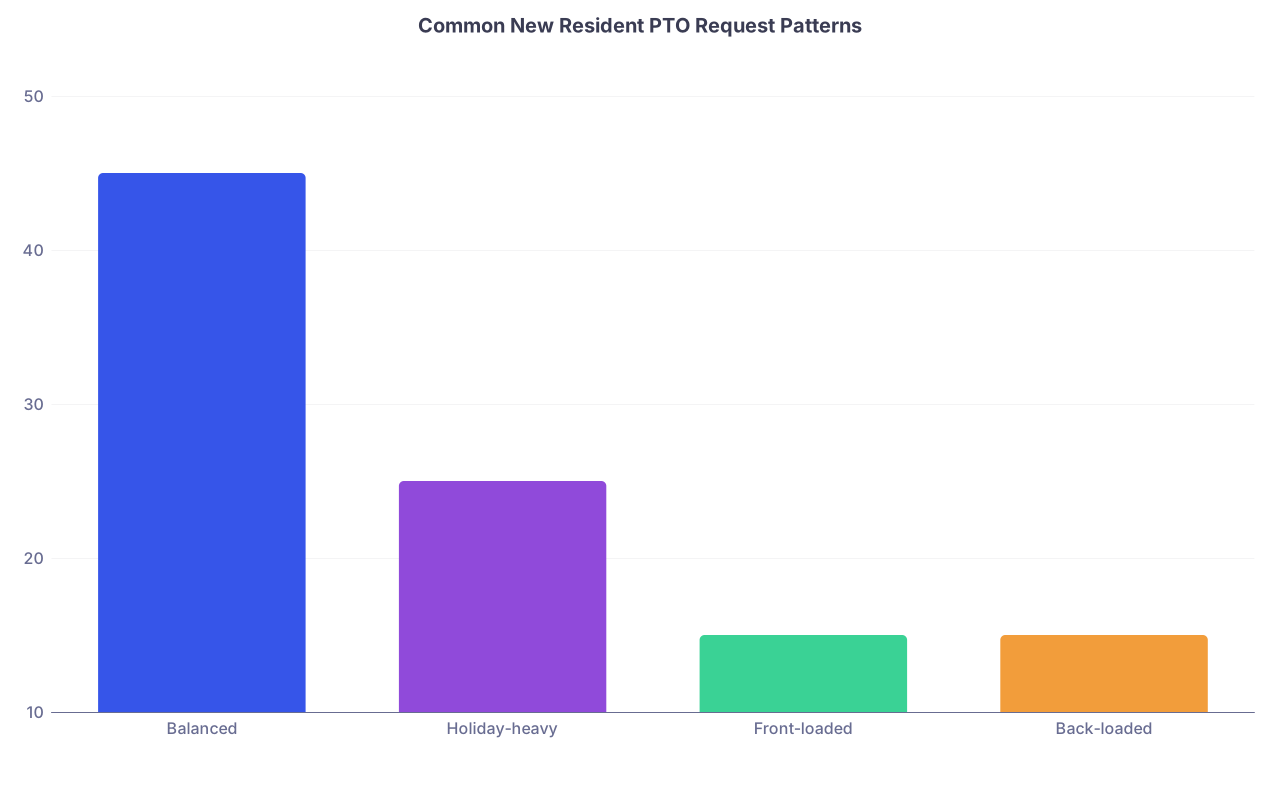
| Category | Value |
|---|---|
| Balanced | 45 |
| Holiday-heavy | 25 |
| Front-loaded | 15 |
| Back-loaded | 15 |
How to avoid this
Use one simple mental rule: “Fair to the group first, then personal preference.”
Ask yourself:
- Would this feel fair if every intern asked for the same thing?
- Does this request concentrate burden on a small number of colleagues?
- Am I asking for more exception than contribution?
Smart approach:
- Spread your vacation across the year unless told otherwise.
- If you need one truly important block (wedding, exam), say that clearly and keep the rest flexible.
- Phrase it like a reasonable adult:
- “My sibling’s wedding is June 15; if possible, I would be very grateful to have that weekend off. I am flexible with other vacation timing and happy to take less popular weeks.”
You do not look weak for accommodating the system. You look like someone people will want on their team.
Mistake #3: Hiding Major Life Events Until After the Schedule Is Built
This one causes real anger.
You had advance notice of:
- A wedding in which you are in the bridal party.
- A scheduled surgery, fertility treatment, or major medical procedure.
- Immigration / visa appointments that are not movable.
- A spouse’s military deployment window.
And you said nothing during scheduling. Then in June you email the chiefs: “By the way, I need this week off; it was planned long ago.”
Now you have put them in a terrible position:
- Either they redo the call schedule and anger six other people.
- Or they say no and look unsympathetic.
They will remember which one you chose to make their problem.
How to avoid this
Disclose early. Not every tiny plan, but anything that:
- Requires more than 1–2 days off.
- Is booked and non‑refundable.
- Involves legal, medical, or immigration constraints.
How to phrase it without oversharing:
- “I have a family wedding I must attend July 12–14; this was scheduled before Match. I understand if exact dates are difficult, but I wanted to share early so it can be considered.”
- “I have a scheduled medical procedure needing 3–5 days of recovery in late September. My physician expects I can work before and after; I am happy to provide documentation if needed.”
Early honesty buys you goodwill. Late “surprises” burn it instantly.
Mistake #4: Being Vague, Noncommittal, or Overly Casual in Responses
Some people think being laid back—“I am easy, anything is fine”—makes them low maintenance.
It does not. It makes the scheduler’s job harder.
Common forms:
- Leaving preference fields blank: “No preference,” “Whatever,” “You choose.”
- Responding to surveys with one‑word answers.
- Not specifying which days actually matter to you.
- Emailing: “Whenever works” when they ask you to choose an option.
What schedulers hear:
You are not taking this seriously. You are not invested. You are not careful with details.
How to avoid this
Be clear and specific without being demanding.
Weak:
- “No preference for vacations.”
Stronger: - “I am flexible on vacation timing. If possible, I would slightly prefer one block between October–December and one between March–May, but I am happy with whatever works best for the schedule.”
Weak:
- (blank response to “Any important days off?”)
Stronger: - “No fixed days off needed. I do not have any immovable events planned.”
That tells them: you thought about it, you respect their work, and you are reliable.
Mistake #5: Over‑Requesting “Protected” Time or Special Accommodations Without Justification
Everyone wants perfect exam timing and away rotations in glamorous places. You are not wrong to want that.
You are wrong when you act like the program is obligated to contort itself for you.
Red flags:
- “I need 4 continuous weeks off to study for Step 3/COMLEX.” (No, you do not.)
- “I prefer not to take call more than once per week due to wellness needs.” In a program with q4 call for all residents.
- “I require elective time in [prestige hospital] for fellowship competitiveness.” That is your goal, not their job.
- “I cannot rotate at the VA / county site due to personal preference.” Unless there is a documented reason, that will land poorly.
| Situation | Reasonable Request | Problematic Request |
|---|---|---|
| Major exam | 3–5 lighter days before | 4 weeks off service |
| Family wedding | One weekend off | Entire month pattern customized |
| Health issue | Documented restrictions | Blanket “no nights ever” |
| Fellowship interest | Ask about electives | Demand specific away rotation |
How to avoid this
Use a basic filter: If this went to the CCC or PD meeting, would it sound reasonable?
Better phrasing:
- “I am planning to take Step 3; if there is flexibility, 2–3 lighter days beforehand would be helpful, but I can work with whatever is standard for the program.”
- “I am interested in [subspecialty]. Are there elective blocks where I might be able to get exposure? I do not need special treatment, just guidance.”
Programs will often work with you when you sound collaborative, not entitled.
Mistake #6: Acting Like Post‑Match = No More Professionalism
Some people mentally clock out after Match. Grades do not matter, attendance is “optional,” email tone becomes sloppy.
The problem: your post‑Match behavior is your first data point as a physician colleague.
Specific things that look bad:
- Sloppy, typo‑filled emails to coordinators and PDs.
- Writing from your phone with no greeting, no signature, no context.
- Responding late at night with casual language like you are texting a friend.
- Ignoring instructions attached to scheduling emails, then asking questions already answered there.
Let me be blunt: coordinators talk. Chiefs talk. When someone says, “That intern seems disorganized and dismissive,” they are not just talking about your email.
How to avoid this
You do not need flowery language. You do need basic professional hygiene:
- Subject lines that mean something: “PGY1 vacation survey – completed” beats “Question”.
- Short greeting + your name + program:
- “Hello Ms. Lopez, This is Alex Kim, incoming IM PGY1. I have attached the completed scheduling form.”
- Read the entire email and attachments once before replying.
- Answer every clear question they asked, not just the one you care about.

| Step | Description |
|---|---|
| Step 1 | Receive Program Email |
| Step 2 | Read Full Email |
| Step 3 | Add to Calendar |
| Step 4 | Prepare Response |
| Step 5 | Send Professional Reply |
| Step 6 | Archive for Reference |
| Step 7 | Action Needed? |
This seems basic. That is the point. People lose respect over basics.
Mistake #7: Burning Bridges With Your Medical School or Away Sites Over Schedule Conflicts
Final stretch of MS4: sub‑I, electives, maybe an away. You match. Then your new program wants documents, onboarding, maybe a pre‑orientation shadow day. Conflict.
Here is the mistake: blowing off your current obligations because “I matched already.”
Examples:
- Skipping days on your current rotation to do residency paperwork without properly arranging it.
- Asking attendings to excuse you repeatedly for “residency stuff” at the last minute.
- Leaving a rotation 1–2 weeks early without clear permission so you can “get settled.”
These people forget: your new program will get a final evaluation. Informal or formal. If your med school says, “They kind of checked out at the end,” that sticks.
How to avoid this
- Coordinate early with your current rotation director if something is time‑sensitive for residency.
- Offer alternatives: staying late, making up missed time, adjusting duties.
- Copy your student affairs office (when appropriate) so communication is transparent.
- Never assume “they will understand.” Ask.
Your professionalism is under the microscope exactly when you relax. That is how people get labeled “strong but unreliable.” Brutal label to shake.
Mistake #8: Failing to Clarify Non‑Negotiables (Legal, Health, Disability) Early and Properly
This is the opposite problem: being too accommodating at the beginning, then needing major schedule changes when something serious comes up.
Common scenarios:
- You have a chronic health condition requiring predictable appointments, but you do not mention it until your first rotation.
- You have an ADA‑qualifying disability and delay formal accommodations because you “do not want to be difficult.”
- You are pregnant or planning fertility procedures and say nothing until the call schedule is built in a way that is unsafe or unmanageable for you.
I understand the fear. You do not want to be labeled “problematic” before you start. But hiding true non‑negotiables does not protect you. It usually makes the disruption bigger later and annoys more people.
How to avoid this
There is a right way to handle serious constraints:
- Work with your med school’s disability office or student affairs before Match if possible.
- Once matched, ask your new program who handles accommodations and health‑related scheduling—usually the PD, APD, or GME office, not the chief residents alone.
- Communicate in focused, factual terms:
- “I have a medical condition that requires standing appointments every X weeks. I am fully able to complete required rotations with reasonable scheduling adjustments. I would like to discuss how to arrange this appropriately.”
- Use formal processes (ADA, occupational health) rather than side agreements with a single chief over text.
You are not “making trouble” by doing this right. You are saving everyone from chaos later.
Mistake #9: Taking Schedule Changes Personally and Reacting Poorly
Last one is big.
Schedules change. Rotations shift. A colleague has a family emergency and someone must swap. The hospital adds a new requirement. You will not like every change.
New interns who damage their reputation fast do the following:
- Fire off angry emails to chiefs or PDs cc’ing everyone.
- Refuse to consider any swap “on principle.”
- Complain loudly in group chats and then screenshots inevitably leak.
- Talk about “unfairness” and “favoritism” without even asking for context.
You are allowed to be frustrated. You are not allowed to behave like a teenager and expect people to see you as a physician colleague.
How to avoid this
Use this sequence:
- Pause 24 hours before responding if you are angry.
- Ask for clarification privately:
- “I noticed my vacation block was changed from October to January. Could you share the reasoning? I want to understand the constraints you were working with.”
- If something truly feels off, escalate professionally:
- Start with the chiefs.
- Then APD / PD if needed.
- Offer solutions, not just complaints:
- “If an alternative is possible, I would be happy to switch with someone who prefers winter vacation.”
The residents who handle this calmly are the ones leadership trusts with bigger responsibilities later.
FAQ (5 Questions)
1. I missed a scheduling survey deadline by a few days. Should I apologize or just submit it late quietly?
Apologize briefly and submit it immediately. A short, direct email works: “I am sorry for the late submission of the vacation survey; I mis‑tracked the deadline. I have attached the completed form and will be more careful with future deadlines.” Owning the mistake once is far better than pretending it did not happen. Do not over‑explain.
2. How many personal requests (weddings, trips) is “too many” before residency even starts?
One major priority event per year is usually fine. Two is pushing it but sometimes manageable if they are spaced out or flexible. Three or more “must‑have” events in PGY1 will almost always create resentment and logistical pain. Prioritize ruthlessly and label only truly non‑negotiable things as such.
3. Can I ask to avoid starting residency on a particularly tough rotation (like ICU or nights)?
You can ask once, carefully. Phrase it as a mild preference, not a requirement: “If there is flexibility, I would appreciate starting on a ward or clinic rotation to adjust to the system before ICU or nights, but I understand if that is not possible.” Some programs randomize anyway. If they cannot accommodate you, drop it.
4. What if I have serious mental health needs that affect scheduling (e.g., nights worsen my condition)?
Then you should address this through formal channels, not by casually writing “no nights” on a survey. Contact the PD or GME office, ask about confidential support and possible accommodations, and involve occupational health or disability services as needed. This is about safety, not convenience. Handle it like a serious medical issue, not a preference.
5. How much detail about personal life (partner’s job, moving logistics) should I share in scheduling forms?
Less than you think. Programs need to know: concrete dates you are unavailable, legal/medical non‑negotiables, and any required continuous time off already booked. They do not need the full story of your relationship, lease, or travel plan. Keep it to: date ranges, level of flexibility, and whether something is fixed or optional.
Key takeaways:
- Treat every post‑Match scheduling interaction as part of your professional record—because it is.
- Be early, clear, and honest about real constraints, and conservative with “special requests.”
- Your goal is not the perfect schedule; your goal is to arrive in July as the intern people already trust, not the one they are already worried about.