
It is March 15th. You matched. The email has your new hospital, your new city, and maybe even your start date. What it does not include: a place to sleep on June 30.
You open Zillow, Apartments.com, maybe Facebook Marketplace. Half the options need move-in dates next week. The other half want three months of paystubs and a local guarantor. You have neither. Your med school lease ends in June. Your residency starts in late June or early July. And right now, you have exactly zero housing nailed down.
Here is how you fix it. Stepwise. No drama, just a clear plan.
Step 1: Get Oriented – Facts Before Panic
You cannot solve this while hand-waving the details. Start by getting hard data.
In the next 24–48 hours, you need to know:
Your actual start date and orientation date
- Check:
- Your NRMP Match letter
- The program welcome email
- The GME (Graduate Medical Education) page for your hospital
- If unclear, email the program coordinator with a direct subject line:
- “Incoming PGY-1 – Start Date and Orientation Schedule Confirmation”
- Check:
The city’s realistic move-in window
- In many cities, typical lease start dates:
- College towns: June 1 or August 1
- Big metros (NYC, SF, Boston): 4–6 weeks before move-in is normal
- Quick scan:
- Filter apartments for move-in dates around June 15–July 15
- Look at what actually exists, not what you wish existed
- In many cities, typical lease start dates:
Your hard constraints Write these down. Not in your head.
- Max monthly rent (be honest; PGY-1 salaries are public, check your offer letter)
- Required commute time or max distance to hospital
- Car vs no car (this completely changes your search radius)
- Pets, partner, kids, special considerations
This initial clarity will drive every other decision. You are not “looking for a place.” You are solving a logistics problem with clear boundaries.
Step 2: Secure a Temporary Safety Net (So You Are Not Homeless)
If you do not have a long-term lease yet, your first job is not finding The Perfect Apartment. It is making sure you are not couch-surfing the night before orientation.
That means lining up temporary housing with a clear exit plan.
Priority order for short-term housing
Hospital-related options
- Ask your program coordinator:
- “Are there on-call rooms available the first week or two for transition?”
- “Does the hospital have a hotel partnership with resident discounts?”
- “Is there any temporary housing for new interns who are relocating?”
- Many big academic centers have:
- Hospital-owned apartments
- Subsidized “house staff housing” with shorter terms
- Deals with nearby extended-stay hotels
- Ask your program coordinator:
Extended-stay hotels or corporate housing
- Look for:
- Extended Stay America, Residence Inn, Candlewood Suites, etc.
- Corporate housing companies in that city
- Ask explicitly for:
- Monthly rate
- Healthcare worker / hospital discount
- Waived parking fees if you are staff
- Look for:
Furnished room / sublet for 1–3 months
- Use:
- Furnished Finder (targeted to travel nurses and residents)
- Facebook groups (search: “[City] residents,” “[Hospital name] residents,” “Physician housing [City]”)
- Hospital listserv or email from GME office asking about “short-term sublet for incoming PGY-1”
- You are looking for:
- Private room in existing apartment
- Month-to-month or 3-month lease
- All utilities included if possible
- Use:
Hostel / Airbnb / short-term rental
- Hostels work in some major cities short-term.
- Long-stay Airbnb negotiation:
- Do not just click “book.” Message the host:
- “I am a physician starting residency at [Hospital]. I am looking for a 30–60 day stay. Would you consider a reduced monthly rate in exchange for a guaranteed booking?”
- Do not just click “book.” Message the host:
- You want:
- Distance to hospital manageable
- Cooking access if possible
- Laundry access if possible
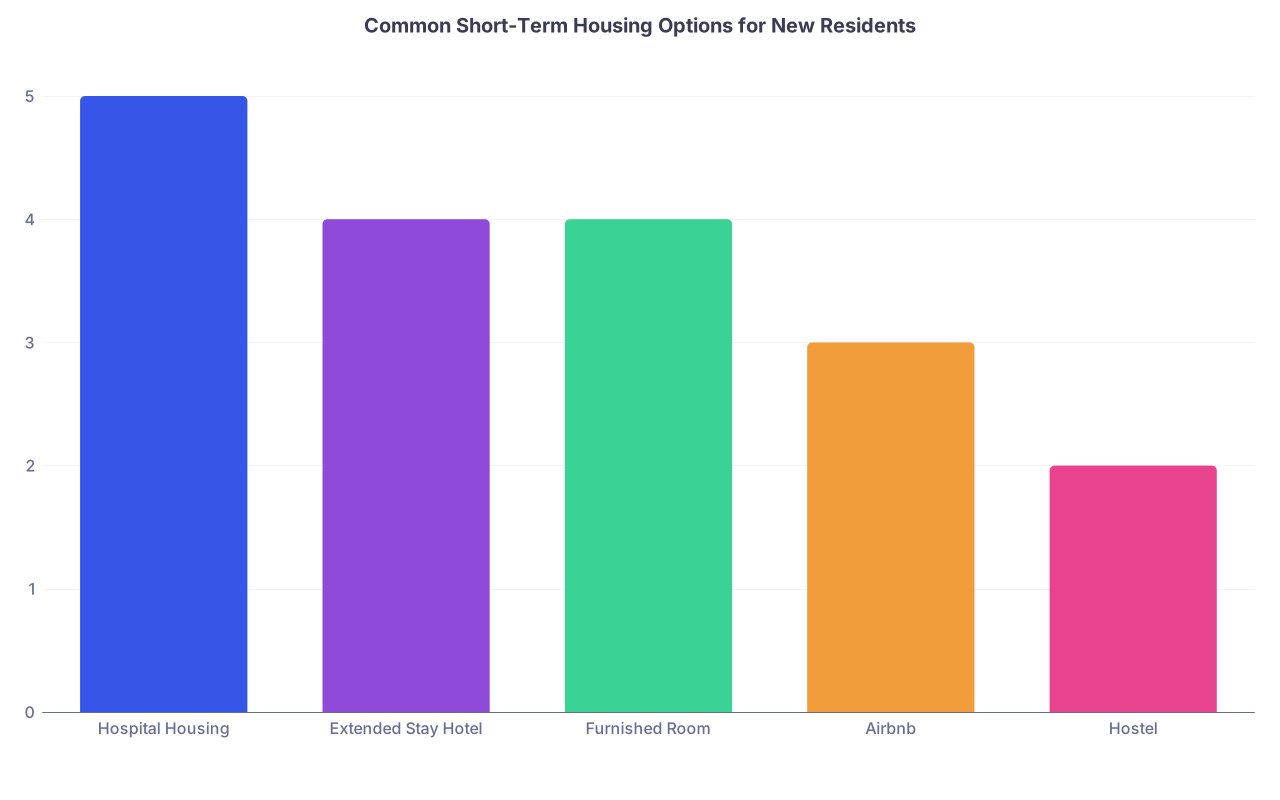
| Category | Value |
|---|---|
| Hospital Housing | 5 |
| Extended Stay Hotel | 4 |
| Furnished Room | 4 |
| Airbnb | 3 |
| Hostel | 2 |
(Scale: 1 = worst overall option, 5 = best blend of cost, safety, and reliability for new residents.)
Target: 2–6 weeks of secured housing
You want at least 14 days guaranteed. Ideally 4–6 weeks. That gives you:
- Time to see long-term rentals in person
- Breathing room to handle credentialing, ID badges, orientation
- A local address and phone number for applications
You do not need to love this temporary place. You just need it to be:
- Safe
- Close enough to commute while tired
- Financially tolerable for 1–6 weeks
Step 3: Exploit Resident-Specific Networks (They Are Better Than Zillow)
Most new residents waste days browsing generic housing sites like every other city transplant. You are not “every other city transplant.” You are joining a pre-existing, hyper-connected group that has already solved your problem.
You tap into that.
Where to access these networks
Ask your program coordinator for:
- Current resident email listserv
- Chief resident contact
- Resident WhatsApp / GroupMe / Slack / Signal groups
- “Incoming intern housing” resources (lots of programs maintain them)
Send a targeted, concise housing email to current residents
Subject:
Incoming PGY-1 – Housing / Roommate Inquiry
Body (keep it tight):
Hi everyone,
I am an incoming [specialty] PGY-1 starting this July. I am moving from [current city/state] and do not have long-term housing set yet.
I am looking for either:
– A room in an existing resident apartment
– A roommate for a 1-year lease near [hospital name]
– Any leads on safe, resident-friendly buildings or landlordsBasic details:
– Budget: up to $[X]/month
– Car: yes/no
– Pets: yes/no
– Preferred commute: under [X] minutesIf anyone knows of a room opening up, is graduating and has a lease to transfer, or can share building recommendations, I would be very grateful.
Thank you,
[Name]
Incoming [specialty] PGY-1
This email works. I have watched multiple incoming interns find housing or roommates in under 72 hours just from this.
- Look for graduating senior lease handoffs
Ask directly:
- “Are any PGY-3/PGY-4 residents moving out with leases to transfer?”
- “Any buildings that commonly house residents near [hospital]?”
Graduating residents often:
- Want someone to take over their lease
- Already negotiated decent deals
- Can introduce you directly to an understanding landlord
Step 4: Decide Your Strategy – Roommate, Studio, or Commute
You have three basic long-term housing strategies as a new resident. Choose deliberately.
| Option | Cost | Social Support | Privacy | Common For |
|---|---|---|---|---|
| Room with roommates | Lowest | High | Low–Med | PGY-1/2 |
| Solo studio/1BR | High | Low | High | PGY-3+ |
| Longer commute | Moderate | Variable | Med–High | Car owners |
A. Resident roommates (most pragmatic for PGY-1)
Pros:
- Cheaper rent and utilities
- Built-in orientation to hospital, workflow, city
- Often closer to hospital (resident-heavy buildings)
- Social support when you come home wrecked after a call night
Cons:
- Less privacy
- Need to align with others’ lifestyles (night float, noise, pets)
If you are starting with zero housing and are stressed about cost, this is usually your best first-year move.
B. Solo living (studio or 1BR)
Pros:
- Full control of space
- Guaranteed quiet (if you choose wisely)
- Mentally easier for some after brutal shifts
Cons:
- Highest cost
- You might isolate yourself
- Harder to get approved without cosigner in some cities
This works if:
- Your finances are solid
- You are okay with being your own social structure
- The market in your city is not vicious
C. Cheaper but longer commute
Pros:
- You can sometimes cut rent by 20–40%
- Often safer neighborhoods or more space for same price
Cons:
- Commuting when exhausted can be dangerous
- Adds hours per week to an already packed schedule
- Weather/traffic risk for getting to the hospital on time
General rule:
- Under 30 minutes door-to-door is acceptable
- Over 45–60 minutes each way during PGY-1 is usually a mistake
Step 5: Make Your Application Bulletproof (Landlords Hate Uncertainty)
You are walking in with some red flags from a landlord’s perspective:
- No local job history
- No residency yet
- No paystubs
- Student loans visible on your credit
You compensate with documentation and organization.
Build a “Resident Renter Packet”
Before you contact landlords, assemble a single PDF with:
Match Letter or employment offer
- Show start date, hospital name, and salary.
Proof of identity
- Driver’s license or passport.
Credit report
- Pull your own through AnnualCreditReport.com.
- Know your score and be ready to explain any dings briefly and calmly.
Bank statements
- Last 2–3 months.
- Show you:
- Have savings to cover 3–6 months of rent
- Are not chronically overdrafting
Co-signer or guarantor info (if applicable)
- If parents or another guarantor are cosigning:
- Their last 2 paystubs
- Their credit score
- Short letter: “I will guarantee [Name]’s lease.”
- If parents or another guarantor are cosigning:
Brief “resident explanation” letter One page max. Straightforward:
- Who you are (incoming resident at [Hospital])
- Stable employment with known salary
- Why you are relocating
- Financial responsibility statement
You do not send all this blindly to everyone. But when a landlord hesitates, you send one organized PDF that screams: “I am low risk and very serious.”
Step 6: Use the Right Tools – And Use Them Aggressively
Yes, everyone knows about Zillow and Apartments.com. Most people use them passively. You do not have that luxury.
Where to look (and how to not waste time)
Big platforms
- Apartments.com, Zillow, Trulia, HotPads
- Filter for:
- Move-in window (around your start date)
- Price ceiling (be strict)
- Distance to hospital
Local-specific platforms
- Many cities have quirks:
- NYC: StreetEasy, local brokers
- Boston: Off-campus housing sites, specific brokers
- College towns: University off-campus housing portal
- Many cities have quirks:
Physician-focused platforms
- Furnished Finder (again, often travel nurse hosts who love residents)
- RotatingRoom (sometimes has resident sublets and rooms)
Facebook
- Search:
- “[Hospital name] residents”
- “[City] physicians”
- “[City] housing” + “young professionals”
- Scroll, but more importantly:
- Post your own “ISO [in search of] housing – incoming resident at [Hospital]” with your basics
- Search:
Local brokers (selective use)
- In some markets (NYC, Boston), brokers are basically unavoidable.
- If you use one:
- Be explicit: “Max rent is X. I will not go above that. I need something within Y minutes of [Hospital].”
- Do not pay anyone who asks for large deposits before you see a lease and verify their legitimacy.
Step 7: Time-Box Your Search and Make Decisions
Endless browsing creates paralysis. You need a structured decision process.
Phase 1: Remote pre-screen (1–2 weeks)
Tasks:
- Identify 5–10 realistic neighborhoods
- Narrow to 10–15 viable listings within budget and commute
- Reach out to:
- Landlords
- Current residents
- Facebook and email networks
Goal:
- Line up 5–8 serious options to see either virtually or in person.
Phase 2: In-person or virtual tour blitz (2–5 days)
If possible, go to the city in person for 2–3 days. If not, lean on:
- Video tours with landlord or agent
- A trusted resident to walk through and FaceTime you
During tours, focus on:
- Safety (locks, entry, neighborhood feel, lighting)
- Noise (thin walls, busy street, near fire station or train tracks)
- Commute reality (try the route at likely shift times if you are in town)
- Laundry, parking, and storage
Phase 3: Make a call
Give yourself a hard deadline:
- “By [date], I will sign some lease, even if it is not perfect.”
Use a simple scoring system:
Rate each place 1–5 on:
- Safety
- Commute
- Cost
- Condition
- Landlord responsiveness
- Gut feeling
Then pick the highest scoring fully viable option. Perfect is dead. You are looking for “solid and safe,” not “dream apartment.”
Step 8: Contingency Plans if Everything Fails
Sometimes the market is brutal. Maybe you are in San Francisco with no car, no guarantor, and a late start to the search. If everything above is crashing, you still have options—but you need to be decisive.
Last-resort but workable options
Longer temporary housing with active search
- Stay 1–2 months in:
- Extended stay hotel
- Airbnb
- Room rental
- Continue aggressive search once you are already local.
- Downsides: more expensive overall, but you avoid rushed, bad decisions.
- Stay 1–2 months in:
Living with co-residents further out
- Some residents will offer couches, spare rooms, air mattresses.
- Works for a month or two while you search.
- Be clear:
- Timeline
- Contribution to rent/food
- House expectations
Negotiate with your program
- If you are truly stuck:
- Talk to chief residents or PD:
- “I have been actively searching but have not secured housing yet. Are there any resources or temporary options the hospital can provide?”
- Talk to chief residents or PD:
- I have seen:
- On-call rooms used short-term
- GME stepping in with contacts
- Hospital social workers assisting in housing search
- If you are truly stuck:
Go further out + car strategy
- If you own a car or can get one:
- Expand your radius.
- Target safer, cheaper suburbs with more tolerant landlords.
- Non-negotiable:
- Secure parking
- Test commute at your expected shift times if possible
- If you own a car or can get one:
Practical Micro-Tips That Save Interns Headaches
These are the details people only mention after the fact. You get them before.
- Avoid ground-floor apartments near bars or busy streets. You will try to sleep at noon.
- If the building is mostly undergrads or partying 20-somethings, walk away. Internship and constant parties do not mix.
- Ask specifically:
- “What internet providers are available in this building?”
- “Average utility costs?”
- If you are on night float often, west-facing windows without blackout curtains will wreck you.
- In winter climates:
- Covered parking or at least off-street parking is worth money when you are leaving for work at 4:30 am.
- Read the lease for:
- Early termination clauses
- Subletting rules (helpful if fellowship or switch happens)
- Guest rules (friends, partners, parents)
Visualizing the Overall Process

| Step | Description |
|---|---|
| Step 1 | Matched, No Housing |
| Step 2 | Secure Short Term Housing |
| Step 3 | Contact Program and Residents |
| Step 4 | Choose Strategy - Roommate or Solo |
| Step 5 | Prepare Renter Packet |
| Step 6 | Search and Pre Screen Options |
| Step 7 | Tour and Evaluate |
| Step 8 | Sign Lease |
| Step 9 | Extend Temporary Plan and Expand Search |
| Step 10 | Move In and Start Residency |
| Step 11 | Viable Long Term Option? |
FAQs
1. When is the latest I can realistically secure housing before residency starts?
If you absolutely had to, you can cut it close and sign something 1–2 weeks before your start date, but only if you already have temporary housing lined up for at least 2–4 weeks. What you cannot do is roll into a new city three days before orientation with no plan and expect to find anything decent. Aim to have something signed 4–6 weeks before start. If the market is brutal, lock in a solid temporary situation and buy yourself extra search time.
2. What if my credit is bad or I have no cosigner?
You make your stability impossible to ignore. Use your resident packet: match letter, contract, bank statements showing savings. Offer a larger security deposit if legal in your state. Target smaller landlords instead of big corporate complexes; individuals are more likely to look at your residency job as “good enough.” Also, lean harder on resident networks—taking over a graduating resident’s lease or renting a room from a current resident is often much easier than convincing a large property manager.
3. Is it a bad idea to live walking distance from the hospital?
Not necessarily. It can be excellent if the area is safe and not insanely expensive. Walking to work is gold when you are exhausted. The traps: overpriced “luxury” buildings that eat half your paycheck, or sketchy neighborhoods that feel very different at 3:30 am than they did at noon. Ask current residents bluntly which buildings and streets are safe, which are “resident central,” and which are “do not live there.” Trust their answers over the real estate listing.
Key points:
- Solve the immediate problem first: secure safe temporary housing for at least 2–4 weeks.
- Then leverage resident networks, a professional renter packet, and a time-boxed search to lock in long-term housing.
- Do not chase perfection. For PGY-1, “safe, sane commute, financially reasonable” beats “dream apartment” every single time.