
Underfunded after Match Day is not a personal failure. It is the default setting of modern residency. The mistake is pretending you can “just wing it” and hoping your checking account keeps up.
You are about to move cities, start the most demanding job of your life, and probably take a pay cut from your last year of moonlighting or working. The system assumes you will quietly absorb thousands in moving and licensing costs. Most residents do not absorb it. They go into more debt, live in chaos for six months, and then wonder why their credit score is wrecked.
Let’s not do that.
This is a rescue guide. You matched, but your money did not. I will walk you through:
- Exactly what costs are coming (with realistic ranges).
- How to build a bare‑bones, survival‑first budget in 60 minutes.
- What to cut, what to negotiate, and what to ignore.
- How to use debt strategically instead of letting it crush you.
- A month‑by‑month cash plan from Match to the first paycheck.
You are not going to make this perfect. You are going to make it controlled. That is the win.
1. Get Brutally Clear On The Damage: What Residency Really Costs
First step: stop guessing. You need a hard number for how much cash you are short between Match Day and your second month of residency.
The unavoidable expenses (whether you like it or not)
Here is what almost every new resident pays for:
- Moving costs (truck, shipping, gas, or flights)
- Security deposit + first month rent (sometimes last month too)
- Application and licensing: state medical license, DEA (if required), board of pharmacy, fingerprinting, background checks
- Work stuff: vaccines, titers, physicals, TB testing, required fit testing, maybe new shoes, maybe a stethoscope
- Basic setup: bed, linens, a few kitchen things, maybe a cheap desk
- Bridge expenses: food, transport, phone bill, minimum debt payments until your first check hits
| Category | Low Estimate | High Estimate |
|---|---|---|
| Moving | $400 | $2,000 |
| Housing (move-in) | $1,500 | $5,000 |
| Licensing/Fees | $600 | $2,500 |
| Basic Setup | $300 | $1,500 |
| Living (2 months) | $1,200 | $3,000 |
I have seen residents in NYC need $7,000 up front. I have seen residents in the Midwest pull it off with $2,000 and some used furniture from Facebook Marketplace. You need your own number.
How to calculate your personal “gap” in 20 minutes
Grab a notepad or spreadsheet. Three columns:
- Expense category
- Estimated amount
- Due date
Run through this checklist:
Moving
- Flights or gas + tolls + 1 night hotel?
- Truck rental or shipping pods?
- Professional movers or just friends / U‑Haul?
Housing
- Security deposit (1 month? 1.5? 2?)
- First month + possible last month rent
- Application fee / admin fee
- Pet deposit or pet rent
Licensing / admin
- State medical license
- Temporary training license
- DEA number (if your program does not cover it)
- Background checks, fingerprinting, passport photos
- USMLE transcript fees if needed for licensing
Basic setup
- Bed / mattress
- 2 sets of sheets, towels, shower curtain
- Kitchen basics (pan, knife, plate, utensils, coffee maker if that’s non‑negotiable)
- Work shoes / scrubs if your program does not provide
Living until second paycheck
- Groceries
- Gas / metro pass / parking
- Phone and internet
- Minimum payments on credit cards / loans (or note if they are in grace/forbearance)
Add it up. Then look at:
- How much cash you have now
- How much cash is realistically coming in (tax refund, family help, side work, signing bonus)
Your funding gap is:
Total pre‑residency + first 4–6 weeks expenses − (cash on hand + expected cash)
That number is what we are solving for.
2. Build a Survival‑Mode Budget, Not a Fantasy Spreadsheet
Forget “ideal budgeting” with 50/30/20 rules. You are not there. You are in survival mode for 6–12 months.
Step 1: Know your after‑tax income (not just “$65k PGY‑1”)
Residency salaries are advertised as gross numbers. You spend net.
If you do not have a pay stub yet, use a rough rule:
- PGY‑1 salary: $60–75k in many programs
- After federal + state tax, Social Security, Medicare, and typical deductions, you will see about 65–75% of that in your bank account.
So:
- $60,000 → you actually see about $3,000–$3,300/month
- $70,000 → you see about $3,500–$3,900/month
Call your GME office and ask:
- “What was the approximate net monthly take‑home for PGY‑1s this year?”
They know. Ask.
Step 2: Set hard caps in 4 categories
I do budgets in four boxes for new residents. Everything fits into one of these:
- Housing
- Transportation
- Food
- Everything else
You are going to set strict caps:
- Housing: Target ≤ 35% of take‑home (not gross).
- Transportation (car + gas + insurance or public transit): ≤ 15%.
- Food (groceries + rare takeout): ≤ 15–20%.
- Everything else (phones, internet, subscriptions, clothes, small fun, minimum debt payments): whatever remains.
If your housing number blows past 35–40% of take‑home, I have a blunt opinion: that is not “city reality”; that is a problem you must solve with roommates, longer commute, or a different neighborhood.
Step 3: Turn the caps into actual numbers
Example: Net monthly take‑home ≈ $3,400.
- Housing cap (35%): ~$1,200
- Transport cap (15%): ~$500
- Food cap (15–20%): $500–$680
- Everything else: $1,020–$1,200
Does this look aggressive? Yes. But I have seen residents spend 55–60% on rent and then put groceries on a credit card at 24% interest. That is worse.
3. Attack Housing First: Biggest Lever, Biggest Mistakes
Housing is where new residents either save themselves or wreck their finances for years. You are tired after Match. You scroll Zillow, get anxious, and end up signing a lease 20% above what you can afford “because parking, because safety, because call.” Some of those concerns are valid. Most are exaggerated.
Hard rules for PGY‑1 housing
I am going to be direct:
- You do not need luxury. A newer building with a Peloton room vs a 1980s building with ugly carpet is not worth an extra $400/month. That is $4,800/year.
- You probably need roommates. If your net pay is under $3,800/month and rent for a studio is $1,700–2,000, a roommate is the rational move. Pride is expensive.
- You need quick, reliable transport, not prestige. Being 12 minutes away in an older complex beats a 40‑minute high‑rise with valet parking.
Decision process: where should you live?
Use this simple priority list:
- Safety enough (not Instagram perfect, but you are not worried walking from your car at 2 a.m.)
- Commute under 30 minutes door‑to‑door on most days
- Cost under your housing cap
- Everything else (gym, pool, views, in‑unit laundry) is negotiable
Do not overthink distant maybe‑rotations. You will figure those out later. Optimize for your main hospital.
Concrete housing cost moves
- Roommates through your program. Email chiefs / admin: “Is there a PGY‑2 or co‑intern looking for a roommate or has a room?” Often there is an informal list.
- Time your lease so you move in 1–2 weeks before orientation, not 6 weeks. Every extra month you pay before your first paycheck hurts.
- Negotiate move‑in fees. Waived application fee, reduced admin fee, or smaller deposit is not rare if you ask and show a signed residency contract.
- Avoid furnished apartments and corporate housing. Overpriced almost every time.

4. Plug The Holes: Cut, Cancel, and Renegotiate
You cannot control your PGY‑1 salary. You can control the leaks.
Step 1: Kill subscriptions ruthlessly
Look at your last 2–3 bank / card statements. List:
- Streaming: Netflix, Hulu, Disney+, YouTube Premium
- Apps: cloud storage, productivity tools, random study apps you do not use
- Fitness: gyms, ClassPass, Peloton membership
Pick one streaming service. One fitness option (cheap gym or running shoes). Cancel the rest for 12 months. This alone often frees up $50–150/month.
Step 2: Optimize your phone and internet
- Call your current phone carrier. Use the line: “I am starting residency with limited income; what lower‑cost plan can I switch to?” Then stay quiet. You will often be offered a lower tier or a discount.
- For internet: skip gigabit speeds if you live alone. 100–300 Mbps is enough.
Step 3: Triage your current debt
Rank your debts:
- Must pay minimally: private loans, any debt not in grace or forbearance, anything about to go to collections.
- Can pause or reduce: federal student loans (depending on current policies), some private loans that allow short‑term forbearance, friendly family loans.
- Should aggressively avoid expanding: high‑interest credit cards (20–30%).
Call your lenders, explicitly say:
“I am a physician entering residency and need to understand options for reduced payments for the next 12 months.”
You are not asking permission to survive. You are collecting menu options.
5. Use Debt Strategically, Not Emotionally
If your funding gap is big, you are going to use debt. The question is: smartly or blindly?
The hierarchy of funding options (from least bad to worst)
| Option | Typical Rate | Comment |
|---|---|---|
| Family loan (written terms) | 0–5% | Best if boundaries are clear |
| 0% promo credit card | 0% then 20–30% | Great if paid before promo |
| Resident‑specific relocation loan | 6–10% | Designed for your situation |
| Personal loan | 8–20% | Better than card if fixed |
| Regular credit card | 20–30% | Last resort |
1. Family help (if available)
If your family can help, treat it like a real loan:
- Clear amount
- Clear payback timeline (e.g., $200/month starting PGY‑2)
- In writing, even if it is an email
It keeps relationships healthier.
2. 0% promotional credit card (used correctly)
If your credit is decent, a 0% APR card for 12–18 months can cover a finite move‑in cost.
Rules:
- Only put one‑time, non‑recurring costs on it (deposits, moving, licensing).
- Set a monthly auto‑payment that guarantees payoff before the promo ends.
- Do not swipe it for groceries, Uber Eats, or random Amazon buys.
This is a surgical tool, not extra lifestyle money.
3. Resident relocation or personal loans
Some banks offer specific “resident relocation” or “residency transition” loans. These are not automatically good. Check:
- Interest rate and if it is fixed
- Origination fees
- Required repayment timeline
If you already have $250k in 5–7% student loans, taking a small, time‑limited 8–10% relocation loan for $5–8k may be rational if it prevents 25% credit card debt.
4. Regular high‑interest credit card
If this is your only option, still do it intentionally:
- Put a ceiling on total card spending (e.g., “no more than $3,000 total across all cards”).
- Set automatic minimum payments so you do not miss due dates in the chaos of intern year.
- Commit to no lifestyle charges—only actual needs.
This is not ideal. But letting your utilities or rent go unpaid is worse.
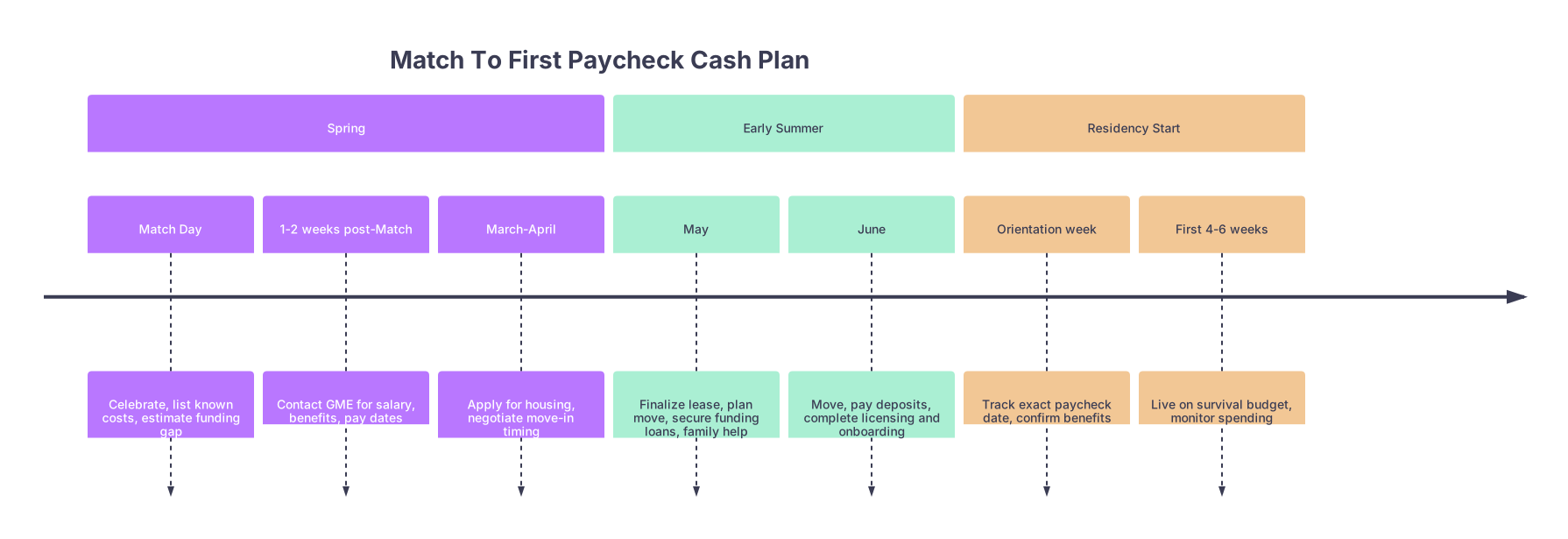
6. Month‑By‑Month Plan: From Match to First Paycheck
Let me lay out a rough timeline. You will adjust for your actual dates.
| Period | Event |
|---|---|
| Spring - Match Day | Celebrate, list known costs, estimate funding gap |
| Spring - 1-2 weeks post-Match | Contact GME for salary, benefits, pay dates |
| Spring - March-April | Apply for housing, negotiate move-in timing |
| Early Summer - May | Finalize lease, plan move, secure funding loans, family help |
| Early Summer - June | Move, pay deposits, complete licensing and onboarding |
| Residency Start - Orientation week | Track exact paycheck date, confirm benefits |
| Residency Start - First 4-6 weeks | Live on survival budget, monitor spending |
Match to 2 weeks after Match
Your goals:
- Rough funding gap number
- Initial contact with GME about:
- Net approximate pay
- Pay schedule (biweekly vs monthly)
- Start date and first paycheck date
Ask specifically:
“On which date did last year’s interns receive their first paycheck?”
2–6 weeks after Match
- Research housing and set a firm max rent number.
- Start a basic spreadsheet of required move‑in + licensing costs with due dates.
- Decide on funding approach:
- Family?
- 0% card?
- Relocation / personal loan?
- Combination?
| Category | Value |
|---|---|
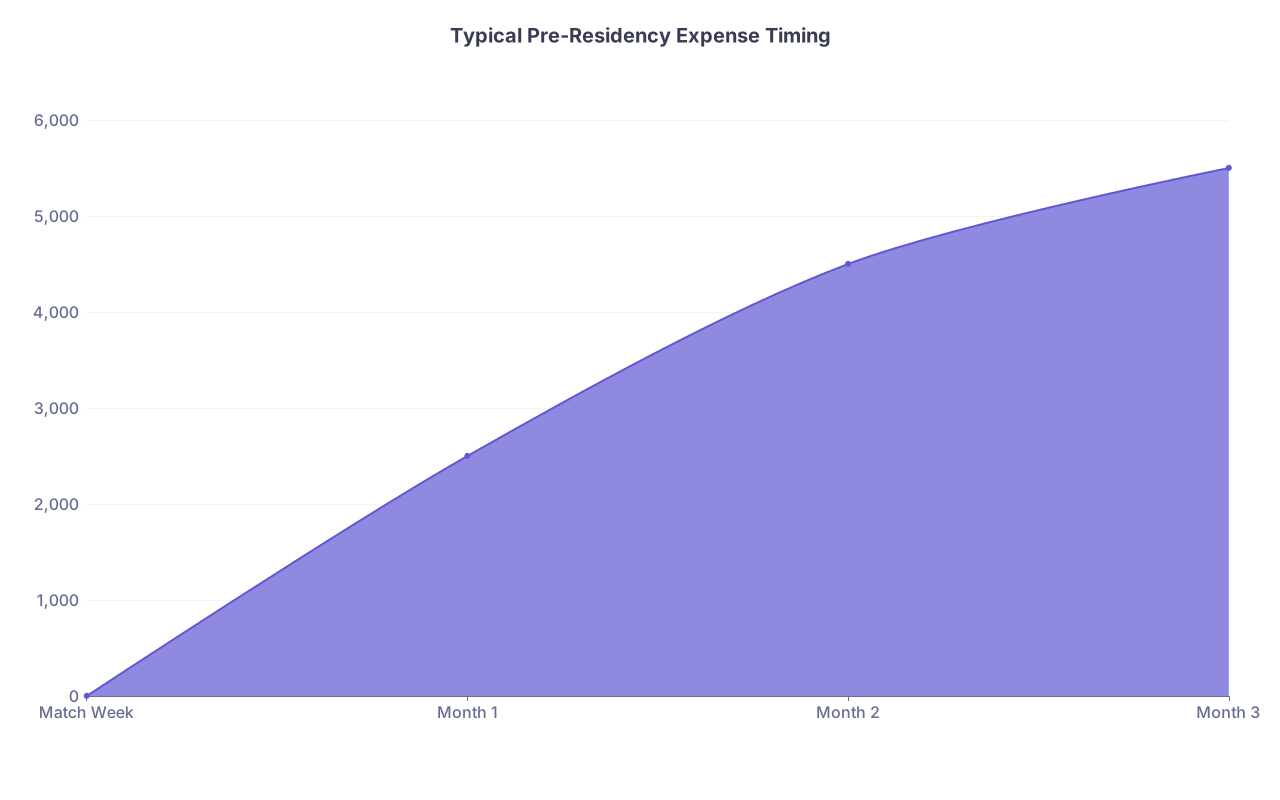
| Match Week | 0 |
| Month 1 | 2500 |
| Month 2 | 4500 |
| Month 3 | 5500 |
1–2 months before start
- Sign lease timed so you move 1–2 weeks before orientation.
- Confirm what your program covers:
- Do they pay for DEA?
- Do they reimburse part of licensing?
- Is there a moving stipend or signing bonus?
- Set up:
- Bank account near your new hospital (or make sure your current one has a good ATM network).
- Direct deposit forms as soon as they are available.
Orientation to first paycheck
This is the danger zone. You are busy, overwhelmed, and everyone wants you to “grab drinks,” “try this place,” “come to this thing.” Decide ahead of time:
- A weekly spending limit for non‑essentials.
- How many social outings you will do per week that cost money (ex: 1 per week, everything else is coffee or home hangouts).
You are not in austerity prison. You are just not lying to yourself that you can live like an attending.
7. Daily and Weekly Systems That Keep You Out of Trouble
You do not need elaborate budgeting software. You need simple systems you can run on 80‑hour weeks.
Daily 2‑minute rule
Once a day, usually before bed, check:
- Bank account balances
- Credit card balances
That is it. No judgments, no spreadsheets. Just visibility. Chaos grows in the dark.
Weekly 15‑minute money reset (pick a fixed day)
On your day off or a slower evening:
- Open your banking app and card accounts.
- Write down:
- Total spent on food this week
- Total spent on transportation
- Total spent on everything else non‑fixed (fun, random Amazon, etc.)
- Compare against your caps:
- If you overspent, decide what you will cut next week (not “I’ll try to be better”).
This is like pre‑rounding on your own finances. Quick, focused, consistent.

Automate what you can
Set automatic payments for:
- Rent
- Utilities (where possible)
- Minimum debt payments
You have enough to remember. Do not rely on memory for due dates during ICU months.
8. Where To Save Without Ruining Your Life
You are allowed to have some quality of life. The game is to buy happiness cheaply, not expensively.
Food
- Batch‑cook 2–3 simple meals per week. Think:
- Sheet pan chicken + vegetables
- Rice cooker meals
- Crockpot chili
- Freeze portions. Those 3 a.m. post‑call meals are where DoorDash drains you.
- Keep high‑protein, cheap snacks at work: peanut butter, nuts, yogurt, hard‑boiled eggs.
One resident I worked with cut takeout from $450/month to $120/month by doing one Sunday cook and keeping $1–2 snacks in their locker. Energy up, costs down.
Transportation
- If possible, choose housing that lets you skip car ownership. Payment + insurance + gas + maintenance adds up fast.
- If you must have a car:
- Shop insurance aggressively—residents often get tagged as “young professionals” and overcharged.
- Carpool when it makes sense.
Scrubs, gear, and “doctor stuff”
- Ask seniors what the hospital actually provides. Many places supply laundered scrubs.
- You do not need a $500 Littmann Cardiology IV as an intern. A decent mid‑range scope is fine.
- Ask graduates if they are selling or giving away furniture, white coats, or other gear before they move.
9. When You Are Already Behind: Digging Out Without Panic
Maybe you are reading this late. You already moved. You already swiped the card more than you planned. Fine. We adjust.
Step 1: Snapshot your current damage
List:
- Credit card balances + interest rates
- Any unpaid bills or late payments
- Cash left in checking/savings
No shame, just data.
Step 2: Prioritize in this order
Stop the bleeding:
- No new non‑essential spending for 2–4 weeks.
- Call any creditors if you are late and set catch‑up plans.
Stabilize essentials:
- Rent, utilities, transport, food.
- Make minimums on all debts. Never skip minimums if you can avoid it.
Plan a slow exit:
- Choose one card or loan with the highest rate.
- Set a fixed extra monthly amount (even $50–100) towards it once things stabilize.
Do not try to “fix everything in three months.” You are an intern. The win is: no new bad debt patterns, small steps in the right direction, and keeping your credit report clean.
| Category | Value |
|---|---|
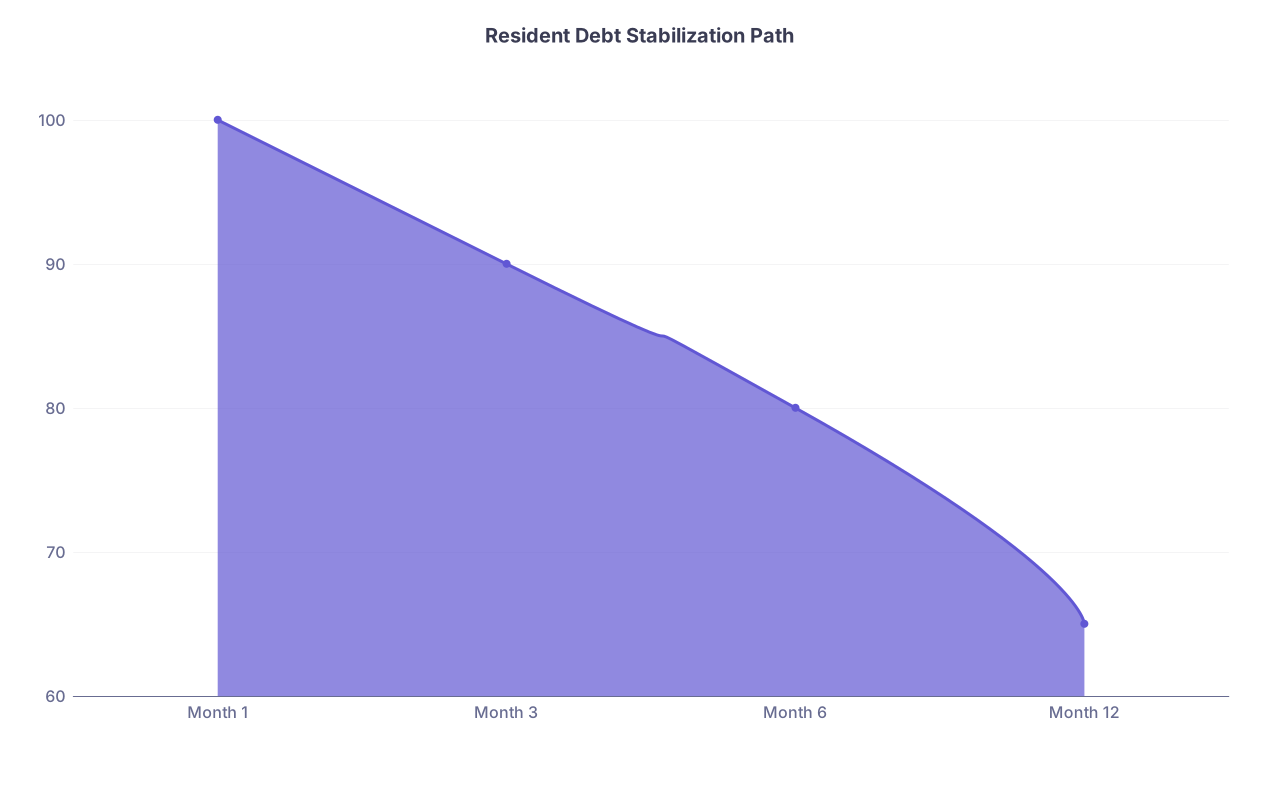
| Month 1 | 100 |
| Month 3 | 90 |
| Month 6 | 80 |
| Month 12 | 65 |
(The numbers here are an index: 100 = peak chaos debt, trending down over a year.)
10. What To Ignore (For Now)
There is a lot of financial noise targeting residents. You do not need to solve everything in PGY‑1.
You can safely postpone:
- Detailed retirement planning
- Aggressive student loan paydown strategies
- Investing in individual stocks or crypto
- Fancy credit card points optimization
Your job this year is simpler:
- Keep a roof you can afford over your head.
- Keep the lights and phone on.
- Eat decently.
- Do not blow up your credit with missed payments or uncontrolled debt.
You can build wealth later. First, survive this transition without financial trauma you did not need.

3 Essential Takeaways
- Residency underfunds you by design. Your job is to quantify your personal funding gap early and attack housing and fixed costs first.
- A survival‑mode budget with strict caps on rent, transport, and food will do more for you than any “perfect” financial plan. Simple systems beat complicated intentions.
- Debt is a tool, not a shame sentence. Use lower‑cost options deliberately for one‑time transition costs, automate minimums, and focus on not creating new financial fires during PGY‑1.