
The most dangerous mistake new residents make is thinking Match Week is the finish line. It is not. It is the starting gun, and the next three and a half months will quietly decide how miserable or manageable your intern year feels.
You want structure. You want a timeline. Good. Let us go in order.
Match Week: Shock, Logistics, First Calls
At this point you should stop refreshing your email and start building a plan. Match Week is not just for celebrating or grieving. It is your first operational week as a future resident.
Match Day – Day 0
Once the envelope is open and the program is real:
Lock in the basics (same day, if possible):
- Take a screenshot/photo of your NRMP result.
- Save the program name, institution, city, and any contact emails listed.
- Start a simple “Residency” folder in your email and a main folder on your computer/drive.
Start your relocation file:
- Create a document titled
Residency Move – [City, State]. - Add:
- Program name and GME office email
- Hospital address
- Potential move window (likely late June)
- Estimated budget ceiling for the move
- Create a document titled
Send one concise email (if needed):
- If your program has not reached out by the end of Match Day:
- Email the program coordinator: brief thank you, confirm you matched, ask when to expect onboarding details.
- If your program has not reached out by the end of Match Day:
Do not send your life story. Coordinators are buried that week.
Match Week – Days 1–7
By the end of Match Week you should have:
Basic contact and initial info from the program:
- Welcome email from GME or program
- Tentative start date (usually July 1)
- Any immediate paperwork portals (MedHub, New Innovations, institution HR)
A realistic decision about staying or moving:
- Are you moving states or commuting?
- Are you driving or flying to your new city?
- Do you need a new car?
Start a running to‑do list with three headings:
- Licensing / Credentials
- Housing / Relocation
- Life Admin (everything else)
You will keep adding to this list for three months.
Late March to April: Paperwork and Licensing or You Will Suffer Later
At this point you should treat paperwork like it is part of your job. Because it is.
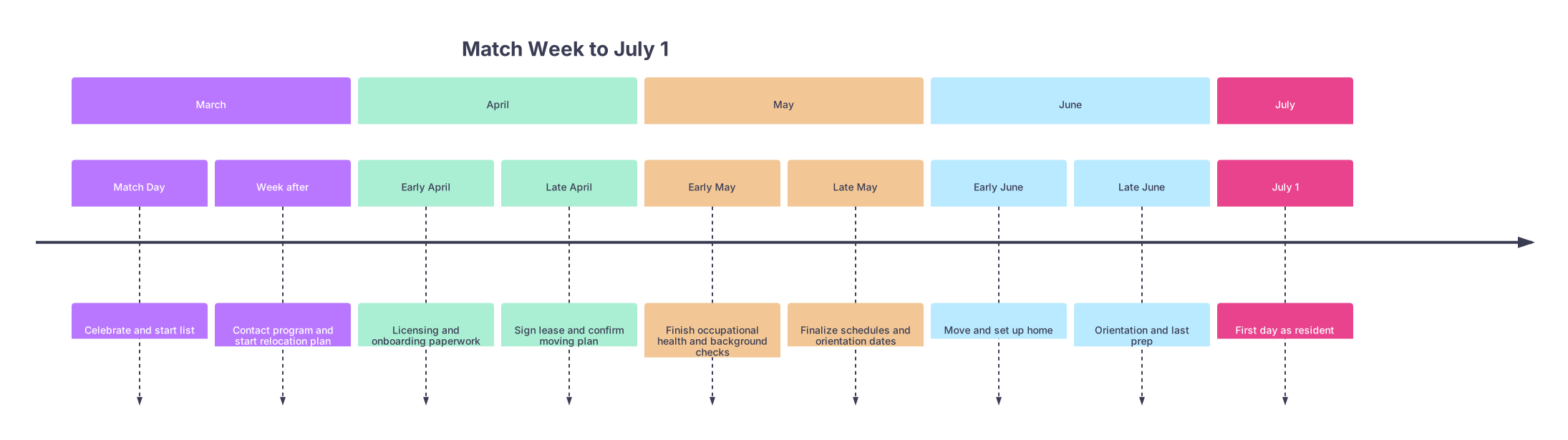
| Period | Event |
|---|---|
| March - Match Day | Celebrate and start list |
| March - Week after | Contact program and start relocation plan |
| April - Early April | Licensing and onboarding paperwork |
| April - Late April | Sign lease and confirm moving plan |
| May - Early May | Finish occupational health and background checks |
| May - Late May | Finalize schedules and orientation dates |
| June - Early June | Move and set up home |
| June - Late June | Orientation and last prep |
| July - July 1 | First day as resident |
Week 1–2 Post‑Match (Late March)
Core focus: start every process that can block your ability to start on time. These move slowly.
State license / training license:
- Some states require a training license; some bundle it with full licensure; some your GME applies for you.
- Your checklist:
- Ask your coordinator: “Do I need to personally apply for any state or training license? Deadline?”
- If yes, start within 48 hours.
- Order official med school transcripts if required.
- Confirm whether they need USMLE/COMLEX transcripts sent directly.
Credentialing and HR:
- Watch your email for:
- Background check forms
- I‑9 employment verification
- Drug screen orders
- Immunization upload portals
- Get a single digital PDF of:
- Passport or driver’s license
- Social Security card or equivalent
- Med school diploma (or letter of completion if you do not have diploma yet)
- USMLE/COMLEX score reports
- Watch your email for:
Immunizations and occupational health:
- You will be asked for:
- MMR, varicella immunity
- Hep B series or titers
- Tdap
- TB testing (PPD/Quantiferon)
- COVID and flu vaccines (depending on season and policy)
- If your records are scattered across clinics, start consolidating now.
- You will be asked for:
-
- If you need J‑1 or H‑1B:
- Reply immediately to any international office or GME email.
- Return every form within 24–48 hours.
- Track deadlines ruthlessly.
- If you need J‑1 or H‑1B:
April: Housing and Concrete Logistics
By the end of April you should have a signed lease or housing plan and all major onboarding tasks at least started. No more vague “I’ll figure it out in June.”
| Area | Specific Task |
|---|---|
| Licensing | Submit training license app |
| HR/Credentialing | Complete background check |
| Occupational | Upload vaccine records |
| Housing | Sign lease or secure arrangement |
| Financial | Estimate moving + setup budget |
Week‑by‑Week for April
Week 1 (early April): Licensing and HR push
- Complete every form in your inbox.
- Schedule drug screen and TB testing within the next 7–10 days.
- If your med school diploma is not ready, confirm with program whether an anticipated graduation letter is acceptable.
Week 2: Housing research and decision
At this point you should be:
- Researching:
- Safe neighborhoods within 15–25 minutes of the hospital
- Parking costs (garage vs street vs hospital)
- Call room vs home distance trade‑offs – for ICU/trauma heavy programs, closer is worth more.
- Talking to:
- Current interns or seniors about where they live.
- Hospital Facebook/WhatsApp/GroupMe housing channels.
Make a firm housing decision by the end of Week 2 unless your move is unusually complicated (e.g., kids, dual‑career partnership).
Week 3–4: Secure and confirm
- Sign lease or confirm:
- Move‑in date (ideally 7–14 days before orientation)
- Deposit and first month’s rent payment date
- Lock in:
- Movers or moving truck
- Travel dates if flying
- If you are shipping a car, schedule now; June slots disappear.
May: Finish Loose Ends Before They Become Emergencies
By May, panic has faded and complacency creeps in. This is when people blow deadlines.
At this point you should assume every slow‑moving process will take twice as long as promised.
Early May (Weeks 1–2)
Goal: 100% of required onboarding tasks submitted and orientation dates on your calendar.
Check your program portal thoroughly:
- Required modules:
- HIPAA
- Compliance / fraud waste abuse
- EMR training (Epic, Cerner, etc.)
- Harassment / professionalism
- Often you can do these from home. Do not wait until June.
- Required modules:
Occupational health completed:
- Attend any in‑person occupational health visit.
- Bring:
- Vaccine records
- TB results
- Any disability/accommodation paperwork if applicable.
Clarify orientation and first‑day structure:
- You should know by now:
- GME orientation dates
- Program‑specific orientation
- When you actually start clinical duties
- Put all of this into a calendar (Google, Outlook, does not matter).
- You should know by now:
Mid May: Financial Setup and Real Life Stuff
This is where people forget they are human beings with bills and bodies.
By mid‑May you should:
- Estimate your first 3 months of expenses:
- Moving costs
- First and last month’s rent + security deposit
- Utility deposits
- Basic furniture and kitchen setup
- Commuting costs (gas, parking, transit pass)
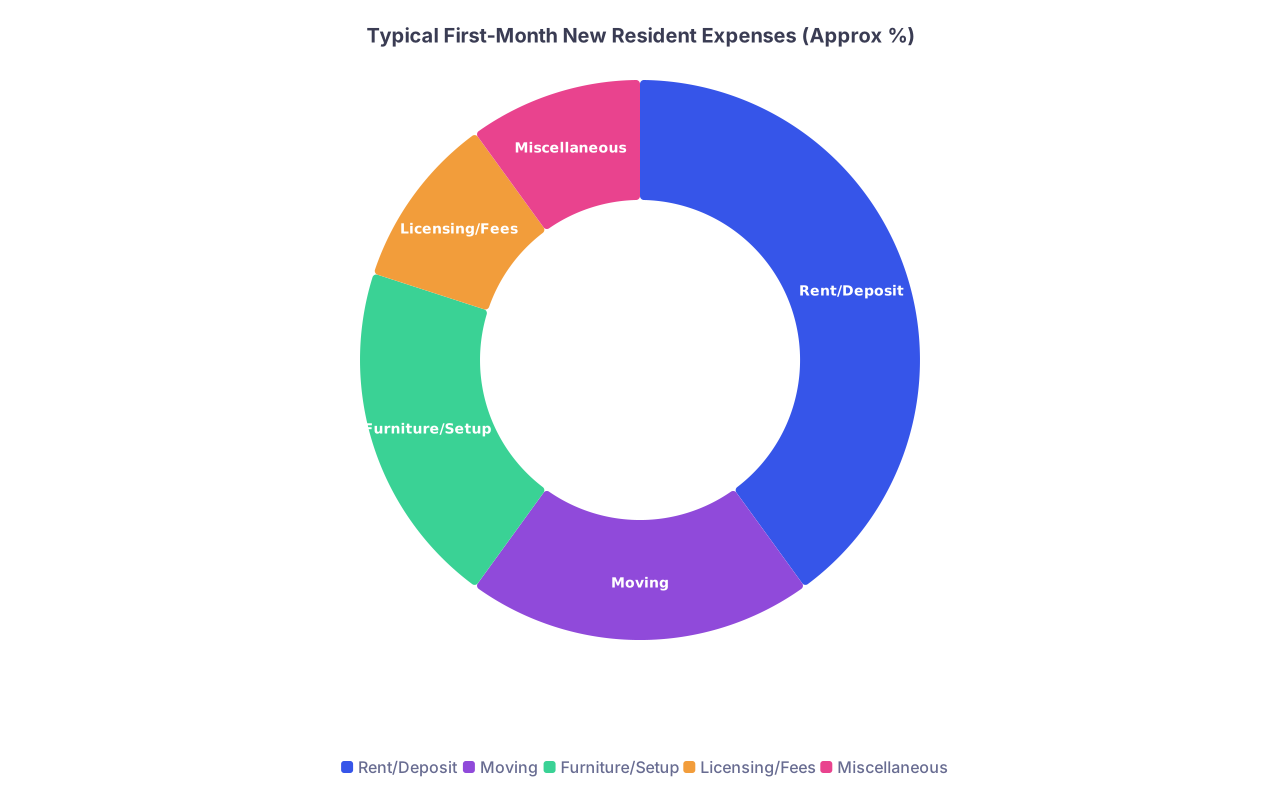
| Category | Value |
|---|---|
| Rent/Deposit | 40 |
| Moving | 20 |
| Furniture/Setup | 20 |
| Licensing/Fees | 10 |
| Miscellaneous | 10 |
Set up or adjust:
- Bank account in your new city (if needed)
- Direct deposit info for your employer (as soon as HR opens it)
- A basic emergency fund if you have not already (even 500–1000 dollars helps)
Insurance and benefits preview:
- Read the benefits packet:
- Health insurance options
- Disability insurance (often underrated but critical for residents)
- Retirement plan and match (even small contributions help)
- Read the benefits packet:
You do not need to become a finance guru. You do need to not be blindsided.
Late May: Program‑Specific Prep
At this point you should stop being generic and start being specialty‑specific.
Know your rotation schedule for July–September:
- Are you starting on wards? ICU? Clinic?
- Nights in the first month or not?
Ask senior residents for focused advice:
- “I am starting on [X rotation] in July. What 1–2 resources or pocket references actually help?”
- That is it. Do not ask for a library. You will not use it.
Order what you will actually carry:
- 1–2 pocket handbooks (e.g., Pocket Medicine, Tarascon, specialty guide)
- A decent stethoscope if yours vanished during med school
- Comfortable shoes for standing 10–14 hours
- Minimal white coats or scrubs if not provided
June: Move, Settle, and Quietly Prepare
By June, the match high is fully gone. Anxiety starts to creep in. That is fine. Use it.
Early June: The Move
At this point you should be in your new city or days away from moving. If you are moving after June 20, you are playing on hard mode.
Move‑in checklist:
Confirm:
- Keys / access codes
- Parking situation day one
- Internet installation date (sooner is better; you will need EMR modules and email)
On Day 1–3 in the new place:
- Set up:
- Bedroom (bed, basic storage)
- Kitchen basics (coffee setup, 3–4 easy meals you can make tired)
- Work corner (desk or table, charging station, whiteboard or notepad)
- Set up:
Ignore decorative perfection. Function first.
Mid June: Admin Cleanup and Hospital Logistics
By mid‑June you should:
Have hospital access plans sorted:
- Badge photo taken or scheduled
- Parking pass arranged (if applicable)
- Know:
- Where you enter the hospital
- Where GME office is
- Where your main resident workroom(s) are
Review EMR access:
- Check that your login works.
- Complete any mandatory EMR modules.
- If your institution offers practice patients or sandbox, spend an hour clicking through:
- Order sets
- Note templates
- Sign‑off workflows
This is boring, yes. It saves you hours of fumbling on day 1.
Late June: Orientation and Mental Recalibration
The last week of June is usually wall‑to‑wall orientation. Use it strategically.
At this point you should shift from “future resident” to “I work here now.”
During orientation:
Take specific notes, not novels:
- Pager number, who to call for:
- Admissions
- Pharmacy
- Radiology
- IT
- Code status process
- Handover expectations
- Who covers nights and how sign‑out works
- Pager number, who to call for:
Build your “who to ask” list:
- One or two chiefs
- A friendly senior who seems organized
- The program coordinator
- At least one co‑intern in your track
This list will save you from flailing at 2 a.m.
The Final 7 Days Before July 1: Daily Checklist
You are almost there. This is where your mindset and small systems matter more than any textbook.
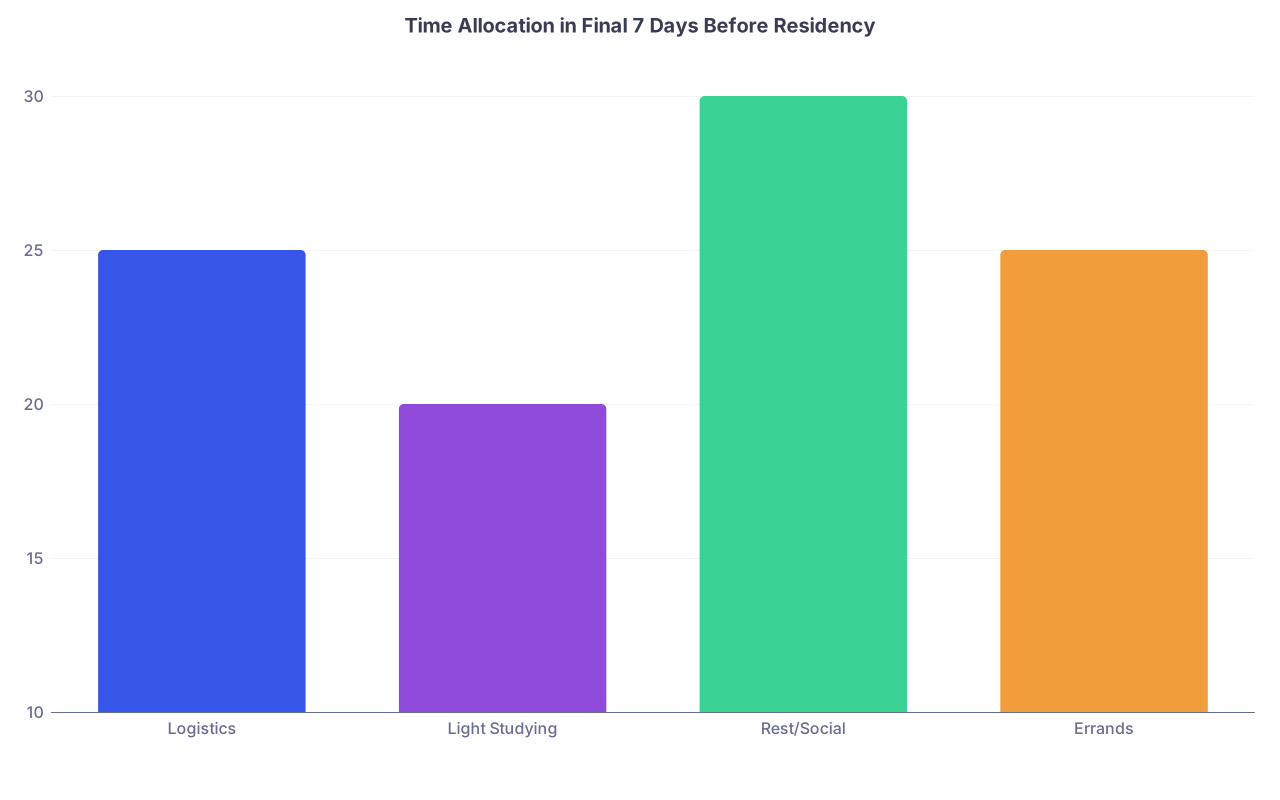
| Category | Value |
|---|---|
| Logistics | 25 |
| Light Studying | 20 |
| Rest/Social | 30 |
| Errands | 25 |
Day −7 to −5: Systems and Environment
At this point you should optimize your life for tired‑you, not ideal‑you.
Set up:
- A spot by the door with:
- Badge (when you get it)
- Keys
- Wallet
- One backup pen
- A small shelf / bag for:
- White coat
- Pocket references
- Stethoscope
- A spot by the door with:
In your kitchen:
- Stock:
- High‑protein snacks
- Coffee/tea
- Easy breakfast options (yogurt, oatmeal, bars)
- Plan 3–4 go‑to dinners you can make or reheat pre‑call and post‑call.
- Stock:
Digital:
- Create a folder on your phone:
- Hospital apps (EMR, secure messaging)
- UpToDate or equivalent
- Calendar
- Add:
- GME, chiefs, program coordinator contacts
- Create a folder on your phone:
Day −4 to −3: Light Clinical Review
You do not need a full‑scale cram. You do need to avoid feeling totally lost.
Pick your specialty and:
Review:
- How to write a basic admission note and daily progress note
- Initial management of:
- Chest pain
- Shortness of breath
- Fever/sepsis
- Altered mental status
- For surgical fields: post‑op orders, fluid management, pain control basics
Build one‑page cheatsheets:
- “Admission orders” template
- “Cross‑cover overnight” common calls and what to ask:
- Pain
- Nausea/vomiting
- Hypertension
- Hypotension
- Low urine output
No 300‑page marathons. Short, usable, and you can glance at it at 3 a.m.
Day −2: Logistics Dry Run
At this point you should remove as many unknowns as you can.
Commute:
- Do a test drive or transit run at the time you will actually commute.
- Find:
- Your entrance
- Parking / bike rack / bus stop
- Where you will get coffee first thing
Clothes:
- Lay out:
- First day outfit (or scrubs if provided)
- White coat if you are wearing one
- Check pockets:
- Pen
- Small notebook or folded paper
- Cheat sheet
- Lay out:
Sleep:
- Start shifting your sleep schedule toward your July 1 wake time.
Day −1: Minimalism and Nerves
The day before, do less than you think.
Confirm:
- Start time
- Location
- Who you report to first (chief, senior, program coordinator)
Prep:
- Simple lunch and snacks
- Enough water or water bottle
- Phone fully charged and a portable battery if you have one
Then stop. No late‑night panicked reading. Go to bed.
July 1: First Day as a Resident
At this point you should accept one thing: you will not feel ready. Nobody does. That is normal.
Morning checklist:
- Arrive 15–20 minutes earlier than you think you need.
- Find:
- Your team
- Your senior resident
- The chief or attending if needed
Through the day:
- Write everything down:
- Login info
- Pager numbers
- Team member names
- Ask short, specific questions:
- “How do you prefer sign‑out structured?”
- “What is your expectation for notes timing?”
When you get home:
- Do a 10‑minute debrief:
- 3 things you did well
- 3 things you want to do differently tomorrow
- Any new numbers or workflows add to your cheat sheet
Then eat, shower, sleep. Repeat.
Key Takeaways
- Treat Match Week to July 1 as a three‑month onboarding project, not a vacation; licensing, housing, and HR all need early, deliberate attention.
- By the end of April you should have your license process started and housing decided; by the end of May, all required onboarding tasks submitted.
- Use June and the final week to stabilize your life systems, practice the commute, and build simple clinical cheatsheets so that on July 1 you can focus on learning, not logistics.