
The worst mistake after Match Day is thinking you can “deal with everything later.” You cannot. Programs move fast, housing disappears, and licensing bottlenecks wreck start dates.
Here’s your March–April, week‑by‑week plan to stay ahead of housing, licensure, and logistics instead of scrambling in June.
Big Picture: What March–April Should Accomplish
By the end of April, you should have:
- A clear housing strategy (lease signed or start date locked in)
- Your state training license application submitted (or final documents in progress)
- HR/onboarding requirements tracked and mostly completed
- A move plan with real dates, not vibes
- A basic financial + benefits setup, especially if you’re moving states
At this point you’re not “thinking about” these things. You’re executing them.
Let’s walk this chronologically, starting Match Week.
Match Week (Mid–March): Confirm, Collect, and Clarify
Match Day (Friday) – 48 Hours After
At this point you should:
Confirm your program communication channels
- Check:
- ERAS email
- Personal email
- Spam folder
- Look for:
- Welcome email
- Onboarding portal link (MedHub, New Innovations, GME portal, etc.)
- Program coordinator contact (gold)
- Check:
Start a central “Residency Logistics” hub I’ve seen this done well as:
- One master Google Sheet or Notion page with:
- Program contact info
- Required documents
- Deadlines
- Status (Not started / In progress / Submitted / Approved)
- Dedicated email label/folder: “Residency – [Hospital Name]”
- A folder (cloud + physical) for:
- Licensure forms
- Immunization records
- Past contracts, transcripts, certificates
- One master Google Sheet or Notion page with:
Clarify your official start date Email or check the welcome packet for:
- GME orientation dates (often late June)
- Program orientation dates
- First official day on payroll
- Any “strongly recommended” early arrival (some surgical prelims love this)
Your move and housing timing will revolve around these dates.
Week 1 After Match: Information First, Decisions Second
At this point you should be gathering information instead of guessing.
1. Get Program and GME Requirements in One Place
Pull every document/portal you have and list out:
- Background check vendor (HireRight, Certiphi, etc.)
- Drug screen requirements and deadline
- State training license vs full license (if you’re in a state requiring one)
- USMLE/COMLEX score report requirements
- Immunization/PPD/TB/flu/COVID documentation
- BLS/ACLS/PALS requirements (and which must be from AHA)
- I‑9/employment verification documents (passport, SS card, etc.)
| Item | Typical Deadline (Post-Match) |
|---|---|
| Background check | 1–3 weeks |
| Drug screen | 1–3 weeks |
| Training license app | 2–6 weeks |
| Immunization records | 2–4 weeks |
| BLS/ACLS | 4–8 weeks |
2. Start Your State Licensing Recon
This is where people get burned.
At this point you should:
- Google:
"[State] medical board resident training license" - Confirm:
- Do they require a resident training license or is a hospital exemption enough?
- Do they require:
- Official medical school transcript?
- Dean’s letter form?
- Fingerprinting (livescan vs ink)?
- Notarized documents?
- Typical processing time (look for real numbers, not fantasy listed on the website)
If your program is in:
California, Texas, Florida, New York, Massachusetts, Pennsylvania
Assume:
- Extra steps
- Longer processing times
- You should start in March, not May
Make a mini checklist just for licensing.
3. Start Housing Research (But Don’t Sign Yet)
You’re not signing anything in the first week unless you already know the city well.
At this point you should:
- Map the hospital and:
- Public transit lines
- Safety by neighborhood (ask current residents—program socials, WhatsApp, GroupMe)
- Average commute times at 6–7 am and 6–7 pm
- Decide your housing priority triangle:
- Short commute vs lower rent vs better neighborhood feel
- Narrow down:
- 2–3 neighborhoods you’d seriously live in
- Basic budget range
Use current residents aggressively here:
- “Where do interns actually live?”
- “Where do the chiefs tell people not to live?”
- “If you were starting again, where would you live?”
Week 2 After Match: Lock in Your Paperwork Timeline
Now you move from research to action.
1. Training License: Start the Application
At this point you should:
- Create your online account with the state board
- Download any paper-only forms
- Make a checklist of required items with source and status:
- From you:
- Application form
- Photo
- Fees
- Exam scores release
- From others:
- Medical school verification (often slow)
- Dean’s letter/Certificate of Graduation
- GME program verification form (program fills a portion)
- From you:
Critical move:
Email your medical school registrar and student affairs dean’s office this week with:
- Subject: “Resident Training License Forms – [State] – [Your Name]”
- Attach board forms and exact instructions
- Ask for:
- Typical processing time
- Whether they batch requests (some only process weekly)
You want your school’s side moving while you handle your side.
2. Background Check & Drug Screen
If the hospital has already sent you links:
- Complete background check immediately
- Schedule drug screen for a time:
- Before you travel (if you’re still away)
- When you’re not dehydrated or post-call from a sub‑I
- Save:
- Confirmation emails
- Any receipts or completion docs
If you haven’t gotten the links, email the coordinator once (politely) and move on. Don’t spam.
3. Begin Serious Housing Shortlist
At this point you should have:
- 5–10 specific housing options saved:
- Apartments
- House shares
- Hospital-affiliated housing (if available)
- A rough move-in goal:
- 1–2 weeks before orientation if far move
- 3–7 days before if staying in same city and know the area well
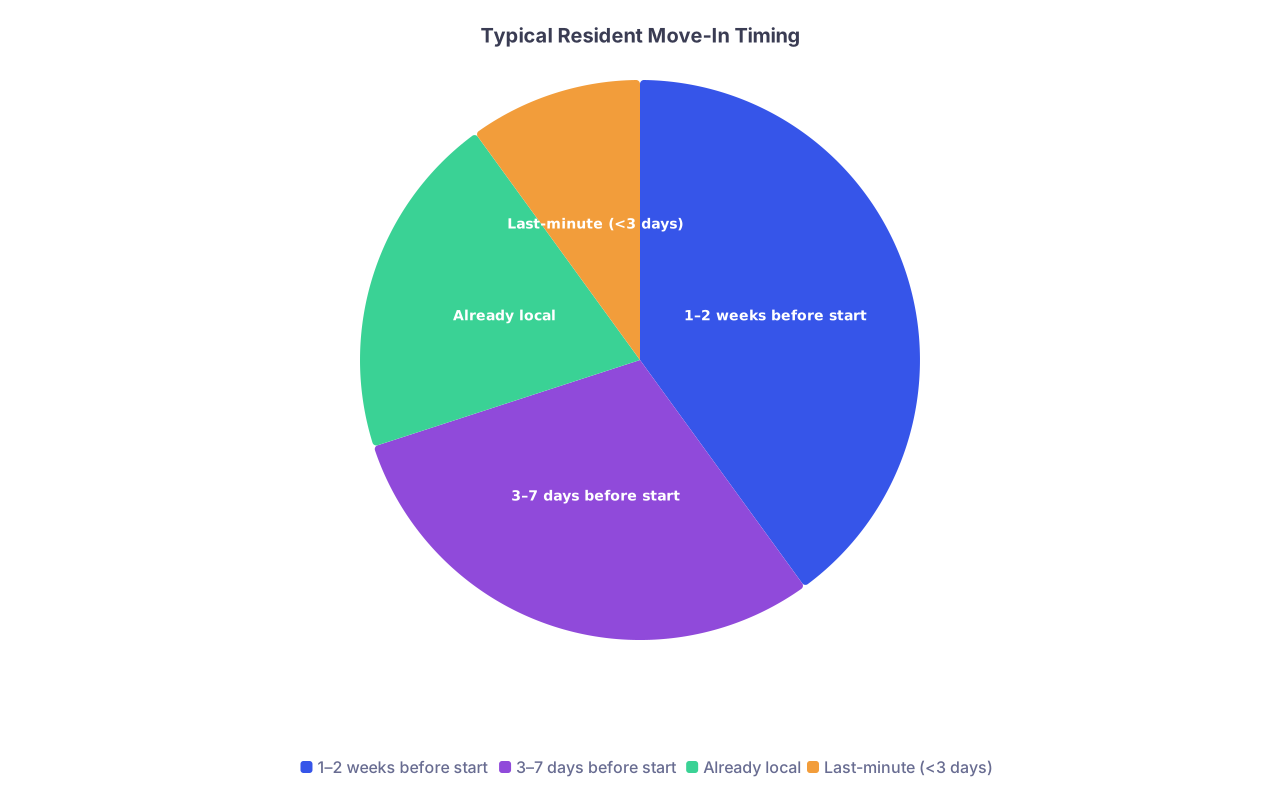
| Category | Value |
|---|---|
| 1–2 weeks before start | 40 |
| 3–7 days before start | 30 |
| Already local | 20 |
| Last-minute (<3 days) | 10 |
Message current residents again, but this time with specifics:
- “Have you or co-residents heard anything about [Building Name]?”
- “Anyone commuting from [Neighborhood]—is call parking a nightmare?”
- “Is street parking realistic for interns on nights?”
Real-world stories beat Google reviews.
Week 3 After Match: Commit to a Housing Strategy
By now you should be moving toward real decisions, not endless scrolling.
1. Decide Your Housing Path
Pick one main path, even if you keep a backup:
Path A: Hospital/University Housing
- Action items:
- Check waitlists and deadlines
- Confirm:
- Lease terms (12 months? Academic year?)
- Included utilities
- Parking (especially nights)
- Apply or accept an offer if it makes sense
- Action items:
Path B: Standard Apartment Lease
- At this point you should:
- Schedule in-person or virtual tours (FaceTime with leasing agent or a trusted friend)
- Ask blunt intern-specific questions:
- Noise levels at night
- 24/7 access
- Package security (you’ll be on nights)
- Proximity to grocery + pharmacy
- At this point you should:
Path C: Short-Term/Sublet First, Decide Later
- Reasonable if:
- You don’t know the city at all
- You want to live with co-residents but haven’t met them
- But:
- Have a clear timeline (e.g., 2–3 month sublet, then revisit in September)
- Reasonable if:
Do not stay in decision limbo past April. Housing inventories drop, prices rise, and your bandwidth shrinks.
2. Start a Budget Reality Check
At this point you should:
- Estimate:
- Monthly gross PGY‑1 salary
- Taxes and typical withholdings (a rough 25–30% is fine for now)
- Loan payments (if not in grace/forbearance)
- Expected rent/utilities range
- Decide:
- Car or no car? (Huge cost and parking consideration)
- Parking budget if needed
- Furniture strategy:
- Basic essentials only vs fully furnished
- Used furniture / Facebook Marketplace vs new
Late March: Licensing, Immunizations, and Certifications
1. Submit or Finalize State Training License Application
At this point you should be:
- Submitting your completed application, payment, and any required documents you control
- Confirming:
- That your medical school has sent its portion (if required)
- That your program has completed any institutional forms
Make a “Licensure Tracking” note:
- Date submitted
- Confirmation number
- Expected processing window
- Who to contact if delayed (and when)
2. Immunization and Occupational Health
Programs will typically require documentation of:
- MMR
- Varicella
- Hep B series + titer
- Tdap
- Flu shot (seasonal requirement)
- COVID vaccine / booster per institutional policy
- TB screening (PPD, Quantiferon, or hospital-specific test)
At this point you should:
- Gather existing records from:
- Undergrad health center
- Medical school health services
- Past employee health records
- Get missing titers or vaccines ordered before you lose easy access to student health.
If something’s missing or incomplete, you want to know in March, not June.
3. BLS/ACLS/PALS Planning
Check your program’s specific requirements:
- Most:
- Require BLS and ACLS (AHA only in many institutions)
- Provide or schedule courses during orientation or
- Expect you to show up already certified
At this point you should:
- Confirm:
- Whether the hospital provides these
- If not, find course dates in May/June near your new city
- Avoid:
- Last-minute online “certifications” that hospitals do not accept
Early April: Lock Down Housing and Move Logistics
Now the clock is real. Decision time.
1. Sign Housing or Lock Short-Term Plan
By early April, at this point you should:
- Sign your lease or
- Commit to a short-term rental (with dates synced to orientation/start)
Before you sign:
- Double-check:
- Start date vs orientation date (ideally give yourself a few days buffer)
- Early termination clauses
- Guest policy (family support during early intern year is common)
- Parking details in writing
If you’re doing a group house/apartment with co-residents:
- Get names on leases clearly
- Decide:
- Who handles utilities
- How you’ll split furniture and move-out responsibilities
2. Build a Realistic Move Timeline
At this point you should:
- Pick a target move window:
- Long-distance: 10–14 days before first orientation event
- Local: 3–7 days before
- Decide:
- Movers vs U‑Haul vs ship + buy used there
- Driving vs flying
- What you’re actually bringing vs selling/donating
Make a simple move checklist:
- Address change (USPS, banks, credit cards, licensing board, etc.)
- Renter’s insurance (often required by landlords and smart anyway)
- Utility setup:
- Electric
- Gas
- Internet
- Water/trash (depending on building)
Mid–April: Clean Up Loose Ends and Confirm Approvals
You’re now in confirmation mode.
1. Check Status: License, Background, Drug Screen
At this point you should:
- Log into the state medical board portal:
- Confirm they’ve marked your application as “complete” or note what’s missing
- If something’s pending from your school:
- Email once, clearly:
- List what’s left
- Include your board ID or application number
- Email once, clearly:
Same with background and drug screen:
- Make sure results show as “received” or “complete” in your GME portal
2. HR and Benefits Pre-Work
By now, many hospitals will open up benefits enrollment or pre-onboarding tasks.
At this point you should:
- Skim benefits options for:
- Health insurance start date (watch the gap with your med school coverage)
- Disability insurance (PGY‑1 is the time to get an individual policy quote)
- Retirement options (403(b), match or no match)
Complete any HR modules they’ve released:
- Code of conduct
- Mandatory trainings (HIPAA, workplace safety, etc.)
- Direct deposit details
It’s tedious. Do it now while you’re not on nights.
3. Transportation Plan
You need a concrete answer to: How are you getting to work?
At this point you should:
- Decide:
- Car:
- Parking permit at hospital
- Street parking realities near home
- Garage vs no garage in winter climates
- Public transit:
- Route options at 5–6 am and at 8–9 pm
- Safety at night
- Bike/Scooter:
- Safe routes
- Locking/storage at hospital and home
- Car:
Late April: Final Pass and Backup Plans
This is the “what’s left?” phase.
1. Do a Full Checklist Review
Create or review a master list that now looks like this:
- Housing
- Lease signed
- Move-in date set
- Utilities arranged
- Renter’s insurance active as of move-in
- Licensure
- Application submitted
- Fee paid
- School forms sent
- Program forms sent
- Board shows “complete” or notes only pending internal review
- HR / Hospital
- Background check complete
- Drug screen complete
- Immunization records uploaded
- BLS/ACLS scheduled or confirmed through hospital
- Direct deposit set
- Move
- Travel booked
- Movers/truck reserved
- Basic furniture plan
- Personal
- Key documents scanned/accessible (ID, passport, SSN card)
- Loan status confirmed (grace period, consolidation, or IDR plan)
- Emergency contact info updated with program if required
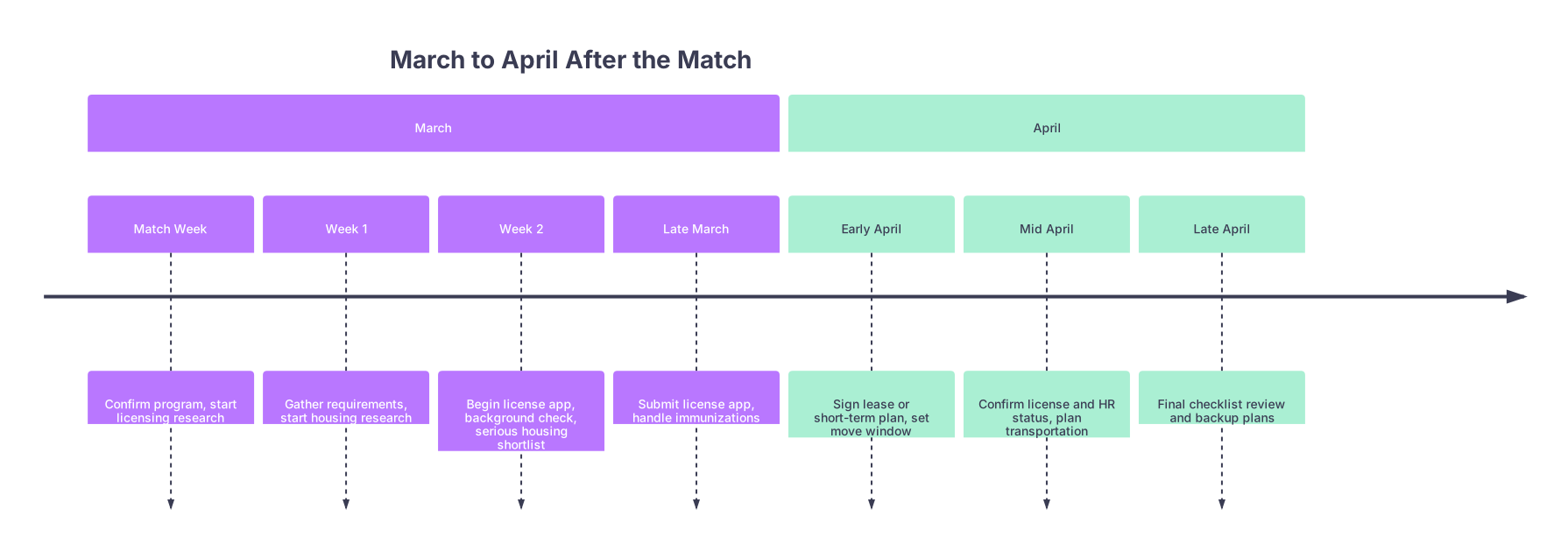
| Period | Event |
|---|---|
| March - Match Week | Confirm program, start licensing research |
| March - Week 1 | Gather requirements, start housing research |
| March - Week 2 | Begin license app, background check, serious housing shortlist |
| March - Late March | Submit license app, handle immunizations |
| April - Early April | Sign lease or short-term plan, set move window |
| April - Mid April | Confirm license and HR status, plan transportation |
| April - Late April | Final checklist review and backup plans |
2. Build Simple Backup Plans
Stuff will go sideways. You should have:
- If licensing is delayed:
- Know:
- Who at GME handles exceptions
- Whether you can start orientation without full approval
- Know:
- If housing falls through:
- Short list of:
- 2–3 extended stay hotels or Airbnb options near the hospital
- Hospital housing office contact
- Short list of:
- If move is disrupted:
- Overnight bag plan:
- 1 week of work clothes
- Scrubs if not provided
- Basic toiletries
- Essential electronics
- Overnight bag plan:
Key Takeaways
- March is for starting licensing and serious information gathering; April is for committing—housing signed, applications submitted, move planned.
- Do the slow, bureaucratic tasks first (licensure, school forms, background checks); save the flexible stuff (furniture, decor) for later.
- By the end of April, you should have no big unknowns about where you’ll live, how you’ll get to work, or whether your license and onboarding are in motion.