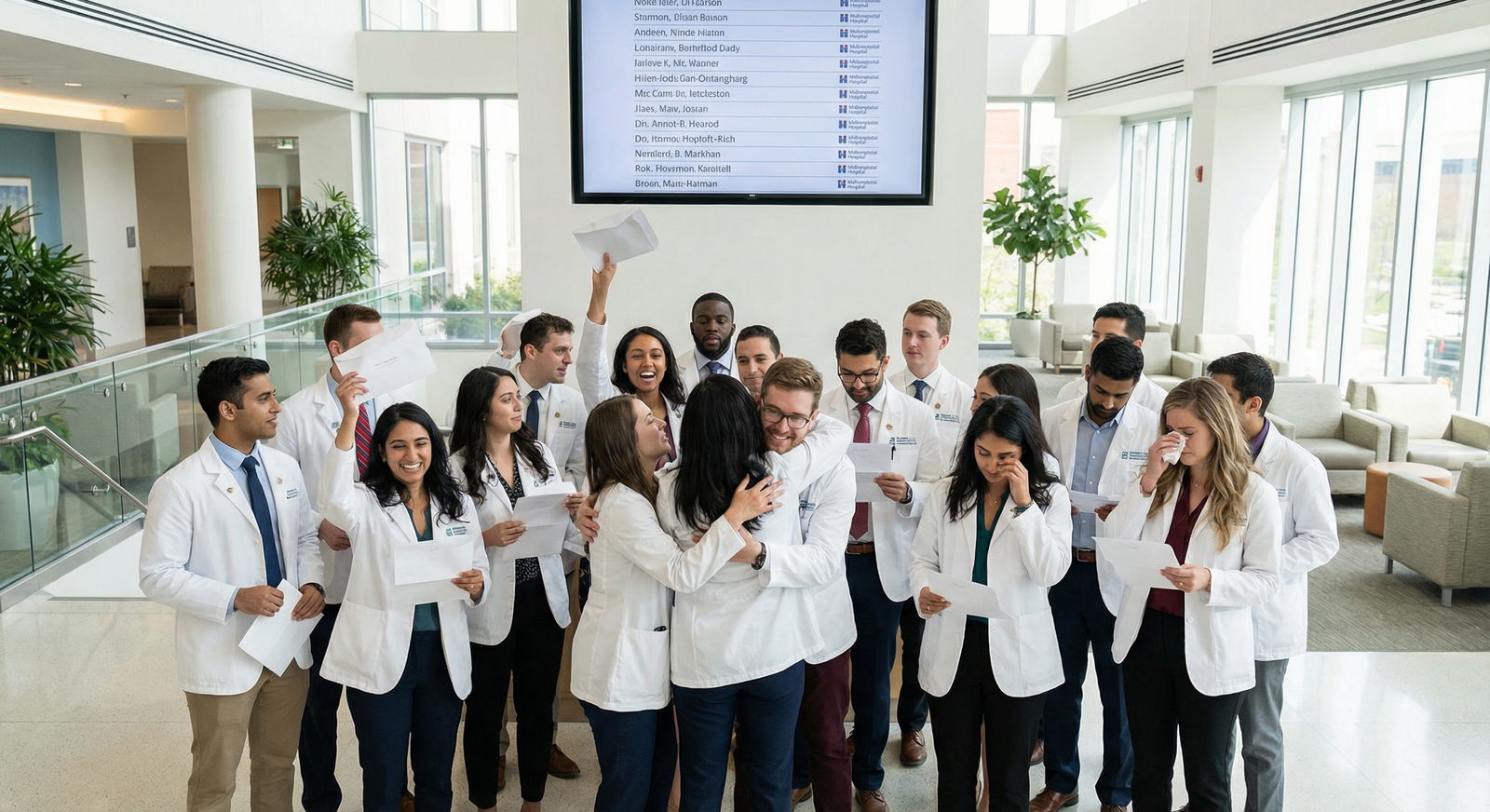
The biggest mistake IMGs make after Match Day is thinking “I’ll sort the visa and license once I know where I’m going.” By the time you think about it, you are already late.
You are now on a clock. Program start dates do not move. Visa, licensure, and credentialing processes move slowly and indifferently. Your job is to stay three steps ahead.
Below is a practical, time-based template: what you should be doing week by week after Match Day to get your visa, license, and hospital credentialing done in time to start on July 1 (or whatever your program’s start date is).
Big-Picture Timeline: Match to Start Date
Assume a standard U.S. start date of July 1 and Match Day around mid-March. Adjust the months if your dates differ; the sequence stays the same.
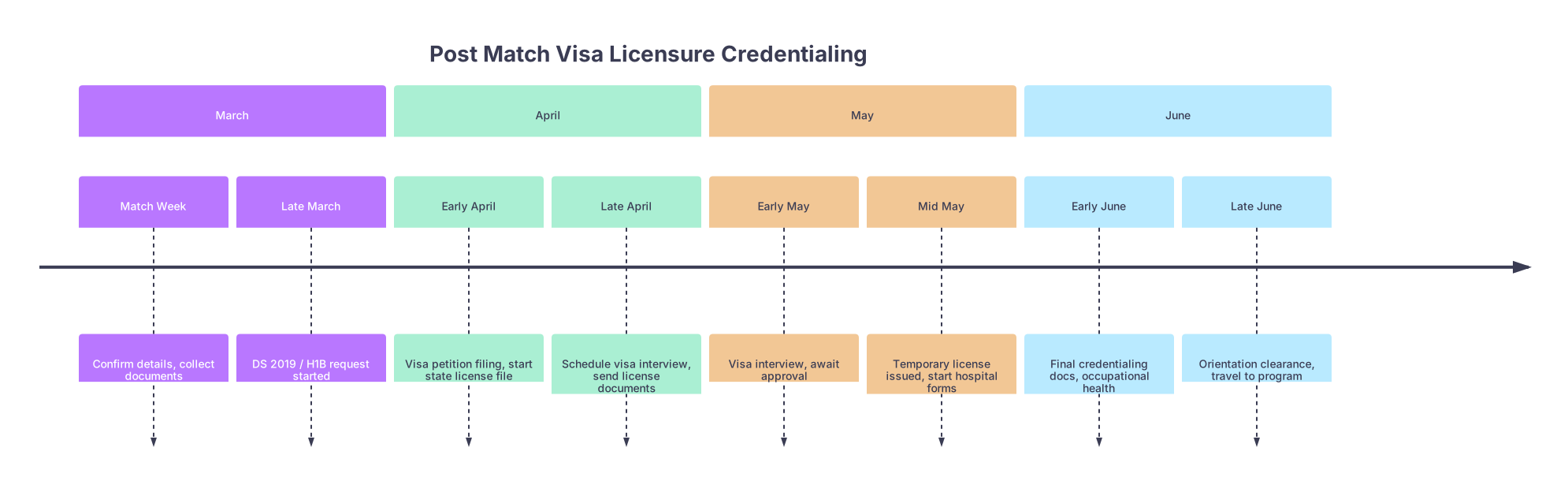
| Period | Event |
|---|---|
| March - Match Week | Confirm details, collect documents |
| March - Late March | DS 2019 / H1B request started |
| April - Early April | Visa petition filing, start state license file |
| April - Late April | Schedule visa interview, send license documents |
| May - Early May | Visa interview, await approval |
| May - Mid May | Temporary license issued, start hospital forms |
| June - Early June | Final credentialing docs, occupational health |
| June - Late June | Orientation clearance, travel to program |
Now let us walk it in detail.
Match Week: Immediate Actions (Days 0–7)
At this point you should stop celebrating long enough to get organized. These first days set the tone.
Day 0–1 (Match Day and next day)
You should:
- Read the official match email from the program line by line
- Log into ERAS / NRMP and save PDFs of:
- Match results letter
- Rank order list (for your records)
- Create a “Residency Start” folder structure on your computer:
- 01_Program_Documents
- 02_Visa
- 03_Licensure
- 04_Credentialing
- 05_Travel_and_Housing
Day 1–3: Contact and confirmation
You should:
- Reply to your program’s welcome email promptly
- Confirm: name spelling, start date, position (PGY-1, prelim, etc.), track (categorical vs prelim)
- Ask one very specific question:
“Will I be on a J-1 or H-1B, and who is my main contact for visa processing?” - Save the contact info for:
- GME office
- Program coordinator
- Institutional visa office or international services
If they do not mention visa type clearly, push for clarity. Vague answers like “we usually do J-1” are not enough. You need a clear statement.
Day 2–5: Document gathering
Start building your master document set. You will use the same core items for visa, licensure, and credentialing:
- Passport:
- Biographic page, plus any renewal pages
- Make sure it will be valid at least 6 months beyond start date
- Medical school diploma (and certified translation if not in English)
- Medical school transcript
- Dean’s letter / MSPE (you likely already uploaded this to ERAS – get your own copy)
- ECFMG certificate (if already issued) or ECFMG ID and status
- USMLE score reports (all Steps / COMLEX if applicable)
- Previous visa documents (I-20s, DS-2019s, I-797 approvals) if you studied or worked in the U.S. before
- Updated CV in US format
- Copies of any current state licenses or training licenses (if you are re-entering residency or transferring)
Scan everything as high quality PDFs, labeled clearly:
Lastname_Firstname_Passport.pdf, Lastname_Firstname_Diploma.pdf, etc.
Late March: Visa Strategy + ECFMG / State Board Reality Check
Week 2: Decide and lock in visa path (or confirm it)
At this point you should have either:
- A program that sponsors J-1 only (most common for IMGs), or
- A program willing to sponsor H-1B (usually requires all Steps including Step 3 passed).
You should:
- Confirm with the program:
- Visa type (J-1 vs H-1B)
- Who generates paperwork (program vs institutional office vs ECFMG)
- Target date for having immigration documents ready
For J-1, understand:
- ECFMG is your J-1 sponsor, not the hospital
- You need a Statement of Need from your home country
- There are hard deadlines for application packages
For H-1B, understand:
- You must have all USMLE Steps passed (including Step 3) before filing in most states/programs
- Many state medical boards require a license or training license before H-1B filing
- Timing can get tight and ugly if you start late
Reality check tasks
You should, this week:
- Log into your ECFMG OASIS / EPIC account:
- Verify your contact info and mailing address
- Check your certification status
- Look up your state medical board:
- Search “StateName medical board residency training license requirements”
- Download their resident or training license instructions
- Note:
- Whether ECFMG certification is required before filing
- Whether they want primary-source verification via ECFMG or directly
- Typical processing times
Early April: Start the Visa File and State License File
You are now in the “applications in parallel” phase.
Week 3–4: J-1 vs H-1B concrete steps
| Item | J-1 (via ECFMG) | H-1B (via employer/attorney) |
|---|---|---|
| Main sponsor | ECFMG | Hospital / University |
| Exam requirement | USMLE 1 + 2 (and often 2 CS old) | USMLE 1 + 2 + 3 |
| Key form | DS-2019 request via ECFMG | I-129 petition |
| Country document | Statement of Need | Sometimes home-country letter helpful |
| Typical earliest start | 3–6 weeks after file completion | 2–3 months after complete petition |
If J-1
At this point you should:
- Get the Statement of Need instructions from ECFMG
- Visit your home country embassy or Ministry of Health website:
- Each country has its own process (mail, in-person, online)
- Request:
- Statement of Need for that specific specialty (e.g., Internal Medicine, Pediatrics)
- Use exactly the language ECFMG wants
Start the J-1 sponsorship application through ECFMG with:
- Appointment / contract letter from program
- Proof of graduation
- ECFMG certificate or status
- CV
- Financial support documentation (usually covered by your contract)
You do not need every single document to open the case. Start the case, then feed documents in as you get them.
If H-1B
At this point you should:
- Confirm with program who the immigration attorney is
- Ask for a clear list of what they need from you within the next 2 weeks:
- Passport
- Diplomas / transcripts
- USMLE steps (include Step 3)
- Previous visa history
- Any dependents’ documents (spouse, children)
Ask bluntly:
“Will you file in regular or premium processing, and what is your expected filing date?”
If they say “We’re not sure yet,” you are already behind. Push them (politely) to set internal deadlines.
Mid–Late April: State Licensure – The Slow Beast
Too many residents—U.S. and international—treat the state training license as an afterthought. I have seen programs hold interns out of orientation for one missing verification.
Week 5–6: Start state license / training permit
You should now:
- Open your state medical board application:
- Create an online account
- Start filling out all demographic and training information
- Request:
- Medical school verification sent directly to the board (or via ECFMG, depending on state)
- USMLE transcript sent to the board
- ECFMG certification verification (often board-to-ECFMG form)
Typical items boards ask for:
- Application form (online or PDF)
- Photo, ID copies
- Fingerprinting / background check
- Proof of residency training contract
- Foreign education verification (through ECFMG or directly)
At this point you should send out every request that depends on third parties:
- Dean’s office for primary verification
- ECFMG for certification verification
- FSMB for USMLE transcript
Then track them. Do not assume any of these institutions care about your July 1 deadline. They do not.
Early May: Visa Interview Preparation and Document Chase
By now, if things are on track:
- J-1 applicants: DS-2019 is either issued or imminent
- H-1B applicants: Petition filed or at least ready to file
- License: Application submitted, verifications requested
Week 7–8: Schedule visa interview (if abroad)
Once you have:
- DS-2019 (for J-1) or
- I-797 receipt or approval (for H-1B)
You should:
- Book your U.S. consulate appointment immediately:
- Go to the consulate website for your country
- Check appointment wait times
- Grab the earliest reasonable date (aim for May or early June)
Visa interview prep checklist:
- Valid passport
- DS-160 confirmation page
- DS-2019 (J-1) or I-797 approval notice (H-1B)
- Program contract / offer letter
- Proof of ties to home country (for J-1):
- Family, job offers back home, property ownership, etc.
- Any previous U.S. visa denials or issues summarized with documentation
If you are already in the U.S. and doing a change of status, you will obsess over USCIS case status instead of consulate appointments. Fine. Same rule: check it weekly, not hourly.
Mid–Late May: Hospital Credentialing and Onboarding
This is the third pillar people underestimate. Visa gets you into the country. License gets you legal permission to practice. Credentialing gets you into the hospital systems.
Week 9–10: Program / hospital paperwork blitz
At this point you should be receiving waves of forms from:
- GME office
- Occupational health / employee health
- HR / payroll
- Hospital medical staff office (if they credential at resident level)
You should:
- Block 2–3 days to sit down and complete everything:
- I-9 and HR forms
- Direct deposit, tax forms
- Immunization history and titers
- TB screening, mask fit documentation
- Drug screen consent
- HIPAA and compliance training modules
- Malpractice coverage acknowledgments
Do not cherry-pick the easy ones and “come back later” to the annoying occupational health pieces. Those are exactly the ones that delay your clinical clearance.
Credentialing specifics
Typical documentation they want:
- State training license or proof of application
- ECFMG certificate
- USMLE transcripts
- Reference letters / dean’s letter (again)
- Explanation for any gaps in training or education
If you had any prior professional issues (academic probation, professionalism letters, visa lapses), prepare concise, factual written explanations now. Do not improvise under pressure when someone emails you “We need an explanation by end of day.”
June: Clean-Up Phase and Risk Management
By June 1, in a well-run case, you should:
- Have your visa approved or change of status approval in hand
- Have your state training license issued or at least “pending final processing”
- Be cleared or nearly cleared by occupational health and HR
Of course, not every case is well-run. So let us organize the last month.
Week 11–12: Confirm status of all three pillars
Create a simple status table for yourself:
| Item | Status Example | Contact Person |
|---|---|---|
| Visa | Approved / Pending / Filed | Visa office / attorney |
| State License | Issued / Pending / Missing | State board analyst name |
| Hospital Clearance | Cleared / Missing immunization | GME coordinator |
You should:
- Email your program coordinator a single, concise summary:
- Visa: current status and expected timeline
- License: application date and any outstanding items
- Credentialing: any modules or tests you still need to complete
Ask one specific question:
“Are there any items on your side that are still waiting on me?”
Week 12–13: Backup planning if something is delayed
If visa is delayed:
- Confirm with program whether remote orientation is possible while you wait
- Ask the visa office or embassy:
- Whether expedited processing is available
- Whether you need to submit additional documents
- Prepare a plan B travel date that still gets you there by the first clinical day, even if you miss day one of orientation
If state license is delayed:
- Call (not just email) the state board
- Ask:
- Whether all documents have been received
- Whether any items are missing or unclear
- Whether they can flag your file as “priority – residency start July 1”
- Loop in your program director or coordinator; sometimes a letter from GME helps push the board slightly.
If credentialing is delayed:
- Complete every outstanding form the same day you learn about it
- Schedule any missing tests (TB, drug screen, mask fit) within 48 hours
- Ask:
- “What specific item prevents me from being cleared for orientation?”
- Then solve exactly that.
Final 7–10 Days Before Moving
At this point you should be tying off loose ends, not starting new processes.
You should:
- Print hard copies of:
- Visa approval / DS-2019 / I-797
- Program contract
- State license or confirmation email
- ECFMG certificate
- Back up all PDFs to a cloud service plus a USB stick in your carry-on
- Confirm:
- Housing (temporary or permanent)
- Start date, time, and location of first orientation session
- Whether you must bring original documents to GME on day one
If you are crossing borders:
- Plan to arrive in the U.S. at least 7–10 days before your start date
- Do not cut it closer unless you enjoy standing in the airport trying to explain to a CBP officer why your flight was yesterday.
Visual Snapshot: Where Your Energy Goes Each Month
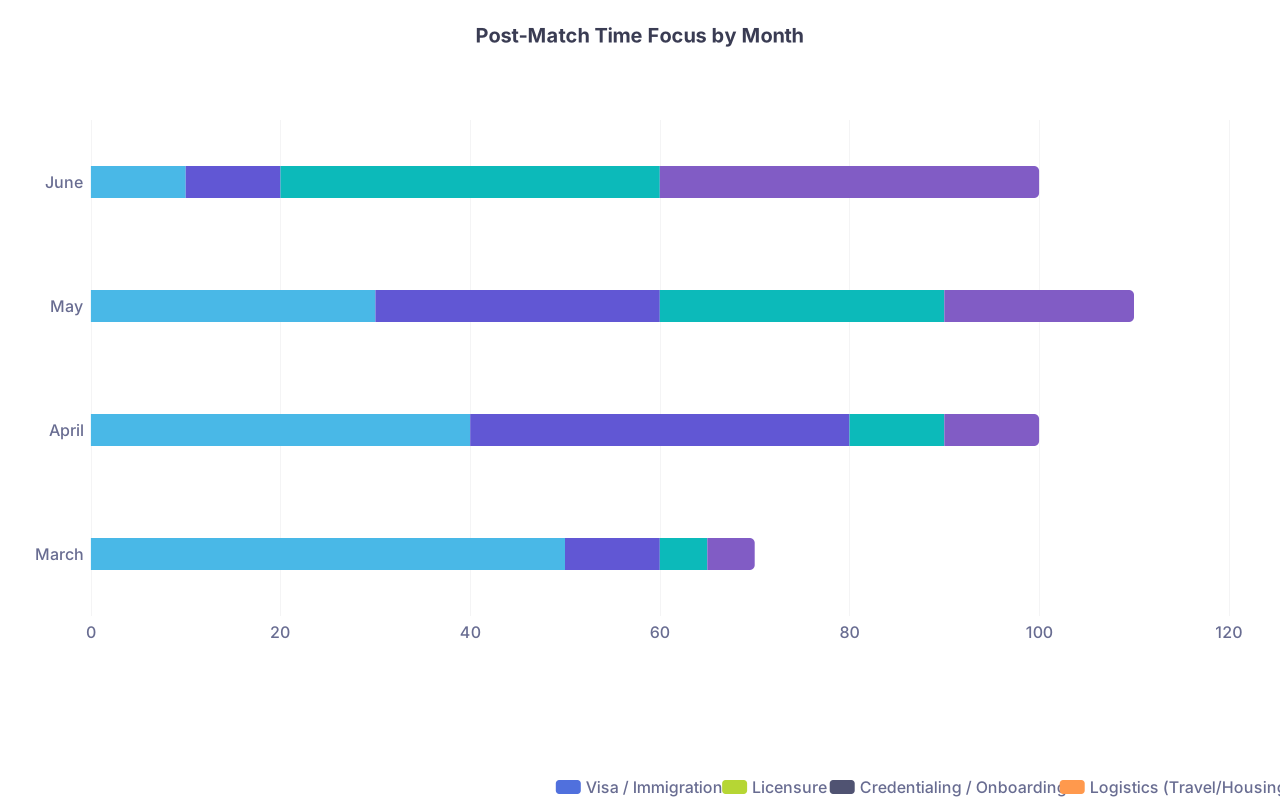
| Category | Visa / Immigration | Licensure | Credentialing / Onboarding | Logistics (Travel/Housing) |
|---|---|---|---|---|
| March | 50 | 10 | 5 | 5 |
| April | 40 | 40 | 10 | 10 |
| May | 30 | 30 | 30 | 20 |
| June | 10 | 10 | 40 | 40 |
A Minimal Week-by-Week Checklist
Here is the same plan collapsed to the essentials.
Match Week (Week 1)
- Confirm program details and visa type
- Gather all core documents and scan them
Weeks 2–3 (Late March)
- Open J-1 or H-1B case with sponsor / attorney
- Pull state board instructions, map requirements
Weeks 4–5 (Early–Mid April)
- File state training license application
- Request all verifications (school, ECFMG, USMLE)
Weeks 6–7 (Late April–Early May)
- Receive DS-2019 or I-797 receipt/approval
- Schedule visa interview or track change of status
Weeks 8–9 (Mid May)
- Attend visa interview (if applicable)
- Start hospital / GME onboarding packet
Weeks 10–11 (Late May–Early June)
- Complete occupational health, HR, and training modules
- Confirm license status; chase any missing documents
Weeks 12–13 (Mid–Late June)
- Verify all three pillars: visa, license, credentialing
- Finalize travel, housing, and orientation details
Core Principles to Remember
- Start everything earlier than feels comfortable. Visa, licensure, and credentialing all stall on other people’s desks. Your only leverage is time.
- Treat visa, license, and credentialing as three separate projects. Each has its own gatekeepers and timelines. One being on track does not rescue the others.
- Communicate in short, precise updates. Programs respond faster to “I submitted my license application on April 12; the board says they are waiting only for ECFMG verification—can you help escalate?” than to “I am worried about my license.”
Follow this sequence, week by week, and you dramatically reduce the odds of the nightmare scenario: you matched…but cannot start.