
The biggest threat to your residency start date often isn’t your Step scores or rank list. It’s paperwork you thought was “just administrative.”
If you screw up your visa or credentialing, programs will delay your start date. Some will rescind your contract. I’ve seen residents lose entire years over mistakes that were 100% preventable.
Let me be blunt:
If you treat visa and credentialing as last‑minute chores, you’re already behind.
This is the side of Match nobody glamorizes. No Instagram posts. Just frantic emails to GME, phone calls to ECFMG, and panicked searches for “what happens if my visa isn’t ready by July 1?” Don’t be that person.
Below are the biggest traps that derail start dates—and how to stay out of them.
1. Assuming “The Program Will Handle My Visa”
This is the most common and the most expensive mistake.
You match, get the congratulatory email, and someone from GME writes, “We sponsor J‑1 visas.” You exhale and assume they’ll do the rest.
They won’t.
Let me translate what that email usually means in reality:
- They’ll sponsor the visa.
- They will not:
- chase you for documents
- fix timing mistakes
- argue with consulates
- remind you that your passport expires too soon
- magically create an appointment at a backed‑up embassy
You’re responsible for making your own file bulletproof.
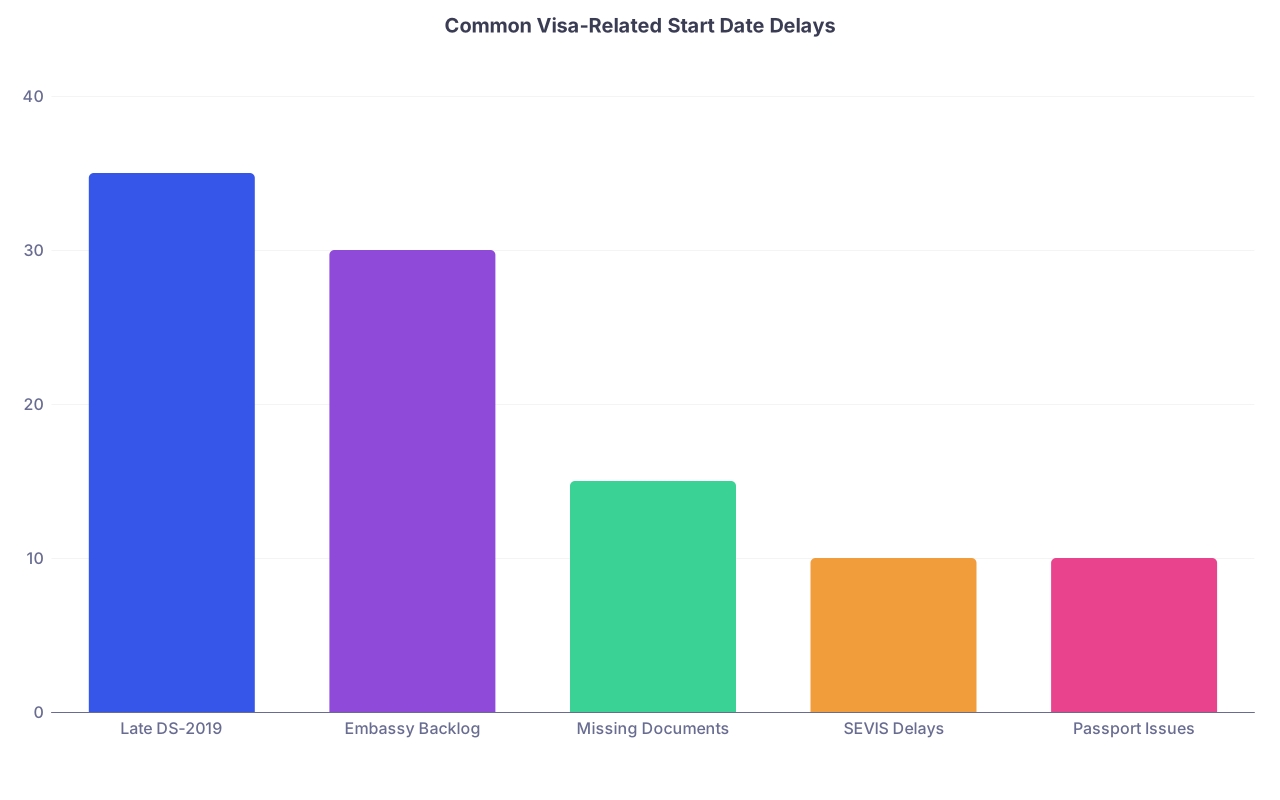
| Category | Value |
|---|---|
| Late DS-2019 | 35 |
| Embassy Backlog | 30 |
| Missing Documents | 15 |
| SEVIS Delays | 10 |
| Passport Issues | 10 |
Classic ways people screw this up:
- Waiting until May or June to send documents to GME
- Not reading ECFMG or program emails fully (“I thought that attachment was just an FYI…”)
- Assuming embassy appointments will be available “like last time”
- Ignoring passport validity rules (often needs to extend well past training start)
How to avoid this:
Right after Match Day, ask one direct question:
“What are the exact steps and deadlines for my visa processing, and when do you need each document from me?”
Not “what do I need?”
“What by when?” is the real question.Create your own deadline that’s earlier than theirs.
If GME says, “We’d like everything by May 1,” your personal deadline is April 1. People who cut it close are the ones who burn.Keep everything in one organized folder (physical or digital):
- Passport
- ECFMG certificate or expected date
- Medical school diploma and translations
- USMLE transcripts
- Previous visas / I‑20 / DS‑2019 (if any)
Painful truth: You’ll likely need to push your own case forward.
Polite, frequent, documented follow‑ups. Every week if timelines are tight.
2. Misunderstanding J‑1 vs H‑1B… and Choosing Wrong for Your Situation
Too many IMGs treat visa type like a formality. “They said they sponsor J‑1, so I’ll just do J‑1.” That might be fine. Or it might destroy your fellowship or long‑term plans.
You can absolutely delay or lose a start date by:
- Trying to switch visa category too late
- Applying for a visa type your program doesn’t truly support
- Not meeting H‑1B requirements but assuming it’ll “work out”
| Factor | J-1 (ECFMG) | H-1B (Employment Visa) |
|---|---|---|
| Who sponsors? | ECFMG | Hospital/program |
| USMLE Step 3 needed? | No | Usually Yes before filing |
| Timing risk | Consulate + SEVIS | USCIS processing |
| Bureaucracy load | Shared with ECFMG | Heavy on GME/legal |
| 2-year home rule | Yes (usually) | No |
Common mistake patterns:
- Deciding in April or May to “switch to H‑1B” for fellowship plans. Too late.
- Assuming Step 3 “after I start residency” is fine for H‑1B. It isn’t. Programs often require Step 3 before they can file.
- Counting on premium processing when the hospital refuses to pay for it—or can’t, by policy.
How to avoid this:
During interviews or right after rank list certification, you should already know:
- Does this program actually sponsor H‑1B? (Not just “we have one H‑1B resident from 2017”)
- What are their exact Step 3 requirements and deadlines?
- Who pays filing and premium fees?
If you’re going for H‑1B:
- Schedule Step 3 as early as humanly possible. Many residents crash here by failing Step 3 late and losing the H‑1B option.
- Get Step 3 results in hand before your program needs to submit the petition.
Switching late from H‑1B hopes to J‑1 reality costs time. And time is the only thing you don’t have between March and July.
3. Underestimating Embassy Delays and Security Checks
This part gets people every single year.
You finally get your DS‑2019 or H‑1B approval. You feel safe. Then the consulate sits on your application for “administrative processing” or your country’s embassy is booking interviews two months out.
That’s how start dates die.
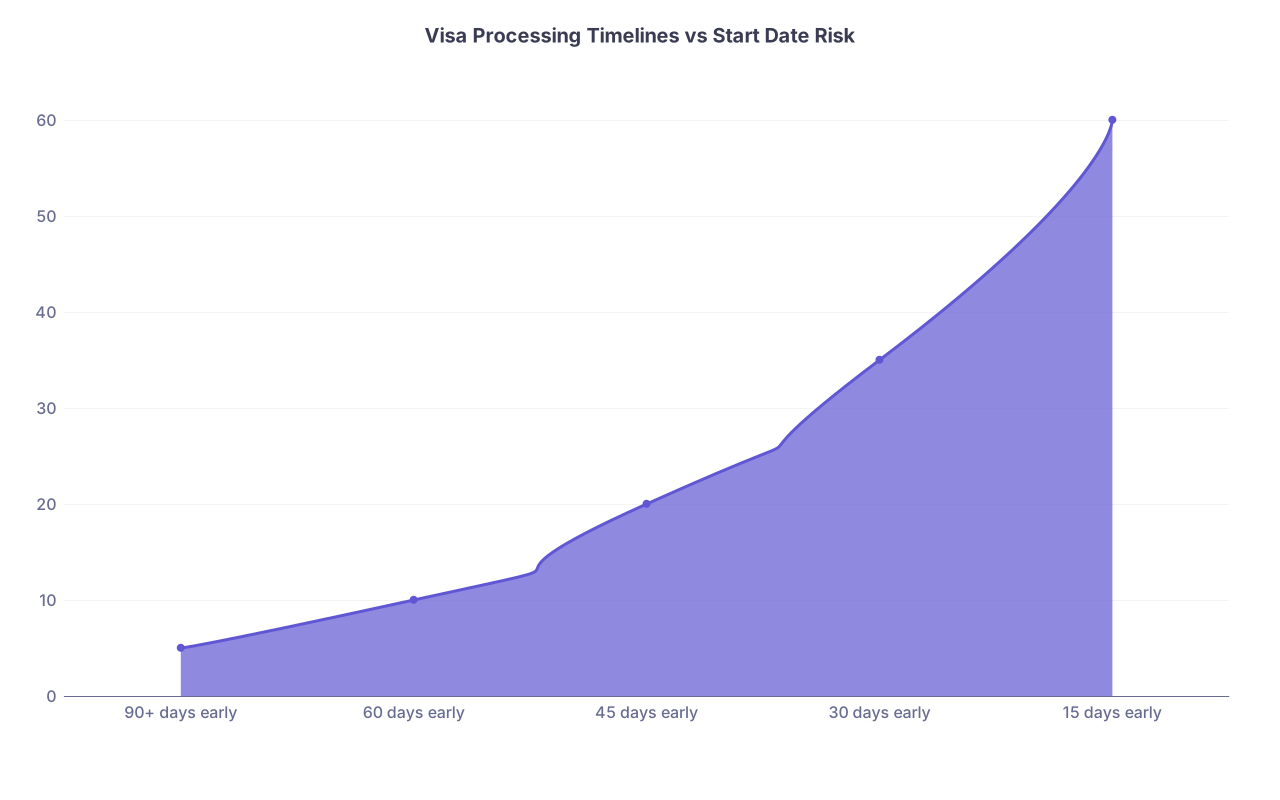
| Category | Value |
|---|---|
| 90+ days early | 5 |
| 60 days early | 10 |
| 45 days early | 20 |
| 30 days early | 35 |
| 15 days early | 60 |
(Values represent rough risk of start date delay in % — the later you cut it, the uglier it gets.)
Big errors:
- Waiting for “all documents to be perfect” before booking an interview slot
- Not checking current wait times on the embassy website
- Assuming your country is “fast” because it was 3 years ago
- Flying to another country for interview without clearing that with the program/ECFMG or checking their rules
How to avoid this:
The day your SEVIS record or H‑1B approval is ready, you treat visa appointment booking as urgent—not optional.
Routinely check:
- US embassy appointment wait times
- Any special local restrictions or seasonal backlogs
Ask your program and ECFMG:
- “Given current embassy wait times for [city], when do you recommend I have my interview by to safely start July 1?”
- “If significant delays occur, what is your policy on delayed start?” (You don’t want to find out after it happens.)
Programs will often tolerate a delay of a week or two. Beyond that, they start calculating service needs, scheduling gaps, and sometimes HR won’t let them onboard you mid‑cycle.
4. Ignoring ECFMG and Credentialing Timelines
This mistake is brutal because it feels like “someone else’s system.” ECFMG, state boards, ERAS, HR. None of that feels like your job.
It is.
I’ve seen residents sitting in apartments near their hospital on July 1, not allowed to touch a patient because of one missing box on ECFMG or a delayed primary source verification.

Things that routinely delay credentialing:
ECFMG certificate not yet issued because:
- Final medical diploma not received or verified
- Name mismatch between passport, diploma, and exam records
- Incomplete verification from your med school
Program’s HR requirements not done on time:
- Background checks
- Drug screen
- Occupational health clearance (vaccines, titers, TB testing)
- Online onboarding modules
State training license (or limited permit) delayed because:
- Application submitted late
- Missing notarizations, photos, or signatures
- Your med school is slow to respond to verification requests
- You assumed “the program will handle it,” and they assumed you would
5. State Licensure and Training Permits: The Silent Start-Date Killer
Some states require even PGY‑1 residents to have a training license. Others don’t. Some boards are efficient. Others move at glacial speed.
The residents who get burned are the ones who never asked how their state works.
| State Type | Licensing Requirement for PGY-1 | Risk if Started Late |
|---|---|---|
| No license needed PGY-1 | None | Low |
| Training license required | Yes, separate app | Medium–High |
| Full license required PGY-1 | Yes (rare) | Very High |
Mistakes I see over and over:
- Submitting state license application in May or June for a July start
- Mailing paper documents internationally without tracking
- Ignoring board emails asking for clarification
- Not understanding that some boards only meet monthly to approve trainees
How to avoid this:
- Ask your program coordinator, in writing, by early April:
- “Do I need a training license or permit to start, and what is your recommended latest date to submit everything?”
- Do not wait for them to “tell you when to start.” You’re not the only resident they’re dealing with.
- Make a checklist:
- Application form
- Passport photos
- Notarized copies of passport/diploma
- Verification from med school
- ECFMG verification
- Fees
- Background check
Send complete packets, not fragments. Boards love to sit on incomplete applications.
6. Name Mismatches and Document Inconsistencies
This one sounds trivial. It is not.
Different spellings. Missing middle names. Marriage name vs maiden name. Adding or dropping part of your surname.
One letter off can hold your file in “pending” for weeks. ECFMG, state boards, HR—they all choke on inconsistency.
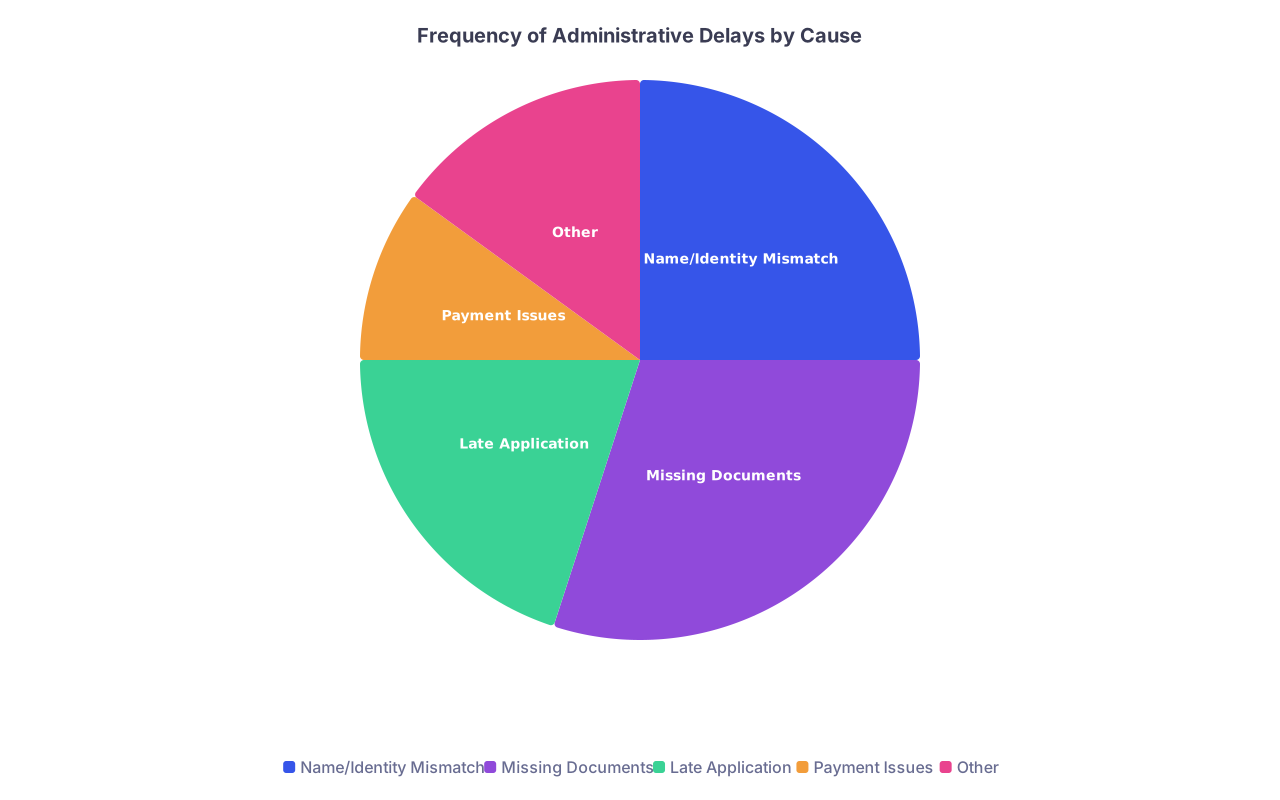
| Category | Value |
|---|---|
| Name/Identity Mismatch | 25 |
| Missing Documents | 30 |
| Late Application | 20 |
| Payment Issues | 10 |
| Other | 15 |
Common screwups:
- Passport updated after marriage, but ECFMG and USMLE records still under old name
- Different order of surnames between diploma and passport
- Using nicknames in some documents
- Transliteration differences not proactively explained
How to avoid this:
Pick one exact legal name and standard order. Everything must match that:
- Passport
- ECFMG
- USMLE score reports
- Medical school diploma / transcripts
- Visa documents
- State license application
If a mismatch is unavoidable:
- Proactively provide notarized name change documents
- Add a short, clear explanation wherever possible
- Tell your program coordinator and ask what documentation they prefer
Name issues rarely kill your career. They just waste weeks. You don’t have weeks.
7. Letting Background Checks and Health Clearances Slide
Here’s the pattern:
You’re moving, doing visa stuff, saying goodbye to family, maybe flying internationally. You see an email from Occupational Health: “Please complete immunization documentation and TB testing before your start date.” You flag it. For later.
Later turns into mid‑June. The clinic is fully booked. Your titers take 10 days to return. Your drug test gets delayed because of a lab error.
And suddenly HR is saying, “You can’t start in the hospital until all requirements are cleared.”
How residents mess this up:
- Assuming foreign vaccine records will automatically be accepted
- Not realizing some hospitals require two TB tests, spaced apart
- Waiting until arrival in the US to start any of it
- Ignoring that certain vaccines (like Hep B series) take time to complete
How to avoid this:
As soon as you get onboarding instructions, print or save them. Sit down and actually read every line.
Convert your vaccination records into something US‑friendly:
- Translated if necessary
- With dates clearly visible
- Lab titers if records are incomplete
If you’re missing doses or unsure of immunity:
- Start updating now. Weeks or months before July.
- Confirm with Occupational Health which documentation formats are acceptable.
Programs are legally and logistically constrained here. They can’t “just let you start” on the floor without this.
8. Poor Communication With Program and GME
A lot of start‑date problems don’t happen because of the issue itself. They happen because nobody knows there’s an issue until it’s too late to fix.
Residents get scared and go silent. Or they send one email and assume “no reply” means “no problem.”
Bad strategy.

| Step | Description |
|---|---|
| Step 1 | Match Day |
| Step 2 | Email GME about visa and license steps |
| Step 3 | Receive checklist and deadlines |
| Step 4 | Send documents early |
| Step 5 | Notify GME and ask options |
| Step 6 | Confirm all clear by June |
| Step 7 | Adjust plan or start date |
| Step 8 | Problem detected? |
Communication mistakes that hurt you:
- Not telling the program your visa interview got pushed back
- Hiding a failed Step 3 attempt while you’re aiming for H‑1B
- Hoping a delayed ECFMG certificate will “just show up in time”
- Assuming program will be angry if you flag problems early
Reality: Programs get angrier when they’re blindsided.
How to avoid this:
Simple rule: If anything affects your ability to start in July, tell them. Earlier is always better.
Use clear, specific subject lines:
- “Visa interview delayed – possible impact on July 1 start”
- “ECFMG certification pending – current status and expected date”
- “Training license – application submitted [date], awaiting board review”
Ask concrete questions:
- “At what point would you consider adjusting my start date?”
- “What documentation do you need from me if my visa is delayed beyond [date]?”
You may not love the answers. But at least you’ll have a plan instead of a disaster.
9. Acting Like July 1 Is a Suggestion, Not a Deadline
Let me say this clearly: July 1 is not a soft target. It’s the start of the academic year. Duty hour tracking starts. Schedules are built around your presence.
If your visa and credentialing are not done, you don’t just “start a bit late” like a casual office job.
Best‑case scenarios when you’re not ready:
- You join weeks late, behind your peers, scrambling to catch up
- Your pay and benefits start late
- You burn goodwill with faculty and co‑residents before you ever show up
Worst‑case:
- The program withdraws your offer
- You lose a year of training
- You trigger visa complications that haunt you for years
What You Should Do Today
Not next week. Today.
Make a single master checklist for:
- Visa (J‑1 or H‑1B)
- ECFMG certification
- State license or training permit
- Hospital onboarding (HR, background, immunizations, modules)
Email your program coordinator or GME office and ask:
- “Can you please confirm all the items you need from me, with your internal deadlines, for a July 1 start?”
Open your email inbox and search:
- “ECFMG”
- “GME”
- “Onboarding”
- “Licensing”
- “Occupational Health”
Make sure nothing is sitting unread, half‑read, or flagged “for later.”
Later is how people lose their start date.
FAQ (Exactly 4 Questions)
1. What happens if my visa isn’t approved by July 1?
Programs have different policies, but typical outcomes include:
- A delayed start date (days to weeks) if they expect your arrival soon
- A deferred start to the next academic year if the delay is long
- In rare cases, especially if delays are due to your own negligence, the program may terminate the contract
Your best move if a delay looks likely: inform your PD and GME well in advance, document embassy timelines, and ask what options exist (late start, off‑cycle start, or deferral). Silence is what gets people replaced.
2. My ECFMG certification is still pending. Can I still start residency?
Often no. Many programs and states require full ECFMG certification before they can:
- Issue a contract
- Sponsor a visa
- Obtain your training license
There are exceptions in some states/programs, but you should never assume you’re one of them. If your certificate is delayed:
- Contact ECFMG and ask exactly what’s missing
- Push your med school to respond to verification requests
- Share updates with your program so they know this isn’t you being careless
3. Can I switch from J‑1 to H‑1B after I’ve already started visa processing?
Technically sometimes yes, practically often a mess.
Switching late:
- Forces your program to redo legal work
- May miss H‑1B filing windows or lead to premium processing battles
- Can trigger timing conflicts that make a July start impossible
If H‑1B is important for you (for example, to avoid the 2‑year home residency requirement), you must:
- Clarify H‑1B sponsorship before ranking or immediately after matching
- Pass Step 3 early
- Commit to a path instead of bouncing back and forth in May or June
4. I’m overwhelmed. What’s the single biggest mistake to avoid first?
Waiting.
Waiting to email GME.
Waiting to gather documents.
Waiting to fix name mismatches.
Waiting to schedule your visa interview.
If you force me to pick one thing: Do not assume anyone else is moving your file forward. Today, open every onboarding and visa‑related email you’ve received and make a dated checklist. Then send one concise, specific email to your program or GME confirming what they still need from you.
That single action will catch most of the disasters before they’re irreversible.