
Signing your residency contract blindly is how smart new doctors get burned.
You matched. You’re exhausted. You just want to click “sign” and be done. That’s exactly how people end up locked into bad call schedules, unfair non-competes, and financial traps they never saw coming.
Let me be blunt: GME offices are not evil, but they are not your personal advocates. Their job is to protect the institution. Your job is to protect you. If you treat this contract like a formality, you are the easiest person in the system to exploit.
Here’s where new residents screw this up—and how you don’t.
1. Treating the Contract Like a Formality (It’s Not)
The most common, most expensive mistake: assuming “everyone signs this, it must be standard.”
No. Some things are standardized. A lot are negotiable or at least clarifiable. And even the “non‑negotiable” items still matter because you are agreeing to be bound by them.
Red flags in mindset:
- “I don’t want to cause trouble.”
- “I’ll just figure it out when I start.”
- “My friend at another program said their contract is fine, so this is probably fine.”
This is how you end up surprised by:
- Mandatory extra clinics
- Unpaid “orientation” work that looks a lot like real clinical labor
- Call schedules you didn’t realize were legal but brutal
- Policies buried in handbooks you never read but legally agreed to follow
Fix this before you sign:
- Block off uninterrupted time (at least 60–90 minutes) to read the entire thing. Slowly.
- Highlight anything you don’t fully understand. If you can’t explain it in plain English, you do not understand it.
- Ask for all referenced documents:
- Resident handbook
- GME policies
- Moonlighting policy
- Leave and benefits manuals
If the contract says “per the House Staff Manual,” you need the House Staff Manual. Today. Not in July.
2. Ignoring the “Incorporated by Reference” Trap
The sneakiest clause in most residency contracts is one you probably skim over:
“The Resident agrees to abide by all policies and procedures of the Hospital and GME Office, as may be amended from time to time.”
Translation:
You’re not just signing the contract. You’re agreeing to an entire universe of documents that may change mid‑year, and you still have to comply.
Common things hidden outside the main contract:
- Duty hour enforcement (or lack of it)
- Moonlighting restrictions
- Disciplinary and remediation processes
- Social media and confidentiality rules
- Pregnancy, parental, and medical leave details

Mistakes to avoid:
- Signing without seeing the current versions of all referenced policies
- Assuming policies are “just guidelines” (they are usually enforceable rules)
- Not asking, “How often do these change?” and “How are changes communicated?”
What you should do:
- Request PDFs of:
- GME handbook
- Institutional policies referenced in the contract
- Program‑specific policies if they exist
- Confirm in writing (email is fine) that:
- These are the current versions
- You’ll be notified of major policy changes affecting pay, leave, or termination
If they get cagey about sending policies now, that’s not a good sign.
3. Misunderstanding Salary, Benefits, and Hidden Costs
Too many residents focus on the PGY‑1 base salary number and ignore everything else. That’s rookie behavior.
You need the full financial picture, not just “$61,000/year.”
Key areas people mess up:
A. Not Clarifying What’s Guaranteed vs. “Subject to Funding”
Watch for phrases like:
- “Subject to annual appropriation”
- “Contingent on continued program funding”
- “Salary may be adjusted at the discretion of the institution”
Are you at risk of:
- Mid‑year salary freezes?
- Unpaid furloughs?
- Sudden cuts in benefits?
Most of the time it’s fine—but you want clarity, especially in shaky health systems.
B. Accepting Vague Benefits Language
If your contract just says “eligible for health insurance and other benefits,” that tells you nothing.
You need answers to:
- When does coverage start? Day 1? After 30 days?
- What’s the monthly premium for:
- You alone
- You + spouse
- You + family
- What’s the deductible and out‑of‑pocket max?
- Is disability insurance included? What’s the coverage amount?
If they say “this is all in HR documents,” then ask for those HR documents.
C. Underestimating Local Cost of Living
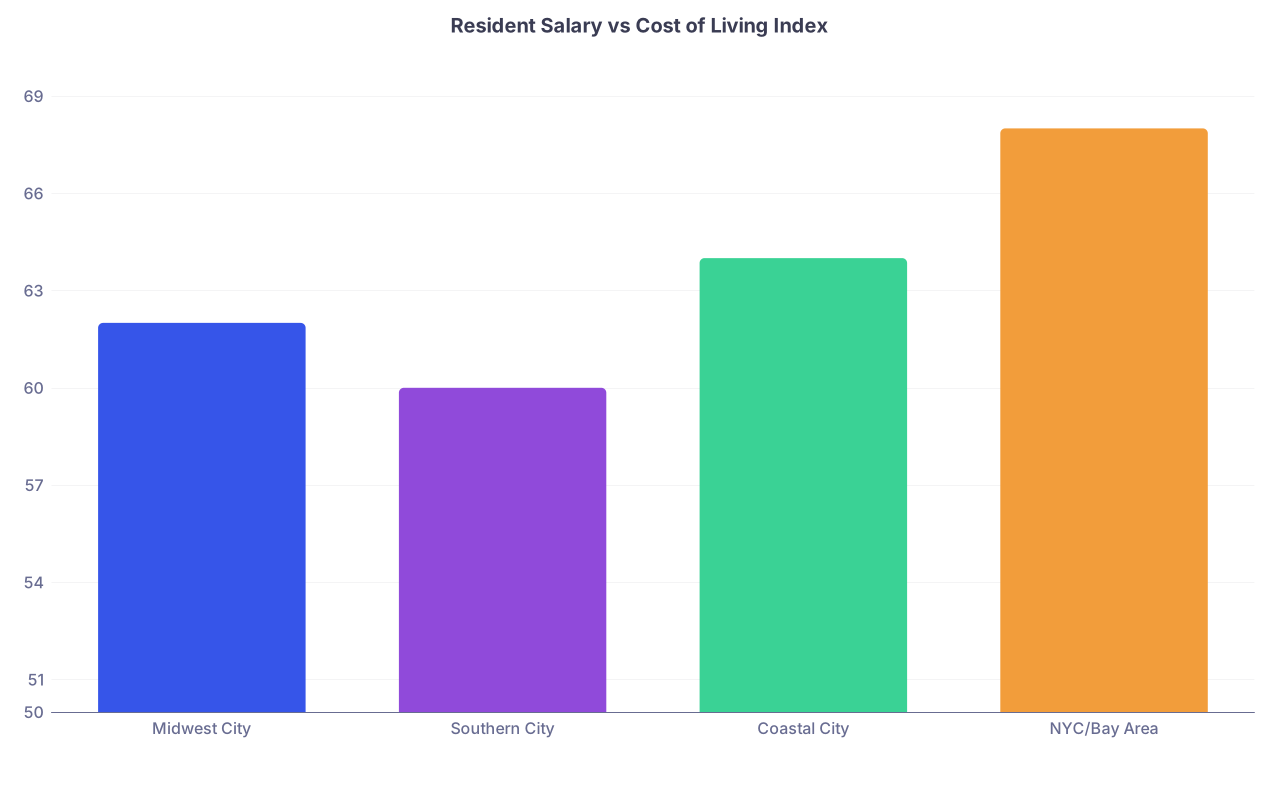
A $62k salary in rural Midwest is not the same as $62k in Boston or San Francisco.
| Category | Value |
|---|---|
| Midwest City | 62 |
| Southern City | 60 |
| Coastal City | 64 |
| NYC/Bay Area | 68 |
(This is salary in thousands—cost of living in some coastal cities will make that feel like peanuts.)
Run the numbers:
- Rent
- Parking / transit
- Required license fees and exams (Step 3, board fees)
- Moving costs no one reimburses
Do not assume “it’ll work itself out.” You will feel it in November when your card is maxed and Step 3 is due.
4. Overlooking Duty Hours, Call, and “Other Duties as Assigned”
I’ve watched interns do this: they ask “How’s the call schedule?” on interview day, then never check what’s actually in writing.
That’s how expectations get rewritten later.
Look for specific language about:
- Maximum weekly hours (should align with ACGME)
- What counts as “duty hours”
- Home call vs in‑house call and whether home call counts toward duty hours
- Mandatory continuity clinics
- Required meetings/lectures—especially after night shifts
The worst clause you’ll see again and again:
“Resident agrees to perform such other duties as assigned by the program director.”
That sounds harmless. It’s not. It’s a blank check.
Examples I’ve seen shoved under this umbrella:
- Mandatory “volunteer” events
- Unpaid pre‑rounding during “orientation week”
- Extra weekend clinics to cover staffing gaps
What you can do:
- Ask for concrete examples of “other duties as assigned” in the last year
- Ask:
- “Are there any mandatory events outside regular duty hours?”
- “Are any of these unpaid?”
- Check if the program has:
- A night float system vs 24‑hour calls
- Clear policies on post‑call days
If the written contract is silent but everyone talks about brutal call, don’t ignore that discrepancy.
5. Not Taking Termination and Remediation Clauses Seriously
Most MS4s barely skim the termination section. Until they’re on a Performance Improvement Plan and suddenly that paragraph matters more than their Step score.
You should know exactly what can get you:
- Non‑renewed
- Suspended
- Immediately terminated
Look closely at:
- “Cause” vs “no‑cause” termination
- Non‑renewal notice requirements
- Appeal or grievance processes
- Who makes the final decision: PD, CCC, GME office, hospital board?
Vague language to watch:
- “Unprofessional conduct”
- “Failure to meet program standards”
- “In the sole discretion of the program director”
That last phrase—“sole discretion”—is a power move. It means they can decide with very little recourse for you.

| Step | Description |
|---|---|
| Step 1 | Concern Raised |
| Step 2 | CCC Review |
| Step 3 | Return to Regular Status |
| Step 4 | Informal Feedback |
| Step 5 | PIP or Remediation |
| Step 6 | Non Renewal or Probation |
| Step 7 | Termination or Extension |
Questions you must ask:
- “Under what circumstances can the program choose not to renew my contract?”
- “How much notice will I receive if I’m not being renewed?”
- “Is there an appeal process? Who reviews it?”
You’re not planning to fail. But the people who get burned here didn’t plan to either.
6. Being Blind to Restrictive Covenants and Non‑Competes
Yes, even as a resident, you can get hit with restrictive covenant language. Especially in certain states and in community programs.
Common traps:
- Non‑compete clauses for post‑residency work within X miles of the hospital
- Restrictions on moonlighting at other hospitals in the same system
- “Non‑solicitation” clauses that limit you from recruiting staff later if you join another local group
| Clause Type | Why It’s a Problem |
|---|---|
| Geographic non-compete | Blocks you from working locally after graduation |
| Moonlighting restriction | Limits extra income options |
| Non-solicitation | Can affect future private practice plans |
| Confidentiality overreach | Can chill whistleblowing or honest discussion |
Do not assume “non‑competes are illegal where I live.” Laws vary, and many hospitals write these in hoping you won’t challenge them.
At minimum, you should:
- Read any non‑compete or restrictive language three times
- Ask:
- “Does this apply during residency only, or after graduation too?”
- “If I stay on as faculty here, does this still apply if I later leave?”
- Consider getting an attorney to look specifically at this section if it exists
If they swear “oh, we never enforce that,” then they should be comfortable taking it out or modifying it. If they won’t, believe the contract, not the smile.
7. Trusting Verbal Promises Over Written Terms
This one has bitten more residents than anything else.
Program director on interview day:
“We’re very flexible with vacation weeks; you can usually take them whenever you want.”
Contract:
“Vacation to be scheduled at program’s discretion consistent with service needs.”
Guess which one wins in a dispute? Always. The. Contract.
Typical verbal promises that mysteriously don’t make it into writing:
- “You’ll get priority for that research track.”
- “We almost always approve moonlighting by PGY‑2.”
- “You’ll rotate at the big tertiary center most of the year.”
- “Parental leave is no problem; we work with people.”
If it matters to you and it isn’t written down, it doesn’t exist.
Your move:
- After conversations, send a short email:
- “Thanks for clarifying that PGY‑2 residents are generally allowed to moonlight up to 12 hours per week. I’ll look for that in the policy documents.”
- Ask directly:
- “Can we put that in writing somewhere—either in the contract or official policy?”
If they avoid committing it to any document, treat it as wishful thinking, not a guarantee.
8. Skipping Legal Review Because “It’s Just a Residency Contract”
You do not need a lawyer for everything. But if something feels off, or there are complex clauses (non‑compete, arbitration, weird termination language), paying a few hundred dollars now can save you tens of thousands later.
Common excuses I hear:
- “No one else in my class is getting a lawyer.”
- “I don’t want them to think I’m difficult.”
- “It’s probably standard.”
Standard doesn’t equal fair. And “everyone else is doing it” is a bad reason to sign anything legally binding.
When a lawyer is worth it:
- Any non‑compete or unusual restriction
- Arbitration clauses that force you into private dispute resolution
- Anything tying your contract to repayment of bonuses, stipends, or sign‑on money if you leave early
- If the contract is longer than ~8–10 pages and feels dense and aggressively legalistic
Look for:
- Healthcare/employment attorneys
- State medical society referrals
- Sometimes your school’s career office has recommendations
You want someone who has actually seen residency and physician contracts before, not just generic employment law.
9. Rushing Because of Deadlines and Pressure
GME offices love sending emails like:
“Please sign and return within 72 hours to secure your position.”
That sounds terrifying. In reality, they’re highly unlikely to yank your Match over a few extra days of review, especially if you communicate.
Rushing leads to:
- Missing problematic clauses
- Failing to get key questions answered
- Signing before seeing all referenced policies
Here’s how to push back without being “that problem resident”:
- Respond quickly, but ask for time:
- “I’ve received the contract and am reviewing it carefully. I may need a few additional days to clarify some points—can you confirm that’s acceptable?”
- Ask your questions in one organized email rather than trickling them in
- Be polite but firm: you are not apologizing for reading something that will control your life for years
If a program gets hostile because you want to understand the contract, that’s data. About the culture. About how they’ll treat you when there’s conflict.
10. Not Getting Clarity on Leave, Illness, and Pregnancy Policies
People massively underestimate how quickly life can hit during residency:
- Personal illness
- Family emergencies
- Pregnancy
- Mental health crises
You do not want to be learning the rules for the first time the week you’re admitted for surgery or when your partner delivers early.
Specific landmines:
- FMLA eligibility (you often aren’t eligible in your first 12 months)
- Whether paid parental leave is in addition to or instead of vacation
- How much leave before you must extend training
- How sick days are documented and whether they trigger “concerns”
| Category | Value |
|---|---|
| Vacation | 15 |
| Sick Leave | 7 |
| Parental Leave | 6 |
| Conference/Other | 4 |
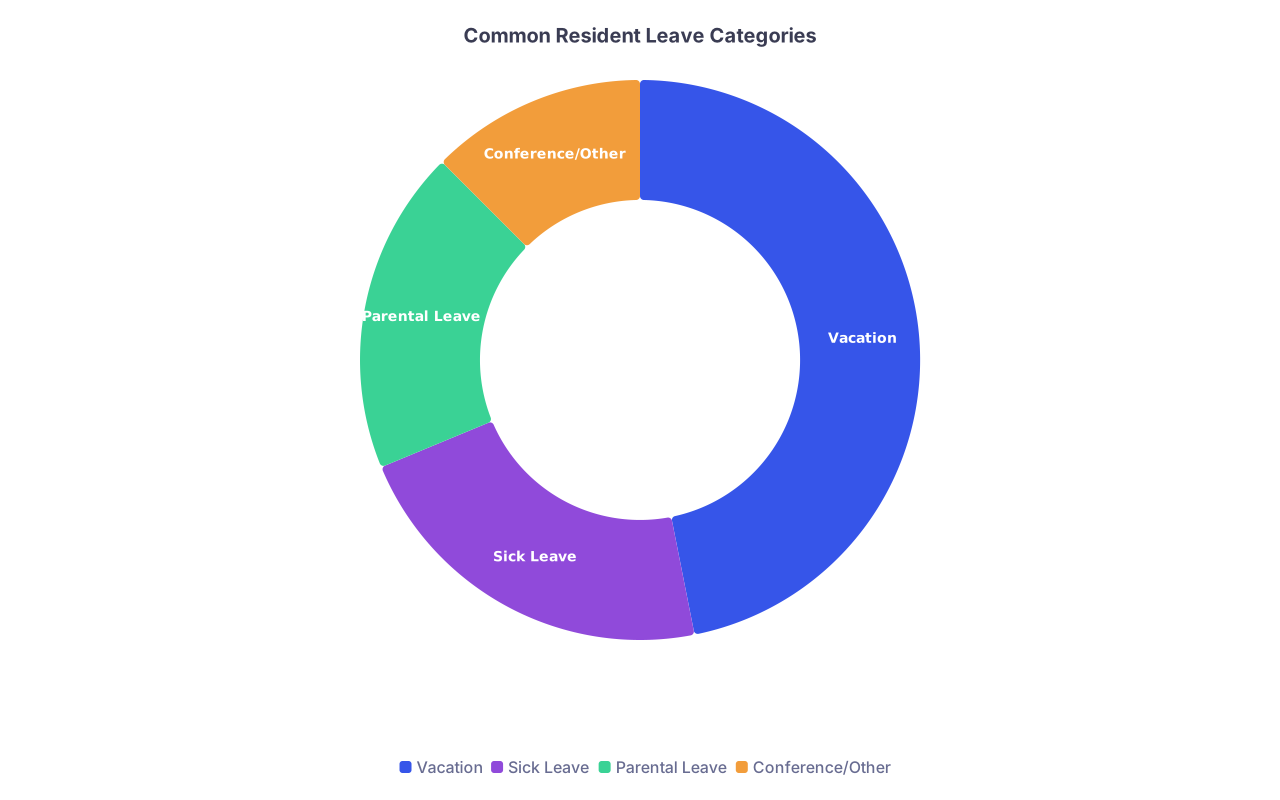
(That’s a typical annual day distribution—tiny margins.)
You need to know:
- How many paid vacation days? Are they guaranteed or “subject to service needs”?
- Sick leave amount and process for using it
- Is there a formal parental leave policy? How many weeks? Paid/unpaid?
- Do these leaves delay graduation? Who decides?
If you’re thinking about pregnancy during residency, do not just rely on “we’re very supportive.” Ask for the actual policy in writing.
11. Ignoring Moonlighting and Outside Work Rules
Residents get blindsided when they assume extra income is an option and then find out it’s banned or heavily restricted at their program.
Key items:
- Is moonlighting allowed at all?
- PGY level required to start (PGY‑2 vs PGY‑3)
- Requirements:
- Full licensure?
- Specific evaluation scores?
- PD or CCC approval?
- Are internal moonlighting hours counted toward ACGME duty hours? (They should be.)
Don’t make the classic mistake:
- Planning financially around moonlighting money that may never actually materialize
- Assuming “everyone does it under the table” is safe. When something goes wrong, “under the table” is exactly what will hang you.
Ask:
- “Can I see the moonlighting policy?”
- “How many residents currently moonlight, and where?”
- “Has anyone been disciplined for violating this policy in the last few years?”
If they look uncomfortable answering, don’t build your budget around moonlighting.
12. Failing to Save a Clean, Final Copy (With All Attachments)
Last mistake is simple but brutal: not keeping an organized record.
Years later, when:
- You apply for a license in another state
- You need proof of training dates
- There’s a dispute about how something was handled
—you’ll wish you had the original documents.
Do this now:
- Save:
- Signed contract (PDF with signatures visible)
- All referenced policy documents you were given at signing
- Email threads where key clarifications were provided
- Store them:
- In a cloud folder labeled “Residency – Contract & Policies”
- Backed up somewhere outside your hospital email account
Future you will be very grateful.
Final Takeaways
Keep it simple:
- Read everything, not just the salary line. If you don’t understand a clause, you don’t sign until you do.
- Believe the contract, not the promises. If it matters and it’s not in writing, it’s not real.
- Protect your future, not just your PGY‑1 start date. Non‑competes, termination rules, leave policies—these are where careers and sanity get wrecked.
You worked too hard to let a sloppy signature control your next three to seven years. Slow down. Ask the uncomfortable questions. And don’t make the mistake of assuming this is “just paperwork.”