
What if the biggest thing you “matched into” on Match Day is a decade of unnecessary debt because of the choices you make in the first 60 days?
Let me be blunt: the financial damage residents complain about later does not start in PGY-3. It starts in the three‑month blur between Match Day and your first paycheck. That window is where people lock in bad leases, bad loans, and bad habits that quietly siphon away six figures over the next few years.
You already did the hard part academically. Do not screw up the money part because you were tired, excited, or too busy finishing MS4 electives.
Below are the mistakes I see over and over again. The ones people vent about in workrooms and on night float at 3 a.m. The ones you still have time to avoid.
Mistake #1: Signing the First Shiny Lease You See
The most common sentence I hear from interns in September:
“I really wish I had not signed this lease.”
The trap is predictable:
- You find out your program location.
- You panic‑scroll Zillow and Apartments.com.
- You fly in or do a frantic weekend tour.
- A leasing agent says, “Units are going fast; you need to sign today.”
- You sign. Over budget. Bad location for call. Bad commute. Locked in for 12 months.
The specific ways people blow this
Renting too much apartment for a resident salary
Your PGY‑1 salary is not attending money. In most programs:
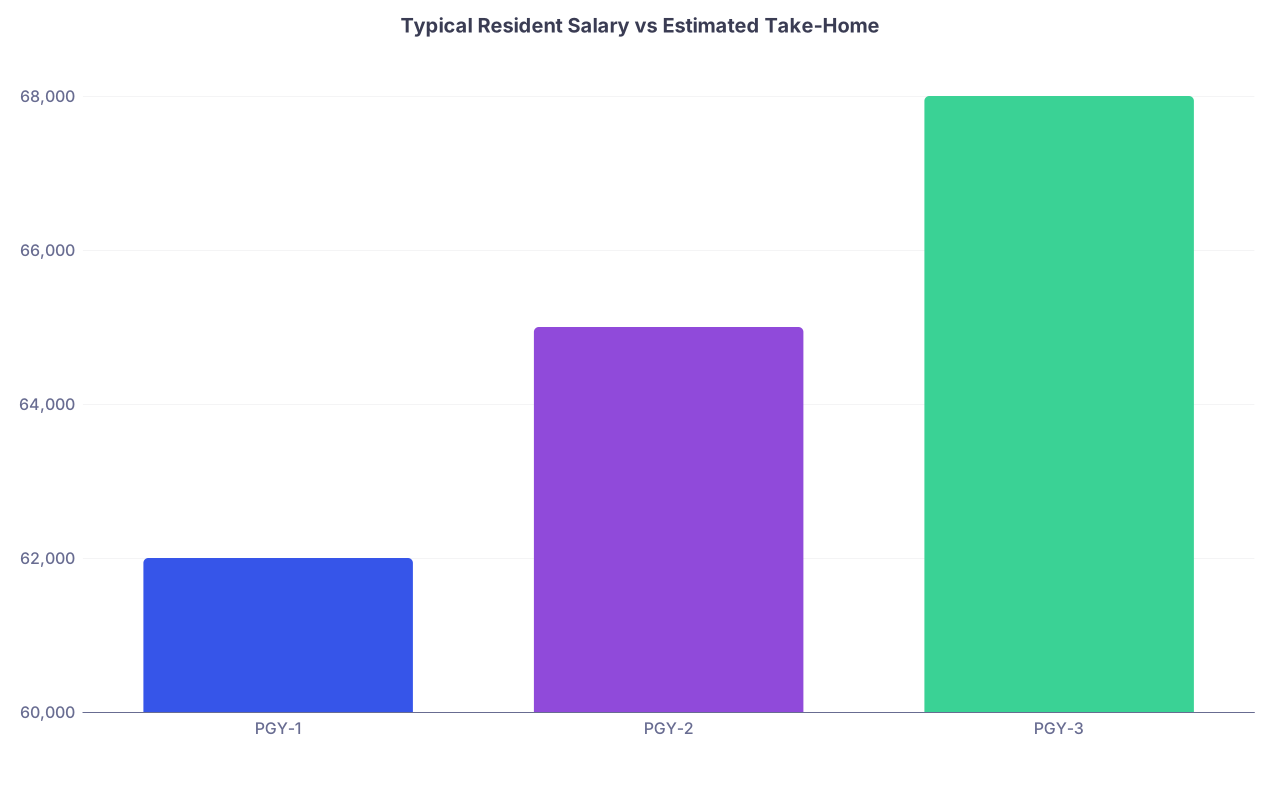
Typical Resident Salary vs Estimated Take-Home Category Value PGY-1 62000 PGY-2 65000 PGY-3 68000 After taxes, retirement, health insurance, and maybe disability, your take‑home might be closer to $3,500–$4,000 per month.
I routinely see residents paying $2,100–$2,400/month solo rent “because I deserve a nice place after med school.” That is how you end up living paycheck to paycheck on a physician salary.
Choosing “luxury” over logistics
Nice lobby. Gym. Rooftop deck. Terrible for a resident:
- 35–45 minutes from the hospital in normal traffic
- No safe walking route for night shifts
- Parking fees that add $150–$200/month
- Noise, bars, and nightlife when you desperately need sleep post‑call
Ignoring shift logistics
I have watched interns leave a program early solely because the commute plus night float destroyed them. They would never say it so plainly, but that is what happened.
The wrong apartment for a resident is:
- More than 25–30 minutes from the hospital
- In an area with unsafe walk/bike routes at 2 a.m.
- With unreliable public transit for weekends/holidays
- Street parking only in dense urban areas where you circle for 30 minutes post‑call
How to avoid wrecking your first year with a lease
Target rent: 25–30% of take‑home pay.
If you are bringing home $3,800/month, aim for $950–$1,100 each if you have a roommate, or ~$1,200–$1,400 solo. More in ultra‑high‑cost cities, but still keep a ceiling.Ask upper‑level residents, not leasing agents.
Ask: “If you had to re‑choose housing for intern year, where would you live?”
They will tell you the truth: buildings with thin walls, sketchy blocks to avoid, hidden parking nightmares.Do not lock in a 15‑month or 18‑month lease.
One year is plenty. You might change services, schedules, or want to move closer or cheaper after you understand your real life.Skip the first place you see.
If you tour and feel pressured—walk. There will be another unit. There is always another unit.
Mistake #2: Financing a New Car You Do Not Need
Match Day plus “new chapter of life” plus a dealership is a cursed combination.
The pattern:
- You matched. You feel like a real doctor now.
- Your current car is old, dented, and smells like anatomy lab memories.
- A dealership offers “low monthly payments for doctors” on a $42,000 SUV.
- You sign because “I’ll be an attending soon anyway.”
Then you run the math two years later and realize you have thrown $8,000+ at a depreciating object you mostly drive to work and back.
Classic car‑related errors
Upsizing because of identity, not need
Residents “upgrade” from:
- Paid‑off Honda Civic → $40k crossover
- 10‑year‑old Camry → $50k luxury sedan
The justification: “I need something reliable for call.”
Reality: The old car, with a $1,000 repair budget, would have covered 3+ years of residency just fine.Leasing with residency miles
Leasing during residency is usually a bad idea:
- Call, clinic, weekend shifts = more miles than you think
- Extra shifts at other sites or moonlighting later
- Vacation road trips because you finally have a salary
You burn through the 10–12k miles/year and pay painful overage fees at the end, while owning nothing.
Ignoring the total cost of ownership
Residents only look at the monthly payment. They forget:
- Insurance (often much higher for newer/luxury cars)
- City parking or garage fees
- Gas for big vehicles vs compacts
- Maintenance and repairs outside warranty windows
What smart residents actually do
Keep the paid‑off car unless it is genuinely unsafe.
Cosmetic issues do not matter. People park $60k Teslas next to your 2010 Corolla in the same hospital garage.If you must replace, buy boring, used, reliable.
3–7‑year‑old Honda, Toyota, Subaru, Mazda, etc. Good mechanic. Reasonable mileage. You want reliability, not status.Cap the car payment.
If you absolutely insist on a payment, keep it under 10% of monthly net income. Less is better.Avoid long loans.
A 72‑ or 84‑month loan on a resident salary is financial handcuffs.
Before you sign anything, ask yourself: “If my attending self looked at this choice, would they roll their eyes at me?” If the answer is yes, walk away.
Mistake #3: Letting Lifestyle Creep Hit Immediately
The first resident paycheck feels incredible. After years of living off loans and ramen, $3–4k/month take‑home looks like freedom.
This is where many people quietly wreck their long‑term finances:
- New furniture, professionally staged Instagram apartment
- $300/month in subscriptions, apps, and convenience services
- Eating out constantly because “I do not have time to cook as a resident”
- Vacations financed on credit cards “to celebrate matching”
You do not feel the danger right away. The damage compounds for years.
How lifestyle creep quietly traps residents
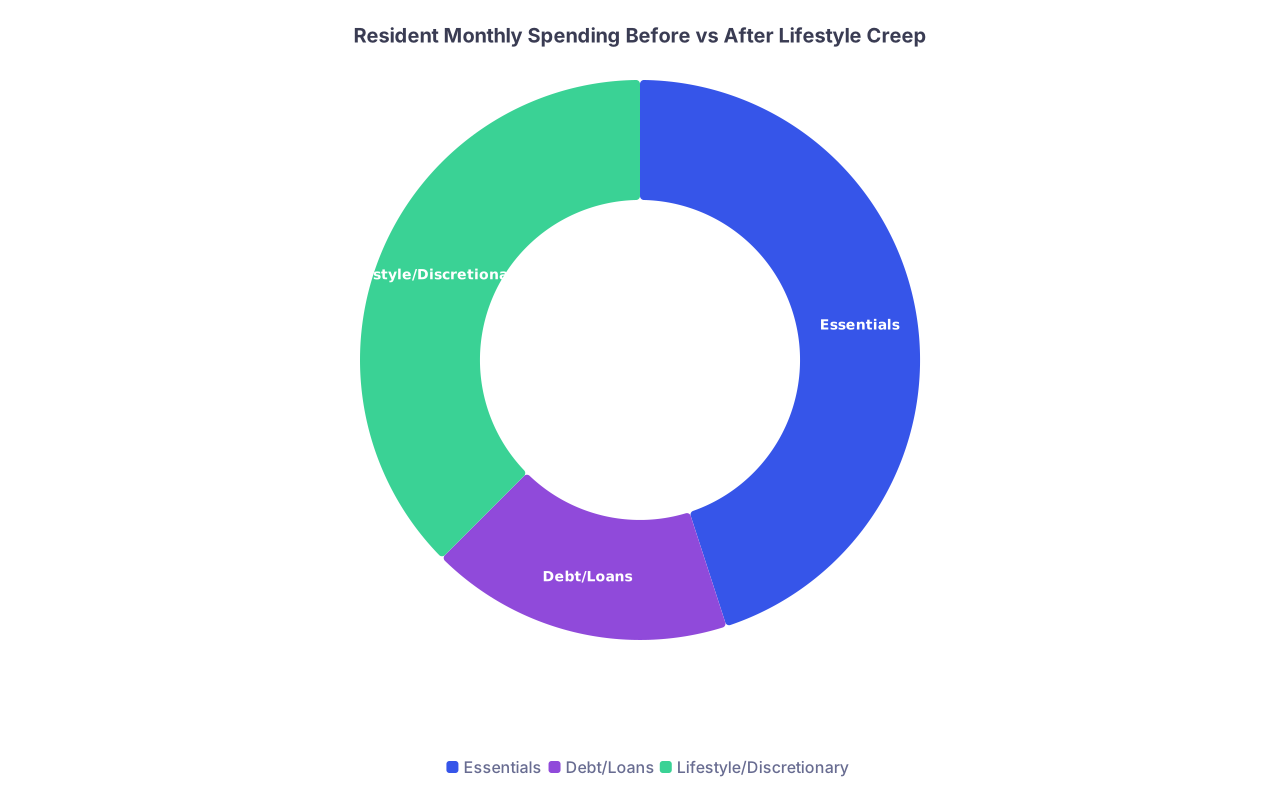
| Category | Value |
|---|---|
| Essentials | 1800 |
| Debt/Loans | 700 |
| Lifestyle/Discretionary | 1500 |
I have watched interns go from:
- $600/month discretionary spending at graduation
- To $1,500+/month by mid‑PGY‑1
All on the same salary. The difference comes straight out of:
- Emergency fund
- Extra loan payments
- Future savings for a down payment or fellowship gap
The specific new‑resident splurges that backfire
- Buying all new furniture at once instead of gradually upgrading
- Weekly cleaning service for a studio apartment
- Uber/Lyft for everything because driving “feels like work”
- $200+ monthly bar / restaurant tabs as the default social life
- First‑year international trip put on a credit card, not actual savings
Am I saying you must live like a monk? No. I am saying the scale and speed of upgrades matter.
How to prevent lifestyle creep from swallowing your raise
Decide your “fun money” cap before residency starts.
For example: “$400/month for restaurants, drinks, entertainment. Hard limit.” Then track it. Actually track it.Upgrade in layers, not all at once.
- Year 1: Basic but functional furniture, minimal subscriptions
- Year 2: Replace 1–2 big items (mattress, couch)
- Year 3+: Re‑evaluate when you know your attending path and true preferences
Pick 1–2 real luxuries, not 10.
Maybe it is one nice trip a year. Or once‑a‑month fine dining. Or a climbing gym membership. Not all of them at once.
Lifestyle creep is not one huge purchase. It is 20 small ones you never undo.
Mistake #4: Ignoring Your Student Loans Until “Later”
This one is brutal, because it combines confusion, denial, and federal bureaucracy.
After Match Day, most people tell themselves:
“I’ll deal with loans once residency starts. I just need to get through graduation, moving, orientation…”
Then PGY‑1 hits. You are sleep‑deprived, you barely have time to shower, and student loans fall to the bottom of your mental pile. Meanwhile:
- Grace periods end
- Interest accrues
- Forbearance gets used incorrectly
- You miss optimization windows for forgiveness programs
Common loan mistakes new residents make
Automatic forbearance “just for intern year”
This looks innocent. It is not. Putting loans in forbearance:
- Stops payments
- Does not stop interest
- Does not count toward Public Service Loan Forgiveness (PSLF) qualifying payments
Residents wake up three years later with higher balances and zero progress toward forgiveness.
Not enrolling in an income‑driven repayment (IDR) plan early
If you are going for PSLF or long‑term IDR:
- Every qualifying payment matters
- Low PGY‑1 income = low IDR payment = discounted progress
Waiting a year or two is essentially throwing away 12–24 cheap qualifying payments.
Not certifying employment for PSLF
You work at a 501(c)(3) hospital, but you never:
- Submit the PSLF Employment Certification Form annually
- Keep records of employment and payments
Then seven years later you discover service time has not been properly counted.
Not understanding your loan types and servicer
I have met residents who literally do not know:
- Whether their loans are Direct, FFEL, or private
- Their current interest rates
- Who their servicer is
They just auto‑pay whatever shows up. That is not a plan. That is blind hope.
The minimum you must do with loans before residency
Know your numbers.
One evening. No excuses. Log in to studentaid.gov and list:- Total federal loan balance
- Types (Direct, grad PLUS, etc.)
- Interest rates
- Current servicer
Decide your likely path: PSLF vs pay‑off.
Matching into an academic IM program and planning fellowship? PSLF more likely.
Matching into private EM or ortho and planning high‑income private practice? Maybe payoff is realistic. You have to think about it now, not in PGY‑4.Enroll in an IDR plan early (if using federal loans).
Do this before grace period ends. Aim so that your first qualifying payment is as early in PGY‑1 as possible if PSLF is on the table.Submit PSLF employer certification once you start.
Put a calendar reminder annually. You will not remember in the middle of wards.
Ignoring loans is a mistake that compounds silently. Fixing it is not fun, but it is straightforward if you start now.
Mistake #5: Assuming “I Will Fix Everything When I Am an Attending”
This is the background lie that powers almost every financial mistake right after Match.
The reasoning:
- “I will make $300k+ later, I can make up for this.”
- “It is only a few years of debt.”
- “I survived med school; I deserve some comfort now.”
Here is what actually happens to many new attendings:
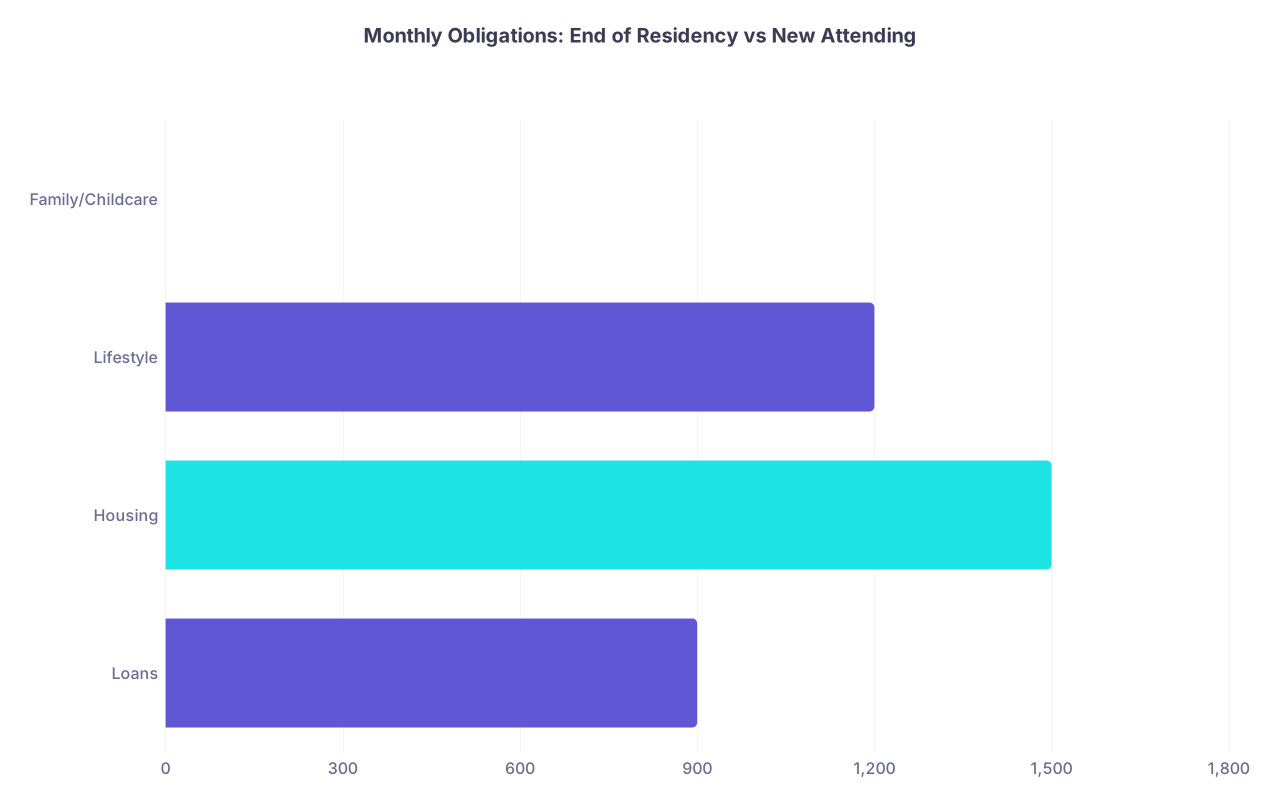
| Category | Value |
|---|---|
| Loans | 900 |
| Housing | 1500 |
| Lifestyle | 1200 |
| Family/Childcare | 0 |
Then as an attending, those bars do not just go down; new ones appear:
- House payment instead of rent
- Childcare costs
- Car for partner/family
- Increased taxes
- Pressure to “live like an attending”
If you start behind because of residency lifestyle bloat and bad loans decisions, the raise gets soaked up immediately.
Why “I’ll fix it later” almost always fails
Habits formed now scale up later.
If you live at 98% of your income as a resident, you will live at 98% as an attending. Just with bigger numbers and more zeroes.Big goals (down payment, financial independence, loan payoff) require time, not just higher income.
The earlier dollars you invest or save are the most powerful. Losing resident‑year compounding hurts.More income creates more complexity, not clarity.
As an attending you will be juggling partnership tracks, RVUs, retirement options, maybe kids, maybe a spouse’s career. You will not magically “have time” then either.
The realistic alternative mindset
You do not need to be perfect. You do need to:
- Avoid permanent, high‑cost mistakes during residency (oversized leases, huge car debt, missed loan programs).
- Aim for “10–20% of my income builds future options” even as a resident.
- Decide now that your attending raise is not for lifestyle explosion, but for strategic upgrades and freedom.
Your future self will not be better with money unless you start training now. On a smaller scale. With smaller consequences.
Mistake #6: Not Building Any Cushion Before Day One
Residents get blindsided by how many costs hit before the first paycheck:
- Moving expenses (truck, gas, flights, hotels, deposits)
- Security deposit + first month’s rent + maybe last month’s rent
- Utility deposits
- Licensing fees, exams, background checks
- Professional clothing, shoes, and equipment
I have watched multiple interns show up essentially broke in July, then charge groceries on credit cards while waiting for their first check in mid‑ or late‑July.
Typical pre‑residency expense pattern
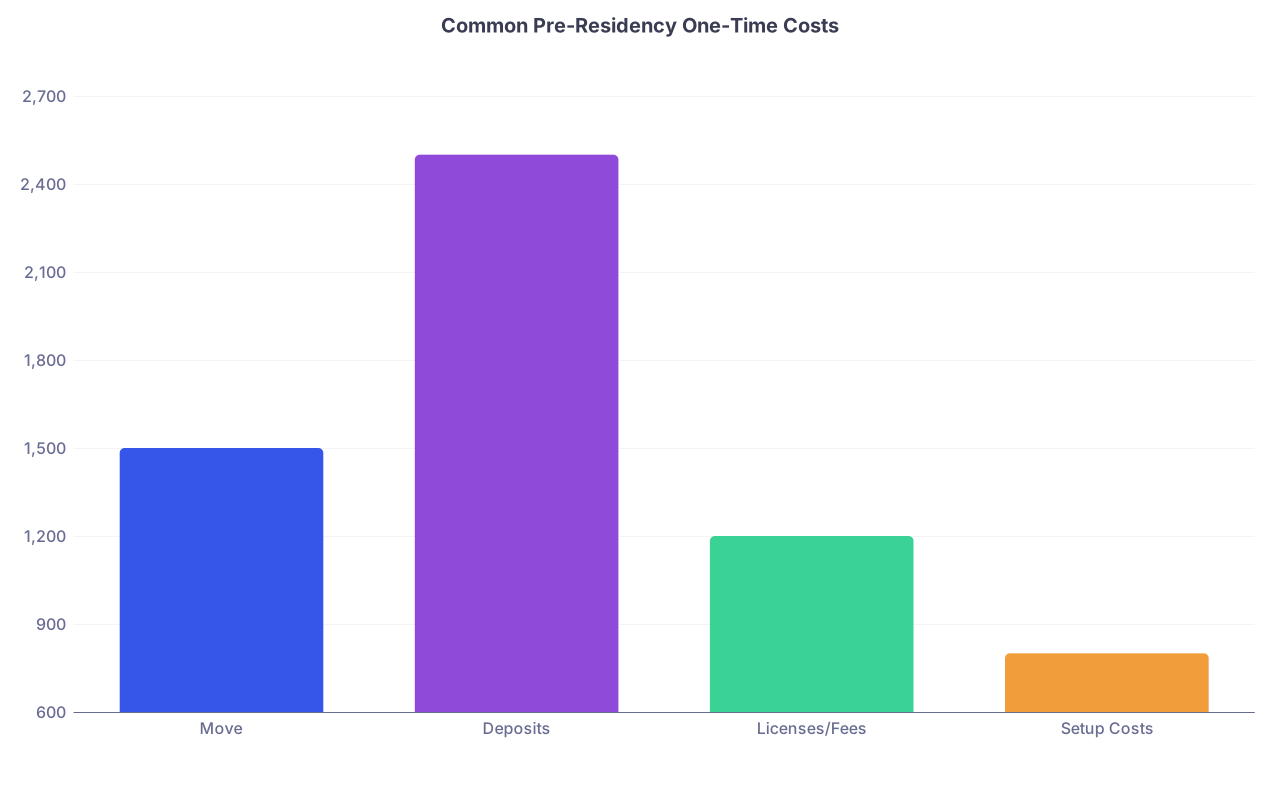
| Category | Value |
|---|---|
| Move | 1500 |
| Deposits | 2500 |
| Licenses/Fees | 1200 |
| Setup Costs | 800 |
That is $6,000 in a blink, and often more in HCOL cities.
The mistake: assuming residency program support will cover it
Some programs offer:
- Small moving stipends
- Sign‑on bonuses (rare for residents)
- Housing assistance (mostly in extremely high‑cost areas)
Most do not. Or if they do, it is taxed and paid later than you hoped.
How to avoid starting PGY‑1 already underwater
Target a minimal emergency buffer before you move.
Aim for at least $2,000–$3,000 in actual cash savings if humanly possible. More is better.Do not pre‑buy everything for your new life.
You do not need:- A brand‑new wardrobe before day one
- Designer scrubs because Instagram said so
- Every kitchen gadget to “meal prep efficiently”
Buy what solves real problems in the first 4–6 weeks. Delay the rest.
Time your move relative to your first paycheck.
Ask HR exactly when your first paycheck will be issued. Not “usually.” The exact date. Then plan your move and lease start date around that.
Scraping through your first month with $23 in your bank account because you front‑loaded every cost is avoidable. But only if you respect how expensive the transition period is.
Mistake #7: Skipping Basic Protection: Insurance and Paperwork
New residents love to talk about investing. But ignore the boring, critical stuff:
- Disability insurance
- Appropriate renters insurance
- Basic will or beneficiary designations
- Health insurance plan details
Skip these, and one bad event can dwarf every “smart” investment idea you had.
The mistakes that bite hardest
No or inadequate disability insurance
Your future income is your biggest asset. You are literally insuring decades of physician earning potential. Yet:
- Many residents never buy own‑occupation disability coverage.
- Or wait until they finish training, when premiums are higher.
- Or rely solely on limited employer policies.
No renters insurance
You cram your new laptop, iPad, white coats, suits, and some nice furniture into a small apartment. Then:
- Fire.
- Burst pipe.
- Theft.
Without renters insurance, you are stuck replacing everything out of pocket on a resident salary.
No beneficiaries or updated paperwork
Marriage, engagement, kids, or just life happening. If you did not:
- Update beneficiaries on retirement accounts
- Set basic instructions for what happens if you die or are incapacitated
You leave a mess for the people who care about you.
Simple protection steps to avoid lifelong regret
Get a quote for own‑occupation disability insurance early in residency.
Even a smaller policy is better than nothing. Waiting costs you more long‑term.Buy renters insurance. Today.
It is often $10–$20/month. Skip one restaurant meal and you paid for it.Log into HR/benefits portal once you have it.
- Confirm health insurance coverage details
- Check who your beneficiaries are
- Enroll in retirement matching if offered, even if only a small percent
This is not exciting. Nobody brags on social media about updating beneficiaries. But this is what adults who protect their future do.
Mistake #8: Having No Simple System (and Trying to Wing It)
The final mistake is more meta: trying to manage all of this from memory.
Residents overestimate their willpower and underestimate their exhaustion. The number of PGY‑1s who tell me, “I meant to track my spending but then wards happened,” is almost everyone.
You do not need a complex system. You do need any system that:
- Limits overspending automatically
- Makes key decisions once, not 40 times a month
- Survives night float and ICU months
A simple structure most residents can actually maintain

| Step | Description |
|---|---|
| Step 1 | Paycheck Arrives |
| Step 2 | Auto Transfer 1 - Rent and Bills |
| Step 3 | Auto Transfer 2 - Savings and Loans |
| Step 4 | Checking for Spending |
| Step 5 | Fixed Expenses Paid |
| Step 6 | Emergency and Extra Loans |
| Step 7 | Day to Day Card or Debit |
- One account for fixed bills (rent, utilities, phone, minimum loan payments)
- One account for savings / loans / long‑term goals
- One account for daily spending, where whatever is there is all you get
No complex categories. No 12‑page budget spreadsheet. Just enough structure that you do not blow your future on fatigue purchases.
What You Should Do Today
Not next month. Not “after graduation.” Today.
Pick one of these and actually do it:
Open your residency contract email.
Confirm your PGY‑1 salary and the start date of your first paycheck. Write those numbers down.Pull up your checking account and last 3 months of spending.
Add up how much went to discretionary categories (restaurants, bars, Amazon, travel). Decide the maximum you allow yourself per month during residency.Log in to studentaid.gov.
List your total balance, loan types, and servicer on a piece of paper. If you matched into a 501(c)(3) hospital, highlight “PSLF” next to it.
Then ask yourself one pointed question:
“If I keep doing what I am doing, will my PGY‑3 self thank me or swear at me?”
If the answer is anything other than “thank me,” fix one thing right now—before Match Day glow turns into financial regret.