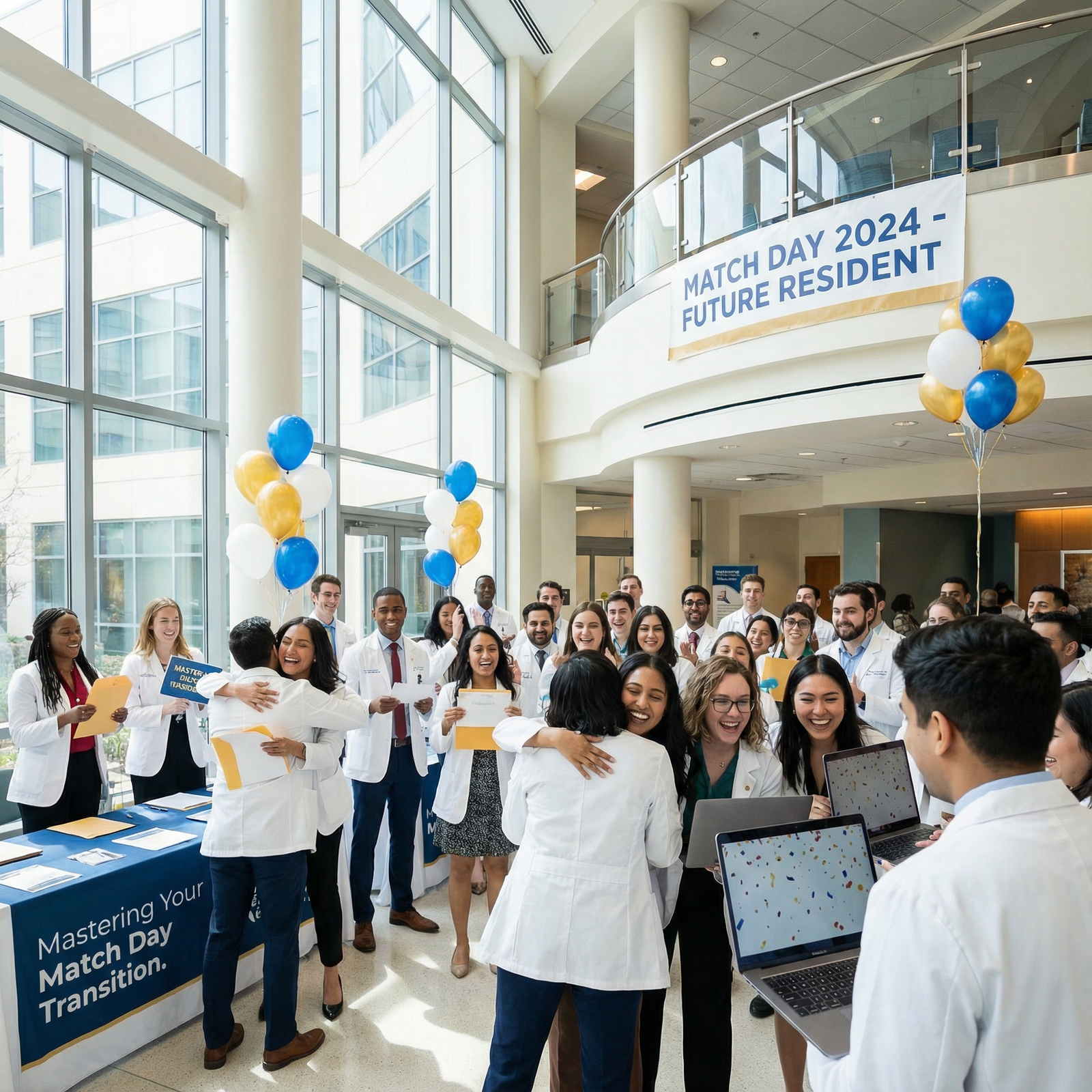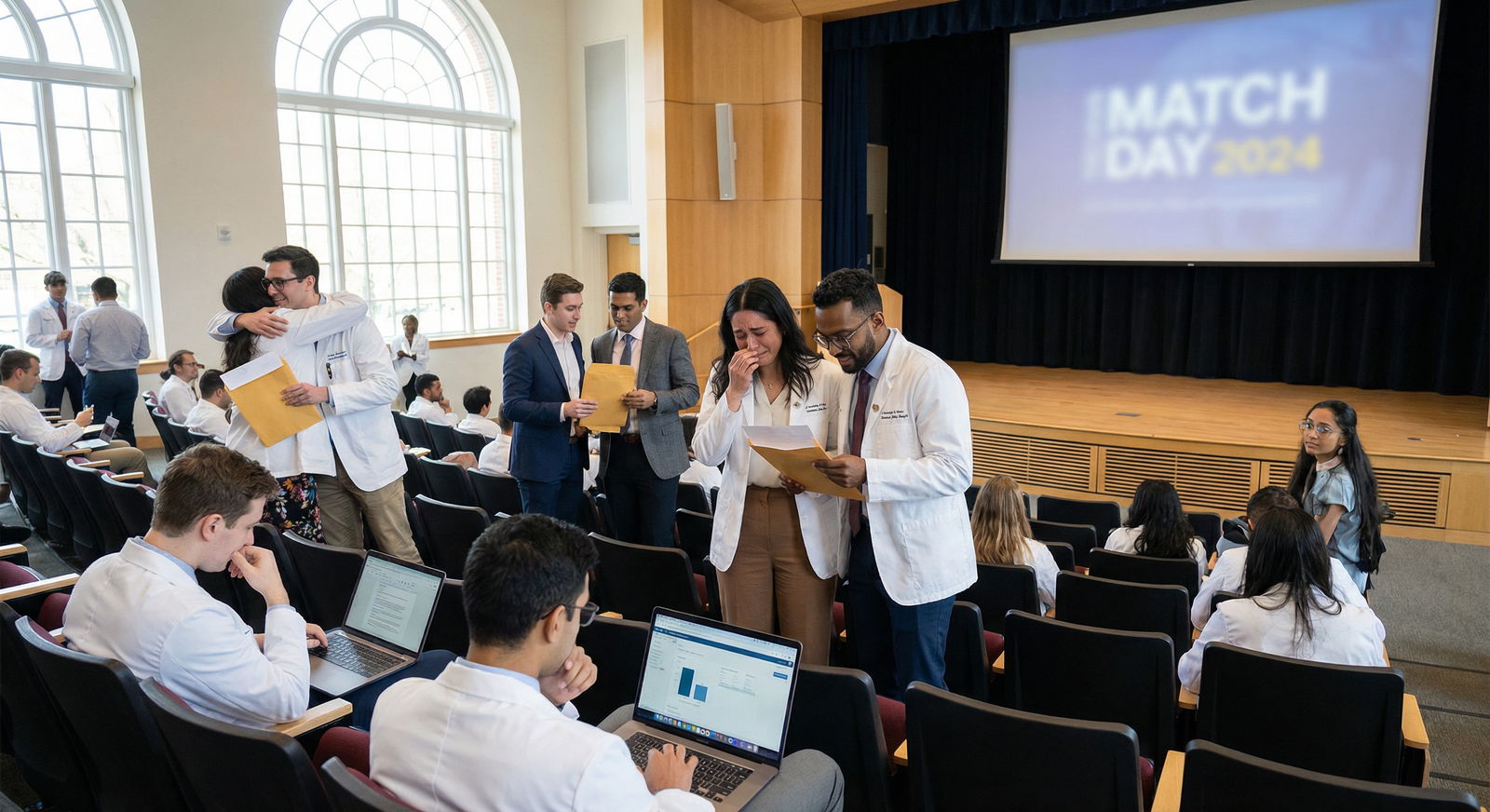
It’s 1:00 PM Eastern on Match Day. You’re in a packed auditorium or standing in a crowded hallway with a white envelope in your hand. Your heart is going 140. The envelope opens, the room explodes, and for a few minutes your entire world collapses into one line of text.
You matched at: [Program Name Here].
While you’re screaming, calling your parents, hugging strangers, and taking 900 pictures for Instagram, do you know what your future program director is doing?
They’re staring at a list.
Your name is on it. And I promise you: what happens with that list in the next few hours, days, and weeks is a lot more strategic, political, and revealing than anyone tells you in public.
Let me walk you through what really happens on the other side of your envelope.
The First Hour: Quiet Screens, Not Champagne
Here’s the first truth: most program directors are not at some glamorous celebration when the results drop. They’re in an office or an empty conference room, with the NRMP screen up, waiting for the list to unlock.
For almost every program in the country, the exact moment they see who they matched is routine:
- Log into NRMP.
- Pull the “Matched Applicants” list.
- Export to Excel or whatever database they live in.
- Cross-reference with their rank list and notes.
That’s the clean version. The real moment is more like this:
A PD leans back, while the coordinator scrolls slowly.
“Okay… first categorical: oh good, we got her.” “Number 3… number 5… number 7… oh wow, we dropped to 12 there.” “Who is that? Did we even meet that person? Pull the file.”
There’s usually one of three emotional tones in that room:
- Relief – “We filled. And high on our list.”
- Mild disappointment – “We filled, but we slid more than we expected.”
- Panic / damage control – “We didn’t fill. How bad is it?”
You will never see this on Twitter. But the first 10 minutes after that list opens decide how the next week of their life looks.
The Immediate Triage: Winners, Surprises, and Problems
Once the initial scroll is done, the real work starts. And it’s surprisingly systematic.
1. They map where you landed on their list
Most PDs will immediately check: where did each matched applicant sit on our final rank order list?
Not just for curiosity. It matters for how they perceive you, even if they’ll never admit it.
If you were in their top 5–10, mentally you’re tagged as “we really wanted you.” They remember you. They probably fought for you in the rank meeting. You’re coming in with a bit of positive bias baked into how they talk about you to faculty.
If you were much lower, like 20+ on a list of 60, the reaction is more mixed. Not necessarily negative, but you become:
“Let’s re-review his file… what was his story again?” “Was she the one with the weird Step timing?” “Pull the notes from the interview – did we have any concerns?”
They don’t tell you this, but your initial narrative in that program is set right there: not just “who are you,” but “who were you relative to the people they hoped to get.”
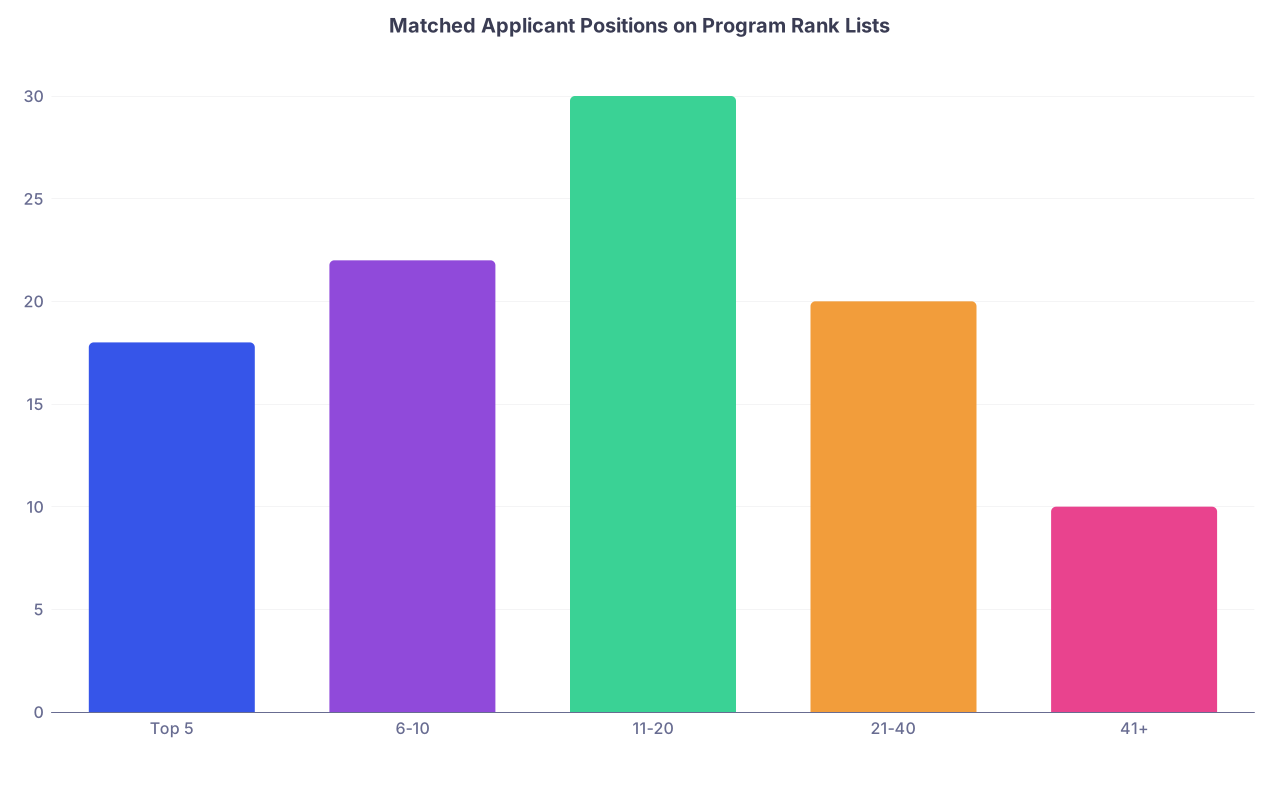
| Category | Value |
|---|---|
| Top 5 | 18 |
| 6-10 | 22 |
| 11-20 | 30 |
| 21-40 | 20 |
| 41+ | 10 |
2. They look for pattern failures
Every PD remembers who they really wanted but didn’t get.
“We lost her to MGH. Of course.” “Those two couples matched together at Hopkins. Fine.” “Wow, we lost all three of our top IMG candidates. Where did they go?”
They’re reading your names, but they’re also reading the gaps. What kind of applicant didn’t come?
That affects future strategy. If they consistently lose high-step, high-academic applicants to “brand name” places, you’ll see them lean harder into culture and wellness in their pitch next year. If they lose all their couples matches to bigger cities, they might push marketing the city more aggressively.
You are both a person and data point.
The Off-the-Record Conversations Start Immediately
Within a couple hours, program directors, associate PDs, and coordinators at different programs are already texting each other.
And no, this isn’t some formal network. It’s personal relationships:
“Hey, did you get that Stanford guy who couples matched with our applicant?” “Did you fill your prelims?” “Did you end up getting [applicant name]? Where did they go?”
Faculty gossip about applicants? Yes. Happens every year.
This is where your behavior during interview season suddenly matters again. The applicant who sent the thoughtful email, seemed mature, and didn’t play games? People are genuinely happy when that person matches well. The one who lied, no‑showed, or was transparently transactional? People remember when those stories end badly too.
That’s not performative professionalism. That’s reputational memory.
The “We Didn’t Fill” Reality: SOAP Mode
Let’s address the elephant no one likes to talk about.
Some programs open the results and see the worst-case scenario: unfilled spots.
They do not go to celebration brunch. They do not post a proud PGY‑1 class photo on Instagram at 1:30 PM.
They go to war-room mode.
For those programs, the match list is suddenly secondary. The list they care about is: “Unfilled programs” and the coming tsunami of SOAP applications.
I’ve been in those rooms. The mood is dark:
- PD quiet, sometimes visibly angry.
- Chair asking, “How did this happen?” even though it’s about 70% beyond anyone’s control.
- Coordinator anxiously waiting for SOAP to open, because in some specialties it’s a knife fight.
While you’re celebrating your match, some PDs are scrubbing through hundreds of SOAP applicants in 24–48 hours, trying to salvage their class. Your spot is locked. Their reality is still fluid.
And what do they do with their actual match list in those programs?
They stack it against the SOAP applicants to see how much their class composition is going to shift and whether they need to adjust the entire educational and call schedule. Your presence affects the levers they pull to make that work.
After the First Look: Turning Names into Real People Again
Once that initial adrenaline passes, the mood changes. In most programs, this is still Match Day afternoon or weekend.
Now the PD and the core faculty start building the story of “Our Incoming Class.”
This is where your file gets reopened for real.
They’re not re-evaluating whether they like you. That ship sailed when they certified the rank list. They’re doing something else: reconciling who they thought they matched with who they actually matched.
They re-read narratives, not just scores
This is the part nobody explains to you. On Match Day and the days after, the things that matter are:
- Where you’re from.
- Whether you’re local or moving across the country.
- Relationship status if it came up in the interview (partner in the area, kids, etc.).
- Any red flags they’ll need to help you manage (USMLE failures, leaves of absence, significant health or family issues).
Not for judgment. For planning.
The PD is asking:
“Do we have a class of six who all went to undergrad and med school in this city? Or are four of them flying in with zero local support?”
“Do we have two residents starting with young kids? Will they need more flexibility early on?”
“Any incoming intern with a known test anxiety issue? We need to think about Step 3 timing and board resources.”
You think they’re just “excited” to have you. They’re actually profiling the risk, needs, and dynamics of their new PGY‑1 group.
The Call Schedule You Never See Being Built Around You
Within a week or two, the matched list turns into logistics. Cold, hard scheduling.
And this is where some of the behind-the-scenes stuff gets a little brutal.
In many programs, the chief residents start mocking up the PGY‑1 schedule before Match Day. It’s a skeleton: ward months, ICU, nights, electives, ambulatory blocks. When the list drops, they plug actual names into that grid.
Here’s what they’re really thinking when they do it:
- “We don’t want the entire class of six brand-new interns on nights together in July.”
- “Who looks like they’ll handle autonomy well? Maybe they shouldn’t all be clustered on the busiest service month one.”
- “Who has a baby due mid-year? Let’s not put them on ICU then.”
- “Who’s couples matched here versus across town? Can we align some rotations?”
They might remember, “She did a sub‑I here and handled nights well – let’s put her in an earlier night float block.” Or, “He mentioned a disability and needing certain accommodations – we need to structure rotations more carefully.”
That’s the stuff no one ever spells out in glossy recruitment slides.
Your “name on the match list” immediately becomes labeled columns on a call spreadsheet. Someone is literally dragging you with a mouse from one month to another and saying, “No, that’ll crush them. Move them to September.”
Who Gets Flagged – In Good and Bad Ways
I’ll be blunt. Program directors absolutely tag certain interns mentally right after the match. Sometimes in ways that help you. Sometimes in ways that haunt you if you’re not careful.
Here’s who gets attention right away:
The “High Potential” Interns
These are the people PDs already see as future chiefs, fellows, or “faces of the program.”
Common patterns:
- Very strong letters from high‑power institutions.
- MD/PhD or heavy research with a clear academic trajectory.
- Already known to the department (home students or rotators who impressed everyone).
PDs start thinking: “Let’s get them in front of Dr. X early. They’ll be a competitive GI or cards candidate.” Or, “We should get them on a research elective in year one if possible.”
You won’t hear that explicitly, but you’ll feel it in who gets “pulled aside” early for mentorship.
The “Watch Closely” Interns
On the other end, there are matched applicants who join with quiet asterisks next to their name:
- Multiple Step failures or very low scores.
- Unusual number of leaves or gaps.
- Significant professionalism concerns mentioned obliquely in letters (“will benefit from strong structure and feedback” – we all know what that really means).
Do PDs hold this against you forever? Not necessarily. But they do create informal watchlists.
I’ve seen it many times: at the PGY‑1 orientation meeting, PD says to chiefs, off the record:
“Keep an eye on A and B. Let me know early if they’re struggling. And make sure C gets looped into research right away; we don’t want to lose them to burnout.”
That’s the reality. Your file is not erased when you match. It becomes the story boarding for how they’ll train you.
The Politics: Chairs, GME, and Reputation
You might think the match list is only internal to your program. Not true.
Within 24–72 hours:
- PDs present the final matched list to the department chair.
- They give a quick narrative: “We filled all spots. We maintained board scores, we attracted three AOA grads, and got two residents from our top ten ranked candidates.”
- They highlight any strategic wins: local pipeline, diversity, academic stars, couples successes.
Your name, your med school, your scores, your CV – all of that gets summarized upward.
Some programs literally do a slide deck with your photos, med schools, hometowns. It’s part celebration, part justification: “Look, we did our job in recruitment. We’re bringing in quality.”
And yes, reputational games matter:
- If a community IM program in the Midwest suddenly matches 3 UCSF/Harvard/Duke grads, the chair will mention that at every meeting for the next year. It becomes a bragging point: “We’re ascending.”
- If a previously strong program slid way down its list and had to SOAP, the internal debrief is much less glamorous. GME leadership asks harder questions about recruitment and faculty engagement.
You are living proof of whether a PD can “sell” the program well or not. They know it. So they use that list as an argument for their own performance.
Match List as Data: How You Shape Future Recruitment
Let me be very clear: this year’s match list heavily shapes what next year’s recruitment looks like.
PDs and coordinators don’t just glance at it and move on. They dissect it.
Some of the real questions that get asked in those rooms:
- “We ranked 8 DOs in our top 20 but matched zero. Did we interview too few? Or did we overestimate our attractiveness to that applicant pool?”
- “We keep losing top‑third IMGs to other programs. Are we signaling poorly? Are our interviews too late?”
- “All of our matched applicants came from mid-tier state schools. Are we not appealing to top‑tier schools? Or are we just not getting those applications at all?”
They’ll literally split the matched list by MD/DO/IMG status, US vs international, geographic region, school prestige, presence of research, and see how the distribution compares to the rank list they actually wanted.
| Attribute | Count |
|---|---|
| Total Categorical | 12 |
| MD Graduates | 8 |
| DO Graduates | 3 |
| IMGs | 1 |
| Home Institution | 4 |
| Couples Matches | 2 |
If the gap between “who we ranked highly” and “who we matched” is big, expect them to change:
- How many interviews they offer.
- How early they send invites.
- How aggressively they court certain applicants during and after interview day.
- How much they lean on signaling (if specialty uses it).
So in a very real way, your match list is next year’s recruitment strategy document.
The Human Side: Do They Actually Get Excited About You?
Underneath all the analysis, yes, most PDs are human, and many genuinely get excited.
There’s usually a moment – often a day or two after Match Day once the chaos settles – when they print your photos, lay them out, and say: “This is our new class.”
That’s often when they remember:
- “Oh, that’s the guy who took care of his sick parent for years.”
- “She was the one who switched careers from engineering.”
- “He was quiet but very thoughtful in interview – might be a slow burn rock star.”
This part is less cynical, more personal. They start picturing you in conference, on rounds, at morning report. They imagine who might be friends, who might clash, who might thrive clinically versus academically.
The best PDs start thinking about how not to break you.
Who needs more support? Who’s likely to push too hard and burn out? Who might isolate if they do not connect early? Those decisions start in that same office where your name first popped up on a spreadsheet.
The Communication Game: What They Tell You vs What They Think
Within a week or two, you’ll start getting emails:
- “Welcome to the [Program Name] Family!”
- Group welcome Zoom invite.
- Paperwork, background checks, occupational health stuff.
- Early introductions to chiefs and categorical class.
You see warmth and logistics.
Behind that, there’s also calculation:
- “Who should send the first welcome email to this person – PD, APD, or chief – based on their profile?”
- “We want the home students to help anchor the class – loop them into planning the intern social.”
- “This person had a bumpy path. Let’s make sure we signal clearly that we’re supportive and structured.”
No one writes this down in a policy manual. But the discussions happen.

| Step | Description |
|---|---|
| Step 1 | NRMP Results Available |
| Step 2 | Review Matched List |
| Step 3 | Compare to Rank List |
| Step 4 | Class Profile Review |
| Step 5 | Enter SOAP Mode |
| Step 6 | Schedule Planning With Chiefs |
| Step 7 | Notify Chair and GME |
| Step 8 | Send Welcome Messages |
| Step 9 | Early Mentorship Planning |
| Step 10 | Filled All Spots |
You’ll only ever see the polished side. I’m telling you what actually drives it.
Social Media, Optics, and the Story of “Our Class”
One of the strange modern rituals is the Instagram / Twitter “Welcome our incoming residents” post.
You might think those are thrown together by some admin. Usually not. PDs and chiefs look very closely at those grids of faces before they go public.
They ask:
- Does this lineup look like the kind of diversity we want to project?
- Are we comfortable with how this reflects on us to med students watching?
- Any sensitive issues with names/photos that we need to be careful about?
Sometimes they’ll even adjust how they list your med school (“University of XYZ” vs “XYZ SOM”) based on how they want your pedigree displayed. It’s branding – for you and for them.
And yes, they know applicants are reading these posts obsessively. They know next year’s candidates will try to infer program priorities from who got in. So they are deliberate.
You are not just joining a program. You’re joining its marketing.

Long View: How That List Follows You for Years
One last uncomfortable truth: that match list you’re on today is going to be opened again.
At least three more times:
When something goes very well
You get a prestigious fellowship. Publish a big paper. Win a major award. The PD pulls the old rank list and says to the APDs:
“Remember where we had them ranked? Did we see this coming?”When something goes very badly
Significant remediation. Probation. Dismissal. Legal issues. They absolutely go back to the file and the initial notes:
“Did we miss something? Was this in the letters? Were there red flags we ignored?”
Your story becomes part of how they interpret future applicants with similar profiles.When they’re defending the program
At ACGME site visits, institutional reviews, or chair meetings, PDs sometimes show “track records” from multiple match years. Where their grads came from and where they went. Your cohort’s match list becomes part of that data story.
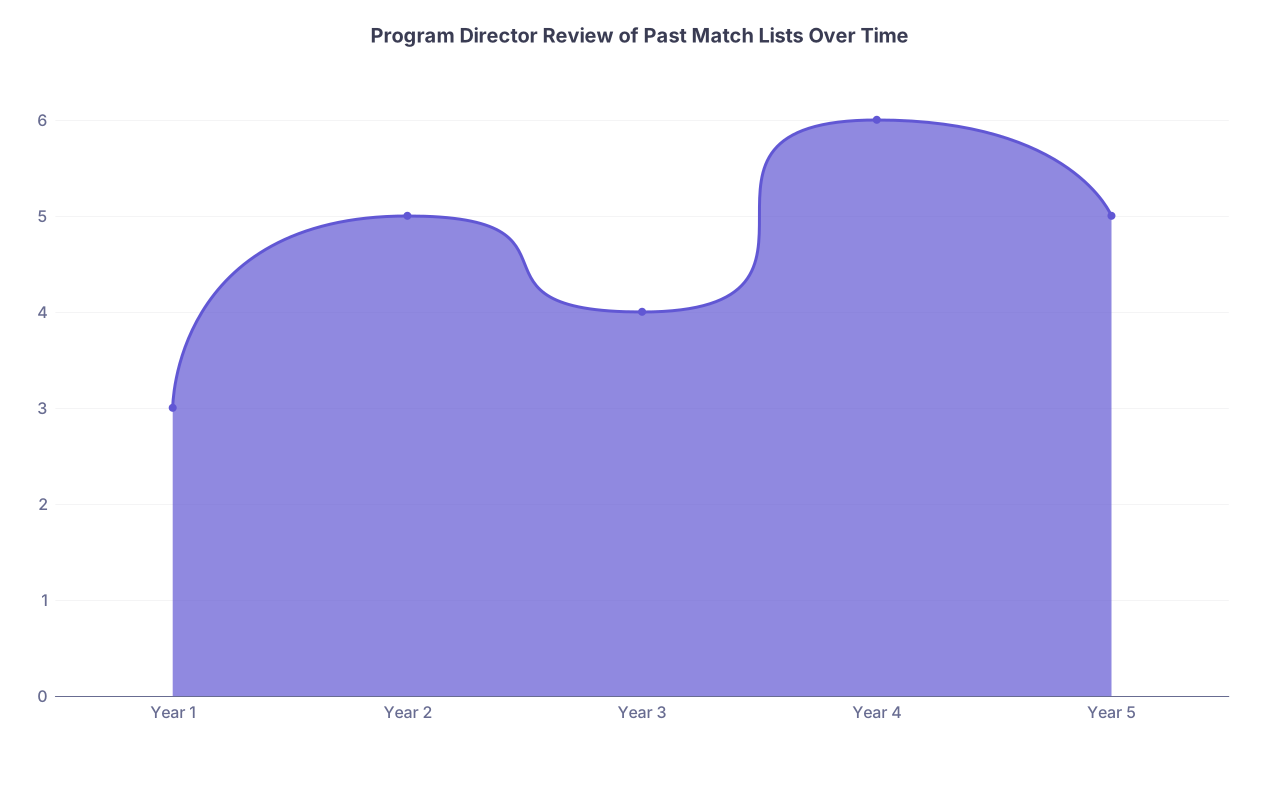
| Category | Value |
|---|---|
| Year 1 | 3 |
| Year 2 | 5 |
| Year 3 | 4 |
| Year 4 | 6 |
| Year 5 | 5 |
So yes, once you’re matched you’re not being selected anymore. But that original list – who you were when you arrived – never completely disappears from the program’s memory.
What This Means For You, Standing There With That Envelope
You don’t need to obsess over any of this on Match Day. The match is done. The decision is made. You’re in.
But you should understand what’s actually playing out behind the scenes, because it changes how you approach the next phase.
A few practical implications:
- The way you presented yourself in interviews is still echoing in faculty discussions right now. That persona – thoughtful, arrogant, anxious, mature – is being reattached to your name as they re-read your file.
- You’re already being slotted into schedules, teams, and informal categories: likely leader, research‑heavy, needs support, local anchor, culture carrier.
- Any “story” in your application (red flags, personal hardship, big ambitions) is about to become part of how they manage and mentor you.
And the biggest one: from this point forward, your file matters less than your behavior once you arrive. Whatever expectations or biases they carry from that match list can be confirmed or completely overturned in six months.
I’ve seen interns who were low on the rank list become the absolute backbone of a program. I’ve watched top‑ranked stars crash and burn because they thought matching was the finish line instead of the starting gun.
Match Day ends the anxiety of “Will I get a spot?” It begins a different game: “Who will I be when I show up?”
PDs are already preparing their answers to that question, sitting with your name on that list, right now.
Your job, once the champagne runs out and the Instagram posts fade, is to walk into orientation and make them rewrite whatever story they wrote about you on Match Day – in your favor.
With that, your time as an applicant is officially over. Next comes something much harder, and much better: becoming the resident they’re glad they saw on that screen.
The real education starts in July. But that’s a story for another day.