
The month before PGY‑1 is where interns are made or broken. Not in skill, but in sanity.
Most new interns waste these 30 days on vague “getting ready” and random Amazon hauls. Then July 1 hits, the pager screams, and they realize they packed three stethoscopes but never set up direct deposit or learned how to page consults. You are not going to be that person.
Here is your day‑by‑day, week‑by‑week PGY‑1 start countdown. Follow it and you’ll walk into orientation calm, logged in, paid on time, and at least 50% less panicked than your co‑interns.
30–21 Days Before PGY‑1: Lock Down Logistics and Paperwork
At this point you should treat residency like a full-time job that already exists. Because it does. HR, GME, and credentialing are already tracking whether you’re on top of things.
Core goals this week
- Finish all mandatory paperwork
- Confirm housing and move-in
- Set up financial basics
- Start a light clinical warm-up
Paperwork & onboarding (Day 30–26)
By one month out, you should:
Clear your inbox from the program
- Go through every email from:
- GME / HR
- Your program coordinator
- Occupational health / employee health
- Create three folders:
- “Action – Before Start”
- “Action – During Orientation”
- “Info – Keep”
- Go through every email from:
Finish all required forms At this point, you should have fully completed:
- I-9 and tax forms (W‑4, state forms)
- Direct deposit forms
- Background check / drug screen
- Occupational health questionnaires
- Immunization uploads (MMR, Varicella, Hep B, Tdap, flu if in season, COVID docs)
If anything is missing, handle it this week. Waiting is how you end up unpaid on your first paycheck.
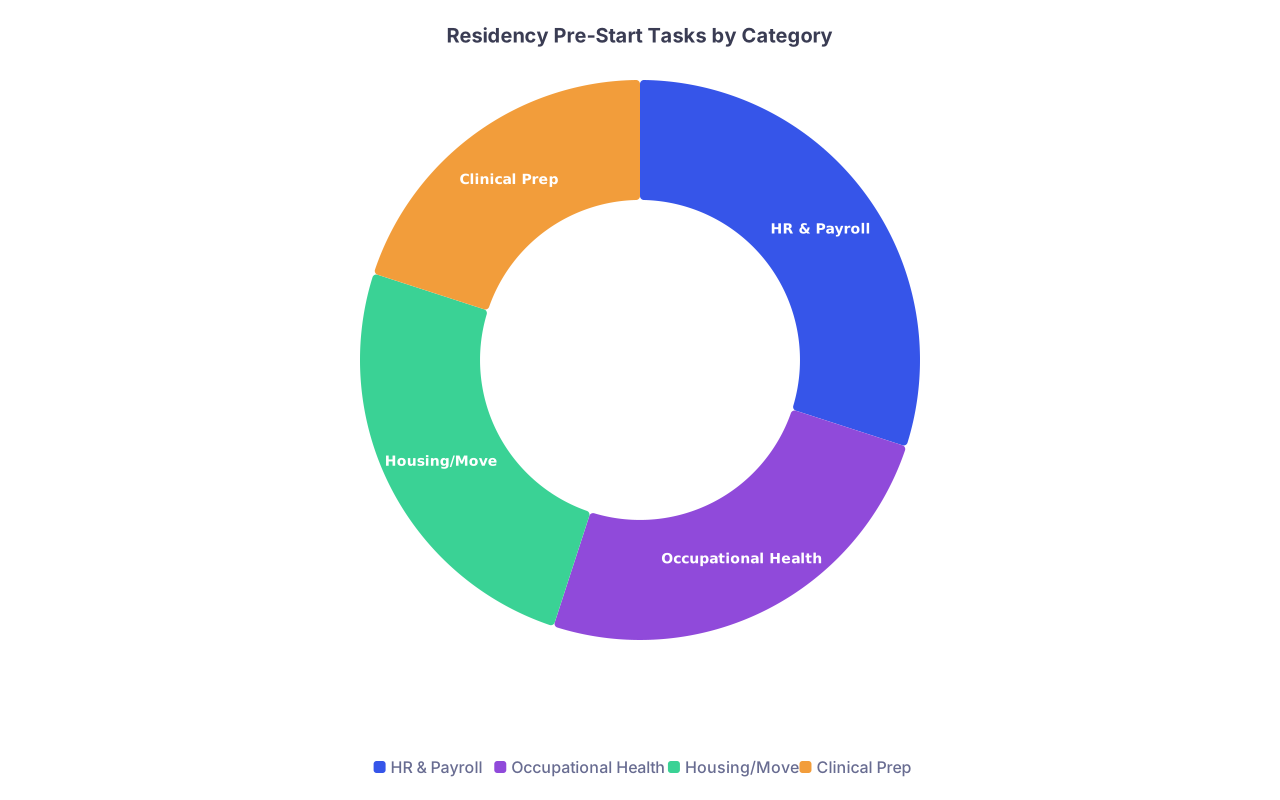
| Category | Value |
|---|---|
| HR & Payroll | 30 |
| Occupational Health | 25 |
| Housing/Move | 25 |
| Clinical Prep | 20 |
- Confirm your start dates & schedule
- Orientation date(s) and time
- Actual first clinical day
- First rotation (service + site)
- Where to report on Day 1 (building, floor, room)
If you do not have this clearly in writing, email your coordinator now. Short and direct: “Can you confirm my orientation schedule, first rotation, and where to report on Day 1?”
Housing, move, and baseline life setup (Day 25–23)
By now, housing should not be “I’ll figure it out.” It should be done.
At this point you should:
- Have:
- Signed lease / confirmed housing
- Move-in date set
- Utilities started (electric, gas, internet)
- And if you don’t, this week is your emergency fix.
Checklist (do these in order):
- Confirm:
- Address
- Rent due date
- Parking / permit details
- Schedule:
- Move-in date
- Movers or rental truck
- Time off from pre-residency travel right before move
Do not schedule your major move in the 48 hours before orientation. You’ll be exhausted and disorganized.
Financial setup (Day 22–21)
At this point you should make it impossible for admin chaos to delay your paycheck.
Banking
- Confirm direct deposit is received and processed
- Have at least 1 month of living expenses already accessible
- Set calendar reminders for:
- Rent due date
- Loan payments
- Credit card due dates
-
- Decide: IDR plan vs. forbearance
- Enroll in your plan or at least know exactly when payments resume
- If going for PSLF, confirm you’ll be at a qualifying institution and save your HR contact for future forms
Baseline budget You do not need a 12-sheet spreadsheet. But by now you should know:
- Take-home monthly pay (ballpark)
- Fixed costs: rent, utilities, transportation, minimums on debt
- How much is left for food / everything else
20–14 Days Before PGY‑1: Tech, Systems, and Clinical Refresh
Now you move from “am I hired and housed?” to “can I function on Day 1 without looking lost?”
Tech & logins (Day 20–18)
You want zero surprises with logins during orientation.
At this point you should:
- Have:
- Hospital email address + working password
- EMR account created (even if not fully active)
- Learning portal access for modules
- And you should test each login once.
Do this now:
- Log into:
- Hospital email
- EMR (Epic/Cerner/etc.) training portal
- Online learning (HIPAA, compliance, etc.)
- Search your email for:
- “training”
- “mandatory”
- “module”
- “orientation”
If you see required modules due before Day 1, block time to do them this week.
Light clinical warm-up (Day 17–15)
You are not remediating medical school. You’re just knocking off rust.
Focus on:
- How to write:
- Admission H&P
- Daily progress note
- Discharge summary
- How to:
- Order basic labs and imaging
- Start first-line treatments for common problems
- Manage common cross-cover calls
At this point you should spend 30–60 minutes per day on targeted refresh, not endless textbook reading.
Use something like:
- “Pocket Medicine” or “The Washington Manual”
- A short, structured resource for first-year residents in your specialty
- Your own old intern survival PDFs if your med school gave them

Start your daily routine shift (Day 14)
Two weeks out, you start moving your sleep and wake schedule toward intern reality.
At this point you should:
- Wake within 1 hour of when you’ll need to wake for wards
- Aim for:
- Lights out no later than 11 pm if typical pre-round start
- 7–8 hours in bed, even if you don’t sleep perfectly
If your first rotation includes nights:
- Shift your schedule gradually in the 3–4 days right before nights, not now.
- For now, just normalize a reasonable, consistent wake time.
14–7 Days Before PGY‑1: Build Your Intern Infrastructure
This week is about systems that will save your brain when you’re tired and being paged every 6 minutes.
Physical setup: your “intern kit” (Day 14–12)
At this point you should assemble ONE small, efficient setup. Not a rolling suitcase.
What you need:
- Badge reel + badge clips
- 1 good pen + 1 backup (that you actually like)
- Small notebook or index cards
- Minimal pocket reference (digital or paper)
- Phone charger + small wall block
- Water bottle you’ll actually carry
Avoid:
- Extra stethoscopes
- Overstuffed white coat pockets
- Giant binders
Digital setup (Day 12–10)
Your phone will be your second brain. At this point you should have:
- Medical apps installed (and signed in):
- UpToDate (if your institution offers it)
- Drug reference (Lexicomp, Micromedex, or equivalent)
- MDCalc or similar for scores
- Your EMR app if available
- A notes system:
- One main note labeled “Intern Brain”
- Sections for: common orders, consult numbers, admission templates, sign-out phrases
Set up persistent reminders:
- Monthly: update CV and log procedures
- Weekly: check duty hours and fill them honestly
- Daily (evening): quick next-day prep (review patient list, if you have one)
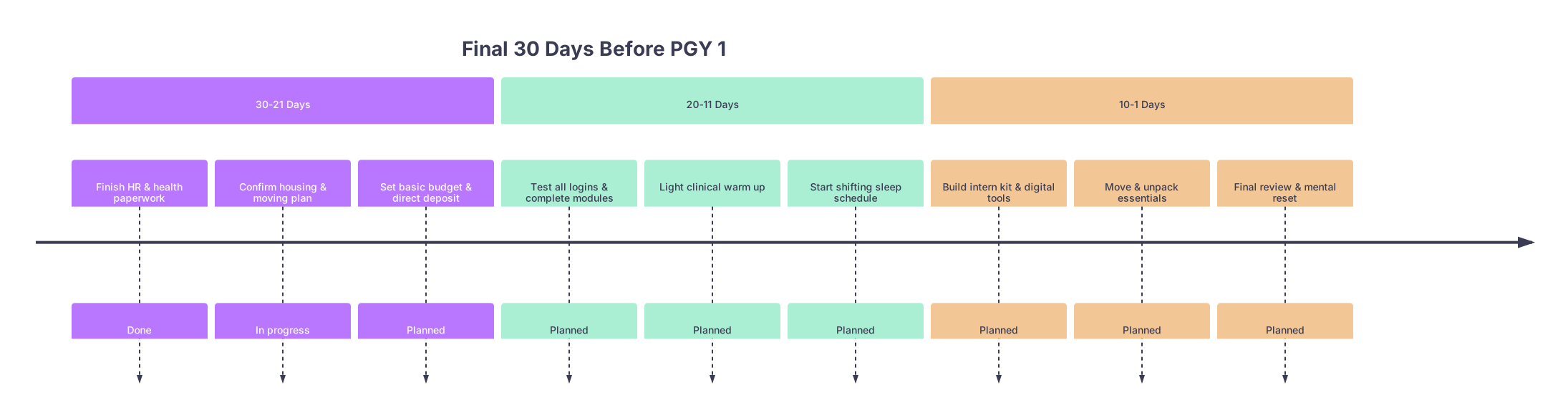
| Period | Event |
|---|---|
| 30-21 Days - Finish HR & health paperwork | Done |
| 30-21 Days - Confirm housing & moving plan | In progress |
| 30-21 Days - Set basic budget & direct deposit | Planned |
| 20-11 Days - Test all logins & complete modules | Planned |
| 20-11 Days - Light clinical warm up | Planned |
| 20-11 Days - Start shifting sleep schedule | Planned |
| 10-1 Days - Build intern kit & digital tools | Planned |
| 10-1 Days - Move & unpack essentials | Planned |
| 10-1 Days - Final review & mental reset | Planned |
Communication & expectations (Day 10–8)
By now, expectations should not be a mystery.
At this point you should:
- Re-read:
- Intern handbook
- Rotation schedule
- Any “welcome” or “expectations” letters from your PD or chiefs
- Write down:
- What time you’re expected to arrive
- Dress code (scrubs vs. business casual + white coat)
- Who you report to on Day 1 (chief, senior, coordinator)
If anything’s unclear, send one concise email to your chief or coordinator. Better a short “just confirming” now than an awkward late arrival on Day 1.
7–3 Days Before PGY‑1: Move, Settle, and Run Drills
This is where people sabotage themselves by trying to do everything at once. You’re going to sequence it.
Move & settle (Day 7–5)
At this point you should complete your move no later than 3 days before orientation.
Moving day (choose 1 main day):
- Goal:
- Get everything into the apartment
- Set up:
- Bed
- Basic kitchen
- Shower and bathroom
- Do NOT:
- Try to fully decorate
- Build 6 pieces of furniture at 1 am
Day after moving:
- Get:
- Groceries for 5–7 days (easy meals, snacks for long shifts)
- Toiletries, cleaning basics, laundry supplies
- Walk:
- From your place to the hospital or transit stop
- To nearest pharmacy and quick food options
At this point you should be able to:
- Get from bed to hospital without GPS
- Feed yourself without relying on takeout for every meal
System drills (Day 4–3)
Now you practice the mundane things that become disasters under stress.
At this point you should run through:
Morning routine rehearsal
- Set your alarm for your real intern wake-up time
- Go:
- Shower
- Get ready
- Eat something
- Leave at the exact time you think you’ll need to
- See what actually happens to your timeline
Hospital entry drill (If possible, do this once before orientation.)
- Find:
- Parking area or transit stop
- Correct hospital entrance at early morning hours
- Where employee entrance is (if different)
- Locate:
- GME office
- Main internal medicine / surgery resident workroom for your program, if accessible
- Cafeteria or coffee spot
- Find:
“Fake” admission on paper
- Take a common admitting problem (e.g., chest pain, pneumonia, DKA)
- Write:
- 5-line HPI
- Focused exam
- Basic labs/imaging
- Admission orders (level of care, fluids, abx, etc.)
- Time yourself. Aim for <20–30 minutes start to finish.
Final 48 Hours: Calm, Clarity, and Last-Minute Checks
If you’ve done the previous steps, these last 2 days are not for cramming. They’re for tightening screws and clearing your head.
48–24 hours before (Day 2)
At this point you should stop major changes and focus on review and readiness.
Clothes and gear check
- Lay out:
- Clothes for Day 1 (and maybe Day 2)
- White coat (clean, buttons attached)
- Hospital ID if pre-issued
- Pack your bag:
- Wallet, ID, any required documents
- Intern kit (pens, small notebook, charger, water bottle)
- Simple lunch or snack
- Lay out:
Orientation & Day 1 confirmation
- Re-check:
- Start time
- Location
- Any instructions about what to bring
- Screenshot directions and building maps to your phone
- Re-check:
Very light clinical review
- Pick 3–4 topics relevant to your first rotation (e.g., for medicine: AKI, sepsis, diabetes management, anticoagulation)
- Skim high-yield summaries, not full chapters
| Timeframe | Primary Focus | What To Avoid |
|---|---|---|
| 48–36 hours | Gear, clothes, logistics | Deep textbook reading |
| 36–24 hours | Light review, routine check | All-day social plans |
| 24–12 hours | Sleep, meals, mental reset | New projects or packing |
| Morning of Day 1 | Calm execution | Changing any major plan |
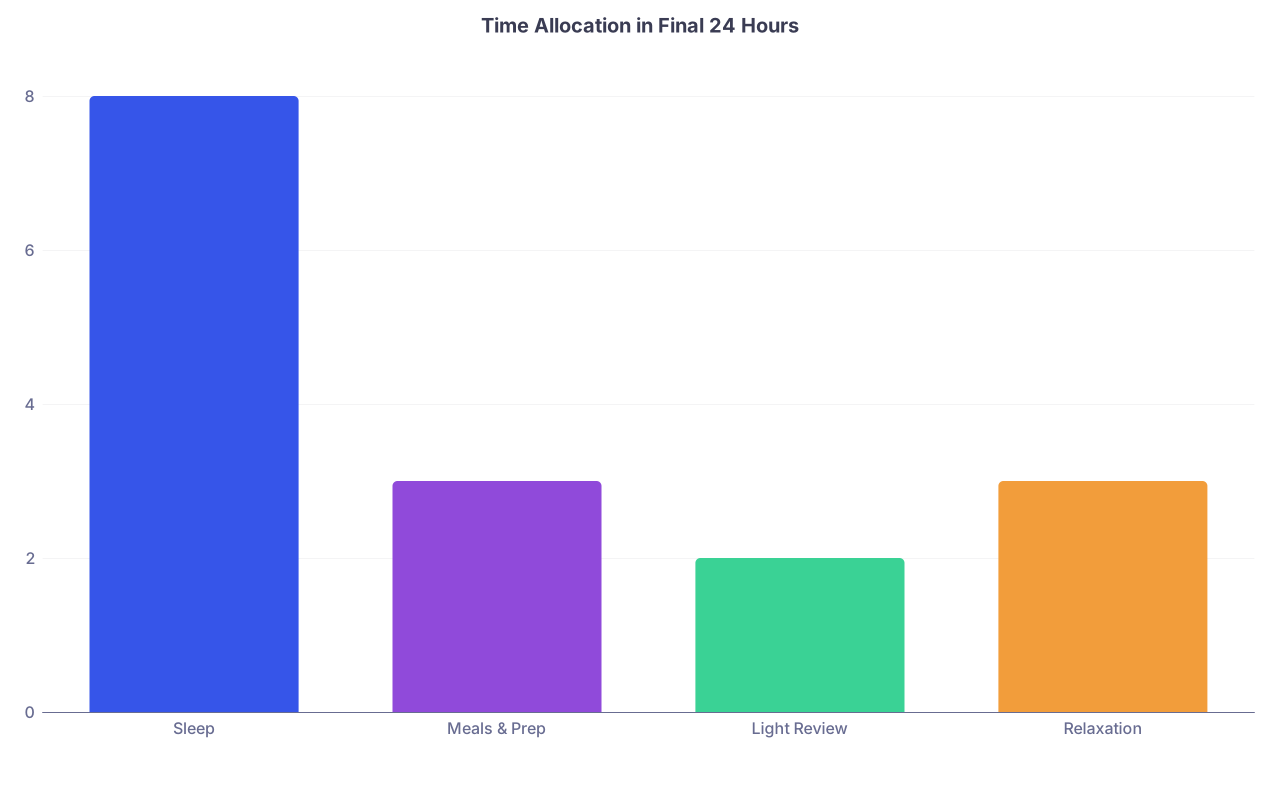
| Category | Value |
|---|---|
| Sleep | 8 |
| Meals & Prep | 3 |
| Light Review | 2 |
| Relaxation | 3 |
Final 24 hours (Day 1 Eve)
At this point you should treat yourself like an athlete before a race.
Evening:
- Eat a normal, non-experimental dinner
- Confirm your alarm(s) are set
- Charge:
- Phone
- Watch
- Any device you’re bringing
- Stop studying at least 2 hours before bed
Mental reset:
- Acknowledge: You will not know everything.
- Your jobs Day 1:
- Be on time
- Be reachable
- Be willing to help and learn
- Be safe
Lights out at a time that gives you at least 7 hours in bed.
Morning of Day 1: Execution, Not Perfection
The countdown is over. Now you just run the plan.
At this point you should:
Wake up with buffer
- Give yourself at least 30 extra minutes beyond your rehearsal time.
- If something goes wrong (slow bus, parking confusion), this saves you.
Simple morning routine
- Light breakfast
- Quick self-check:
- Badge?
- Wallet/ID?
- Keys?
- Phone and charger?
- Packed lunch/snacks?
Arrive early
- Aim to arrive at the hospital 20–30 minutes before the stated time.
- Use the extra time to:
- Find the room
- Breathe
- Meet a co-intern without rushing
You are not supposed to be efficient yet. You’re supposed to be present, responsive, and safe.
The Big Picture: What Actually Matters
Across these 30 days, you’re doing three things:
Remove avoidable stressors before Day 1
- Housing, HR, money, and basic logistics should be handled before your pager ever goes off.
Build simple systems you can lean on when tired
- Intern kit, digital tools, sleep routine, and basic notes will save you more than any last-minute study binge.
Shift from student mindset to resident mindset
- You’re not there to show what you know.
- You’re there to take responsibility, ask for help early, and keep patients safe.
Follow this countdown, and by the time July 1 shows up, you won’t be “ready for everything.” No one is. But you’ll be ready for Day 1—and that’s exactly enough.