
Programs absolutely judge you long before July 1. The match is not the finish line; it’s the point where they quietly raise the bar and start keeping score in a different way.
I’ve sat in those closed-door meetings. I’ve heard attendings say, “If they’re already doing this in March, what are they going to be like as an intern?” You think no one’s watching after Match Day? They are. And they have very specific expectations they will never spell out to you directly.
Let me walk you through what’s actually going on once your name moves from “Applicant” to “Incoming PGY‑1.”
1. You Matched. They Relax… And Then They Start Evaluating Again
Once the rank list is certified, there’s a brief moment where PDs and faculty exhale. The scramble is over. But after the emails go out and the obligatory “Congratulations!” messages are sent, a different conversation starts.
Behind closed doors, it sounds like this:
- “Who’s the supposed rock star from Hopkins? Let’s see if they can actually work.”
- “That couple match from our own med school — we already know their weak spots. We’re going to have to stay on them.”
- “This one had stellar scores but pretty average letters. I want to see what they’re like in person.”
They’re no longer comparing you to other applicants. They’re asking one question: Are you going to be safe and reliable on July 1?
From Match Week to orientation, every interaction is now interpreted as data about that question. Emails, paperwork, how you respond to requests, whether you show up to optional events. None of that feels high stakes to you. It absolutely is to them.
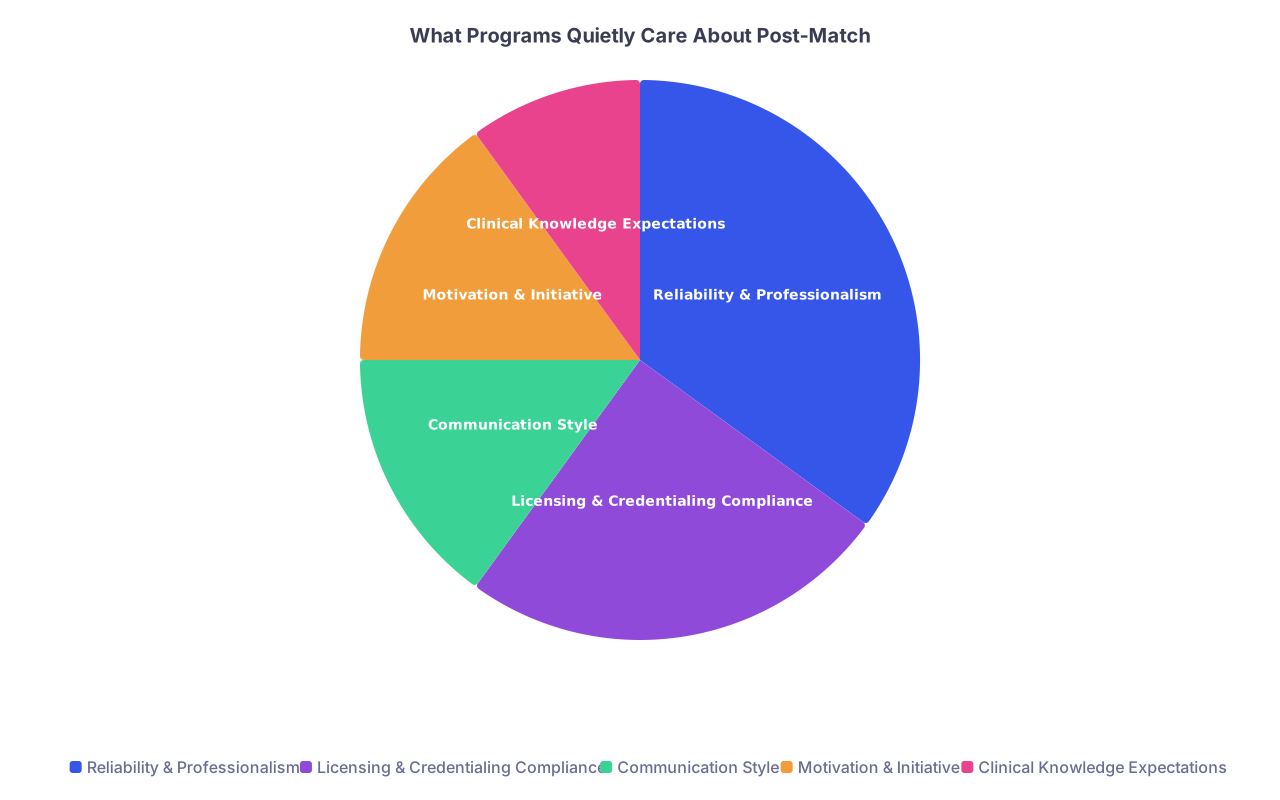
| Category | Value |
|---|---|
| Reliability & Professionalism | 35 |
| Licensing & Credentialing Compliance | 25 |
| Communication Style | 15 |
| Motivation & Initiative | 15 |
| Clinical Knowledge Expectations | 10 |
If you act like “Match = done,” they notice. And they start re-categorizing you from “high-potential” to “possible problem child” way faster than you think.
2. The Administrative Test You Don’t Realize You’re Taking
Nobody tells you this: your first “rotation” as a matched incoming resident is actually paperwork and logistics. And yes, they judge you on it.
The GME office sends out:
- Credentialing packets
- Vaccine records / titers requests
- Background check forms
- Drug screen scheduling
- State license or training license applications
- EHR training modules
- Hospital onboarding modules
Here’s the part no one says out loud: programs treat your responsiveness here as a proxy for how you’ll handle patient care tasks.
When you:
- Submit things late
- Need multiple reminders
- Ignore or skim emails
- Don’t read instructions and ask questions already answered in the attachments
…faculty and coordinators make a note. They won’t email you, “You’re worrying us,” but they’ll say in the office, “We’re already chasing this person for basic stuff.”
And then that translates to: “We’ll need to keep an eye on them in July.”
I’ve watched PDs pull up email threads on screen in June: “Look — we had to remind them five times for their drug screen. Don’t put them on night float first month.”
They’re not being petty. They’re drawing the obvious conclusion: if you can’t get your vaccine record in on time, can you be trusted to follow up an abnormal lab?
3. The “Senior-Colleague” Shift: You’re Not a Student Anymore
Here’s the psychological shift programs absolutely expect from you, and most interns miss it.
On March 14, at 10:59 AM, you’re a student.
At 11:00 AM, you’re effectively considered a junior colleague.
The big unspoken expectation: you start behaving like a physician before July 1.
That means:
You stop acting like this is still school. PDs expect you to:
- Respond to emails like a professional, not a student hoping the deadline “can be flexible”
- Use clear, brief, respectful communication, not casual or chatty messaging
- Show initiative rather than waiting for someone to handhold you through every step
- Own your mistakes in paperwork, not deflect or ghost
There’s a thing attendings say all the time behind the scenes:
“How someone handles small responsibilities is how they’ll handle big ones.”
When you show up to orientation late, or you’re unprepared, they immediately extrapolate that to “This is how rounds will look.” Rightly or wrongly, that’s the link they draw.
4. Clinical Expectations: The Bar is Higher Than You Think
No one expects you to function as a seasoned resident on Day 1. But do not kid yourself: they absolutely expect you to show up with a baseline that is not “just passed Step 2.”
Here’s what’s usually in their heads when they think “incoming intern competency”:
- You can write a coherent H&P without an attending rewriting every line.
- You can construct a basic assessment and plan for common problems: chest pain, SOB, fever, AKI, DKA, post-op fever, etc.
- You know bread-and-butter management steps — and when to ask for help.
Programs won’t email you a list of “required topics to know by July.” But in PD meetings, they say things like:
- “I shouldn’t have to teach an intern how to write for DVT prophylaxis.”
- “They need to know how to call a consult. Not perfectly. But not like it’s their first time using a phone.”
- “If an intern can’t present a simple pneumonia admission without falling apart, that’s ridiculous.”
You matched? Good. Now they assume:
- You’re reviewing core topics in the spring, not mentally checked out.
- You’re brushing up on common orders in your specialty.
- You’re not showing up cold.
Programs expect you to use that post-Match period to build a floor under your knowledge, not to coast.
They can’t say, “You need to study now,” because you’re technically not their employee yet. But they judge the end result in July.
5. The Attitude Test: How You Act Between Match and July
I have seen more careers damaged by attitude in these three months than by any USMLE score.
Once you’ve matched, everyone relaxes the fake politeness. You do. They do. This is where your true demeanor leaks out.
Program directors watch for a few things very closely:
Entitlement.
You matched at a “top” program? They’re watching for arrogance. The intern who says, “At my med school we did it this way” on Day 1 is instantly on the radar. Your reputation gets set so fast it will make your head spin.
Victim mindset.
If, in your first few interactions, you’re already complaining about schedules, call, housing, credentialing, “unfairness,” PDs file that away. They know those complaints will get louder once you’re stressed. They start mentally sorting you into “resident we’ll have to manage emotionally.”
Defensiveness.
If someone—coordinator, chief, or faculty—gives you feedback pre-start (e.g., “Please turn forms in on time”), how you respond matters. Graceful and accountable? Good sign. Argumentative or passive-aggressive? They’ll remember that longer than you think.
The unspoken expectation: you approach this phase like a professional who is joining a team, not like a customer whose purchase (matching) entitles them to a certain level of service.
6. Social Media, Side Hustles, and Your “Brand” After Match
Let me be blunt: programs absolutely look at your social media again after you’ve matched. And they’re less forgiving.
Before Match, if they see questionable content, they might think, “We don’t know them; maybe it’s out of context.” After Match, the attitude is more like, “We chose this person; if this blows up, it’s our problem.”
They’re looking for:
- Posts that trash med schools, hospitals, nurses, patients, or other residents
- Oversharing about mental health crises or impairment in a way that suggests you may not be safe to practice (not that you have issues—everyone does—but how you frame and handle them online)
- Side businesses that look like they’ll interfere with residency: coaching, paid consulting, anything time-intensive or ethically messy
No one is going to email: “We saw your TikTok and we’re concerned.” Instead, they’ll store the concern for when, not if, any performance problem arises. Then it becomes part of the case for remediation or non-renewal.
Programs expect your online presence to shift from “student who vents” to “physician who understands public responsibility.” Without being told.
You’re not just representing yourself now. You’re tied to their name.
7. Quiet Expectations About Your Personal Life
This is the part nobody writes in official handbooks, but gets discussed constantly in resident meetings.
Program leadership knows you have a real life. They know people move, get married, have kids, have health issues, care for parents. That’s not the problem.
Their unspoken expectation is simple: your major life logistics should not explode in July.
That means:
- You’re moved and reasonably settled before orientation starts.
- Your childcare plan is at least somewhat thought through.
- Visa, licensing, and banking issues are already in process months in advance.
- You’re not spending your first two months chasing paperwork you ignored in April.
I’ve sat through exasperated conversations about an intern who “suddenly realized” in late June that they hadn’t started their state license application.
Nobody says, “Hey, we expect you to adult at a pretty high level now.” But that’s exactly what’s on their mind. You are joining a profession that does not stop for your chaos. You’re allowed to have problems. You’re not allowed to pretend you didn’t see them coming.
8. The Hidden Curriculum of Communication
Programs judge your emails more than you realize.
I’ve watched coordinators forward an email to the PD with a single line: “This is our new intern.” The email is either an example of composure and professionalism—or a red flag.
They expect you to:
- Use a clear subject line, respond within a reasonable timeframe
- Answer all questions asked, not cherry-pick or create more confusion
- Be brief but complete
- Avoid drama or oversharing in professional channels
Here’s the kind of thing that quietly irritates everyone:
An email that says:
“Hey, I’m super overwhelmed right now, can I maybe get an extension on this if it’s not too much trouble? I’ve just had a lot going on and I’m not sure when I’ll get to it.”
Versus:
“Thank you for the reminder. I can submit X and Y by Friday. I’ll need until Tuesday for Z due to a prior commitment. Please let me know if that timing is a problem.”
Those two emails create two entirely different narratives about you. One reads as “fragile, disorganized, self-focused.” The other reads as “busy but competent and respectful.” Programs expect the second, and they quietly brace for trouble when they see the first.
9. What Programs Expect The Week You Show Up
The first week of residency, PDs and chiefs are watching you closely. Not for medical brilliance, but for how you function as a trainee and teammate.
Interns don’t realize how often the following gets said in back rooms:
- “Who already knows how to handle sign-out decently?”
- “Who looks completely lost with the EHR?”
- “Who is showing up 20 minutes early and trying to learn workflows?”
Here’s the unspoken checklist they’re mentally running that first week:
- Are you on time? Consistently. Without excuses.
- Do you look like you take this seriously? Attire, demeanor, how you talk in front of patients and nurses.
- Are you trainable? When given a correction once, do you adjust or repeat the same mistake?
- Do nurses feel comfortable approaching you? Programs listen very closely to nursing impressions; they’re more predictive of your success than Step scores.

You’re not expected to know all the answers. You are expected to:
- Ask for help before something becomes unsafe
- Take notes and not ask the same basic thing five times
- Follow through on what you say you’ll do
Nobody says, “Here’s the rubric we’re grading you on week one.” But trust me, there is a rubric.
10. When Things Go Wrong Before You Even Start
Here’s the part that makes applicants uncomfortable: matching does not mean your position is absolutely guaranteed no matter what you do.
If you:
- Fail Step/COMLEX after Match
- Have a major professionalism issue at your med school
- Get arrested or face serious legal trouble
- Completely implode on licensing/credentialing tasks and become ineligible to start
…programs talk to each other, to GME, to legal, to the NRMP. I’ve watched long, tense meetings where everyone is trying to decide if they can safely, legally, and ethically still bring someone in.
No PD wants to fire an incoming intern before they start. It’s a nightmare. It screws their class, their rota, their budget. But if your behavior from March to June screams “risk,” they will absolutely consider it.
The unspoken expectation: once you’ve matched, you keep your life within a reasonable corridor of stability and professionalism. If you know you have an issue, you disclose and work with them early. Surprises in June are what really scare programs.
11. What “Good” Looks Like From Their Side
Let me flip this to the positive, because you can absolutely build a strong reputation before you ever write your first admission order.
Here’s what impresses programs post-Match:
- You handle all credentialing and licensing tasks early, cleanly, with minimal reminders.
- Your emails are professional, prompt, and solution-oriented.
- You ask smart, focused questions when things are unclear, rather than vague “I’m confused, help” messages.
- You show interest without being needy: “I’d like to read about common cases we see on the wards. Any resources you recommend?” once, not ten emails.
- You show up to orientation and the first week rested, presentable, on time, with a notebook, and you act like this matters.
Residents like that enter July with the benefit of the doubt. Attendings coach them more patiently. Chiefs assign them to slightly more complex teams sooner. Faculty mention them by name in positive ways: “That new intern on Red team is really sharp and dependable.”
The unspoken truth: your reputation trajectory is already in motion before you write your first note.
12. Timeline: What Programs Assume You’re Doing Each Month
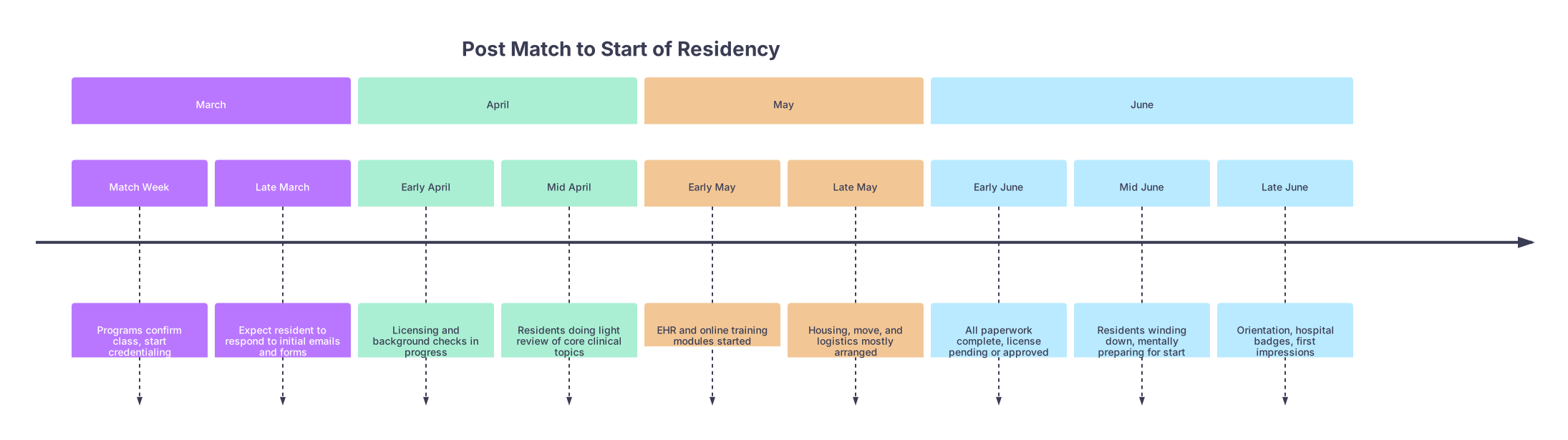
Just so you see the mismatch between what students think (“I’m relaxing!”) and what programs assume (“They’re getting ready”), here’s how this usually plays out.
| Period | Event |
|---|---|
| March - Match Week | Programs confirm class, start credentialing |
| March - Late March | Expect resident to respond to initial emails and forms |
| April - Early April | Licensing and background checks in progress |
| April - Mid April | Residents doing light review of core clinical topics |
| May - Early May | EHR and online training modules started |
| May - Late May | Housing, move, and logistics mostly arranged |
| June - Early June | All paperwork complete, license pending or approved |
| June - Mid June | Residents winding down, mentally preparing for start |
| June - Late June | Orientation, hospital badges, first impressions |
You don’t need to live like a monk for four months. But programs quietly expect you to treat this like a transition into the most demanding job you’ve ever had, not like the last big party before “real life.”
13. How to Use This Knowledge Without Making Yourself Miserable
You can read all this and either:
- Spiral into anxiety, or
- Treat it like a cheat sheet.
You don’t need to be perfect. Programs are not hunting for reasons to hate you. They just don’t have time for interns who create chaos.
If you:
- Handle your paperwork early and professionally
- Keep your personal life as stable as reasonably possible
- Do some targeted review of core material for your specialty
- Communicate like a junior colleague, not a checked-out student
- Show up in July ready to learn, not to argue
…you’ll be ahead of a surprising chunk of your class.
You’re not being asked to be amazing. You’re being asked not to be a liability—administratively, clinically, or interpersonally.

Quick Comparison: What You Think vs What They Expect
| Your Assumption Post-Match | Program's Unspoken Expectation |
|---|---|
| I finally get to relax | You downshift but stay engaged and responsible |
| Deadlines are flexible now | You meet or beat every credentialing deadline |
| I’m still basically a student | You’re already a junior colleague |
| July is when I start learning again | You’ve reviewed core topics before July |
| My personal life is my business | Your instability becomes their problem |
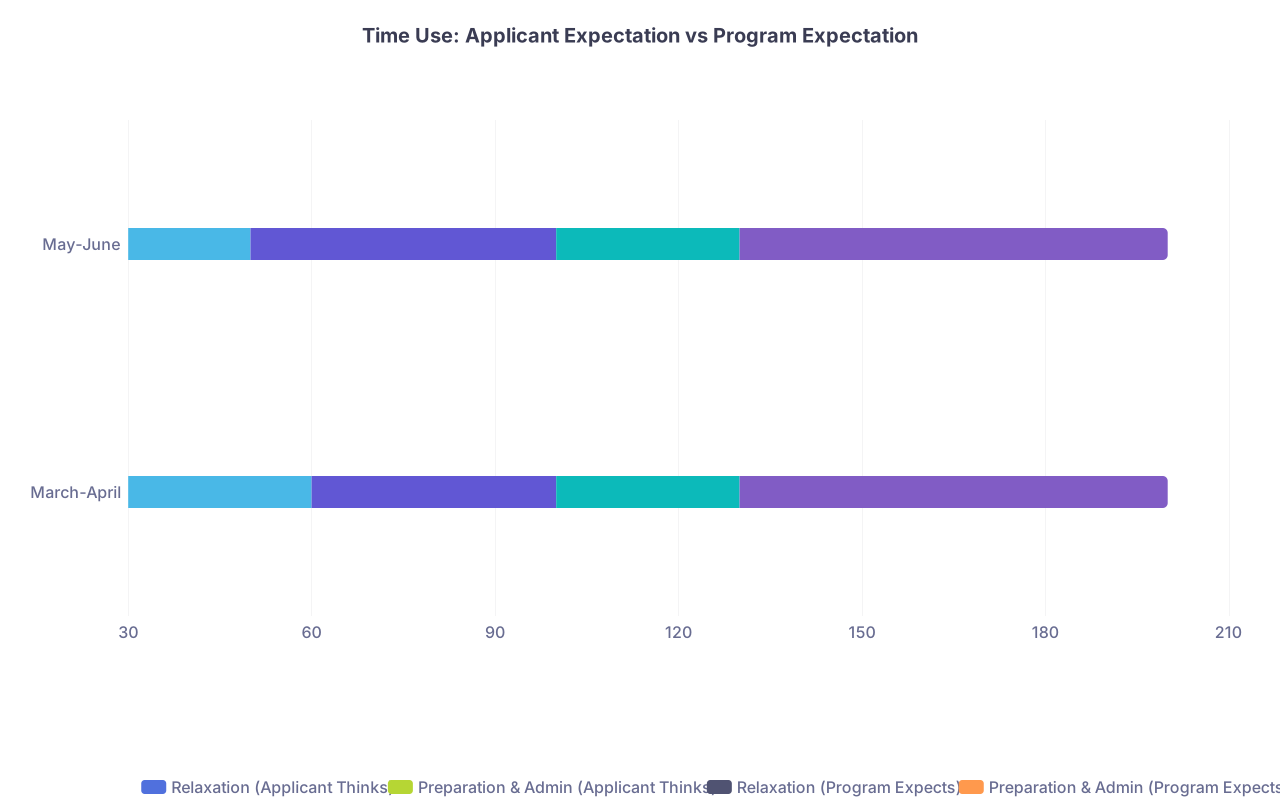
| Category | Relaxation (Applicant Thinks) | Preparation & Admin (Applicant Thinks) | Relaxation (Program Expects) | Preparation & Admin (Program Expects) |
|---|---|---|---|---|
| March-April | 60 | 40 | 30 | 70 |
| May-June | 50 | 50 | 30 | 70 |
FAQ: The Unspoken Expectations After You’ve Matched
1. Do programs actually care if I take a long vacation after Match?
They don’t care that you take a vacation; they care how you handle it. If you finish paperwork early, communicate clearly about your availability, and are reachable for essential issues, no problem. If you vanish for six weeks and ignore emails, you’ve just told them exactly how you’ll handle stress and responsibility.
2. How much studying do programs really expect before residency starts?
They’re not looking for you to be fellowship-level. They expect that you review core bread-and-butter topics for your specialty and remember how to think through common presentations. Coming in completely cold signals that you treated the gap months as a total academic blackout. That worries them.
3. Can my spot actually be taken away after I match?
It’s rare, but yes, in serious situations: failing licensing exams, major professionalism violations, criminal issues, or losing eligibility to work (visa, license, etc.). Usually programs try hard to keep you, but if your behavior creates major risk, they will consider separation or delayed start.
4. How formal should my emails to the program be after Match?
Err on the side of professional. Short, clear, respectful. Use greetings and sign-offs. Respond within 24–48 hours. You can relax slightly over time once you know the culture, but starting casual (“Hey, what’s up?” tones, emojis, sloppy language) makes you look unserious.
5. What’s the single biggest mistake new interns make between Match and July?
Coasting. Assuming the hard part is over, ignoring logistics, not studying at all, showing up disorganized and tired. Programs read that as lack of judgment and maturity. The residents who quietly prepare, handle their administrative tasks, and arrive ready to work are the ones who get trust early—and more opportunity later.
Remember:
- Matching is not the end; it’s the beginning of a new kind of scrutiny.
- Programs judge your reliability and attitude long before you write your first note.
- If you treat the post-Match months like a professional ramp-up instead of a victory lap, you’ll start residency two steps ahead of everyone who didn’t understand any of this.