You're three months into a deployment, eating cold chow in a tent, and the thought hits again: I want to be a physician. Not someday. On a real timeline. The problem? Your duty day doesn't care about AAMC deadlines, your command may rotate next quarter, and the nearest quiet study space smells like jet fuel.
That's the reality for active-duty service members chasing the MCAT. Civilian premeds get clean six-month study blocks. You get field exercises, unexpected TDYs, and the constant background hum of "what if orders drop." Timing isn't just helpful here, it's the whole game. Miss the window and you can blow an HPSP cycle, delay separation paperwork, or watch a USUHS application window slam shut.
This guide walks you through ten concrete milestones, sequenced for military life. At each point I'll tell you exactly what you should lock down before moving forward. No fluff. Just the checkpoints that keep your med-school path from getting overrun by the next set of orders.
Milestones 1-3: Foundation and Early Planning (12-9 Months Before Test Date)
For service members balancing unpredictable schedules, mastering time management becomes critical, consider exploring specialized strategies for balancing MCAT prep with demanding military obligations.
At this point you should stop treating the MCAT like a distant idea and start treating it like a mission with a hard start date.
Milestone 1: Assess eligibility and map the pathways. Decide which door you're kicking open. Health Professions Scholarship Program (HPSP), Uniformed Services University (USUHS), or civilian medical school with a later military commitment each carry different timelines, service obligations, and application calendars. Pull the current year HPSP board dates and USUHS application windows now. I've watched too many solid applicants discover, too late, that their preferred pathway closed three months earlier because they waited for "a better time."
Milestone 2: Command consultation. Sit down with your CO or senior rater. Be direct: "I'm preparing for the MCAT on [target date]. Here's how it intersects with our upcoming training cycle and possible deployments. I need your support for study time and a letter if required." Some commanders light up and clear the path. Others need education. Either way, you need the conversation on record early. Without it, every late night in the library becomes a negotiation instead of a plan.
Milestone 3: Baseline assessment. Take one full-length AAMC practice exam under realistic conditions, timed, no phone, same start time you'll use on test day. Score it cold. That number is your ground truth. Most service members I coach land somewhere in the 490s-500s on the first try; the ones who skip this step waste months reviewing content they already own.
Critical action before you leave this phase: build the support network. Find two people who already made the military-to-medicine jump, one still in uniform, one who separated. Ask them the ugly questions about command resistance, spouse stress, and what they wish they'd done differently at the 12-month mark.
If your scores don't reach your target during intensive prep, having a clear retake strategy built into your timeline can prevent an unwanted gap in your application cycle.
Notice the military bar stretches farther left. That's not padding, that's buffer for the days you'll lose to the field.
Milestones 4-5: Strategic Planning and Resource Acquisition (9-6 Months Before Test Date)
At this point you should turn the vague "I'll study when I can" into a written schedule that survives contact with the duty day.
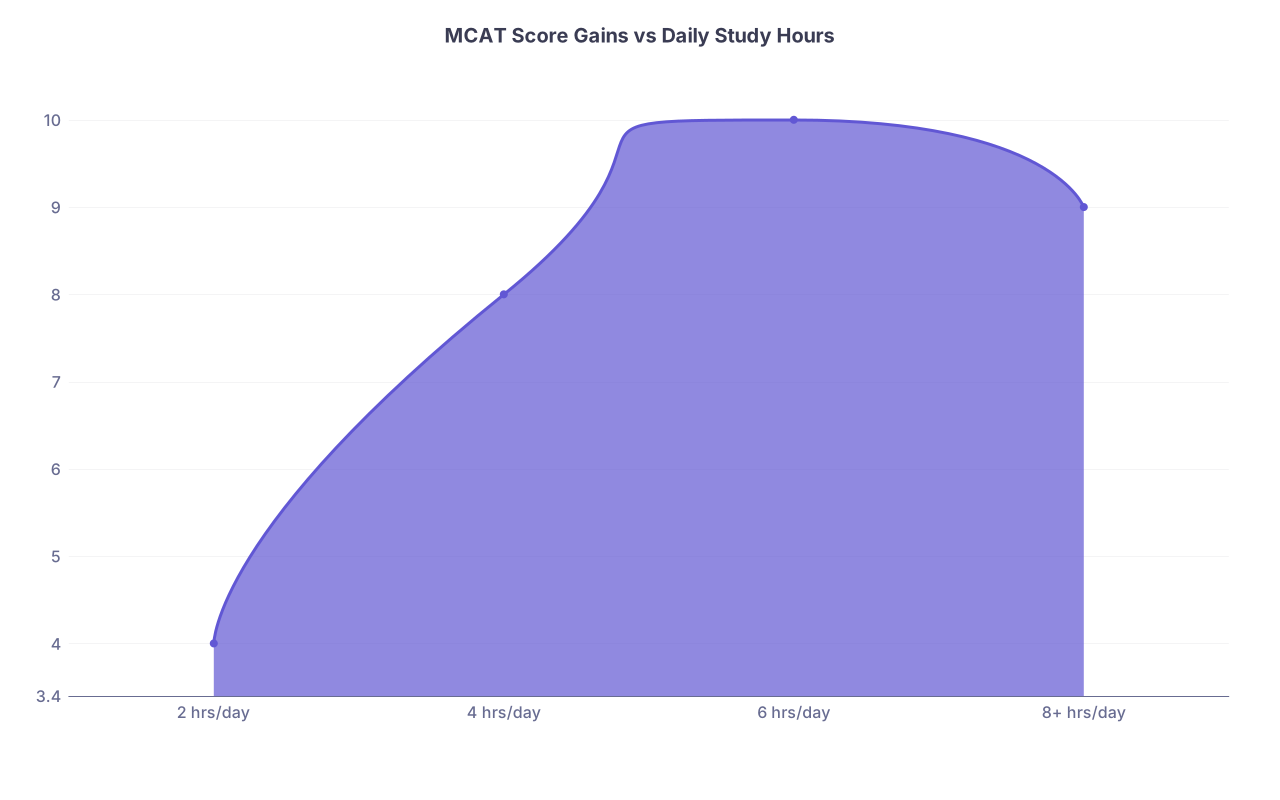
Milestone 4: Build the realistic schedule. Block duty hours first, then family obligations, then sleep. What's left is your study real estate. Most active-duty schedules can sustain 15-20 focused hours per week without collapse. Anything claiming 40+ hours while you're still on a full ops tempo is fantasy, and fantasy leads to burnout two months before the test. Write the plan in pencil. Deployments, inspections, and last-minute taskings will erase parts of it. That's expected. The goal is a living document, not a museum piece.
Milestone 5: Gather resources and lock logistics. Order your primary materials now, AAMC official guides, a solid content book set, and a question bank with offline capability. If you're using Tuition Assistance or other education benefits, submit the paperwork this month; finance offices move at the speed of bureaucracy. Scout quiet study spaces on base: education centers, chapel libraries, empty conference rooms after 1800. Confirm you can get in after hours.
Deployment contingency is non-negotiable. If orders could drop, answer these three questions today:
- Can I access my question bank and Anki decks offline?
- What's my absolute latest test date that still feeds the next application cycle?
- Who holds my study materials if I have to leave them behind?
Follow the left branch if there's even a 30% chance of movement. I've seen "low probability" deployments eat entire study blocks.
Milestones 6-7: Intensive Preparation Phase (6-3 Months Before Test Date)
At this point you should be deep in the work, not still shopping for the perfect planner.
Milestone 6: Finish systematic content review. Cover biology, general and organic chemistry, physics, psychology, sociology, and CARS in that order if your baseline showed classic military-applicant weaknesses (strong in physics from technical training, softer in biochem and psych/soc). Use a checklist you can mark complete, open loops kill momentum when you're tired. Aim to finish first-pass content by the five-month mark so the next phase isn't contaminated by "I still haven't looked at amino acids."
Milestone 7: Launch full-length practice exams. Minimum four to six AAMC or high-quality full-lengths under test-day conditions. Take one every two to three weeks. Score them the same day, then spend the next 48 hours reviewing every single missed question, not just the ones you got wrong, but the ones you guessed right. Track the trend line. If you're not seeing a steady climb of 2-3 points every two exams, something in your review method is broken. Fix it immediately.
Adaptation rule if you deploy during this window: switch to maintenance mode, 30-45 minutes daily of high-yield Anki and CARS passages. No heroics. When you return, run a compressed four-to-six-week sprint of full-lengths and weak-area drills. The people who try to force full intensity in a combat zone usually return with worse scores and a new hatred for the process.
These numbers assume a non-deployed tempo. Scale them to whatever your actual free hours allow, but keep the proportions.
Milestones 8-9: Final Preparation and Test-Ready Status (3-1 Months Before Test Date)
At this point you should stop acquiring new content and start proving you can perform on demand.
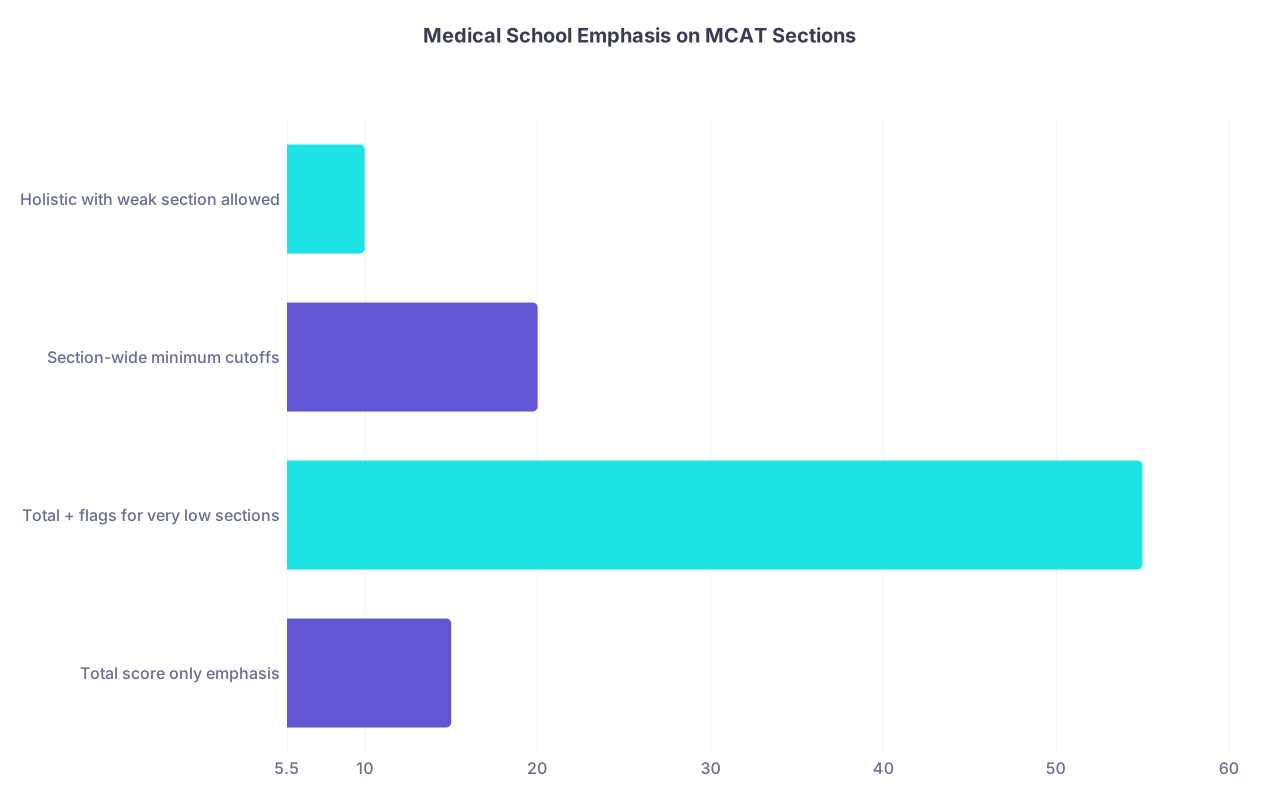
Milestone 8: Hit consistent target scores. Your last three full-lengths should sit at or above your goal score (most military applicants aiming competitive for HPSP/USUHS want 510+ with balanced section floors). If you're still swinging ±5 points, you don't have a confidence interval, you have hope. Keep testing until the floor is solid.
Milestone 9: Taper and lock logistics. One to two weeks out, cut volume by roughly 30%. Sleep becomes non-negotiable. Light CARS and weak-area drills only. Confirm your test center. If you're overseas or at a remote CONUS post, you may need to travel to a Pearson VUE site or use a military testing facility if available, book flights and lodging now. Pack the required government ID and know the exact reporting time. Build a test-day contingency: backup alarm, backup ride, backup snack. Military life teaches you that the plan fails at the worst moment; treat test day the same way.
Mental prep matters more than another practice passage. Use whatever stress tools already work for you under fire, box breathing, short walks, talking to your spouse or battle buddy. The MCAT is a long, quiet fight. You already know how to stay in the pocket.
Milestone 10 and Closing: Test Week and Next Steps
Milestone 10: Execute test day. Arrive early. Eat the breakfast you've practiced. Use the same anxiety tools that got you through qual boards or deployment processing. Once you're in the room, it's just another timed evolution. Trust the reps.
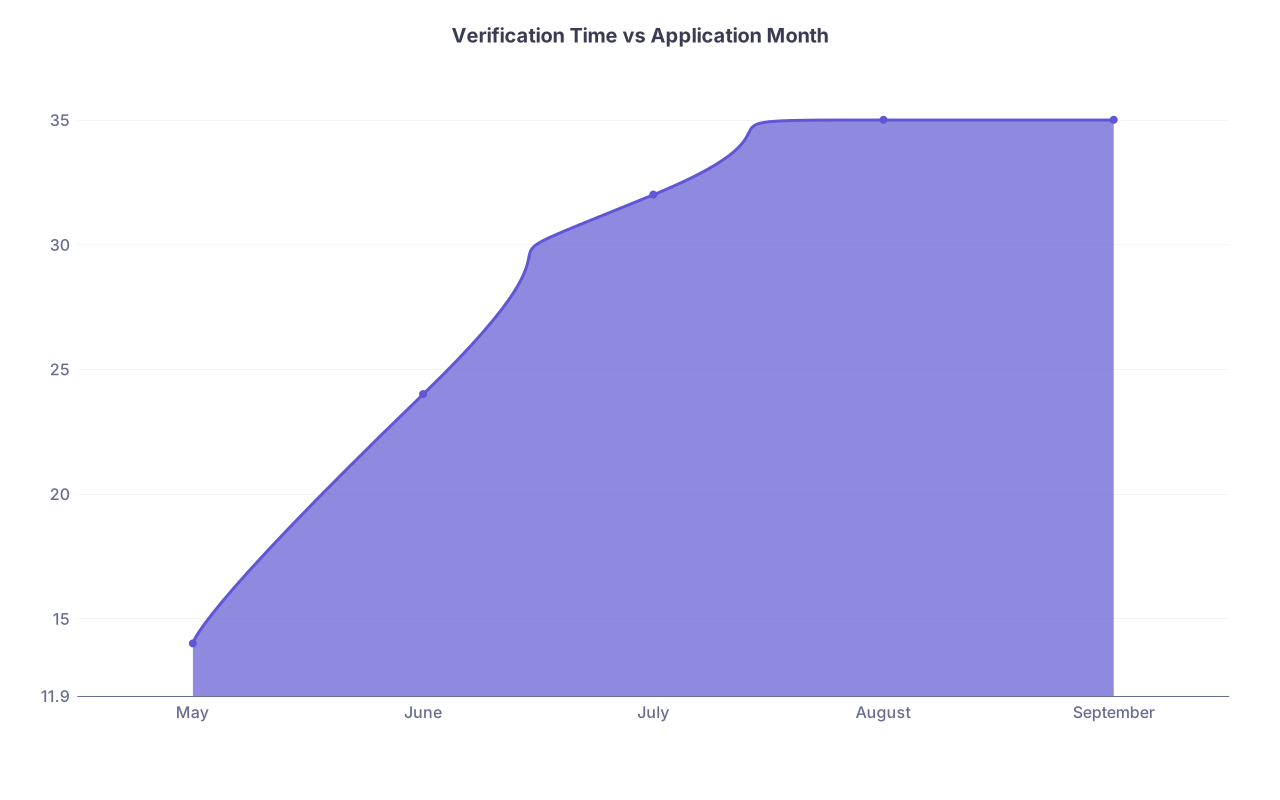
Scores usually drop 30-35 days later. The day they release, you already need the next decision tree ready:
- Score at or above target → lock the application timeline (HPSP board, AMCAS/AACOMAS submission, USUHS).
- Score below target but close → schedule a retake within the same cycle if dates remain and your command can support another focused block.
- Score well below or life exploded → consider a deliberate delay and re-attack next cycle rather than forcing a weak application.
Military obligations sometimes force non-traditional timelines. That's fine. A clean retake after a deployment beats a rushed score that tanks your whole packet. Coordinate early with your detailer or career counselor so a med-school acceptance doesn't collide with an unexpected set of orders.

Your Immediate Action Steps
- Pick your target test date and count backward 12 months. Mark that start date on your calendar today.
- Request the command meeting this week. Bring a one-page outline of your plan and the specific support you need.
- Register for and take a baseline full-length within the next 14 days.
- Identify one mentor who has already walked this path and send the message before the weekend.
- Write your deployment contingency answers on a single sheet and put it with your study materials.
Start early, build flexibility into every milestone, and keep your command inside the tent. The MCAT is hard. Doing it on active duty is harder. But the service members who treat it like a planned operation, with checkpoints, contingencies, and honest assessments, get the white coat. Your move.