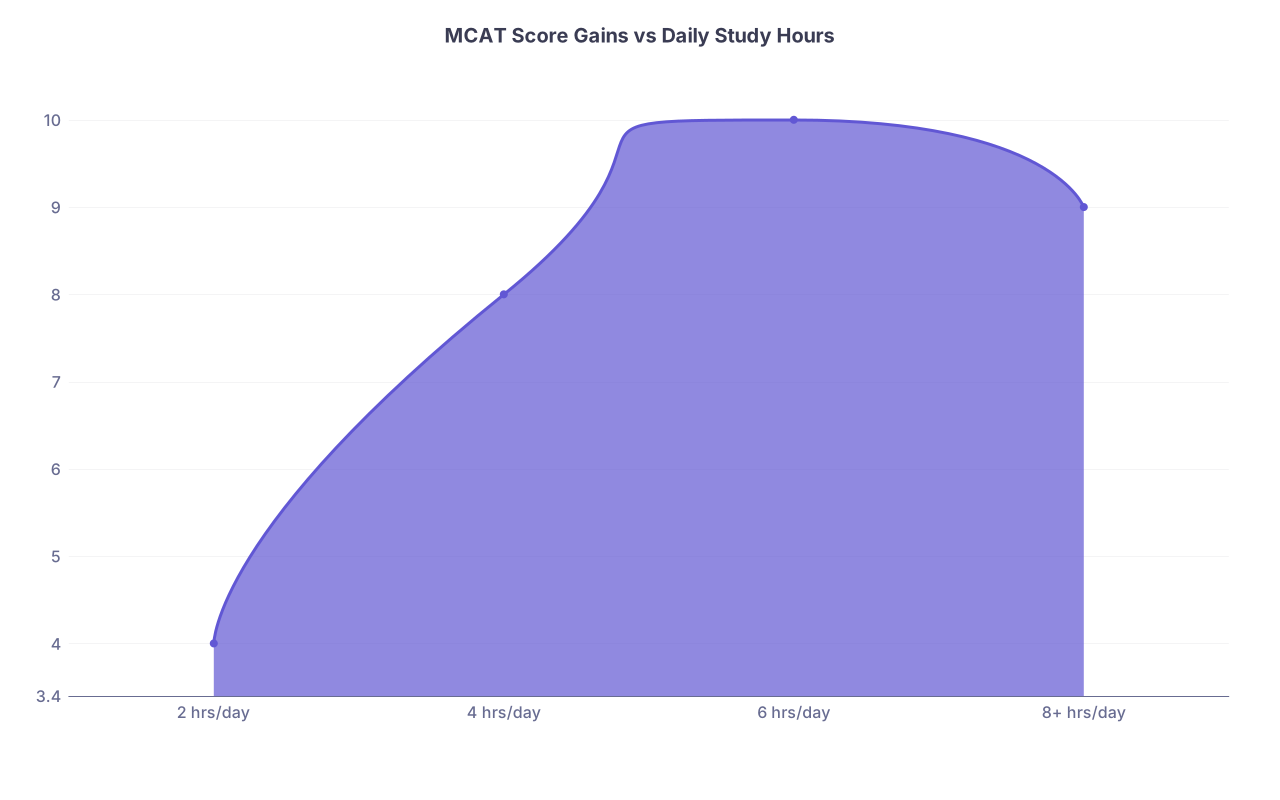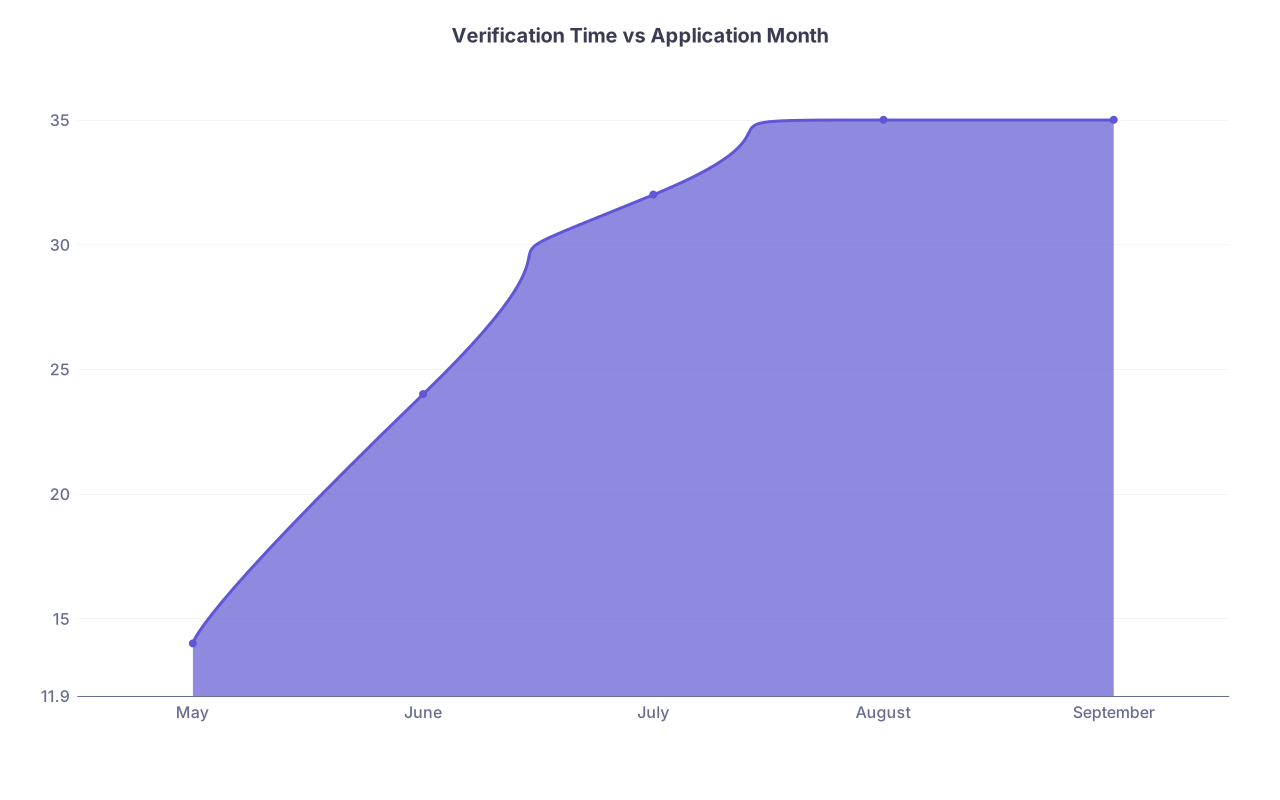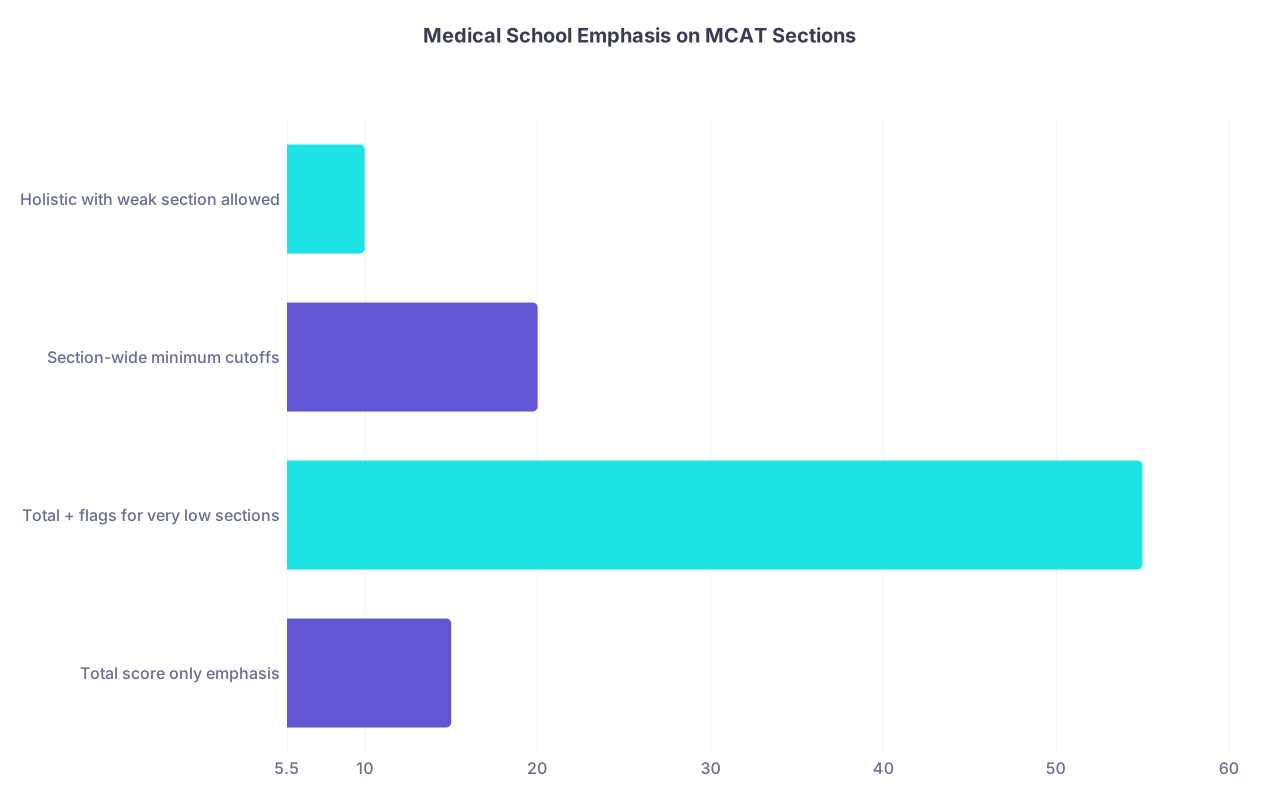
Sixty-five percent of MCAT examinees burn through more than 70 percent of their total study hours on content review, and still watch their scores stall. That is not a motivation problem. It is a cognitive mismatch. They keep feeding the same input loop while the exam demands a completely different output skill: rapid retrieval and application under a ticking clock. I have watched this pattern destroy otherwise strong students for years. They finish Kaplan, they finish UWorld content banks, they can recite the urea cycle forward and backward. Then they sit for a timed CARS section and freeze on a passage that feels "familiar" but refuses to yield clean answers. The knowledge is present. The architecture for using it under pressure is not.
The Gap Between Knowing and Applying: The 80% Threshold
Most premeds treat content review like a finish line. Read the chapter, highlight the bold terms, maybe make a few Anki cards, check the box. That approach works until it hits what I call the Content Saturation Point. Beyond roughly 80 percent mastery of the tested material, additional passive reading produces almost zero score gain. You are polishing already-known facts while the real deficit, application speed and decision-making under constraint, remains untouched.
I see this every cycle. A student scores 505 on a full-length after three months of pure content. They panic and open the books again. Another month of reading. Next full-length: 506. The extra knowledge never reached the retrieval circuits that fire when the clock is running and four dense answer choices are staring back. Passive learning syndrome is real. Your brain recognizes the information when it is presented in the same order and format as the textbook. The MCAT never presents it that way.
The required cognitive shift is brutal and non-negotiable. You must move from recognition ("I have seen this before") to active retrieval under load ("I must generate the relevant principle in under 40 seconds and apply it to a novel scenario"). That shift does not happen by rereading. It happens by forcing the brain to perform the exact behavior the exam will demand, repeatedly, while the timer is visible. Everything that follows in this guide is designed to engineer that shift deliberately.
The students who break 515 and above do not know dramatically more content than the 505 cohort. They have simply trained the retrieval and triage systems that turn knowledge into points. The rest of this article walks through the exact sequence I use with students who are stuck in the content trap and need to convert into timed-exam operators.
Before you commit to a long-term approach, it is worth reviewing essential MCAT study schedule tips for future medical students to ensure your timeline remains realistic.
Step 1: Implementing the 'Knowledge-to-Application' Ratio
The first structural change is mathematical. Most students begin with a 70/30 split, seventy percent of study time spent absorbing or reviewing content, thirty percent on practice. That ratio must invert. By week six to eight of a serious study period, you should be living at 30/70 or even 20/80. Content work becomes surgical and reactive, not exploratory.
How do you actually execute the flip? Stop treating practice passages as graded tests you either "pass" or "fail." Treat every block as a diagnostic instrument. After each passage set, you are not looking for a percentage correct. You are mining for specific failure modes. Was the miss caused by a genuine knowledge gap (you never learned the distinction between competitive and non-competitive inhibition)? Or was it a strategy error (you misread the experimental setup and chased the wrong variable)? Those two errors require completely different fixes.
I force students to keep a simple error log with two columns only: Knowledge Gap versus Process Error. After two weeks of this, the pattern becomes obvious. Most people discover that 60-70 percent of their misses are process errors, misreading, poor elimination, time panic, not missing content. That discovery alone kills the urge to reopen the textbook for the fifth time.
When a true knowledge gap appears, you do not reread the entire chapter. You pull the single relevant page or video segment, write a one-sentence rule, and immediately re-attempt two or three similar questions. The content work is now downstream of the diagnostic. That is the only way additional reading still produces returns after the saturation point.
Many students fail to realize that Mastering MCAT Preparation: Turning Practice Tests into Performance Boosts is the single most effective way to identify your specific, non-content-related testing weaknesses.
Notice the chart. The early weeks still contain heavy content because you need the foundation. But the endpoint is unambiguous. If you are still spending the majority of your hours reading three weeks before your test date, you are training the wrong skill.
Step 2-4: The Procedural Pivot (Triage, Pacing, and Endurance)
Once the ratio flips, three procedural systems must be installed simultaneously: triage, pacing, and endurance. I group them because they reinforce each other.
Step 2 is the Triage Protocol. Every MCAT section contains questions engineered to consume disproportionate time. These "trap" items usually involve multi-step calculations, dense experimental figures, or deliberately ambiguous CARS inferences. The protocol is simple and ruthless: if you have not generated a clear path to the answer by the 90-second mark, you flag it, pick your current best guess, and move. Protecting the remaining questions is more valuable than heroically solving one impossible item. I have seen students lose 4-6 points in a single section because they refused to abandon a single stubborn discrete. That is not diligence. That is poor resource allocation.
You train triage by forcing yourself to mark time stamps on paper during practice. After every block you review not only accuracy but time distribution. Any question that ate more than two minutes gets dissected: was it truly hard, or did you spiral?
Step 3 builds the internal metronome, especially for CARS. The 95-minute CARS section is where most students bleed points through uneven pacing. You cannot rely on the on-screen timer alone; checking it every two minutes creates its own cognitive tax. Instead, you develop an internal sense of passage cadence. Rough target: nine minutes per passage including questions, with a hard stop at ten. Practice this by doing CARS blocks with the timer visible only at the end of each passage. Over two weeks the body learns the rhythm. When test day arrives, you feel the pace rather than constantly calculating it.
Step 4 is pure endurance construction. Most students practice in 15- or 30-question chunks because those feel manageable. The actual exam delivers 59-question sections with only short breaks. Your working memory and decision quality degrade after about 40 continuous questions if you have never trained past that point. Therefore you must progressive-overload the block size. Week one of timed work: 20-25 questions. Week three: full 59-question sections under timed conditions, even if the score is ugly. The goal is not a pretty percentage. The goal is remaining cognitively sharp at question 55.
Post-passage analysis is where the real learning occurs, and most students do it wrong. They look at the correct answer, nod, and move on. That is passive review. Active recall during review looks different. Cover the answer key. Re-explain, out loud or on paper, why each wrong choice is wrong and why the right choice must be right, using only the information in the passage plus your own knowledge. Then uncover. If your reasoning matches, good. If it does not, you have located the precise fracture in your mental model. This loop is non-negotiable.
The diagram above is the daily engine. Notice it feeds back into more practice, not into endless content rereading. That closed loop is what converts weak areas into automatic responses.
Step 5-7: Simulated Environment and Metric Tracking
The final three steps lock the new skills into conditions that match test day as closely as possible.
Step 5 standardizes the environment. Many students practice with noise-canceling headphones, fancy standing desks, snacks within reach, and phones face-down but still present. Then they walk into a Prometric center, fluorescent lights, keyboard clicks, the person two seats away sniffling, and their carefully built focus collapses. Begin stripping comforts at least four weeks out. Use only the materials allowed on test day. Sit in a straight chair. Keep a simple whiteboard or laminated sheet for scratch work exactly as the center will provide. Run the official timer. No music. No "just one quick text." The brain must learn that the sterile, slightly uncomfortable environment is normal.
Step 6 is fluctuation data analysis. Your full-length scores will bounce. A 510 followed by a 505 followed by a 512 is common. Most students interpret the drop as "I am getting worse" and spiral back into content panic. Wrong. You must separate two variables: content difficulty of that particular form versus time-induced anxiety or pacing breakdown. Look at the section timing data and the error log side by side. If you finished with eight minutes left and still missed easy questions, the issue is focus under fatigue. If you ran out of time and guessed on the last six, the issue is triage. If the misses cluster in one low-yield topic that happened to be heavy that day, ignore the score noise. Tracking these distinctions prevents emotional overreaction and keeps the study plan stable.
Step 7 is the final taper into high-yield pattern recognition. In the last 10-14 days, content review drops to near zero except for rapid review of your personal error log. The bulk of time goes to full-length exams and targeted passage sets that emphasize the patterns the AAMC repeats: experimental design flaws, data interpretation shortcuts, CARS main-idea structures, and the classic biochem pathway questions that appear in slight disguise every year. You are no longer learning new material. You are sharpening the recognition of the exam's favorite moves so that on test day the questions feel like familiar variations rather than novel threats.
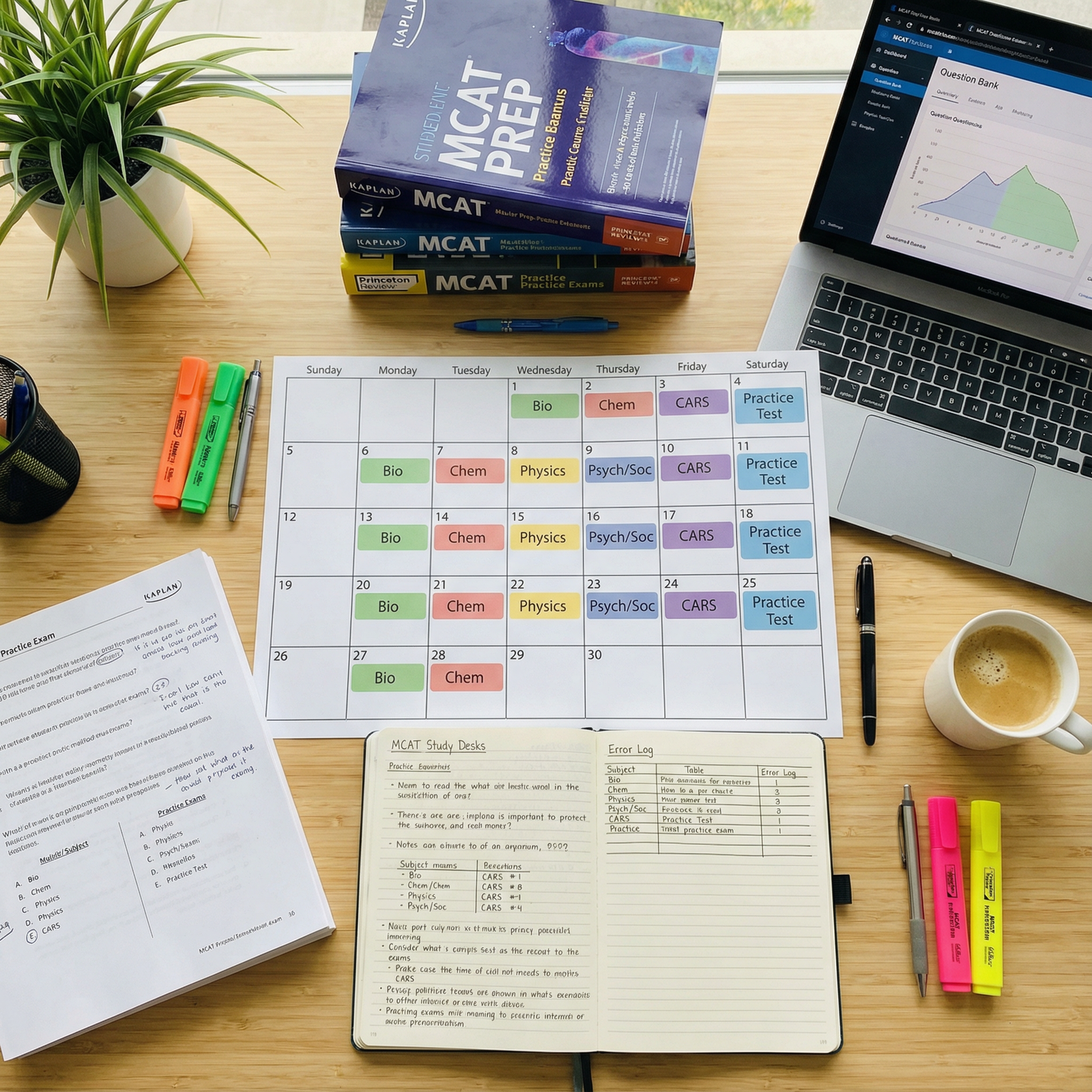
I have watched students gain 8-12 points in the final month solely by executing this environmental and metric discipline. The content was already there. The testing operating system was not.
Summary: What Actually Moves the Score
Content review builds the foundation. Timed, analyzed practice builds the load-bearing structure the MCAT actually tests. A missed question on a practice passage is not a moral failure; it is a high-resolution data point showing exactly where your mental model is incomplete or your process breaks. Mastering the clock is equal in weight to mastering the Krebs cycle, learn to abandon the impossible question so the remaining solvable ones stay protected. Finally, stop reading passages for general "understanding." Read them for question-relevant extraction. Every sentence is evaluated against the likely demands of the items that follow.
The transition from content mode to timed-exam mode is uncomfortable. Your practice scores will look worse before they look better because you are suddenly measuring the real skill instead of the proxy skill. That discomfort is the signal you are finally training the correct system. Execute the ratio flip, install triage and pacing, build endurance, simulate the environment, and track the right metrics. Do that with discipline and the score that felt permanently stuck starts moving.