You've seen the post. "Studied for 12 days, jumped from 502 to 521." Then comes the ritual humiliation: maybe you don't want it badly enough. Maybe if you just lock in, delete social media, drink enough caffeine, and suffer with sufficient intensity, you too can brute-force a top MCAT score out of thin air.
No. That's not discipline. That's bad science wrapped in motivational theater.
Before finalizing any testing timeline, students should review strategic guidance on Do You Need 15+ Full-Length MCATs? What High-Scorers Actually Did.
The two-week MCAT miracle is one of the dumbest persistent myths in premed culture because it flatters panic. It tells desperate people exactly what they want to hear: that time lost can be conquered by effort concentrated hard enough. But your brain doesn't care about your panic, your guilt, or your Reddit bookmarks. Memory consolidation isn't a moral reward for suffering. It's a biological process with limits.
I've watched students do this to themselves. Day one starts with color-coded optimism and a 14-hour study plan. Day four becomes caffeine, shame, and random content hopping. Day nine is a full-length exam meltdown. By test day, they're not sharper. They're cognitively frayed, sleeping five hours a night, and mistaking familiarity for mastery.
That's the trap: the effort-equals-outcome bias. You feel like massive effort should guarantee massive results. It doesn't. Not on the MCAT. This exam doesn't just ask whether you've seen amino acids or Newtonian mechanics before. It asks whether you can retrieve, integrate, and apply them under pressure across seven-plus hours. That's not cramming territory. That's training.
The Two-Week Miracle Fallacy: Why Desperation Breeds Bad Science
Internet folklore treats the MCAT like a college final with better branding. Same old fantasy: if you suffer hard enough in a compressed window, you can beat the system. But the MCAT isn't testing whether you can temporarily stuff facts into short-term memory and dump them onto a blue book. It's testing whether core science knowledge has been built into durable, usable mental architecture.
That difference matters.
Panic studying feels productive because it's intense. Intensity is seductive. You're highlighting, rewatching metabolic pathways at 1.5x speed, drilling formulas, stacking twelve-hour days. It looks serious. It feels virtuous. And it often produces the dangerous illusion of progress because recognition goes up before performance does. You reread a passage and think, "Yeah, I know this." Then the question stem twists the concept one degree sideways, and suddenly your "knowledge" evaporates.
Cognitive neuroscience has been blunt about this for years. Working memory is limited. Long-term retention depends on repeated retrieval, spacing, sleep, and reconsolidation. Not vibes. Not adrenaline. Not a self-destructive sprint fueled by fear.
Conventional wisdom says grit can compress any learning curve. That's nonsense. Grit helps you persist through a good plan; it doesn't redeem a bad one. If your preparation window is two weeks because life happened, that's unfortunate. If your strategy is to pretend those two weeks can replace three to six months of layered learning, that's self-deception.
The harsh truth? Most "I raised my score in 14 days" stories fall into one of three buckets. They already had a strong foundation and were polishing weaknesses. Their baseline score was artificially deflated by poor stamina or bad timing and corrected upward. Or they're leaving out key details, which is a polite way of saying the story is misleading.
What the Data Actually Shows: The Forgetting Curve vs. Cramming
Here's what the data actually shows: cramming is great for feeling busy and terrible for building durable recall.
Memory research has repeatedly shown that spaced repetition outperforms massed practice. That's not a trendy study-hack slogan; it's one of the most stable findings in learning science. When you revisit material across time, you force retrieval under conditions of partial forgetting. That struggle is the point. It strengthens access pathways. It tells the brain, "This matters. Keep it."
When you cram, you get the opposite. High exposure. Low durability.
That forgetting curve matters even more on the MCAT because the exam isn't simple fact recall. It's layered reasoning. You need enough fluency with content that your working memory can handle interpretation, not just rescue operations. If all your bandwidth is spent trying to remember what a competitive inhibitor does, you've got nothing left for the passage logic.
This is also why passive rereading and video bingeing are so overrated. They produce familiarity, not retrieval strength. A student can watch ten hours of biochemistry and walk away feeling smarter while being almost unable to generate the relevant concept cold. The same goes for annotating every page in a prep book like it's a sacred text. Pretty notes are not evidence of encoding.
And no, your undergrad finals aren't a valid comparison. I hear this all the time: "I crammed for orgo and got an A." Great. A course exam is narrower, taught to a local instructor's emphasis, often partially predictable, and usually rewards short-horizon memorization more than the MCAT does. The MCAT is broad, scaled, passage-heavy, and specifically designed to punish fragile understanding. You can bluff a final. You usually can't bluff AAMC logic for 230 questions.
Long-term potentiation, the cellular process tied to strengthening synaptic connections, doesn't magically accelerate because you're scared. Sleep also isn't optional here. Sleep is when a chunk of consolidation happens. Slash sleep to gain more study hours, and you undercut the very learning you're trying to force. That's not hustle. It's sabotage wearing gym clothes.
Anatomy of a Failed Strategy: The Math of 300 Hours in 14 Days
Let's do the arithmetic, because arithmetic is less kind than hope.
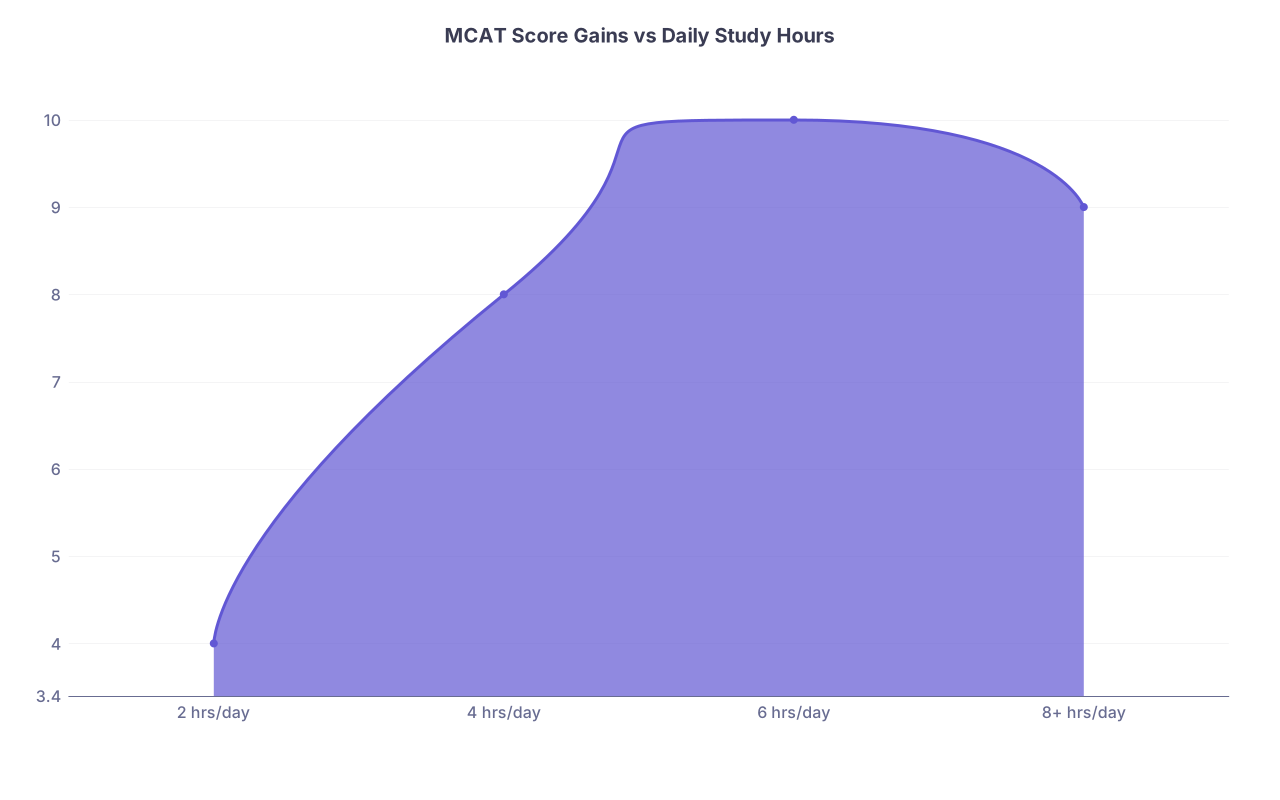
A lot of students hear that serious MCAT prep takes roughly 300 to 400 hours. That range aligns with what many advisors and major prep programs recommend, usually spread over three to six months. Not because everyone loves long timelines, but because the exam covers General Chemistry, Organic Chemistry, Physics, Biology, Biochemistry, Psychology, Sociology, plus CARS, plus full-length review, plus question-bank analysis, plus weak-area repair.
Now compress 300 hours into 14 days.
That's about 21.4 hours a day. Every day. No transition time. No meals worth mentioning. No commuting. No exercise. No emotional breakdowns. No review lag. No human biology.
Absurd.
Even if you slash the target to 150 hours, you're still at nearly 11 hours a day of truly focused work. Not "I sat near my books" time. Real cognitive labor. For two straight weeks while tackling one of the broadest standardized exams in higher education. Most people don't sustain that. And the ones who try usually descend into chaotic pseudo-productivity: skimming chapters, half-finishing question sets, avoiding CARS because it feels bad, and calling exhaustion "dedication."
I've seen these schedules. Day one: 6 a.m. wake-up, physics until 9, biochem until noon, psych/soc after lunch, CARS at 4, Anki at 7, full review until midnight. Day three: same schedule, but slower. Day five: wake-up slips. Day seven: student "takes half a day off" from cognitive overload, then feels guilty and doubles down. Day ten: full-length score comes back ugly, panic spikes, sleep gets worse. Day fourteen: they're not prepared; they're inflamed.
And let's be blunt about sleep deprivation. It damages attention, emotional regulation, reaction time, working memory, and reasoning flexibility. In other words, exactly the functions the MCAT taxes all day long. People love to talk about content deficits, but test-day cognitive impairment from bad sleep is often the quieter killer.
The AAMC ecosystem rewards integration and stamina. A 14-day cram tends to destroy both.
The Rare Exception: Who (If Anyone) Can Actually Benefit From a Two-Week Sprint?
Here's the contrarian truth: a two-week sprint can help some people. Very few. But they exist.
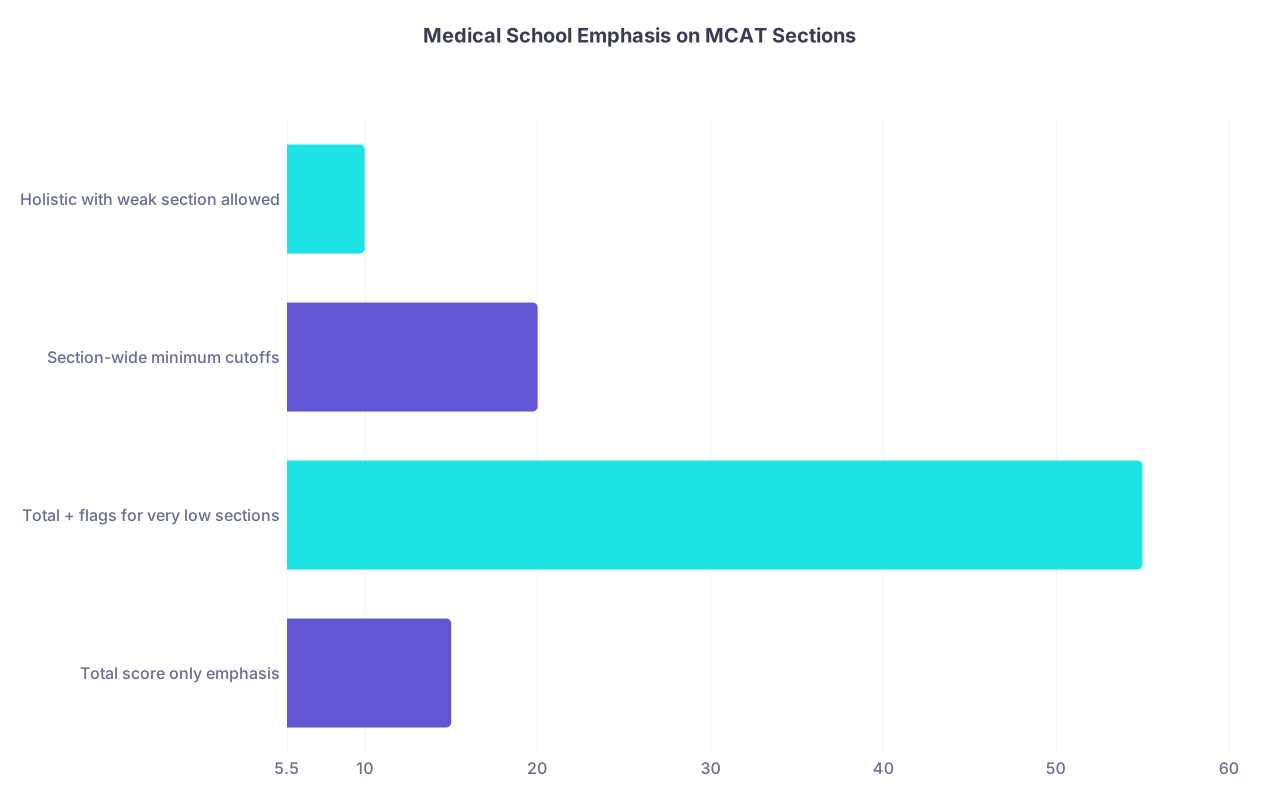
Not beginners. Not students whose content foundation is shaky across half the exam. Not someone sitting at a 493 after realizing they "really need to lock in." That person does not need a sprint. They need a postponement and a better plan.
The only realistic beneficiaries are retakers or near-ready first-timers who already have a strong base and need targeted psychometric cleanup. Think someone who previously scored, say, in the low 510s, knows the content reasonably well, and can identify a few fixable issues: timing errors in CARS, careless mistakes in data interpretation, weak passage mapping, poor pacing in Chem/Phys, or avoidable misses in psych terminology. That student might gain a few points in two weeks because they aren't building from scratch. They're tuning an engine that already runs.
That distinction is everything.

There's another trap here: third-party score inflation and false hope. Some students think they improved dramatically because an uncalibrated practice test said so. Then they hit official AAMC material and discover the scale is less forgiving. Third-party exams can be useful for stamina and extra reps, but they are not the same as actual AAMC score behavior. If your two-week "jump" lives mostly on random prep-company tests, that's not proof. That's noise.
So yes, a sprint can sharpen an already competent test-taker. It cannot reliably transform a weak foundation into a strong MCAT score. Those are different universes.
Rejecting the Hail Mary: How to Pivot to Evidence-Based Preparation
If two weeks is all you've got and your scores say you're not ready, stop romanticizing the comeback story. Postpone if you can. That's not cowardice. That's what rational people do when the data looks bad.
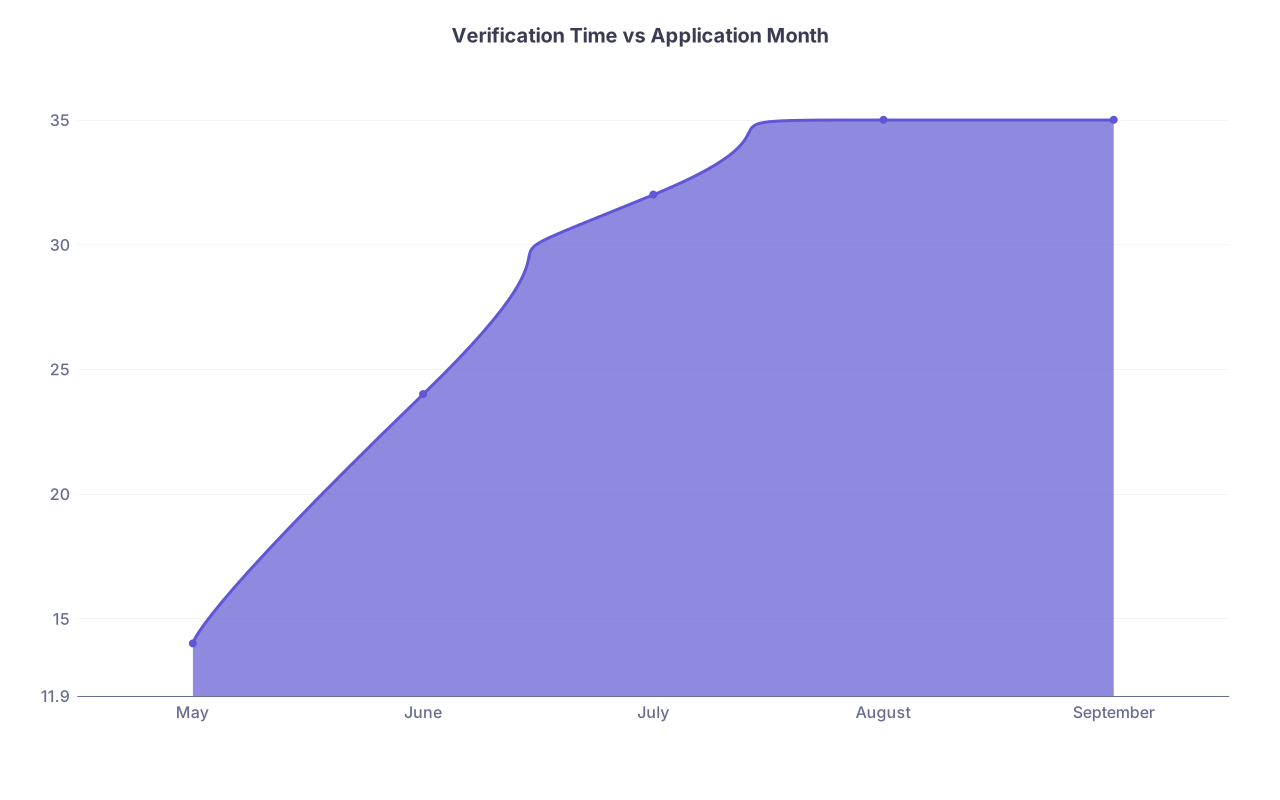
Use your last full-lengths as your lie detector. If you're nowhere near your target on official AAMC exams, the exam date is the problem, not your work ethic. Rescheduling hurts your pride for a day. A bad official score can haunt an application cycle much longer.
If postponing isn't possible, then triage honestly. Don't pretend you can master everything. Focus on testable, high-yield moves: tighten pacing, memorize must-know equations and amino acids, drill AAMC question logic, clean up repeat mistakes, protect sleep like it's part of the exam, because it is. You're not aiming for a miracle. You're aiming to limit damage.
And here's the part premed culture hates: medicine is not built on heroic cramming. It's built on longitudinal mastery. Repetition. Reflection. Pattern recognition earned over time. The students who eventually become good physicians aren't the ones who win every panic sprint. They're the ones who stop gambling with their learning and start respecting how real expertise is built.
That's the mindset worth carrying into medicine. Not "How much can I force in 14 days?" But: "How do I build knowledge that still works when the pressure's on?"
Because on the MCAT, and later in medicine, that's what counts.