The interviewer leans forward, smiles, and asks, "So, do you have a partner? How do they feel about you moving across the country for med school?"
You freeze. This wasn't in the list of common questions you practiced. Your mind races: Is this even allowed? Should I just answer honestly? What's the right balance between being open and oversharing?
I've coached hundreds of premed and medical school applicants through this exact moment. What you're experiencing is a boundary test cloaked as small talk. Interviewers ask personal questions for a mix of reasons, some innocent, some inappropriate, and many that land in a gray area. Your job isn't to lay your life bare. It's to protect your privacy while still coming across as warm, composed, and professional. Let's break down exactly what to do, word by word.

Why Interviewers Ask About Personal Life
Here's the thing: most interviewers aren't trying to trap you. They're assessing two critical skills that don't show up on a transcript, interpersonal intelligence and emotional regulation. Medicine isn't just about knowing the Krebs cycle; it's about connecting with patients who are scared, angry, or guarded. So when an interviewer asks, "How does your family feel about this path?" they're often probing: Can you read the room? Will you fall apart under a sensitive question?
But let's be honest. Some questions cross a line. And sometimes the interviewer knows they're crossing it and is watching to see if you'll politely hold your ground. I've seen applicants get asked about their marriage plans, their religious views, or even whether they're planning to have kids during residency. That's not rapport-building. That's illegal in many jurisdictions. Yet it still happens.
So you need a mental framework to triage these moments in real time. Think of it like this:
- Legitimate rapport-building questions: "What do you do for fun outside of school?" or "How did you handle the stress of your MCAT prep?" These are fair game. Answer briefly, with a smile.
- Gray-area probes: "Are you married?" or "Do you have a support system here?" These might be well-intentioned, but they sniff around your personal situation. You can answer neutrally without giving away private details.
- Inappropriate and potentially illegal questions: "When do you plan to start a family?" or "Are you gay?" These violate federal anti-discrimination protections. You don't have to answer them, period. But you still need to deflect gracefully.
Understanding the difference keeps you from being caught off guard. You'll feel less defensive, more in control. That composure, alone, wins points.
What's Off-Limits: Legal and Ethical Boundaries
Let me be blunt: some interviewers will ask things they shouldn't. And while you can't control their behavior, you can control your response. Federal law, specifically Title VII of the Civil Rights Act, the Americans with Disabilities Act, and similar state laws, prohibits discrimination based on marital status, family status, sex, sexual orientation, religion, age, and disability. That means questions directly probing those categories are out of bounds.
A quick reality check: just because a question is technically illegal doesn't mean it won't get asked. I've had applicants tell me they were asked, "How will you balance having a baby with residency?", a blatant violation. Another was asked in a panel interview, "What church do you attend?" by someone who clearly thought they were being warm. You need to know your rights so you can recognize the red flags and decide how to respond.
Here's what you're protected from being pressed on:
- Relationship status: Married, single, divorced, living with a partner. None of it should matter.
- Plans for children: Whether, when, how many.
- Caregiving responsibilities: For kids, elderly parents, sick relatives.
- Sexual orientation and gender identity.
- Religious affiliation and practices.
- Age or date of birth (except to verify you meet legal requirements).
If you're asked any of these, remember: the question itself may signal an interviewer who lacks training or, worse, has discriminatory intent. That tells you something about the program's culture. Your goal is not to litigate the moment, but to exit it cleanly. I'll show you how.
The Redirect Technique: How to Answer Without Over-Sharing
Imagine you're asked, "Are you married?" It lands in the gray zone. You don't want to come across as evasive, but you also don't need to share your spouse's name and occupation. The BRIEF method is your best friend here. It's a mental checklist I teach that keeps answers tight and forward-moving:
- Brief: No more than two or three sentences. Ever.
- Relevant: Tied back to your candidacy or the program, however tangentially.
- Informative: Actually answers the core of what they might be wondering (e.g., "Will you be stable here?").
- Forward-looking: Pivots to the future and your professional goals.
For the marriage question, a BRIEF response: "I'm married, and my spouse is fully on board with the demands of medical training. We have a strong support system in place." Period. You've acknowledged the relationship, signaled stability, and immediately removed any doubt about your commitment. Then you stop talking. Silence is your ally; don't fill it with nervous details.
For questions that clearly cross into protected territory, you'll need a polite but firm redirect. "I prefer not to discuss that" works if you deliver it neutrally, without anger. But I prefer an approach that feels less abrupt: pivot to something you are happy to talk about. "I'm really focused on my career development right now, and I'm excited about how this program's research opportunities align with my goals." You're not answering the question, but you're not leaving dead air either. You're leading the conversation back to safer ground.
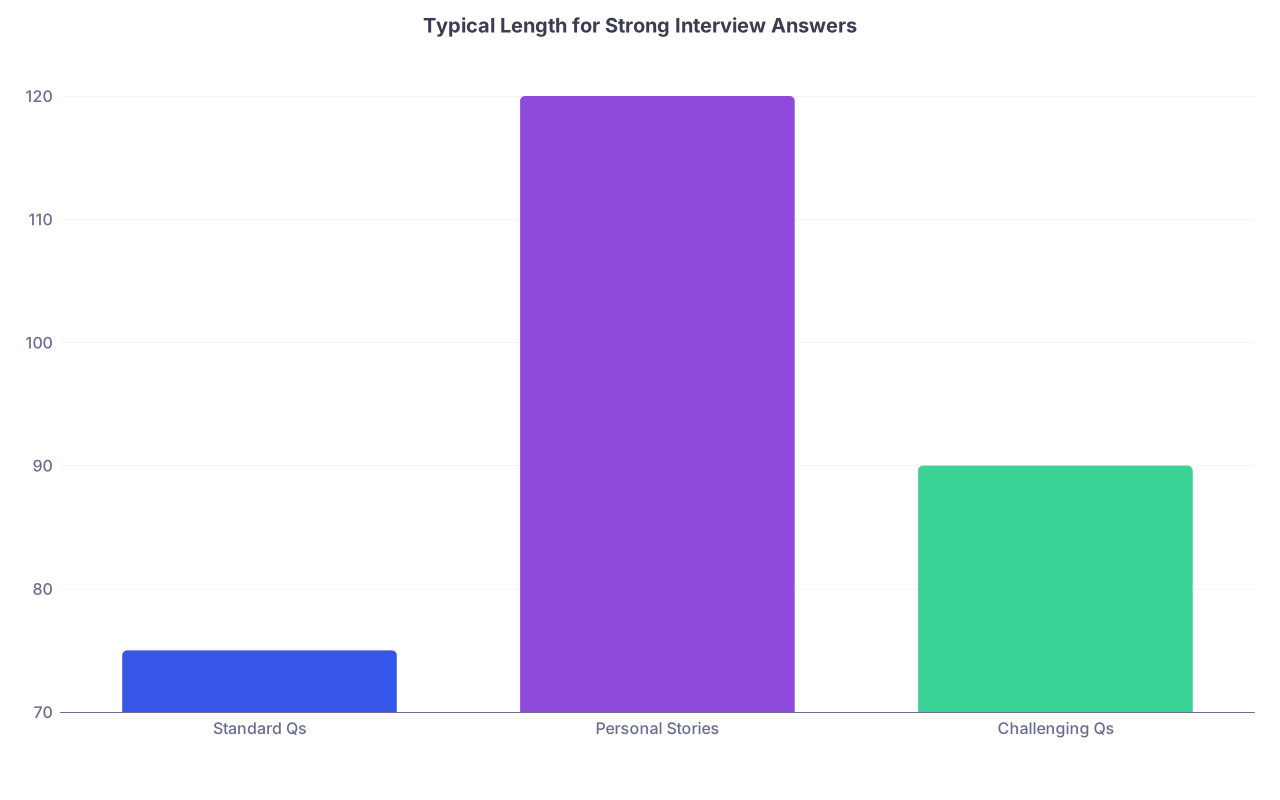
Practice keeping your answers to 15-30 seconds. Time yourself. Anything longer and you're probably volunteering too much. I once watched an applicant, when asked "Tell me about your family," launch into a five-minute saga about her brother's legal troubles. Don't do that. "My family is incredibly supportive of this path, and they've seen my dedication firsthand", done.
Common Scenarios and Scripted Responses
Let's get concrete. Here are the questions I hear about most often, and exactly what I coach applicants to say. You can adapt these scripts, but memorize the structure so it becomes muscle memory.
Marital/Relationship Status Question: "Are you single? Is your partner okay with the move?" Script: "I'm in a committed relationship, and my partner is completely supportive of my career goals. We've planned for this transition together." Why it works: It's honest, neutral, and reassures them you won't be distracted by personal drama. No names, no backstory.
Children and Family Plans Question: "Do you see yourself having kids during residency?" Script: "Right now I'm 100% focused on becoming the best physician I can be. I'll cross that bridge later, and when I do, I have a strong support system in place." Why it works: You're not lying, you haven't promised to delay family, you've simply stated your current priority. And you've implicitly addressed their concern about reliability.
Gap Years or Personal Challenges Question: "I see a gap here, what were you doing?" (They might be fishing for mental health issues, family crises, or academic setbacks.) Script: "I took that year to support my family during a health challenge. It actually deepened my resilience and reinforced why I want to go into medicine." Then pivot: "I'm happy to talk more about what I learned in my clinical experience during that time." Why it works: You've framed the gap as a strength, not a liability. No apologies. You took control of the narrative.
Social Media or Online Presence Question: "We looked you up online. Can you tell me about X post?" Script: "I maintain a professional presence online, and I'm comfortable that my profiles reflect my values. I'd love to talk about my research in Y if that's helpful." Why it works: You've acknowledged without defending, and you've redirected to a concrete strength. Never get drawn into explaining a meme or a photo.

Preparation Strategies for Sensitive Questions
You can't predict every question, but you can arrive feeling bulletproof. I make all my clients do three things before every interview:
Build a personal "redirect bank" of 2-3 phrases. These are your go-to scripts when a question feels off. For example: "I'd rather focus on why I'm so drawn to this program." Or "What I can tell you is that my commitment to medicine is unwavering." Write them on a note card. Say them out loud until they sound natural.
Role-play with a trusted mentor or advisor. Not your parents, not your partner, someone who will push you. Ask them to fire off uncomfortable questions: "When are you having kids?" "How old are you, really?" Practice staying calm, taking a breath, and delivering your redirect without your voice shaking. The first time you hear a blunt question shouldn't be in the interview chair.
Research the program's culture beforehand. Talk to current students if you can. Some programs are notoriously formal and will keep things strictly professional. Others have a more "family feel" and may ask more personal-gauge questions. Knowing what to expect dials down the anxiety. But even in casual environments, your boundaries remain yours.
One more thing: never feel pressured to lie. I've seen applicants claim they're single when they're not, thinking it makes them seem more "flexible." That backfires when you later mention your spouse in a thank-you note or social media. Integrity is simpler. You can be truthful and brief.

Your personal life belongs to you. The program is trying to get to know you, sure, but you get to decide how much of yourself you share. The best applicants I've worked with don't just survive the personal questions, they use them to demonstrate poise and boundaries. That's exactly what you want a future physician to have. Now go practice.
Key Takeaways
- Interviewers ask personal questions to assess interpersonal skills and emotional intelligence, not to invade your privacy, answer professionally and briefly.
- Federal law protects certain personal categories; you can politely redirect inappropriate questions without risking your candidacy.
- The BRIEF method (Brief, Relevant, Informative, Forward-looking) is your tactical framework for keeping answers tight.
- Have 2-3 neutral, scripted responses ready for common probes about relationships, family plans, and personal circumstances.
- Mock interviews with a mentor are the single best way to build composure and redirect fluidity.