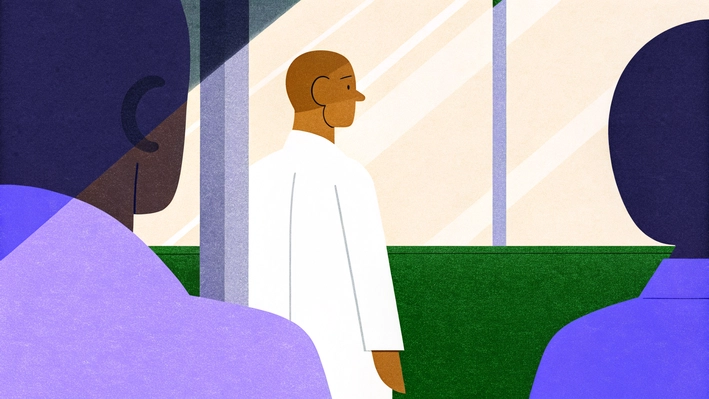
What do you do when the phone buzzes mid-exam and it's not a spam call, it's your sibling saying Mom collapsed, or Dad's in the ER, or your kid's school needs you now?
You freeze. Your heart rate spikes. The question on the screen turns into white noise. You're stuck between two identities that both feel non-negotiable: competent future physician and person who shows up for family.
Here's the blunt truth I've watched play out with students over and over: you can be a good student and respond to an urgent family need. Catastrophizing ("my career is over") is optional. Safety-first triage is not.
This plan is built for the ugly middle: the first hour, the communication scripts, the mental reset, the stay-or-leave call, and the cleanup afterward. Goal order never changes, safety first, then clear communication, then mental stabilization, then exam decisions. Everything else is noise.
First 60 Minutes: Safety Triage (Not Just Stress Triage)
If anyone is in immediate danger, active bleeding, chest pain, seizure, overdose, suicidal statements, inability to breathe, you call emergency services before you do anything about the exam. Not after you "just finish this block." Not after you text three people. Call. Follow their instructions. Then you deal with the testing center.
I've seen students try to finish "one more section" while a parent was coding. Don't be that person. Your board score will not matter if someone dies because you hesitated.
If the emergency is urgent but not immediately life-threatening (grandma fell, needs transport; partner's labor progressing faster than expected; sibling having a severe panic attack and needs a ride), your job shifts to delegation. You cannot run the whole show from a testing seat. Designate who does what in the next ten minutes:
- Who is closest and can go now?
- Who has the medication list / insurance card / advance directive?
- Who will stay on the line with the hospital or EMS?
- What is the one piece of information you still need to give them before you hang up?
Decide what you can realistically communicate during the exam window. Most testing centers will not let you take a long call at your seat. So you plan the shortest possible handoff.
Once the danger call or the delegation call is made, you tell the supervisor. Short. Factual. No monologue.
Your Immediate Response Script: Communication That Protects Both Safety and Your Exam
You need a 20-30 second script. Anything longer and you start rambling, which makes proctors nervous and slows the process.
Use this structure:
- Who you are (first name + seat/row if needed).
- Nature of emergency in one plain sentence (no graphic details).
- What you need right now.
- What you will do next.
Example when danger is real: "I'm Alex in seat 14. I just got a call, my father is having a medical emergency and EMS is on the way. I need to step out immediately for safety reasons. Can you pause my exam or note the time while I handle this?"
Example when urgent but not crashing: "I'm Jordan. Family medical emergency, my mother fell and needs transport to the ER. I need two minutes to confirm who is taking her, then I'll let you know if I'm returning or leaving."
Contact order that actually works:
- Proctor / testing center supervisor, first human who controls your exam clock and exit path.
- Family / EMS coordinator, once you're outside or in a permitted area.
- Institution accommodations / student affairs, same day or next business day, not while you're still in the room.
Do not overshare medical details with the proctor. They don't need the diagnosis. They need the category: family medical emergency requiring your immediate attention. Clarity gets you better options than drama or minimization.
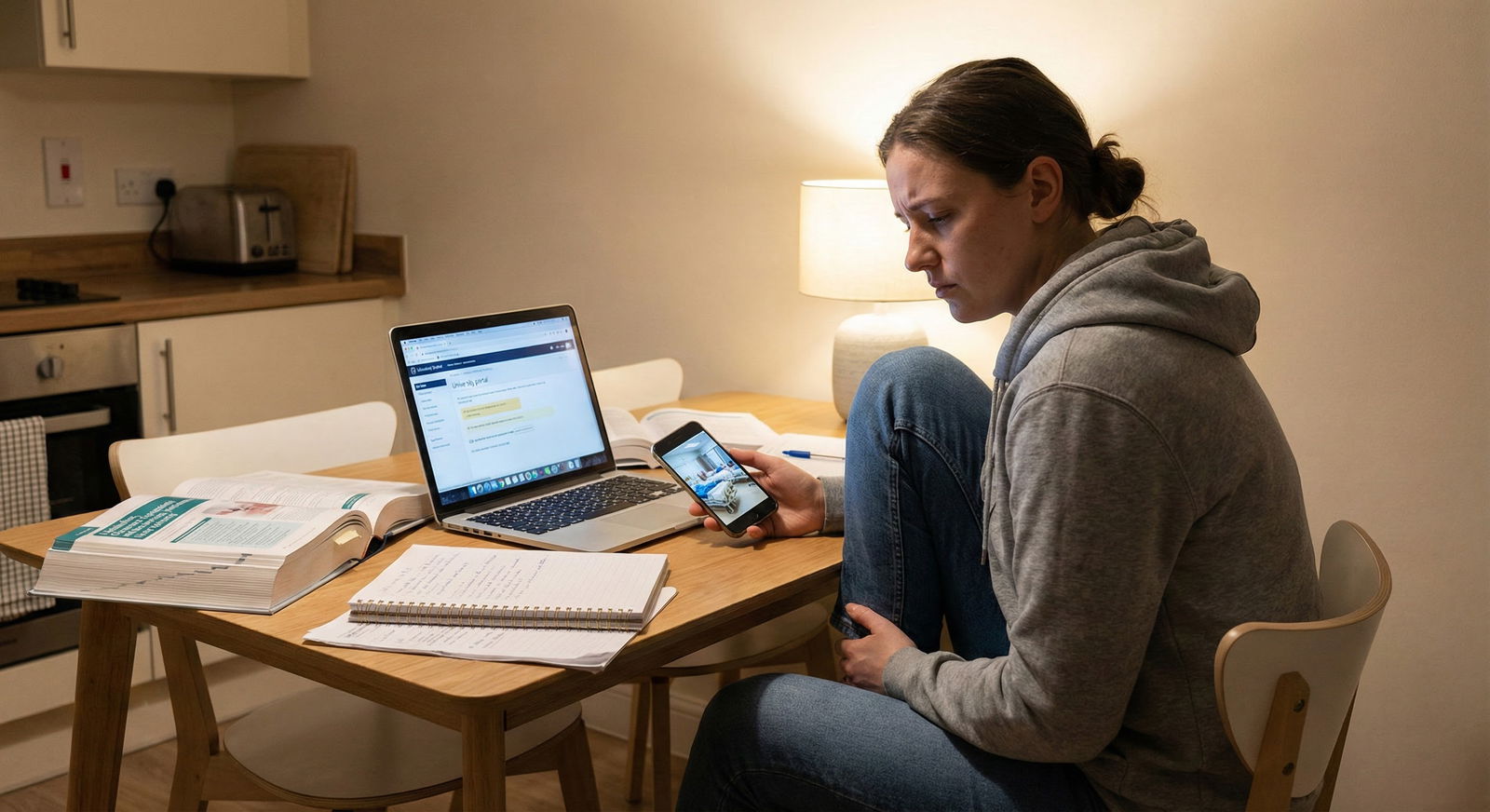
Mental Health Stabilizer: What to Do During the "Waiting / Leaving / Come Back" Gaps
You'll have weird pockets of time: waiting for the supervisor, standing in a hallway, sitting in your car before you drive to the hospital, or coming back after a short coordination call. Those gaps are where rumination wrecks you.
"I'll fail because of this." "I should have stayed home today." "Everyone else is crushing it while my life falls apart."
Shut that down with a repeatable protocol. No 20-minute meditation fantasy. You get minutes, sometimes seconds.
Rapid calming protocol (use in order):
- 2 minutes physiological downshift: paced breathing (inhale 4, exhale 6) while unclenching jaw, shoulders, and fists. Feet flat on floor.
- 60 seconds cognitive reset: name five concrete things you can see, then state one true sentence: "I handled the safety piece. Next action is ___."
- One actionable next step: speak to supervisor / call sister / get water / write the timeline. Then do only that.
Replace the failure spiral with a controllable sentence: "I'll speak to the supervisor, then return if permitted." Or "I'm leaving now and I'll document everything for rescheduling." Controllable beats catastrophic every time.
Here's a practical menu by time available. Effectiveness is self-rated calm (1-5) from students who've actually used these under pressure, not clinical claims.
Pick the version that fits the clock you actually have. Then move.
Decision Framework: Stay, Leave, Request a Break, or Delay/Reschedule?
Match the decision to two things only: the emergency's trajectory and the real exam policy in front of you. Do not gamble safety on a guess about "maybe they'll be nice."
Ask yourself four questions out loud if you can:
- Does staying put anyone at higher risk of harm?
- Can I return and function within a short, defined window?
- Are there legal/ethical duties here (you're the only adult, power of attorney, dependent child)?
- What accommodations path exists after today if I walk out?
Then use this matrix.
Plain-language version of those codes:
- Low/moderate + likely quick: stay, brief supervisor check-in, keep going if your head is usable.
- Low/moderate + uncertain timeline: exit briefly to coordinate, then return only if the situation is truly stable.
- High severity + any timeline: leave. Reschedule is the professional move. Continuing while someone you love is crashing is how you both lose.
- High + uncertain: exit and notify. Do not attempt to continue. Your cognitive bandwidth is already spent.
I've watched people power through "just one more block" and then bomb the rest of the day because their prefrontal cortex was offline. Leaving is not weakness. It's triage.
After the Emergency: Documentation, Follow-Up, and Protecting Your Mental Health
When the acute phase ends, or at least when a family plan is in place, you switch to paperwork and recovery. Do this while the details are still sharp.
Within the first hour: Hydrate. Eat something if you can. Write a cold timeline: times of calls, who you spoke to, what you requested, what the testing center said. Keep it objective. No adjectives. This document becomes gold for rescheduling or accommodations.
Same day or next business day: Notify the testing center / school official channel in writing. Attach the bare facts. Request next steps for incomplete exam, score void, or reschedule. Do not wait for "when I feel better."
1-3 days: Contact academic support or the accommodations office if the emergency will keep affecting your schedule or concentration. Bring the timeline.
Within a week: Do a real mental health check-in. Counseling services, a trusted peer, a mentor who has lived this. Watch for delayed effects: sleep disruption, intrusive replays, guilt spirals, sudden avoidance of studying, irritability that surprises you. If symptoms are climbing, panic, inability to sleep, persistent hopelessness, escalate to mental health services or crisis resources the same day. Waiting it out is a terrible strategy.
What to Say (and Not Say): Avoiding Shame, Miscommunication, and Self-Sabotage
With supervisors, stay neutral. Good: "Family medical emergency. I need to leave / pause / coordinate." Bad: "It's nothing, I'm fine" (they can't help you) or "This is the worst day of my life, everything is ruined" (they freeze and you lose clarity).
With yourself, kill the shame script. You responded to a health and safety issue. That is what competent adults do. Shame loves to dress up as "I should have been tougher." Reframe it into the actions you already took: you called, you delegated, you notified, you documented. Those are the only metrics that matter in the first 24 hours.

You will feel guilty anyway. Feel it for five minutes, then put it on the "can't control" side of the page and move.
Key takeaways worth tattooing on your forearm: Safety and delegated family action come before exam perfection. Stabilize with a short protocol, then use a clean proctor script so you protect both people and testing options. Document cold facts fast, follow up the same day, and treat delayed stress like the real medical issue it is, before it steals the next three weeks.
Action steps if this hits you tomorrow
- Save a 25-second emergency script in your notes app tonight.
- Identify your two backup people (who can drive, who has med lists) and tell them the plan once.
- Screenshot your school's exam emergency / incomplete policy so you're not googling it in a panic.
- Practice the 2-minute breathing + one-next-step reset once while calm so it's automatic later.
- If an emergency already happened and you're still spinning: write the timeline now, send the notification email, and book a counseling slot this week, even if you "feel fine."
You don't get to choose when family emergencies arrive. You do get to choose the triage order. Use it.