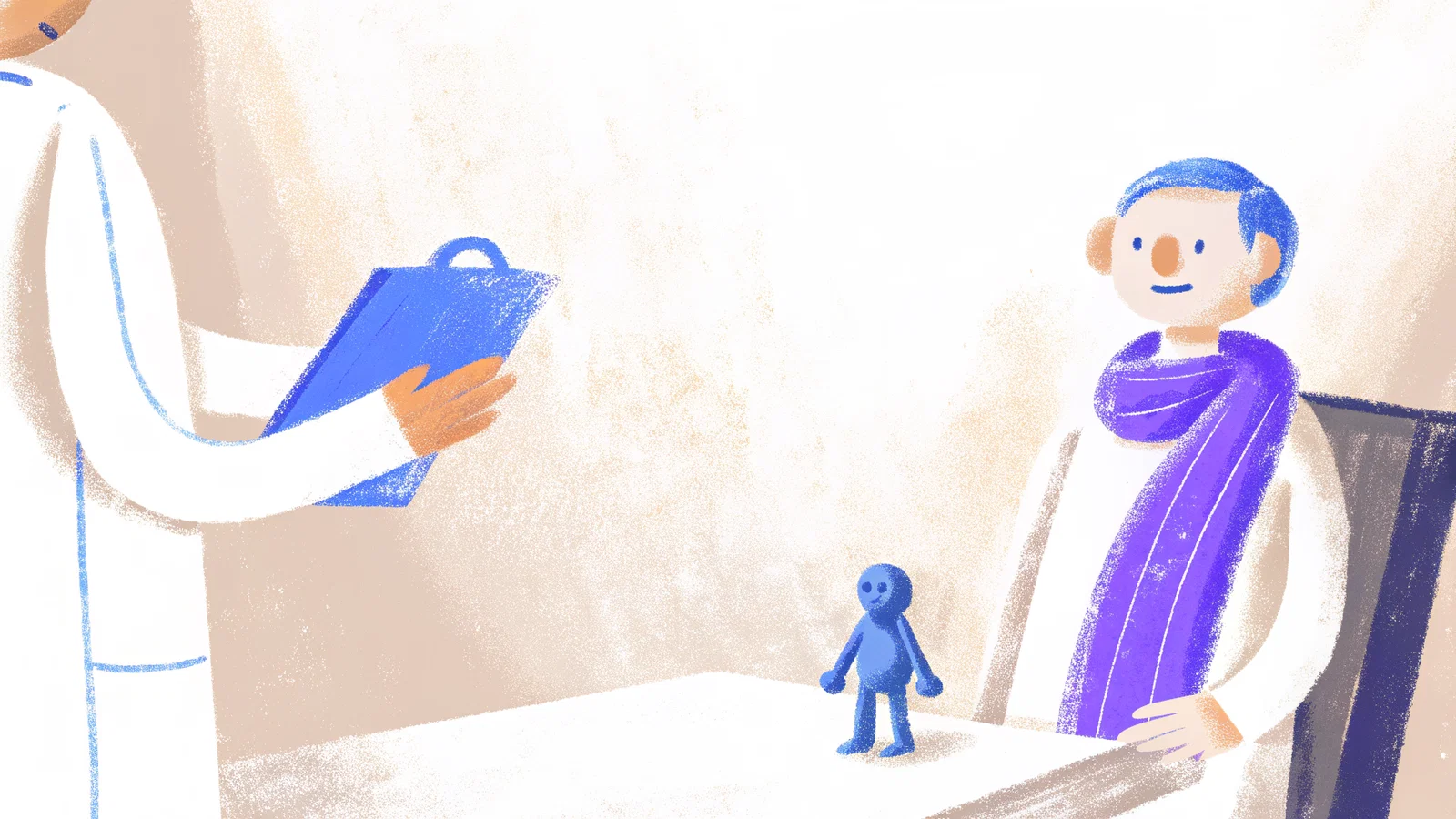
Everyone assumes a joke is harmless. A little levity to break the ice. What's the worst that could happen? In a clinical setting, plenty. The wrong joke, or the wrong response to a patient's joke, can quietly erode trust, flatten a patient's dignity, and shift the emotional labor of the visit onto the person least equipped to carry it.
Humor in medicine is a tool, not a personality trait. And like any tool, it has a user manual. Most clinicians never read it.
Here's the contrarian part: the question is not whether to be funny. It's whether your response helps the patient feel safer, or smaller. The data on patient communication, psychological safety, and clinical rapport gives us a surprisingly clear answer. And it's not "wing it."
The Myth: "Any Humor Builds Rapport"
The comforting belief is that humor universally humanizes the clinician and relaxes the patient. The data doesn't support that. What it supports is context-dependent humor, and the context is everything.
A 2017 review in Patient Education and Counseling found that humor in medical encounters helped patients only when it was patient-initiated, low-stakes, and clearly not at the patient's expense. When humor was clinician-initiated, sarcastic, or used before rapport was established, it correlated with reduced patient satisfaction and lower adherence to recommendations.
The common failure modes are predictable:
- Sarcasm. Reads as dismissiveness, especially from someone with a white coat and a prescription pad.
- Sexual innuendo or body-related jokes. Even when well-intentioned, these land in a power vacuum. The patient is undressed, vulnerable, and not in a position to push back.
- Dark humor deployed too early. The team that uses gallows humor in the break room is processing their own stress. The patient doesn't share that context.
- Self-deprecation that makes the patient manage your feelings. "I'm terrible at this" might get a laugh in a social setting. In an exam room, it puts the patient in the awkward position of reassuring the clinician.
What the evidence actually supports: humor works best when it's patient-centered, culturally aware, low-risk, and clearly not at the patient's expense. If the patient isn't in on the joke, you don't have humor. You have an awkward moment.
What Patients Actually Read in the Moment
Here's what most clinicians miss: patients aren't processing your joke in a vacuum. They're processing it through a stack of filters you can't see.
They're processing it through vulnerability, they're in a gown, in pain, or afraid of a diagnosis. Through power imbalance, you hold information they need. Through prior trauma, a joke about bodies might land very differently on someone with a history of sexual assault. Through cultural context, humor norms vary dramatically across communities, generations, and identities. Through uncertainty, they don't know if laughing is the safe move or if you actually want a serious answer.
I once watched a well-meaning resident respond to a patient's nervous "doc, am I going to make it?" with a quip about the hospital's cafeteria coffee. The patient laughed. Then went quiet for the rest of the visit. The resident thought it went well. The patient told the nurse later that he wasn't sure the doctor was taking him seriously.
The same line can land differently depending on age, culture, diagnosis, identity, and whether the patient has felt heard in the last five minutes. Before you joke, ask yourself whether the patient feels understood, not merely entertained.

The Evidence-Based Response Framework
When a patient makes a cringe joke, you have about three seconds to decide how to respond. The data points to a clear stepwise model:
- Pause. Don't react on reflex. A half-beat of neutral expression buys you time and prevents the accidental laugh that rewards the wrong thing.
- Assess the room. Is this a mildly awkward attempt to lighten the mood, or something that crossed a line? The response differs.
- Acknowledge the moment. A brief nod or "I hear you" signals you're not going to shame them, but you're also not going to amplify it.
- Redirect without freezing the interaction. Bring the focus back to their care, their concern, their next step.
For mildly awkward humor, the nervous pun, the self-deprecating comment about getting old, a light acknowledgment works. Something like, "I appreciate that," followed by a smooth pivot back to the clinical agenda. You're not endorsing the joke. You're not punishing it. You're keeping the visit on track.
For jokes that cross a line, inappropriate comments, boundary-testing humor, anything that makes the room uncomfortable, the evidence supports a calm, brief boundary. Not a lecture. Not a visible wince. A simple, professional reset: "Let's keep our focus on what brought you in today." Then move on.
What you don't do is make the patient manage your discomfort. More on that below.
What Not to Do: The Well-Intended Mistakes That Backfire
Here's where good intentions go sideways. The mistakes I see most often:
- Overexplaining why the joke was inappropriate. A ten-minute speech on professionalism wastes the visit and humiliates the patient. They came for care, not a tribunal.
- Trying to out-joke the patient. Escalating with a wittier reply might get a laugh from the team, but it teaches the patient that the exam room is a performance space.
- Visibly cringing. The patient sees your reaction. Now they're managing your discomfort. The power dynamic inverts in exactly the wrong direction.
- Making the patient feel small to reassert authority. Sarcastic replies, cold silence, or pointed professionalism all signal "you did something wrong" without actually setting a boundary.
The goal is not to punish awkwardness. It's to preserve psychological safety and keep care moving. Sometimes the best response is no commentary at all, a neutral expression, a brief nod, and a pivot to the next clinical question. Silence is underrated. Especially when the joke is merely clumsy rather than harmful.
Closing Reflection: The Real Skill Is Not Comedy, It's Calibration
The best clinicians aren't the funniest ones. They're the ones who read the room before they open their mouth.
What looks like minor banter, a joke, a quip, a nervous laugh, can carry outsized meaning in a clinical encounter. The patient is not your friend at a dinner party. They're someone who came to you with a problem, often scared, often exposed, often unsure whether they can trust you. Your response to their humor is part of how they answer that question.
Treat humor as a clinical tool. Not a personality test. Not a rapport-builder you can deploy on autopilot. A tool with indications, contraindications, and side effects. Use it when the data, and the room, say it's safe. And when you're not sure? A calm pause, a brief acknowledgment, and a redirect to what matters: their care.
That's not boring. That's professional. And the evidence says it's what patients actually need.

Key Takeaways
- Cringe jokes are not automatically harmless. In healthcare, timing, power dynamics, and patient vulnerability decide whether humor builds rapport or breaks it.
- The most effective response is usually calm, brief, and patient-centered: acknowledge lightly when appropriate, set a boundary when needed, and always redirect to care.