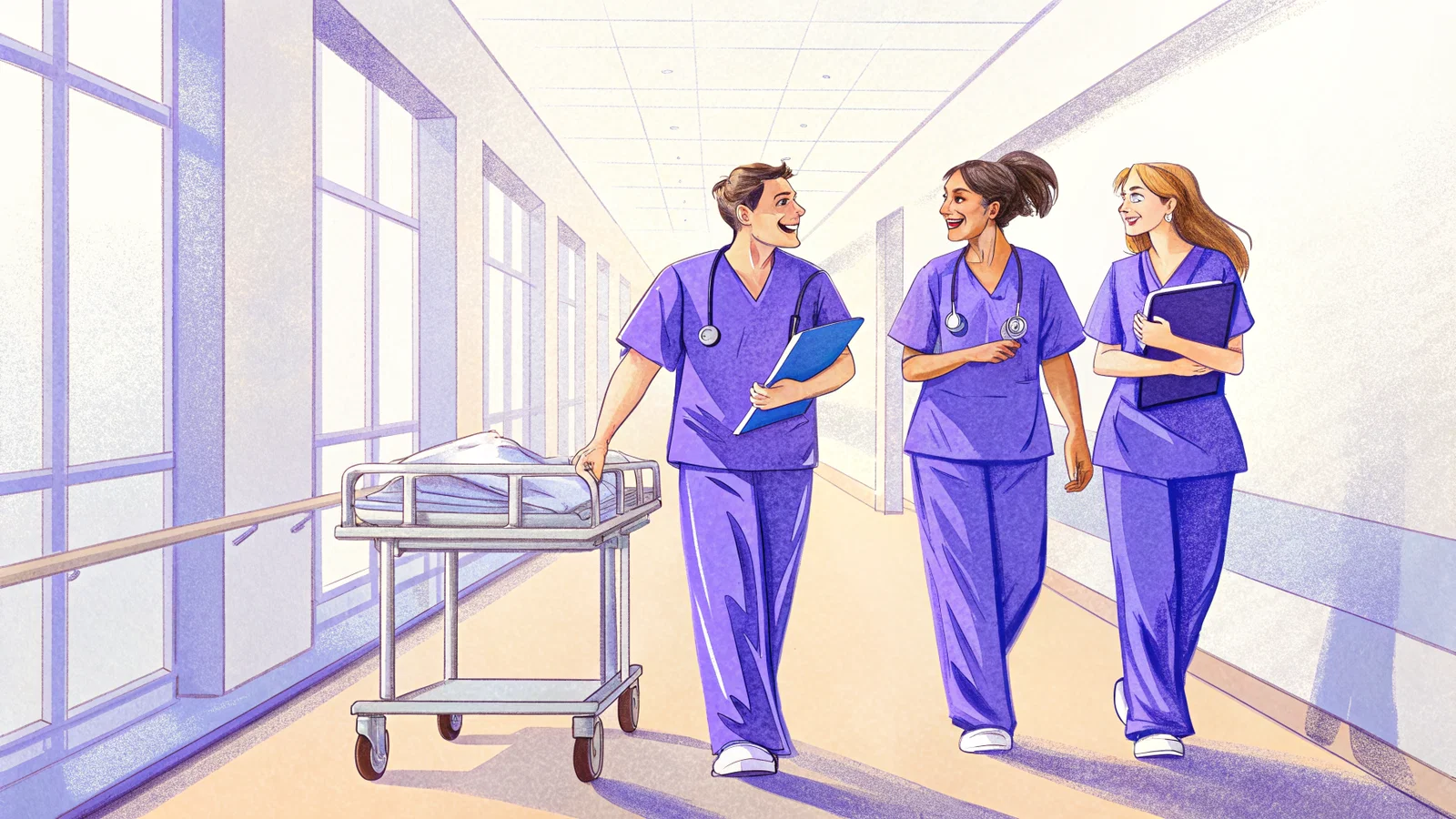
I know that knot in your stomach. It appears the instant you lock eyes with the patient and realize the punchline didn't evaporate into the antiseptic hallway air. It burrowed right through the curtain and landed in their ears. It's a uniquely medical flavor of terror. You weren't being malicious. You were sleep-deprived, running on burnt coffee, and your senior resident made a crack about Mr. Thompson's extremely creative attempt to remove a foreign object that would make a sailor blush. You snorted. You embellished. You moved on. Except Mr. Thompson, silent as a ghost, was right there, and now his chart will likely include a new psychosocial note about trust issues.
I've replayed this scenario in my head more times than I've practiced a cardiac exam. Because that's what anxious applicants do. We catastrophize. We imagine an inside joke, born purely of gallows humor to survive a 28-hour shift, costing us a residency spot, a license, or our entire fragile identity as a "good future physician." The fear isn't just about getting caught. It's the moral hangover. Am I already that burned-out cynic? Am I a fraud with a white coat and a dirty laugh?
Here's the blunt truth, no hedging: that joke was unprofessional. And you know it. But the world doesn't end there. We fix things. We learn. We don't let one bad moment define a career we haven't even officially started yet. This isn't about making excuses. It's about real damage control from someone who lies awake dissecting every social misstep.
The Core Challenge
The real crisis isn't the joke itself. It's the massive power differential you just made grotesquely visible. The patient is vulnerable, often literally undressed, in pain, and has handed their body over to a tribe of strangers who speak a coded language. When you shatter that therapeutic alliance with a shared snicker, you confirm every paranoid fear a sick person has: They aren't a person to you. They're a case. A punchline.
I've seen a third-year med student absolutely crumble after a nurse overheard her mocking a patient's accent during a handoff. The student wasn't a monster. She was mimicking the speech pattern of a beloved, eccentric uncle, and it slipped out in a moment of exhaustion. But to the patient's family member standing at the nurses' station, it was pure, undiluted bigotry. The student's first instinct was the worst: she fled. She hid in a supply closet.
That's the pitfall we all stumble toward. Avoidance. Your anxiety screams at you to pretend it never happened, to pray the patient was too sedated or too confused to register it. Sometimes they were. Often, they weren't. And even if the patient didn't hear the exact words, they felt the shift in the room's energy, the sudden chilling of smiles when they turned their head. That feeling of being an outsider in their own care can do more damage than the specific words.
Another favorite trap the panicked brain loves: over-explaining. You burst back into the room, sweating, and launch into a six-minute monologue about how "the joke was actually referencing a niche meme from a medical podcast" and "it's really a satire of physician burnout, not his specific anatomy." Stop. You're digging a grave and asking the patient to appreciate the shovel's ergonomic design. They don't want a dissertation. They want to know if you still see them as human.
The worst-case scenario thinking that keeps you up at night (formal complaints, professionalism committees, the dean's ominous email) is rare for a single, low-grade, overheard quip. But it's not impossible. Especially if the joke touches on protected characteristics, or is overtly sexual, cruel, or recorded. The core challenge is navigating the gap between "I said something dumb" and "I am an irredeemable pariah." You have to stop spiraling long enough to read the room, own the thing, and crucially, shut up.

Actionable Next Steps
You're in the room. Or just outside it, hyperventilating. Forget the high-minded professionalism essays. Here's the step-by-step manual for the terrified.
First, do a fast, brutal triage of the severity. There's a chasm between "mildly inappropriate black humor about the situation" and "viciously degrading the patient's identity." If your joke fell into the second category, racist, misogynistic, transphobic, mocking a disability, this is no longer just an interpersonal oops. You need to self-report to a trusted attending or your clerkship director immediately. Yes, it's terrifying. But a complaint will come. Getting ahead of it with raw humility is your only play. Don't try to spin it. Say what you said, don't justify, and state what you're going to do to fix the damage.
For the more common scenario, a cynical clinical quip, a poor-taste reference, or mocking an unusual presentation, you can likely handle this directly if you have the guts. I won't pretend it's easy. My heart rate just typing this is a solid 110. But you do it anyway. Go back into the room alone. Don't bring the whole giggling team to form a firing squad. Sit down. This is critical: get your eye level below theirs if they're in bed, or take a knee. Make yourself physically non-threatening.
Now, the apology. It must be surgical: clean, specific, and with no anesthetic. "I need to apologize. You may have overheard a comment I made outside that was unkind and completely unprofessional. I made a joke about your situation. It was wrong, and it shouldn't have happened." Notice what's absent. No "I'm sorry if you were offended." No "it was just a joke." No "we're all so tired." You must own it completely. The patient might yell. They might cry. They might stare at you with devastating silence. You sit there and you take it. That silence is the consequence of your action, and enduring it is how you prove you're not just a coward looking for quick absolution.
After the apology, offer a repair, but only a genuine one. "I want you to know this doesn't change the care I'm going to give you. I'll understand if you'd prefer a different student or provider on your team today." Giving them control back is the point. Do not grovel. Groveling forces the patient to comfort you, which is a grotesque reversal. Once you've said your piece, thank them for letting you speak, and leave unless they ask you to stay. Then, document it. Not in the patient's chart, never write "patient was upset about my joke" in the medical record. I mean email your attending or program director a straightforward, brief account of what happened and that you've apologized. Create a paper trail that shows you handled it, you're not hiding, and you learned.
The next shift, you walk back in. Not as a persona non grata, but as a professional who owned a mistake. Greet the patient normally. Don't act like a kicked puppy, but don't go back to cracking jokes. Be competent, quiet, and present. Let your actions show the respect your mouth failed to convey. This doesn't just salvage the relationship for the patient; it starts repairing the self-image you shattered in the mirror at 3:00 a.m.
Here's the resource you need: your own reflection. Gallows humor is a pressure valve, not a moral failing. But the inside joke that escapes containment is a dangerous gas leak. Be prepared. The high-yield area to focus on isn't just the apology script; it's the moment before the joke leaves your lips next time. Cultivate the tiny pause. Ask yourself: if my patient were my parent, and they magically understood English right now, could I still defend this? If the answer is no, file it away for the bar with your co-residents, far off hospital grounds. Your future career depends less on never screwing up than it does on what you do in the ten minutes after you do. So breathe. Fix it. Move forward. The knot in your stomach will untie eventually.