
Educational disclaimer: This article is for general medical education only. It is not legal, regulatory, financial, tax, compensation, contracting, or institutional policy advice. Hospital AI deployment, vendor review, reimbursement or compensation incentives, and risk decisions should be discussed with your supervising physicians, compliance leaders, risk management team, legal counsel, and other qualified professionals at your institution.
Meta description: Learn how to judge whether a hospital AI tool is safe before use, with practical questions on validation, bias, monitoring, workflow fit, governance, escalation, and patient safeguards in real clinical settings.
The email goes out on a Tuesday afternoon. "New AI-enabled sepsis surveillance tool now live in pilot units." Or maybe it's a radiology assist model, a triage score in the ED, an inbox documentation helper, or an early deterioration flag folded quietly into the chart. By Wednesday morning, somebody from leadership is saying the magic words: FDA-cleared. Validated. Best-in-class. And then comes the part nobody says out loud: we expect you to use it.
I've watched this rollout pattern more times than hospitals like to admit. The demo was slick. The vendor had polished slides. Someone important got excited because the tool promised speed, staffing relief, fewer misses, cleaner notes, faster throughput. The attending who asks annoying questions gets labeled "not innovative." The resident is too busy to fight it. Nursing gets one short in-service. IT says the integration is stable. Quality says they're monitoring. Maybe they are. Maybe they aren't.
Here's what really happens in hospitals: tools often enter clinical workflow before frontline staff understand what the model actually does, what data it depends on, where it fails, and whether anyone local has proved it works on their patients. That gap is where preventable harm starts.
The core truth is simple. Safety is not the same as approval. It is not the same as a vendor study. And it is definitely not the same as a beautiful dashboard. A hospital AI tool can be impressive, misleading, or dangerous depending on how it was tested, who owns it, and what happens when it's wrong.
This article is for educational purposes only. It is not financial advice, not legal advice, and not tax advice. Figures vary by individual circumstances, consult a qualified professional before acting.
What "Safe" Actually Means for a Hospital AI Tool
"Safe" is not a vibe. It's not a logo on a slide deck. In clinical practice, safe means the tool is accurate enough to help, reliable enough to trust within limits, consistent across patient groups, and predictable inside the mess of real workflow. Not the clean world of a retrospective dataset. The real one. Missing labs. Delayed charting. Copy-forward notes. Boarding patients. Night shift staffing. The intern clicking through six alerts in a row.
A model can have strong technical performance and still be unsafe. That's the part non-clinicians routinely miss. A study might show an impressive AUROC, strong sensitivity, or good benchmark performance against experts. Fine. But if the model fires constantly on low-value cases, buries staff in false positives, misses atypical presentations, or behaves erratically when data are incomplete, it is not safe in practice. It's just statistically flattering.
And here's another insider truth: attendings and program directors don't care about AI marketing language nearly as much as vendors think they do. What they care about is whether the tool changes decisions in a way that reduces errors instead of introducing new ones. Does it help catch real sepsis earlier without creating alarm fatigue? Does it improve radiology workflow without pushing people to overcall? Does it summarize notes accurately without inventing a physical exam that never happened? Those are safety questions. The rest is decoration.
Safety also includes harm from false reassurance. People focus on false alarms because they're noisy. False reassurance is quieter and often worse. If the screen is green, if the score is low, if the AI says "low likelihood," clinicians can unconsciously ease up. Fewer repeat checks. Less skepticism. Slower escalation. I've seen teams anchor on a reassuring output even when the patient in front of them was declaring themselves clinically. That is how a tool becomes dangerous without ever "breaking."
So judge safety where it matters: in decisions, in workflow, and in the patients who get missed when the tool looks most convincing.
The Pre-Use Safety Check: Questions Insiders Always Ask
Before you touch the tool, ask the first question nobody asks enough: what exactly is this thing doing? Is it decision support? Is it automation? Is it a diagnostic aid? Is it making a prioritization recommendation that effectively behaves like triage? These categories matter because the safety bar is different. A note-drafting assistant that occasionally needs correction is one thing. A model that influences ICU transfer, imaging urgency, thrombolysis timing, or who gets seen first in a crowded ED is another matter entirely.
Then ask about evidence, and be specific. Not "has it been validated?" That question is too soft and vendors know how to dance around it. Ask: was it externally validated outside the development site? Was it validated locally in our hospital? Was it prospectively tested in the exact environment where it will be used? Retrospective success is cheap. Real-world prospective testing is where weak tools start sweating.
This is where the smartest clinicians get blunt. Show me the patient mix. Show me age bands. Show me race and ethnicity data if collected. Show me language groups, comorbidity burden, acuity, unit type, device differences, outpatient versus inpatient performance, academic center versus community setting. A tool trained on one documentation culture can degrade badly in another. A model built around data-rich ICU patients may stumble on ward patients with sparse inputs. Imaging tools can shift when scanner type or acquisition protocol changes. Documentation assistants can hallucinate when the source note structure changes. None of this is theoretical. I've seen it.
You also need to know the failure modes. Every real model has them. If someone presents a tool as broadly excellent with no meaningful weak spots, that's not confidence. That's either ignorance or salesmanship. Ask directly: where does it underperform? Rare diseases? Pediatric edges of use? Non-English-speaking populations? Patients with incomplete records? Transfer patients? Those with chronic inflammatory conditions that mimic sepsis? Ask how performance changes when key variables are missing or delayed. In many hospitals, "real-time" data are not nearly as real-time as leadership imagines.

Ask who owns the tool clinically. Not who purchased it. Who owns it. Name, department, escalation path. If the answer is vague, "innovation team," "digital health," "operations", pause. Hard. Every clinically influential AI tool needs a responsible physician or interdisciplinary clinical owner who can answer for use criteria, false positives, false negatives, update cycles, and rollback decisions. Otherwise the tool is politically owned but clinically orphaned. That's common. And it's dangerous.
You should also ask how the model is monitored after deployment. Models don't stay still just because the software does. Inputs drift. Documentation habits change. Lab ordering changes. Populations change seasonally. Treatment protocols shift. EHR updates alter variable mapping. A tool that looked good six months ago can degrade quietly. Quietly is the key word. Bad AI usually doesn't explode. It erodes.
And let me tell you the part people don't say in committee meetings: the most dangerous tools are often the elegant ones. Clean interface. Smooth confidence score. Pretty trendline. People stop questioning them because the presentation feels authoritative. Ugly tools invite skepticism. Polished tools seduce it out of you. That's not a software problem. That's a human factors problem. Same result if you ignore it.
Red Flags That Should Make You Pause Before Using the Tool
Some warning signs are subtle. Others are flashing neon and hospitals still ignore them.
If performance claims are vague, that's a red flag. "Clinically proven." "Highly accurate." "Outperforms standard care." Fine. Compared with what? On whom? At what threshold? With what tradeoff between sensitivity and specificity? A sepsis model with "good overall performance" can still miss too many true cases or swamp the floor with false positives. A radiology tool can improve one metric while worsening overcalls. Calibration matters too. If a risk score says 80%, does it behave like 80% in real patients, or is that number theater?
Missing subgroup data is another classic tell. If they can't show performance in the populations you actually treat, then you're guessing. And guessing under the banner of machine intelligence is still guessing.
Be wary when nobody can explain how the outputs are generated, updated, monitored, or retrained. I'm not demanding every bedside clinician become a machine learning engineer. I am demanding that someone in your institution can explain, in plain language, what the tool sees, what it predicts, how often it updates, and what happens if performance slips. "Proprietary" is not a safety strategy.
Black-box tools deserve extra caution when they influence urgent decisions, triage, or resource allocation. That doesn't mean every opaque model is unusable. It does mean the less transparent the tool, the stronger the evidence and monitoring must be. If a hidden system helps decide who gets immediate attention, who gets scanned first, or who is judged "low risk," opacity becomes a patient safety problem fast.
Weak governance is where a lot of hospital AI programs embarrass themselves. No named clinical owner. No escalation path when the output looks wrong. No downtime plan. No rollback plan. No stop rule. I've sat in rooms where everyone was proud the integration was live and nobody could answer the most basic operational question: if this tool starts behaving badly on Friday night, who shuts it off? Silence. That silence tells you everything.
Here's the behind-the-scenes reality. Many hospitals deploy tools before they have a serious rollback plan because rollout gets applause and rollback feels like failure. That's vanity. Safe systems are built assuming failure is possible.
How Hospitals Should Test an AI Tool Before Rolling It Out Widely
The safest rollout sequence is boring. Good. Boring is what you want around patient safety.
Start with sandbox testing. Make sure the tool functions technically, maps data correctly, and isn't making absurd predictions because of broken interfaces or mismatched variables. Then do retrospective local validation using your own data. Not vendor data. Yours. After that, run the model in silent mode. Let it make predictions without influencing care, then compare outputs against real clinical outcomes and clinician decisions. Silent mode exposes nonsense before patients pay for it.
If it survives that, move to a limited pilot in a contained setting with real oversight. One unit. One service line. A defined patient population. Not a hospital-wide blast because someone wants a ribbon-cutting moment. During the pilot, measure what actually matters: error rates, misses, false positives, workflow time, alert fatigue, override frequency, adverse events, and trust calibration. That last one matters more than people realize. Are clinicians ignoring a useful tool, or worse, overtrusting a mediocre one?
You also need local champions who are credible, not just enthusiastic. A respected attending. Nursing leadership. IT. Quality. Sometimes radiology. Sometimes emergency medicine. Sometimes hospital medicine. The point is alignment with people who understand both workflow and consequences. A pilot run by tech optimists alone is not a safety program.
And set stop rules before launch. Predefined. Written down. If false positives exceed a threshold, pause. If subgroup performance drops, pause. If staff report specific dangerous misfires, investigate immediately. If clinicians are overriding the tool constantly, don't pretend that's "engagement." It may be the model telling on itself.
My standard is simple: if a tool cannot survive quiet pilot testing, it has no business being marketed as ready for broad clinical use. Period. Real tools prove themselves under friction. Fake confidence needs a stage.
What to Do if You're a Clinician Asked to Use the Tool Tomorrow
If this lands on your workflow tomorrow, don't panic and don't surrender your judgment. Start with three questions: who validated this locally, what populations was it tested on here, and who is monitoring it now that it's live? If nobody can answer those cleanly, you've learned something important already.
Use the tool only within its approved scope. If it's meant to support documentation, don't let it drift into diagnosis by suggestion. If it's a risk flag, don't let it become an autopilot. If the output conflicts with your bedside assessment, slow down. High-stakes decisions are exactly where overconfident AI causes damage. Triage. Escalation. Discharge. Antibiotics. Imaging urgency. Resource allocation. That's where you earn your paycheck by being harder to impress.
Document concerns when appropriate. Escalate mismatches. Tell the supervising attending, charge nurse, service lead, or whoever owns the tool. Not to be difficult. To create a trace. Hospitals love to say they are monitoring AI performance. Monitoring only works if frontline clinicians report when the thing is acting strange.
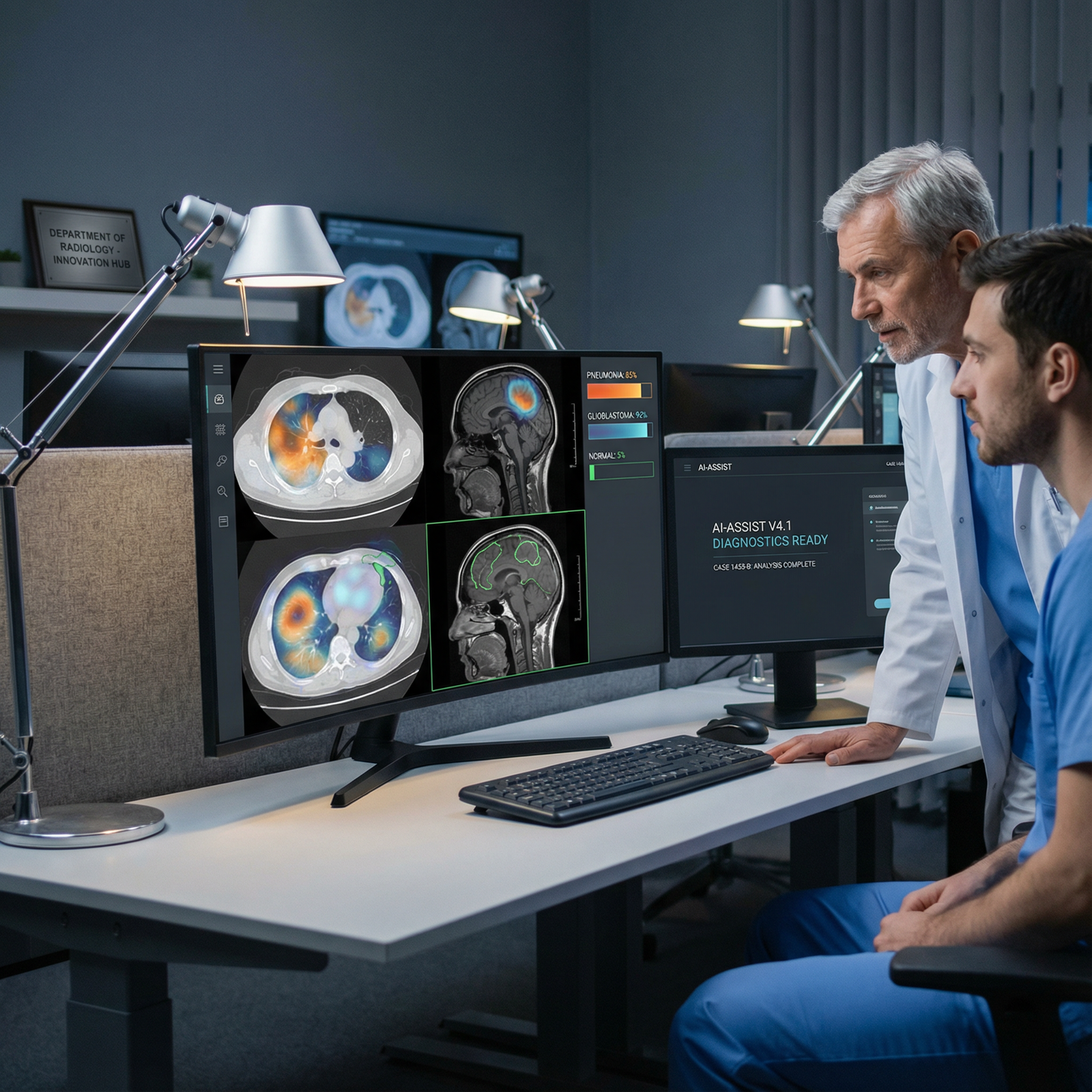
And know when to put the brakes on. If the patient population is unusual, if the outputs are inconsistent, if the recommendation feels like a hidden second opinion with no accountable human attached, do not move faster just because the software looks confident. Confidence displays are cheap. Clinical judgment is not.
You do not need to become a data scientist. That's not the job. But you do need to be a disciplined skeptic. The best clinicians I know are open-minded and hard to fool. That combination is exactly what safe AI use requires.
Bottom Line: The Fastest Way to Tell If the Tool Is Worth Trusting
Here's the mental checklist I use: validated, local, monitored, transparent, clinically owned.
If one of those is missing, trust should drop immediately. If two are missing, I'm already worried. If the tool is flashy but weak on governance, subgroup data, or local testing, that's not innovation. That's risk dressed up as progress.
Safe hospital AI is not about demos. It's about predictable behavior, accountable oversight, and evidence in the environment where your patients actually live and get treated. The right question is not, "Is this AI impressive?" That question gets hospitals in trouble.
Ask the harder one. The adult one. The one that protects patients.
Has this hospital actually proved this tool will not quietly harm the people in my care?
That's the standard. Keep it.