
Let me tell you what really happens behind the residency program doors. Every year, some well-meaning researcher or administrator trots out a click count metric and declares an epidemic of EHR-induced burnout. The narrative is seductive: more clicks equals more frustration equals worse efficiency. It's clean, it's quantifiable, and it's wrong.
Program directors and attendings don't sit around evaluating residents by raw mouse clicks. We evaluate whether you can write a note that holds up in court, get paid correctly, and communicate a coherent clinical story. If that takes 40 clicks or 400, nobody I respect cares, as long as each click does real work.
I've watched residents click furiously for 20 minutes on a note that looked like a ransom note, and I've watched others click even more while producing documentation that made me want to frame it. The difference isn't the number. It's the value.
The Click Count Paradox: Why More Isn't Always Worse
The myth has infected everything from medical school lectures to mid-level administrator dashboards. More clicks = bad. Fewer clicks = good. This is lazy thinking.
Here's the insider truth: click count is a terrible metric because it doesn't distinguish between a click that builds a problem list and a click that reopens a dropdown you already filled. A resident who clicks 60 times but enters structured data, billing codes, and quality measures is dramatically more efficient, in the ways that actually matter, than a resident who clicks 30 times but leaves the note useless for coding and handoffs.
I've heard attendings grumble about "click burden," sure. But when they sit down to review your chart, they're not counting mouse presses. They're asking: Does this note explain what happened? Can I defend it? Will the coders pay it? If yes, the clicks are invisible.
So let's dismantle the myth properly. What you've been told is that click volume is the enemy. What really happens behind the scenes is that click value is the only thing we ever discuss. And that distinction changes everything.
The Myth: More Clicks Equals More Burnout
The common narrative says EHR click burden is the primary driver of physician burnout and inefficiency. You've heard it from podcasts, op-eds, and maybe even a jaded attending in the break room. High click counts correlate with dissatisfaction. True.
But correlation is not causation. I'm going to say that again because medical training should have beat it into you by now: correlation is not causation.
Here's the data part. Studies show certain specialties click more per encounter. Emergency medicine can average 60 clicks per patient. Internal medicine sits around 50. Surgery often fewer, maybe 35, because of shorter notes and more procedural documentation. Family medicine around 45. But those numbers don't tell you whether those clicks are driving decisions or driving people insane.
I've seen residents with high click counts get praised as thorough. Attendings value documentation quality over raw speed every single time. A resident who clicks more to build a proper problem list, update med reconciliation, and insert discrete billing codes is not inefficient. They're doing the job the way the system rewards.
The real burnout driver isn't the click count. It's clicking without purpose. Re-entering the same allergy three times because the EHR doesn't auto-populate. Hunting through six menus to find a simple order. Those are the clicks that make you want to throw the monitor out a window.
The myth survives because hospitals can measure clicks easily. It's a lazy administrator's proxy for work. But behind closed doors, no program director I know uses click counts to judge a resident's efficiency. They use your notes, your handoffs, and your ability to synthesize.
The Reality: Clicks Are Not Created Equal
Let's get concrete. There are high-value clicks and low-value clicks. High-value clicks create structured data, satisfy billing requirements, trigger clinical decision support, and build a chart that works for everyone downstream. Low-value clicks are redundant entries, duplicate dropdowns, unnecessary navigation, and fights with a poorly designed interface.
Efficiency is not the total number. It's the ratio of valuable clicks to wasteful clicks. A resident with 70 total clicks and 60 of them high-value is crushing it. A resident with 40 total clicks and 30 of them low-value is drowning.
Here's an insider tip: many attendings actually prefer structured documentation that requires more clicks. Here's why. It reduces the risk of missed billing, improves data analytics, and makes quality reporting easier. That means higher reimbursement, fewer coding queries, and a cleaner audit trail. The extra clicks are an investment, not a waste.
Think of it like a procedure. No surgeon brags about making fewer incisions if those fewer incisions mean poor exposure and bad outcomes. They make precisely the incisions needed, no more, no less. The same applies to clicks. You want precisely the clicks that produce a defensible, billable, clinically accurate note.
The low-value clicks are the real enemy. Duplicate data entry. Clicking through the same med list three times because the reconciliation tool is broken. Chasing a drop-down that resets when you change tabs. Those clicks don't just waste time, they eat your cognitive bandwidth and make you hate the chart.
Attendings know this. We don't need you to click less. We need you to click better.
What Really Drives Efficiency? The Insider Perspective
Here's what program directors actually look at when we evaluate a resident's efficiency: time per patient, note completeness, ability to synthesize information, and whether the chart supports safe handoffs. Not click counts.
If you can see a complex patient in 25 minutes, write a complete note, and communicate the plan clearly, I don't care if you clicked 200 times. If you click 20 times but leave out the medical decision-making, you're done.
But there are hidden factors that separate the residents who seem effortless from the ones who stay until 9 p.m. Workflow design. Template customization. Macros. Smart phrases. Voice recognition. Seamless interoperability with labs, imaging, and pharmacy systems.
I once watched a second-year resident use a headset and a set of custom templates to finish a complex discharge summary in under four minutes. The note was beautiful. Coders loved it. The attending signed it without edits. That resident clicked a lot, voice commands, template selections, discrete fields, but every click was purposeful. Meanwhile, another resident clicked far less but spent 15 minutes typing free text that no one could read and that the coders rejected.
Guess which resident got rated higher.

The real efficiency killers are not individual clicks. They are systems failures: a clunky EHR with no interoperability, a template your program never optimized, and a training culture that teaches residents to document for billing but not for workflow. The residents who master shortcuts, who build a personal library of dot-phrases, who customize their note templates for their specialty, who use voice recognition for the narrative parts, those residents are rated higher. Even if they click more overall. Because their clicks are worth more.
I'll say it plainly: if you are spending your nights clicking through the same worthless screens, it's not because the EHR demands more clicks. It's because you haven't optimized the system. And the program directors know it.
Strategies to Optimize Clicks Without Sacrificing Quality
Let's get practical. You want fewer wasted clicks and more high-value ones. Here's how the residents who actually thrive do it.
First, customize your templates for your specialty. A surgeon's note should not look like a family medicine note. Build templates that include the required elements, history, exam, medical decision-making, billing codes, as structured fields from the start. Don't re-create the wheel every morning.
Second, build a personal library of macros and dot-phrases. Common clinical narratives, discharge instructions, normal exam findings, procedure notes, these should be one typed phrase that expands into a full paragraph. One click, not fifty.
Third, leverage voice recognition for free text components. The narrative parts of your note don't need to be clicked together. Speak them. Most modern EHRs handle voice well enough to save you hours each week.
Fourth, apply the 80/20 rule of clicks. Focus on the 20% of clicks that generate 80% of documentation value. Structured problem lists, medications, allergies, billing codes, quality measures. Those are your high-yield clicks. The rest, redundant navigation, duplicate entries, manual retyping, should be eliminated or automated.
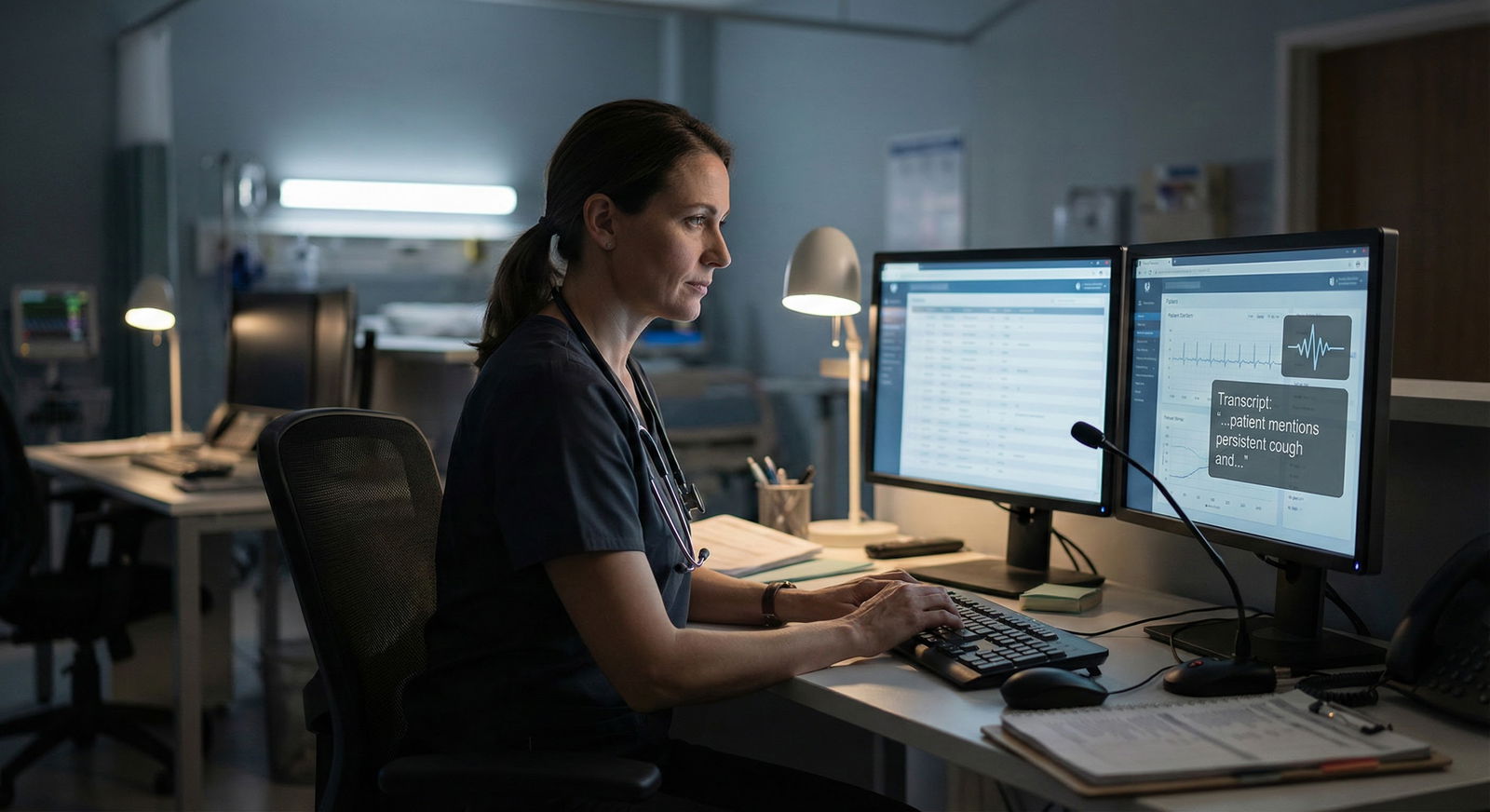
One resident I mentored cut her documentation time by 40% without changing a single clinical behavior. She just rebuilt her templates, added 25 dot-phrases, and started using voice for the assessment and plan. Her click count actually went up because she was now entering more structured data. Her evaluations went up too. The attendings noticed the notes were cleaner, the billing was smoother, and she left on time.
That's the real secret. Stop counting clicks. Start valuing them.
It's not about the number of clicks, it's about the value of each click. The real secret is mastering your EHR to work smarter, not harder. The residents who understand this will walk into any attending's office with confidence. The ones who obsess over click counts will keep drowning in a metric that was never meant to guide their careers.
This article is for educational purposes only. It is not financial advice, not legal advice, and not tax advice. Figures vary by individual circumstances, so consult a qualified professional before acting.