
Patient portals have been wildly oversold as a magic bullet for “engagement” and outcomes. They are not.
The Big Myth: “If Patients Use the Portal, Outcomes Will Improve”
The core claim pushed by vendors, consultants, and too many hospital leaders goes like this:
“Patient portals empower patients. Empowered patients are more engaged. Engaged patients have better outcomes. Therefore: portals improve outcomes.”
That’s not logic. That’s a marketing funnel.
Let me be blunt: the best current evidence says:
- Portals modestly improve process measures (like test follow‑up, med refills, appointments).
- They sometimes improve intermediate clinical markers in very specific, often high‑touch, programs (like diabetics in tightly managed systems).
- They have weak, inconsistent, or no evidence for meaningful improvements in hard outcomes (mortality, hospitalizations, complications) in the real world.
And worse: if you run a busy post‑residency clinic, portals likely increase your workload, widen disparities, and shift uncompensated labor onto you, all under the banner of “innovation.”
Let’s separate myth from what the literature actually shows.
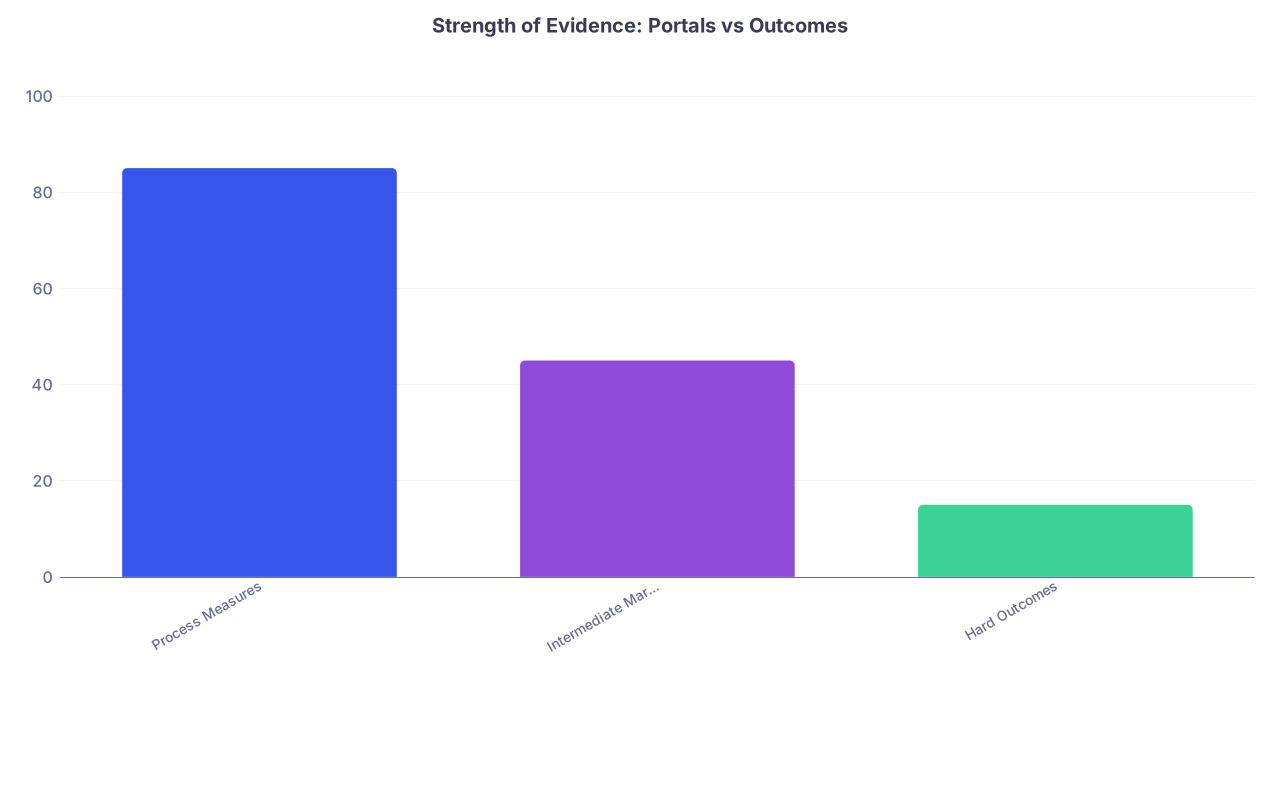
| Category | Value |
|---|---|
| Process Measures | 85 |
| Intermediate Markers | 45 |
| Hard Outcomes | 15 |
What the Evidence Actually Shows (Not What the Brochure Says)
Most of the high‑quality data we have on portals is observational, often in integrated systems like Kaiser or VA, where everything is already more organized than the average community practice.
1. Process Measures: Yes, Portals Help (A Bit)
This is where portals genuinely shine. And I’m not going to pretend they do nothing.
Study after study has found:
- Higher rates of test result viewing
- Better medication refill adherence (at least ordering the refill)
- Increased preventive service uptake (mammograms, colonoscopies, flu shots) among enrollees
- Faster message‑based communication for simple issues
Example: Several large VA and Kaiser studies showed portal users are more likely to get recommended preventive care and chronic disease monitoring done. It’s not dramatic, but it’s consistent.
But here’s the catch no one likes to say out loud: portal “users” in these studies are already the type of patients who show up, follow through, and have higher baseline health literacy and income. They’re healthier, more engaged people to begin with. The portal is riding the wave, not creating it.
2. Intermediate Outcomes: Some Signal, But Only in Narrow Settings
Look at diabetes, the favorite playground of digital health studies.
You’ll find papers showing:
- Portal use plus secure messaging plus case management leads to average A1c reductions of ~0.3–0.6% in some cohorts.
- Better blood pressure control in patients who use portals in high‑touch, integrated care models.
Sounds good. Except:
- These effects are usually tied to broader interventions: disease management programs, nurse outreach, standing orders, population health infrastructure. The portal is just the front door.
- The effect sizes are modest and often limited to subgroups: frequent message users, those with higher baseline engagement, patients with easier access to technology.
Strip away the case managers and the tightly designed workflows, and you’re often left with… a glorified inbox and lab viewer.
3. Hard Outcomes: Very Weak Evidence
Now the part that matters for actual medicine:
- Hospitalizations?
- ED visits?
- Mortality?
- Major complications?
The evidence that portals independently reduce any of these in normal health systems is thin to nonexistent.
There are a few studies that show associations between portal use and lower hospitalization or ED utilization. Then you read the methods and discover:
- Heavy confounding by socioeconomic status and baseline health behavior
- No adjustment for other concurrent interventions (PCMH adoption, care coordination programs)
- Use of “enrollment” or “any login” as the intervention, which is laughable as a causal exposure
In other words: the healthier, better‑resourced patients sign up and do better. Shocking.
So no, there is not robust, reproducible evidence that just “having a portal” in your average outpatient practice meaningfully improves major clinical outcomes.
What Portals Actually Change for You As a Practicing Clinician
If you’re post‑residency and working in a health system, you already know this: portals don’t feel like a miracle. They feel like a second job.
Here’s the on‑the‑ground reality.
(See also: Does more clicks mean worse care? for how EHR usage metrics can be confounded.)
1. Message Volume and Uncompensated Work
You finish your day in clinic. You open the EHR. The red bubble for “patient messages” is glowing like a threat.
What used to be:
- A quick nurse call
- A scheduled follow‑up
- Or honestly, a problem the patient might have managed at home
…is now a 5‑paragraph portal message demanding a same‑day detailed response, med change, or work letter.
And you are:
- Not compensated separately for most of it
- Not given protected time
- Not given a realistic messaging policy, because leadership is scared of looking “unresponsive”
Portals have not just “improved access.” They have redefined the expectation of instant, free, asynchronous clinician access—without a matching change in staffing or payment.

2. Clinical Risk and Boundary Confusion
Portals blur lines. Patients treat the message box like an urgent care, therapy session, and legal document generator rolled into one. You get:
- “I’ve had chest pain since last night, what should I do?” sent at 2 am
- Photo of a leg with “Is this DVT?”
- Complex mental health disclosures written in long form
Legally and ethically, once it’s in your inbox, you own it.
Health systems often talk about “triage protocols,” but in real life:
- Triage is under‑resourced
- Coverage expectations off‑hours are vague
- Documentation and liability land back on you
No, portals do not simplify care. They redistribute clinical risk into an asynchronous channel with terrible boundaries.
3. Patient Satisfaction vs. Clinician Burnout
On the patient side, portals often do improve satisfaction—especially for:
- Getting results quickly
- Asking simple questions
- Avoiding phone queues
On your side, they are a frequent contributor to after‑hours burden and burnout. The literature is starting to catch up and show this, but it’s been obvious anecdotally for years.
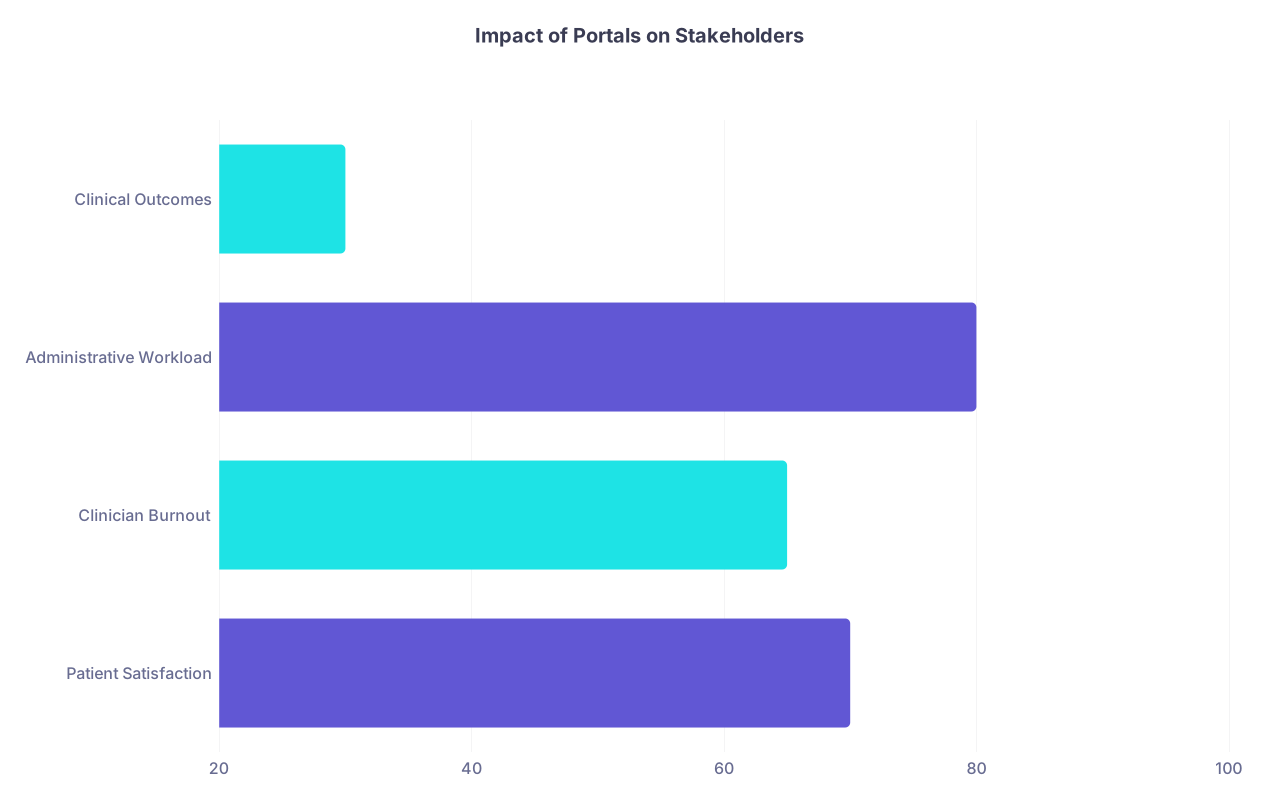
| Category | Value |
|---|---|
| Patient Satisfaction | 70 |
| Clinician Burnout | 65 |
| Administrative Workload | 80 |
| Clinical Outcomes | 30 |
Notice how often administrators tout the first bar and quietly ignore the next two.
The Disparity Problem: Who Actually Benefits?
One of the laziest assumptions in health tech is that “access for all” means “benefit for all.” Portals are a perfect case study in how that’s wrong.
Study after study has found:
- Portal enrollment and active use are significantly lower among:
- Older patients
- Lower income groups
- Patients with limited digital literacy
- Many racial and ethnic minority groups
- Non‑English speakers
Even when health systems aggressively promote portals, the dominant users remain:
- Insured, more educated, more resourced patients
- People comfortable online
- Those who already tend to engage with their care
So what happens?
- The most connected, least vulnerable patients get even more access to you via messaging, fast refills, and test follow‑ups.
- The least connected patients, who actually drive a lot of your preventable morbidity and readmissions, remain mostly offline.
Portals risk becoming a clinical amplifier for the already advantaged.
| Patient Group | Relative Portal Use |
|---|---|
| Younger, insured, college educated | High |
| Older adults >70 | Low |
| Limited English proficiency | Very low |
| Low income / Medicaid | Low |
| High chronic disease burden but low digital literacy | Very low |
So when someone says, “Portals improve population health,” you should immediately ask: “Whose population?”
Where Portals Do Help (If Used Correctly)
Let me be fair. Patient portals are not useless. They’re just not what the hype machine claims. There are specific, high‑yield use cases that are genuinely valuable—if your workflows aren’t a disaster.
1. Test Result Transparency and Follow‑Up
Moving away from “we’ll call you if it’s abnormal” is a good thing. Portals can:
- Give patients direct, fast access to labs and imaging
- Decrease the number of “lost to follow‑up” results, when paired with good alerts and tracking
- Reduce phone tag and voicemails
But this only works if:
- You have clear policies on when results are auto‑released
- You provide templated, understandable comments for common labs
- There is a system for patients who see an abnormal result on a Friday night and panic
Portals without thoughtful result messaging just shift anxiety into your inbox.
2. Chronic Disease Management in Structured Programs
In high‑functioning programs, you can use portals to:
- Collect home BPs or SMBG data
- Adjust meds asynchronously with protocols and nursing support
- Send brief, targeted educational content
The key words there: protocols, support, and structure. If it’s just “send me your numbers” dumped into your personal inbox, that’s not chronic disease management. That’s chaos.
3. Administrative Friction Reduction
Used sanely, portals can reduce friction for:
- Appointment scheduling and reminders
- Medication refill requests with built‑in checks
- Pre‑visit questionnaires and screenings (depression, SDOH, etc.)
This can improve your clinic flow if those tasks are properly offloaded to staff and not funneled back to you in raw form.

| Step | Description |
|---|---|
| Step 1 | Patient sends portal message |
| Step 2 | Front desk handles |
| Step 3 | RN or MA protocol |
| Step 4 | MD review with time |
| Step 5 | Issue resolved |
| Step 6 | Type of request |
Compare that with what usually happens: everything is tagged “provider action needed” and dumped on the physician.
What You Should Push For As a Practicing Clinician
You’re not going to single‑handedly kill the portal. It’s baked into the EHR and the PR narrative. But you are not powerless.
If you want portals to help more than they hurt, you should be pushing hard for a few non‑negotiables.
1. Message Triage and Role Clarity
Every message should be triaged by staff first, with:
- Clear categories (admin, refill, clinical, urgent vs routine)
- Protocols for nonphysician resolution
- Time expectations: “Responses within 2–3 business days for nonurgent issues”
If your system refuses to define and enforce this, they’re choosing clinician burnout. Full stop.
2. Compensation or RVU Credit for Complex Messaging
If a message thread requires:
- Clinical decision making
- Medication changes
- Interpretation of diagnostic testing
- Detailed counseling
That is a clinical encounter, not “customer service.” It should be billable when it meets criteria. Many systems are grudgingly moving there. Push them faster.
3. Guardrails on Result Release and Interpretation
You want:
- Sensible delay or MD‑review for high‑stakes results (biopsy reports, new cancer diagnoses)
- Standardized, patient‑friendly comment templates for common labs
- Education for patients on what to do when they see an abnormal result (and when to message vs call vs go to ED)
Dumping raw, unexplained data into layperson hands and then expecting you to clean up the fallout via ad hoc messaging is not “transparency.” It is abdication.

4. Targeted Support for Low‑Access Populations
If your system wants to brag about “digital engagement,” they can earn it:
- In‑clinic help desks or navigators to enroll patients who struggle with tech
- Multilingual support and culturally appropriate onboarding
- Alternative communication channels that are actually resourced (phone line that’s not a black hole)
If portals are just another privilege multiplier, that’s not progress.
The Bottom Line: Myth vs Reality
Let’s stop pretending portals are more than they are.
- Portals improve access to information and communication for patients who are already relatively engaged and equipped. That’s a good, but limited, thing.
- The evidence that portals alone improve hard clinical outcomes is weak and highly confounded. They are tools, not treatments.
- Without sane triage, staffing, compensation, and guardrails, portals amplify clinician workload, blur safety boundaries, and widen disparities more than they solve them.
Use them. But do not worship them. And when leadership tells you “the portal will improve outcomes,” your answer should be:
“Show me the data—and show me the staffing plan.”
(See also: No, AI Won’t Replace You for what automation changes for clinicians.)