
The belief that a “better” EHR will fix physician burnout is wrong. And hospitals keep paying dearly to learn that lesson the hard way.
The comforting lie: “We just need the right EHR”
You’ve heard the script in meetings.
“If we switch from System X to System Y, documentation will be faster, clicks will go down, and physicians will be happier.”
There’s usually a glossy slide deck. A vendor demo with a “patient journey.” Someone says the phrase “intuitive workflow” with a straight face. Administration frames it as an investment in clinician well‑being.
Then go talk to a hospital that actually switched. Six months later, the same complaints, different log‑in screen.
Here’s what the data and real-world experience actually show:
- Different major EHRs produce very similar documentation time and “pajama time” once the dust settles.
- Burnout correlates far more strongly with workload, staffing, organizational culture, and regulatory overhead than with which specific EHR logo is on the toolbar.
- Every big switch creates a huge, predictable spike in stress, errors, and after-hours work for 6–18 months.
Swapping EHRs to “fix burnout” is like changing stethoscope brands to fix heart failure outcomes. You’re focused on the wrong thing.
What the evidence actually shows about EHRs and burnout
Let’s start with the part nobody wants to argue: yes, EHRs are absolutely linked to burnout. But the way they’re linked is not as simple as “Vendor A bad, Vendor B good.”
Several large studies in the last decade have hammered the same point:
- AMA and Mayo Clinic data: physicians who spend more time on the EHR and clerical work have significantly higher odds of burnout. No surprise.
- But when you look across Epic, Cerner, Athena, Allscripts, etc., the differences in burnout are much smaller than you think once you adjust for specialty, workload, and organizational factors.
One Stanford/AMA survey found that satisfaction with an EHR was driven far more by training quality, local customization, and support than by which system was used. Same software, two hospitals, completely different levels of misery.
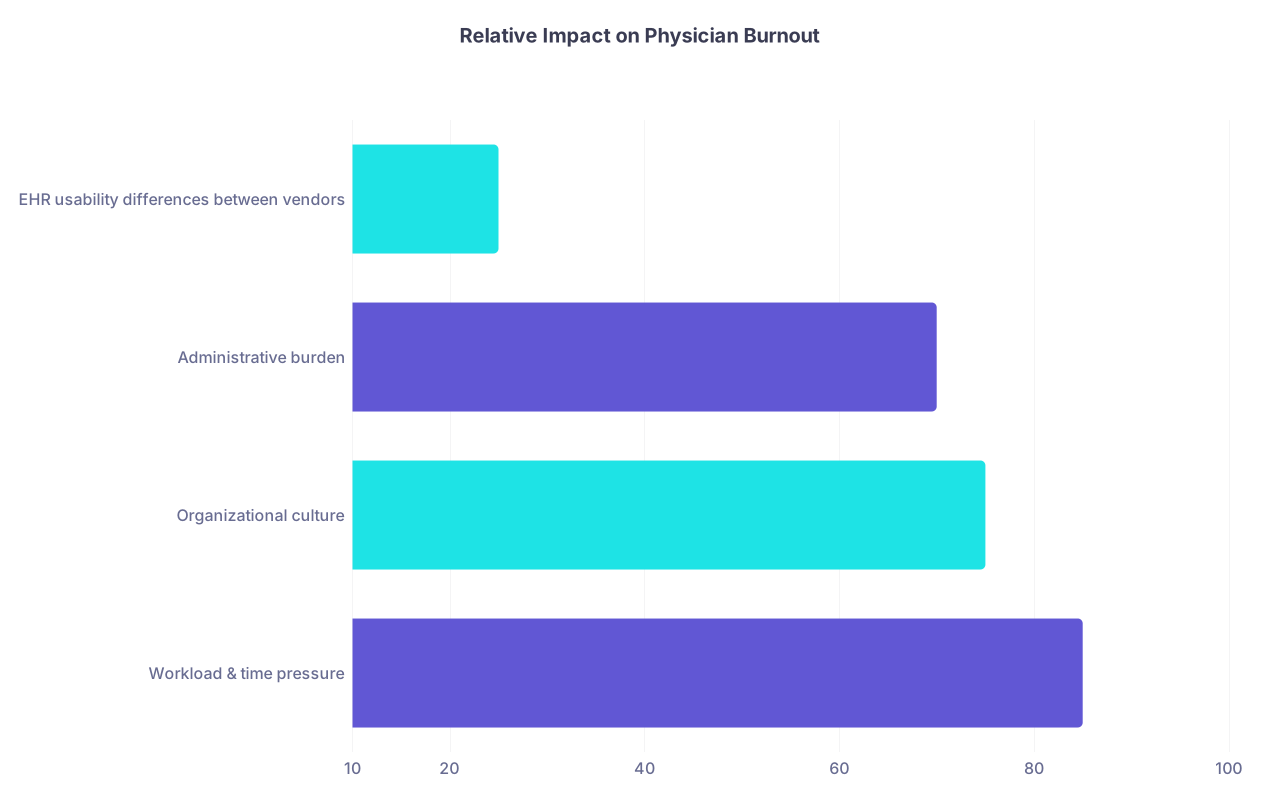
Here’s the part leadership often ignores: the biggest drivers of burnout in most data sets are:
- Workload (patient volumes, visit lengths, panel size)
- Time pressure and lack of control over your schedule
- Organizational culture and leadership responsiveness
- Administrative burden and performance/quality reporting requirements
The EHR is mostly the plumbing that delivers all that administrative sludge into your lap. Replacing the pipes doesn’t change what’s flowing through them.
| Category | Value |
|---|---|
| Workload & time pressure | 85 |
| Organizational culture | 75 |
| Administrative burden | 70 |
| EHR usability differences between vendors | 25 |
So yes, EHRs matter. But vendor choice is a small slice of a much bigger pie.
Why switching EHRs rarely helps (and often hurts)
I’ve watched multiple health systems go through the Epic-from-Cerner conversion or vice versa. The early pattern is nearly identical every time.
You get:
- 3–6 months of chaotic go-lives, extra staffing, and frantic emails
- 6–12 months of productivity loss and increased after-hours charting
- 12–18 months of “optimization” meetings where people argue about order sets and note templates
If you think I’m exaggerating, look at what the implementation literature and internal “lessons learned” reports show: it’s common to see 20–30% productivity drops in the first months, with some specialties taking over a year to climb back.
And no, that doesn’t translate into happier physicians at the end.
Why not?
Because the fundamental constraints and pressures do not change:
- Regulatory demands (Meaningful Use, MIPS/MACRA, HEDIS, quality metrics, prior auth documentation) stay the same.
- The number of patients per day is usually unchanged or quietly increased to “make up for the investment.”
- Staff support (scribes, MAs, RN ratios) is rarely boosted long term. The temporary “go-live” helpers disappear, but the extra clicks stay.
- Leadership attitudes about productivity, inbox response times, and “encounter closure” targets don’t magically soften.
What changes is the learning curve. On day one of the new system, every attending is suddenly an intern again… but with full clinic schedules.

| Step | Description |
|---|---|
| Step 1 | Old EHR - Plateau of Discontent |
| Step 2 | Decision to Switch |
| Step 3 | Implementation Chaos |
| Step 4 | Productivity Drop |
| Step 5 | Partial Recovery |
| Step 6 | Realization - Same Problems |
The curve is predictable: initial hope, sharp pain, slow recovery, and then a quiet recognition that the deeper issues were never about which F-key does what.
The myth of the “intuitive interface”
Vendors love the word “intuitive.” Let me spoil that for you.
There is no such thing as an intuitive EHR for a complex clinical environment. There are only systems you’ve spent hundreds of hours learning, and systems you haven’t.
Ask an intern starting July 1 how “intuitive” Epic feels after orientation. Then ask a senior attending who’s used it for 10 years. Completely different answers about the same software.
You’re not comparing intuitive vs non-intuitive. You’re comparing:
10,000+ hours of accumulated workarounds, customizations, and muscle memory
versusA new interface that still has to satisfy:
- Billing and coding requirements
- Dozens of specialty needs
- Regulatory checkboxes
- Quality reporting
- Safety alerts and black-box warning pop‑ups
- Interoperability mandates
All that complexity has to live somewhere. You can hide it behind prettier buttons, but you can’t erase it.
This is why studies that look at “usability” scores often show wide variation within the same EHR product across organizations. Same software, different implementation and governance.
Some sites:
- Ruthlessly trim alerts
- Build sensible order sets with clinicians at the table
- Give smartphrases, templates, and quick actions that match actual workflows
- Provide ongoing 1:1 optimization help
Other sites:
- Turn on every default alert “for safety”
- Build cluttered order sets by committee without frontline input
- Let compliance, coding, and legal drive design unchecked
- Do one-time training at go-live and then vanish
And then they blame the vendor when physicians hate it.
The real enemies: inbox chaos, metrics, and hidden work
If you want to know why physicians are drowning, look at how they actually use the EHR.
The data are uncomfortable:
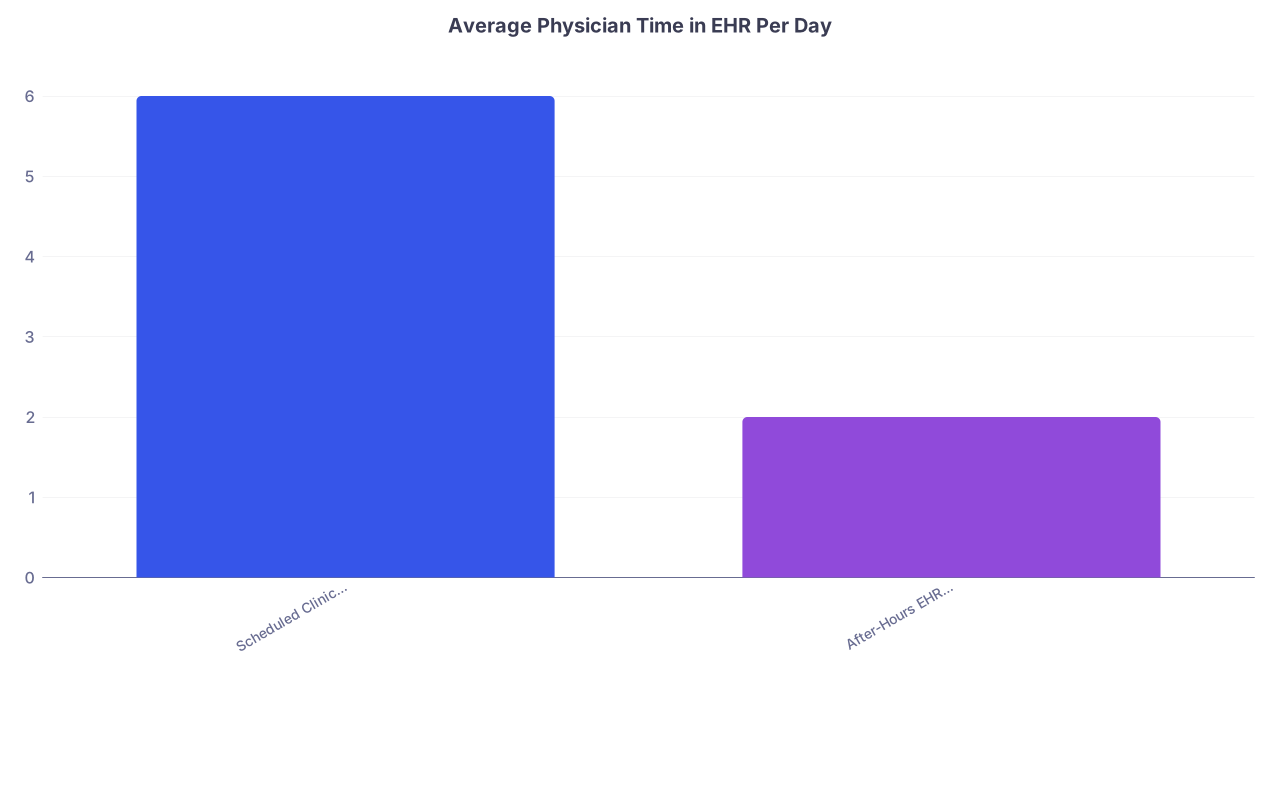
- Primary care docs routinely spend 1–2 hours per day on the EHR after scheduled hours.
- “Inbasket” messages (refills, results, patient portal messages, staff messages) can easily hit 50–100+ per day in busy practices.
- Visit lengths haven’t kept up with complexity, so more of the history, counseling, and coordination gets pushed into “pajama time.”
| Category | Value |
|---|---|
| Scheduled Clinic Hours | 6 |
| After-Hours EHR Time | 2 |
Most of that pain is vendor-agnostic. It’s driven by:
- Organizational decision to push more work into the inbox (refills, paperwork, patient messages)
- Understaffed clinics where physicians are doing MA/RN-level work in the EHR
- Productivity targets that force 15-minute slots for 45-minute problems
- Quality/metric programs that require extra clicks and structured data entry
Change the software all you want. If the physician is still responsible for:
- Reading every result
- Handling every prior auth
- Responding personally to every portal message
- Closing every encounter same day
- Documenting to satisfy billing and quality metrics
…then burnout will not budge.
Where EHR choice actually matters (a little)
Now, I’m not going to pretend all EHRs are equal. They’re not.
There are real differences in:
- Speed and reliability
- Search and shortcut efficiency
- Integration with devices and third-party tools
- Quality of mobile apps and remote access
- Specialty-specific features
Those differences can matter at the margins. A fast, stable system with decent mobile support and good order sets is objectively better than a slow, clunky mess that crashes daily.
But those are marginal gains. They’ll take a 9/10 misery and make it a 7/10 if you’re lucky. They will not convert a fundamentally abusive workload into a sustainable one.
Where EHR choice matters most is when:
- You can’t recruit because your system is truly primitive or unsafe
- Your current vendor is blocking interoperability or innovation
- You’re consolidating multiple systems and need a shared record for patient safety
- You actually commit to a redesign that addresses workflows, staffing, and governance, not just the software
Even then, the EHR is maybe 30% of the story. The other 70% is what your organization chooses to do with it.
| Strategy | Impact on Burnout | Time to Effect |
|---|---|---|
| Switch major EHR vendor | Low–Moderate | 12–24 months |
| Reduce panel size / visit volume | High | 1–3 months |
| Add scribes or documentation support | High | 1–3 months |
| Rebalance inbox / team-based tasks | High | 3–6 months |
| Leadership commitment to fewer metrics | Moderate–High | 3–12 months |
Notice what actually moves the needle. It’s not the logo in the upper left of the screen.
What actually helps: redesigning work, not just software
If you’re post-residency, staring down decades of charting, here’s the unglamorous truth. EHR vendor choice is not your salvation. But there are levers that change your day-to-day life.
The organizations that actually improve things do a few non-sexy, very practical things:
They change who does what.
- MAs and RNs handle protocolized refills, inbox triage, and pre-visit planning.
- Team-based documentation: scribes, or at least structured rooming that front-loads the chart.
- Physicians focus on decisions, relationships, and complex problems instead of chasing forms.
They change how many patients you’re expected to see.
- Slightly longer visits for complex patients.
- Real limits on panel sizes.
- Acceptance that you cannot safely manage 2,500+ high-acuity patients and also meet every metric and answer every portal message personally.
They change the rules around metrics and documentation.
- Strip out non-essential checkboxes and redundant documentation requirements.
- Limit internal “quality” projects that each add a few clicks but never subtract any.
- Negotiate with payers to focus on fewer, more meaningful measures where possible.
They invest in ongoing optimization, not just training week.
- 1:1 or small-group “efficiency clinics” where an analyst and a clinician peer watch how you chart and fix your personal pain points.
- Protected time to learn shortcuts, smart tools, and rebuild templates.
- Governance structures where frontline docs can kill dumb alerts and workflows.
And yes, sometimes they do all that during a vendor switch. Then leadership points at the new EHR and says, “See? It fixed burnout.” No. The work redesign did. The software was just the stage.

How to evaluate a job without falling for the “EHR bait”
You’re on the job market. Here’s how you avoid getting sold a fairy tale.
Do not ask: “What EHR do you use?” and stop there.
Ask instead:
- “How many hours per week do your physicians typically spend in the EHR after hours?”
- “Who handles refill protocols and portal messages? Is there team-based inbox management?”
- “Do you use scribes, and if not, how is documentation burden addressed?”
- “Can you walk me through what a typical clinic day looks like, from first patient to last chart closed?”
- “How are EHR changes governed? Do frontline physicians have veto power over new alerts or documentation requirements?”
Then talk to people in the trenches, not just the recruiter and the CMIO. Ask a mid-career doc, off to the side, “How many nights a week are you finishing charts from home?”
Their answer tells you more about your future burnout risk than any vendor name ever will.

Stop blaming the hammer for the house
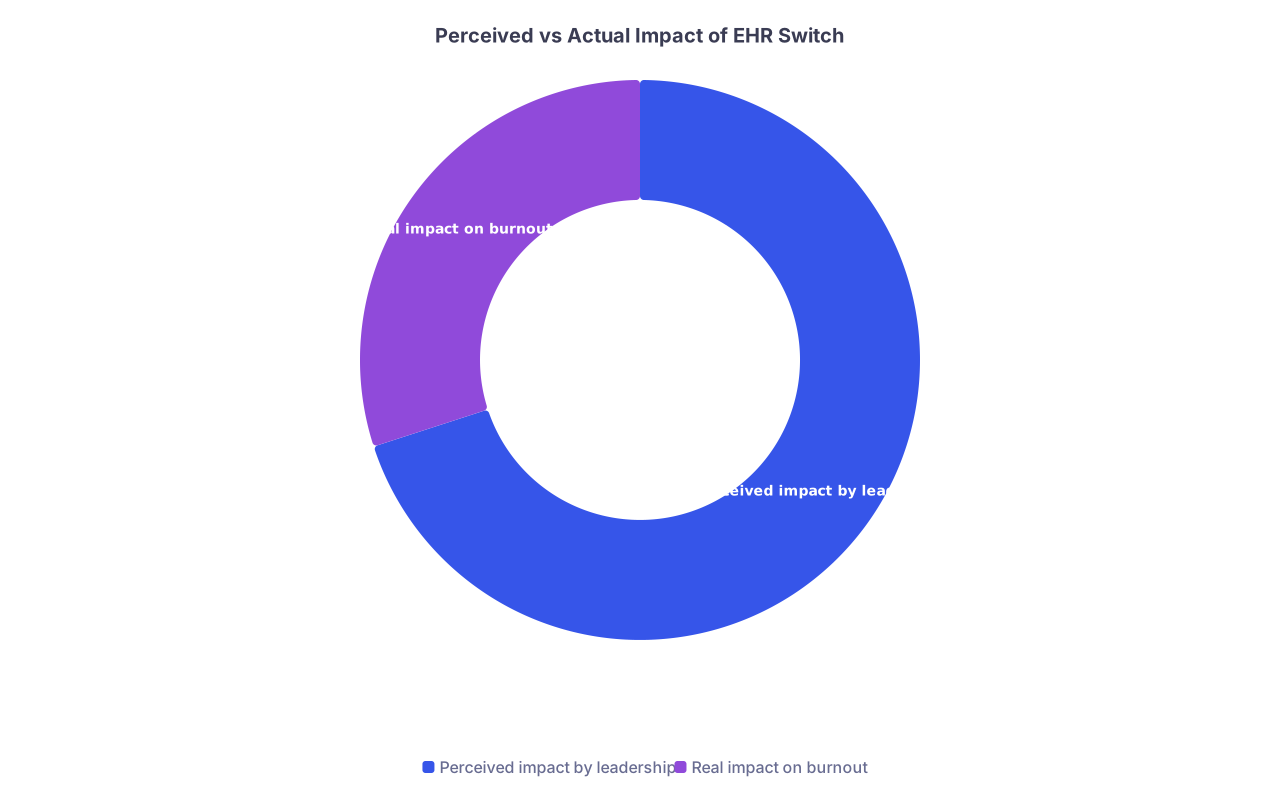
The myth of the perfect EHR is comforting because it externalizes responsibility. “We just picked the wrong tool.” It’s a technology fairy tale sold to executives who’d rather sign a software contract than admit they’re overloading clinicians.
The harder truth:
- You can’t software-engineer your way out of too much work.
- You can’t UI-design your way around regulatory bloat and perverse incentives.
- You can’t vendor-switch your way to a humane practice if your culture worships RVUs and ignores exhaustion.
If leadership refuses to touch volume, staffing, metrics, or governance, then an EHR swap is just rearranging deck chairs.
| Category | Value |
|---|---|
| Perceived impact by leadership | 70 |
| Real impact on burnout | 30 |
FAQs
1. Is there ever a good reason to switch EHRs?
Yes. If your current system is truly unsafe, non-compliant, or blocks essential interoperability, a switch may be justified. Consolidation across a health system can also improve patient safety with a single shared record. But do not sell it internally as a burnout cure. Sell it as an infrastructure and safety upgrade, then separately tackle workload and workflow reform.
2. I’m stuck with a bad EHR. What can I personally do?
You have three levers: your own efficiency, your team, and your employer. Learn every shortcut, smartphrase, and template optimization you can—ideally with a local superuser or trainer watching you work. Push hard for team-based inbox management and task delegation. And during job negotiations or internal discussions, fight for realistic panel sizes and real support, not cosmetic software tweaks.
3. Should I avoid jobs that don’t use Epic or other “top” systems?
No, not automatically. I’ve seen people burned out on Epic and relatively fine on smaller systems because the organization actually respected their time. Evaluate jobs on after-hours EHR time, staffing, culture, and how they govern changes—not just the software name. A sane clinic running a mediocre EHR beats a toxic clinic running the market leader, every time.
Key points:
- Switching EHR vendors almost never fixes burnout because the real drivers are workload, culture, staffing, and regulatory overload—not the logo on your login screen.
- The organizations that actually improve physician well‑being redesign work and governance, not just software.
- On the job market, ignore the vendor hype and interrogate how much work, support, and after-hours charting you’re actually signing up for.