
Educational disclaimer: This article is for general educational purposes only and is not legal, financial, tax, or professional advising. Residency application strategy is highly individual; applicants should confirm decisions with their medical school advisors, specialty mentors, and other qualified professionals.
Opening: The Real Question Behind ‘Should I Mention Couples Match?’
Here’s what applicants are really asking, and it’s not whether couples match is “allowed.” Of course it’s allowed. The real question is this: if you mention it, what story does a program hear?
That’s the whole game.
Program directors usually don’t recoil at the words couples match. They recoil at what those words sometimes signal: rigidity, geographic baggage, divided priorities, or a quiet expectation that the program should solve your relationship logistics. I’ve seen perfectly good applicants muddy a sharp personal statement because they got nervous and started explaining their life circumstances instead of showing why they’d be excellent residents.
And that’s the insider truth. The fact itself matters less than the framing.
If the mention makes you sound mature, intentional, adaptable, and easy to work with, it can help. If it makes you sound like half of a package deal, it hurts. And sometimes the smartest move is silence. No mention. No drama. No unnecessary invitation for someone to start wondering whether you actually want their program or just a ZIP code that works for your partner.
This is a practical question, not a moral one. I’m going to tell you when mentioning couples match strengthens your statement, when it weakens it, and when leaving it out is the cleaner, smarter play.
What Program Directors Actually Think When They See Couples Match
Let me tell you what really happens in file review.
A program director reads hundreds of personal statements. Most blur together. So when couples match appears, it lands fast. Not always badly. Just fast. It instantly creates a few questions in the reader’s mind:
Are you flexible?
Are you primarily choosing training based on educational fit, or based on your partner’s map?
Are you going to be high-maintenance about location?
Do you understand that residency selection is not concierge matchmaking?
That’s the internal checklist. Not romance. Not judgment. Risk assessment.
Most faculty are not anti-couples match. They’ve trained couples. They’ve recruited couples. Some of them met their own spouses in medicine and understand exactly why this matters. But they are very sensitive to tone. The phrase becomes a problem when the applicant sounds entitled, overly dependent, or weirdly transactional. If your statement reads like, “I am seeking a program that can support both me and my partner,” a lot of faculty hear, “This applicant may expect special handling.”
Bad move.
Specialty matters too. In broad specialties with many geographic options, mentioning couples match may barely register if your wording is clean. In tiny, hypercompetitive, location-sensitive fields, readers may pay more attention. Same thing in cities where everyone wants to live. If you’re applying dermatology in Southern California, or ortho in Manhattan, and your statement emphasizes location because of your partner, you’ve just added friction where you didn’t need any.
What PDs do appreciate is honesty delivered with adult-level judgment. Short. Calm. Professional. If couples match is part of your context, fine. But your personal statement still has to be about medicine. About your clinical motivation, your growth, your fit, your habits under pressure, the reasons people can imagine training with you at 2 a.m. during a terrible call night.
That’s what they’re actually selecting. Not your relationship. You.
When Mentioning Couples Match Helps Your Personal Statement
There are times when mentioning couples match absolutely works. I’ve recommended it myself. But only when it reinforces a narrative that’s already strong.
The best use case is when couples match reflects maturity, not dependency. Maybe you and your partner have spent years making disciplined, realistic career decisions. Maybe you’ve both navigated long-distance training, family obligations, visa issues, military commitments, or research years with unusual patience and coordination. Maybe your story naturally involves sacrifice, teamwork, and intentional planning. In those cases, a brief mention can signal steadiness. It says: I make major decisions thoughtfully. I understand competing priorities. I can commit without becoming inflexible.
That can be attractive.
It also helps when the mention supports a theme already present in your statement. If your essay shows adaptability, resilience, collaboration, or a service-driven life built around real tradeoffs, then a brief line about couples match can feel organic. It becomes one more data point in a coherent portrait. Not an awkward disclosure. Not a disclaimer.
Another good scenario: your partner’s presence explains geographic breadth rather than geographic rigidity. That’s a subtle but important distinction. “We are couples matching and are open to a range of training environments” lands very differently from “I hope to remain in X city because my partner is applying there.” One sounds flexible. The other sounds anchored and potentially difficult to recruit if your location isn’t ideal.
The mention also works when it’s doing real explanatory work. For example, if your application strategy clearly spans several regions or reflects intentional alignment across two careers, a single sentence can prevent confusion. Faculty don’t need your relationship history, but they do appreciate context that makes your choices look deliberate rather than random.
The rule is simple: if couples match sharpens your portrait as a thoughtful future resident, keep it. If it merely explains your personal life, cut it.
When It Hurts: The Times to Leave Couples Match Out
Most applicants who mention couples match do too much with it. That’s the mistake.
They start explaining how long they’ve been together. They mention engagement plans. They describe the partner’s specialty, rank strategy, and city preferences. Suddenly the personal statement stops being a professional narrative and turns into a logistics memo with emotional frosting. Nobody asked for that.
This hurts most when your statement was otherwise strong. I’ve seen applicants open with a compelling patient story, build a solid case for specialty choice, and then derail the final paragraph by tacking on a clunky line about hoping for “institutional support for couples match opportunities.” That phrase alone can make faculty’s eyes narrow. It sounds like administration. It sounds needy. It sounds like work.
And here’s the ugly truth: if your statement suggests you are primarily shopping for geography, some readers will assume you’re less likely to rank them highly unless your partner’s options align. Programs don’t like feeling like backup plans. They especially don’t like being told so indirectly.
Leave it out if the line makes you sound apologetic. Leave it out if it reads as a request for accommodation. Leave it out if it introduces stress, complexity, or divided attention where none needed to exist.
And definitely leave it out if you’re using it to compensate for weak fit. Couples match is not a charm. It does not make a generic statement more human. Usually it does the opposite. It invites the reader to think about variables unrelated to your training quality.
The worst versions share the same flavor: “Please understand my circumstances.” No. That’s not what a residency personal statement is for. Your job is to make a PD think, “This person is smart, grounded, motivated, and easy to picture in our program.” Anything that interferes with that mission is dead weight.
How to Mention Couples Match the Right Way: Insider Writing Tactics
If you’re going to mention couples match, be disciplined. One clause. One sentence. Maybe two if you’re unusually skilled and the context genuinely demands it. Not a paragraph. Never a paragraph.
The best placement is usually late in the statement, after you’ve already established your professional identity. Don’t open with it. Don’t build your central narrative around it. Your relationship is not your specialty choice. If couples match appears too early, it becomes the frame through which everything else is read. That’s exactly what you don’t want.
You also want to anchor the line in something bigger than logistics. Shared service values. Coordinated long-term career planning. Flexibility across training environments. A history of adapting thoughtfully. Those are professional signals. They read well. They reassure faculty that this is a mature life circumstance, not a demand disguised as vulnerability.
Here are the kinds of sentence structures that work:
“I am participating in the couples match, a process that has reinforced the same qualities of intentionality, flexibility, and long-term commitment that I bring to residency training.”
Clean. Adult. No begging.
Another:
“As I apply through the couples match, I remain focused on finding a program where rigorous training, teamwork, and service align with the physician I am becoming.”
That works because the subject is still your training priorities.
Another:
“Couples matching has required thoughtful planning and adaptability, qualities that have also shaped my approach to medicine and residency preparation.”
Again, the relationship detail is secondary. The professional trait is primary.
Now compare those to the lines that fail:
“I hope to train in a location that will also accommodate my partner’s application needs.”
No. That sounds like procurement language.
Or this:
“Because my partner and I are deeply committed to remaining together, I am seeking programs that can support our future.”
Absolutely not. That belongs in a private conversation, not in your personal statement.
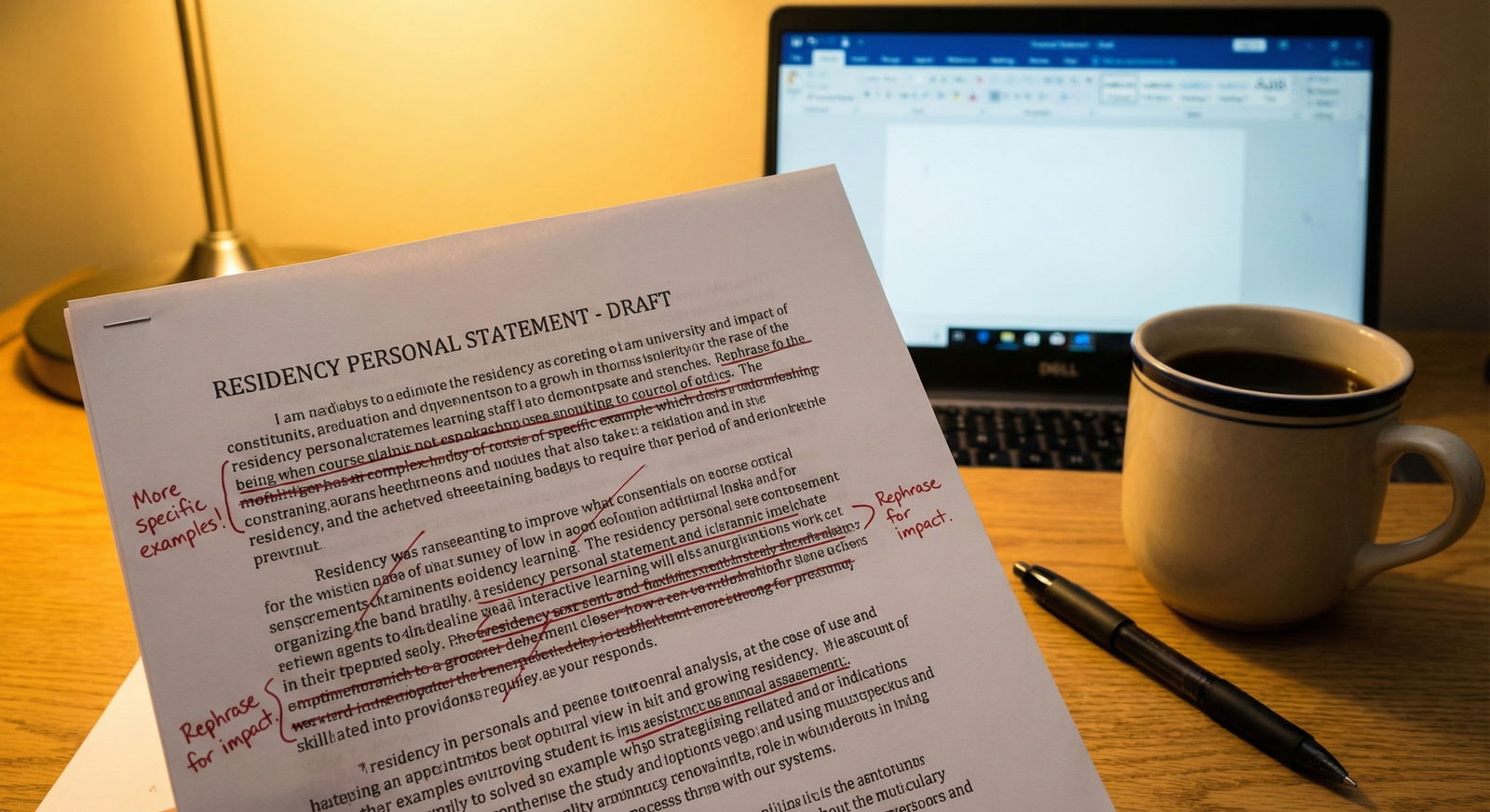
Here’s another insider rule people don’t say out loud: the more competitive or brand-conscious the program, the more restrained you should be. Elite programs often assume applicants are balancing many priorities already. They don’t need a speech about it. A subtle mention is enough. In fact, in very competitive settings, omission is often safer unless the line genuinely improves the essay.
And one more thing. Your personal statement is not the only place this issue can surface. Interviews, signals, geographic preferences, supplemental materials, advisor outreach—those may be better venues depending on your strategy. Don’t force the personal statement to carry information that fits more naturally elsewhere.
That’s the secret. Great applicants don’t cram every true fact into the essay. They curate. They decide what earns its place on the page.
Decision Framework: Should You Mention It at All?
Use a blunt test.
If you delete the couples match line, does your statement get cleaner, sharper, and more centered on your candidacy? If yes, cut it. That’s your answer.
Mention it only if it does at least one of three things: it clarifies an otherwise confusing application pattern, strengthens an existing theme of maturity or adaptability, or quietly reinforces fit without shifting attention away from medicine. If it does none of those, it’s clutter.
Special cases matter. If you and your partner are in different specialties and applying broadly, the mention may help explain geographic openness. If you’re both targeting the same city, be careful—location emphasis can quickly start sounding like the real agenda. If one partner has a much stronger application than the other, be even more cautious. You do not want your statement accidentally implying comparative leverage or a package arrangement. Programs hate that dynamic, even when no one says it outright.
I also want you to get a second set of eyes on the exact wording. Not from six classmates in a group chat. From one trusted advisor who understands residency selection culture. Ask a blunt question: “Does this sound strategic, or does it sound distracting?” You want the person who will tell you the truth, not the person who says, “Aw, I think it’s sweet.”
Sweet is not the goal. Effective is the goal.
Closing: The Smartest Move Is the One That Strengthens Your Story
Couples match is not a red flag. But it is not automatically an asset either. It belongs in your personal statement only when it makes your story better—clearer, sharper, more mature, more convincing. If it dilutes your professional identity, it has no business being there.
Write toward the reaction you want from a program director: this applicant is focused, thoughtful, flexible, and easy to imagine training here. That’s the bar. Not “understand my circumstances.” Not “support my relationship.” Not “please read this generously.”

The applicants who handle this well do one thing right: they protect the center of gravity of the essay. The statement stays about their calling, their preparation, and their fit. Everything else is secondary.
That’s the smartest move. And usually, the one that wins.