It is 9:05 AM on application release day in late September. Your ERAS application is officially transmitted. Instead of feeling relief, panic sets in. You open your saved PDF copy, scroll to paragraph three, and freeze. A misplaced comma. A awkward phrasing choice. Or perhaps worse: you just logged onto PubMed and saw your first-author paper was officially published, but your submitted essay still lists it as "under review."
Now you enter post-submission paralysis. Do you re-edit the essay, re-upload it to ERAS, and unassign/reassign it to 40 programs? Or do you leave it untouched?
Before you decide to re-upload, consider whether your current essay truly represents you, as what program directors actually look for in a reapplicant's personal statement remains a crucial factor for success.
Most applicants act on pure emotional distress at this stage. I have watched hundreds of medical students wreck their focus during peak interview invite season because they could not step away from their submitted documents. They panic-edit, send needy updates to program coordinators, and create unnecessary noise.
We do not make decisions based on anxiety. We make decisions based on program timelines and hard data. Here is your definitive guide to evaluating whether a post-submission update helps your match odds or simply wastes your time.
This article is for educational purposes only. It is not financial advice, not legal advice, and not tax advice. Figures vary by individual circumstances, so consult a qualified professional before acting.
If you are worried about the impact of your narrative, remember that what faculty think when they see a 'generic' personal statement can be a decisive factor during the review process.
The Post-Submission Dilemma: Should You Update?
The "Post-Submission Window" spans from the late-September ERAS application release through mid-November. During these critical six weeks, program selection committees pull application files, run initial automated filters, and distribute interview invitations.
Perfectionism during this window is a trap.
You need to understand how selection committees actually handle your file once submitted. They do not get a real-time pop-up notification every time you tweak a sentence in your personal statement. In fact, constantly updating files creates administrative drag for program coordinators who are already managing thousands of incoming applications.
+-------------------------------------------------------------------------+
|                    THE UPDATE THRESHOLD FILTER                          |
+-------------------------------------------------------------------------+
| NEGLIGIBLE UPDATES (DO NOT SUBMIT)   | SIGNIFICANT UPDATES (EVALUATE)  |
+------------------------------------------------------+------------------+
| - Minor typos, spelling, punctuation | - PubMed ID (PMID) issued for    |
| - Sentence phrasing re-wordings      |   a major manuscript             |
| - Stylistic polish                   | - Step 2 CK score release        |
| - Adding a minor interest/hobby      | - Honors grade in a sub-internship|
|                                      | - National research award        |
+-------------------------------------------------------------------------+
A negligible update is anything that alters form rather than substance. Fixing a typo in paragraph four does not change your clinical competency or your alignment with a program's mission.
A significant update adds concrete, verifiable value to your candidate profile. If your update does not fit into the "Significant" column, your protocol is simple: close the file and step away.
The Data: Does an Updated Personal Statement Move the Needle?
Program Directors (PDs) process massive amounts of data in tight windows. According to broad survey data across specialties, document update re-evaluations depend entirely on what changed and when it arrived.
Re-uploading a personal statement just to correct a minor typo yields zero statistical benefit. In fact, forcing a program coordinator to re-download an updated document for a cosmetic fix risks irritating the very staff managing your interview file.
Look at the numbers. Correcting a minor typo changes your interview invitation probability by a statistically meaningless 1%. Program directors do not reject qualified candidates over a missing serial comma. They are searching for clinical track record, board performance, solid letters of recommendation, and core specialty interest.
However, content updates carry weight. When an applicant adds a top-tier pub or an Honors mark in an Acting Internship, interview invite probability jumps significantly, from 32% up to 48% or 62%.
The Application "Read-In" Window
Timing matters just as much as content.
- September 25, October 10: Peak Screening Window. Committees conduct initial reviews. Updates uploaded during this window are most likely to be captured during primary file screening.
- October 11, October 31: Tier 1 Invite Distribution. Most competitive programs send out their first and second rounds of interview invites. If a program has already screened your application and placed you in the "Hold" or "Invite" pile, an updated personal statement rarely triggers a total re-read of your file.
- November 1 Onward: Read-In Closure. For competitive specialties (Orthopedics, Dermatology, Plastic Surgery, ENT), initial screening is largely finished. An updated statement at this point almost never moves an applicant from the hold pile to the interview list unless accompanied by a high-yield institutional connection or letter.
The Workflow: When and How to Communicate Changes
If you possess a genuinely significant update, you must execute the process cleanly. Follow this decision pathway before taking action:
Day-by-Day Update Execution Protocol
When you confirm that your update meets the threshold (e.g., a newly accepted manuscript or major rotation grade), run this exact sequence:
Step 1: Check Program-Specific Policies (Day 1)
Visit the residency website for every program on your list. Many programs explicitly state: "We do not accept post-submission update emails." Respect their rule. If a program explicitly bans update emails, sending one proves you cannot follow directions.
Step 2: Update ERAS Document Assignments (Day 1)
- Upload the revised Personal Statement to ERAS under a clear title:
Personal_Statement_Final_v2. - Unassign the old statement from target programs.
- Assign the updated version to those programs.
- Note: ERAS updates the date-stamp on your document automatically.
Step 3: Targeted Notification (Day 2)
Do not blast 60 programs with a generic email. Target only your top 5-10 programs where you have not yet received an invite or rejection.
Keep your email to the Program Coordinator crisp, polite, and under 100 words.
Subject: Application Update: [Your Name] - [AAMC ID] - [Specialty]
Dear [Program Coordinator Name],
I hope this email finds you well.
I am writing to share a quick update regarding my application to the [Program Name] Residency Program. I have recently updated my Personal Statement on ERAS to reflect [1 Short Sentence: e.g., the publication of our manuscript in JAMA Surgery / completion of my Sub-Internship at Hospital X].
[Program Name] remains one of my top choice programs due to [1 Specific Reason: e.g., your strong surgical critical care training].
Thank you for your time and consideration.
Best regards, [Your Name] AAMC ID: [12345678]
The Psychological & Strategic Reality Check
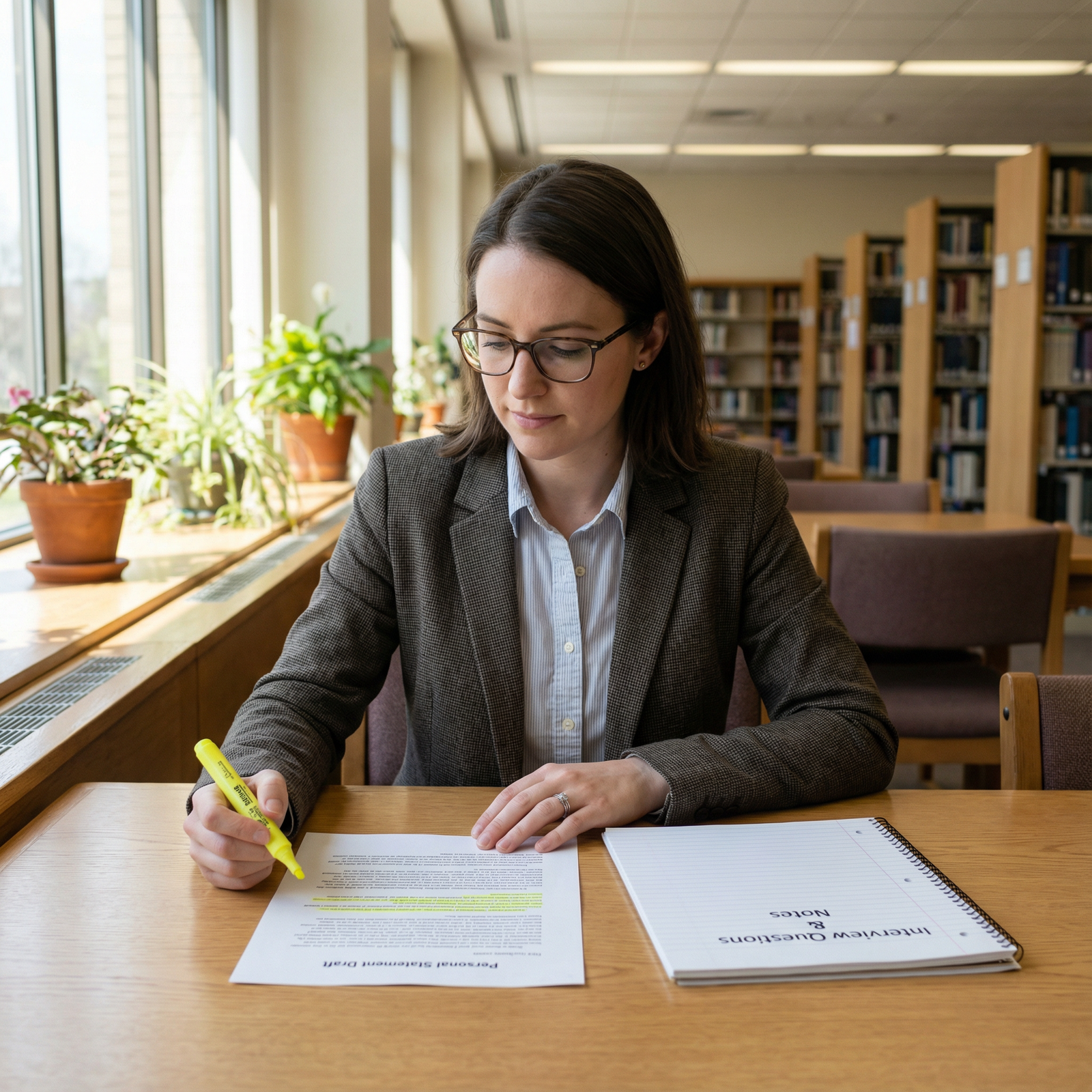
At this point you should: Shift your energy away from document editing and direct it entirely toward interview preparation.
Let's be candid about what happens next. A great personal statement gets your application opened and help clear the initial screening hurdle. That's its only job. It gets you in the room.
Once an interview invitation lands in your inbox, your personal statement's influence drops near zero. Selection committees rank applicants based on interview performance, clinical interpersonal skills, institutional fit, and faculty consensus. Re-polishing an already-submitted essay in late October yields zero return on investment compared to practicing behavioral interview scenarios.
Your Post-Submission Checklist
- Silence document editing apps: Close your draft files. Convert them to PDF or archive them so you aren't tempted to re-read them late at night.
- Set communication checks to fixed times: Check your email and ERAS portal twice daily (e.g., 8:00 AM and 4:00 PM). Do not refresh your inbox every seven minutes.
- Shift focus to mock interviews: Practice answering core questions out loud ("Tell me about yourself," "Describe a tough clinical situation," "Why this specialty?").
- Excel in your current rotations: Clinical evaluations during early Fourth Year still generate critical letters and updates for late-season signaling.
Focus on what moves the needle today. Your submitted personal statement has done its job, now go win the interview.