
The Night-Float Trap: When Your Prelim Year Becomes a Teaching Void
You matched. You survived the algorithmic lottery, secured your spot in an advanced specialty like radiology, neurology, or dermatology, and celebrated the end of medical school. But before you get to the good stuff, you have to survive a preliminary year. You signed the contract, packed your bags, and showed up on July 1st ready to learn the ropes of inpatient medicine.
Then they handed you the schedule.
You're on night-float. Not just for a month. For three, four, or sometimes six months of your intern year.
See also: managing burnout during a prelim year for strategies to cope with stress.
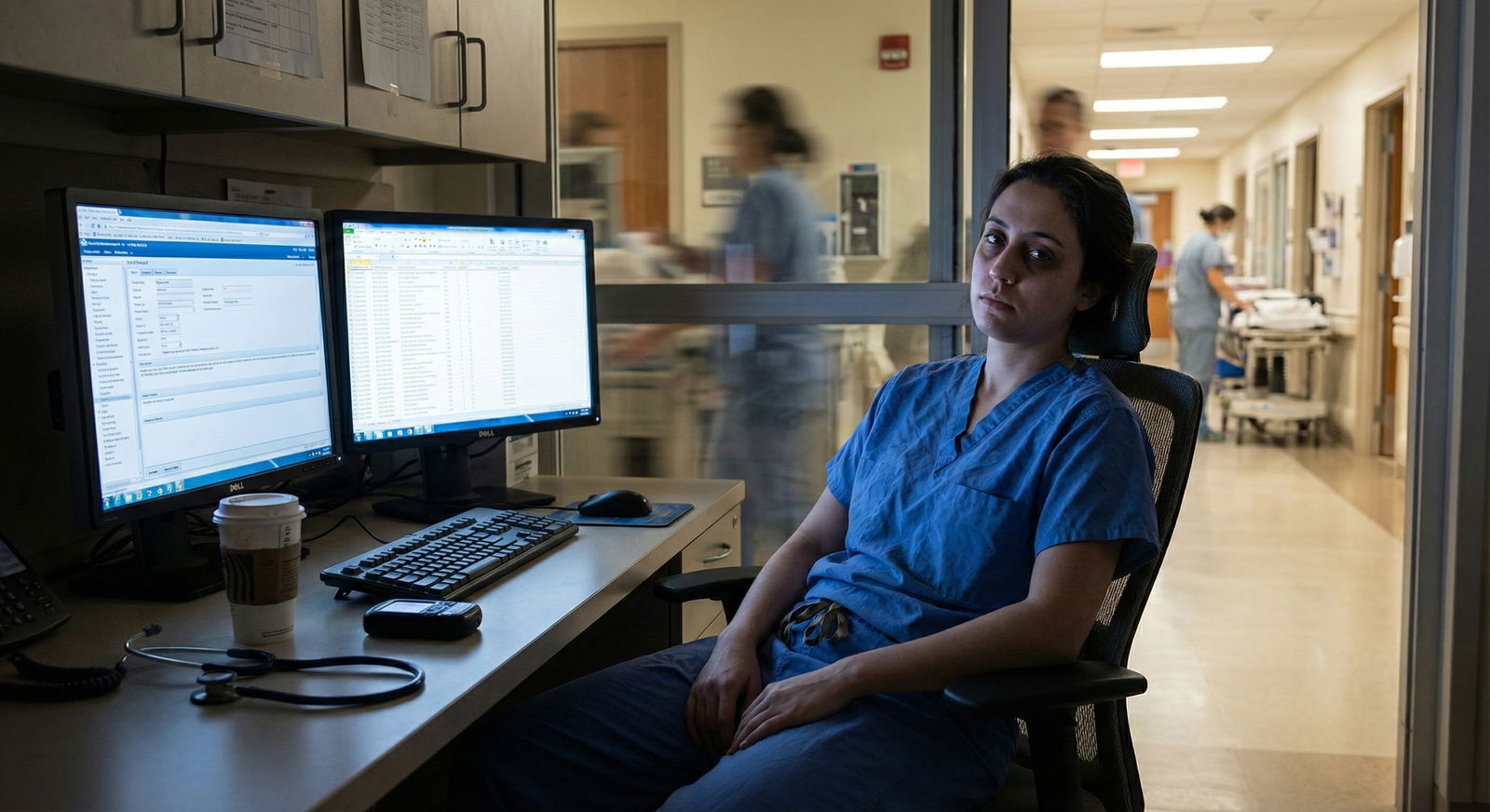
Let's be brutally honest about what a night-float schedule actually is. It's long stretches of overnight shifts, usually 10 to 12 hours, starting when the sun goes down and ending when the sun comes up. You are the cross-cover resident. The admissions catcher. The code responder. The person who keeps the hospital from burning down while the day team sleeps.
But here is the dirty secret of the night-float prelim year: it is an educational black hole.
Think about the structure. There are no morning rounds. There are no midday didactics. The attendings are asleep when you are actively managing patients. When you are awake and making critical decisions at 2:00 AM, the people who are supposed to be teaching you are in their beds. By the time they wake up and stroll into the hospital at 7:00 AM, you are exhausted, signing out your patients, and going home to sleep. You miss the attending's morning walk-through. You miss the senior resident's bedside teaching. You miss the casual, high-yield hallway conversations that actually build clinical intuition.
You matched into a specialty that requires this prelim year to build a rock-solid foundation in internal medicine or general surgery. Instead, you're stuck in a rotation that feels like an endless game of whack-a-mole with paging systems and sleeping patients.
The problem isn't just that you're tired. The problem is that without structured teaching, you risk severe skill atrophy. You stop thinking like a diagnostician and start thinking like a triage nurse. You order the same midnight labs for every patient. You treat the numbers, not the patient. Your board prep for Step 3 stalls out because you don't have the cognitive bandwidth to study after a 12-hour night shift. And worst of all, you build a weak clinical foundation right before you transition into your advanced program, where you'll be expected to already know this stuff cold.
See also: building a competitive application for tips on managing your workload.
Programs love night-float prelims. You are cheap, compliant, and keep the ACGME duty hours in check for the senior residents. But this system inherently reduces teaching moments to near zero. If you don't actively fight for your education, the night-float trap will swallow your intern year whole.
What You Actually Lose: The Hidden Costs of a Teaching-Free Prelim Year
It's easy to look at a night-float schedule and think, "Well, I'll just see a lot of cross-cover emergencies and learn from that."
Wrong. Cross-cover at night is mostly managing chronic issues that flared up, writing PRN orders, and fielding calls from nurses about sleeping patients. It is not a masterclass in clinical reasoning. When you are isolated on the night shift, you lose the hidden curriculum of residency.
First, you miss the attendings' thought processes. Medicine isn't just about knowing the right answer; it's about knowing why it's the right answer and why the other three options are wrong. During the day, an attending will look at a complex patient and say, "I know the guidelines say to do X, but in this specific patient, we are doing Y because of Z." That is a clinical pearl. On night-float, you never hear those pearls. You just execute the plan the day team left for you, or you manage acute, algorithmic emergencies where deep reasoning isn't required.
Second, your feedback loops die. During the day, if you write a terrible assessment and plan, a senior resident or attending will rip it apart and show you how to fix it. At night, your notes are read by the day team the next morning. They might silently rewrite your plan, but they rarely track you down at 8:00 PM when you wake up to tell you what you did wrong. You get no real-time corrections on your differentials, your notes, or your procedures. You just keep making the same mistakes in the dark.
Third, your board prep takes a massive hit. Step 3 and your incoming specialty knowledge rely heavily on active teaching and case discussions. You can only do so many UWorld questions before the concepts blur together. You need the clinical context to make the knowledge stick.
Finally, you become isolated. The night-float team is usually small. Sometimes it's just you and a co-intern, or you and a rotating senior resident who is just as exhausted as you are. You miss out on the collaborative learning, the venting, and the shared misery that bonds a day team together.
Look at the data. The difference in educational exposure between night-float and day-float prelims is staggering.
When you are on night-float, you are getting less than a quarter of the teaching contact hours of your day-float peers. That is a systemic failure. And if you don't patch that gap yourself, you will enter your advanced residency playing catch-up.
Real Scenario: You're on Night-Float for 3 Months, Here's How to Turn the Void Into a Classroom
Let's set the scene. It's mid-July. You've just started a 3-month night-float block. You feel like a warm body with a pager. You're tired, you're cynical, and you feel like you're learning absolutely nothing.
Stop waiting for the program to save you. They won't. Here is exactly how you take control and turn this void into a classroom.
Action Step 1: Proactively schedule a 15-minute debrief with the day team. You cannot rely on the day team to teach you during sign-out. They are rushing to get home. Instead, identify 2 or 3 interesting cases you managed overnight. The next day, when you wake up, text or securely message the day resident or attending who took over your patients. Say: "Hey, I managed Mrs. Smith's AFib with RVR last night and struggled with the diltiazem drip titration. Can we chat for 5 minutes about your approach to rate control?" Force the feedback loop. Make them explain their reasoning.
Action Step 2: Create a personal 'night-float curriculum'. If they won't give you a curriculum, build one. Pick 3 high-yield topics per week. Week 1: Fluid management and hyponatremia. Week 2: Arrhythmias and ACLS algorithms. Week 3: Common midnight consults (GI bleeds, COPD exacerbations, acute kidney injury). During your downtime at 3:00 AM, when the wards are quiet, don't just scroll on your phone. Read up on your weekly topics. Use UpToDate, a textbook, or a specialized question bank.
Action Step 3: Use the quiet hours for focused board prep. Night-float has a rhythm. Admissions happen early in the shift. Codes are random. But between 2:00 AM and 5:00 AM, the hospital usually sleeps. Block this time out. Do 10 to 15 UWorld questions for Step 3. Keep a dedicated "learning log" on your phone or a small notebook. Write down the concepts you got wrong. This turns dead time into high-yield study time.
Action Step 4: Milk the night attending for micro-teaching. There is usually an attending on call at night. They are often bored unless there is a true emergency. When you call them to admit a patient or discuss a code, ask for a teaching point. "I know we need to intubate this patient, but can you walk me through your thought process on choosing the paralytic?" Even a 2-minute pearl over the phone is better than nothing. Attendings respect interns who ask smart questions, even at 4:00 AM.
Action Step 5: Form a virtual study group. You aren't the only prelim suffering through this. Use social media, Reddit, or your medical school alumni network to find other interns on night-float across the country. Set up a weekly 30-minute Zoom call. Share the weirdest cases you saw. Quiz each other on your personal curriculums. Misery loves company, but shared misery with a study guide actually builds knowledge.
What to Do When Your Program Ignores the Night-Float Teaching Problem
Sometimes, despite your best efforts, the system is just too broken. You've brought up the lack of teaching to the chief resident. You've sent polite emails to the program director. And absolutely nothing changes. The night-float schedule remains a desolate wasteland of pager alerts and sleeping patients.
This is where you need to get strategic and slightly ruthless about protecting your own education.
Action Step 1: Document everything. Keep a meticulous log. Track your shift times, the patient volume, the missed teaching opportunities, and the specific times you reached out to the day team for feedback. When you eventually sit down with the program director for your semi-annual review, you don't want to just say, "I feel like I'm not learning." You want to say, "Over the last 8 weeks, I had 2.1 hours of attending contact time, which is 80% below the ACGME expectation for supervised learning. Here is my log." Data changes conversations.
Action Step 2: Identify a faculty advocate. Find a daytime attending who is known for being an excellent teacher and who actually cares about interns. Ask them to be your mentor. Explain your night-float situation. A well-respected attending going to bat for you in a faculty meeting carries ten times the weight of an intern complaining about the schedule.
Action Step 3: Propose a concrete, low-friction solution. Don't just present a problem; bring a fix that doesn't cost the program money or massive time. Propose a weekly 30-minute virtual teaching session specifically for night-float residents. It can be held at 5:00 PM (before your shift) or recorded during the day for you to watch on your break. Show them the data on how teaching hours drop at night, and pitch this as an easy ACGME compliance win for the program.
Action Step 4: Use your elective time to fill the gaps. If the program refuses to adapt, route around them. When you get your elective months or vacation time, do not just take it easy. Arrange a mini-rotation with a mentor in your future advanced specialty. Attend a board review course early. Shadow a day team for a week just to absorb the clinical reasoning you missed. You have to aggressively fill the educational void yourself.
Action Step 5: Remember the endgame. This is a temporary year. It feels like an eternity when you are staring at the ceiling at 4:00 AM, but it is just 12 months. Your ultimate goal is to survive, pass Step 3, and arrive at your advanced residency with a strong, board-ready foundation. Do not let the system's flaws derail your long-term plans. Be your own teacher. Guard your knowledge.
Your Action Plan for Surviving the Night-Float Void
If you are heading into a night-float prelim year, or you are currently trapped in one, here are your immediate next steps:
- Stop expecting osmosis. The day team learns by being in the room. You are not in the room. Accept that your education is now 100% your responsibility.
- Build your shadow curriculum tonight. Pick your three topics for the week. Put them in your phone's notes app.
- Force the feedback loop. Tomorrow morning, text the day resident about one specific clinical decision you made overnight and ask for their critique.
- Protect your downtime. The 3:00 AM lull is your classroom. Do your UWorld questions. Read your articles. Don't waste it.
- Track your data. If the program is failing you, log the hours. Bring hard numbers to your PD when it's time to negotiate for better educational support.
Night-float prelim years are inherently teaching-poor, but they do not have to be career-limiting. Reclaim your learning, build your own curriculum, and use the quiet hours to get ahead. The system might treat you like a warm body, but you know you're a future specialist. Act like it.