It’s March. Your rank list is in. You’ve got a couple of categorical spots high, but also a few prelim medicine and prelim surgery programs sitting there as “backup.” And now the thought hits you at 2:17 a.m.:
“What if I match to a prelim year, get absolutely wrecked, burn out, and then don’t even match into the categorical spot I actually want? Did I just sign up for a year of misery… for nothing?”
Welcome to the mental spiral. I know this one well.
Let’s walk straight into it instead of dancing around. You’re worried that:
- A prelim year = 80-hour weeks of scut and humiliation
- You’ll burn out so badly you’ll hate medicine forever
- You’ll have no time or energy to apply again for PGY-2
- You’ll end up stuck in limbo: tired, bitter, and unmatched
You’re not crazy for thinking this. A lot of people seriously underestimate how different a prelim year feels compared with a comfy fourth-year schedule. And nobody really sits you down and says, “Here’s exactly what this is, and here’s how to not lose your mind.”
So let’s do that.
What Is a Preliminary Year, Really?
A prelim year is basically a one-year internship without a guaranteed follow-up spot in that same program or specialty (unless it’s something like advanced radiology/anesthesia/derm you already matched into).
You’ll see a few flavors:
- Prelim internal medicine
- Prelim surgery
- Transitional year (the unicorn, comparatively cushier but still not a vacation)
| Path Type | Length | PGY-2 Guaranteed? | Typical Workload |
|---|---|---|---|
| Categorical IM | 3+ yrs | Yes | Heavy but structured |
| Prelim IM | 1 yr | No | Heavy, service-driven |
| Prelim Surgery | 1 yr | No | Very heavy, procedural & call |
| Transitional Year | 1 yr | No (usually) | Mixed, often lighter |
| Advanced (e.g. Rad) | 4+ yrs | Starts PGY-2 | Depends on matched PGY-1 |
Why it feels scary: you’re signing up for:
- A steep learning curve
- A lot of responsibility, fast
- The pressure to reapply or line up a PGY-2 position
- All while you’re still figuring out how to write an order set without breaking someone’s kidneys
That’s… a lot for one year.
Burnout in a Prelim Year: What Actually Happens
Let me be blunt: yes, prelim years can be rough. Especially at big urban safety-net hospitals or malignant-feeling surgery programs that staff half their night float with prelims because, well… someone’s got to admit those 15 patients.
But burnout is not automatic. I’ve watched three types of prelim interns play out:
- The Completely Crushed – never set boundaries, tried to impress everyone, did every extra note, stayed late daily “to help,” stopped sleeping, stopped exercising, stopped talking to anyone outside the hospital. By spring, they were shells.
- The Barely Hanging On – did OK but felt guilty constantly: guilty leaving on time, guilty saying no, guilty for being tired. They didn’t implode, but they finished the year bitter and suspicious of medicine.
- The Quietly Strategic – showed up, worked hard, but played the long game. Protected sleep. Protected time off. Asked for help early. Picked their “yes” moments carefully. They were tired, sure, but not destroyed. And they matched PGY-2.
Most people think burnout is just about hours. It’s not. I’ve seen people burn out on 55-hour weeks and others stay functional at 70. The difference is control and meaning:
- Do you feel like a warm body plugging gaps, or like a trainee learning something?
- Do you have any say in your schedule, your days off, your life outside?
- Do you see this year as a transaction (“I’m being used”) or as a bridge (“I’m building skills and a CV to get where I want”)?
This is where planning matters.
What to Expect Day-to-Day in a Prelim Year
Let’s stop speaking in abstract “workload” terms. Here’s what it usually looks like.
Prelim Medicine
Busy, but somewhat predictable. Lots of admissions, cross-cover, chronic trainwrecks. You live in EPIC.
You can expect:
- 6-day stretches, 1 golden weekend every month or two if you’re lucky
- Day teams admitting + managing 10–20 patients
- Night float blocks where you carry 30–80 cross-cover patients and admit a handful
- Constant pages about pain meds, blood pressures, “patient pulled out the IV”
You’re the person who writes:
- The admission H&P with med rec on 18 meds
- The discharge summary for the 14-times-readmitted CHF patient
- The “please don’t die overnight” plan for cross-cover
Prelim Surgery
Heavier, often more brutal. Long OR days plus floor work plus consults plus call.
You’ll probably see:
- OR from 6:30 a.m. until whenever plus evening signout
- 24-hour calls or Q4/Q5 call depending on program
- Early morning pre-rounds, then rounds, then cases, then notes, then floor fires
- Less formal teaching, more “learn on the fly and don’t screw up”
Surgery prelims are used heavily for scut and floor coverage in some programs. Others are actually decent and treat prelims like real interns. There’s huge variability.
Transitional Year
If you got one of the good ones, yes, it’s better. You still work hard, but:
- More electives
- More clinic
- Fewer soul-destroying stretches of nights
- Often more humane leadership because they’re not trying to staff an entire inpatient service with prelim bodies
But it’s still PGY-1. That means:
- You’re the one being paged, not the student
- Mistakes have consequences
- You’re responsible, legally and emotionally
So yeah, anxiety is justified.
Planning So You Don’t Burn Out (Or At Least Don’t Shatter)
The reality: you can’t choose your hours. You can choose how you structure your life around them and how you approach the year.
Step 1: Be Very Intentional About Where You Rank Prelims
This is where people mess up: they rank prelims blindly as “backup” without actually checking if they’re survivable.
Basic due diligence that actually matters:
Ask current prelims (not chiefs) straight-up:
“Are prelims treated differently from categoricals?”
“What’s your average hours per week?”
“How many golden weekends did you get?”
“Do prelims match into good PGY-2 spots from here, or do they disappear?”Look at call schedule and night float. If prelims are the default “night team,” that’s a warning sign.
Check how many prelims they have. Large numbers often = service coverage.
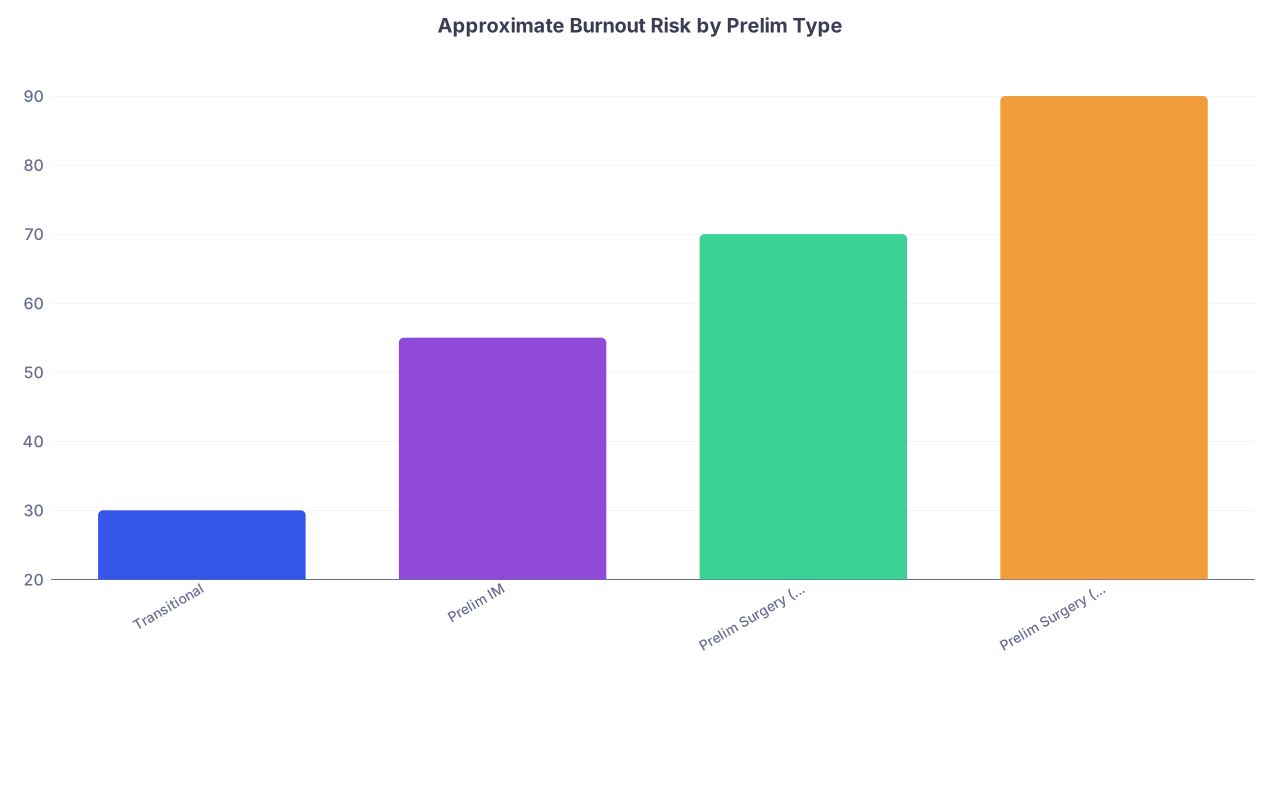
| Category | Value |
|---|---|
| Transitional | 30 |
| Prelim IM | 55 |
| Prelim Surgery (good) | 70 |
| Prelim Surgery (malignant) | 90 |
If you’re already anxious, I’d unapologetically rank more humane prelims higher, even if the name is less shiny. Your brain and body are not decorations.
Step 2: Decide Your Main Goal for the Year Before It Starts
Is your primary aim to:
- Crush it and get letters to reapply to a competitive field?
- Survive and protect your mental health while transitioning into your already-matched advanced specialty?
- Keep doors open for several IM-adjacent specialties?
Don’t try to do all three. Lack of a clear goal = chronic guilt. You’ll constantly feel like you’re never doing enough in any direction.
Your goal should determine:
- How many extra projects you say yes to
- Which attendings you prioritize building relationships with
- Which rotations you put max effort into vs. which ones you just competently complete
The PGY-2 Application During a Prelim Year: Will You Even Have Time?
This is the other nightmare scenario running circles in your head: you’ll be so exhausted you won’t actually be able to apply anywhere, and the whole year will have been “for nothing.”
Let’s be clear: applying out of a prelim is absolutely possible. People do it every single year.
The catch: you need to front-load the work.
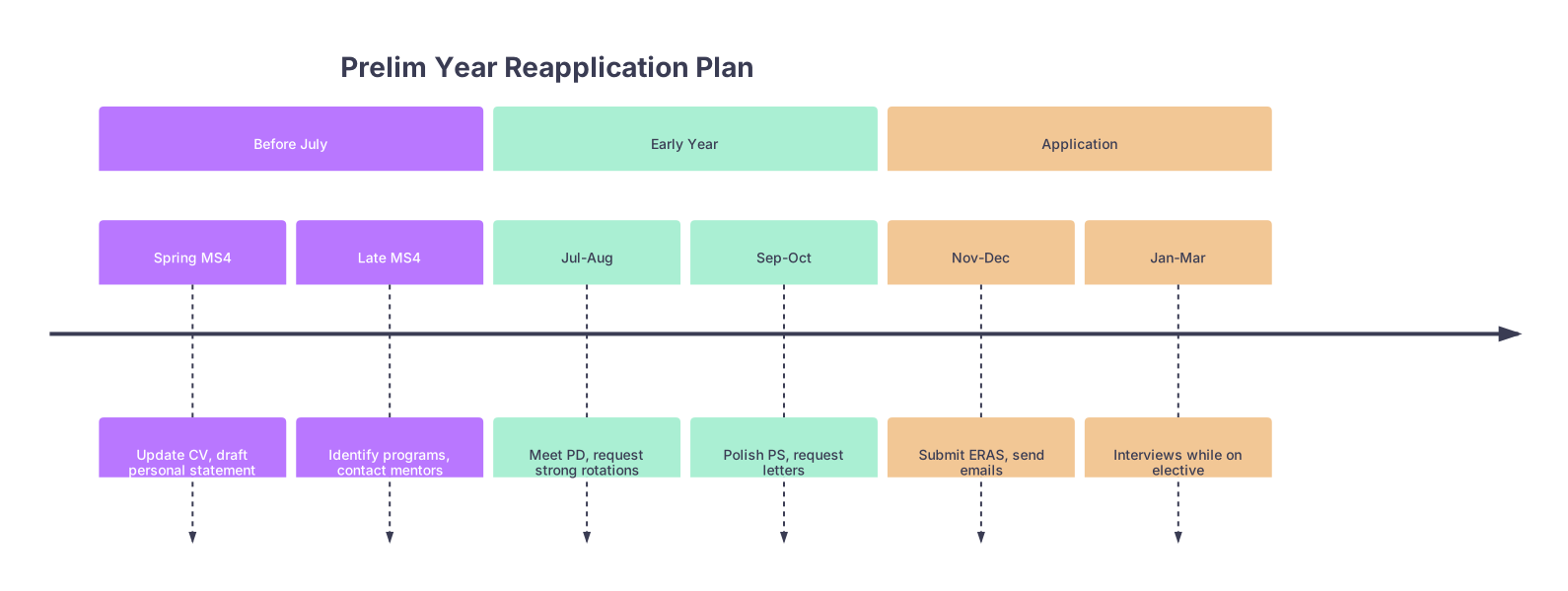
| Period | Event |
|---|---|
| Before July - Spring MS4 | Update CV, draft personal statement |
| Before July - Late MS4 | Identify programs, contact mentors |
| Early Year - Jul-Aug | Meet PD, request strong rotations |
| Early Year - Sep-Oct | Polish PS, request letters |
| Application - Nov-Dec | Submit ERAS, send emails |
| Application - Jan-Mar | Interviews while on elective |
What this actually feels like:
- July–September: You’re just trying not to drown. That’s normal. Expect to feel stupid and slow.
- October: You start to see patterns. You’re less terrified of every page. This is when you can start thinking strategically again.
- November–January: Heavier application work if you’re going for a PGY-2 spot starting the next July.
The smartest prelims I’ve seen did this:
- They drafted a personal statement before graduation, then tweaked it later.
- They picked one or two attendings early on and told them: “I want to reapply in X. Can I work with you on service to get a strong letter?”
- They arranged to be on a lighter rotation (clinic/elective) during peak interview months if possible.
You won’t have full control, but you’re not powerless. Programs know prelims use PGY-1 to reapply. This is not some shameful secret.
Okay, But How Do I Not Mentally Break?
Anxiety says: you’re going to lose all your hobbies, all your friends, all your joy, and become a bitter zombie who hates every code blue ringtone.
Reality: you will be tired, and some days you’ll be miserable. But there are ways to keep from snapping completely.
1. Precommit to Non-Negotiables
If you leave this vague like “I’ll try to take care of myself,” PGY-1 will steamroll you. Decide now:
- Minimum sleep per 24h you will protect, even if you have to skip social stuff
- One small weekly ritual you will protect (brunch, call with partner, therapy)
- Boundaries around staying late “to help” when it’s not your responsibility anymore
You will feel guilty leaving on time while others stay. That’s built into the culture. But ask yourself: is burning out and making more mistakes actually “helping patients” or just feeding a broken system?
2. Find One Senior Who’s Actually Human
You don’t need ten mentors. You need one decent senior or attending who:
- Doesn’t mock you for asking questions
- Shows you shortcuts (like which notes can be 4 sentences instead of 14)
- Will tell you honestly when you’re taking on too much
That person can single-handedly cut your burnout risk in half.
3. Treat the Year as Skill-Building, Not Purgatory
This sounds like toxic positivity, but it isn’t. It’s survival framing.
Prelim year will make you:
- Faster at decision-making
- Better at triaging what actually matters
- Less afraid of sick patients
- More efficient with EMR and orders
Those skills transfer to literally any specialty. Even derm. Even radiology. Even anesthesia. You’re not “wasting a year” – you’re compressing a painful learning curve into 12 months so that later years are less awful.

How Bad Is Burnout Risk Really in a Prelim Year?
You want numbers. Concrete things.
There’s no perfect dataset just for prelims, but general intern/resident burnout rates are often quoted around 40–60%. Prelims, especially in heavy programs, skew to the higher end.
Here’s the unvarnished truth:
- If you walk in already depleted (Step prep, away rotations, personal life stress) and then choose a malignant, service-heavy program and refuse to set any boundaries because you feel guilty… yeah, your risk is high.
- If you choose a program carefully, intentionally protect small pieces of your life, and accept that “good enough” is enough on many days, your risk is still real, but not inevitable.
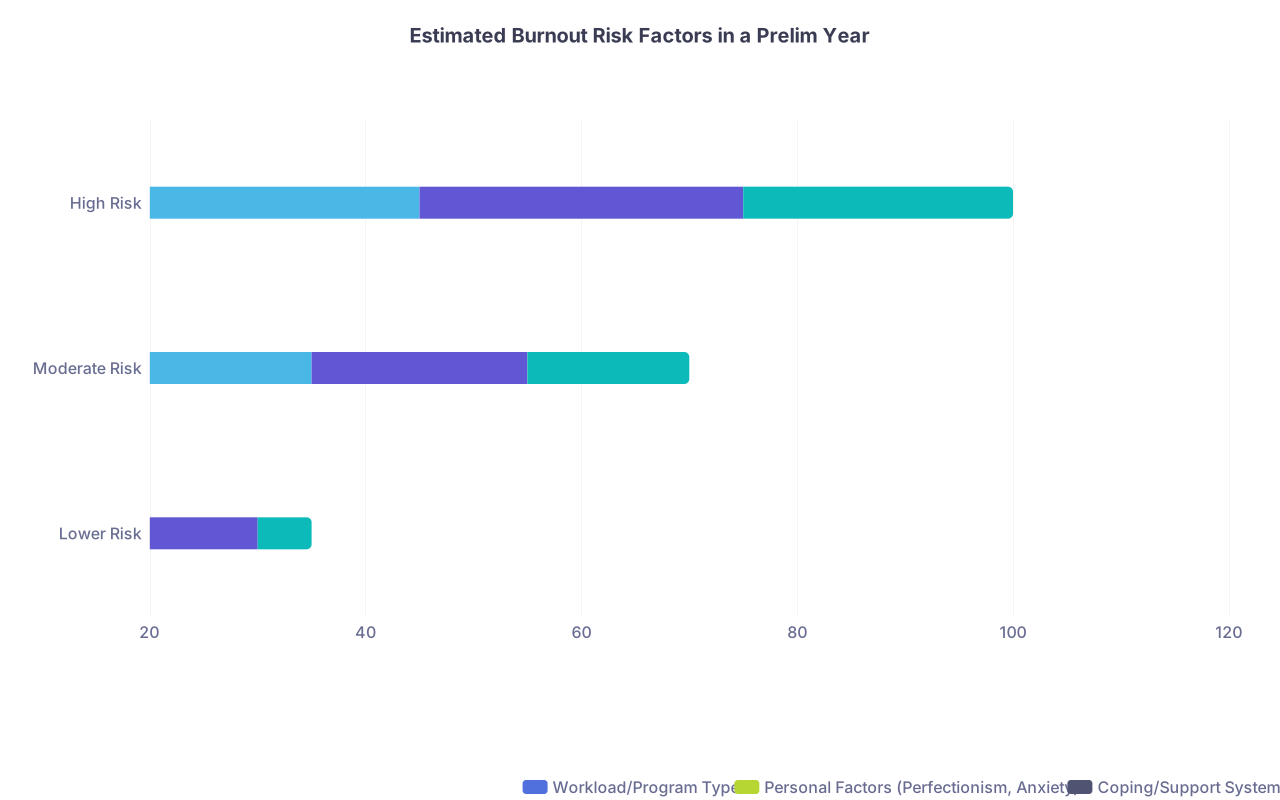
| Category | Workload/Program Type | Personal Factors (Perfectionism, Anxiety) | Coping/Support Systems |
|---|---|---|---|
| Lower Risk | 20 | 10 | 5 |
| Moderate Risk | 35 | 20 | 15 |
| High Risk | 45 | 30 | 25 |
You can’t control all of it. You can shift yourself out of the worst-case bucket.
Red Flags vs. Green Flags When You’re Still in the Application/Rank Phase
Since you’re in the Match/application phase, let’s be practical.
Red flags I’d take seriously if burnout terrifies you:
- PD or residents brag about “this is the hardest year of your life, we weed out the weak.” No. You’re not joining the Marines.
- Prelims are clearly treated as disposable bodies: separate orientations, no continuity clinic, never invited to conferences, never get feedback.
- No clear track record of prelims matching into decent PGY-2 spots. If graduates vanish into the void, that’s not encouraging.
Green flags that actually matter:
- Residents openly talk about wellness without rolling their eyes; they know specifics (free therapy access, schedule tweaks for major events).
- Prelims and categoricals indistinguishable in how they’re treated day-to-day.
- Seniors say things like, “We try hard to send you home post-call,” and it matches what the prelims confirm privately.

What If You Already Know You’re Prone to Burnout or Anxiety?
Then you’re not starting at zero. You’re starting at a deficit. That doesn’t mean you’re doomed; it means you need more scaffolding from day one.
Real things you can do:
- Line up therapy before July. Don’t wait until you’re in pieces to try to find a provider during a 6-day stretch of wards.
- Tell one person you trust: “If I start talking about quitting medicine every single day, I want you to remind me this might be burnout talking, not truth.”
- Be honest with yourself about meds. If you’ve ever benefited from SSRIs or ADHD treatment, now is not the time to “see if I can do without.”
And if you hit a breaking point during the year? You’re still not trapped. People take medical leave. People switch programs. People change paths entirely. Is it messy? Yes. Is your life over? No.
The Quiet Upside Nobody Talks About
Here’s something you don’t hear often from the “prelim year is hell” crowd: a lot of people come out of it… sharper. More confident. Weirdly grateful.
I’ve seen:
- A radiology-bound prelim who was terrified of codes become the unofficial “code whisperer” for her reading room later.
- A future anesthesiologist who felt useless as an MS4 turn into the intern everyone trusted to stabilize the crashing GI bleeds.
- A derm-bound prelim who started the year hating inpatient medicine but ended with a totally different respect for hospitalists and a broader sense of her own competence.
It’s not that the year was fun. It wasn’t. But it shifted their internal story from “I’m an imposter who got lucky” to “I survived that. I can handle a lot more than I thought.”
You can get there without being destroyed. But not if you pretend you’re invincible.

FAQ (Exactly 5 Questions)
1. If I match a prelim year without an advanced spot, did I screw up?
No. It’s not ideal, but it’s not a death sentence. Plenty of people use that year to build a stronger application and then match into IM, anesthesia, rads, PM&R, etc. You’ll need to be organized and intentional, but you didn’t ruin your life.
2. Is a prelim surgery year always worse than a prelim medicine year for burnout?
Not always, but often heavier. Surgery has longer OR days, more call, and often a harsher culture. A cushy, well-run prelim IM can be way more tolerable than a malignant surgery program. The specific program matters more than the label.
3. Will I have any life outside the hospital during a prelim year?
Not “normal” life, but not zero life either. Expect fewer social events and less flexibility, but you can keep one or two things: weekly phone call with a friend, a hobby 1–2 hours/week, a workout a few times per week. The key is shrinking, not erasing, your non-work life.
4. If I start to feel burned out, will my program even care?
Some will, some won’t. The nice surprise: many programs now actually take burnout seriously—offering counseling, schedule adjustments, or time off if things are bad. But nobody can help you if you hide it. You have to say, “I’m not okay” to someone with some power.
5. Is it better to rank a weaker-name but kinder prelim higher than a big-name but brutal one?
If burnout and mental health are on your mind as much as they seem to be, I’d say yes. A survivable year at a mid-tier program beats a soul-crushing year at a brand name where you’re just a number. Programs hiring PGY-2s care more about your performance and letters than whether your prelim was “famous.”
Key points, short and honest:
- A prelim year is hard, but burnout isn’t guaranteed; how you choose and use the year matters a lot.
- You can absolutely reapply or line up a PGY-2 during a prelim, but you have to plan early and protect small pieces of your life.
- You’re not signing up for purgatory. You’re signing up for a brutal but finite bridge year that can leave you stronger—if you don’t sacrifice yourself completely to it.