
Last fall, I watched a surgical intern quietly realize he’d just torched his shot at a competitive PGY‑2 spot. Not because of his OR skills. Not because of his in‑service score. Because of three emails and two phone calls made about him behind the scenes—by people he barely knew were watching. Those calls came from his preliminary year attendings.
Let me tell you what really happens with prelim years and letters. The part no one spells out on your med school advising slide decks.
What a Preliminary Year Really Is (From the People Using It Against You or For You)
On paper, a preliminary year is “a one‑year training position, typically in internal medicine, surgery, or transitional year, that can be followed by advanced training in another specialty.”
That’s the brochure version.
The real version: it’s a year‑long audition. Not just for your day‑to‑day job, but for your future letters, your reputation, and your backchannel narrative.
Programs think in categories. Interns fall into mental buckets that faculty and chiefs will literally say out loud in resident meetings:
- “Automatic letter, happy to call for them.”
- “Neutral, safe to say they were fine.”
- “I’d be careful co‑signing anything strong.”
- “Do not attach my name to that application.”
Your prelim year decides which bucket you fall into when PDs and attendings get the inevitable email:
“We’re considering Dr. X for a PGY‑2 in our program—can you tell us about them?”
That conversation matters more than the actual letter half the time.
To understand why, you need to understand three overlapping currencies of a prelim year:
- The formal record (evaluations, written letters, MSPE addenda).
- The informal record (hallway comments, WhatsApp chats, faculty meetings).
- The backchannel (off‑the‑record phone calls, “hey, quick question about this applicant” emails, quiet warnings).
Your letters live on all three layers. Your prelim year feeds all of them.
How Program Directors Actually Use Prelim‑Year Letters
I’ve sat in rank meetings and watched this play out. The conversation about a prelim applicant is almost formulaic.
Someone pulls up ERAS. Someone else asks: “Who do we know at their prelim program?”
If they know someone, the letter gets scanned, not studied. The call does the real work.
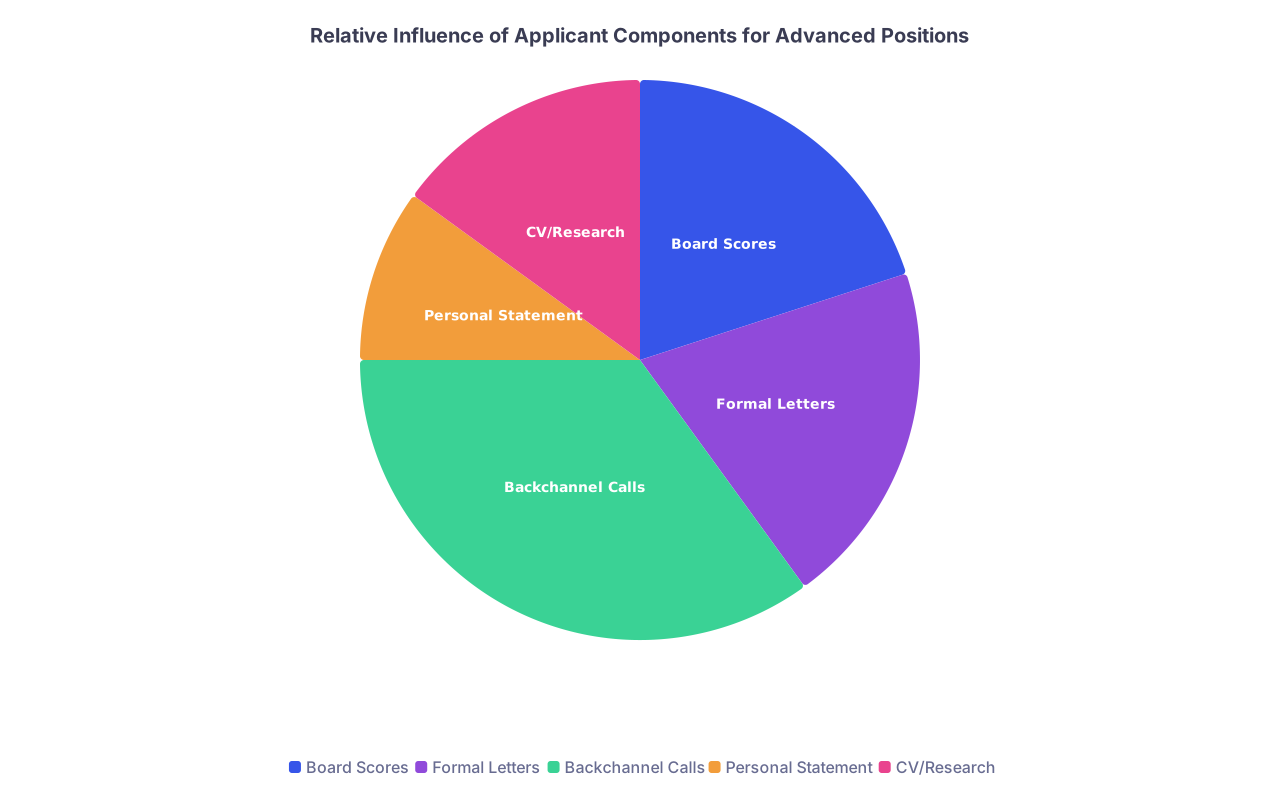
| Category | Value |
|---|---|
| Board Scores | 20 |
| Formal Letters | 20 |
| Backchannel Calls | 35 |
| Personal Statement | 10 |
| CV/Research | 15 |
Here’s how it actually breaks down when a PD is deciding between two applicants for a PGY‑2 anesthesia spot, both from prelim medicine:
They look at:
- Step 2 CK: similar.
- Med school: similar tier.
- Research: maybe marginally helps.
- LORs: both “excellent,” both full of the usual adjectives.
Then the tie‑breaker:
“I’m going to call their prelim PD and see what they’re really like.”
Now the prelim PD (or APD, or chief) has four mental buckets for phone responses:
Enthusiastic Endorsement
“Take them. No reservations. We’d keep them here if we could.”Supportive But Measured
“They’re solid, dependable, no major concerns. Not the superstar, but absolutely safe.”Cautious Neutral
“They completed all their duties.”
That line is poison. PDs know exactly what it means.Quiet Warning
“I’d be careful. There were some professionalism concerns.”
That’s the kiss of death. The call ends early; your file quietly moves down the list.
Your daily behavior from July to December of your prelim year determines which of those sentences gets said about you during a three‑minute phone call you will never know happened.
That’s the backchannel.
Who Actually Gets Asked About You (It’s Not Just Your “Letter Writers”)
Most prelim interns think: “I just need 2–3 strong letters from attendings who like me.”
You’re missing half the game.
Programs do not only call the people whose names appear on your letters. They call:
- The program director of your prelim year (obvious).
- The APD who runs the rotation you struggled on.
- The chief resident everyone trusts.
- The random attending who trained with them 10 years ago and “might know this intern.”
And sometimes, more important than the people who love you are the people who are mildly annoyed by you. Because they don’t volunteer to write letters. They speak up in closed‑door meetings.
I’ve heard exact quotes in eval meetings like:
- “They’re smart but constantly five minutes late. Every day.”
- “Asks for days off but then picks up moonlighting—doesn’t sit right.”
- “Good clinician, but complains a lot. Not malignant, just…draining.”
Those lines get carried into PD‑to‑PD conversations months later.
You can impress three hand‑picked attending letter writers and still have your application quietly sink because the chief who covers the night float schedule says, “Honestly? I wouldn’t rehire them.”
When another PD hears that from someone they trust, your polished letter becomes a nice piece of paper with no weight.
The Three Hidden Stories Your Prelim Year Writes About You
Behind every formal letter, there’s a story the writer would tell if you weren’t in the room. That story shapes the letter tone and the backchannel comments.
Your prelim year writes three main narratives:
1. “Can You Survive Residency, or Will You Be a Problem?”
This is the first, brutal filter: are you safe to bring into our program?
Prelim attendings and PDs are looking for red flags that will make their phone call awkward later. Stuff like:
- Chronic lateness
- Poor documentation
- Ignoring pages
- Emotional outbursts
- Gossiping, stirring drama with co‑interns
- Arguing over call schedules instead of quietly working them out
Nobody wants to say this on paper, but they’ll say it on the phone.
On the page, the letter might say:
“Dr. A is a capable intern who fulfills their responsibilities and is progressing appropriately.”
On the phone, when pressed:
“Would you rehire them?”
“…Probably not. They’re not unsafe. Just…high maintenance.”
That “just high maintenance” kills more advanced‑position opportunities than low Step scores.
2. “Are You as Good as You Think You Are?”
You know who stands out to faculty? Not the flashy, self‑promoting intern. The one whose self‑perception matches reality.
The intern who says, “I’m still shaky on vent management” and then busts their ass to get good at it—gets great letters. The one who says, “I should be fast‑tracked” by week four? We remember them, too. For different reasons.
Prelim attendings are especially sensitive to entitlement from advanced‑match interns. Radiology, anesthesia, derm, ophtho—if they sense you believe this year “doesn’t really count,” your letter tones down. Or worse, your backchannel story becomes:
“Bright, but thinks they’re above the work. I’d pass unless you’re desperate.”
No one will type that in an official letter. They will absolutely say it over the phone.
3. “Are You a Force‑Multiplier or a Drain?”
This one is deceptively simple: does the team work better when you’re on?
You’ve seen both kinds of people:
- The intern who stabilizes the team, takes admits without whining, helps cross‑cover without scoreboard keeping.
- The intern who tracks every slight, reminds everyone how stressed they are, disappears when things get rough.
Prelim letters from chiefs and PDs heavily encode this. You can read between the lines:
- “A pleasure to work with, frequently volunteered to help co‑interns.” = This is the person we wanted on night float.
- “Completed required tasks and maintained professionalism.” = We’re not lying, but we’re saying as little as possible.
- “Will continue to grow with more supervision.” = We’re hinting that you needed more hand‑holding than your peers.
Those phrases were discussed with more colorful language in the conference room before they were sanitized for ERAS.
Inside the Faculty Room: How Your Name Comes Up
You want the real picture? Here’s a common scene.
It’s January. PD, APDs, chiefs, a few key faculty leaders in a room. Coffee, tired faces, shared EMR misery.
On the agenda: “Prelim intern impressions—future letters / PGY‑2 applications.”
Names go down a list. The discussion is quick, ruthless, and 100% shapes your backchannel “file.”
“Nguyen?”
“Rock solid. I’ll write them a letter anytime.”
“Good, mark them as ‘strong recommend’ for outside programs.”
“Patel?”
“Very bright, a little needy, but I’d still recommend.”
“Okay, ‘supportive recommend.’”
“Robinson?”
Chief pauses. “They’re…fine. No serious issues, but they’re not who I’d want covering nights alone.”
PD: “Okay, if we’re asked?”
“Safe, but I’d be neutral, not enthusiastic.”
Next to your name, in someone’s private spreadsheet, you just got coded as: neutral backchannel.
“Sanchez?”
Another pause. Everyone shifts. Someone says, “We had that professionalism incident…”
APD: “Yeah. I’d be honest if asked. I wouldn’t recommend them for a high‑autonomy program.”
That’s your application dying in a room you will never see.
You think your prelim year is “just one year.” For PDs, it becomes a one‑line summary they carry for you for years.
Transitional vs Medicine vs Surgery Prelim: How the Backchannel Differs
Different prelim structures create different kinds of letters and backchannel narratives. This matters more than students realize.
| Prelim Type | Typical Focus | Backchannel Risk | Backchannel Upside |
|---|---|---|---|
| Transitional | Breadth, lifestyle | “Too cushy?” | “Team player” |
| Medicine Prelim | Heavy floor work | “Burned out” | “Workhorse” |
| Surgery Prelim | High acuity, OR | “Attitude” | “Battle tested” |
Transitional Year
Faculty wonders: are you actually any good, or did you hide on easy rotations?
Backchannel questions for TY interns:
- “How were they on the harder rotations—ICU, ED?”
- “Did they complain a lot about workload?”
- “Were they present on off‑service months, or did they check out?”
TY can produce fantastic letters if you’re excellent even when the rotation is light. But if the whisper becomes “they chose TY to coast,” your letters get an invisible asterisk.
Medicine Prelim
This is the grind year. Floors, nights, admits, discharges. Here, the backchannel is all about reliability under load.
Common backchannel themes:
- “Dependable night coverage?”
- “How did they handle 15‑patient lists?”
- “Did nurses trust them or bypass them?”
A medicine prelim year can generate some of the strongest letters in the game—if you show you can absorb work like a categorical IM resident. Specialty PDs love “This intern could have been one of ours, we tried to keep them.”

Surgery Prelim
Surgery prelims live and die by attitude and resilience.
Backchannel questions:
- “Did they melt down when yelled at?”
- “How were they on trauma call at 3 a.m.?”
- “Did they show up prepared for the OR even on post‑call days?”
Surgical culture is blunt. I’ve literally heard: “Knife skills we can teach. We can’t fix a bad attitude.” That exact line then shapes how strongly they’ll back you with their colleagues in ortho, ENT, urology, etc.
How Your Prelim Year Choices Shape Future Letters
There are a few decision points inside your prelim year that quietly reshape your letter potential.
Who You Align With
Some interns instinctively cozy up to the “cool” residents who are always cutting corners. Late notes, sloppy sign‑outs, constant complaining about scut.
Faculty sees that.
When PDs ask chiefs about you, they almost never say, “They’re great, but unfortunately they hung out with the wrong crowd.” Humans don’t parse it that way. They just remember you as part of that subculture.
Smart interns align with:
- The senior who is trusted with the sickest patients.
- The night float resident who always gets called back for crises.
- The chief who knows everyone’s reputation.
Those are the people whose off‑hand comments about you turn into phrases like:
“You can give them a heavy list and they’ll get it done without drama.”
That is the line that makes another PD say, “Done. Bring them in for an interview.”
How You Handle Your Worst Month
Every prelim year has a breaking point rotation. MICU with a malignant fellow. Gen surg nights with constant admits. A toxic consult service.
Faculty do not judge you by your best month. They judge you by your worst.
I’ve seen two interns with the same evals split completely different ways in backchannel stories because of how they handled a brutal rotation.
- Intern A: complained to everyone, told co‑interns they were being abused, sulked during rounds, threatened to go to GME.
- Intern B: visibly tired, but still helped others, owned their mistakes, asked for feedback instead of demanding schedule changes.
On paper, both got “meets expectations.” On the phone:
- “A? I’d avoid unless you’re okay with drama.”
- “B? I’d take them. They were stretched but never unsafe and kept trying to improve.”
Same documented performance. Completely different whispered narrative.
How You Talk About Your Future Specialty
Here’s where a lot of advanced‑match interns sabotage themselves without realizing it.
There’s a difference between:
“I’m really excited about anesthesia, but I want to be solid in medicine so I can take care of sick patients in the OR.”
and
“I just need to survive this year so I can get to the real training.”
Everyone in that room has done years of “this” work. When you hint their field is just a box to check, they remember. You become “the derm intern who talked down about medicine all the time” or “the ophtho intern who kept saying this wasn’t real surgery.”
When those same attendings get called later?
They’ll say, “Technically competent, but I’m not sure how invested they are in patient care outside their narrow field.” That’s lethal in competitive specialties.
The Rematch Scenario: When Your Prelim Year Becomes Your Lifeline
Here’s the part no one thinks they’ll need—but some of you will.
Sometimes the advanced spot falls through. You fail to secure the PGY‑2, your planned path implodes, or your specialty decides they don’t want you.
In that moment, your prelim year reputation becomes everything.
I’ve seen prelim interns who didn’t match advanced, walk into the PD’s office with humility and a solid track record, and walk out with:
- A categorical IM spot offered internally
- A call made to another program director: “We’ll vouch for them. You should pick them up.”
And I’ve seen the opposite: the intern who’s been skating by, griping, doing the bare minimum, then comes begging for help. The PD nods politely, then sends one lukewarm email and no follow‑up.
When you’re in trouble, PDs decide whether to spend their political capital on you. That decision is based on an entire year of behavior, not your Step score.
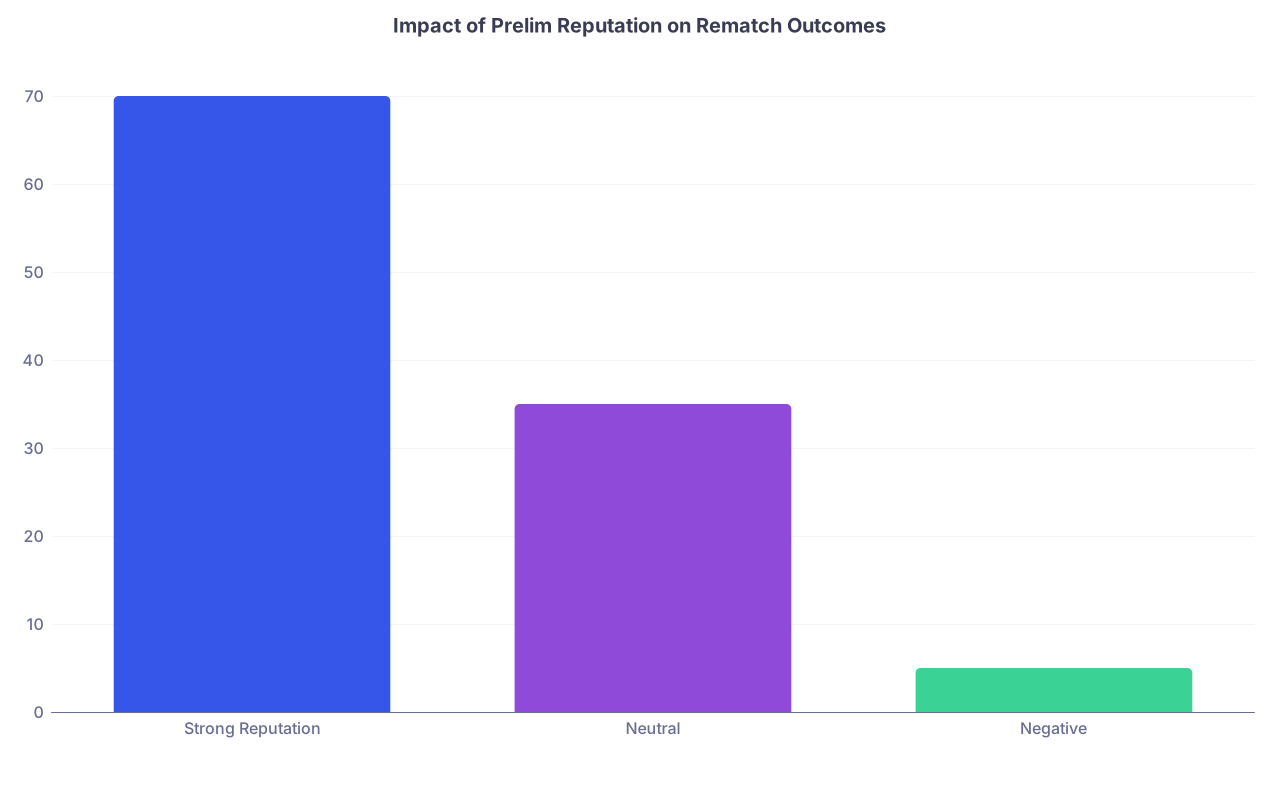
| Category | Value |
|---|---|
| Strong Reputation | 70 |
| Neutral | 35 |
| Negative | 5 |
Those numbers aren’t published anywhere. But they’re roughly what I’ve seen: if your prelim leadership would fight for you, your odds in a bad situation go way up.
How to Engineer Letters That Survive Backchannel Scrutiny
You’re not just chasing pretty phrasing. You’re trying to create a situation where:
- Your written letters are strong.
- The same people, when called privately, say, “Yes, you can trust what I wrote.”
A few practical, insider points:
Your best letter is often from someone who saw you struggle then improve.
The attending who only saw you on an easy elective will write “pleasant, strong fund of knowledge.” The one who saw you drown in the ICU, then come back better, can say, “Rapid growth, resilient, teachable.” That’s gold.Chief residents’ voices carry more than you realize.
They may not all write your letters, but when a PD asks, “What do you think of them?”, that answer colors everything. Treat chiefs like future judges, not just schedule‑makers.Ask fewer people, more deliberately, for letters.
Two letters from people who really know you beats four from attendings who can barely place your face. PDs can tell when a letter is generic.Timing matters.
The sweet spot to secure your primary letter writer is after they’ve seen you on at least one hard month—and before they’re burnt out by February and less generous with their energy.

- Give them concrete ammo.
When you ask for a letter, remind them of specific cases, crises, or improvements you made. It jogs their memory and makes the letter more credible and detailed, which then aligns better with what they’ll say on the phone.
The Backchannel Truth You Need to Internalize
By the end of your prelim year, for better or worse, you will be reduced to a sentence in people’s heads. Something like:
- “Smart, works hard, no drama.”
- “Good but high‑maintenance.”
- “Technically fine, but I don’t trust their judgment at 3 a.m.”
- “I’d hire them again in a heartbeat.”
That sentence walks ahead of your letters. When PDs talk among themselves, that’s what gets traded.
You cannot control everything. You can’t control whether your prelim hospital is malignant, whether a particular senior is unfair, whether that one attending had it out for you. But you have more control than you think over the story people tell about you by:
- Showing up early and consistently.
- Owning your mistakes loudly and fixing them quickly.
- Being relentlessly reliable, even when you’re tired or bitter inside.
- Treating the prelim year as real training, not a bureaucratic hurdle.
Years from now, you won’t care what your ERAS comment bank looked like. You’ll remember whether, in the one year where everyone was quietly judging whether they’d stake their reputation on you, you behaved like the kind of physician they’d be proud to claim.
And that’s what your prelim year really is: not a gap between med school and “real residency,” but the year you teach the system what kind of story to tell about you when you’re not in the room.
FAQs
1. If I know I’m going into a competitive advanced specialty, is a medicine or surgery prelim better for future letters?
If your specialty doesn’t mandate a specific prelim type, a strong medicine prelim is usually safer for letter purposes. Medicine leadership is used to writing for anesthesia, rads, derm, ophtho. They’re plugged into those networks. Surgery prelims can produce spectacular letters if you shine, but the variance is higher—one bad personality clash with a surgeon can stain your backchannel narrative. Transitional years can also work well if the program is reputable and you deliberately seek out harder rotations where people can actually see you work.
2. Can a single bad rotation ruin my prelim‑year letters and backchannel reputation?
One brutal rotation won’t destroy you by itself, but how you respond to it absolutely can. If you struggle, own it, seek feedback, and clearly improve on subsequent months, faculty actually like telling that story—it makes for a compelling “growth” narrative. If you respond by blaming everyone, escalating constantly, or mentally checking out, that one rotation becomes the anchor story everyone uses when talking about you later.
3. Should I ask my prelim program director for a letter even if I barely worked with them clinically?
Usually, yes—if you haven’t set off major alarms. PD letters carry weight because other PDs know they’ve seen all your evals and spoken to chiefs and faculty. They’re not judging you on a single encounter; they’re summarizing your entire year. But you want to pair that PD letter with at least one or two from attendings who saw you on the ground on tough months. And if you suspect your PD sees you as “borderline” or has hinted at concerns, talk to a trusted chief or APD first; they’ll tell you, off the record, whether that PD letter will help or quietly hurt.