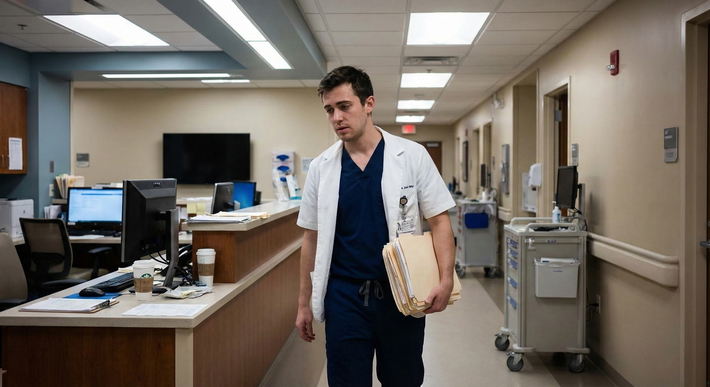
Understanding Preliminary Years in Medical Residency
When you start looking seriously at medical residency options, you quickly encounter the term “preliminary year”—often abbreviated as “prelim year.” For many medical students and residency applicants, this part of training can feel confusing: Is it mandatory? How is it different from a transitional year? Does it help your chances of matching into a competitive specialty?
This guide answers the most common questions about preliminary years in residency and expands on the original overview to give you a practical, detailed understanding of how prelim years fit into your overall medical education, clinical training, and specialty training plans.
What Is a Preliminary Year in Residency?
A preliminary year is typically a one-year, non-categorical residency position completed before starting an advanced specialty residency. It is usually in a core specialty (most commonly Internal Medicine or General Surgery) and focuses on broad-based clinical experience rather than specialty-specific training.
Key Features of a Preliminary Year
- Duration: Usually 12 months (PGY-1)
- Type of position: Non-categorical (you are not guaranteed continuation in that specialty at that program)
- Primary purpose: Provide foundational clinical training for an advanced residency (e.g., radiology, anesthesiology, dermatology) or for applicants still deciding their long-term path
- Common base specialties for prelim years:
- Internal Medicine
- General Surgery
- Transitional year (a slightly different structure but often used similarly)
- Occasionally Pediatrics or other fields, depending on program design
A key distinction:
- Categorical position: A multi-year training track (e.g., 3–7 years) that leads directly to board eligibility in that specialty.
- Preliminary position: A one-year position that does not by itself lead to board eligibility, but often serves as a required or strategic stepping stone to an advanced program.
Why Is a Preliminary Year Important in Medical Residency?
A preliminary year exists for more than just “checking a box.” It serves several educational, professional, and strategic roles within your broader residency training.
1. Building a Strong Clinical Foundation
Regardless of your ultimate specialty—whether radiology, dermatology, anesthesia, ophthalmology, or another advanced field—you must be able to:
- Manage acutely ill patients
- Recognize and stabilize emergencies
- Communicate effectively with patients and families
- Coordinate care with multidisciplinary teams
- Navigate hospital systems and workflows
A prelim year, especially in Internal Medicine or Surgery, offers:
- High patient volume and acuity
- Frequent call or night-float experiences
- Exposure to inpatient medicine, consults, and procedural basics
This foundation makes you a safer and more effective physician when you transition to more focused specialty training.
2. Exposure to Different Clinical Environments and Specialties
Even if you think you know your future specialty, the preliminary year can:
- Confirm your interest in that path (e.g., an aspiring anesthesiologist realizing they truly enjoy perioperative medicine)
- Expose you to alternative specialties you might not have seriously considered
- Help you understand how different specialties collaborate around shared patients (e.g., IM, surgery, radiology, pathology, anesthesia, ED)
For undecided graduates, a prelim year—particularly a more flexible Internal Medicine or transitional-type prelim—can offer time, networking, and perspective to refine career decisions while still progressing in medical residency.
3. Satisfying Requirements for Advanced Residency Programs
Many advanced residency programs require a separate, accredited clinical training year that must be completed before starting specialty training. Common examples include:
- Diagnostic Radiology
- Interventional Radiology – Independent Track
- Anesthesiology
- Dermatology
- Neurology (at some institutions)
- Ophthalmology
- Physical Medicine & Rehabilitation (PM&R)
- Radiation Oncology
These specialties often specify that applicants must complete one of the following:
- A preliminary year in Internal Medicine, Surgery, or mixed clinical training
- A transitional year (broad-based PGY-1)
- Less commonly, an accredited year in Pediatrics, OB/GYN, or another primary specialty (depending on board and program requirements)
Understanding each advanced program’s specific PGY-1 requirement is critical as you design your residency application strategy.
4. Strengthening Your Future Application and CV
A well-executed preliminary year can significantly enhance your competitiveness:
- Stronger letters of recommendation from U.S.-based attendings
- Demonstrated ability to function as a physician in a U.S. healthcare system
- Evidence of professionalism, teamwork, and dependability
- Opportunity to engage in QI projects, scholarly activity, or teaching (e.g., working with medical students)
This is particularly important if:
- You did not match your desired specialty on your first attempt
- You are an International Medical Graduate (IMG) seeking U.S. clinical training experience
- You are applying to very competitive fields (e.g., dermatology, plastics, radiology subspecialties)

How Is a Preliminary Year Structured?
While specific schedules and rotations vary by institution and specialty, most prelim years share common elements.
Core Rotations
Typical rotations during a preliminary year include:
- Internal Medicine floors / wards
- Managing complex inpatients
- Daily rounding, admitting, discharging
- Working within multidisciplinary teams
- Intensive Care Unit (ICU) or step-down units
- Exposure to critical care, ventilator management, vasopressors
- Emergency Medicine
- Rapid assessment and stabilization
- High-acuity patient management and triage
- General Surgery / Surgical Subspecialties (for surgical prelims)
- Perioperative care
- Operating room exposure
- Trauma or acute care surgery coverage
- Outpatient or continuity clinics (more common in medicine or transitional prelims)
- Electives (if allowed)
- Subspecialty rotations aligned with your future field (e.g., dermatology clinic, radiology reading room, anesthesia, neurology)
Clinical Responsibilities
As a PGY-1 preliminary resident, your responsibilities are similar to those of categorical interns:
- Admitting and managing patients under supervision
- Writing progress notes and orders
- Presenting on rounds
- Communicating with consultants
- Discussing plans with patients and families
- Participating in sign-out/hand-off
- Performing basic procedures where permitted (e.g., IV lines, ABGs, paracentesis, central lines in some programs)
Your role is designed to:
- Cement skills learned in medical school
- Transition you from “student” to “physician”
- Prepare you to handle the clinical components of future specialty work
Supervision, Teaching, and Mentorship
Preliminary residents are supervised by:
- Attending physicians (ultimate decision-makers and evaluators)
- Senior residents or fellows (immediate supervisors and role models)
Most prelim programs include:
- Daily or weekly didactic sessions
- Morning reports, noon conferences, grand rounds
- Case-based discussions and simulation sessions
- Opportunities to receive direct feedback and mentoring
Tip: Early in the year, identify at least 1–2 attendings or senior residents who can serve as longitudinal mentors and potential letter writers.
Evaluation and Feedback
You will be evaluated on:
- Medical knowledge and clinical reasoning
- Patient care and procedural skills
- Professionalism
- Communication and teamwork
- Systems-based practice and practice-based learning
Evaluations often include:
- Rotation-based written assessments
- Direct observation tools (mini-CEX, etc.)
- Multisource feedback (nurses, peers, allied health)
- Semiannual or annual summative reviews
High-quality evaluations during your prelim year can significantly bolster your portfolio, especially if you are re-applying to the Match or transitioning into competitive advanced programs.
Which Specialties Commonly Require or Use a Preliminary Year?
Several specialties either require or commonly incorporate a preliminary or transitional year into their training pathway.
Specialties That Typically Require a Separate PGY-1 Year
- Diagnostic Radiology
- Interventional Radiology – Independent Track
- Anesthesiology
- Dermatology
- Ophthalmology
- Radiation Oncology
- Neurology (at some programs; others offer categorical positions)
- Physical Medicine & Rehabilitation (PM&R)
These programs may be listed as advanced (A) positions in the NRMP, requiring you to secure a separate PGY-1 prelim or transitional year.
Specialties With Categorical vs. Advanced Pathways
Some specialties offer both categorical and advanced tracks:
Anesthesiology:
- Categorical programs: include the PGY-1 year within the same institution
- Advanced programs: you must match separately into a PGY-1 prelim or transitional year
Radiology and Neurology:
- Some programs start at PGY-1 (categorical), others at PGY-2 (advanced), requiring an external PGY-1
Surgery and Surgical Subspecialties:
- Many general surgery positions are categorical, but surgical preliminary positions also exist.
- These may be used by people who:
- Intend to pursue a different advanced specialty later
- Did not match into a categorical surgery spot but still want a year of surgical experience
Competitive Specialties and Strategic Use of Prelim Years
Highly competitive specialties such as dermatology, ophthalmology, plastic surgery, and some subspecialty fellowships often attract applicants who strategically use prelim years to:
- Strengthen their CV with additional clinical work, research, or publications
- Obtain stronger U.S.-based letters of recommendation
- Demonstrate dedication and capability in a demanding clinical setting
Choosing and Applying to Preliminary Year Programs
Can You Choose Your Preliminary Year Program?
Yes. Preliminary positions are part of the regular residency match process (ERAS/NRMP). Depending on your advanced specialty, you may:
- Apply to combined categorical programs that include PGY-1
- Apply separately to:
- Advanced positions in your chosen specialty (e.g., Radiology PGY-2+)
- Preliminary or transitional year programs for PGY-1
You rank prelim programs independently in the NRMP, often on a supplemental rank list associated with your advanced program.
Factors to Consider When Selecting a Prelim Program
When evaluating prelim options, consider:
- Type of prelim year:
- Internal Medicine vs. Surgery vs. Transitional year
- Does it align with your future field’s requirements and your personal learning style?
- Program culture and workload:
- Call schedule, night float, ICU time
- Resident support, wellness resources, mentorship
- Geographic location:
- Proximity to your advanced program (if already matched)
- Family, partner, or lifestyle considerations
- Educational quality:
- Board pass rates (for categorial residents)
- Reputation for teaching and supervision
- Opportunities for electives in your target specialty
- Track record with advanced specialties:
- Do graduates match well into your field of interest?
- Are there strong relationships with advanced programs?
Tips for the Application Process
- Clarify PGY-1 requirements for every advanced program you apply to.
- Use your personal statement to explain:
- Why you are pursuing a specific prelim track
- How it fits into your long-term goals in specialty training
- Ask for letters of recommendation that speak to:
- Clinical performance
- Work ethic and resilience
- Teamwork and communication skills
- For IMGs and reapplicants, emphasize:
- Growth since your last application
- Concrete steps taken to strengthen your profile (USCE, exams, research)
Work Hours, Lifestyle, and Expectations in a Preliminary Year
Duty Hour Rules
Prelim residents are subject to the same ACGME duty-hour regulations as other residents:
- Maximum 80 hours per week, averaged over 4 weeks
- At least 1 day off in 7, averaged over 4 weeks
- In-house call typically no more frequent than every 3rd night (varies by program/rotation)
- Minimum rest time between shifts as per ACGME standards
While these rules exist, the perceived intensity can vary:
- Busy surgical prelim years may feel more demanding, especially with operative responsibilities and frequent call.
- Internal Medicine or transitional prelims may offer more variability, with some rotations lighter than others.
Lifestyle Considerations
Expect:
- Night shifts, weekends, and holiday coverage
- Periods of high workload and steep learning curves
- Emotional stress from caring for acutely ill or dying patients
Balance this with:
- Proactive self-care (sleep, nutrition, exercise)
- Seeking support from co-residents, mentors, and wellness resources
- Time management skills to optimize study and rest
International Medical Graduates (IMGs) and Preliminary Years
Can IMGs Apply for Preliminary Year Positions?
Yes. International Medical Graduates can and frequently do apply to preliminary year positions through the same processes (ERAS/NRMP) as U.S. graduates. Prelim years can be especially valuable for IMGs because they provide:
- U.S. clinical experience (USCE) in an ACGME-accredited environment
- U.S.-based letters of recommendation
- An opportunity to demonstrate:
- Adaptation to U.S. healthcare systems
- Communication skills in English
- Professionalism in a U.S. residency context
Strategic Considerations for IMGs
For IMGs, a prelim year can:
- Serve as a bridge to a categorical position in a subsequent Match cycle
- Help address concerns about limited clinical exposure, time since graduation, or unfamiliarity with U.S. practice
- Provide opportunities for research collaboration, QI projects, and networking
It is important, however, to:
- Clarify visa policies (J-1 vs. H-1B eligibility) for each program
- Plan ahead financially and logistically for the possibility of needing to re-apply for a categorical or advanced spot after the prelim year

How a Preliminary Year Impacts Future Residency Applications and Career Path
Impact on Competitiveness
Completed successfully, a prelim year can:
- Make your application more compelling, especially if:
- Your medical school record had gaps
- You are changing specialties
- You are reapplying after not matching
- Provide tangible examples of:
- Managing complex patients
- Leading teams or quality improvement initiatives
- Handling high-pressure situations
Program directors often value applicants who have already proven themselves at the intern level.
Using Your Prelim Year Strategically
To maximize the benefit of your preliminary year:
- Perform strongly on core rotations:
- Show up prepared, reliable, and eager to learn.
- Request early feedback:
- Ask attendings how you can improve and act on their suggestions.
- Secure strong letters of recommendation:
- Identify potential letter writers by mid-year and ask them early.
- Engage in scholarly or QI work:
- Even small projects or case reports can enhance your CV.
- Network with faculty in your target specialty:
- If your institution has your desired specialty, ask to rotate or shadow.
Frequently Asked Questions About Preliminary Years in Residency
1. What is a preliminary year in residency?
A preliminary year is a one-year, non-categorical PGY-1 position in a core specialty (often Internal Medicine or General Surgery) that provides foundational clinical training before starting an advanced or specialized residency. It does not, by itself, lead to board eligibility but is often required or strongly recommended for certain advanced specialties.
2. How is a preliminary year different from a transitional year?
Both are PGY-1 experiences, but:
- Preliminary year:
- Usually focused in one core specialty (e.g., IM prelim, surgery prelim)
- Less elective time, more structured core rotations
- Transitional year:
- Broader and more flexible rotation mix (medicine, surgery, EM, electives)
- Often considered more “balanced” or “generalist”
Advanced specialties may accept either one, but some have specific preferences (e.g., some programs prefer an Internal Medicine prelim over a transitional year). Always check the requirements of the specialty boards and individual programs.
3. Does completing a preliminary year lead to board certification?
No. Completing a prelim year alone does not make you board-eligible in any specialty. Board certification typically requires:
- Completing an ACGME-accredited categorical residency (e.g., 3 years of Internal Medicine, 4 years of Anesthesiology including PGY-1 if categorical), and
- Passing the relevant specialty board examinations.
The prelim year is a component of training, not the final step.
4. Are preliminary years required for all specialties?
No. Some specialties offer categorical positions that include PGY-1 and all subsequent years at the same institution (e.g., Family Medicine, Pediatrics, many Internal Medicine and General Surgery programs).
Prelim years are primarily associated with specialties that start at PGY-2 (advanced programs) or with applicants using the year to gain experience, strengthen their application, or change direction in their careers.
5. What happens after I finish my preliminary year?
After your preliminary year, several paths are possible:
- Begin an advanced residency program (if you matched into one starting at PGY-2)
- Enter a categorical position obtained through the Match or outside the Match
- Reapply to the Match for your desired specialty, now with intern-level experience
- Pursue non-training roles (e.g., research, clinical fellowships in some systems, or non-residency positions—though these may be limited and vary by country/institution)
Planning ahead during your prelim year—rather than waiting until the last few months—is key to a smooth transition.
By understanding the purpose, structure, and strategic value of a preliminary year in residency, you can make more informed choices about your clinical training and long-term specialty training pathway. Whether you are an MS4 planning for the Match, an IMG navigating the U.S. system, or a reapplicant looking to strengthen your profile, a thoughtfully chosen and well-executed prelim year can be a powerful step in your medical education and career.