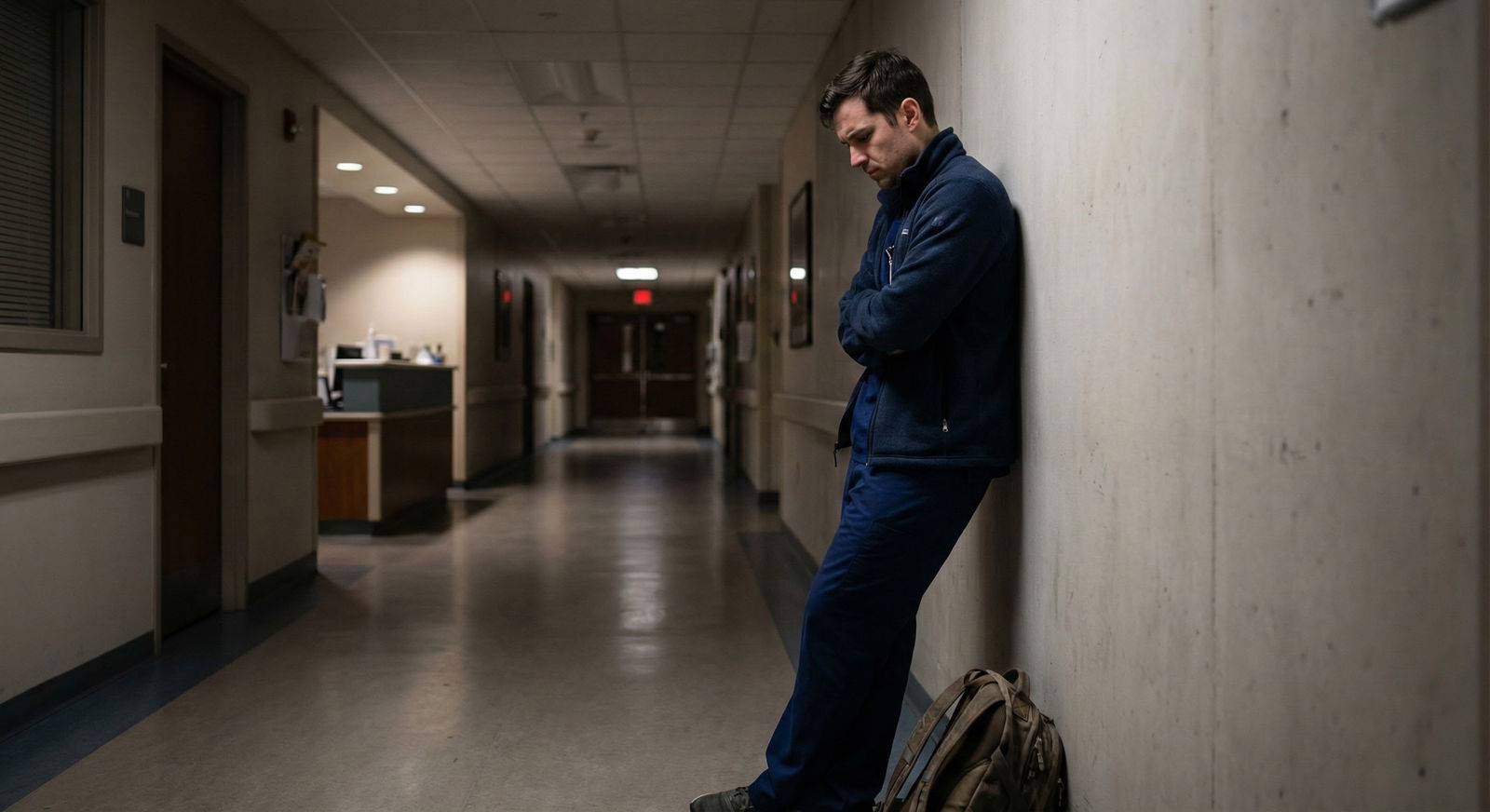
Surviving a heavy prelim year while trying to build a competitive residency application is not a “work-life balance” question. It is a systems problem. And systems problems get solved with structure, not hope.
You are not going to “find time.” You are going to make time by force—using a set of rules, habits, and boundaries that fit a brutal schedule.
Let me walk you through exactly how.
What a Preliminary Year Really Is (And Why It Feels So Bad)
A preliminary (prelim) year is a transitional, usually one-year internship, most commonly in:
- Internal Medicine (Prelim IM)
- General Surgery (Prelim Surgery)
- Transitional Year (TY)
You match into it knowing you still need a categorical position later (unless you already secured an advanced spot like radiology, anesthesia, derm, rad onc, etc.).
The core problem:
You are doing a full intern workload without the security of a long-term home program. At the same time, you must:
- Prepare for the next Match
- Build or finish research
- Get letters of recommendation
- Fix any academic/career red flags
- Maintain at least minimal sanity and health
And all of that while working:
- 60–80+ hours a week
- 6 days per week, with call and nights
- With unpredictable “bonus” disasters (codes, sick patients, endless pages)
Let’s be precise about what you are up against.
| Activity | Hours / Week (Typical) |
|---|---|
| Clinical work + notes | 55–70 |
| Call/night float | 5–15 |
| Commute | 3–7 |
| Basic life tasks | 7–10 |
| Sleep (best case) | 42–49 |
That leaves you maybe 5–10 usable hours per week. Total. For everything else.
So the strategy cannot be: “I’ll work on my application when I’m less busy.”
You will not be less busy. You must build your application inside the chaos, not around it.
Step 1: Get Ruthlessly Clear on Your Target and Timeline
If you treat “build a competitive application” as one giant project, it will die. You need a specific target and a backward calendar.
1. Choose the exact outcome you are aiming for
Examples:
- “Match into categorical Internal Medicine at a mid- to upper-tier academic program.”
- “Match into Anesthesiology after a prelim medicine year.”
- “Salvage from a SOAPed prelim spot into a categorical IM/FM/Peds position this cycle.”
Your target determines what matters most. The expectations for Derm vs Family Medicine are not remotely similar.
| Future Plan | Top Priorities in Prelim Year |
|---|---|
| Competitive advanced (Derm, Ortho, ENT) | Research, letters, networking, Step 2/3 strength |
| Mid-competitive (Anes, Rads, EM) | Strong clinical reputation, solid letters, some research |
| Core fields (IM, FM, Peds, Psych) | Clinical performance, letters, no new red flags |
2. Backward plan from the Match calendar
Rough realistic timeline during prelim year (for someone reapplying or applying again):
- March–April: Start research/mentorship, clarify specialty target
- May–June: Build CV, outline personal statement, identify letter writers
- July–August: ERAS work: experiences, PS draft, program list, requesting letters
- September: Submit ERAS (early), final letter requests, finish PS
- Oct–Jan: Interviews + ongoing clinical work
- Feb: Rank list and backup plans
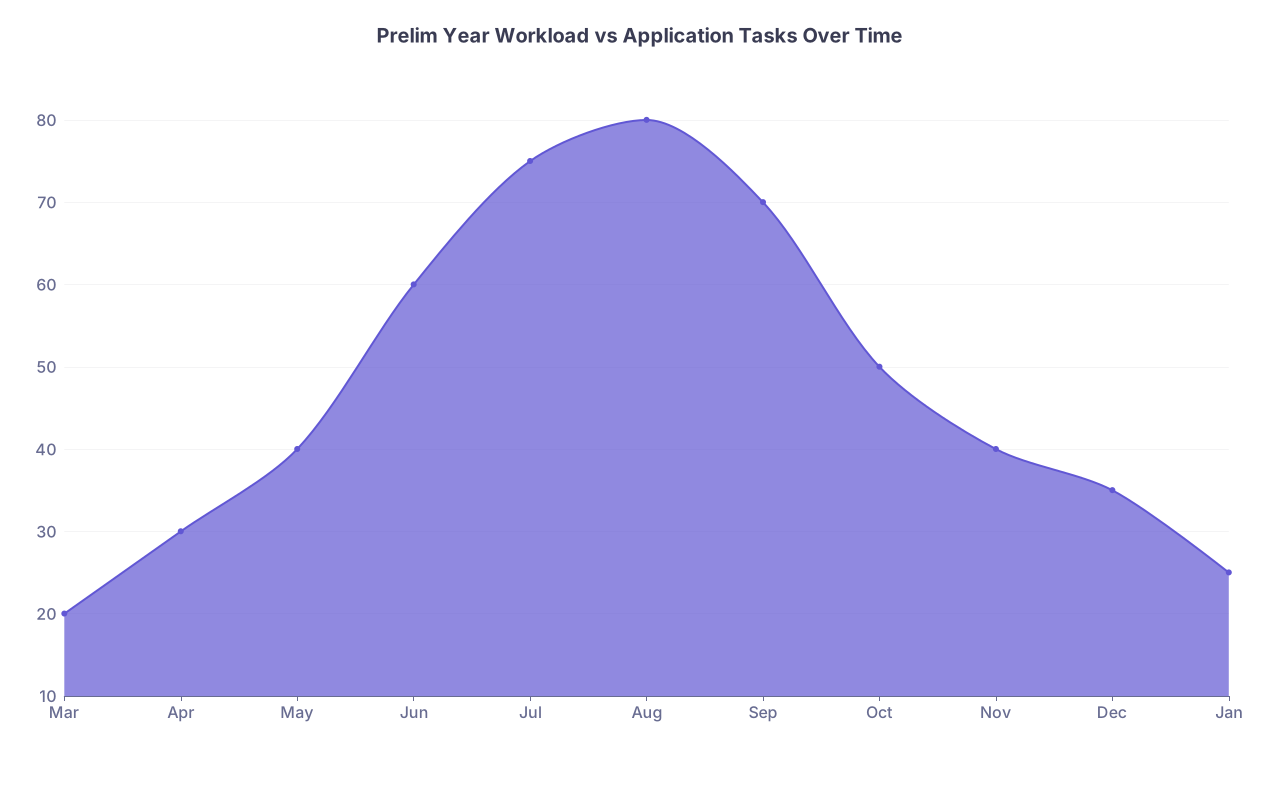
Now, align that with your hardest rotations.
| Category | Value |
|---|---|
| Mar | 20 |
| Apr | 30 |
| May | 40 |
| Jun | 60 |
| Jul | 75 |
| Aug | 80 |
| Sep | 70 |
| Oct | 50 |
| Nov | 40 |
| Dec | 35 |
| Jan | 25 |
Interpretation: as your clinical load peaks in the summer, you must front-load planning in spring and early summer, then shift to maintenance and execution.
Action today:
- Write your target in one sentence.
- Grab your rotation calendar.
- Mark 3 “lighter” months (relatively speaking). Those are your application build months.
Step 2: Build a Time-Defense System That Actually Works on Service
You do not need fancy productivity apps. You need a rigid micro-structure that works with pager chaos.
1. Use “micro-blocking,” not long study blocks
You will almost never get a free 4-hour chunk. You will often get 10–20 minutes. Use them.
Core rule: Every free 10–20 minutes already has a job assigned. You decide it the night before.
Create 3–4 categories:
- Admin/Application (emails, ERAS entries, PS edits)
- Research (data entry, reading, writing)
- Studying/Knowledge (UWorld blocks, review, reading)
- Recovery (short walk, power nap, food)
Each day, on your phone notes or a small index card, decide:
- Two 10–20 min “Admin/Application” slots
- One 10–20 min “Research” slot
- One 10–20 min “Study” slot
Examples of micro-tasks:
- Draft 3 bullet points for one ERAS experience
- Email 1 potential mentor or letter writer
- Edit one paragraph of your personal statement
- Do 4–6 UWorld questions and review just those
If you do that consistently, you are not “cramming” your application at 2 A.M. the week before ERAS opens.
2. Non-negotiable protected time each week
You need one 2–3 hour block per week that is sacred. That is the “deep work” zone.
Rules for that block:
- Not post-call
- Not night float day-sleep time
- Phone on Do Not Disturb, pager covered if possible for 60–90 min chunks
- Location away from TV / bed (hospital library, quiet café, office)
You may have to trade a small favor with a co-intern: “You cover call that Saturday morning, I cover the one next month.” Fine. Do it. But protect at least one serious work session per week.

| Step | Description |
|---|---|
| Step 1 | Clinical Schedule Posted |
| Step 2 | Mark 1 deep work block |
| Step 3 | Assign daily micro tasks |
| Step 4 | Execute micro tasks on service |
| Step 5 | Use deep work block for big items |
| Step 6 | Adjust plan for next week |
3. Hard boundaries you must accept
- You will not watch full seasons of anything.
- You will say no to many social events.
- Your “hobbies” may temporarily shrink to sleep, showers, and coffee.
This is not forever. But if you scatter your limited energy across distractions, your application will be mediocre. And mediocre applications from prelims get filtered out early.
Step 3: Turn Your Prelim Year into an Asset, Not a Liability
Program directors are not impressed by suffering. They are impressed when you turn suffering into evidence.
You want your prelim year to scream:
“Reliable. Coachable. Low-drama. Operates at a high level under pressure.”
1. Behaviors that convert into strong letters
You do not control your attending’s generosity. You do control what they see.
On each rotation, commit to:
- Be 5–10 minutes early to everything (rounds, sign-out, conferences).
- Own 1–2 tasks without being asked: follow-up labs, update families, pre-round thoroughness.
- Communicate clearly: “I will call nephrology, place the order, and update the note by noon.”
- Proactively close loops: “We stopped the heparin, repeat H/H is stable, platelets improved.”
You want attendings thinking, “If I had a categorical spot, I would keep this person.”
2. Ask for letters the smart way
Do not wait until the last week of a rotation and mumble, “Um, could you maybe write a letter?”
Instead, around the mid-point of a rotation:
- Ask for performance feedback first:
- “I am planning to apply to categorical IM next cycle. Are there areas I should improve on this month?”
- If feedback is not scathing and they seem positive, then at the end:
- “Based on how we have worked together this month, do you feel you could write a strong letter of recommendation for my application?”
If they hesitate, pivot and thank them. Do not push. You want strong, not “generic OK.”
When they agree:
- Send your CV + brief bullet list of cases/strengths they saw
- Remind them of specific projects or patients where you performed well
- Give them the ERAS letter submission link early
| Category | Value |
|---|---|
| 0 Strong | 30 |
| 1 Strong | 45 |
| 2 Strong | 65 |
| 3+ Strong | 80 |
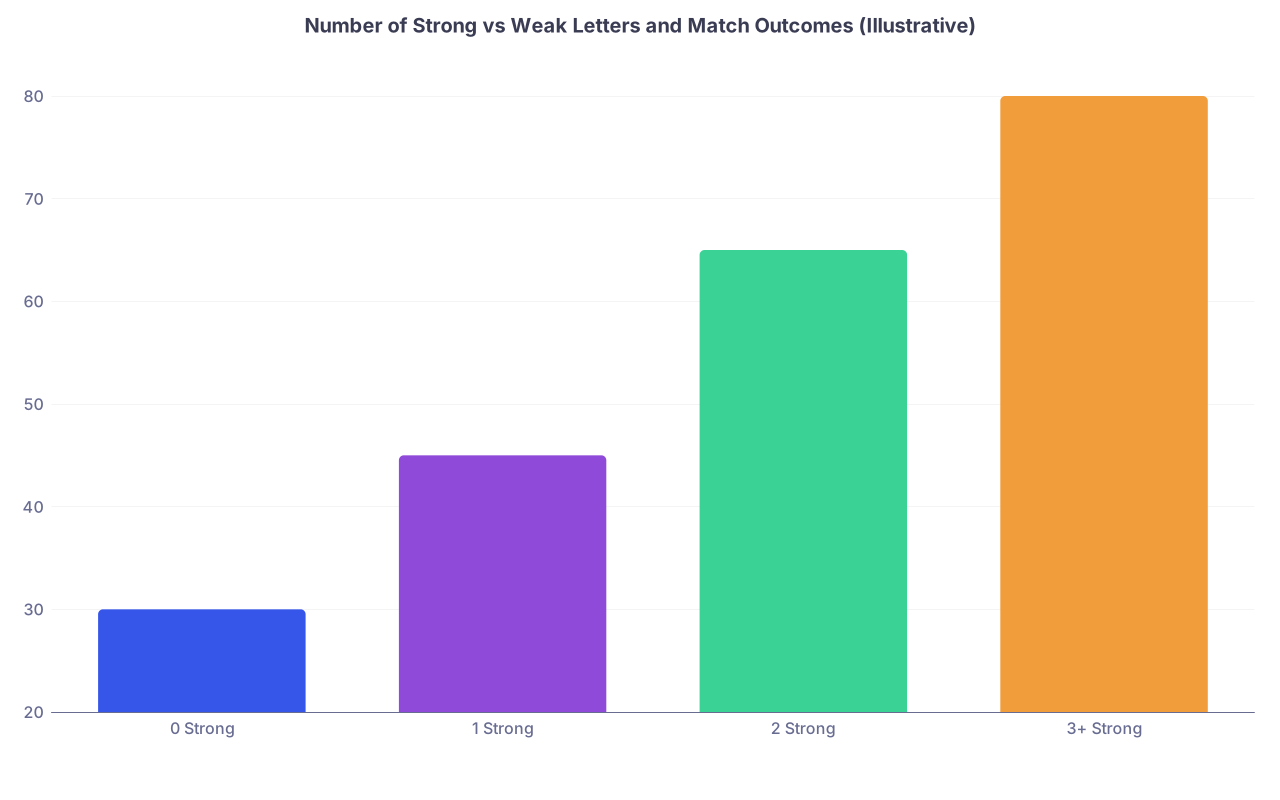
More strong letters → higher match success. Obvious, but many prelims never ask early enough.
3. Avoid turning your prelim into a red-flag generator
Things that seriously hurt you:
- Repeated lateness documented
- Unprofessional notes in the chart (ranting, sarcasm, blame)
- Conflicts with nursing or ancillary staff
- “Needs close supervision” language in evaluations
Set personal rules:
- Never argue in the chart. Ever.
- When you are angry, delay sending that message or email.
- When in doubt, over-communicate and apologize once rather than justify later.
Your number one job this year: do not create new problems. Your second job: build your application.
Step 4: Build Research and CV Strength Without Burning Out
Here is a reality that frustrates people:
You are unlikely to start and finish a large, first-author, original research paper from scratch in a heavy prelim year. Not impossible. Just rare and inefficient.
Aim for fast, focused, low-friction wins.
1. Choose projects that match your bandwidth
Look for:
- Case reports (especially if your program encourages them)
- Retrospective chart reviews where data is already extracted or partially done
- Review articles or book chapters with a clear outline provided
- Quality improvement (QI) projects with defined endpoints
Avoid:
- Starting a prospective study from zero
- Overly complex database projects with no mentor leading it
- Anything where the attending says, “We will figure out the details later”
You want to join moving trains, not build the train yard.
2. Script to approach potential mentors
You do not need to overcomplicate this. A short, direct email works:
Subject: Prelim resident interested in [specialty] research
Dear Dr [Name],
I am a preliminary [medicine/surgery/TY] resident on [service]. I am planning to apply for [specialty] this cycle/next cycle and am looking for 1–2 manageable projects I can contribute to during this year.I have [brief research background OR minimal prior research but strong interest and reliability]. I can realistically commit [2–4 hours per week] and prefer projects where I can help with [data collection, chart review, writing, etc.].
Would you be open to a brief 15-minute meeting to see if there might be a good fit?
Best,
[Name], PGY-1 Prelim [Dept]
Send that to 3–5 people. Not 1. You are matching yourself into a mentor who actually uses residents.
3. Integrate research into your limited time
Use the same micro-block system:
- Weekdays: 1 micro-block for reading / writing (20 minutes)
- Weekends: 1–2 hours for data entry or actual writing
Expectations:
- Time from project start to submission may be 6–12 months
- You might get an abstract first, paper later—still useful
- Even being added as a co-author on something in progress is better than nothing
Your CV line does not need to be “Nature paper.” It needs to say: “I engage with scholarship in this field.”
Step 5: Build Your ERAS Application While On Service (Not After)
If you leave ERAS to “when I have a free weekend,” it will be sloppy. You must treat it like a longitudinal clinic patient: see it a little, often.
1. Break ERAS into bite-sized units
Main elements:
- Personal statement
- Experiences (work, research, leadership, volunteering)
- Publications/posters/presentations
- Program list
- Letters of recommendation
Take 2–3 weeks per category, micro-tasking your way through.
Example micro-tasks:
- Day 1: List 10 experiences in a note app
- Day 2: Turn 1 experience into 3 bullet points (what you did, what changed, what you learned)
- Day 3: Clean up 2 experiences in ERAS itself
- Day 4: Draft 1 paragraph of your personal statement
- Day 5: Search and list 10–15 programs as “likely targets”
2. Personal statement: one clear story, not a masterpiece
You are tired. You do not need literature. You need clarity.
Basic structure that works:
- A brief opening that grounds your interest (1–2 sentences, no childhood clichés)
- A 2–3 paragraph middle: concrete experiences, especially from prelim year, that show how you work and think
- A closing paragraph: what you want in a program and what you bring
Use your prelim year as proof of resilience and growth, not as a pity story.
Bad:
“I had a very difficult prelim year, with long hours and constant stress, but I learned a lot.”
Better:
“During my preliminary year in Internal Medicine, I routinely managed high-acuity patients on night float. I learned to prioritize quickly, communicate clearly under pressure, and take ownership of complex care plans. That experience reinforced my commitment to [specialty] and sharpened the habits I will bring to residency: reliability, follow-through, and team-centered care.”
3. Build your program list logically
Use 3 tiers:
- Reach
- Solid
- Safety (yes, even for prelim survivors you need these)
| Tier | Number of Programs | Description |
|---|---|---|
| Reach | 5–10 | Top academic, competitive cities |
| Solid | 15–25 | Mid-tier academic + strong community |
| Safety | 10–15 | Community, less desirable location |
You are not “above” safety programs. The goal is to stop doing prelim after this.
Step 6: Use Your Prelim Network for Career Leverage
Prelim years can feel like you are a guest in someone else’s house. Use that house.
1. Identify 3–5 key people
These should be:
- 1–2 attendings who like working with you
- 1 program director or associate PD
- 1 senior resident in your target specialty
- 1 fellowship director if relevant to your specialty
You are not trying to become everyone’s favorite intern. You are trying to build a tight circle of people who will:
- Write letters
- Send emails for you
- Mention your name to colleagues
2. Ask for specific advocacy, not vague support
Do not say: “Can you help me with my career?”
Do say:
- “Would you be comfortable emailing Dr [X] at [other program] to let them know I am applying and that you have worked with me?”
- “If you hear of open categorical positions in [specialty], could I email you so you could share my CV with any contacts?”
Busy people respond better to small, concrete asks.
Step 7: Protect the Minimum Health You Need to Function
No, you are not going to live your “optimized wellness routine.” You are trying to avoid collapse.
Set minimum standards:
- Sleep: Aim for 6 hours average. Non-negotiable bed-time whenever not on call.
- Food: Have at least one predictable, semi-healthy meal built in (e.g., same simple breakfast daily, prepped snacks).
- Movement: 10–15 minutes of walking or light stretching on most days, not “gym or nothing.”
The mistake I see: interns delay all self-care until a mythical “off week” that never arrives. Then burnout hits, and both clinical performance and application quality nosedive.
Tie simple habits to existing routines:
- After sign-out → 10-minute walk before sitting down
- Before bed → 5-minute stretch while phone charges in another room
- On pre-call morning → pack 2 snacks with actual protein
You are not training for a marathon. You are preserving cognitive function.
Step 8: Contingency Planning If Things Go Sideways
Sometimes the prelim year exposes more problems:
- Failed Step 3
- Poor evaluations from a key rotation
- No interviews or very few
- Personal crisis or health issues
You need a backup strategy, not just hope.
1. If your application is clearly not competitive this year
You may need to:
- Extend research for an additional year
- Seek a second prelim or a categorical switch into a less competitive specialty
- Focus on passing Step 3 and removing academic red flags
Talk early with:
- Your prelim PD
- Someone honest in your target specialty
- A mentor outside your institution if your home program is unsupportive
Collect real feedback, not platitudes.
2. If you are considering switching specialties
Use your prelim rotations as test cases:
- Notice where you feel less drained (e.g., ICU vs clinic vs ED)
- Pay attention to which attendings you naturally respect
- Ask seniors in those fields bluntly: “If you had my Step scores and prelim background, what would you do?”
Then make a clear call by mid-year. Do not drift undecided until August.
Pulling It All Together: A Weekly Operating Blueprint
Here is what a realistic week might look like on a heavy prelim rotation, assuming 70 hours of work.

Before the week starts (Sunday or post-call):
- Review your schedule
- Pick:
- One 2–3 hour deep work block (e.g., Sunday afternoon or a lighter post-call day)
- Daily 3–4 micro-block tasks for Mon–Fri
Example micro-plan for one week:
Monday:
- Micro-block 1 (midday lull): Edit 2 ERAS experience entries
- Micro-block 2 (evening): Do 6 UWorld questions, review briefly
Tuesday:
- Micro-block 1: Email 1 potential letter writer / mentor
- Micro-block 2: Write 1 paragraph in personal statement draft
Wednesday:
- Micro-block 1: Read 1 article for research project
- Micro-block 2: Update your program list with 3 new programs
Thursday:
- Micro-block 1: Work on data entry for 20 minutes
- Micro-block 2: Tweak 1 PS paragraph based on feedback
Friday:
- Micro-block 1: Check on letter submission status in ERAS
- Micro-block 2: Short walk + decompress (intentionally)
Weekend deep work block (2–3 hours):
- Finish a full draft of personal statement OR
- Complete a section of the research manuscript OR
- Clean and finalize all ERAS experiences
This is how heavy prelims actually build applications: in small, boring, consistent chunks. Not in heroic all-nighters.

| Step | Description |
|---|---|
| Step 1 | Set Target Specialty |
| Step 2 | Map Year Timeline |
| Step 3 | Build Weekly Structure |
| Step 4 | Daily Micro Tasks |
| Step 5 | Progress on Application |
| Step 6 | Strong Letters and Reputation |
| Step 7 | Competitive Match Application |
Your Next Concrete Step (Today)
Do this now, not “when things calm down”:
- Open your rotation schedule and calendar.
- Mark one 2–3 hour block in the next 7 days that you will protect for application work.
- On a note app, write down 5 micro-tasks you can complete this week toward your application (ERAS entries, PS paragraph, 1 email, etc.).
Then treat those blocks like a consult on a crashing patient—non-optional.
Your prelim year is hard. That is not the question. The question is whether you will let the chaos dictate your future, or you will force structure onto it and quietly build an application that gets you out.
Start by defending that one 2–3 hour block. The rest of the system can grow from there.