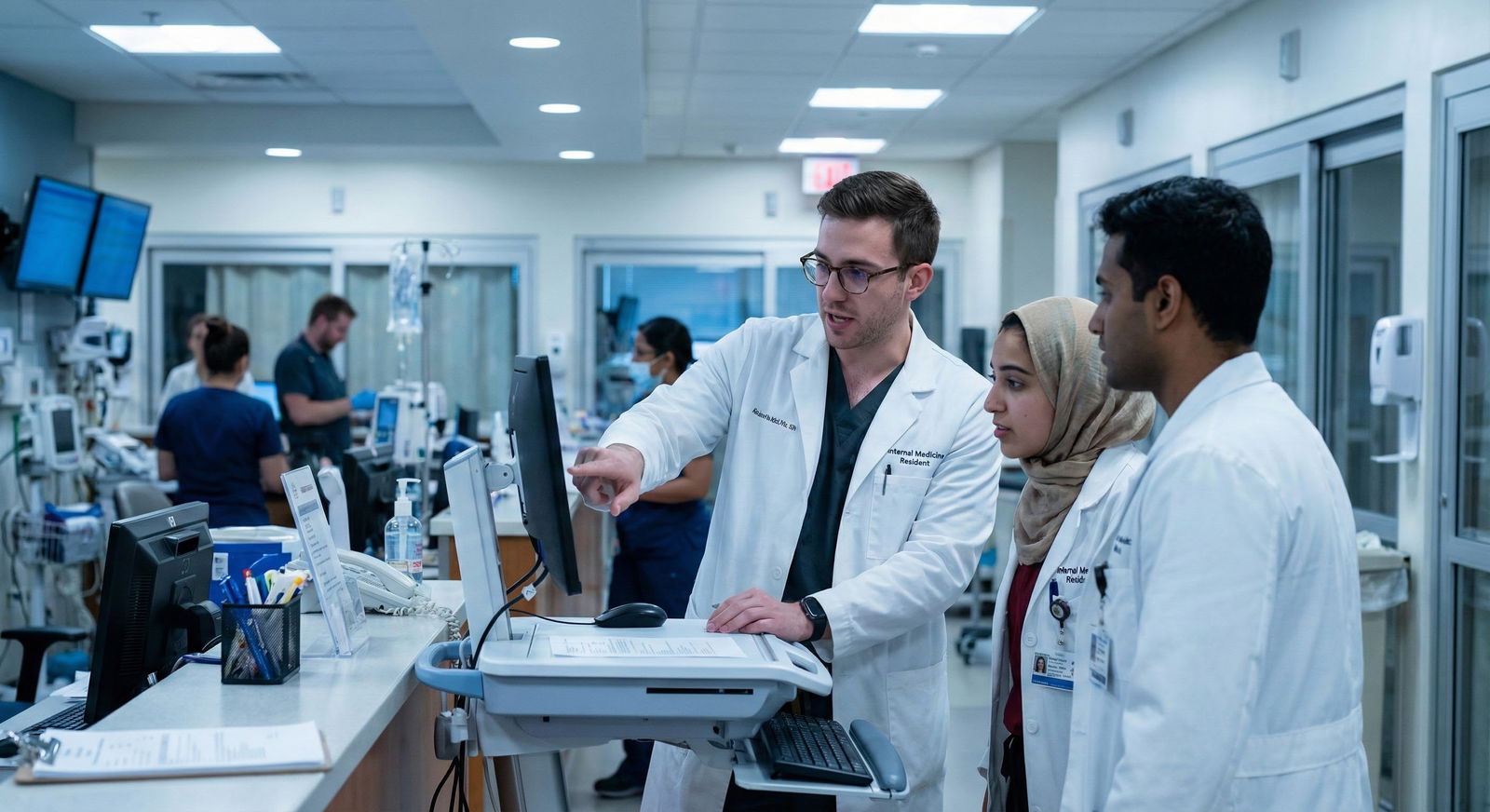
The dirty secret about prelim years is this: some programs see you as cheap, skilled labor they do not have to invest in—and some see you as a one‑year audition they can absolutely win or lose.
If you do not understand which type you’re walking into, you’re gambling your entire categorical future.
Let me lay out what actually happens behind those closed‑door meetings, when program directors, chiefs, and faculty talk about prelims. Because what you see on interview day—the warm smiles, the “you’ll be part of our family”—is not how they talk once the door shuts and the coffee is out.
First: What You Are to Them as a Prelim
You’re not just “a resident who’s only here for a year.” On the inside, prelims fall into a few mental buckets for faculty and leadership:
- Extra hands to keep the wards from collapsing.
- Potential future categorical residents to poach or “convert.”
- Political currency with advanced programs (neuro, anesthesia, derm, ophtho, rads).
- Administrative headache that leaves in 12 months and then needs letters and favors.
Programs that love prelims live mostly in bucket #2 and #3. Programs that barely tolerate prelims are locked into #1 and #4.
I’ve literally heard an associate PD at a big academic IM program say during recruitment planning:
“Look, the prelims keep our caps legal. Just find people who can work. We’re not going to put energy into folks who are gone in July.”
And at a different place, same specialty, different vibe:
“If we don’t recruit strong prelims, we’re going to miss the chance to grab the ones who decide they hate anesthesia and want to stay in medicine.”
Same job title. Completely different expectations.
Why Some Programs Genuinely Love Prelim Residents
The programs that actually like prelim residents usually share a few characteristics. None of this is written on the website, but you’ll hear it in the hallways and see it in how they schedule you.
1. They See You as a Pipeline, Not a Placeholder
Programs that love prelims quietly treat you as a recruiting pool.
They know every year some residents in anesthesia, radiology, neurology, or ophtho suddenly realize:
“I miss actual patients. I made a mistake. I want categorical IM or surgery.”
When that happens, who has first dibs on that resident?
The prelim program they’ve already spent a year with.
These programs actively track prelims. I’ve been in meetings where the PD asked the chiefs in October:
“Of our prelims, who would you keep if we had a spot open next July?”
Not “are any prelims catastrophic?”
The question was: “Which ones are worth a categorical position if medicine or surgery becomes their plan B… or plan A again?”
Signs you’re walking into one of these programs:
- They explicitly tell you about prior prelims who converted into categorical spots.
- They know where their last 3–5 classes of prelims ended up, by name and specialty.
- Chiefs and attendings can actually recall “that prelim who stayed on as a PGY-2.”
When a program is proud of its prelims, they talk about them the way they talk about chiefs and star seniors.
2. They Rely on Prelims to Maintain Relationships With Advanced Specialties
There’s a quiet politics between IM/surgery prelim programs and advanced specialties.
Anesthesia, neuro, radiology, ophtho, derm—they all need you to survive that first year, not burn out, and not embarrass their department. In turn, your prelim program wants those advanced programs to keep ranking their prelim track highly.
So at certain institutions, prelims are basically diplomatic envoys. If the IM prelim is miserable, the anesthesia PD hears about it. If the prelims are well trained and not destroyed, the advanced programs keep sending their matched intern class there.
At one large academic center, the IM PD openly said in our leadership meeting:
“We cannot screw over the anesthesia intern class. If they have a bad year with us, the anesthesiology PD will send them somewhere else. That’s 8 funded spots we will lose.”
Do you know what happened next? That program started:
- Sending prelims to the stronger teaching teams instead of dumping them on the worst rotations.
- Including prelims in noon conference and simulation days.
- Making sure someone from IM leadership checked in with the anesthesia/neurology PDs about how their interns were doing.
That’s what a “prelim-friendly” program looks like on the inside: leadership knows you’re valuable politically, not just clinically.
3. They Invest in Teaching You Even Though You’re Leaving
Here’s how you can tell, very quickly, whether a program actually cares:
Look at who gets excluded from the good stuff.
At programs that love prelims, you see prelims:
- On ICU rotations with high-yield procedures and real autonomy.
- In continuity clinic that actually functions as teaching time (even if you won’t stay).
- Included in simulation, code training, ultrasound workshops, QI projects.
At programs that barely tolerate prelims, you’re deliberately steered away from all of those “high-investment” experiences. Why? Because those are viewed as resources for categorical residents only.
I remember a chief at a mid-tier community program being told by her PD:
“Try not to put prelims on MICU unless we have to. It’s better to let categoricals get the procedures. The prelims are gone in 10 months.”
That’s the mentality: skills are a finite resource; you’re not worth the investment.
In a prelim-friendly program, that sentence does not get said out loud. The ICU director might even specifically request prelims, because they know advanced fields want strong general medicine or surgery training, not clipboard holders.
4. They Respect Your Future Specialty
This one is huge and rarely discussed.
Good prelim programs understand that your future advanced specialty actually cares about how you come out of intern year. They’re not just checking boxes. Anesthesia wants people comfortable managing sick patients. Rads wants people who can work up a patient before imaging. Neuro wants people who can triage and not panic at 3am with a crashing stroke code.
When a prelim program is proud of what they’re producing, you’ll hear commentary like:
“Our prelims hit PGY-2 anesthesia and they’re the ones their classmates go to when someone on the floor is crumping.”
Or:
“The radiology PD emailed to say our prelim was the only one who could synthesize a real H&P without three hours of flailing.”
Programs that love prelims take that as a point of pride. They’ll use that story in recruitment.
And they will not hesitate to pick up the phone and call your future PD if there’s a serious problem, because the relationship between programs matters more than protecting a single intern’s ego.
That feedback loop pushes them to train you well.
, Reputation with other PDs](https://cdn.residencyadvisor.com/images/articles_svg/chart-why-programs-invest-in-prelim-residents-1584.svg "Why Programs Invest in Prelim Residents")
| Category | Value |
|---|---|
| Pipeline to categorical | 80 |
| Maintain advanced ties | 70 |
| [Improve service coverage](https://residencyadvisor.com/resources/preliminary-year-vs-categorical/how-program-leadership-uses-preliminary-years-to-fill-service-needs) | 60 |
| Reputation with other PDs | 65 |
Why Other Programs Barely Tolerate Prelims
Now the fun part. The places that see you as a body to fill a schedule slot and disappear.
You won’t find a section labeled “We don’t care about prelims” on their website. But you’ll feel it within two weeks of starting.
1. You Are a Service Fraction, Not a Trainee
At these places, the scheduling meeting sounds like this:
“How many interns do I need to cover nights, ICU, and the busy floor rotations?”
“Okay, we’re short categoricals by three.”
“Fine, we’ll just add three prelims.”
You’re penciled into the Excel sheet to fix a coverage hole. End of thought.
No one asks:
“What does a reasonable prelim curriculum look like?”
“What will neurology or anesthesia think of this training?”
“Are we making these folks better doctors in a year?”
They just need bodies.
And that mentality leaks everywhere:
- You get backloaded with heavy rotations from March to June because categoricals are “studying for boards.”
- You’re on more nights and cross-cover than the average categorical resident.
- Teaching is “check the box” only. People might throw a random chalk talk in between pages, but no one tracks whether prelims are actually learning.
I’ve seen call schedules where prelims had 20–25% more nights than categoricals. Not subtle. When asked why, a chief shrug-laughed and said, “Well, they’re gone in a year.”
That’s barely-tolerating energy.
2. You Are Systematically Excluded From Opportunities
Watch for the phrase: “Since you’re only here for a year…”
That sentence is the gateway to being denied anything that looks like professional development:
- Research projects? “We usually prioritize categoricals.”
- Committee roles? “Those are typically for longer-term residents.”
- Leadership roles as interns? “We’ll have the categoricals be the go-tos.”
Part of that is understandable. Nobody is making a prelim intern a chief. But when you start noticing that prelims:
- Don’t get dedicated elective time.
- Are never asked to present at M&M or noon conference.
- Aren’t invited to mentorship dinners, fellowship info sessions, or departmental retreats.
That tells you exactly how much the program expects to get from you—or give to you.
One of the most revealing lines I heard from a PD once was:
“The prelims are the advanced programs’ problem after June.”
Translation: once they finish your ACGME requirements, your narrative, growth, burnout, and future are someone else’s issue.
3. Faculty Don’t Learn Your Names
This one sounds petty. It isn’t.
In faculty meetings at healthy programs, you’ll hear:
“Emily, one of our prelims, is phenomenal. She’s going to do neurology; we need to write her a letter.”
or
“Rahul, our anesthesia prelim, needs better opportunities to do procedures. Let’s get him more intensive care time.”
In the “we barely tolerate you” programs, faculty refer to you as:
- “One of the prelims.”
- “The anesthesia intern.”
- “That ophtho guy.”
Nobody’s tracking your story. Nobody’s thinking about where you came from or where you’re going.
You’re transient traffic.
You can pick this up on interview day sometimes. If you ask a faculty member, “What are your prelims doing now?” and they answer vaguely, or they can’t name more than one, that’s a warning sign.
4. Letters and Advocacy Are Afterthoughts
Prelim-friendly programs will have a plan for your letters and evaluations from early on. They know you’ll need:
- Strong narrative comments for your advanced program files.
- Honest but supportive feedback if you’re applying or reapplying.
- PD or chair letters that quantify your performance among peers.
Barely-tolerating programs do this in June, rushed, annoyed:
“Do we have to write something for this prelim?”
“Just say he was fine and met expectations.”
That’s death by faint praise.
I have seen prelims sabotaged by this. Objectively solid, worked hard, got generic, lukewarm letters because the program never really mentally adopted them. Meanwhile, their categorical co-interns got specific, glowing letters with concrete examples.
The Real Drivers Behind Love vs Tolerance
So why such a stark split? It usually comes down to three things that have nothing to do with your personal merit.
A. Funding and Slot Structure
Programs that love prelims often have:
- Explicitly funded prelim positions tied to advanced specialties.
- Stable or growing categorical classes so they aren’t panicking about service coverage.
- Flexibility to convert a prelim to categorical if something opens.
Programs that barely tolerate prelims tend to:
- Use prelim spots as overflow staffing for a chronically understaffed service.
- Have no intention or ability to convert anyone into categorical.
- See prelim funding as precarious, subject to GME cuts or shifting hospital politics.
If the hospital CFO sees you as “cheap, replaceable coverage,” the culture usually trickles down.
B. Relationship With Advanced Programs
If anesthesia, neuro, rads, ophtho, or derm are influential at that hospital, prelims suddenly matter more.
When the anesthesiology PD sits on the GME committee and says, “We’re not sending our matched interns through your IM prelim anymore if they’re miserable,” people notice.
If the advanced programs are weak, tiny, or politically isolated, your prelim experience is much easier to ignore.
C. Leadership Philosophy
This one’s simple: some PDs believe training any physician who walks through their door is their responsibility. Categorical, prelim, transitional—doesn’t matter.
Others think exclusively in terms of “My residents” meaning “my categoricals.” Everyone else is peripheral.
I’ve watched a chair turn to a PD and say:
“We’re judged by every doctor we train, not just the ones who stay three years.”
That chair ran a prelim-friendly department.
I’ve also watched someone shrug and say:
“If the rads intern is unhappy, they’ll be gone in a year. We have bigger problems.”
That was a barely-tolerating place.
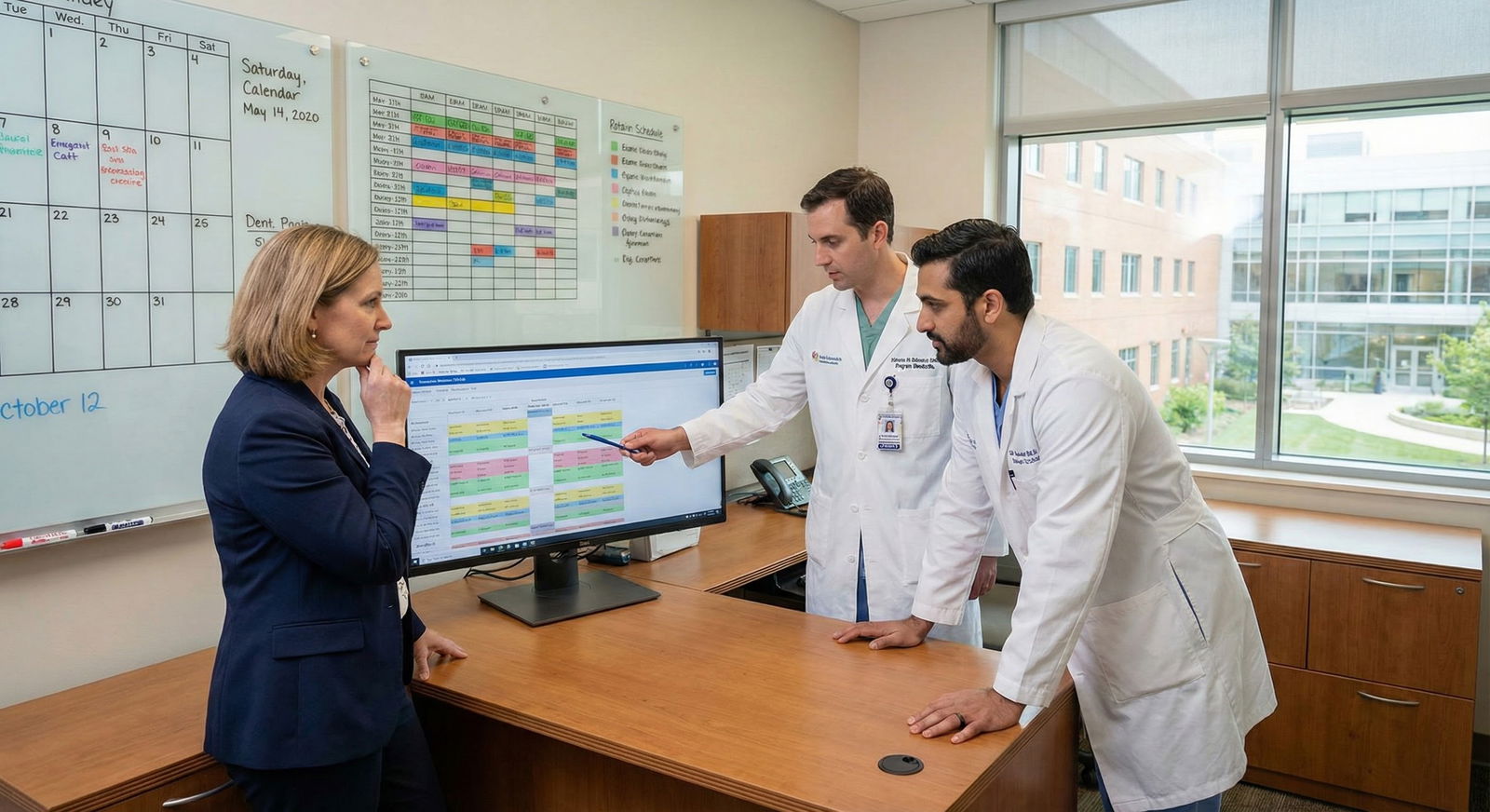
How You Can Tell Which Type You’re Dealing With—Before You Match
You’re not powerless here. There are clear tells if you know what to ask and what to watch.
Listen to How They Talk About Past Prelims
Ask directly: “What have your recent prelims gone on to do?”
A strong program will answer:
- With names.
- With concrete destinations.
- With a trace of pride.
“We had Sofia who went into derm here, Jason who started in anesthesia but stayed in medicine with us, and two who matched incredible neurology programs after doing research with our stroke team.”
A weak or indifferent program will answer generically:
“Oh, they all go to their advanced fields, I think. We don’t really track them in detail.”
Translation: you were never on their radar.
Ask Prelims (Not Just Categoricals) How They’re Treated
If you only talk to categorical residents on interview day, you’re seeing the curated version of the program.
You must talk to current prelims or recent grads of the prelim track. And you have to ask questions that force specifics, not polite noises:
- “How many truly off days did you get on ICU?”
- “How often are prelims put on the least desirable rotations?”
- “Did anyone sit down with you about letters and your advanced program’s expectations?”
- “If you struggled on a rotation, did anyone invest in helping you improve, or did they just move on because you were a prelim?”
If a prelim says, “Honestly, we work a ton but they train us well,” that’s not a red flag. Hard work with good training is fine.
The red flag is: “You get forgotten. You’re just here.”
Read the Schedule Like an Insider
This is where people miss the truth because they don’t know how to interpret the grid.
Ask for a sample intern schedule that includes prelims.
Then look for:
- How many ICU months do prelims get vs categoricals?
- Are prelims shouldering disproportionate nights and cross-cover rotations?
- Do prelims get any elective time that isn’t pure scut-fest?
If the prelim column is just: Wards, Wards, Nights, ICU, Wards, Nights, Wards, with no meaningful variety or electives, that program is not investing in your development.
| Feature | Prelim-Friendly Program | Prelim-Hostile Program |
|---|---|---|
| Prelim role in meetings | Discussed by name, tracked | Barely mentioned |
| ICU/procedures | Shared with categoricals | Restricted or minimized |
| Nights/coverage burden | Roughly balanced | Heavier for prelims |
| Letters and advocacy | Planned early, specific | Last-minute, generic |
| Relationship with advanced PDs | Active, collaborative | Minimal, transactional |
The Hidden Upside: How to Exploit a Program That Loves Prelims
If you land at one of the good ones, you can do more than just survive. You can leverage that year hard.
Here’s what insiders actually watch for:
- Do you show up as strong or stronger than the average categorical intern?
- Do you own your patients on the wards instead of acting like a visitor?
- Do you respond to feedback quickly, or do you coast because “it’s just a prelim year”?
- Do you show genuine curiosity about medicine or surgery, even if you’re headed to rads or ophtho?
I’ve seen prelims walk into a program “just planning to do their time,” then fall in love with that department, get noticed, and grab categorical or fellowship‑track spots simply because they outperformed expectations.
At a large IM program I know, two prelims in a five‑year span got:
- Converted to categorical IM.
- Later matched competitive GI fellowships from that same institution.
Both started as “just prelims.”
What did they do differently?
- They acted like they were already part of the categorical class.
- They asked the chiefs straight up: “If a spot opens, what would you need to see from me?”
- They made it very easy for the PD to advocate for them in front of the GME committee.
Programs that love prelims are looking for reasons to keep the best of you. They won’t always have a slot, but when they do, they remember the ones who performed like owners, not renters.

| Step | Description |
|---|---|
| Step 1 | Start Prelim Year |
| Step 2 | Included in teaching and ICU |
| Step 3 | Heavy service load |
| Step 4 | Strong evals and letters |
| Step 5 | Generic evals |
| Step 6 | Respected by advanced PD |
| Step 7 | Forgettable to advanced PD |
| Step 8 | Better fellowship or categorical options |
| Step 9 | Limited leverage moving forward |
| Step 10 | Program culture |
Bottom Line: What Really Matters for You
Strip away the glossy brochures and “we value all our residents” speeches. Here’s the real calculus behind prelim love vs toleration:
Programs that love prelims see you as part of their reputation and pipeline, not just a patch for call coverage. They know where you came from and where you’re going—and want to influence that.
Programs that barely tolerate prelims structure your year around their staffing gaps, not your development. You’ll feel it in your rotations, your nights, your lack of advocacy, and the silence when it’s time for big letters.
Your job is to identify which camp a program falls into before you sign. Talk to current prelims, study the schedule, and ask how leadership tracks their prelims’ long‑term outcomes. If they cannot answer clearly, they probably do not care.
Pick the place that treats you like a one‑year investment, not a one‑year inconvenience. Your entire PGY‑2 life will feel the difference.