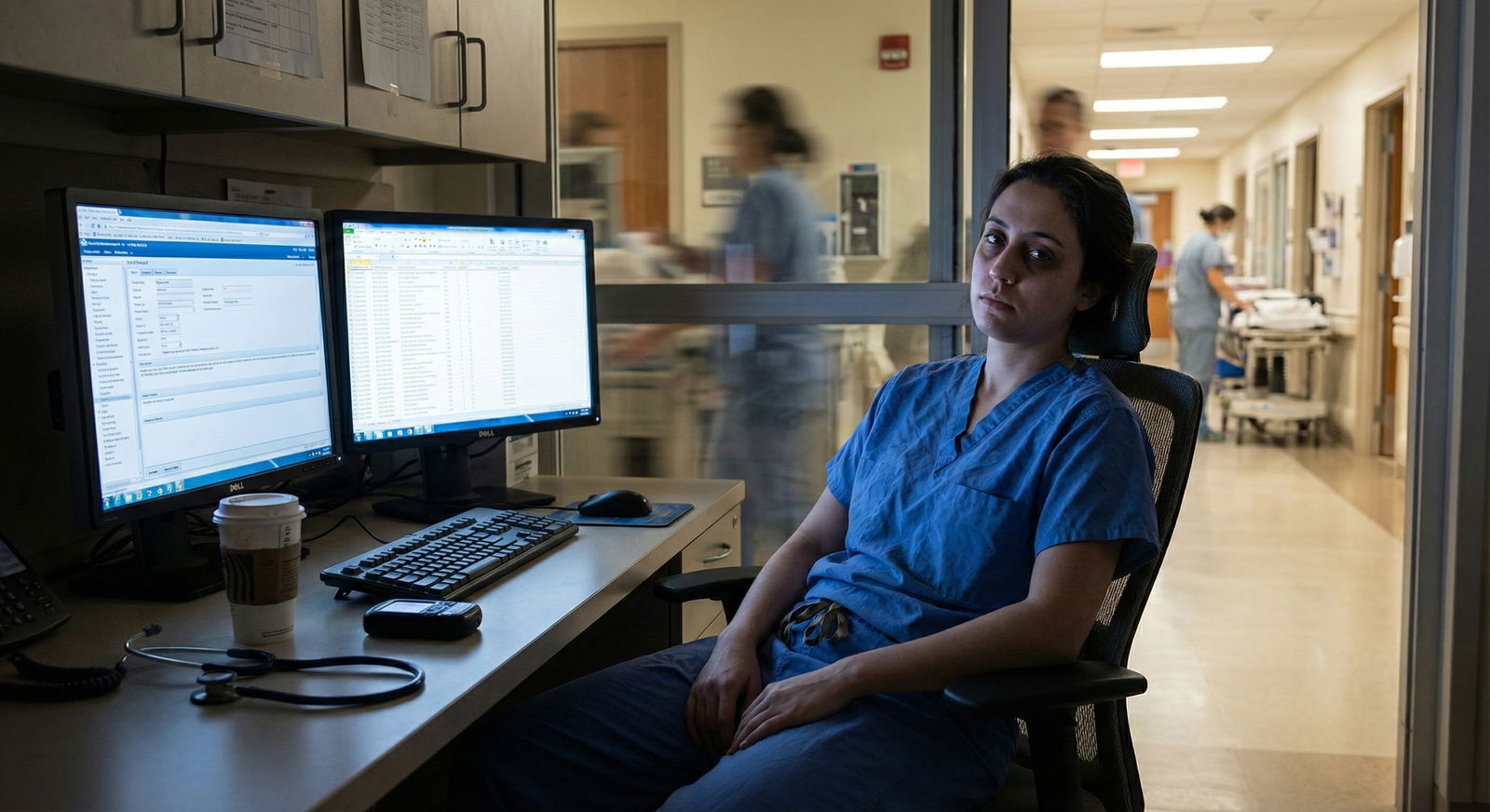
Most applicants are lying to themselves about prelim call. Not intentionally. But they massively underestimate it, then pay for that mistake in exhaustion, burnout, and a miserable PGY-1.
If you’re applying to a preliminary year and you’re not ruthlessly dissecting the call schedule, you’re walking into a trap with your eyes half-closed.
Let me walk you through the exact ways people misjudge prelim workload and how to avoid wrecking your intern year before it even starts.
The Core Lie: “It’s Just One Year, I’ll Survive”
This is the first, and biggest, mistake.
Applicants treat the preliminary year as:
- A hurdle
- A formality
- Something to “get through” before the “real” residency
So they tell themselves:
- “I can do anything for a year.”
- “All prelims are rough—it won’t matter where.”
- “I just need an intern year for my advanced spot; I’ll be too busy for call details.”
That’s how you end up:
- On q3–q4 in-house call on a busy medicine service
- Admitting 10–15 patients a night
- Doing cross-cover on 60+ patients with one senior
- Still responsible for the same documentation and follow-up as categorical interns
And here’s the part people forget: your advanced program does not care that you destroyed yourself during prelim. They still expect you to show up as a functional PGY-2.
What a “Bad Fit” Prelim Call Year Can Actually Do
You’re not just “tired.”
You’re:
- Learning less in your intended specialty because you’re cognitively fried
- Starting PGY-2 with resentment and dread instead of excitement
- Burning bridges with co-residents because you’re stretched too thin to be reliable
- Cutting corners in patient care because you’re trying to survive, not excel
The mistake is thinking: “Any prelim will do.”
The truth: The wrong prelim call burden can poison your entire residency trajectory.
The Two Programs You’re Really Matching Into
You’re not applying to “just a prelim.” You’re applying to:
- Your advanced program (radiology, anesthesia, derm, ophtho, rad onc, neuro, etc.)
- Your preliminary year, which will dominate your life for 12 straight months
And too many applicants behave like #1 is the “real” choice and #2 is background noise.
Let me be blunt:
Your day-to-day happiness in the next 12 months will be dictated almost entirely by #2.
Here’s how people screw this up:
- Ranking prelims they barely researched
- Prioritizing “name brand hospitals” over survivable schedules
- Ignoring how many prelims wash out, transfer, or quietly hate their lives there
- Assuming “medicine prelim = same as TY = same as cush transitional” (they’re not)
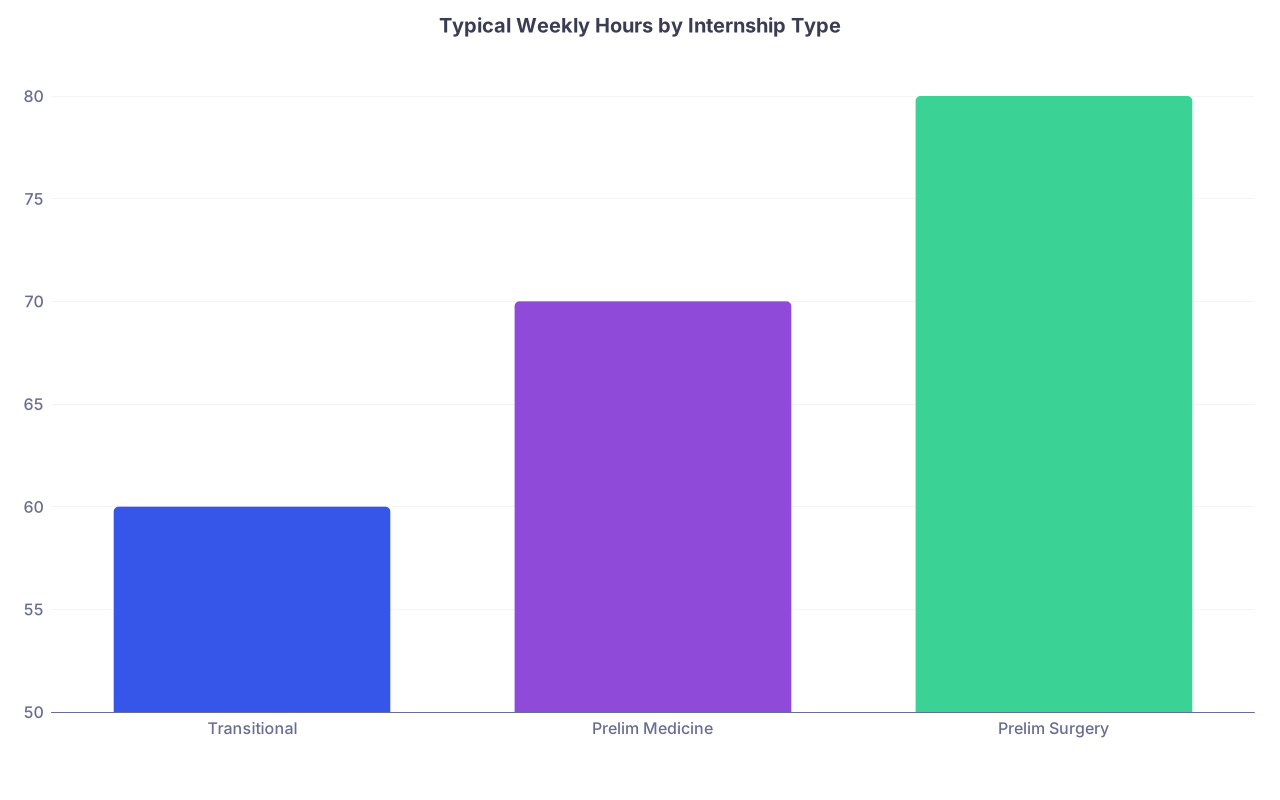
| Category | Value |
|---|---|
| Transitional | 60 |
| Prelim Medicine | 70 |
| Prelim Surgery | 80 |
If you don’t understand how different those categories feel in real life, you’re at high risk of making a very expensive, very painful mistake.
The Sneaky Ways Programs Hide Call Intensity
No program is going to put on their website:
“Prelims do relentless scut work and get crushed with call. Avoid us.”
Instead you get language like:
- “Robust clinical experience”
- “Strong emphasis on inpatient medicine”
- “Preliminary residents fully integrated into the call pool”
- “Excellent exposure to a wide variety of pathology”
Let me translate:
- “Robust clinical experience” = You will be admitting constantly.
- “Fully integrated into the call pool” = No, you don’t get a lighter prelim schedule.
- “Wide variety of pathology” = You will see every disaster in the emergency department at 2 a.m.
You need to train your brain to read between the lines.
Red-Flag Phrases in Prelim Descriptions
When you see these, your call antenna should go up:
- “High-volume tertiary/quaternary referral center”
- “Busy urban safety-net hospital”
- “Prelims treated the same as categorical residents”
- “Significant exposure to night float and cross-cover”
- “Ideal for applicants seeking a rigorous intern year”
None of those are deal-breakers by themselves. But if you don’t pause and ask: “What does this mean for call?” you’re doing exactly what burns applicants every year.
The Numbers That Actually Matter (And You’re Not Asking About)
Most applicants ask garbage questions about prelim years:
- “What EMR do you use?”
- “Is the hospital affiliated with [fancy school]?”
- “Do you see interesting pathologies?”
Those are nice. They will not save you at 4 a.m. Here’s what will.
You need specific, numeric answers to these:
- How many in-house 24-hour calls per month for prelims?
- How many nights in a typical night float block?
- Do prelims do ICU call, floor call, or both?
- How many patients is a prelim responsible for on nights?
- Are prelims ever the only intern in-house with 1 overworked senior?
- Is there protected time from call for:
- Step 3
- Moving for advanced residency
- Licensing / paperwork
| Topic | Concrete Question to Ask |
|---|---|
| Call frequency | How many calls or night shifts per 4-week block? |
| Call type | Is call 24-hour, 16-hour, or night float only? |
| Night coverage load | How many patients do I cross-cover on nights? |
| Prelim vs categorical | Are prelims on same call schedule as categoricals? |
You’ll notice these aren’t “vibes” questions. They’re measurable. If you walk away from an interview day without this data, that’s on you.
Classic Applicant Myths About Prelim Workload
Let’s dismantle a few myths I hear every cycle.
Myth 1: “Prelim Medicine Is Always Better Than Prelim Surgery”
Not automatically.
- Medicine prelim:
- Usually more cross-cover, more admissions, more pages
- Nights often mean you’re juggling multiple teams’ patients
- Surgery prelim:
- Savage early mornings, long days, OR plus floor work
- In some places, prelims are service mules with zero respect
The actual question is:
What is the specific call structure for prelims at THIS program?
Not “Is it medicine or surgery?”
Myth 2: “Transitional Years Are Always Cush”
Some are golden. Some are just prelim medicine/surgery with a nicer name and a few electives.
Programs love to advertise:
- “Well-rounded transitional year with robust education”
You need to ask:
- How many inpatient months?
- How many call-free rotations?
- On which rotations do prelims still take call?
If you don’t, you’ll rank something “because it’s a TY” and then realize in July it functions like a heavy prelim.
Myth 3: “Academic = More Resident Support, So Better Prelim”
Academic can also mean:
- Giant referral center
- No beds, constant ED boarding, nonstop admits
- Complex patients, high mortality, endless workups
Community programs can be brutal too, but they can also have:
- Smaller census
- Saner call expectations
- More autonomy with less bureaucratic chaos
Again: program-specific data > stereotypes.
The Hidden Cost: Prelim Call Colliding With Your Advanced Match
Here’s what people forget in all their “I’ll muscle through it” bravado:
Your prelim year overlaps with:
- Moving across the country (sometimes twice)
- Signing housing leases for your PGY-2 city
- Step 3 studying and taking the exam
- Onboarding, credentialing, and licensing for your advanced spot
- Learning actual medicine so you’re not dangerous later
If your call schedule looks like:
- q3–q4 24s
- ICU nights back-to-back
- Every-other-weekend coverage
Then all those tasks either:
- Get done in an exhausted haze (where you make expensive mistakes)
- Or don’t get done on time, which angers your future program
I’ve watched prelims:
- Miss deadlines from advanced programs because of brutal ICU blocks
- Show up late to orientation in their new specialty because they couldn’t move earlier
- Fail Step 3 because they tried to “squeeze studying in around call”
Those are completely predictable problems if you ignore call structure during application season.
How to Actually Evaluate a Prelim’s Call Reality
Here’s the part everyone skips. Do not.
1. Demand Specifics on Interview Day
When they ask, “Do you have any questions?” don’t waste it.
Ask:
- “Can you walk me through an average 4-week block for a prelim on wards—days vs nights, weekends, and call?”
- “How often do prelims take 24-hour call compared to categorical interns?”
- “Do prelims have any elective months that are call-free?”
- “Is there a difference in call burden between prelims going into anesthesia vs radiology vs other fields?” (Sometimes there is. Sometimes there isn’t. You have to ask.)
Watch how they answer.
- If they’re vague: bad sign.
- If they’re defensive: worse sign.
- If they give you honest numbers: you’ve got real data.
2. Corner the Current Prelims (Politely)
This is non-negotiable.
At every interview, find a current prelim and ask them away from faculty:
- “On your worst month, what did your schedule look like?”
- “What’s the most brutal call setup here?”
- “If you had to do it again, would you rank this prelim high?”
- “What do people complain about after a 3 a.m. admission night?”
You’ll get more truth in those 3 answers than anything the PD says in their 45-minute slide deck.
3. Cross-Check with Alumni in Your Field
If you’re going into anesthesia, radiology, derm, ophtho, etc., your seniors already did this.
Message them:
- “Where did you do your prelim?”
- “How was the call?”
- “Would you recommend it to someone like me?”
- “What surprised you about the workload?”
People in your specialty know which prelims reliably crush their interns and which are reasonable. Don’t reinvent the wheel.
Watch Out for These Specific Structural Traps
Certain patterns should make you very cautious.
Trap 1: “Prelims Do the Same Call as Categorical, But With Fewer Benefits”
You might hear:
- “Our prelims have the same responsibilities and schedule as categorical interns.”
Sounds flattering. Like you’re “fully integrated.”
Reality:
You might be doing the same call with:
- No continuity clinic
- No long-term mentorship in that department
- No pathway to stay for residency
- Less priority when it comes to vacation timing
Same workload. Less payoff.
Trap 2: Heavy ICU + Night Float Combo
A schedule like:
- 2–3 months of MICU with in-house nights
- 1–2 months of night float
- Minimal outpatient or “light” rotations
This means:
- You’re nocturnal half the year
- You never recover a normal circadian rhythm
- You’re constantly tired when you try to handle Step 3, moving, or family life
For someone going into radiology or derm, that level of ICU + nights is overkill and frankly unnecessary.
Trap 3: “Prelims Cover Multiple Services Overnight”
Ask specifically:
- “At night, am I covering just my team’s patients, or multiple services?”
If the answer is:
- “You’ll cross-cover all medicine teams”
or - “You’re the only intern for the whole surgery service overnight”
That’s a massive work signal. Especially at high-volume centers.
How This Plays Into Your Rank List (Where People Really Mess Up)
Here’s where otherwise smart applicants self-sabotage.
They build a rank list like:
- Fancy advanced program A + Whatever prelim
- Fancy advanced program B + Whatever prelim
- Any advanced program + “Backup” prelims
- Lone prelims they threw on the list with zero real research
They don’t:
- Differentiate prelims by call burden
- Drop prelims that sounded like absolute call hell
- Move a slightly less prestigious prelim program up because the schedule is survivable
You should be thinking the opposite:
- “Which prelim call setups would I actually tolerate without burning out?”
- “Which combos of advanced + prelim will leave me functional by PGY-2?”
Sometimes the right move is:
- Ranking a less “prestigious” prelim above a brand-name but malignant one
- Pairing your dream advanced spot with a prelim in another city that has sane hours
- Flat-out removing programs from your list if the prelim call sounds punishing and misaligned with your goals
Yes, even if they’re “famous.” Your future self doesn’t care about the logo when they’re on their 3rd 24 in 10 days.
Quick Self-Check: Are You Underestimating Prelim Call Right Now?
Run this honest test:
- Can you name the exact call structure (24s vs night float, # calls/month) for at least your top 5 prelim programs?
- Do you know if prelims share equal, heavier, or lighter call than categorical interns at those places?
- Have you spoken to at least one current or recent prelim at each of your serious options?
- Have you adjusted your rank list based on what you learned about call—not just reputation?
If you answered “no” or “kind of” to any of those, you’re guessing. Guessing is what leads to the “I had no idea it would be this bad” group text in October of intern year.

| Step | Description |
|---|---|
| Step 1 | Identify Prelim Programs |
| Step 2 | Collect Call Data |
| Step 3 | Email or Message Residents |
| Step 4 | Compare Call vs Personal Limits |
| Step 5 | Move Down or Remove from Rank List |
| Step 6 | Keep or Move Up on Rank List |
| Step 7 | Talked to Current Prelims? |
| Step 8 | Too Heavy for Your Goals? |
FAQ: Misjudging Prelim Call Demands
1. Is it ever worth choosing a heavier-call prelim at a more prestigious institution?
Sometimes, but only if there’s a direct, meaningful benefit to your long-term goal. Example: you want to match into a hyper-competitive fellowship at that same institution, and this prelim gives you real exposure and networking there. Even then, you need to be brutally honest about your own resilience and priorities. Prestige alone, without clear payoff, is not worth sacrificing your mental health and performance.
2. How many calls per month is “too much” for a prelim year?
There’s no magic number, but big warning lights start flashing when you see:
- More than 5–6 in-house 24s per 4-week block
- Multiple consecutive months of night float with no lighter rotations
- ICU plus nights stacked back-to-back without recovery time
If you’re going into a non-ICU-heavy field (like rads, derm, ophtho), anything beyond moderate call starts to look more like unnecessary suffering than “good training.”
3. Should I email the program coordinator or residents to clarify call if it wasn’t clear on interview day?
Yes. Do not be shy about this. A short, targeted email is perfectly reasonable:
- “I’m very interested in your program and wanted to better understand the preliminary call schedule: roughly how many calls or night shifts do prelims work per month, and is this similar to the categorical interns?” If they can’t or won’t give you a straight answer, treat that as a data point. Lack of transparency itself is a red flag.
4. What if my dream advanced program is paired with a notoriously brutal prelim—should I still rank it first?
Not automatically. You should seriously consider:
- How fragile or resilient you tend to be under chronic sleep deprivation
- Whether there are reasonable alternatives (same advanced specialty, slightly less famous name, kinder prelim year)
- The risk that you’ll show up to PGY-2 in your dream specialty already burned out
Sometimes the smarter play is a slightly “less shiny” advanced spot + survivable prelim that lets you arrive as a functional, enthusiastic PGY-2.
Open your prelim program list right now and write down, in numbers, the call burden for each one. If you can’t, your next step today is simple: start asking the uncomfortable questions you’ve been avoiding.