
The Night Before Interview: When Your "Research" Story Doesn't Match the Bench
It's 11:40 p.m. the night before your interview. You've got your suit steamed, Zoom background checked, and your ERAS application open for the tenth time. Under "research experiences," you look solid. Several abstracts. A poster. Maybe even a publication from a retrospective database project.
Then the panic hits.
Because you remember what happened on your last interview. The faculty member smiled and said, "Interesting. If this finding were real, how would you validate it experimentally?" Then came: "What were your controls?" And: "What bias worried you most?" Suddenly your polished "I worked on a research project" story collapsed into "I helped collect data."
I've seen this happen a lot. Good applicants. Smart people. Totally legitimate research experience. But ERAS makes everything look like one big bucket called research, while interviews separate people fast. The interviewer is not just asking whether you touched a project. They're testing whether you understand how the project actually worked, why the design made sense, what could have gone wrong, and what should happen next.
That's the gap.
If your work was database-based, retrospective, registry-driven, chart-review heavy, or outcomes-focused, you do not need to pretend you pipetted cells at 2 a.m. You do need to sound like someone who understands scientific logic, controls, quality, and validation. That's what this article is about. By the end, you'll know how to turn database study experience into an interview answer that sounds sharp, honest, and credible, without faking benchwork you never did.
What ERAS Calls "Research" vs What Interviewers Mean by "How It Works"
Here's the blunt truth: ERAS is broad. Interviewers are not.
On ERAS, "research" can mean at least three very different things:
- Database or retrospective research: chart reviews, registry analyses, claims data, EHR studies, NSQIP, SEER, TriNetX, institutional datasets
- Clinical research: prospective cohorts, surveys, trials, outcomes studies, protocol-driven patient research
- Bench or wet lab research: cell lines, animal models, assays, reagents, western blots, PCR, microscopy, mechanistic experiments
These are not interchangeable. And interviewers know it.
When they ask, "Tell me about your research," they're rarely asking for your publication citation. They're probing for five things:
Did you understand the hypothesis? Not the broad topic. The actual question.
Did you understand why the design fit the question? Why this dataset? Why this cohort? Why this comparator?
Did you think about data quality? Missingness, misclassification, coding problems, confounding, verification.
Could you troubleshoot? Bench people talk about failed assays. Database people should talk about bad variable definitions, flawed inclusion criteria, and sensitivity analyses.
Do you understand ethics and oversight? IRB, de-identification, patient privacy, and what you were actually allowed to do.
That last point matters more than applicants think. A lot of people sound weirdly detached from the ethics of their own project. Don't be that person.
Here's the translation rule I want you to use:
If you can explain the rationale, assumptions, failure points, and quality checks in your database study, you can absolutely sound credible answering bench-style questions.
No, you can't fake reagent knowledge. Don't try. It's obvious and embarrassing. But you can talk clearly about design logic, comparators, validation, and what a sensible next experiment would test. That's what strong applicants do.

Database Study Research: The Real Bench Skills You Already Have (and Must Articulate)
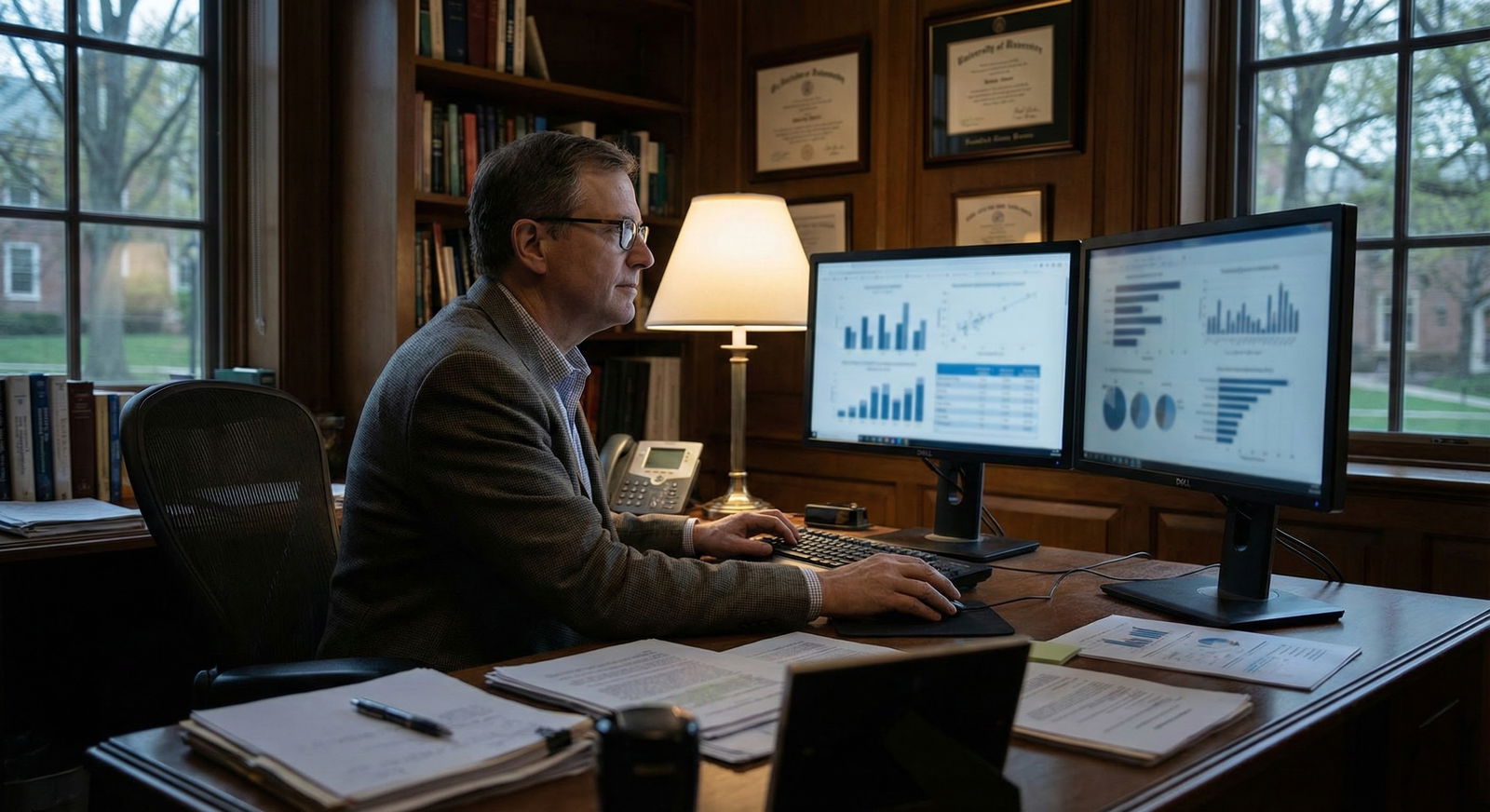
If your project was retrospective or database-based, you already used a research workflow that has real scientific structure. The problem is that applicants describe it badly. They talk about tasks instead of decisions.
Don't say: "I pulled data and ran stats."
That sounds like clerical labor.
Say what you actually did:
- identified a clinical question
- translated that question into measurable variables
- built inclusion and exclusion criteria
- defined exposures and outcomes
- extracted or verified data
- checked for missingness or coding errors
- selected an analysis plan
- interpreted findings in light of bias and limitations
That is research. Real research.
For interviews, I want you to mentally map your work this way:
- Study question = your hypothesis
- Operational definition = your assay design equivalent
- Inclusion/exclusion criteria = sample selection logic
- Data extraction/cleaning = specimen handling/troubleshooting equivalent
- Quality checks = controls
- Sensitivity analysis = robustness testing
- Interpretation of limitations = planning the next validation step
The "controls" question scares database applicants for no reason. You have controls. They just don't look like test tubes.
In a database study, your controls may include:
- comparator cohorts
- matched populations
- multivariable adjustment
- propensity score methods
- subgroup analyses
- sensitivity analyses
- alternate outcome definitions
- chart verification of coded variables
- exclusion of implausible values or duplicate entries
Those are not fake controls. They are your methods for checking whether the signal holds up.
If an interviewer asks, "What were your controls?" you can say something like:
"Because this was a retrospective database study rather than a wet lab experiment, our controls were design-based and analytic. We used a comparator cohort, adjusted for major confounders, and ran sensitivity analyses with alternate definitions to see whether the association remained stable."
That answer works. It's honest and sophisticated.
Use this four-line script for any project:
- Hypothesis: "We wanted to know whether X was associated with Y in Z population."
- Methods: "We used [dataset], applied these cohort criteria, and compared A vs B."
- Quality safeguards: "To reduce bias, we verified variable definitions, adjusted for confounders, and tested robustness with sensitivity analyses."
- Limitations/next step: "The main limitation was residual confounding, so the next step would be prospective or experimental validation."
That's a clean answer. Interview-friendly. No fluff. No pretending.
When Interviewers Ask "If You Did Benchwork, What Would You Do Next?"
This is where applicants get themselves into trouble. They hear a bench-style question and think they're supposed to cosplay as a scientist they're not.
Wrong move.
If you didn't do wet lab work, say so directly:
"I didn't run the assay myself, but based on our findings, I can explain what a reasonable validation plan would look like."
That line is gold. It's honest, confident, and keeps you in the conversation.
So what should your answer include?
1. Start with the signal your data suggested
For example:
- "Our analysis suggested biomarker X correlated with worse survival."
- "We found patients exposed to Y had higher complication rates."
- "The subgroup effect raised the possibility that pathway Z might matter."
Now you've named what needs validation.
2. Propose a plausible next step
Stay general unless you truly know the techniques.
Good language:
- "I'd want to test whether the biomarker is actually expressed differently in the relevant tissue."
- "I'd want to validate whether the pathway activation is present in an experimental model."
- "I'd want a prospective cohort or lab-based assay to see whether the association reflects a true mechanism."
Bad language:
- naming a fancy assay you can't explain
- pretending you know reagent details
- making huge claims about translational pipelines you clearly don't understand
3. Mention controls
Always. Even conceptually.
You can say:
- positive and negative controls
- matched comparison samples
- baseline vs exposed condition
- repeated measurements
- independent validation cohort
4. Define what success and failure would mean
This is what makes you sound thoughtful.
For example:
"If the signal replicated with appropriate controls, that would support the association being biologically meaningful. If it didn't, I'd suspect the retrospective finding reflected confounding, measurement error, or a subgroup artifact."
That's a strong answer because it respects uncertainty instead of overselling.
5. Keep feasibility in view
Interviewers like applicants who understand that research lives in the real world.
Mention things like:
- sample availability
- whether tissue specimens exist
- whether the cohort is large enough
- whether prospective follow-up is realistic
- whether the readout is clinically relevant
That doesn't make you sound less ambitious. It makes you sound sane.
A 30-Day ERAS Readiness Plan: From "I Collected Data" to "I Understand the System"
If your interviews are coming, don't just reread your abstracts. That's passive and useless. Train the answer.
Here's the 30-day plan I'd use.
Week 1: Rewrite every project in plain English
For each project, write:
- a one-sentence hypothesis
- a one-sentence methods summary
- one sentence on quality checks
- one sentence on key result
- two limitations
- one realistic next step
Then strip jargon. If you sound like you swallowed the abstract whole, fix it.
Your goal is simple: explain the project to a smart attending who hasn't read your paper and has no patience for vague talk.
Week 2: Build two versions of every answer
You need:
- a 30-second version
- a 5-minute version
The 30-second version is for "Tell me about your research."
The 5-minute version is for the follow-up grilling:
- Why this dataset?
- What bias worried you?
- How did you handle missing data?
- What would you test next?
- What were your controls?
Most applicants only prepare the first version. That's lazy. Interviews are won in the follow-up.
Week 3: Practice the bench-style bridge
Take each database project and answer these prompts out loud:
- "If this finding is real, what's the next validation step?"
- "What are the equivalent controls in your study?"
- "What could have produced a false signal?"
- "How would you design a prospective follow-up?"
- "If you had access to a lab, what would you want measured?"
You don't need technical wet-lab fluency. You need conceptual fluency.
A great daily drill is this: pick one paper, one project, or one result and force yourself to answer three questions:
- What could have gone wrong?
- What did we check?
- What would I do next?
Do that every day for 10 minutes. It changes how you speak fast.
Week 4: Mock interviews with self-audit
Record yourself. Yes, actually record yourself. Everyone hates it. Do it anyway.
Then listen for these red flags:
- Did I state the question clearly?
- Did I explain why the design made sense?
- Did I mention controls or quality checks?
- Did I name limitations without sounding defensive?
- Did I give a realistic next step?
- Did I overclaim my role?
If your answer sounds like "we did this, we did that" but never says what you thought, changed, checked, or learned, it's weak.
I also want you to prepare two "what would you do next?" answers in advance:
- one for a prospective/clinical validation
- one for a conceptual bench-style validation
That way, you're covered no matter who interviews you.
Common Failure Modes (and Fixes) for Database Researchers Under ERAS Interview Pressure
Let's go through the common ways this goes bad.
Failure mode 1: You sound like a data clerk
Symptom:
- "I extracted data from the EMR."
- "I helped with chart review."
- "I ran the analysis."
That's not enough. It says nothing about whether you understood the science.
Fix: center the question and your decisions.
Say:
"The key issue we were trying to answer was whether X predicted Y, and my role was helping define the cohort, verify the variables, and think through how to reduce bias in the comparison."
Much better. Now you sound engaged.
Failure mode 2: You overclaim
This is a bad one. Interviewers can smell inflation instantly.
If you say you "designed the project" but can't explain the inclusion criteria, or you claim ownership of the analysis but can't discuss confounders, you lose credibility fast.
Fix: state your actual role cleanly.
Try:
"I wasn't the senior designer of the study, but I was responsible for data cleaning, cohort verification, and interpreting the results with the team. Through that, I learned a lot about how variable definitions and bias affect the conclusions."
That answer is honest. Honesty lands better than fake grandeur.
Failure mode 3: You skip limitations
Applicants do this because they think limitations weaken them. Opposite. Skipping limitations makes you sound naive.
Name at least two.
Examples:
- retrospective design
- residual confounding
- coding misclassification
- missing data
- selection bias
- limited generalizability
- inability to infer causality
Then add one mitigation:
"A next step would be prospective data collection with predefined variables," or "An independent validation cohort would help test whether the finding is stable."
That's what mature researchers say.
Failure mode 4: Your "next step" sounds ridiculous
If your retrospective project found a modest association and you immediately leap to "this could become a therapeutic target," you sound unserious.
Fix: keep the next step proportional to the finding.
Association study? Next step is validation. Exploratory subgroup finding? Next step is replication. Biomarker signal? Next step is expression or prospective testing.
Don't jump three floors up the building.
Putting It All Together: Two High-Impact Answer Templates You Can Memorize
You do not need a perfect script. You need a reliable structure.
Template A: Database study answer
"Our question was whether X was associated with Y in Z population. We used dataset/cohort and compared A vs B using predefined inclusion criteria. To improve reliability, we used comparator groups, variable verification, confounder adjustment, and sensitivity analyses. We found main result. The biggest limitations were residual confounding and retrospective design, so the next step would be prospective or experimental validation to see whether the association reflects a true biological or clinical effect."
That's clean. It works.
Template B: Bench-style next step answer
"I didn't perform wet lab work on this project, but if we wanted to validate the signal our analysis suggested, I'd want to measure X in relevant samples or model and include appropriate positive/negative controls or matched comparators. The goal would be to see whether the observed association has a reproducible biological correlate. If the signal held up, that would strengthen the finding; if not, it would suggest the retrospective result may have been driven by confounding or measurement limitations."
That answer does exactly what it should:
- stays honest
- shows design thinking
- acknowledges uncertainty
- sounds scientifically literate
And when you close, tie it back to patient care and your specialty:
"What I liked most about the project was that it connected data interpretation to a clinically relevant question, and that's a big part of why I'm excited about this specialty."
That final line matters. Programs aren't just recruiting data people or bench people. They're recruiting future residents who can think.
The good news is you do not need to become a fake bench scientist before interview season. You need to become a clearer interpreter of your own work. That's it.
If your application is built on database studies, own that. Then elevate it. Show that you understand the question, the design, the weak points, the controls, and the next test that would matter. That's interview-ready research talk.
And once you can do that, you stop sounding like someone who merely touched a project. You sound like someone who can think through one. That's the version of you programs remember.
Key Takeaways
- You don't need wet lab experience to be interview-ready; you need to demonstrate design thinking, quality control, and a credible plan for validation.
- Practice translating your database study into bench-like concepts: comparators and sensitivity analyses are controls; data cleaning and verification are troubleshooting; limitations tell you what to test next.
- Prepare honest "next steps" answers that fit your findings, without pretending you ran assays you didn't.