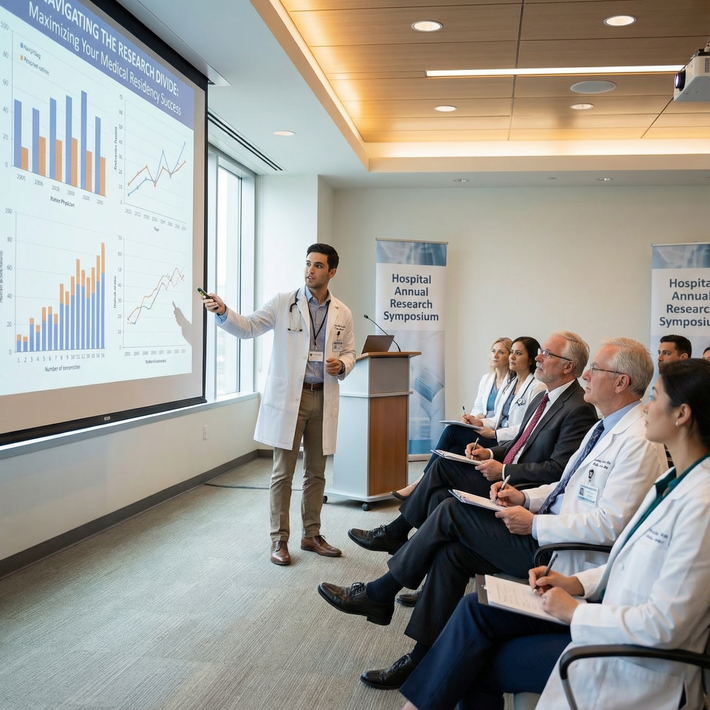
Do Big Academic Centers Actually Give You a Matching Edge?
Does doing research at a big-name academic center actually improve your odds of matching, or is that just one of those comforting stories med students repeat to each other because prestige feels easier to measure than substance?
Here's the myth in its cleanest form: famous institution equals better research, better research equals more publications, more publications equals stronger match odds. Therefore, if you want to match well, especially in a competitive specialty, you'd better get yourself attached to the biggest academic logo you can find.
Sounds neat. Also incomplete.
The data and the lived reality of residency selection don't support the simplistic version of that story. Research can absolutely help your application. I'm not anti-research, and I'm not pretending institutional prestige is meaningless. It isn't. But the leap from "prestigious center" to "match advantage" is where applicants get fooled. Programs don't rank logos. They rank people. And they interpret research through a much messier lens than applicants like to admit.
What actually moves the needle is usually some combination of output quality, specialty relevance, strong mentorship, credible letters, project completion, and whether your application tells a coherent story. Not the building. Not the hospital's Wikipedia page. Not the fact that your abstract was produced within 500 feet of a Nobel laureate you've never met.
I've seen applicants from smaller schools with two finished, specialty-specific projects beat applicants from elite institutions carrying a bloated CV full of half-baked posters, middle-author papers they can't explain, and a vague sense that prestige should do the talking for them. It doesn't. Not reliably.
That's the contrarian truth: the "big academic center" advantage is real mostly when it creates better work. The brand alone is overrated.
What the Data Actually Suggests About Research and Matching
Research matters in the Match, but not for the lazy reason people think. It matters because it signals things programs care about: productivity, follow-through, intellectual curiosity, commitment to a field, and sometimes the ability to function in an academic environment. That's the actual mechanism. Not institutional magic dust.
And even that signal varies by specialty. In dermatology, plastic surgery, neurosurgery, radiation oncology, ENT, ophthalmology, and academic internal medicine pathways, research often carries more weight. In other fields, it can help but rarely rescues a weak clinical application. A stack of abstracts doesn't erase mediocre clerkship performance. It definitely doesn't fix bland letters or a bad interview. Programs are not stupid. They know the difference between someone who can produce scholarship and someone who can actually be trusted with patients, teams, and call.
Quantity is also not quality. Applicants love counting "research items" because ERAS historically made counting easy. But a peer-reviewed manuscript, a national podium presentation, a case report, a local poster, and an abstract submitted but never presented do not carry equal value. Programs know this. Faculty know this. You should know this too.
The more sophisticated question is not "How many publications do you have?" It's "What kind of work did you do, how relevant is it to your chosen specialty, and can you speak about it like someone who actually owned part of it?" That's the difference between signal and decoration.
This is where the prestige myth gets exaggerated. Applicants at major academic centers often do look stronger on paper. But that does not prove the institution itself caused the better match outcome. A lot of those students already had stronger research interest, more aggressive career planning, earlier mentorship, or better access to scholarly infrastructure. In other words, they didn't just inherit an advantage from the logo. They often built better portfolios within richer systems.
And residency selection is brutally multi-factorial anyway. Board performance still matters. Clinical grades still matter. Letters matter a lot. Interviews matter a lot. Specialty signaling matters. Geographic ties matter. Department advocacy matters. Sometimes your sub-I matters more than six months of spreadsheet work on a retrospective chart review.
So no, "big center research" is not a universal match multiplier. It's one ingredient. Sometimes a useful one. Sometimes an overrated one.
Why Big Academic Centers Feel Advantageous Even When the Effect Is Smaller Than People Think
Let's be fair. Big academic centers do offer real advantages. Just not the cartoon version applicants imagine.
The real advantage is infrastructure. A student at a large academic center may have easier access to statisticians, IRB support, experienced coordinators, established databases, fellows who need help, residents running side projects, and faculty who routinely publish. That ecosystem matters. A lot. It can make the difference between a project dying in a Google Drive folder and a project becoming a poster, then a manuscript, then a talking point on interview day.
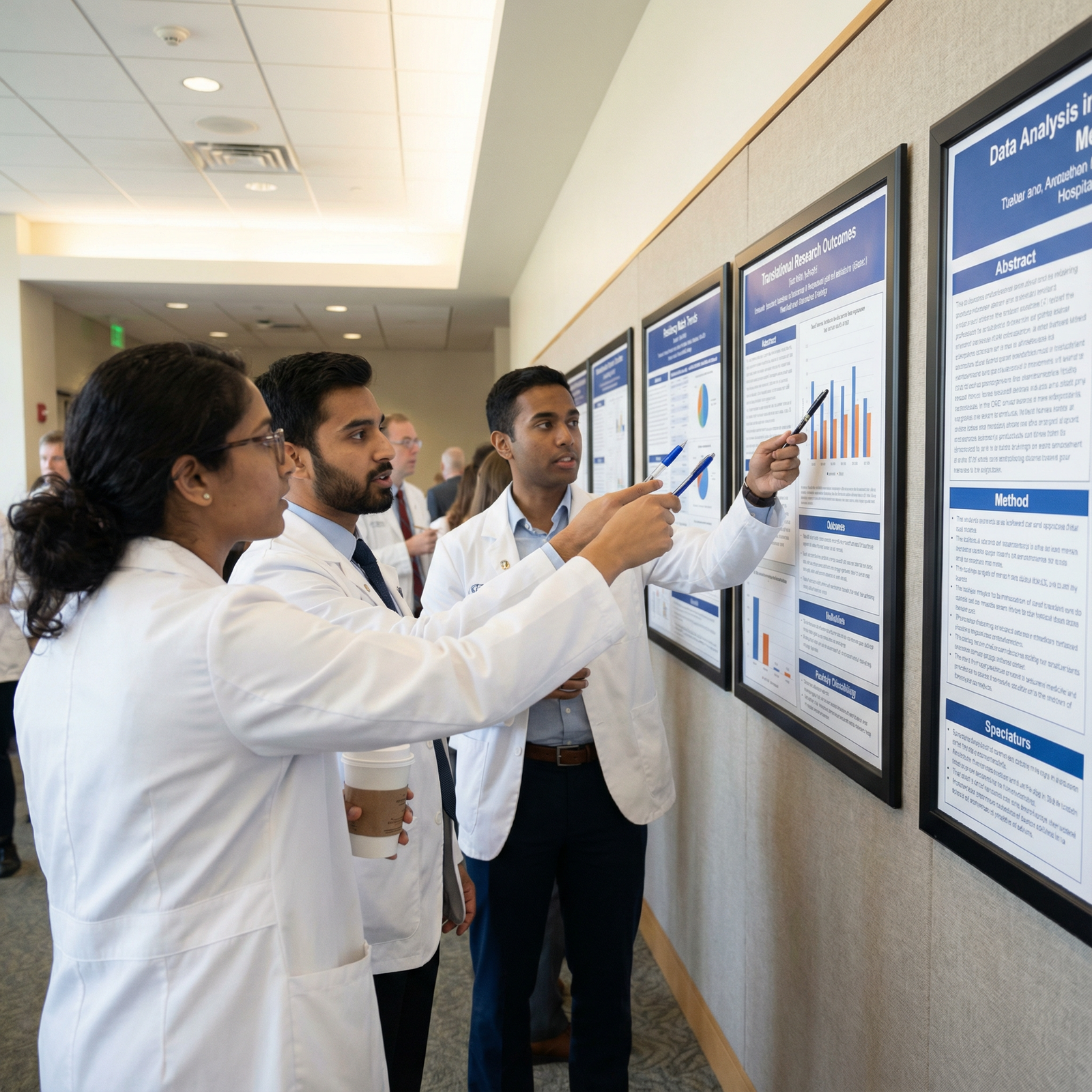
That's the real engine. Support systems. Process. Mentorship. Repetition.
But this is exactly where applicants confuse correlation with causation. The institution often gets credit for what the ecosystem actually did. And even the ecosystem gets too much credit when the student was unusually proactive from day one. I've watched students at famous places waste enormous opportunity because they assumed access was enough. It isn't. Meanwhile, students at less flashy institutions built excellent applications by being ruthless about choosing finishable projects, asking for ownership, and following up like professionals.
Selection bias also muddies everything. Big-name centers attract students already aiming for competitive specialties. Those students tend to self-select into research early, seek national meetings, and cultivate faculty connections aggressively. Then later, everyone looks at the match list and says, "See? The institution works." Maybe. Or maybe ambitious students with strong support did what ambitious students with strong support usually do.
Specialty differences matter too. In research-heavy specialties, institutional resources can absolutely amplify your chances because those fields often value scholarly output more explicitly. But in many specialties, clinical performance, likability, work ethic, and local reputation carry more weight than where your abstract was produced. A flawless acting internship at a regional program can beat a prestigious but impersonal research pedigree. Happens all the time.
That's the part no one likes because it's less glamorous. Matching well is usually about accumulated evidence, not aura.
What Actually Helps an Applicant More Than "Being at the Big Place"
If you want the practical version, here it is: strong mentorship beats vague prestige. Finished projects beat famous affiliations. Ownership beats proximity.
The students who get real value from research usually do a few unsexy things well. They join early. They pick a niche. They ask, plainly, what the deliverable is. Poster? Abstract? Manuscript? Database paper? They clarify authorship expectations. They choose projects that can actually be completed within the timeline of medical school. Radical concept, I know.
A student at a smaller institution can build a very competitive research story by doing work that is coherent and complete. One good specialty-specific project that leads to a presentation and a strong faculty letter can be worth far more than five loosely connected entries nobody can explain. Programs are trying to predict what kind of resident you'll be. Reliable people finish things.
Limited resources aren't a death sentence anymore either. Remote collaboration is normal. National mentorship is easier than it used to be. Specialty societies, conference networking, alumni connections, research collaboratives, and even a cold email with a sane question can open doors. I've seen students from schools without home programs publish with faculty across the country because they were organized, responsive, and pleasant to work with. That last part is underrated. People keep inviting back the student who answers emails, meets deadlines, and doesn't create chaos.
If you're choosing between a shiny name and a mentor who actually gets students to publication, choose the mentor. If you're choosing between a sexy project likely to die and a boring project likely to be finished, choose finished. If you're choosing between being author number nine on a splashy paper and being first or second on a solid, relevant project, think hard before chasing glamour.
Programs respond to evidence of impact and reliability. The logo on the badge is background noise unless it helped you produce something real.
How to Interpret Prestige Without Getting Fooled by It
Prestige is not fake. It's just noisy.
A famous center can open doors. A recognizable mentor name can help your letter land differently. A program director may glance more favorably at an institution they know well. That's all true. But applicants routinely inflate that into something much bigger and much dumber: the belief that prestige itself compensates for thin output, weak ownership, or a scattered application narrative.
It doesn't.
The better question is never "Is this place prestigious?" The better question is "Do students here actually produce meaningful work, get mentored well, and match into the kinds of programs they want?" Look at publication rate. Look at whether students can get on projects early. Look at whether residents and faculty are accessible. Look at alumni outcomes. Look at whether anyone can tell you, concretely, how a student goes from interest to submission. That's what matters.
Applicants get trapped by what's visible. Prestige is visible. The hospital is huge. The name is famous. The faculty bios are intimidating. Meanwhile, the less glamorous setup with the diligent mentor, accessible database, and realistic timeline looks ordinary. But ordinary can be high-yield. I've seen students throw away workable opportunities because they were seduced by institutional aura and ended up with nothing finished by ERAS season except stress and a half-written discussion section.
That's the reflection worth sitting with: the best research environment is not the one that impresses your classmates at lunch. It's the one that lets you do credible work, finish it, talk about it intelligently, and tie it to the physician you're trying to become.
That's the data-informed answer. Not as romantic as the prestige myth. Much more useful.