Is Research the Key to Matching Success? Understanding Its Role in Residency Applications
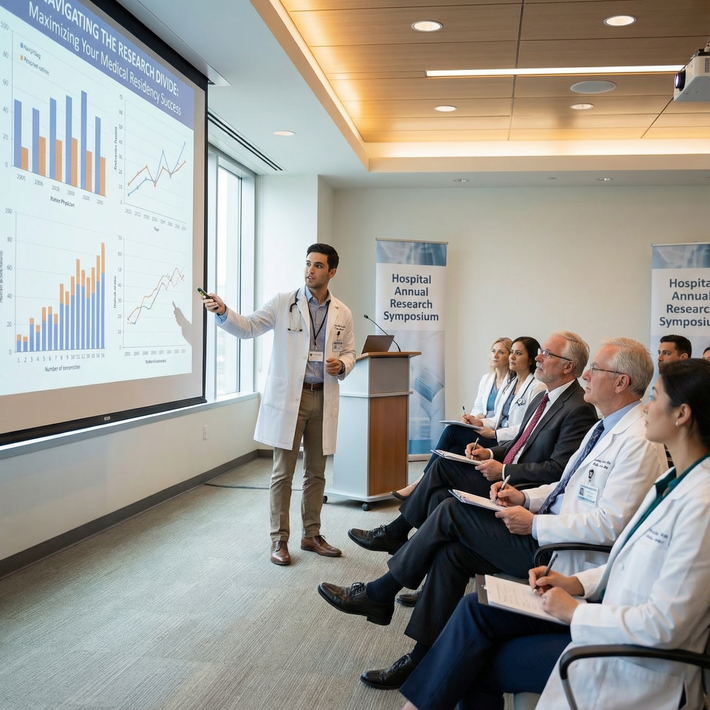
The transition from medical school to residency is one of the most competitive and high‑stakes phases in medical education. Each year, thousands of applicants submit residency applications, hoping to secure a position that aligns with their interests and long‑term career goals. In this process, one question repeatedly surfaces: Is research experience the key to matching success, or just one piece of a broader puzzle?
This enhanced guide explores the role of Medical Research in residency applications, the types of research that are most valued, how expectations differ by specialty, and how to balance research with Clinical Skills, leadership, and Networking. By the end, you should have a clearer, more actionable understanding of how to strategically incorporate research into your application strategy—without losing sight of everything else that matters.
1. Why Research Matters in Residency Applications
1.1 How Program Directors View Research
Residency program directors are not just evaluating who will be a safe, competent intern; they are also selecting future colleagues, potential academic leaders, and ambassadors for their program. Research experience signals several traits that are highly valued in modern medical education:
- Intellectual curiosity – Will you keep asking “why” and “how” as medicine evolves?
- Discipline and follow‑through – Can you commit to long‑term projects and see them to completion?
- Evidence‑based mindset – Do you understand how medical knowledge is generated, evaluated, and applied?
- Potential for academic contribution – Will you help the program produce scholarly work, quality improvement projects, or publications?
In many programs—especially academically oriented ones—research is viewed as a marker of future potential, not just a checkbox on your CV.
1.2 What Research Demonstrates About You
Research experience can powerfully complement your clinical profile by highlighting attributes that are sometimes harder to see in brief clinical evaluations:
Commitment to Medicine Beyond the Curriculum
Choosing to pursue research on top of a demanding medical school schedule demonstrates genuine engagement with the field. It shows that you’re willing to go beyond required coursework and clerkships to deepen your understanding.Critical Thinking and Problem‑Solving
Research requires defining questions, navigating ambiguity, troubleshooting obstacles, and making data‑driven conclusions. These skills directly translate into clinical decision‑making and complex patient care.Professionalism and Time Management
Balancing data collection, deadlines, IRB approvals, and manuscript timelines while handling clinical duties reflects strong organizational skills—essential in residency.Contribution to the Medical Community
Whether through a poster presentation, quality improvement (QI) project, or peer‑reviewed publication, research allows you to contribute actively to medical knowledge and patient care improvements.
1.3 Networking, Mentorship, and Letters of Recommendation
One underappreciated benefit of research for residency applications is how it facilitates Networking and mentorship:
- Access to mentors – Research connects you with faculty who can advocate for you, introduce you to colleagues, and help clarify your career direction.
- Stronger letters of recommendation – A mentor who has worked with you closely on a project can write a detailed, personalized letter highlighting your persistence, analytical ability, and character.
- Visibility in your desired specialty – Presenting at specialty‑specific meetings or joining a research team aligned with your chosen field increases your name recognition among future colleagues and interviewers.
These intangible benefits often matter as much as the research line on your CV.
2. How Research Expectations Differ by Specialty
Not all residency programs weigh research equally. Understanding specialty‑specific expectations can help you allocate your time strategically and select appropriate projects.
2.1 Surgical Specialties and Competitive Fields
Specialties such as:
- General Surgery
- Orthopedic Surgery
- Neurosurgery
- Plastic Surgery
- Otolaryngology (ENT)
- Dermatology
- Radiation Oncology
often place substantial emphasis on research—especially in academic centers and high‑profile programs.
Why it matters more here:
- These fields frequently involve rapidly evolving technology, techniques, and outcomes research.
- Many residents go on to fellowships and academic careers, where research productivity is essential.
- Programs often track metrics such as publications per resident as a marker of departmental success.
Practical implications for applicants:
- Aim for multiple meaningful projects, ideally with at least one poster or publication.
- Try to align research with your chosen specialty (e.g., surgical outcomes, procedural innovations, clinical trials).
- Consider dedicated research time (e.g., a research year) if targeting very competitive specialties and top‑tier academic programs—while recognizing this is not mandatory for everyone.
2.2 Internal Medicine and Subspecialty‑Oriented Paths
In Internal Medicine, research is valued but not always a strict requirement for matching, particularly in community programs. However, it becomes increasingly important if you aim for:
- Academic internal medicine residencies
- Highly competitive fellowships (e.g., cardiology, GI, heme/onc, pulmonary/critical care)
- Clinician‑investigator or physician‑scientist careers
Useful research types include:
- Clinical outcomes and epidemiology
- Quality improvement and patient safety
- Chronic disease management and health systems research
For Internal Medicine, one or more well‑executed, relevant projects—even without multiple high‑impact publications—can demonstrate your interest in lifelong inquiry and academic growth.
2.3 Pediatrics, Family Medicine, and Primary Care Fields
Primary care specialties (Pediatrics, Family Medicine, Internal Medicine‑Primary Care tracks) may place slightly less emphasis on traditional lab or high‑impact clinical research and more on:
- Public health and population health projects
- Community‑based research
- Health disparities and access to care
- Quality improvement initiatives in outpatient settings
Here, research that aligns with community health and real‑world practice improvement can be particularly compelling. Programs value applicants who show they care about outcomes on both the individual and population level.
2.4 Other Specialties (Psychiatry, EM, Anesthesiology, etc.)
In fields like Psychiatry, Emergency Medicine, and Anesthesiology, research can boost your application, particularly for academic programs, but is rarely the sole deciding factor. Projects in areas like:
- Mental health outcomes
- Emergency department flow and operations
- Perioperative safety and pain management
can strengthen your profile, especially when integrated with strong clinical performance and thoughtful narrative in your personal statement.

3. Types of Research Experience that Strengthen Residency Applications
Not all research looks the same on paper, and not all experiences are evaluated equally. The key is quality, relevance, and your role, not just the number of lines on your CV.
3.1 Clinical Research and Outcomes Studies
Clinical research is often the most directly relevant for residency programs, especially those with strong clinical training environments.
Examples include:
- Clinical trials of new therapies or interventions
- Retrospective chart reviews evaluating patient outcomes
- Prospective cohort studies tracking specific patient populations
- Health services research focused on access, utilization, or quality of care
How this benefits your application:
- Demonstrates familiarity with real‑world patient data and outcomes.
- Shows you can handle IRB protocols, data collection, and ethical considerations.
- Provides concrete material to discuss in interviews: hypotheses, methods, results, and what you learned.
3.2 Basic Science and Translational Research
Basic science research is particularly valued if you:
- Aspire to a physician‑scientist or MD/PhD‑style career
- Are applying to research‑intensive specialties or institutions
- Plan to pursue bench‑to‑bedside translational work
Key elements:
- Bench work: cell culture, molecular biology, animal models, imaging, etc.
- Translational projects: linking molecular mechanisms or biomarkers to clinical outcomes
- Grant writing exposure: seeing how funding proposals are developed
Even if you ultimately choose a clinically heavy specialty, basic science experience shows scientific rigor and persistence, especially if it leads to abstracts or publications.
3.3 Public Health, Epidemiology, and Population Health
With healthcare systems shifting toward value‑based care and population health, public health research has become increasingly relevant.
Strong examples:
- Projects on social determinants of health
- Epidemiologic analyses of disease burden in specific communities
- Interventions to improve vaccination rates, screening, or chronic disease control
- Policy‑oriented work on healthcare access, equity, or quality metrics
These experiences are particularly powerful for applicants to Family Medicine, Pediatrics, Internal Medicine‑Primary Care, and Psychiatry, and for those interested in health policy or leadership roles.
3.4 Quality Improvement (QI) and Patient Safety Projects
Many students overlook QI as “lesser” than traditional research, but residency programs often strongly value QI experience because it is:
- Directly applicable to everyday clinical work
- Often required in residency curricula
- Focused on improving systems, workflows, and patient outcomes
Examples include:
- Reducing hospital readmissions for a specific condition
- Improving adherence to evidence‑based guidelines
- Streamlining handoff or discharge processes
- Reducing medication errors or delays in care
If you can demonstrate a measurable impact and your role in designing and implementing changes, QI projects can be a major strength.
3.5 Case Reports, Case Series, and Educational Research
These may be more accessible entry points for students early in training or those in schools with limited research infrastructure:
- Case reports/series – Highlight rare conditions, unusual presentations, or novel management approaches.
- Medical education research – Evaluate new teaching methods, curricula, or assessment tools.
- Narrative medicine or ethics projects – Explore communication, professionalism, or patient experience.
While a single case report will not replace a large research portfolio in highly competitive specialties, a thoughtful, well‑presented project still adds value—especially if it leads to a poster, presentation, or publication.
4. Is Research the Only Path to Matching Success?
The direct answer is no: research is not the only path, nor is it always the decisive factor. Residency applications are evaluated holistically. In many specialties and programs, applicants with modest or even no research have matched successfully because other parts of their application were exceptional.
4.1 Clinical Performance: The Foundation of Your Application
Your performance in clinical rotations remains one of the strongest predictors of matching success. Program directors repeatedly emphasize:
- Clerkship grades and comments
- Sub‑internship (Sub‑I) performance in the specialty you’re applying to
- Clinical evaluations describing reliability, teamwork, communication, and work ethic
A student with excellent clinical evaluations, strong Clinical Skills, and enthusiastic letters can often match well even with limited research experience—especially in less research‑heavy specialties or community programs.
4.2 Leadership, Service, and Extracurricular Involvement
Residency programs also want team players and future leaders. Valuable experiences include:
- Student organization leadership (e.g., specialty interest groups, SNMA, LMSA, AMSA)
- Long‑term community service or global health initiatives
- Teaching and mentoring (e.g., tutoring younger students, TA roles)
- Hospital committees, advocacy work, or student government
These roles demonstrate maturity, accountability, and a commitment to medicine that goes beyond personal achievement.
4.3 Letters of Recommendation and Mentorship
Strong, specific letters of recommendation can outweigh a thin research CV. Ideal letters:
- Come from faculty who know you well and have worked closely with you
- Provide concrete examples of your clinical competence, professionalism, and teamwork
- Comment favorably on your readiness for residency and potential within the specialty
Mentors who have seen your growth over time—clinically or in research—can be powerful advocates during Residency Applications and the Residency Match.
4.4 Personal Statement and Narrative Cohesion
Program directors frequently mention that a compelling, focused personal statement can make an application stand out. Use it to:
- Explain how your experiences (clinical, research, leadership) fit together
- Clarify your genuine interest in the specialty
- Reflect on a meaningful case, project, or challenge and what you learned
- Show insight, humility, and self‑awareness
Research can be a part of this story—but it does not have to be the centerpiece if your passion is rooted more in clinical work, teaching, or community engagement.
5. Real‑World Examples: How Research Interacts with Other Application Elements
Case Study 1: Research as a Differentiator in a Competitive Field
“Dr. Sarah” – Aspiring Surgeon
- Engaged in two years of clinical outcomes research in minimally invasive surgery
- Co‑authored several abstracts and a first‑author publication
- Presented at a national surgical conference
- Strong but not “perfect” clinical grades
In interviews, Sarah was able to:
- Discuss her research questions, methodology, and findings in detail
- Explain how her work shaped her approach to evidence‑based surgery
- Show familiarity with current literature and innovation in her field
Her research did not replace the need for solid clinical performance, but it clearly differentiated her among surgical applicants and helped her match at a top academic surgery program.
Case Study 2: Balanced Clinical Excellence with Targeted Research
“Dr. James” – Internal Medicine Applicant
- Prioritized excelling in core clerkships and Sub‑I
- Participated in one focused project on chronic disease management in underserved populations
- Presented a poster at a regional meeting
- Received outstanding letters emphasizing clinical judgment, teamwork, and patient rapport
James’ strong clinical record and clear commitment to patient care carried significant weight. His modest but meaningful research experience supported his interest in outcomes and population health, helping him match into a solid academic Internal Medicine program with opportunities for future research.
Case Study 3: Research Alone Couldn’t Overcome Clinical Weakness
“Dr. Mia” – Cancer Biology Researcher
- Spent two additional years in a basic science oncology lab
- Produced multiple oral presentations and high‑impact first‑author publications
- Clinical clerkship evaluations described inconsistent reliability and communication issues
Despite an impressive research portfolio, Mia’s application struggled because program directors prioritize residents who can deliver safe, dependable patient care. Her experience underscores a crucial point: research can enhance but not replace core clinical competence and professionalism.
6. Practical Strategies to Build Effective Research Experience
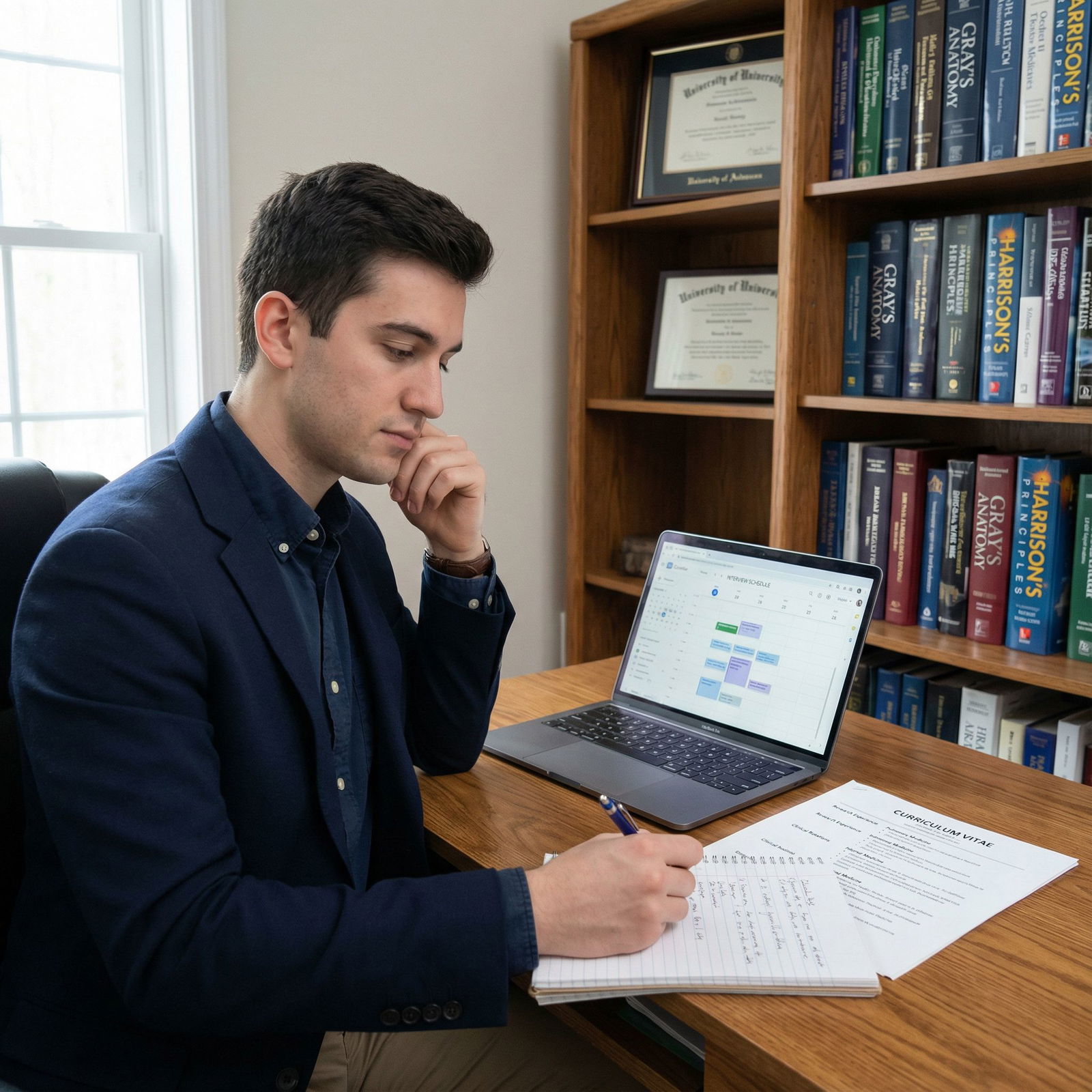
6.1 Getting Started with Research in Medical School
If you’re early in medical school and unsure where to begin:
Identify your interests
- Start broad: Are you drawn more to lab science, direct patient outcomes, or systems‑level questions?
- Explore your school’s specialty interest groups—they often connect students with faculty projects.
Approach potential mentors strategically
- Look up faculty profiles in your area of interest.
- Email a brief, tailored message with your CV, expressing specific interests and the time you can realistically commit.
- Ask about ongoing projects where you can take on a clear role.
Start small but meaningful
- Case reports, chart reviews, or QI projects are realistic entry points.
- Aim for experiences that allow you to see a project from conception to completion.
6.2 Maximizing the Impact of Limited Research Time
Many students have time constraints due to coursework, jobs, or personal circumstances. If your time is limited:
- Seek projects with a clear timeline and feasible scope.
- Clarify expectations with your mentor: hours per week, responsibilities, and goals (e.g., poster, abstract).
- Document your work meticulously so you can speak confidently about your role in interviews.
- Consider summer research or short intensive blocks where you can focus more deeply.
6.3 How to Present Research in Your Application and Interviews
When listing research in your residency application:
- Be honest about your role (e.g., data collection, analysis, writing).
- Highlight outcomes: abstracts, posters, talks, manuscripts (submitted/accepted/published).
- In interviews, be prepared to:
- Summarize your project in 2–3 minutes.
- Discuss the question, methods, main findings, and limitations.
- Explain what you personally did and what you learned.
Programs are less concerned with whether your study was groundbreaking and more interested in whether you can think critically and communicate clearly about it.
FAQ: Research and Residency Applications
1. Do I need a publication to match into residency?
No. A publication is helpful—especially in research‑heavy or competitive specialties—but it is not mandatory for most residency programs. Many successful applicants have:
- Ongoing projects without completed publications
- Posters or abstracts presented at regional or national conferences
- Strong clinical performance and compelling narratives
Programs care more about the substance of your experience and how you discuss it than about having a specific number of publications.
2. How much research is “enough” for my Residency Applications?
This depends heavily on your target specialty and the type of programs:
Highly competitive, academic specialties (e.g., Derm, Ortho, Neurosurgery):
Multiple meaningful projects, ideally with at least one presentation or publication, are common among matched applicants.Moderately competitive fields or mixed academic/community programs:
One to a few solid projects, especially if relevant to your specialty, can be sufficient.Primary care and less research‑intensive specialties:
Research is beneficial but often not essential; strong clinical performance, leadership, and service may carry more weight.
Quality, depth of involvement, and alignment with your career interests matter more than raw quantity.
3. What if I have no research experience at all?
You can still match successfully, particularly if:
- Your clinical evaluations and clerkship grades are excellent
- You have strong letters of recommendation
- You’ve demonstrated leadership, service, or teaching
- Your personal statement clearly articulates your motivation and goals
If you are later in medical school and have no research, consider:
- Shorter‑term QI or case report projects
- Joining an existing project where you can contribute to data collection or analysis
- Focusing your energy on maximizing your clinical and interview performance
4. Can I start or continue research during residency?
Yes. Many residency programs not only allow but encourage involvement in research and QI projects. During residency you can:
- Join ongoing departmental projects
- Initiate QI initiatives aligned with program priorities
- Collaborate with faculty mentors to publish case reports or educational innovations
- Lay the groundwork for fellowship or academic career paths
If research is a major long‑term interest, look for programs that:
- Advertise protected research time
- Have a track record of resident publications
- Offer clinician‑educator or physician‑scientist tracks
5. What type of research should I choose to best enhance my application?
Select projects based on a combination of:
Relevance to your intended specialty
(e.g., surgical outcomes for surgery, public health for primary care, neuroimaging for neurology)Feasibility and mentorship quality
A smaller project with excellent mentorship is usually better than a large, unfocused one with minimal guidance.Your genuine interest
Passion and curiosity will sustain you through inevitable obstacles and will show in your interviews and personal statement.
Ultimately, choose experiences that help you grow as a future physician—clinically, intellectually, and professionally.
In summary, research is an important but not exclusive pathway to matching success. It is most powerful when integrated with strong clinical performance, thoughtful mentorship, leadership, and a coherent personal narrative. View research as one component of a well‑rounded application strategy—one that can open doors, deepen your understanding of medicine, and support your long‑term career development within the residency match and beyond.