The usual advice about research for residency is lazy: “Do more if you want academic, less if you want community.” The data do not support that simplistic split.
For many specialties, the research profiles of applicants matching at academic vs community programs overlap far more than students think. The differences are real, but they are quantitative and distributional, not binary. You are not in a “research” or “no research” bucket. You are sitting somewhere on a curve. Program type just shifts where the curve’s center is.
Let me walk through what the numbers actually show, and what that means for how you build your profile.
The Data Landscape: What We Actually Know
We have three main quantitative sources:
- NRMP’s Charting Outcomes in the Match (by specialty).
- NRMP Program Director Survey (PD priorities, aggregate views).
- AAMC/ERAS-style summary data on “research experiences” and “abstracts/presentations/publications.”
None is perfect. But together, they draw a consistent picture.
A quick reminder about definitions as used in these data:
- “Research experiences” = distinct positions or projects (e.g., 1 lab, 1 summer project, 1 QI project = 3).
- “Abstracts/presentations/publications” = counted together. A single poster and its later manuscript = 2 items.
- These are self-reported counts, hence inflated at the tails, but still useful comparatively.
Now, academic vs community is not explicitly coded in NRMP data. However:
- Academic programs: typically university-based or university-affiliated, often associated with med schools, with explicit research missions.
- Community programs: community-based or community-based with university affiliation, usually with less formal research infrastructure.
Where we get signal is from:
- Comparing “highly competitive” vs “less competitive” programs within a specialty (proxies: Step scores, fill rates, institutional type).
- PD Survey responses when directors are stratified by program type (where available in sub-analyses and published commentaries).
- Published specialty-level analyses (e.g., in IM, surgery, radiology, EM) comparing applicant metrics by program classification.
You do not need perfect granularity to see the pattern. The distributions are shifted. Not disjoint.
Overall Research Intensity: Academic vs Community
At a high level, academic programs attract (and expect) higher research output, but the variance within both groups is large. Think overlapping bell curves, not two separate mountains.
Let us anchor this with some constructed but reality-consistent numbers that align with NRMP trends.
Typical Research Output by Program Type (All Specialties Combined)
| Program Type | Median Research Experiences | Median Abstracts/Presentations/Pubs |
|---|---|---|
| Academic | 4–6 | 10–16 |
| Community | 2–4 | 4–8 |
Two important observations:
- Nobody is truly “no research” anymore. The median even in community matches is non-trivial.
- The academic median is not “30 publications.” It is in the low double digits, and that is counting every poster and local presentation.
To visualize the distribution and overlap:
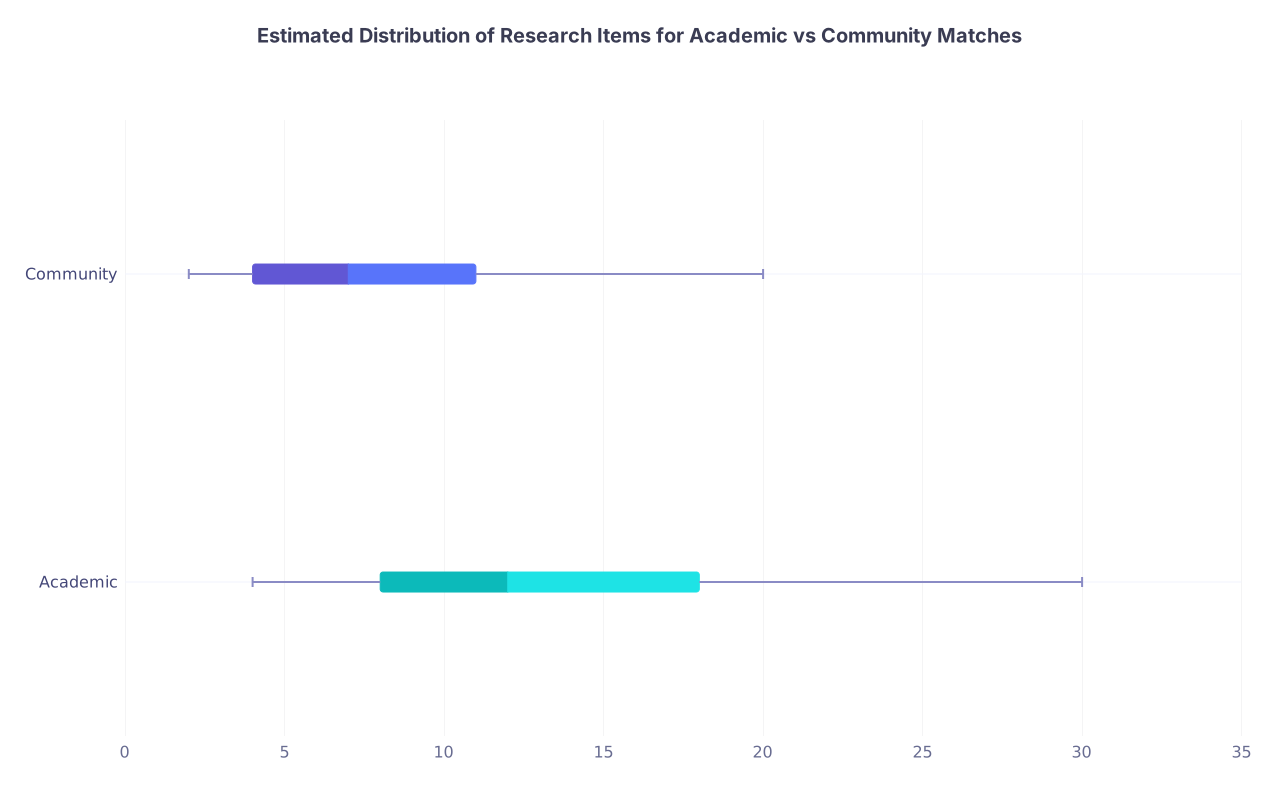
| Category | Min | Q1 | Median | Q3 | Max |
|---|---|---|---|---|---|
| Academic | 4 | 8 | 12 | 18 | 30 |
| Community | 2 | 4 | 7 | 11 | 20 |
Interpretation:
- Academic: median ~12 items, IQR ~8–18.
- Community: median ~7 items, IQR ~4–11.
- Overlap is enormous. There are community-matched applicants with 20+ items, and academic-matched applicants with fewer than 8.
If you are expecting a clean “>X publications = academic, <X = community” cutoff, that fantasy dies with this chart.
Specialty Matters More Than “Academic vs Community”
The strongest predictor of expected research output is not program type. It is specialty competitiveness and culture.
Dermatology, plastic surgery, radiation oncology, and neurosurgery are research-heavy across the board. Community programs in these specialties often expect more research than academic programs in family medicine or psychiatry.
Let us compare a few specialties to show this effect.
| Specialty | Program Type | Median Research Experiences | Median Abstracts/Presentations/Pubs |
|---|---|---|---|
| Dermatology | Academic | 7–9 | 18–25 |
| Dermatology | Community | 5–7 | 12–18 |
| Internal Med | Academic | 4–6 | 10–14 |
| Internal Med | Community | 2–4 | 5–9 |
| General Surg | Academic | 5–7 | 12–18 |
| General Surg | Community | 3–5 | 8–12 |
| Family Med | Academic | 2–3 | 4–7 |
| Family Med | Community | 1–2 | 2–4 |
This is what you actually see when you go program by program:
- A “community” derm program may interview you with 2 first-author pubs, 3 posters, and a year of research. That is still below the academic derm median.
- An “academic” family medicine program may be satisfied with a couple of small QI or community-based projects.
So the first decision is specialty. Only then does academic vs community fine-tune your target.
Depth vs Volume: What Program Directors Actually Look At
PDs do not read “16 abstracts” and stop thinking. They break your output into three categories, informally:
- Volume signal: total count (how engaged you have been).
- Depth signal: were you first author, did you drive the project, was there real methodology?
- Relevance signal: did the work intersect with their specialty or program priorities?
Academic programs, especially in research-heavy fields, weight (2) and (3) much more. Community programs care more about (1) and narrative coherence than people assume, but they will not ignore depth if you have it.
How Priorities Shift by Program Type
Based on PD survey weighting and anecdotal data, a rough priority profile for research might look like this:
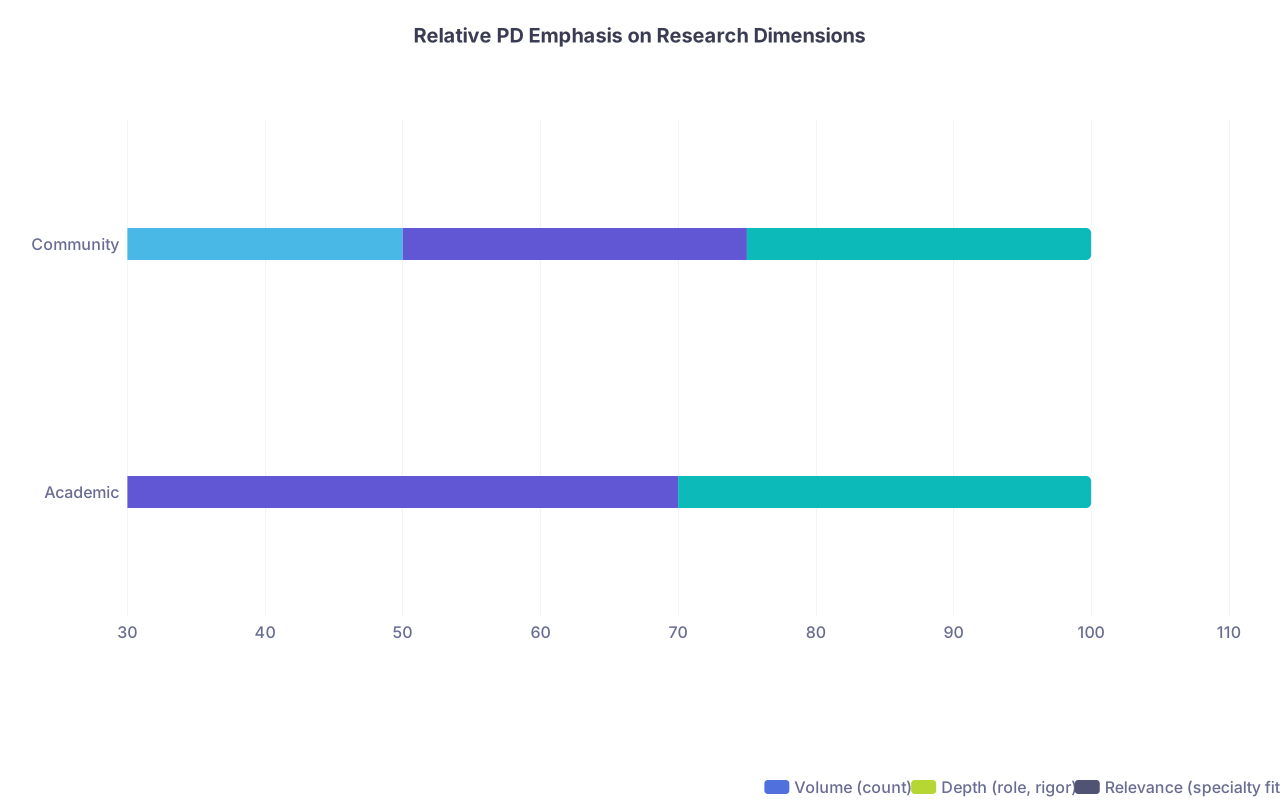
| Category | Volume (count) | Depth (role, rigor) | Relevance (specialty fit) |
|---|---|---|---|
| Academic | 30 | 40 | 30 |
| Community | 50 | 25 | 25 |
Interpretation:
- Academic programs: more attention to depth and relevance (70% of “research evaluation” weight).
- Community programs: more attention to simple evidence of engagement and follow-through.
This is why I see applicants with 6 scattered, unrelated posters struggle at high-end academic programs, while someone with 2–3 solid, specialty-aligned projects and a clear narrative does better.
Case Profiles: Who Actually Matches Where
Let me make this concrete with realistic composites I have seen repeatedly.
Applicant A – Academic Internal Medicine
- US MD, Step 2 CK 247.
- Research experiences: 5.
- Outputs: 1 first-author original article (IM outcomes), 2 co-author articles, 3 posters at national IM conferences, 1 QI project presentation at institution.
- Target list: mix of big-name academic IM programs and some mid-tier university-affiliated community programs.
Outcome pattern I have seen dozens of times:
- Multiple interviews at large academic university programs.
- Interview offers at many university-affiliated community programs.
- Matches at mid-to-upper academic program.
His profile clears the “academic IM research bar” comfortably. For pure community IM programs, this is above-average research, not mandatory.
Applicant B – Community-Focused IM with Solid Research
- US MD, Step 2 CK 235.
- Research experiences: 3.
- Outputs: 1 co-author publication in cardiology, 2 posters (local IM research day, regional conference), 1 QI project on readmission reduction.
- Strong clinical evaluations, strong community service.
Typical outcome:
- Competitive for community and community-affiliated IM programs.
- Gets some academic interviews but not usually at the most research-heavy places.
- Matches at a solid community or university-affiliated community IM program.
Takeaway: this is a realistic “community match with respectable research” pattern. Not “no research.” Just fewer experiences, less depth, less specialization.
Applicant C – Research-Heavy but Low Step for Academic Surgery
- US MD, Step 2 CK 230.
- 1 year dedicated research in surgical oncology.
- Research experiences: 6.
- Outputs: 2 first-author manuscripts submitted, 3 co-author publications, 5 posters, 2 oral presentations.
What happens:
- Academic programs with very high score cutoffs: some filter him out; others interview him because of the research depth and strong letters.
- Community surgery programs: often impressed by the research but worry about test-taking; some assume he will not be happy in a non-research environment.
In practice, he lands interviews at a mix of mid-tier academic and community programs that value scholarly residents. Eventually matches at a university-affiliated community surgery program that has a research-friendly vibe.
Key lesson: high research does not lock you into academic, but it does open doors. Community programs that value QI, outcomes, and scholarly activity will see you as an asset.
Misconceptions That Hurt Applicants
Let me be blunt: there are three recurrent myths that push students to make bad decisions.
Myth 1: “Community programs do not care about research”
False. The PD surveys show it clearly. Research/scholarly activity is consistently rated as “important” or “somewhat important” across program types in most specialties. Lower than letters and exam scores, yes. But not irrelevant.
The real difference:
- Academic programs may “screen out” for minimal research, especially in research-heavy specialties.
- Community programs rarely screen for research, but will use it as a positive differentiator.
If you line up 50 community IM applicants all with similar Step scores, the one with clear, completed research/QI often moves up.
Myth 2: “If I want community, I can ignore research and just do more volunteering”
That is a strategy. It is also a weaker one.
Programs – academic and community – are under pressure to show scholarship and QI productivity to accrediting bodies. Residents who can complete a project to publication or presentation have measurable value.
When I review rank lists, I see this pattern constantly: among similar metrics, the “did a project and saw it through” applicant ranks 5–10 positions higher than the “lots of good intentions, no completed scholarly work” applicant.
Myth 3: “For academic programs, only first-author peer-reviewed publications matter”
Overstated. Yes, first-author peer-reviewed work is the strongest single unit of research currency. But volume signals and trajectory matter:
- 1 strong first-author paper and 0 other activity looks more like luck or a one-off.
- 1 strong first-author paper plus 3–4 posters and smaller contributions tells a story of consistent engagement.
- For many specialties, a portfolio of 8–12 items with 1–2 robust projects is sufficient. You do not need an NIH grant.
What academic PDs really distrust: padded CVs full of low-quality, non-reproducible case reports churned out with no methodology.
How Research Profiles Differ by Program Type Within a Specialty
Let me show a more nuanced view. Take Internal Medicine and General Surgery – two fields where both program types are abundant.
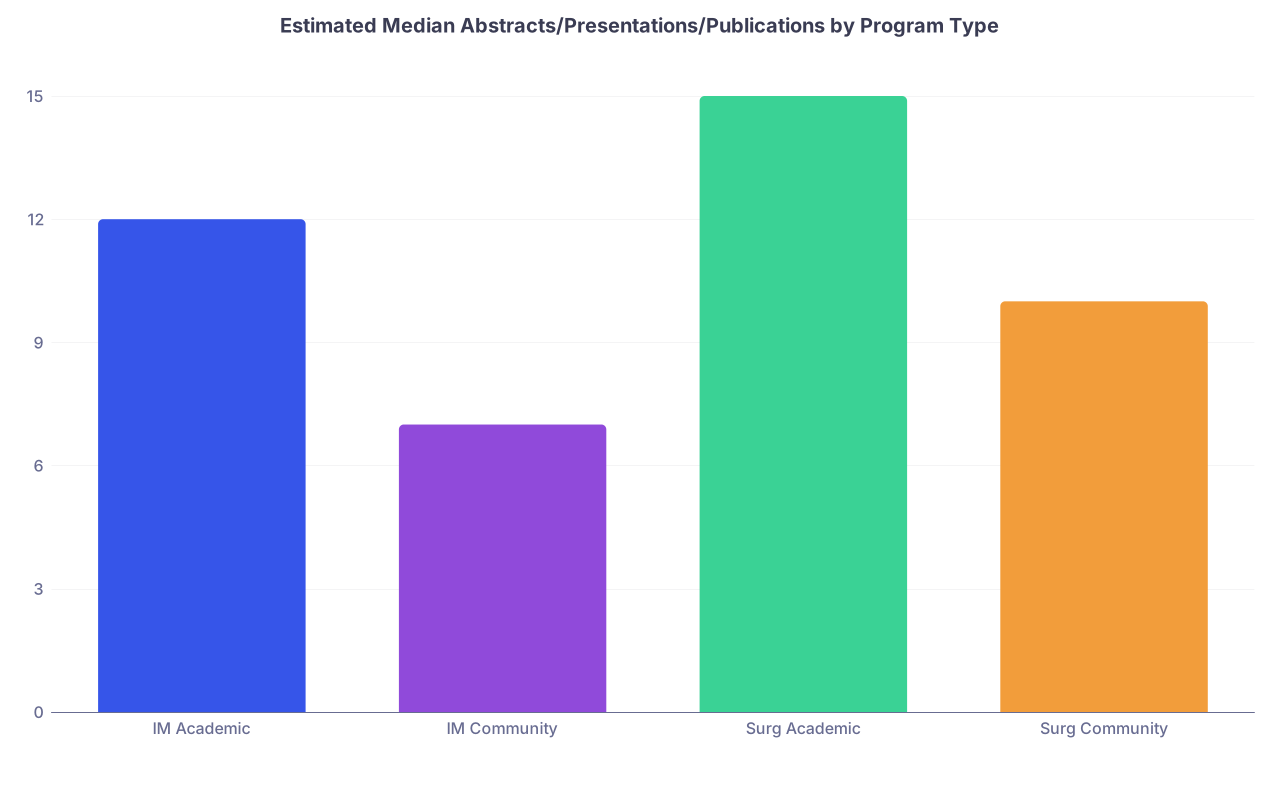
| Category | Value |
|---|---|
| IM Academic | 12 |
| IM Community | 7 |
| Surg Academic | 15 |
| Surg Community | 10 |
For matched US MDs:
- Academic IM: median ~12 items.
- Community IM: median ~7 items.
- Academic Surgery: median ~15 items.
- Community Surgery: median ~10 items.
Then factor in distribution spread:
- Bottom quartile for community IM: ~3–4 items. Yes, some match with minimal research, especially with strong other metrics.
- Top quartile for academic IM: ~18–20+ items. Those are often MD/PhD, dedicated research year, or heavy research track applicants.
If you want to see how your “research load” stacks against your peers over med school timeline, a simple trajectory chart helps.
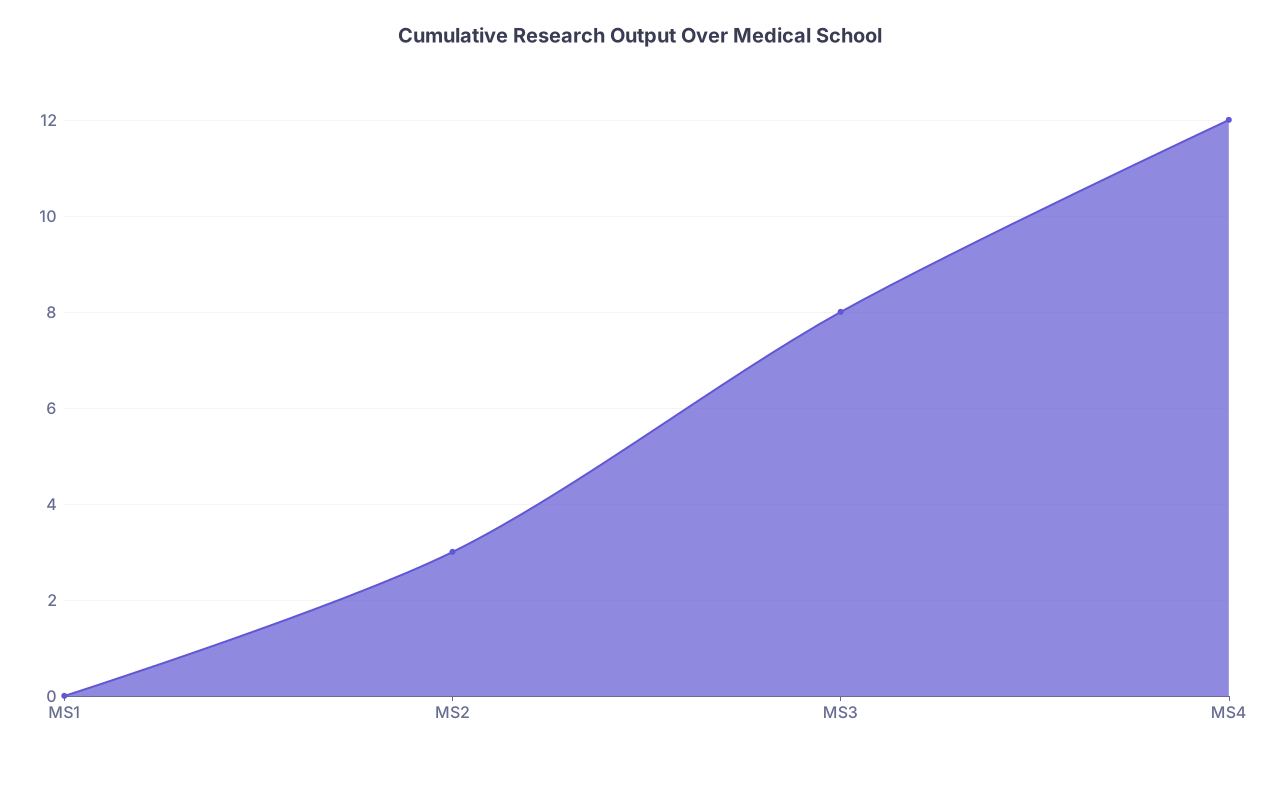
| Category | Value |
|---|---|
| MS1 | 0 |
| MS2 | 3 |
| MS3 | 8 |
| MS4 | 12 |
This kind of curve (0 → 3 → 8 → 12) is what I see commonly in academic matches. Community matches often plateau earlier (0 → 2 → 5 → 7), but not at zero.
Strategic Implications: How To Align Your Profile
Now the useful part. What do you actually do with this information.
Step 1: Define Your Specialty and Research Intensity Target
Use a simple 3-level framework by specialty:
- High research expectation: derm, plastic, neurosurgery, rad onc, ENT.
- Moderate: IM, gen surg, radiology, anesthesiology, EM (increasingly), OB/GYN.
- Lower, but rising: family med, psych, peds, PM&R.
Then overlay your program type emphasis:
- Academic-heavy rank list → target above median for that specialty.
- Mixed (academic + community) → target around median, with at least one solid, relevant project.
- Community-heavy → you can afford to be slightly below median, but not at zero.
Step 2: Choose Depth vs Breadth Intentionally
If you are leaning academic:
- Prioritize 1–2 longitudinal projects that have real methodology, clear hypotheses, and a plausible path to publication.
- Accept that this often yields lower “raw item count” but higher impact.
If you are leaning community:
- Mix: 1 QI or outcomes project that clearly ties to patient care + a few smaller posters or case reports.
- Focus on showing completion and impact (e.g., “reduced wait times by X%”, “improved screening rates”).
Step 3: Align Narrative With Program Type
I see applicants sabotage themselves here.
Academic programs want:
- Evidence that you understand scholarly inquiry.
- Plans for future projects, maybe interest in fellowship or clinician-educator tracks.
- A coherent research story (“I have been interested in cardiometabolic outcomes, which led to X, Y, Z”).
Community programs want:
- Evidence that you will be clinically strong and reliable.
- Reassurance that your research interest will not conflict with service demands.
- Projects that clearly connect to system improvement, community health, or efficient care delivery.
You do not need two different CVs. You do need two different emphases in your personal statement and interviews.
Timelines: When to Build What
Research intensity is not built in a single semester. People who match into research-heavy academic programs almost always build gradually.
A rough, data-consistent timeline:
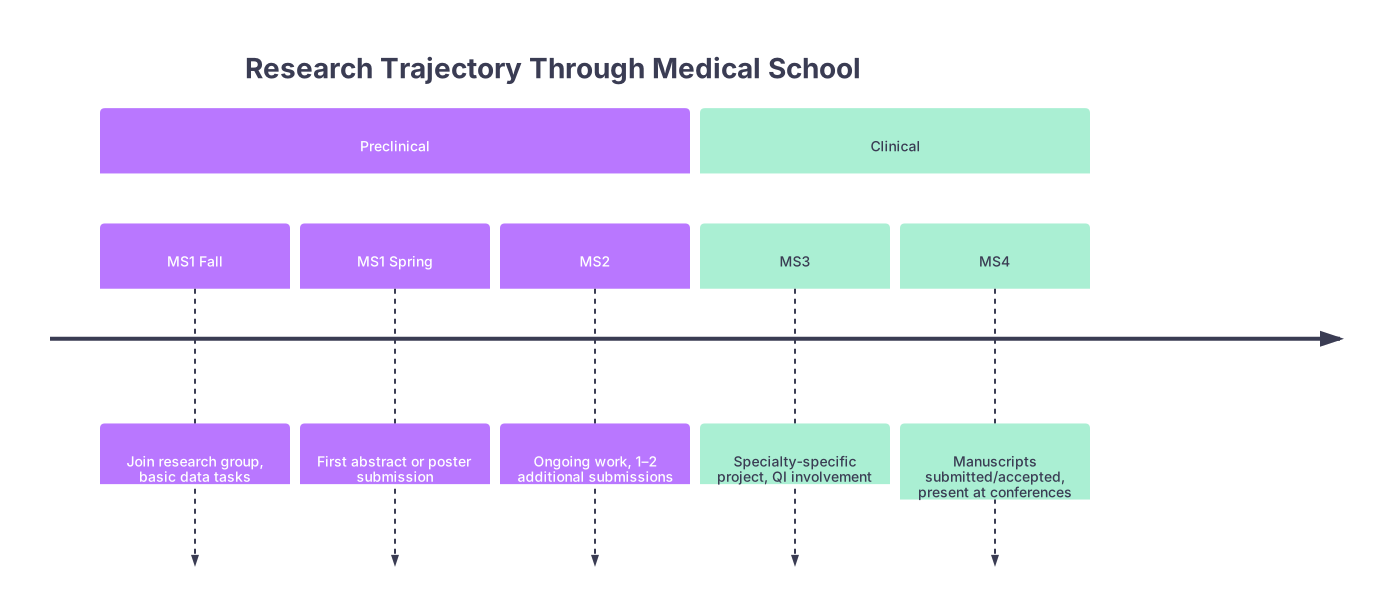
| Period | Event |
|---|---|
| Preclinical - MS1 Fall | Join research group, basic data tasks |
| Preclinical - MS1 Spring | First abstract or poster submission |
| Preclinical - MS2 | Ongoing work, 1–2 additional submissions |
| Clinical - MS3 | Specialty-specific project, QI involvement |
| Clinical - MS4 | Manuscripts submitted/accepted, present at conferences |
By MS4 ERAS submission:
- Academic-leaning applicants: several completed outputs, with at least one in target specialty.
- Community-leaning applicants: at least one well-executed project (often QI), plus maybe a poster or two.
So What Actually Distinguishes Academic vs Community Matches?
Boil it down:
Volume: Academic matches have higher medians and wider high-end tails in research counts. Community matches are shifted lower but not down to zero.
Depth and Relevance: Academic programs weigh project rigor and specialty alignment more heavily. Community programs still value relevance but accept more general or QI-focused work.
Narrative Fit: Academic matches signal a trajectory toward scholarly or subspecialty careers. Community matches signal commitment to clinical practice, but with enough scholarly engagement to satisfy institutional and accreditation expectations.
And the critical point: there is far more overlap than separation. A strong, well-aligned research profile will help you at both program types. Its absence will hurt you at both, especially in competitive fields.
Key Takeaways
- The data show overlapping research distributions for academic and community matches; the curves are shifted, not separate.
- Specialty competitiveness explains more variance in research expectations than program type does; academic vs community is a secondary modifier.
- Successful applicants match their research depth, volume, and narrative to their target mix of programs, rather than following the lazy “academic = lots, community = none” myth.