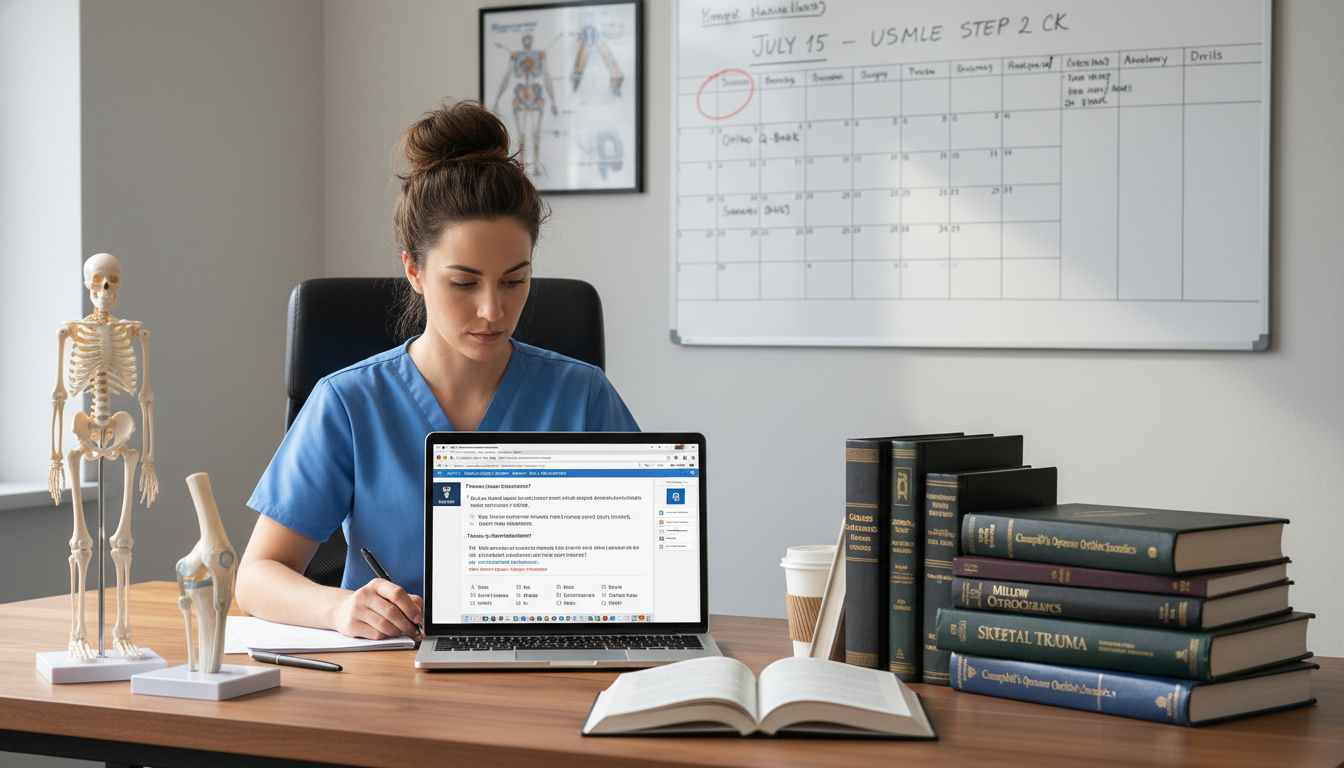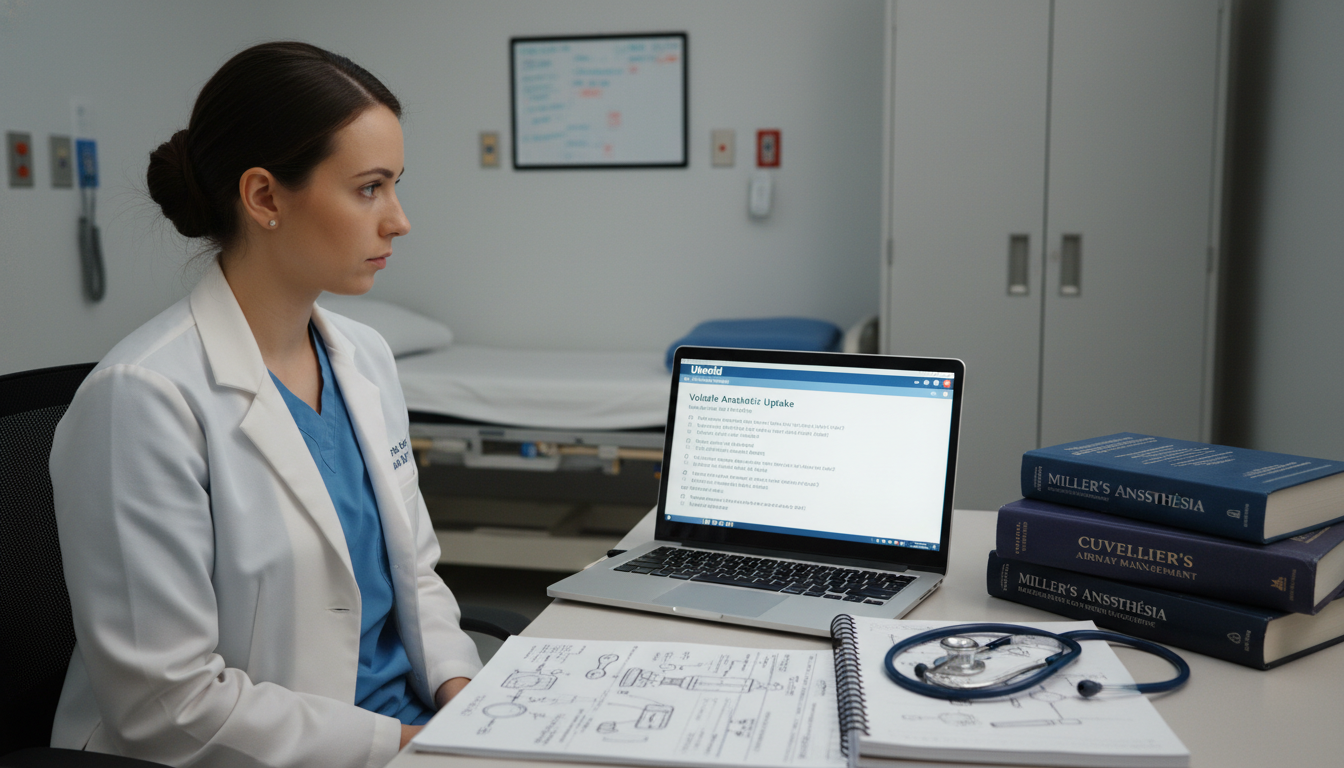
Preparing for anesthesiology board exams is a long game, not a cramming sprint. Between clinical duties, call schedules, fellowship applications, and life outside the hospital, you need a strategy that maximizes learning efficiency and minimizes burnout. This guide walks you through the core board exam study resources in anesthesiology, how to use them, and how to build a smart, sustainable plan that carries you from CA‑1 through the anesthesia match and into independent practice.
Understanding the Anesthesiology Board Exam Landscape
Before diving into specific board exam resources, it’s essential to understand what you’re actually preparing for and how each exam shapes your study strategy.
The Major Exams in Anesthesiology Training
Most U.S. anesthesiology residents will encounter:
USMLE/COMLEX (Pre‑Residency)
- These exams determine competitiveness for the anesthesiology residency and anesthesia match.
- Even after you match, the habits and resources you used (Anki USMLE decks, UWorld tips, mastery of physiology and pharmacology) form the foundation for anesthesia learning.
- High‑yield systems: cardiopulmonary physiology, pharmacokinetics and pharmacodynamics, neurophysiology, renal physiology, and pain pathways.
In‑Training Exam (ITE) in Anesthesiology
- Annual multiple‑choice exam (CA‑1 to CA‑3).
- Strong predictor of ABA BASIC performance.
- Program directors use it to benchmark your progress; fellowship directors often review these scores as well.
ABA BASIC Exam
- Taken at the end of CA‑1 year.
- Focuses on fundamental concepts: physiology, pharmacology, basic anesthesia, equipment, and monitoring.
- Builds directly on USMLE knowledge but in an anesthesia context.
ABA ADVANCED Exam
- Usually taken after residency completion.
- More clinically nuanced: subspecialty anesthesia, critical care, pain, advanced monitoring, practice management, and consultative decision‑making.
Oral Boards (APPLIED – OSCE + Standardized Oral Exam)
- Case‑based, interactive format.
- Emphasizes communication, crisis management, professionalism, and real‑world judgment.
Each step requires a slightly different resource mix. Choosing board exam resources without this context is like picking drugs without knowing the patient.
Core Resource Types: Building a Balanced Study “Formulary”
Think of your study resources as you would your anesthetic agents—each has indications, strengths, and side effects. A good regimen combines a few first‑line tools used consistently, rather than everything used sporadically.
1. Question Banks (Qbanks)
For anesthesia board exams, Qbanks play a central role.
Why Qbanks matter:
- Mimic exam style and test‑taking logic.
- Expose knowledge gaps.
- Teach via explanation, not just right/wrong answers.
- Reinforce memory through retrieval practice.
Key features to look for in an anesthesiology qbank:
- Blueprint alignment with ABA BASIC/ADVANCED or ITE.
- Up‑to‑date content (within last 2–3 years).
- Detailed rationales, with references to standard anesthesia texts (e.g., Miller, Barash, Morgan & Mikhail).
- Performance analytics and ability to create custom exams by topic/difficulty.
How to use qbanks effectively:
- For BASIC: Focus on foundational sections (physiology, pharmacology, equipment, monitoring, basic anesthesia).
- For ADVANCED: Prioritize subspecialty topics (cardiac, thoracic, neuro, OB, pediatrics, critical care, pain, regional).
- Start with tutor mode early in the year; switch to timed mode closer to the exam to build stamina.
- Target 20–40 questions/day consistently, rather than 100 once a week.
Though UWorld is geared to USMLE, the study habits you developed there are directly transferable. Your UWorld tips—like reviewing every explanation, tagging weak topics, and revisiting incorrects—apply perfectly to anesthesia‑specific Qbanks.
2. Textbooks and Core References
Textbooks provide the conceptual backbone your Qbank practice hangs on. The most commonly cited anesthesia board exam resources include:
Miller’s Anesthesia
- Comprehensive, in‑depth, and often used as the reference standard.
- Best used for clarifying complex topics, not front‑to‑back reading.
- Great for ADVANCED‑level understanding and specific high‑yield chapters (cardiac anesthesia, pulmonary physiology, pharmacology of anesthetic agents, fluid management).
Barash, “Clinical Anesthesia”
- Slightly more clinically oriented; very popular for residents.
- Often better for practical, case‑based understanding.
Morgan & Mikhail’s Clinical Anesthesiology
- Concise, readable, and board‑oriented.
- Ideal as a primary BASIC exam text.
- A strong choice for CA‑1 residents building fundamentals.
Equipment & Monitoring Texts
- E.g., Dorsch & Dorsch, Understanding Anesthesia Equipment.
- High‑yield for the BASIC exam and frequently tested ITE items (vaporizers, ventilators, gas laws, breathing circuits, safety systems).
Strategy tip: Pick one primary text as your anchor (e.g., Morgan & Mikhail for BASIC, Barash for ADVANCED) and commit. Use the others as references to fill in gaps when Qbank explanations point you to a specific topic.
3. Review Books and Outlines
Review resources are like quick‑onset, short‑acting agents—perfect for pre‑exam tuning:
- Anesthesia Board Review textbooks (topic‑based Q&A with explanations).
- Outline or bullet‑point review books targeted to BASIC or ADVANCED exams.
- High‑yield summaries for cardiopulmonary physiology, pharmacology, and pain pathways.
These resources are particularly useful:
- In the 4–8 weeks leading up to the exam.
- During short downtime (commute, quick breaks).
- For structured reading in high‑yield topics (airway, difficult airway algorithms, regional anesthesia complications, anticoagulation and neuraxial techniques).

Spaced Repetition & Digital Tools: Anki, USMLE Habits, and Beyond
Spaced repetition isn’t optional anymore; it’s a must‑have. What you did for USMLE can and should be adapted to anesthesiology.
Using Anki for Anesthesiology Boards
If you used Anki USMLE decks as a med student, you already know the power of spaced repetition. For anesthesiology:
Deck Types
- Pre‑made decks specifically for:
- ABA BASIC exam
- ABA ADVANCED / ITE
- Custom cards from:
- Qbank explanations you missed.
- Attending teaching points on rounds.
- Key details from reading (drug dosages, equations, algorithms).
- Pre‑made decks specifically for:
What to Put into Anki
- Numerical values:
- MAC values for inhaled agents.
- Pharmacokinetic parameters (onset, duration, metabolism).
- Ventilator settings and ARDSnet parameters.
- Algorithms and flows:
- Difficult airway algorithms.
- Local anesthetic systemic toxicity (LAST) management.
- Malignant hyperthermia treatment.
- Tables and comparisons:
- Opioid potency and conversions.
- Local anesthetic potency, onset, and duration.
- Ventilation strategies in specific disease states (COPD, ARDS, obesity).
- Numerical values:
Daily Workflow
- Protect 30–45 minutes/day for cards.
- Limit new cards (e.g., 20–30 new/day) to avoid burnout.
- Make it automatic: mornings pre‑rounds or evenings post‑call.
Anki is especially helpful between exams, where continuous spaced repetition ensures your BASIC foundation doesn’t decay before ADVANCED and board certification.
Integrating Qbanks and Anki
- After each Qbank session:
- Create 3–10 cards only from questions you missed or guessed.
- Focus on single, atomic facts or small algorithms, not huge paragraphs.
- Include images when helpful (airway devices, flow–volume loops, monitoring traces).
This combo mimics the USMLE strategy where UWorld tips emphasized:
- Understand why every option was right or wrong.
- Capture only the highest‑yield learning points.
- Reinforce with spaced repetition rather than repeated rereads.
Phase‑Based Strategy: From Residency Start to Final Boards
Your board exam strategy should evolve as you move from CA‑1 to practice. Below is a structured timeline using common resources and realistic expectations.
CA‑1 Year: Building the Foundation (BASIC‑Focused)
Primary Goals
- Establish strong core knowledge for the ABA BASIC and ITE.
- Translate USMLE physiology and pharmacology into anesthesia practice.
Core Resources
- One primary textbook (e.g., Morgan & Mikhail).
- Anesthesia‑specific Qbank aligned to BASIC/ITE.
- Anki decks or custom cards focusing on fundamentals.
Weekly Template (Example)
- Qbank: 20–30 questions/day × 5 days/week.
- Reading: 2–3 textbook chapters/week matching your qbank topics or current rotation (e.g., OB anesthesia rotation → OB chapters + OB‑related questions).
- Anki: 30–45 minutes/day, no zero‑days.
Practical Advice
- Start BASIC prep at least 6 months before the exam.
- Use ITE results to identify weak areas (e.g., equipment, OB, peds) and allocate extra reading + targeted questions.
- Attend resident didactics and convert high‑yield teaching points into Anki cards the same day.
CA‑2 Year: Depth, Subspecialties, and Strong ITE Performance
Primary Goals
- Solidify core knowledge and expand into subspecialties.
- Use ITE to gauge progress toward ADVANCED level expectations.
- Begin informal preparation for fellowship interviews (for those considering critical care, cardiac, peds, pain).
Core Resources
- Subspecialty chapters in your main textbook (cardiac, peds, neuro, thoracic).
- Qbank with ADVANCED‑level and subspecialty questions.
- Practice questions from review books in focused blocks (e.g., “cardiac month”).
Example Monthly Focus
- On cardiac rotation:
- Read selected chapters from Barash or Miller.
- 15–20 cardiac‑anesthesia questions/day from qbank.
- Create Anki cards for valve lesions, anticoagulation, CPB management, and hemodynamic goals.
CA‑3 Year: ADVANCED Exam and Transition to Independent Practice
Primary Goals
- Prepare systematically for the ADVANCED exam.
- Integrate practice management, critical care, pain, and ethics.
- Begin early exposure to oral board style (reasoning out loud).
Core Resources
- ADVANCED‑aligned Qbank (all topics).
- Review texts and high‑yield outlines.
- Brief reference reading from Miller/Barash for complex or frequently missed areas.
- Case‑based review materials (for both ADVANCED and eventual oral boards).
Final 3–4 Months Before ADVANCED
- Complete one full pass through a primary qbank.
- Mark and redo all incorrect or uncertain questions.
- Use timed blocks of 40–60 questions to simulate exam days.
- Focus reading on high‑yield, test‑dense areas:
- Cardiovascular and pulmonary anesthesia.
- Regional anesthesia and anticoagulation guidelines.
- Critical care (ventilation strategies, sepsis, shock, renal failure).
- Perioperative medicine and preop risk assessment.

Resources for the APPLIED (OSCE & Oral Boards)
Even though this exam comes after residency, it’s smart to understand resources early—especially if you’re shaping your communication and clinical reasoning now.
Standardized Oral Exam (SOE) Resources
Case‑based prep books
Collections of oral board scenarios with:- Vignettes.
- Questions a board examiner might ask.
- Model answers and reasoning pathways.
Small‑group practice
- 2–4 residents + one attending or senior fellow.
- Rotate roles: “examiner,” “examinee,” “observer.”
- Focus on structure:
- Clear, organized answers.
- Explicit risk–benefit justification.
- Crisis management steps stated out loud.
OSCE (Objective Structured Clinical Examination) Resources
While more program‑dependent, useful tools include:
- Communication skills workshops (e.g., breaking bad news, informed consent).
- Sim lab sessions focused on:
- Difficult airway scenarios.
- Crisis resource management.
- Team communication in emergencies.
- Institutional OSCE prep materials from your department or the ABA website.
Early Actionable Step: During residency, practice “thinking out loud” on rounds. When presenting your anesthetic plan:
- State the problem.
- List options.
- Justify your choice.
- Explicitly mention risks, alternatives, and mitigation plans.
These are the same habits tested on the APPLIED exam.
Putting It All Together: A Practical Study Blueprint
Here is a consolidated, actionable plan for using board exam resources efficiently through anesthesiology residency:
1. Choose Your “First‑Line” Resources
For most residents, a balanced regimen looks like:
BASIC Phase
- Textbook: Morgan & Mikhail or Barash.
- Qbank: BASIC/ITE‑aligned anesthesia qbank.
- Spaced repetition: Anki deck (pre‑made + custom).
- Supplement: Equipment/monitoring text for weak areas.
ADVANCED Phase
- Textbook: Barash (primary) + selected Miller chapters as needed.
- Qbank: ADVANCED‑level anesthesia qbank.
- Review: Bullet‑point or outline‑style board review book.
- Oral board awareness: Start light case‑based reading.
2. Use “Horizontal” and “Vertical” Integration
- Horizontal (across resources)
- Sync your reading, questions, and Anki around the same topic each week (e.g., “this week = airway + pulmonary physiology”).
- Vertical (across training years)
- Revisit key domains yearly:
- Airway management.
- Cardiovascular physiology.
- Pharmacology of anesthetics.
- Regional techniques and complications.
- Revisit key domains yearly:
3. Apply Smart USMLE Strategies to Anesthesia
Your experience with Anki USMLE decks and UWorld tips should translate directly:
- Never do “passive” questions. After each question:
- Why is the correct answer correct?
- Why is each distractor wrong?
- Convert your most painful wrongs into Anki cards.
- Avoid trying to use every resource. Just like with USMLE, depth with a few tools beats superficial exposure to many.
4. Track and Adjust
- Use qbank analytics and ITE feedback to:
- Identify weakest quartile topics.
- Rebalance your study time monthly (e.g., +20% time to OB if that’s bottom quartile).
- Keep a simple log (digital or notebook) with:
- Daily question counts.
- Chapters covered.
- New Anki cards added.
- Reflections on what’s working or not.
Frequently Asked Questions (FAQ)
1. How early should I start studying for the ABA BASIC exam?
You should begin structured BASIC preparation about 6 months before the exam, though your day‑to‑day residency work and ITE prep from the start of CA‑1 already count as indirect preparation. At the 6‑month mark, commit to:
- A consistent qbank schedule (20–30 questions/day).
- Targeted reading from one primary text.
- Daily Anki review for high‑yield facts and algorithms.
2. Are USMLE resources like UWorld still helpful during anesthesiology residency?
Directly, no—UWorld is not tailored to anesthesiology. Indirectly, very much yes. The study behaviors you developed with UWorld tips—like careful review of explanations, error logging, and disciplined daily question blocks—are exactly the behaviors that will make anesthesia‑specific qbanks powerful. Some USMLE physiology and pharmacology explanations can also provide helpful refreshers for BASIC concepts, but your main focus should be anesthesiology‑specific resources.
3. Do I really need Anki for anesthesiology boards if I didn’t like it for USMLE?
Not everyone must use Anki, but spaced repetition in some form is crucial. If you didn’t like Anki for USMLE, consider:
- Using smaller, more focused decks (e.g., just drug dosages, MAC values, or algorithms).
- Limiting new cards to avoid daily overload.
- Trying alternative spaced repetition apps or simple paper flashcards.
The key principle is regular, spaced review, not any single tool.
4. How many question banks should I use for BASIC and ADVANCED?
Most residents do best with one primary, high‑quality qbank per exam, done thoroughly:
- Aim to complete 100% of the bank, and then redo your incorrects.
- Only add a second resource if you:
- Have genuinely finished one bank with careful review.
- Still have time and bandwidth before the exam. Over‑spreading across multiple qbanks often leads to incomplete coverage and shallow learning.
By choosing a focused set of anesthesiology board exam resources and using them with intention—daily questions, consistent reading, and spaced repetition—you can build a durable knowledge base that serves you from the anesthesia match through certification and into independent practice.