
USMLE Step 2 CK is often the single most important exam for a US citizen IMG aiming to match in the United States. For many American students studying abroad, Step 2 CK becomes the “make‑or‑break” component of their application, especially as Step 1 has become pass/fail.
This guide is tailored specifically for the US citizen IMG—someone who understands the US system, but is training in a different one. You likely face:
- Different exam styles than the USMLE
- Varying clinical exposure and supervision
- Limited access to in‑person US mentorship
- Time constraints around clerkships and travel for US rotations
Below is a comprehensive, practical roadmap to USMLE Step 2 study: how to structure your prep, what resources to use, how to use them, and how to strategically time the exam to maximize your Step 2 CK score for residency applications.
Understanding Step 2 CK as a US Citizen IMG
Step 2 CK is designed to test clinical knowledge and the application of that knowledge to patient care. It’s not just about what you know; it’s about how you reason, prioritize, and make safe decisions.
Why Step 2 CK Matters So Much for US Citizen IMGs
For an American studying abroad, program directors often view Step 2 CK as:
- The key objective metric to compare you with US and non‑US graduates
- A reflection of how you will perform in real-world clinical decision-making
- A compensation factor if Step 1 was average or if your school’s reputation is less known in the US
Strong Step 2 CK performance helps:
- Demonstrate you can excel in a US‑standard, NBME‑style exam
- Offset concerns about school variability, grading systems, or lack of home institution in the US
- Strengthen your file if you have limited US clinical experience or later audition rotations
For competitive specialties (e.g., Dermatology, Ortho, ENT) the bar is very high, but even for core fields like Internal Medicine, Emergency Medicine, Pediatrics, and Family Medicine, a strong Step 2 CK score can noticeably elevate your candidacy.
Step 2 CK Structure and Skills Tested
- Format: 8 blocks in one day
- Number of questions: Up to ~40 questions/block, ~318 total
- Time: 60 minutes per block, plus break time
- Question Type: Long clinical vignettes, multiple‑choice, heavy on reasoning
Skills emphasized:
- Diagnosis and management of common conditions
- Next‑best step questions (e.g., diagnostic test, treatment, triage)
- Patient safety, ethics, and communication
- Prioritization of critically ill patients
As a US citizen IMG, your clinical rotations abroad might emphasize memorization or written exams. Step 2 CK, however, emphasizes clinical reasoning under time pressure, which must be trained deliberately.
Building a Realistic Timeline for Step 2 CK Preparation
Your timeline will depend on:
- Whether you’ve already taken Step 1
- Where you are in your clinical years
- Your target specialty and competitiveness
- How closely your school’s schedule aligns with US-style clerkships
Below is a practical framework you can adapt.
Step 1: Diagnostic Phase (2–3 Weeks)
Before committing to a long study plan, you need a starting point.
Review your Step 1 performance (if taken):
- Strong Step 1 (even with P/F, high NBME performance before exam): you may adapt faster to Step 2 CK.
- Weak Step 1: you’ll need a more deliberate, longer Step 2 CK study schedule.
Take a baseline NBME or UWorld Self‑Assessment:
- Use an early NBME Comprehensive Clinical Science Self‑Assessment (CCSSA) or UWSA1 to gauge:
- Your current score relative to your target specialty
- Weak content domains (e.g., OB/GYN, Surgery, Psych)
- Do NOT wait until you’re “ready”—this is a diagnostic, not a final test.
- Use an early NBME Comprehensive Clinical Science Self‑Assessment (CCSSA) or UWSA1 to gauge:
Map your calendar around clinical obligations:
- Identify:
- Rotation-heavy periods vs lighter blocks
- Windows for dedicated Step 2 CK preparation (4–10 weeks)
- Travel for US electives, away rotations, or exams
- Identify:
Typical Timeline for a US Citizen IMG
6–12 Months Before Exam
- Start integrating USMLE-style questions (UWorld) alongside your core rotations.
- Build familiarity with NBME question style and English medical terminology if your training is in another language.
3–6 Months Before Exam
- Transition to a more structured Step 2 CK study schedule.
- Aim for consistent daily question practice (20–40 questions/day at first).
6–10 Weeks of Dedicated Study (if possible)
- Intensify to 40–80 questions/day, plus targeted review.
- Multiple full-length practice exams to refine test-taking stamina.
Core Resources and How to Use Them Effectively
As a US citizen IMG, you may have less in‑person guidance on USMLE resources. Using the right tools—and using them properly—is critical.
1. Question Banks (Qbanks): Your Primary Tool
UWorld for Step 2 CK
This is non‑negotiable for a strong USMLE Step 2 study plan.
- Treat UWorld as your main learning tool, not just assessment.
- Aim to complete 100% of the bank, and ideally:
- 1.2–1.5 passes (first pass thoroughly, second pass focused on weak topics).
How to Use UWorld Effectively
Early Phase:
- Start with tutor mode, untimed.
- Do questions by system aligned with your current rotation (e.g., Medicine, Surgery).
- Read every explanation, including why distractors are wrong.
Dedicated Phase:
- Transition to timed, random blocks to simulate test conditions.
- Aim for 2 blocks/day (80 questions) during a strong dedicated period, adjusting for fatigue and other responsibilities.
- Review each block thoroughly: quality of review > quantity of questions.
Data Interpretation for US Citizen IMGs
- The UWorld percentile is not a direct predictor of your score, but:
- Aim for ≥60–65% correct by the end of your first pass if targeting a solid, competitive score.
- Focus less on the raw percentage and more on closing content gaps and understanding reasoning patterns.

2. Supplemental Question Banks
If you have a long timeline or weak foundation:
- Consider an additional qbank (e.g., Amboss) before or alongside UWorld:
- Use it for learning and expanding breadth.
- Use UWorld as your main high-yield refinement tool.
3. NBME Practice Exams
NBME CCSSAs are the closest representation of the actual test.
- Take 3–5 NBMEs spread over preparation:
- One for baseline (early).
- One around midway.
- One every 2–3 weeks as you near the exam.
- Use them to:
- Track progression.
- Identify persistent weak domains.
- Decide exam readiness.
Pair at least one NBME with UWorld Self‑Assessments (UWSA1 and UWSA2); UWSA2 often correlates closely with real scores.
4. Content Review Resources
Unlike Step 1, there is no single “bible” for Step 2 CK, but several high-yield resources are widely used:
Online MedEd (OME)
- Strong for building clinical frameworks, especially if your rotations abroad are variable in quality.
- Watch videos by system, then reinforce with questions.
Step‑Up to Medicine (for Internal Medicine foundations)
- Helpful if your internal medicine training is thin or heavily non-US focused.
Divine Intervention podcasts, Emma Holliday, or similar reviews
- High‑yield audio/visual reinforcement, useful when commuting or between rotations.
Use content review strategically:
- Don’t read textbooks cover-to-cover late in your prep.
- Use them to patch conceptual holes identified from Qbank and practice exams.
5. Anki and Spaced Repetition
For an American studying abroad, you may be juggling different guidelines and practices from your host country versus the US. Anki can help keep US‑standard information straight.
- Use an established Step 2 CK deck (e.g., those that map to UWorld concepts) or make your own cards based on:
- Missed questions
- NBME concepts
- Commonly confused guidelines
Aim for consistent, small daily Anki sessions (20–40 minutes) rather than marathon catch‑ups.
Designing an Effective Study Plan as a US Citizen IMG
Your Step 2 CK preparation should be adapted to your context as a US citizen IMG: school demands, clinical exposure, and future US rotations.
Step 2 CK Preparation During Clinical Rotations
If you’re still in core rotations while prepping:
Align study with your current rotation:
- Internal Med rotation → focus on Cardio, Pulm, Renal, ID in your qbank.
- Surgery rotation → GI, trauma, peri‑op management.
Daily Template (Busy Rotations):
- Morning: 10–20 Anki or light review (30–40 minutes).
- Post-clinic/ward: 20–40 UWorld questions + review (1.5–2 hours).
- Weekend: 1–2 larger blocks + targeted content review (4–6 hours).
Aim for steady, low‑intensity progress rather than waiting for a perfect “dedicated” that might never fully materialize.
Dedicated Period: 4–10 Weeks
During dedicated, your life revolves around USMLE Step 2 study. A general framework:
Weeks 1–2
- 40–60 UWorld questions/day, mostly by system to firm up weak areas.
- 2–3 hours/day of content review or videos for heavily deficient systems.
- One NBME or UWSA to set your baseline in dedicated.
Weeks 3–5
- 60–80 UWorld questions/day, in timed, random blocks.
- Review each block thoroughly (2–3 hours).
- Begin full-length exam simulation:
- One NBME every 1–2 weeks.
- Adjust schedule based on weak topics identified.
Weeks 6–8+
- Focus on:
- Random, timed blocks to mimic test day.
- Final NBMEs/UWSAs for calibration.
- Targeted review of low‑yield but frequently missed topics (ethics, biostatistics, preventive medicine).
- Start “maintenance mode”: no new massive resources, just consolidation and practice.
Balancing US Rotations, Interviews, and Study
Many US citizen IMGs take Step 2 CK around the same time they are:
- Doing US clinical electives/observerships
- Preparing for interviews
- Finishing core requirements at their school abroad
Strategies to stay on track:
- Use hotel or short-term housing time for Anki and short qbank blocks.
- Protect at least 1–2 focused study hours/day even during busy US rotations; communicate your exam date to supervisors if appropriate so they understand your schedule.
- Avoid scheduling Step 2 CK in the middle of an intense away rotation; either:
- Take it right before you start US rotations, or
- Take it shortly after your heaviest clinical block, with 3–4 weeks of semi‑dedicated prep time.
Test-Taking Skills, Mindset, and Exam Day Logistics
High knowledge without strong test-taking strategy leads to underperformance. This is particularly true for US citizen IMGs who may be used to different exam cultures.
Mastering the USMLE Question Style
USMLE questions reward:
- Safety (do no harm)
- Evidence-based practice
- Prioritization (sickest first)
- Cost-effective, guideline‑consistent decision‑making
When reviewing questions, always ask:
- What is the clinical priority? (Stabilize airway? Rule out life-threatening causes?)
- What information in the stem is most critical?
- Which answer options are dangerous, unnecessary, or unrelated?
Develop a structured approach:
- Read the last line of the question first (e.g., “What is the next best step?”).
- Skim the options quickly to know the domain (diagnostic test vs medication vs referral).
- Read the stem actively, looking for red flag clues.
- Commit to an answer before looking back repeatedly.
Improving Stamina and Focus
- Simulate test day multiple times:
- At least 2 full 7–8 block practice days before the real exam.
- Practice:
- Sitting for long periods
- Minimizing distractions
- Managing mental fatigue across multiple blocks
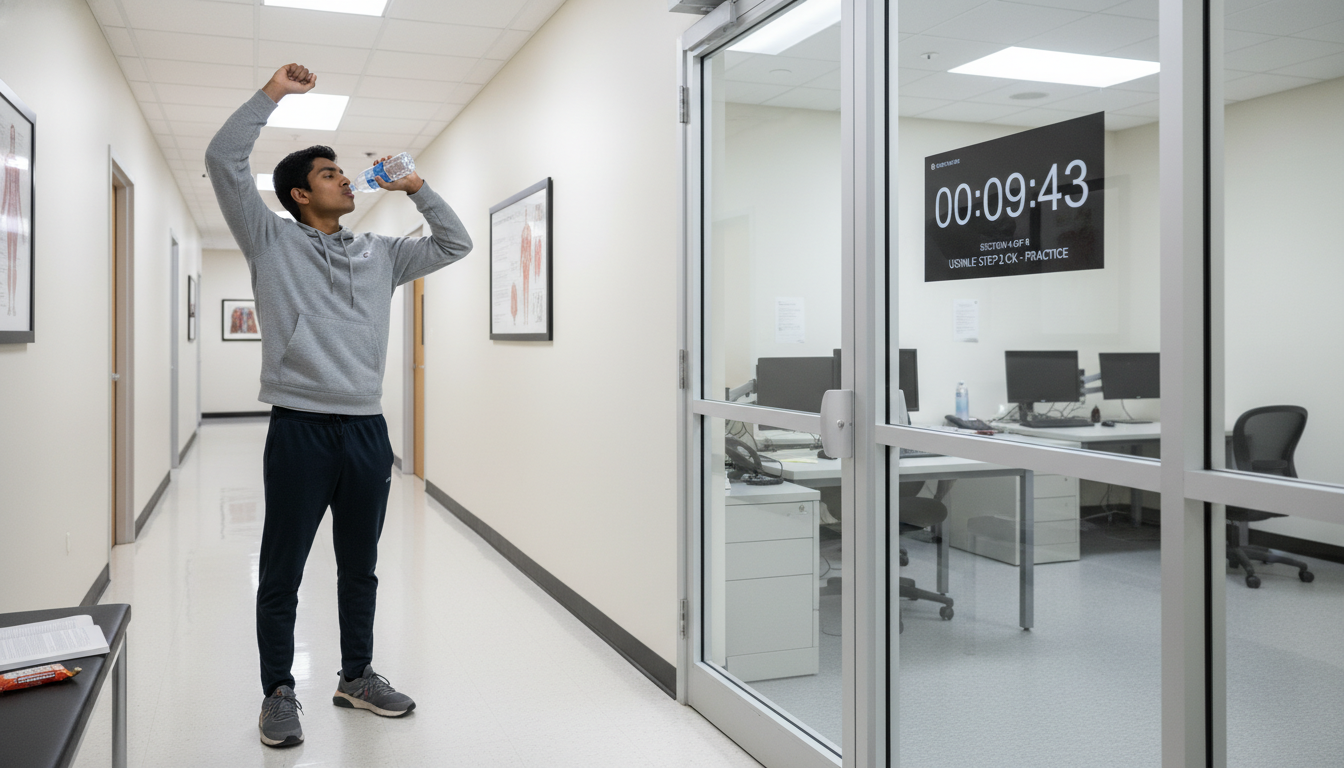
Use breaks strategically:
- Take short breaks every 1–2 blocks (5–10 minutes).
- Snack on light, familiar foods that keep energy stable.
- Stay hydrated, but not to the point of frequent bathroom breaks.
Exam Day Logistics for US Citizen IMGs
As a US citizen studying abroad, you might be traveling to sit for the exam:
- Schedule early to secure your preferred location and date.
- If flying internationally:
- Arrive at least 2–3 days before exam day to recover from jet lag.
- Do light review only (Anki or flashcards) the day before; no new content.
- Pack:
- Valid government ID (check NBME requirements).
- Snacks and a water bottle for your locker.
- Comfortable clothes in layers (testing centers can be cold).
Minimize stressors:
- Double-check transport routes and timing a few days before.
- Have a backup plan for reaching the test center (rideshare, taxi, etc.).
- Sleep is non‑negotiable; in the final 2–3 nights before the exam, prioritize sleep over extra late‑night studying.
Mindset and Confidence
As a US citizen IMG, you might carry:
- Anxiety about perceived stigma of training abroad
- Pressure to “prove yourself” with a high Step 2 CK score
Channel this pressure into consistent work, not panic:
- Remind yourself: you’ve completed clinical science training; Step 2 CK is a refinement, not a beginning.
- Use meaningful metrics: trends in NBME/UWSA scores, not individual bad days in UWorld.
- Practice exam‑day affirmations or routines:
- Brief mindfulness exercise before starting each block.
- Short breathing exercises during moments of anxiety.
Putting It All Together: Sample Study Plans
Below are two example study frameworks specifically tailored to common US citizen IMG scenarios.
Scenario 1: US Citizen IMG with 3 Months Before Exam, Full-Time Clinical Rotations
Goal: Solid, competitive score for core specialties (IM, FM, Peds, EM).
Month 1
- 20–30 UWorld questions/day in tutor mode, by system matching your rotation.
- 30 minutes of Anki per day.
- OME or brief review videos for your weakest systems.
- One NBME at the end of the month to set your direction.
Month 2
- 40–50 UWorld questions/day, gradually moving to timed, mixed blocks.
- 45–60 minutes/day of targeted content review (based on questions missed).
- One NBME at the middle of the month.
Month 3
- 60 questions/day in timed, random blocks.
- Every 1–2 weeks: one NBME or UWorld self-assessment.
- Final 2 weeks: exam simulation days (5–7 blocks in one sitting at least once).
Scenario 2: US Citizen IMG with 6 Weeks of Dedicated Time
Goal: Maximize score improvement in a short window, possibly to boost competitiveness for a mid-to-high-demand specialty.
Weeks 1–2
- 2 UWorld blocks/day (80 questions), by system for weakest subjects.
- 2–3 hours/day of targeted content review (notes, OME videos).
- One early NBME to calibrate.
Weeks 3–4
- 2–3 random, timed UWorld blocks/day.
- Review every block thoroughly (2–3 hours).
- One NBME per week.
- Fill in gaps with focused resources (biostatistics, ethics, OB emergencies).
Weeks 5–6
- 2–3 random blocks/day with emphasis on accuracy and efficiency.
- One UWSA + one NBME for final performance assessment.
- Light review of Anki/high-yield lists in final week, tapering intensity 2–3 days before the exam.
FAQs: US Citizen IMG and Step 2 CK
1. How high does my Step 2 CK score need to be as a US citizen IMG?
There is no single cutoff, but higher is always better. Roughly:
- For less competitive fields and community programs: being around or slightly above the national mean can be sufficient with strong clinical experiences and letters.
- For solid mid-tier academic programs: aim above the national mean by at least 10–15 points.
- For highly competitive specialties: you typically need a score well above average, strong clinical evaluations, research, and often a compelling narrative. Use NRMP Charting Outcomes and specialty-specific data to refine your target.
2. Should I take Step 2 CK before or after my US clinical electives?
If possible, take Step 2 CK before your US rotations so you can:
- Focus fully on clinical performance and letters during electives.
- Demonstrate your score to programs early in the application season.
However, if your foundation is weak, you may benefit from US-style clinical exposure first, then a 4–8 week dedicated study period.
3. How many NBMEs should I take, and when should I postpone my exam?
Aim for at least 3–4 NBMEs and 1–2 UWSAs. Consider postponing if:
- Your most recent 1–2 practice exams are well below your target (more than ~10–15 points away).
- Your scores are not trending upwards over time.
But also consider realities: visa issues, school deadlines, and residency application timelines. Sometimes a strategically “good enough” score taken on time is better than a late, marginally improved score.
4. I’m an American studying abroad in a non-English system. How can I adapt to English NBME-style questions?
- Read UWorld explanations out loud or subvocally to reinforce English medical phrasing.
- Use English resources exclusively for Step 2 CK (OME, podcasts, NBME forms).
- Practice summarizing cases in English after rotations.
- If needed, spend 1–2 weeks doing shorter timed blocks purely to get used to reading speed and comprehension in English before ramping up question volume.
By building a structured, realistic plan; using high-yield resources wisely; and intentionally training your test-taking skills, you can transform Step 2 CK from a source of anxiety into a powerful asset in your residency application. As a US citizen IMG, you bring unique experiences and adaptability—pair those with a strong Step 2 CK performance, and you’ll significantly improve your chances of matching into a program that fits your goals.