Preparing for USMLE Step 1 is high-stakes for every medical student, but if you’re aiming for a plastic surgery residency, the exam carries especially heavy weight. Even though Step 1 has transitioned to Pass/Fail, program directors in highly competitive fields—especially those reviewing integrated plastics match applicants—still view Step 1 performance as a strong indicator of work ethic, cognitive discipline, and test-taking skill.
This guide walks you through USMLE Step 1 preparation specifically tailored to aspiring plastic surgeons—how to plan your study, which Step 1 resources to prioritize, how to integrate surgical and anatomy knowledge, and how to use Step 1 as the foundation for a competitive plastic surgery application.
The Role of Step 1 in Plastic Surgery Residency Applications
For integrated plastic surgery, nearly every element of your file must be outstanding: clinical performance, research, letters of recommendation, and board exams. With Step 1 now Pass/Fail, its role is evolving but far from irrelevant.
Why Step 1 Still Matters for Plastic Surgery
Baseline filter for competitiveness
- Programs want evidence that you can master large volumes of information and handle board-style exams.
- A strong pass on Step 1 (often inferred from your subsequent Step 2 CK score and transcript timing) signals reliability and discipline.
Foundation for Step 2 CK (which is now heavily weighted)
- Plastic surgery programs increasingly use Step 2 CK scores as a key quantitative discriminator.
- Students who build deep conceptual mastery for Step 1 generally perform better on Step 2 CK—often the formal “number” plastics programs will see.
Indicator of study skills and resilience
- The habits you build during USMLE Step 1 study (resource discipline, question bank consistency, error analysis) are the same habits that carry into clerkships, research productivity, and later board exams.
Context for research and specialty interest
- A solid Step 1 history reassures busy faculty that supporting you (e.g., letters, research mentorship) is a good investment of their time.
What Programs Care About Beyond Step 1
Because Step 1 is scored Pass/Fail, plastic surgery PDs increasingly emphasize:
- Step 2 CK score and timing
- Research output, especially plastics-related
- Letters from plastic surgeons
- Clerkship grades, particularly surgery and related rotations
- Sub-internship performance in plastic surgery
- Professionalism and teamwork
Your Step 1 strategy should therefore do two things simultaneously:
- Ensure you pass comfortably on the first attempt
- Build a robust knowledge and test-taking base that sets up an excellent Step 2 CK and clinical performance
Building a High-Yield Step 1 Study Plan with a Plastic Surgery Lens
A great Step 1 plan for an aspiring plastic surgeon looks similar to any strong Step 1 plan, but with specific attention to anatomy, wound healing, and surgical sciences.
Step 1 Preparation Timeline
Below is a common timeline framework (adjust based on your curriculum):
Pre-dedicated Period (MS1–early MS2)
Goals:
- Build conceptual foundations
- Learn to use Step 1 resources in parallel with coursework
- Begin light board-style questions
Action Steps:
- During each system (e.g., cardio, neuro):
- Read corresponding sections of First Aid, Boards & Beyond, or similar resource
- Do 20–40 UWorld questions/week, even early, focused on your current system
- Start AnKing or other Anki deck for long-term spaced repetition
- Establish a habit of daily Qbank + Anki, even if just 10–20 minutes at first.
Dedicated Period (usually 4–8 weeks)
Goals:
- Consolidate and integrate knowledge
- Maximize Qbank exposure (UWorld + supplemental bank if time)
- Address weaknesses, simulate exam conditions
Sample 6-Week Structure:
Week 1–2: Systems review with integrated questions
- 60–80 Qs/day in timed, random blocks
- Rapid pass through high-yield content (e.g., First Aid, B&B notes)
Week 3–4: Emphasis on mixed blocks and weak systems
- 80–120 Qs/day, mostly mixed and timed
- Heavy focus on error analysis and consolidation
Week 5–6: NBME practice, test-day simulation
- NBME every 5–7 days
- Half-days of full-length simulations (with breaks structured like test day)
Study Planning Specifically for Aspiring Plastic Surgeons
While Step 1 itself won’t test operative techniques, plastics is a detail-oriented, anatomy-heavy specialty. Reflect that in your study approach:
Prioritize anatomy and embryology:
- Especially head and neck, upper extremity, trunk, vascular and nerve anatomy
- Tightly recall neurovascular bundles, compartment anatomy, and anatomic variants
Strengthen understanding of:
- Wound healing phases (hemostasis, inflammation, proliferation, remodeling)
- Collagen types, scarring, and keloid vs hypertrophic scar biology
- Infection and inflammation, host response, and perioperative considerations
- Microbiology relevant to skin and soft tissue (e.g., S. aureus, Pseudomonas)
Learn to integrate pathophysiology with anatomy:
- Example: A question about a midshaft humeral fracture with wrist drop is an anatomy + neuro question that resonates with upper extremity reconstructive planning later.
This content overlaps heavily with plastics and will also help you appear more prepared in early specialty conversations and research presentations.
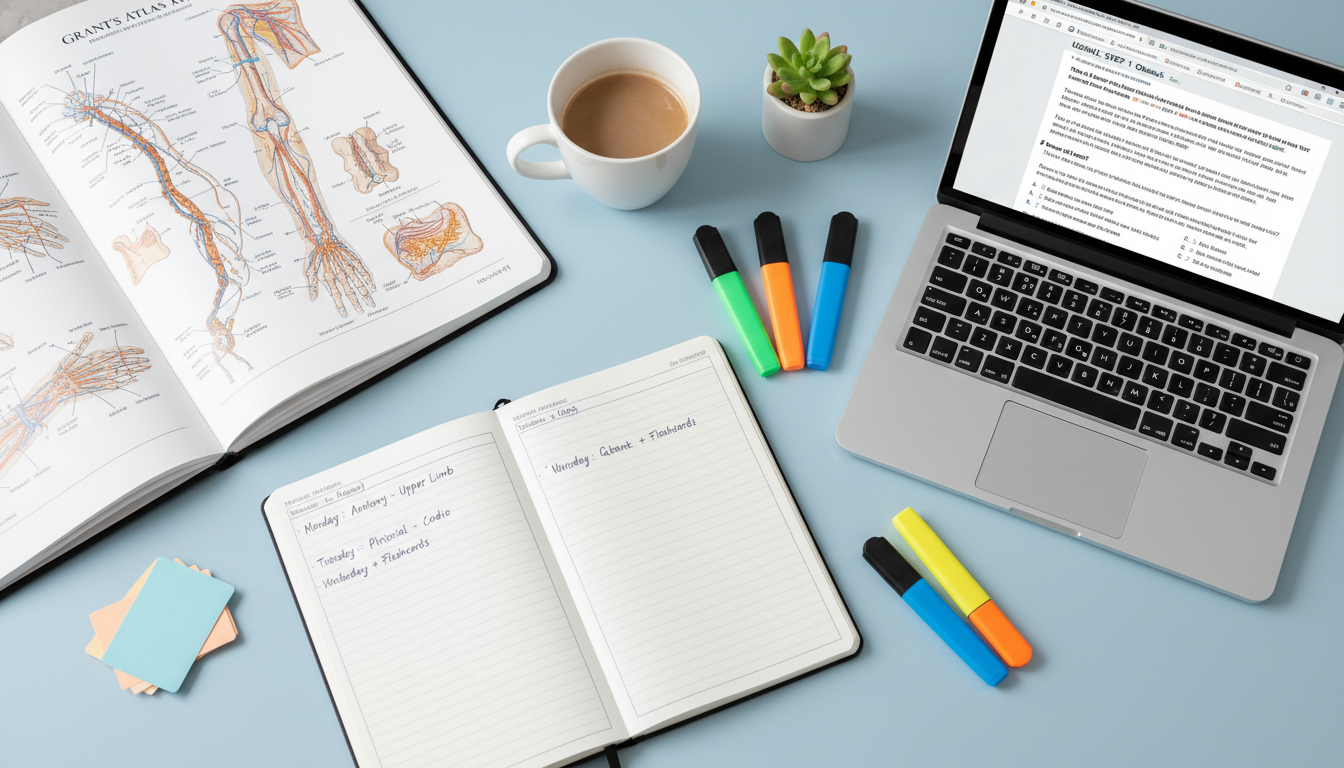
Essential Step 1 Resources and How to Use Them Strategically
There are many Step 1 resources, but a plastics-bound student must be disciplined: depth over breadth, mastery over “resource collecting.”
Core Content Resources
UWorld Step 1 Qbank (non-negotiable)
- Treat this as your primary learning tool, not just an assessment.
- Aim to complete 100% of the bank, ideally with review of all explanations.
- Use timed, random mode during the latter half of prep to simulate test conditions.
For plastics-oriented students:
- Tag questions related to anatomy, musculoskeletal, skin/soft tissue, wound healing for review.
- Build a habit of mapping each clinical vignette to anatomic structures you might address surgically.
First Aid for the USMLE Step 1 (or equivalent core review text)
- Use as a skeletal framework:
- Annotate with insights from UWorld and lectures
- Add extra detail in anatomy and pathology you find clinically interesting
- Don’t just read; connect each fact to a clinical scenario.
- Use as a skeletal framework:
Boards & Beyond / Pathoma / OnlineMedEd (or similar)
- Pathoma: Essential for path foundations; watch early and re-watch weak topics during dedicated.
- Boards & Beyond: Excellent for physiology and integration—especially for complex systems like neuro or cardio, which are highly relevant for microsurgery planning and perioperative care.
Supplementary Resources (use selectively)
Amboss or Kaplan Qbank
- Use if you finish UWorld with time to spare or want more practice.
- Consider focusing your extra questions on anatomy, neuro, MSK, and integument.
Anatomy-specific resources (higher-yield for plastics-bound students):
- Clinical Anatomy by Regions (Moore) or similar: skim relevant regions during systemic blocks.
- Short, focused anatomy videos or apps (e.g., Complete Anatomy, Acland videos).
- During your USMLE Step 1 study, aim not just to identify structures but to learn approaches: e.g., where nerves are vulnerable during common incisions or fractures.
Anki (e.g., AnKing, lightyear decks)
- Use for spaced repetition of facts.
- Tag or create custom cards for:
- Nerve lesions and associated deficits
- Cutaneous innervation patterns
- Muscle origins/insertions most common in exam questions
- Collagen types, wound healing mediators, surgical infection pathogens
What to Avoid
- Constantly switching primary resources
- Trying to use every popular book/video/course
- Reading large surgery texts as “Step 1 prep” (true surgical detail is not tested heavily; prioritize core science that underlies surgery)
Your goal: Fewer resources, deeper mastery, more questions.
High-Yield Content Areas for Future Plastic Surgeons
While you must master the entire Step 1 blueprint, a plastics-focused lens can make the process more meaningful and help shape your future competency.
1. Anatomy: The Bedrock for Plastic Surgery
While most Step 1 questions are conceptual, anatomy remains crucial. For plastics-bound students, go beyond minimal exam-level competency.
Key areas:
Head and Neck Anatomy
- Facial nerve branches and clinical correlations
- Trigeminal nerve divisions, sensory innervation
- Blood supply to face, scalp, and oral cavity
- Parotid gland and its relationships
- Orbital contents and extraocular muscles
Upper Extremity
- Brachial plexus formation and branches
- Innervation of major muscle groups and resulting deficits when injured
- Arterial supply (axillary, brachial, radial/ulnar) and common injury points
- Spaces (carpal tunnel, cubital tunnel, Guyon’s canal)
Lower Extremity
- Lumbosacral plexus basics
- Major nerves (femoral, obturator, sciatic, tibial, common peroneal) and lesion patterns
- Vascular supply and relevant claudication/ischemic syndromes
Trunk and Back
- Breast anatomy (lobules, ducts, lymphatic drainage)
- Abdominal wall layers, hernia spaces (Hesselbach’s triangle, inguinal vs femoral hernias)
Neuroanatomy
- Cranial nerves and brainstem lesions
- Motor and sensory pathways
- Stroke syndromes and vascular territories
As you study, ask: “How would this anatomy impact incision choice, flap design, nerve repair, or aesthetic outcomes?”
2. Wound Healing, Tissue Biology, and Infection
Plastic surgeons are experts in tissue handling and healing. Step 1 lays the mechanistic foundation:
- Phases of wound healing: time course, dominant cells, and mediators
- Collagen synthesis and remodeling
- Risk factors for poor healing: diabetes, smoking, steroids, malnutrition, vascular insufficiency
- Hypertrophic scars vs keloids: differences in pathogenesis and treatment
- Skin structure: epidermal layers, adnexal structures, melanocytes, Langerhans cells
- Microbiology of skin/soft tissue infections
- Principles of graft and flap physiology (although Step 1 rarely tests flap specifics, the underlying physiology—angiogenesis, ischemia, reperfusion—is high-yield)
3. Pathophysiology that Bridges to Plastic Surgery
- Oncology relevant to plastics:
- Breast cancer basics (receptors, common treatments)
- Skin cancers: basal cell, squamous cell, melanoma (ABCDEF, Breslow depth)
- Vascular disease and ischemia relevant to limb salvage and reconstructive cases
- Burns: classification (depth, TBSA), fluid shifts, initial management principles
Although these topics are not “plastic surgery questions,” they are cornerstones of the problems plastic surgeons manage daily.
Test-Taking Strategy, Mental Health, and Long-Term Positioning for the Integrated Plastics Match
Performing well on Step 1 is not only about knowledge. It’s about consistency, self-awareness, and resilience—qualities that matter deeply in the OR and in competitive matches.
Test-Taking Tactics for Step 1
Approach to Questions
- Read the last line of the stem first to anchor your attention.
- As you read, annotate mentally: age, key comorbidities, time course, key labs.
- Form a provisional diagnosis or mechanism before looking at the answer choices.
Use of Timed Blocks
- From mid-prep onward, always practice in timed mode.
- Aim for 1 minute 15–20 seconds per question in practice to build a small buffer for hard items.
Handling Uncertainty
- Eliminate clearly wrong choices; pick the best remaining.
- Avoid overthinking rare zebras unless the stem strongly supports them.
- Train yourself not to dwell on a missed question—build “cognitive compartmentalization,” which is essential in surgery.
NBME and Practice Exams
- Use NBMEs to:
- Identify content gaps
- Calibrate pacing
- Simulate test-day fatigue
- Always thoroughly review every wrong and guessed question.
- Use NBMEs to:
Protecting Your Mental Health
Plastic surgery attracts highly driven, perfectionistic students—traits that can both help and harm.
Set realistic daily goals
- Example: 80 UWorld questions + 200–300 Anki reviews + 2–3 hours of focused content review.
- Celebrate completion of the process, not just high percentages.
Schedule off-time
- At least half a day off weekly for exercise, sleep, or personal activities.
- Protect your sleep; cognitive performance collapses on chronic restriction.
Manage comparison
- Many plastics-bound peers will be high-performers; avoid constant score comparison.
- Focus on your trend and your needs; your path may differ in timing or background.
Seek help early if struggling
- Academic support services, upperclass mentors in plastics, or wellness programs can provide structure and accountability.
Linking Step 1 to the Bigger Picture: The Integrated Plastics Match
Think of Step 1 as your first “board exam dress rehearsal” for a lifelong surgical career. Use it to:
Build Board-Ready Habits
- Disciplined use of Qbanks and spaced repetition
- Structured error analysis (Why did I miss this? Knowledge? Interpretation? Rushing?)
Reinforce Your Specialty Story
- Use anatomy and wound healing topics as an entry point to seek plastic surgery mentors or research early.
- Demonstrate to faculty that your enthusiasm for plastics is grounded in scientific curiosity, not just lifestyle or prestige.
Position Yourself for Step 2 CK
- After Step 1, continue light Qbank/Anki during clerkships.
- Aim for a strong Step 2 CK score that complements your documented Step 1 pass and supports your integrated plastics match application.
If Step 1 is a rough experience (e.g., just passing after struggling), all is not lost. Many successful plastics residents had setbacks early; they compensated with:
- Outstanding Step 2 CK performance
- Strong research portfolios
- Stellar letters and sub-I performance
The key is to learn from Step 1 and upgrade your strategy.
Practical Example: A Sample 6-Week Dedicated Step 1 Schedule for Plastics-Bound Students
Here’s a concrete template you can adapt (assuming you’ve done some pre-dedicated prep):
Monday–Saturday (Typical Day)
8:00–10:30 – UWorld Block 1 & Review
- 40 Qs, timed, mixed
- Detailed review: read explanations, annotate First Aid/notes
10:45–1:00 – UWorld Block 2 & Review
- 40 Qs, timed, mixed
- Note patterns of mistakes (e.g., misreading, content gap, poor anatomy recall)
1:00–2:00 – Lunch + short walk or break
2:00–4:00 – Content Review (rotating by system)
- Pathoma or Boards & Beyond video(s) + corresponding First Aid chapters
- On M/W/F: heavy focus on anatomy and neuro
- On T/Th/Sat: other systems, with special emphasis on micro and immunology
4:00–5:30 – Anki / Flashcards
- 200–300 review cards
- 20–30 new cards (prioritize anatomy and pathophys)
5:30–7:00 – Optional 20–40 extra questions or targeted review
- Focus on weak topics or an anatomy Qbank if available
Evening – Light walk/exercise, dinner, wind-down
- Short 30–45 minutes of passive review (annotating notes, rewatching a tough concept)
Sunday: Lighter or NBME Day
If NBME day:
- Morning: Full NBME in test-like conditions
- Afternoon: Review marked and incorrect questions
- Evening: Relax / reset
If non-NBME day:
- Half day only (e.g., 40–80 questions + review)
- Afternoons off for rest, meal prep, and brief planning for the upcoming week
Adjust this template based on your stamina and performance, but maintain:
- Daily questions
- Daily spaced repetition
- Daily content reinforcement
FAQs: USMLE Step 1 and Plastic Surgery Residency
1. Does Step 1 still matter for plastic surgery now that it’s Pass/Fail?
Yes, but differently than before. Most plastic surgery programs will not see your exact numeric Step 1 score, but they care that you:
- Pass on the first attempt, ideally without delay
- Demonstrate habits that lead to an excellent Step 2 CK score
- Use Step 1 as a foundation for strong clinical and research performance
Programs will scrutinize your Step 2 and overall trajectory more heavily, but a strong Step 1 preparation process remains critical.
2. Should I study plastic-surgery-specific material for Step 1?
Not directly. Step 1 tests basic and clinical sciences, not operative technique. However, as a future plastic surgeon, you should:
- Put extra effort into anatomy, wound healing, tissue biology, and infection.
- Learn this material with a clinical reconstruction mindset, which will pay off later.
- Save detailed flap design, aesthetics, and microsurgery reading for after Step 1 or during clinical years.
3. How can I balance Step 1 preparation with early plastic surgery research?
Prioritize Step 1 when you’re within ~3–4 months of your dedicated period or exam date. Earlier in MS1–MS2:
- Start small research commitments (e.g., chart reviews, case reports, literature reviews) that don’t require strict daily lab presence.
- Communicate clearly with your mentor, explaining that Step 1 will require increased focus closer to the exam.
- After Step 1, ramp up plastics research intensity when you can give it proper attention.
4. If I struggle with anatomy, can I still be competitive for plastic surgery?
Yes—if you’re willing to invest in mastering anatomy over time. For Step 1:
- Use a combination of visual resources (3D apps, atlases) and clinical vignettes.
- Create or tag specific Anki cards for nerve injuries, vascular territories, and important muscle groups.
- Continue building your anatomy through your surgery clerkship and sub-Is.
Plastic surgery values growth and coachability. Demonstrating substantial improvement—from early weakness to later strength in anatomy and operative thinking—can become a powerful part of your story.
With thoughtful planning, disciplined use of high-yield Step 1 resources, and a plastic-surgery-focused mindset—especially for anatomy and wound healing—you can turn USMLE Step 1 preparation into more than just an exam hurdle. It can become your first deliberate step toward a successful, intellectually rich career in plastic surgery.