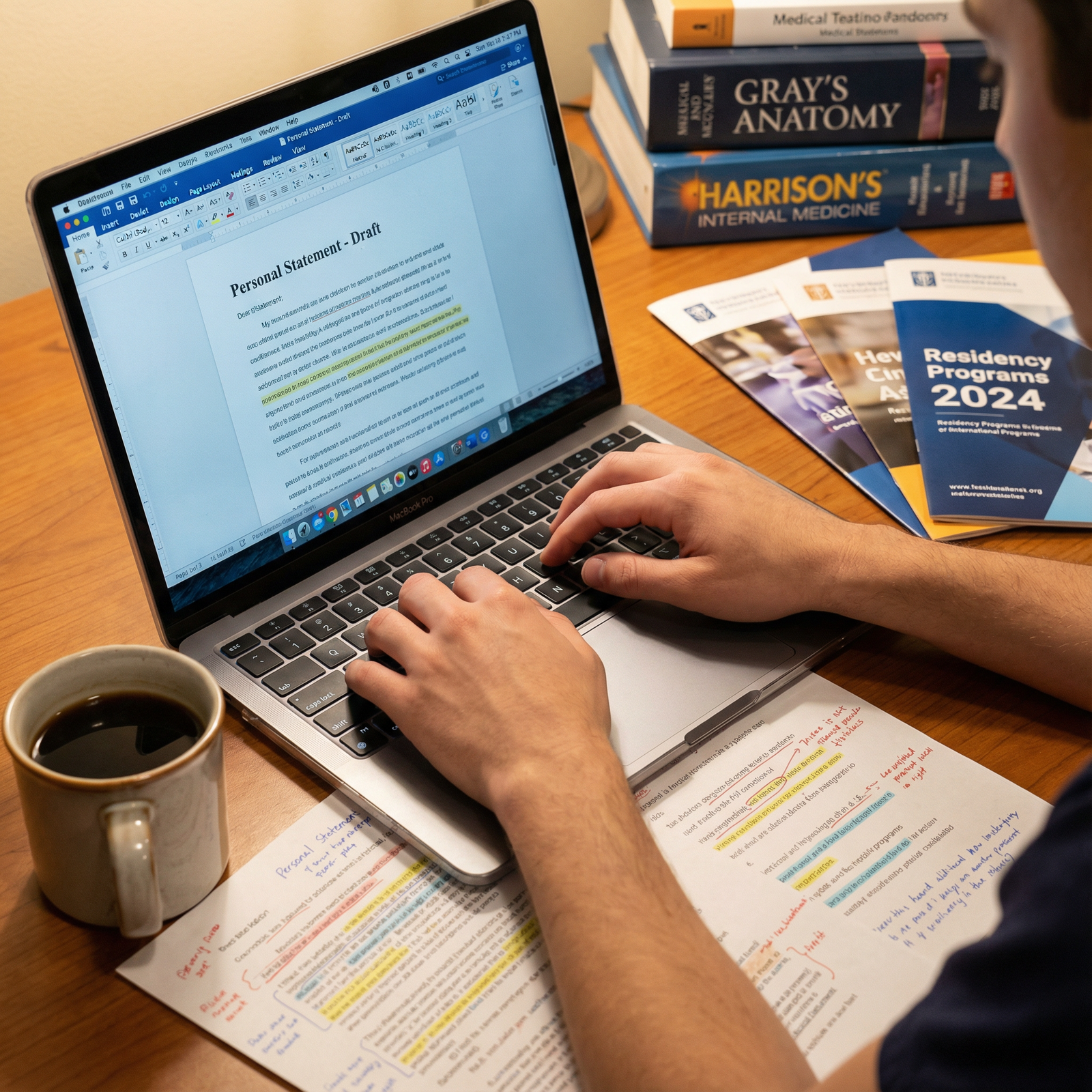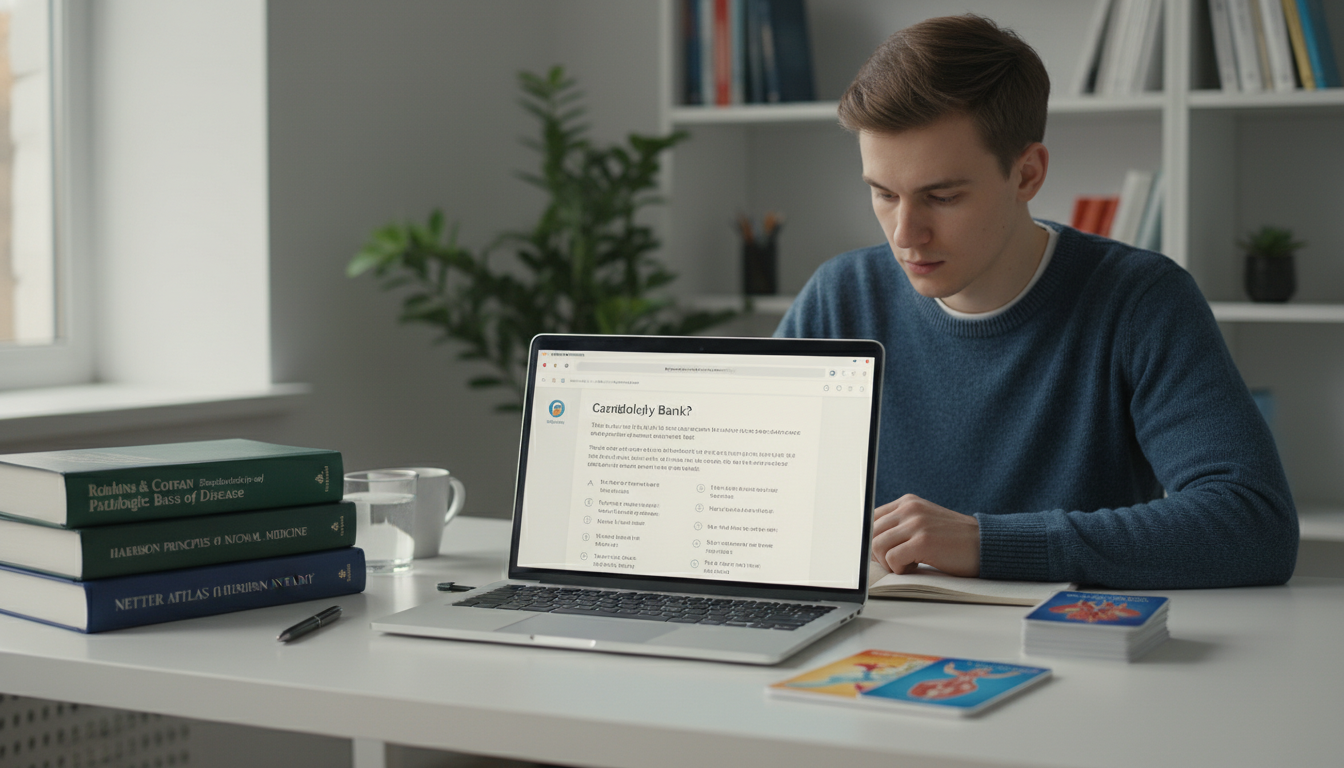
Preparing for medical board exams—whether USMLE, COMLEX, or specialty boards—can feel overwhelming. The stakes are high, the content is vast, and the number of board exam resources on the market seems to grow every year. Choosing the right tools and using them effectively is just as important as how many hours you study.
This guide walks you through the major categories of resources, how to combine them into a coherent strategy, and concrete tactics to get the most out of tools like Anki USMLE decks, UWorld, and other high-yield platforms. The focus is especially relevant to students planning for residency applications, where board performance plays a major role in interview offers and program ranking.
Understanding the Landscape of Board Exam Resources
Before you build a study plan, you need to understand what types of resources exist and what each is designed to do. Not all tools solve the same problem, and using the wrong tool at the wrong time is one of the most common study mistakes.
Core Categories of Study Resources
Question Banks (Qbanks)
- Purpose: Build clinical reasoning, test-taking skills, and familiarity with exam style.
- Examples: UWorld, AMBOSS, Kaplan, BoardVitals.
- Strength: Most predictive of exam performance when used properly.
- Limitation: Not ideal as your only source of initial content learning.
Comprehensive Review Books / Framework Texts
- Purpose: Provide a structured, high-yield overview of exam content.
- Examples:
- Step 1: First Aid, Boards & Beyond (video + outlines), Pathoma notes
- Step 2/3: Step-Up to Medicine, Master the Boards, NMS, OnlineMedEd notes
- Strength: Establish the big picture and key facts.
- Limitation: Reading passively without active recall results in poor retention.
Flashcards & Spaced Repetition (Anki)
- Purpose: Long-term retention of high-yield facts and concepts.
- Examples:
- Anki USMLE decks (e.g., AnKing Overhaul, Lightyear, lolnotacop, Zanki)
- Self-made decks for weaker areas or specific question stems.
- Strength: Prevents forgetting and keeps old content fresh.
- Limitation: Can become overwhelming without good deck management.
Video Lecture Series & Online Courses
- Purpose: Explain complex topics, fill gaps, and provide structure.
- Examples: Boards & Beyond, Pathoma, Sketchy, OnlineMedEd, Osmosis.
- Strength: Great for initial learning and clarification.
- Limitation: Passive; must be paired with questions and active recall.
Practice Exams & Self-Assessments
- Purpose: Gauge readiness, identify weaknesses, and simulate test day.
- Examples: NBME practice forms, UWorld self-assessments, COMSAEs for COMLEX.
- Strength: Most accurate way to estimate score trajectory.
- Limitation: Finite number; must be used strategically.
Supplemental Tools
- Purpose: Add efficiency or address niche needs.
- Examples:
- Sketchy Micro/Pharm (visual mnemonics)
- Clinical case books (e.g., Case Files, PreTest)
- Apps for rapid review (e.g., USMLE-Rx flashcards).
Matching Resource Type to Study Phase
Think of your study timeline in three overlapping phases:
Foundation Phase (Early Medical School / Early Dedicated)
- Main tools: Videos + review books + starter Anki
- Goal: Build understanding and a mental framework.
Integration Phase (Pre-dedicated / Early Clinical Rotations)
- Main tools: Question banks + targeted Anki + selective video review
- Goal: Apply knowledge repeatedly and identify weaknesses.
Refinement Phase (Dedicated Study Period)
- Main tools: High-intensity Qbank use, self-assessments, focused Anki review
- Goal: Close knowledge gaps, refine test-taking, and build exam stamina.
Building a High-Yield Core Resource Stack
You do not need—and should not try—to use every resource available. The highest performers usually rely on a deliberately limited, deeply used set of tools.
The “Core 4” for Most Board Exams
For most USMLE-style exams, a practical, high-yield core stack looks like:
Primary Qbank (UWorld)
- UWorld remains the gold standard for USMLE-style questions.
- Its detailed explanations function like a mini-textbook.
Spaced Repetition (Anki USMLE Deck)
- A well-curated deck (such as AnKing) aligned with your other resources.
- Ensures long-term retention so concepts from early months are still strong on test day.
Framework Resource (Book or Video Series)
- Boards & Beyond + First Aid (Step 1)
- OnlineMedEd / Step-Up / Master the Boards (Step 2/3 or shelf prep).
- Provides conceptual scaffolding and big-picture understanding.
Official/NBME Self-Assessments
- To track progress and predict performance.
- Used at key milestones rather than constantly.
All other board exam resources should be considered supplements, chosen to address specific weaknesses (e.g., visual memory, microbiology, pharmacology, ethics) rather than used “because everyone else is.”
How Many Resources Are Too Many?
A rough heuristic:
- Primary resources: 3–4 maximum (Qbank, Anki, 1 major content source, practice exams).
- Secondary/supplemental: 1–2 used sparingly (e.g., Pathoma for pathology, Sketchy for micro/pharm).
If you find yourself juggling 7–8 different platforms daily, your attention and depth of learning will suffer. It is better to master a smaller set thoroughly.

Mastering Question Banks: UWorld Tips and Strategy
Question banks are the single most powerful tool for board success—but only if used correctly. Poor qbank habits (mindless clicking, rushing, ignoring explanations) are a major reason for disappointing scores.
When to Start UWorld
- Step 1: Ideal to start during systems courses (e.g., doing related questions after each block), then repeat or finish unused questions in dedicated.
- Step 2 CK: Start in 3rd year and align blocks with current rotations (e.g., internal medicine, surgery).
- Dedicated period: UWorld should be your central daily activity.
If you’re late starting, don’t panic. Focus on quality over quantity and prioritize systems with the highest exam representation (e.g., cardiovascular, respiratory, renal, neurology).
UWorld Tips for Daily Use
Use Timed, Random Mode as Soon as Possible
- Early on, you can do tutor mode + system-based to build confidence.
- By the midpoint of your prep, transition to timed, random blocks—this better mimics exam conditions and mixes disciplines the way the real exam does.
Target Block Lengths Thoughtfully
- 40-question blocks are standard (mirrors exam length).
- In early study, 20-question blocks can help you read explanations thoroughly.
- Do 2–4 blocks per day in dedicated, depending on your stamina and time.
Study the Explanation, Not Just the Answer
For each question, ask:- Why is the correct answer correct?
- Why are the other answer choices wrong?
- What general principle does this question illustrate?
Consider making Anki cards directly from explanations for details you’re likely to forget.
Track Your Mistakes Systematically
Create a simple system for tracking errors:
- A spreadsheet with columns: System, Topic, Type of error (knowledge, misread question, premature closure), Key takeaway.
- Or digital tags/flags in UWorld plus notes for heavily tested topics.
Revisit this list weekly and let it guide what you review in books/videos and what you add to Anki.
Don’t Obsess Over Percent Correct in Isolation
- Early scores often look brutal; that’s normal.
- Look for trends across several hundred questions.
- Pay more attention to NBME/self-assessment scores and patterns of weakness than to day-to-day UWorld percentages.
Integrating Qbanks with Other Resources
- When UWorld highlights a weak area (e.g., renal physiology), go back to:
- Your core resource (Boards & Beyond, First Aid chapter) for concept review.
- Your Anki deck—suspend poorly written cards and add new targeted ones if needed.
- Repeat similar-style questions from a secondary qbank only if:
- You’ve largely completed UWorld and have enough time, or
- You need more volume in a specific subject (e.g., pediatrics).
Avoid splitting time equally between multiple full qbanks; depth with one (usually UWorld) is better than shallow exposure to many.
Using Anki USMLE Decks and Spaced Repetition the Right Way
Spaced repetition is one of the few methods with strong cognitive science evidence behind it. Used well, Anki acts as your long-term memory insurance policy so that material from early in your prep is not forgotten by exam day.
Choosing an Anki USMLE Deck
Popular options include:
- AnKing Overhaul: Comprehensive, organized, integrates content from Boards & Beyond, Pathoma, Sketchy, and First Aid. Highly popular for Step 1 and increasingly for Step 2.
- System-based decks (e.g., Lightyear): Good if your school curriculum is systems-based and you want close alignment.
- Self-made cards: Essential for capturing your personal weak points and UWorld takeaways.
For most students:
- Use a well-vetted, shared deck (like AnKing) as your backbone.
- Add custom cards for:
- Personal mistakes in qbanks
- Nuances from NBME practice exams
- “Traps” you fall into repeatedly.
Core Principles for Effective Anki Use
Consistency Matters More Than Single-Day Volume
- Aim for daily reviews (even 20–30 minutes on busy clerkship days).
- Large swings (0 cards some days; 1,000 the next) lead to burnout and poor retention.
Control New Card Load
- Set a realistic “New cards per day” limit—commonly 20–40 early on, ramping up only if you can maintain quality reviews.
- If your review queue explodes, lower new cards until it’s sustainable.
Keep Cards Short and Focused
- One fact or concept per card (“atomic cards”).
- Avoid long lists—break them into smaller chunks (e.g., separate mechanisms, side effects, or presentations).
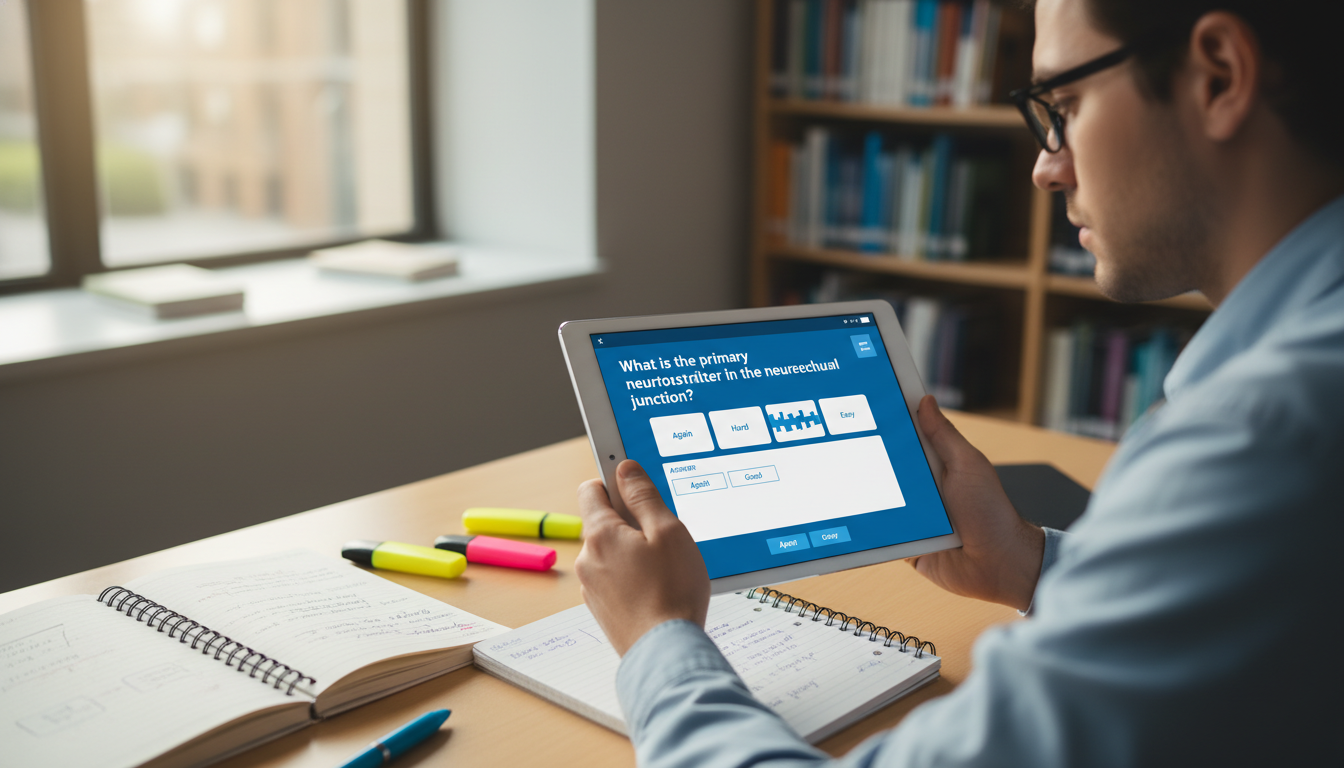
Use “Good” and “Hard” Buttons Thoughtfully
- Don’t reflexively hit “Easy”—this usually overestimates your retention.
- If you’re barely recalling something or need a hint, choose “Hard” or even “Again.”
Tagging and Filtering
- Use tags that match your resources and exam: e.g., “Renal,” “Micro,” “Step2-IM,” “Ethics.”
- Before or after focused study (e.g., a Cardiology block), you can filter cards by tag to reinforce that topic.
Avoiding Common Anki Pitfalls
- Doing cards mindlessly while distracted
- Turn off notifications.
- Use the “keyboard only” mode to stay in a steady rhythm.
- Trying to “finish” a massive shared deck
- You don’t need every single card. Suspend overly detailed or low-yield cards that don’t match your study plan.
- Relying on Anki instead of understanding
- If you repeatedly fail cards on one topic, pause and re-watch a video or re-read a short section from your core text.
Practice Exams, NBMEs, and Tracking Progress
Clerkship evaluations and class grades matter, but when it comes to residency applications, program directors still place significant emphasis on standardized exam performance. That makes practice tests crucial in your board exam preparation.
Types of Self-Assessments
NBME Comprehensive Clinical Science / Basic Science Exams
- Written by the same organization that writes USMLE.
- Most predictive of actual performance.
- Should be prioritized over third-party exams.
UWorld Self-Assessments (UWSAs)
- Also reasonably predictive, especially for Step 2 CK.
- Include detailed explanations, making them a good learning tool.
COMSAE/COMAT Exams (for COMLEX and DO students)
- Official NBOME self-assessments.
- Help align prep with COMLEX style and emphasis.
When and How Often to Take Practice Exams
For a typical 6–8 week dedicated period:
Baseline NBME/UWSA:
- Around 6–8 weeks out from your exam.
- Helps you set realistic goals and identify broad weaknesses.
Midpoint Assessment (4 weeks out):
- Another NBME or UWSA to monitor improvement and adjust your plan.
Final 1–2 Assessments (within last 2–3 weeks):
- Space them about 5–7 days apart.
- Use them to fine-tune stamina and last-minute weak points.
Avoid taking a full-length practice exam in the 48 hours before your real test; this time is better for light review, rest, and logistics.
How to Review Practice Exams
Block Off a Dedicated Review Day
- Don’t just glance at your score and move on.
- Review every question, including ones you got right by guessing.
Classify Each Missed Question
Use categories such as:- Knowledge gap (didn’t know the fact/concept)
- Reasoning error (misapplied a concept, narrow differential)
- Test-taking error (misread, rushed, changed a correct answer)
Convert Errors into Action
- Knowledge gaps → specific topics for focused review plus new Anki cards.
- Reasoning errors → more practice questions in that subject.
- Test-taking errors → adjust pacing, adopt checklists (e.g., re-reading the last line of the question before answering).
Update Your Study Plan
After each assessment, adjust:
- Content emphasis (e.g., “Next week, 40% of my time on cardio/renal”).
- Qbank focus (e.g., extra blocks in weak systems).
- Anki tagging or filtered decks to lean into weak topics.
Putting It All Together: Sample Study Plans and Practical Tips
Choosing board exam resources is only half the battle. The other half is turning them into a coherent daily and weekly routine.
Example: 6-Week Dedicated Study Plan for Step 1
Core resources: UWorld, Anki USMLE deck (AnKing), First Aid + Boards & Beyond as needed, NBME/UWSA.
Weekly structure:
Monday–Friday
- Morning:
- 1–2 timed, random UWorld blocks (20–40 questions).
- Thorough review of all explanations; make/mark Anki cards for new facts.
- Afternoon:
- Focused content review based on UWorld mistakes (1–2 hours).
- Anki reviews (30–90 minutes, divided into shorter sessions).
- Evening:
- Light video review (Boards & Beyond/Pathoma) or targeted weak-topic reading.
- Morning:
Saturday
- Practice exam or multiple full-length UWorld blocks to simulate testing.
- Shorter evening review only; avoid late-night cramming.
Sunday
- Anki reviews to maintain streak.
- Light content review + planning for next week.
- Rest, exercise, and sleep prioritized.
Example: Balancing Boards with Clerkships (Step 2 CK)
Core resources: UWorld Step 2, Anki (custom deck + limited core cards), OnlineMedEd notes, NBME/UWSA.
On heavier rotations:
- Daily minimums:
- 20–40 UWorld questions (timed) after clinic/wards.
- 20–30 minutes of Anki on commute or breaks.
- Weekends:
- One 40-question block each day, plus 2–3 hours of targeted review.
- Once per month: one practice exam or two long UWorld blocks back-to-back for stamina.
On lighter rotations:
- Increase UWorld to 60–80 questions per day.
- Catch up on backlog of Anki reviews and deeper content review.
Managing Burnout and Efficiency
Board prep is a marathon, not a sprint. A few evidence-informed tactics:
- Prioritize sleep: Chronic sleep deprivation impairs memory consolidation and reasoning—exactly what board exams test. 7–8 hours is ideal.
- Use time blocks: 45–60 minutes of focused studying followed by 5–10 minutes break is more effective than multi-hour unfocused sessions.
- Plan rest: One half-day off per week to decompress can improve long-term output.
- Avoid doom-scrolling study forums: Over-comparing your resources or schedule to others’ can generate anxiety without increasing your score.
FAQ: Board Exam Study Resources
1. Do I need more than one major question bank (e.g., UWorld plus another)?
Not usually. For most students, one primary qbank (UWorld) plus thorough review of explanations is more valuable than splitting time across multiple full qbanks. If you have extra time after finishing UWorld once (or nearly twice), you may add a secondary bank for extra questions in weak areas, but this is optional.
2. Is Anki mandatory to score well on board exams?
No—many students score well without it. However, spaced repetition (via Anki or another method) is one of the most efficient ways to maintain large volumes of information over months. If you dislike large pre-made decks, consider a smaller, personalized deck built from your own qbank errors and key concepts.
3. How many NBME practice exams should I take?
For most examinees, 3–5 self-assessments (NBMEs and/or UWSAs) are reasonable:
- One early baseline
- One at the midpoint
- 1–3 in the final 2–3 weeks
Taking more than this often yields diminishing returns and can cause fatigue, but you should ensure you’ve taken at least one official NBME close to your exam date.
4. What if my practice scores are lower than I hoped close to test day?
First, analyze why: Are your weaknesses primarily content gaps, reasoning, or test-taking? Then:
- Narrow your resource list to your core essentials—don’t add more new materials.
- Focus on high-yield topics and repeat patterns of questions you consistently miss.
- Consider whether you realistically have time to improve before your scheduled date. Discuss with an advisor or dean’s office if a brief postponement could meaningfully change your preparation and stress level.
Selecting and using board exam resources wisely is ultimately about strategy, not volume. A focused set of tools—UWorld, a structured content source, Anki USMLE decks used judiciously, and well-timed practice exams—paired with consistent, reflective study habits will position you strongly not only for passing your boards, but for maximizing your competitiveness in the residency match.