
Understanding the COMLEX Landscape as a US Citizen IMG
For a US citizen IMG (American studying abroad), COMLEX Level 1–3 is not just “another set of exams”—it’s your primary licensing pathway as a DO graduate and a critical data point for residency programs. Because your medical education occurred outside the US, program directors will often scrutinize your board performance more closely to gauge how you’ll handle US training.
What COMLEX Levels 1–3 Actually Test
COMLEX Level 1
- Focus: Foundational biomedical sciences + basic clinical application
- Emphasis: Physiology, pathology, pharmacology, microbiology, biochemistry, OMM basics
- Style: Conceptual questions with clinical vignettes; heavy integration of OPP (osteopathic principles and practice)
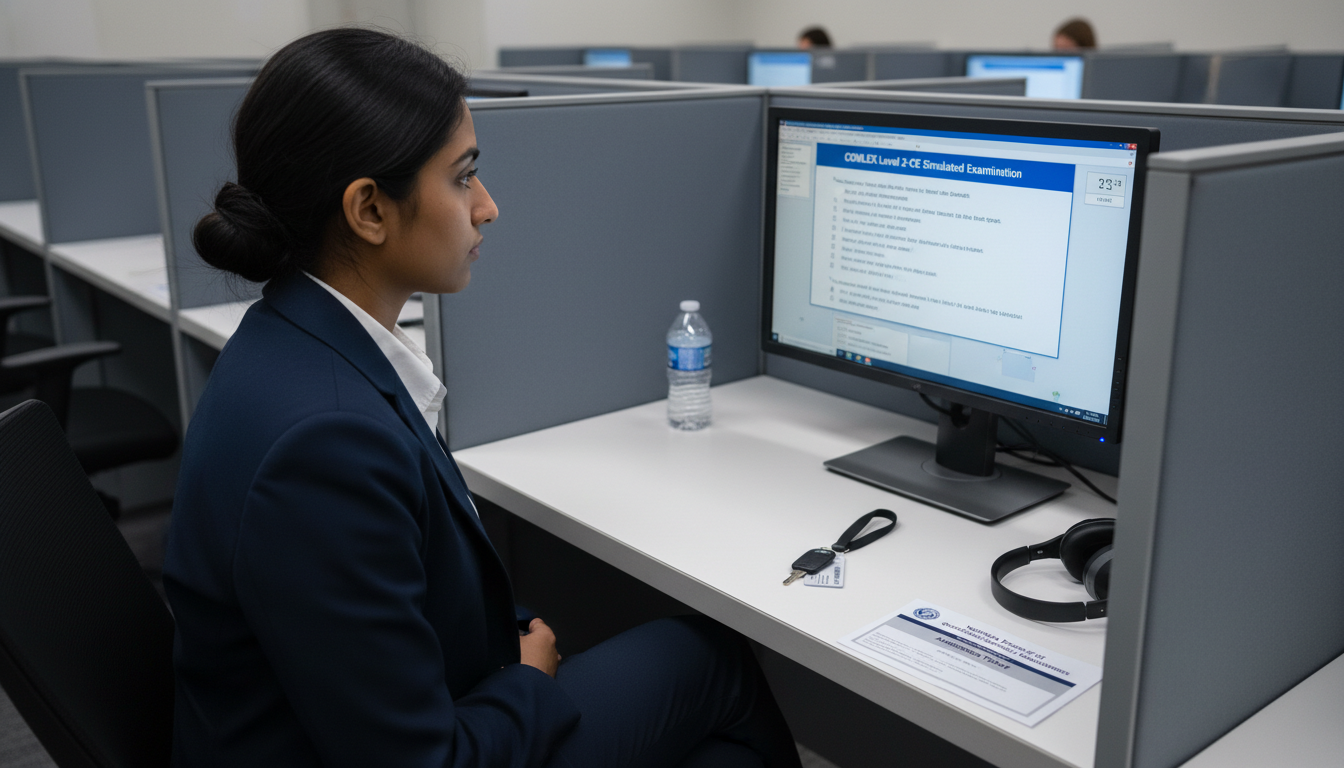
COMLEX Level 2-CE
- Focus: Clinical diagnosis, management, and patient safety
- Emphasis: Internal medicine, surgery, pediatrics, OB/GYN, psychiatry, emergency medicine, preventive medicine, OMM in a clinical context
- Style: Long vignettes with next-best-step, diagnostic workup, and management questions
COMLEX Level 3
- Focus: Independent practice and systems-based care
- Emphasis: Longitudinal care, multi-morbidity, health systems, public health, and OMM in complex patients
- Style: Mixed Qs across specialties, with more focus on management, sequencing of care, and safety
For US citizen IMGs in DO programs (including those who did premed or prior degrees abroad), these exams are your proof of readiness for US clinical training. As an American studying abroad, your aim should be to outperform averages, not just pass.
Core Strategy: Designing a COMLEX Study Framework That Works Abroad
Studying abroad or as an IMG graduate in the US adds extra logistical and psychological challenges. A solid framework keeps you focused and efficient for COMLEX preparation, whether Level 1, Level 2, or Level 3.
Step 1: Anchoring Your Timeline
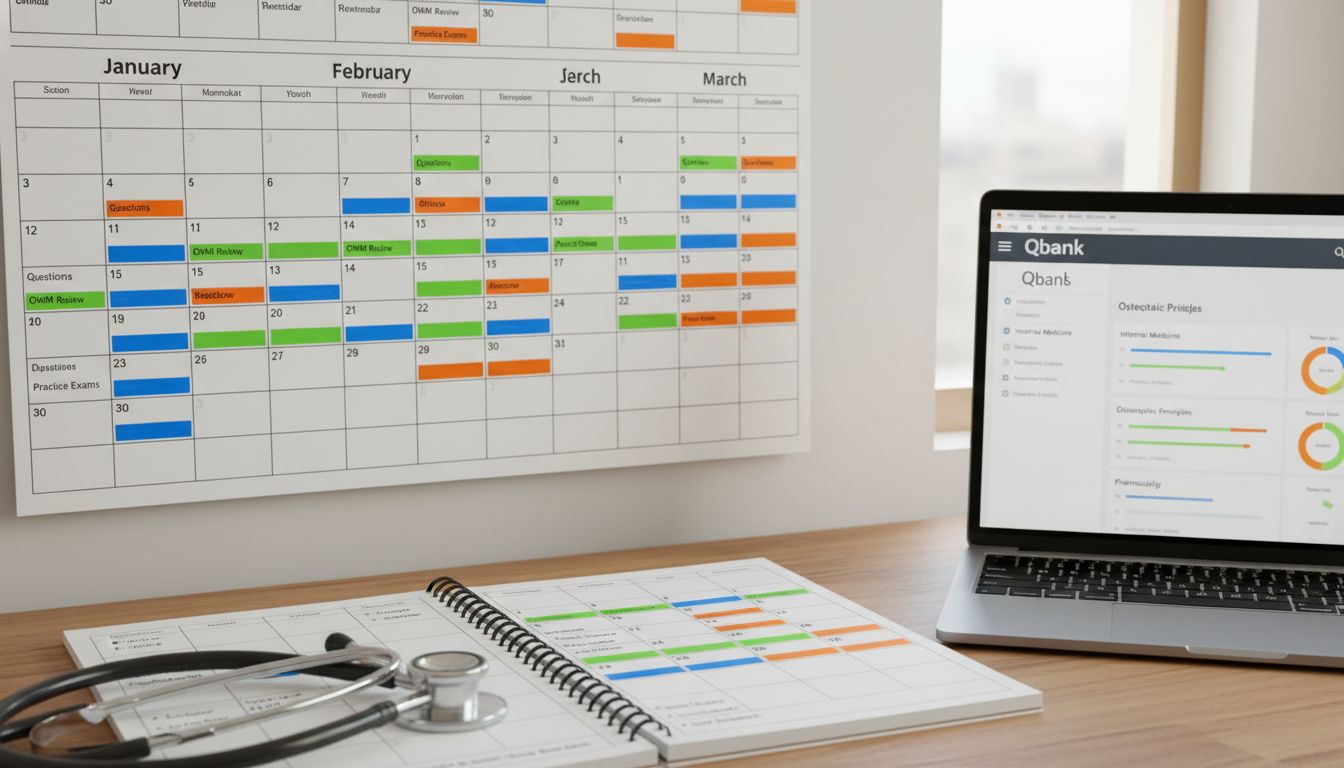
For each level, think in terms of phases:
Foundation Phase (2–4 months)
- Goal: Build or repair content knowledge
- Tools: Video resources, comprehensive review books, OMM texts
Integration & Question Phase (2–3 months)
- Goal: Apply knowledge through questions
- Tools: Qbanks (COMBANK, TrueLearn, UWorld for USMLE-style thinking), Anki
Refinement & Simulation Phase (4–6 weeks)
- Goal: Sharpen performance, stamina, and timing
- Tools: Full-length practice exams, targeted review of weaknesses, OMM-intensive practice
For US citizen IMGs, especially those outside the US:
- Add buffer time for:
- Exam scheduling issues at international Prometric centers
- Travel to testing centers (visa, flights, time zones)
- Faculty letter deadlines and residency application timing
Practical tip: Build at least 2–3 weeks of cushion into your plan in case of delays or illness. Program directors only see your score; they don’t see the delays you overcame.
Step 2: Daily Structure That Works Anywhere
No matter your time zone or clinical schedule, a high-yield COMLEX day generally includes:
Content Review (3–4 hours)
- Focus on one or two major systems (e.g., cardio + pulm)
- Use high-yield resources (e.g., COMLEX-specific notes, board review videos)
Question Blocks (2–4 hours)
- 40–80 timed questions in exam mode
- Immediate review of explanations with notes/flashcards
Active Recall & Spaced Repetition (1–2 hours)
- Anki or self-made flashcards
- Emphasis on formulas, key OMM principles, microbiology, pharm facts
OMM/OPP Practice (30–60 minutes)
- Daily or near-daily exposure to OMM concepts, viscerosomatic reflexes, treatments
For those in rotations abroad or with busy clinical schedules, shrink the blocks but keep the structure. On long clinical days, you might do:
- 20–40 questions + 1–2 hours of review + 30 minutes of Anki
- Heavier days on off-rotations and weekends
COMLEX Level 1: Building a Strong Foundation as a US Citizen IMG
COMLEX Level 1 is the exam that tells residency programs whether your basic science training—obtained abroad or in a non-traditional pathway—is solid and clinically applicable.
Key Challenges for US Citizen IMGs
Curriculum mismatch
- Some international programs emphasize theory over clinical reasoning.
- You may have strong memorization but weak “next-step” thinking.
Less integrated OMM exposure
- If you completed undergraduate or early science courses abroad, osteopathic integration might feel “tacked on.”
Language and terminology differences
- International schools sometimes use British or non-US terminology and guidelines.
Your strategy must directly counter these gaps.
High-Yield Resources for Level 1
Core science / general COMLEX:
- A structured review text or video series (e.g., Boards-style review)
- Pathology text or videos that emphasize mechanisms, not just lists
Qbanks:
- TrueLearn COMLEX Level 1 or COMBANK – for COMLEX-style stems and OMM
- UWorld Step 1 – for deep pathophysiology and clinical reasoning (still very valuable even for COMLEX)
OMM/OPP:
- Savarese OMT review book (or similar)
- Dedicated OMM question sets in TrueLearn/COMBANK
- Short OMM review videos and diagrams
Content Priorities for Level 1
Focus on:
- Big 4 sciences: Pathology, physiology, pharmacology, microbiology
- High-yield systems: Cardio, pulm, renal, neuro, MSK, GI, endocrine
- Classic COMLEX topics:
- Autonomic nervous system and viscerosomatic reflexes
- Chapman's points and sympathetic/parasympathetic innervation
- Osteopathic structural exam findings and basic treatment principles
- Biostatistics and ethics (often more straightforward points)
Example of targeted integration:
If you’re reviewing myocardial infarction:
- Basic science: Pathology of infarction, lab markers (troponin, CK-MB), EKG changes
- Clinical: Presentation, initial workup, acute management
- OMM:
- Viscerosomatic levels (e.g., T1–T5 for heart)
- Expected tissue texture changes
- When OMM is contraindicated (e.g., acute MI instability)
Question Strategy for Level 1
Early phase (3–4 months out)
- 20–40 questions/day untimed, tutor mode
- Focus on learning from explanations, not on speed
- Take notes or make Anki cards for missed questions
Middle phase (2–3 months out)
- 40–80 questions/day, timed, mixed subjects
- Aim to replicate exam-style cognitive switching
- Start exclusively in “exam mode” for blocks
Late phase (4–6 weeks out)
- 80–120 questions/day when possible
- 1–2 full-length practice exams
- Intensive OMM review (daily)
As an American studying abroad, your early question emphasis should be on bridging between your school’s style of questions and COMLEX style. Pay extra attention to why US guidelines (e.g., ACC/AHA) drive certain answer choices.
COMLEX Level 2-CE: Clinical Judgment and US-Focused Care
Level 2 shifts the focus from mechanisms to what you do in the clinic or hospital. For US citizen IMGs, this is often the first strong test of your US-style clinical reasoning.
Common IMG-Specific Pitfalls on Level 2-CE
- Using non-US guidelines or terminology (e.g., UK-based staging or management)
- Over-ordering tests rather than recognizing the single best next step
- Unfamiliarity with US preventive care, screening, and vaccination schedules
- Underestimating the presence of OPP in clinical vignettes
To counter these, ground your preparation in US sources and COMLEX-focused clinical materials.
Key Resources for Level 2-CE
Qbanks:
- TrueLearn or COMBANK (Level 2-CE) – absolutely critical
- UWorld Step 2 CK – gold standard for clinical reasoning; pair it with OMM resources
OMM:
- OMM/OPP clinical applications review
- Dedicated “clinical OMM” question sets
Guidelines & practice:
- US-based preventive care tables (USPSTF recommendations)
- Vaccination schedules (CDC)
- Common emergency protocols (ACS, ACLS basics, etc.)
Clinical Integration Strategy
Organize your studying by systems and settings:
- Systems: Cardiology, pulm, renal, endocrine, GI, MSK, neuro, psych, OB/GYN, peds, surgery, EM
- Settings: Outpatient clinic, emergency room, inpatient ward, ICU
When studying Type 2 diabetes:
- Outpatient management: A1C goals, first-/second-line meds, lifestyle, screening for complications
- Inpatient: Adjusting insulin, managing DKA/HHS
- Preventive: Annual eye exams, foot exams, nephropathy screening
- OMM: Limited direct tie-ins, but may be embedded in “chronic disease & pain” cases
Question Strategy for Level 2-CE
Core approach
- 40–80 questions per day, primarily timed
- Mix of COMLEX and USMLE-style questions (TrueLearn/COMBANK + UWorld)
- Always ask: “What is the single best next step in management or diagnosis?”
US guidelines emphasis
- While reviewing explanations, write a one-line summary:
- “Next test in chest pain with normal EKG and negative troponins in low-risk patient is [X].”
- “First-line therapy for major depression in adolescent with no suicide risk is [Y].”
- While reviewing explanations, write a one-line summary:
OMM on Level 2
- Expect questions like:
- “Patient with pneumonia and rib inhalation dysfunction—what is the best OMM approach to improve ventilation?”
- “Pregnant patient with low back pain—what OMM techniques are appropriate/contraindicated?”
- Expect questions like:
OMM is often lower-density but high-yield: a small body of knowledge that appears consistently. As a US citizen IMG, mastering OMM is a way to distinguish yourself positively—as an IMG who fully embraces the osteopathic identity.
COMLEX Level 3: Bridging to Independent Practice and Residency
COMLEX Level 3 is often taken during the first year of residency (PGY-1), but as a US citizen IMG, your timing needs careful planning.
When Should a US Citizen IMG Take Level 3?
- Most programs prefer Level 3 to be completed by the end of PGY-1.
- Some competitive fellowships and states like seeing Level 3 passed early.
- If your status as an IMG raises concerns for program directors, passing Level 3 on first attempt is especially reassuring.
Coordinate with your residency program:
- Ask: “What is the recommended timeline for COMLEX Level 3?”
- Check state requirements if you are in a state with specific licensing timelines.
Content Focus for Level 3
Level 3 is about longitudinal, holistic care:
- Multi-morbidity management (e.g., diabetes + CHF + CKD in one patient)
- Health systems, cost-conscious care, and public health
- Chronic disease follow-up and adjustments
- Maternity and pediatric preventive care
- OMM in complex patients, including what is safe/unsafe in unstable conditions
Examples:
A patient with diabetes, CKD, and hypertension:
- Which med is best when considering all comorbidities?
- How do you adjust therapy after new lab changes?
- What preventive measures are overdue?
A patient with chronic low back pain, on opioids, with depression:
- How do you approach multimodal pain management (including OMM)?
- How do you screen for substance use disorder and depression?
- What is the next safest prescribing decision?
Study Strategy for Level 3 While in Residency
Leverage your daily clinical work
- Turn real patients into board-style scenarios:
- Ask yourself: “If this case appeared on COMLEX, what would the question ask? What’s the next best step?”
- Turn real patients into board-style scenarios:
Qbank use (2–4 months prep)
- 20–40 questions/day on workdays, 60–80 on off days
- Focus on multi-system questions and ambulatory care
- Use Level 3–specific Qbanks (TrueLearn/COMBANK Level 3)
Reinforce OMM applications
- Especially in OB, pain management, and respiratory conditions
- Focus on safety: when to avoid OMM (e.g., unstable fracture, acute trauma, hemodynamic instability)
Systems and preventive care
- Master screening schedules across the lifespan
- Understand immunization catch-up schedules
- Know common quality metrics (e.g., A1C targets, BP goals) and guideline-based care
For US citizen IMGs, passing Level 3 cleanly solidifies your trajectory and can help erase any lingering doubts about your pathway to medicine.
COMLEX-Specific Tactics: OMM, Test-Taking, and Stress Management
Mastering OMM/OPP Across Levels 1–3
Because OMM is uniquely emphasized on DO board exams, your COMLEX preparation must include:
Daily micro-review of:
- Sympathetic/parasympathetic innervation levels
- Chapman's points
- Major tender points and associated muscles
- Common OMM techniques and indications
Pattern recognition:
- Associate organ systems with spinal segments (e.g., T1–T5 heart, T5–T9 stomach, etc.).
- Practice exam-style questions that tie physical findings to diagnoses and OMM treatments.
Safety and contraindications:
- At all levels, know when OMM is contraindicated (e.g., HVLA in osteoporosis, acute fracture, vascular compromise).
- On Level 2 and 3, these questions are especially frequent in trauma, post-op, and unstable medical patients.
Test-Taking Skills for COMLEX
COMLEX questions often:
- Include extraneous data and long vignettes
- Use slightly different wording than USMLE (e.g., more “osteopathic language”)
- Reward pattern recognition and safety-first thinking
Tactics:
Underline or mentally highlight:
- Age, vitals, key exam findings, red flags
- Answer choices that are obviously wrong for safety or ethical reasons
Practice “triage thinking”:
- If the patient looks unstable, think: ABCs, stabilization, emergency interventions first.
- If stable, think: safest, least invasive, most cost-effective initial step.
Learn COMLEX phrasing:
- Use COMLEX-specific Qbanks long enough to become fluent in their style.
- Actively compare similar UWorld and TrueLearn questions to see stylistic differences.
Managing Stress as a US Citizen IMG
As an American studying abroad or training outside the “traditional” US route, you may feel:
- Extra pressure to “prove” yourself
- Isolated from US peer support systems
- Anxious about visas, travel, or licensing logistics
Practical strategies:
- Build a virtual support group of other US citizen IMGs taking COMLEX
- Schedule regular “check-in” calls or study sessions with peers
- Maintain at least one non-medical activity (exercise, hobby) to avoid burnout
- Set process goals, not just outcome goals:
- “Complete 60 questions/day” vs. “Score 600+”
High COMLEX performance is not just about intelligence; it’s about consistent execution over months.
Frequently Asked Questions (FAQ)
1. As a US citizen IMG, is COMLEX enough, or should I also take USMLE?
If you are in a DO program, COMLEX is required. For residency:
- Some ACGME programs accept COMLEX alone and are very DO-friendly.
- Others strongly prefer or require USMLE scores.
For a US citizen IMG DO student aiming at competitive specialties or academic centers, taking both COMLEX and USMLE can broaden options. However, if you do this, ensure that your COMLEX and USMLE performance are both strong; a weak USMLE score can hurt you more than no USMLE score at all.
2. How far in advance should I start COMLEX Level 1 preparation as an IMG?
Most students benefit from 6–9 months of structured prep, with intensity increasing over time:
- 3–5 months of part-time study alongside classes/rotations
- 2–3 months of focused, daily preparation
- 4–6 weeks of high-intensity review and practice exams
As a US citizen IMG, err on the side of more time, especially if your school’s curriculum differs significantly from typical US osteopathic curricula.
3. How much OMM do I really need to know for COMLEX?
OMM/OPP can represent anywhere from 10–20% of exam questions, varying between levels. You cannot ignore it. The good news:
- The OMM content body is relatively finite and repeatable.
- Mastering core OMM concepts can reliably boost your score.
Focus on:
- Spinal levels and viscerosomatic reflexes
- Common OMM techniques and indications
- Contraindications and safety
- High-yield clinical applications (respiratory, low back pain, OB, post-op ileus)
4. What if I fail a COMLEX exam as a US citizen IMG?
A failure is a serious setback but not the end of your path:
Immediately analyze what went wrong
- Content gaps? Timing? Anxiety? Poor question practice?
Get objective feedback
- Talk to your school’s academic support, advisors, or a board prep tutor.
Build a structured remediation plan
- Increase dedicated study time
- Switch or supplement Qbanks
- Add daily OMM and biostatistics practice
- Consider formal prep courses if needed
Communicate honestly in applications
- Be prepared to explain what changed after the failure and how you improved.
Many residents with a prior failure have matched successfully after clear, documented improvement in later exams and clinical performance.
As a US citizen IMG, performing well on COMLEX Level 1–3 is one of the most powerful ways to show residency programs that your training abroad has prepared you to thrive in US medicine. With a structured plan, COMLEX-specific practice, and consistent execution, you can turn these exams from a source of anxiety into a cornerstone of a strong residency application.