
Preparing for pathology board exams—whether for the Pathology Boards, in-training exams, or to solidify knowledge after the pathology residency match—requires a deliberate strategy and smart use of resources. This guide walks you through the major board exam study resources in pathology, how they fit together, and how to use them efficiently during residency.
Understanding the Pathology Board Exam Landscape
Before choosing resources, it helps to know what you’re studying for and what cognitive skills are tested.
1. Types of Pathology Exams You’ll Encounter
USMLE / COMLEX (Pre-residency)
- Emphasis: Pathophysiology, high-yield mechanisms, clinical correlations.
- Primary tools: Question banks, Anki USMLE decks, integrated resources like Pathoma, Goljan notes.
Pathology In-Service / RISE
- Annual in-residency exams that mirror board content.
- Purpose: Benchmark performance, identify weaknesses.
American Board of Pathology (ABPath) Primary Exams
- Anatomic Pathology (AP)
- Clinical Pathology (CP)
- Emphasis: Visual diagnosis, pattern recognition, clinical reasoning, integrated lab medicine.
Each stage builds on the last. Your USMLE foundation informs early residency learning; your residency study strategy directly shapes AP/CP board performance and day-to-day practice.
2. What the Boards Are Actually Testing
Across USMLE and pathology boards, the exams emphasize:
- Recognition: Histology, gross pathology, cytology, peripheral smears, lab patterns.
- Application: Using findings to arrive at the best diagnosis or management step.
- Integration: Tie morphology with molecular tests, immunostains, and clinical data.
- Judgment: Cost-effective, evidence-based use of laboratory and ancillary studies.
Implication for resources: You need question banks, image-heavy atlases, concise board-style texts, and some form of spaced repetition (Anki, etc.).
Core Question Banks and Online Platforms
Question-based learning is central for pathology residency trainees and those gearing up for USMLE or board-level exams. Here are the major categories and how to use them.
1. UWorld and USMLE-Focused Qbanks
Even though UWorld is not pathology-board specific, it remains valuable early in your training.
Why it’s useful:
- Strong integration of pathology into clinical vignettes.
- Reinforces foundational mechanisms and clinical reasoning that carry over to AP/CP board questions.
- The explanations often show how pathology drives clinical decision-making.
UWorld tips (for pre-residency and early PGY years):
- Use UWorld during M3/M4 and early residency to polish your clinical pathology reasoning (e.g., coagulation labs, microbiology, transfusion medicine).
- Always read explanations—even for questions you get right; the pearls often become board-level anchors.
- Tag pathology-focused questions with notes to revisit during dedicated board preparation.
Other USMLE-style Qbanks:
- AMBOSS, Kaplan, and BoardVitals can reinforce pre-board fundamentals.
- For pathology-heavy review, pair any Qbank with dedicated pathology videos (e.g., Pathoma) and Anki decks.
2. Pathology-Specific Question Banks
By residency, you’ll need resources tailored to AP/CP content:
ASCP RISE materials and exam questions
- Many residents treat the yearly RISE as a board rehearsal.
- After you sit the RISE, use your score report to target weak areas (e.g., cytology, transfusion, molecular).
Board review books with built-in question sets
- Many pathology review texts now include online question banks or companion websites.
- Look for titles that explicitly advertise “board-style questions” with explanations, not just answer keys.
Institutional resources
- Some programs maintain banks of prior in-service questions or curated image quizzes (often resident- or faculty-made). These are highly aligned with day-to-day diagnostic thinking and can be board-relevant.
How to use question banks efficiently:
- Treat timed, mixed blocks as exam simulations.
- Use tutor mode early in your study to build understanding and annotate your notes/Anki.
- Track performance by category (hematopathology, GI, transfusion, microbiology, etc.).
- Re-do incorrect questions 4–6 weeks later to reinforce learning.
High-Yield Texts, Atlases, and Outlines
You cannot pass or excel on pathology boards with question banks alone; you need structured content to hang facts onto.
1. Board-Focused Review Books (Your Spine)
These should be concise, exam-oriented, and broad enough to cover the AP/CP spectrum. Typical features:
- Bullet-style text with heavy emphasis on:
- Key histologic features and patterns
- Immunohistochemical panels and molecular markers
- High-yield differentials and “buzzwords”
- Summary tables for tumor classification, staging, grading, and key lab tests.
- Integrated CP sections (transfusion, coag, micro, chem, molecular, cytogenetics).
How to use them:
- First pass: Read quickly with a pen in hand. Mark sections you miss on qbanks.
- Second pass: Focus on weak areas and incorporate into spaced repetition (Anki cards or condensed notes).
- Final pass (6–8 weeks before boards): Rapid skim of high-yield summaries and tables.
Pragmatically, choose one primary board review text and commit. Two or more main texts often becomes redundant and dilutes focus.
2. Standard Surgical Pathology Texts (Your Depth)
For AP, classic multi-volume surgical pathology texts are indispensable for:
- Clarifying tricky differentials and finer morphologic details.
- Understanding nuanced WHO classifications.
- Deep dives into rare entities that still show up occasionally on exams.
Use them:
- When reviewing cases at sign-out.
- For reinforcing tricky topics you consistently miss in qbanks.
- To generate your own “mini-outlines” or flashcards from particularly exam-prone topics.
Don’t attempt to read cover-to-cover; use them surgically for problem areas.
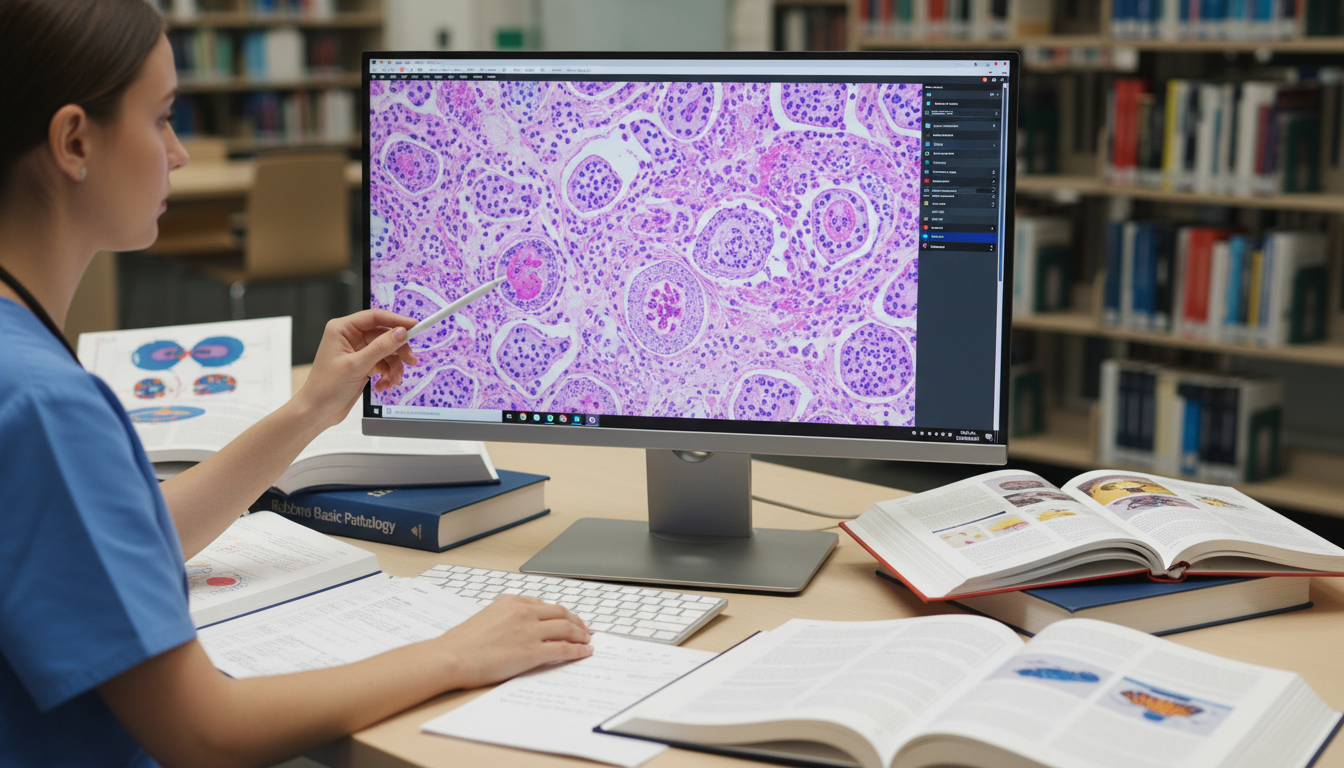
3. Atlases and Image-Based Resources
AP exams are image-heavy. You need exposure to many examples of the same entity in different guises.
Histology and cytology atlases
- Show variations in morphology, staining patterns, and key mimics.
- Often highlight “classic board images” (e.g., Reed-Sternberg cells, papillary thyroid nuclear features).
Hematopathology, blood smear, and bone marrow atlases
- Particularly helpful for AP/CP heme sections and peripheral smear recognition.
- Reinforce association between morphologic features and cytogenetic/molecular signatures.
Online case repositories
- Many academic departments host “case of the month” with annotated images and discussion.
- These mimic board-style thinking: “Given this slide and these stains, what is the diagnosis?”
4. Clinical Pathology and Lab Medicine Resources
CP can feel diffuse. A board-oriented approach helps:
Laboratory medicine handbooks
- Cover lab test principles, reference ranges, interpretive patterns.
- Especially beneficial for chemistry, coag, and hematology.
Microbiology and infectious disease references
- Good for integrating culture results, rapid diagnostics, and susceptibility patterns with clinical scenarios.
- Short, board-style micro review books or flashcards are great for retention.
Transfusion medicine and blood banking texts
- Important for both boards and daily practice.
- Focus on indications, product selection, reactions, and compatibility testing.
Spaced Repetition, Anki, and Long-Term Retention
Without systematic review, pathology details fade quickly. Spaced repetition (SR) is arguably the single most powerful technique for board prep.
1. Using Anki for Pathology and Board Prep
Anki is widely used for USMLE preparation and carries well into pathology boards:
Anki USMLE decks (e.g., Pathoma-based decks) are great in pre-clinical and early clinical years:
- Strong for mechanisms of disease, pattern recognition, and classic high-yield images.
- Good for bridging to pathology residency.
For pathology boards, consider:
- Creating a personal deck from your own missed questions and daily sign-out cases.
- Using decks from reputable sources where available (some residents share CP- and AP-focused decks through programs or online communities).
Key principles for Anki in pathology:
Make short, focused cards:
- Front: “Classic IHC profile for medullary carcinoma of the thyroid?”
- Back: “Calcitonin+, chromogranin+, CEA+, often RET mutated; negative for thyroglobulin.”
Include images where feasible:
- Snip a relevant image from a textbook (within fair use for personal study).
- Use them to train pattern recognition (e.g., “Identify this thyroid lesion and one key IHC”).
Integrate lab values and algorithms:
- Front: “First-line test to evaluate prolonged PT and normal aPTT?”
- Back: “Assess factor VII level; consider vitamin K deficiency, warfarin therapy, or liver disease.”
Scheduling tips:
- Aim for consistent daily reviews rather than sporadic cramming.
- Use Anki for:
- Short pockets of time (15–20 minutes between cases).
- Commuting (if safe), or at home after dinner.
- Cap new cards per day if reviews become unmanageable.
2. Other Forms of Spaced Repetition
If Anki doesn’t fit your style:
- Use a spiral notebook or digital note system:
- Write “exam pearls” after sign-out.
- Revisit and highlight 1–2 times per month.
- Make one-page summary sheets by organ system or topic:
- Keep them visible at your desk or in your call room.
- Quickly re-read when you see related cases.
Video Lectures, Courses, and Live/Online Board Reviews
Many residents benefit from structured lecture series and review courses.
1. Pathology Board Review Courses
These can be in-person or virtual and typically:
- Offer high-yield, exam-focused lectures over several days.
- Provide PDF slides, practice questions, and image banks.
- Are often scheduled 3–6 months before boards, ideal timing for focused review.
How to maximize them:
- Preview the topic quickly (10–15 minutes) before each lecture to activate prior knowledge.
- Annotate your board review book or Anki cards with pearls from the course.
- Afterward, test yourself using related question sets.
2. General Pathology and USMLE-Level Video Series
- Pre-residency: Pathoma, Sketchy (especially micro), and similar resources build durable conceptual frameworks.
- Early residency: Re-watch or selectively revisit these for areas that now intersect with real cases (e.g., lymphomas, leukemias, vasculitides).
Use them:
- When a topic feels murky in text form.
- On days when you’re mentally tired and need a passive learning mode.
Building an Effective Study Strategy During Pathology Residency
Resources matter less if the strategy is weak. Align your plan with your training stage and exam timeline.

1. PGY-1 and PGY-2: Laying the Foundation
Goals:
- Solidify morphology and diagnostic frameworks.
- Build an intuitive understanding of how lab tests are used clinically.
- Develop sustainable study habits.
Approach:
- Sign-out first. Real cases are the most high-yield resource you’ll ever have.
- After sign-out, skim the relevant:
- Surgical pathology text chapter (for novel entities).
- CP resources (for unusual lab issues you encountered).
- Start light question bank use:
- 10–15 questions a few times per week, focused on current rotations.
- Use mistakes to drive reading and Anki card creation.
2. PGY-3 and PGY-4: Dedicated Board Preparation
Goals:
- Systematic coverage of all AP/CP domains.
- Target weaknesses identified by RISE or mock exams.
- Build exam stamina and test-taking skill.
Suggested structure (12–18 months before boards):
Map the syllabus
- Divide content into broad blocks: GI, liver/pancreas, breast, GU, gyn, heme, derm, bone/soft tissue, head & neck, neuropath, pediatric, cytology; CP blocks for heme/chem/micro/transfusion/molecular, etc.
Assign windows
- 2–4 weeks per major AP block.
- 1–3 weeks per major CP block.
- Include review weeks for high-yield/weak topics.
For each block:
- Read the relevant sections of your board review text.
- Supplement tricky topics with a focused textbook chapter or atlas.
- Do block-specific question sets.
- Make/review Anki or summary notes.
6–8 months before the exam:
- Increase question volume.
- Incorporate mixed-topic blocks to simulate real exam conditions.
- Begin attending board review courses if planned.
Last 2–3 months:
- Focus on:
- Weak topics revealed by practice tests.
- Rapid review of high-yield tables, algorithms, and “must-know” entities.
- Decrease heavy new content intake; emphasize consolidation.
- Focus on:
3. Balancing Boards with Day-to-Day Residency
- Use clinic and call experiences as exam fodder:
- Turn interesting cases into flashcards or short write-ups.
- For each unusual case, ask: “What might the board test here?”
- Protect time:
- Negotiate consistent weekly “board blocks” with your program if possible (e.g., one protected afternoon).
- Use “edge times”:
- 10–20 minutes before conferences.
- Short breaks on call.
- Early morning sessions (if that matches your chronotype).
4. Common Pitfalls and How to Avoid Them
- Pitfall: Resource overload
- Solution: Choose one primary board review text, one main Qbank, and your preferred SR tool. Everything else is supplemental.
- Pitfall: Ignoring CP until late
- Solution: Tie CP learning to rotations and cases from PGY-1. Do small, regular CP question sets.
- Pitfall: Over-focusing on obscure zebras
- Solution: Master the common entities and pattern recognition first; boards are heavy on bread-and-butter disease.
Integrating Pre-Residency Study Habits into Pathology Boards
Many residents underestimate how much their USMLE-era habits can help later.
1. Translating Anki USMLE Skills to Boards
If you already used Anki for Step 1 and Step 2 CK:
- Reuse the same workflow:
- Daily reviews.
- Cards based on mistakes.
- Short, targeted prompts.
- Adjust the content style:
- Move from mechanisms to diagnostic discriminators and algorithmic thinking:
- “Immunostain panel to distinguish primary lung adenocarcinoma from metastatic colorectal carcinoma?”
- “Next test after an indeterminate ANA in suspected SLE?”
- Move from mechanisms to diagnostic discriminators and algorithmic thinking:
2. Applying UWorld Tips to Pathology Question Banks
Many UWorld tips extend directly to pathology-specific qbanks:
- Read the question stem first, then the last line, then the options.
- Identify:
- What are they really asking? Diagnosis, next step, best test, or interpretation?
- Which details are distractors vs. essential?
- After each question:
- Summarize the key teaching point in one takeaway line.
- Decide if it’s “card-worthy” (i.e., merits a flashcard).
Frequently Asked Questions (FAQ)
1. Do I still need board-specific resources if I did very well on USMLE and used UWorld extensively?
Yes. While UWorld and Anki USMLE decks form a solid conceptual base, pathology boards emphasize much more detailed morphology, immunohistochemistry, molecular diagnostics, and lab operations than USMLE. You’ll need pathology-specific board review books, atlases, and AP/CP question banks to be fully prepared.
2. How early in pathology residency should I start serious board preparation?
Start light and focused from PGY-1:
- Prioritize learning from sign-out and CP rotations.
- Build a habit of taking notes, doing small sets of questions, and using spaced repetition. A structured, comprehensive board plan usually becomes necessary by mid-PGY-2 to early PGY-3, depending on when you plan to sit for the AP/CP exams.
3. Is Anki really necessary for pathology boards, or can I just read and do questions?
Anki (or another spaced repetition system) is not mandatory, but some form of systematic review is critical. Many residents who rely solely on reading and questions struggle to retain the massive volume of details across organ systems and lab disciplines. Even a small, targeted Anki deck focused on your personal weak spots can make a major difference in retention and board performance.
4. How do I balance studying for boards with fellowship applications and clinical responsibilities?
Plan your timeline realistically:
- Start building your foundation early in residency, so your PGY-3/PGY-4 years focus on polishing and practice questions rather than learning everything from scratch.
- Use protected time, if available, and small daily study blocks.
- During fellowship application season, aim to maintain your routine (e.g., daily flashcards, small question sets) rather than ramp it up. Increase the intensity again once applications and interviews slow down.
By thoughtfully combining question banks, board-focused texts, atlases, spaced repetition tools like Anki, and structured review courses, you can create a powerful, sustainable study system that serves you from USMLE through the pathology boards and beyond. The most important element is not which exact resource you pick—it’s how consistently and strategically you use it over time.