Understanding the Board Exam Landscape in Medicine-Psychiatry
Combined medicine psychiatry residency is uniquely rewarding—and uniquely demanding when it comes to board exams. You are preparing not just for one specialty, but two. This means understanding:
- Internal Medicine Boards:
- USMLE/COMLEX step exams during medical school
- ABIM (American Board of Internal Medicine) Certification Exam after residency
- Psychiatry Boards:
- ABPN (American Board of Psychiatry and Neurology) Psychiatry Certification Exam
Most med psych residency graduates aim to be dual-boarded in Internal Medicine and Psychiatry. The good news: a well-planned strategy and the right board exam resources can make this manageable and even efficient—because there is substantial overlap with your med psych clinical training.
In this guide we’ll cover:
- How the exam content is structured for each specialty
- The highest-yield board exam resources for med psych residents
- How to use Anki USMLE decks and UWorld tips effectively as a dual trainee
- Practical, sample study schedules that fit real-world med psych rotations
- How to avoid burnout and keep your study habits sustainable
Core Question Banks: Building the Foundation
For both internal medicine and psychiatry boards, question banks remain the single most powerful study tool. For a med psych residency path, your strategy isn’t just “do questions,” but how and when to integrate them into your demanding call and rotation schedules.
UWorld for Internal Medicine and USMLE-Style Thinking
Even after USMLE Steps are finished, UWorld remains incredibly useful for board prep and ongoing learning.
Why UWorld still matters in residency:
- Mirrors ABIM-style multiple-choice questions (format, difficulty, rationale depth)
- Reinforces clinical reasoning in internal medicine
- Helps you stay sharp on bread-and-butter IM topics that may be less common on psychiatry-heavy rotations
High-yield ways to use UWorld in med psych residency:
During IM-heavy blocks (wards, ICU, cardiology, nephrology):
- Target: 15–20 questions per day on weekdays, 20–30 on lighter days/weekends
- Use timed, random mode for ABIM-style prep
- Focus on ALL internal medicine systems; do not skip rheum, ID, heme/onc—even if your clinical exposure feels uneven
During psychiatry-heavy blocks:
- Decrease to 10–15 UWorld questions/day, focusing on:
- Chronic disease management (HTN, DM2, CAD, COPD)
- Psych-related medicine: neuro, endocrine, toxicology, geriatrics, addiction medicine
- Decrease to 10–15 UWorld questions/day, focusing on:
In the final 3–4 months before ABIM:
- Switch to mixed blocks if you’ve been doing system-based
- Review incorrects systematically (make an Anki deck from missed questions or use UWorld’s notes)
Key UWorld tips (for dual-board trainees):
- Take notes in a structured format: one note per topic (e.g., “Hyponatremia Management,” “Atrial Fibrillation Anticoagulation,” “COPD Exacerbation”). This reduces duplicate work.
- Use question stems to sharpen time management and test pattern recognition—skills that transfer directly to psychiatry boards, even if the content differs.
UWorld and Other Qbanks for Psychiatry
While UWorld’s psychiatry content is helpful for Step prep, it is not tailored to the ABPN psychiatry boards. For psychiatry certification, combine:
- BoardVitals (Psychiatry)
- Beat the Boards! Psychiatry
- PRITEs and PRITE-style question banks (if available through your program)
How to best use psychiatry question banks:
Start lightly in PGY2–PGY3:
- 10–15 psych questions 2–3 days per week during heavy medicine months
- 20–30 questions on dedicated psychiatry rotations
In the final 6–9 months before psychiatry boards:
- Aim to complete at least one full question bank, ideally more
- Focus on the ABPN content outline:
- Mood disorders, psychotic disorders, anxiety disorders
- Neurocognitive disorders and neuropsychiatry
- Substance use, consult-liaison, emergency psychiatry
- Child/adolescent psychiatry and lifespan topics
- Ethics, systems of care, cultural and forensic issues
For med psych residents, prioritize consult-liaison, neuropsychiatry, psychopharmacology in medically ill—you’re already strong in this area clinically, and it’s heavily tested.
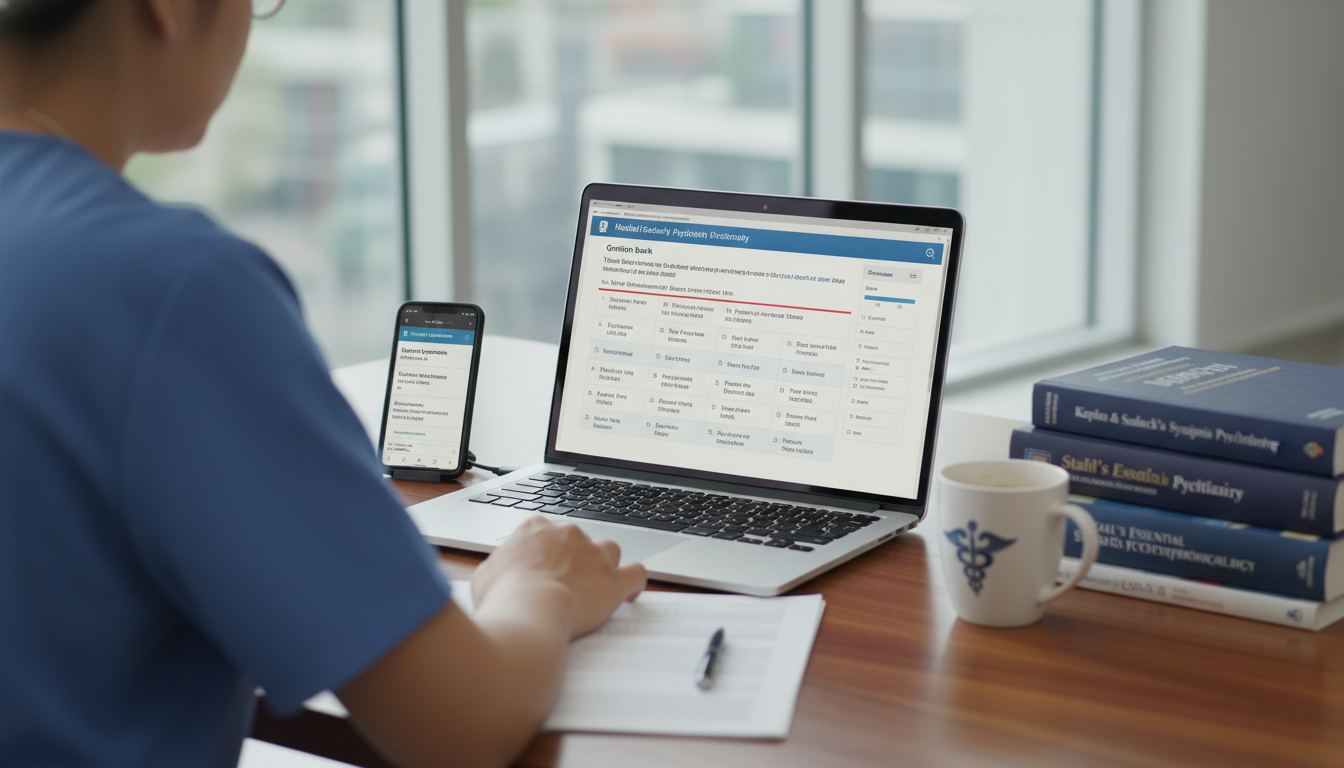
Spaced Repetition and Anki: Making Knowledge Stick Long-Term
Anki USMLE decks and specialty-specific decks are incredibly powerful for a combined medicine psychiatry residency, especially given the vast scope of content. Your goal is to avoid the “cram and forget” cycle and instead build a durable knowledge base that survives long internist and psychiatry workdays.
Choosing the Right Anki Decks
For med psych study, consider a tiered approach:
Pre-existing broad decks (if you’re early PGY1–PGY2):
- Anking or similar USMLE Step 2/3 decks for core internal medicine concepts
- Use selectively: focus on areas you’re weak in—not every card
Custom decks for residency-level knowledge:
- Create cards directly from:
- UWorld and other question banks
- MKSAP (for internal medicine)
- PRITE or psychiatry review texts
- Aim for simple, single-concept cards (e.g., one side: “First-line treatment for bipolar depression,” other side: “Quetiapine, lurasidone, or lamotrigine (add detail)”
- Create cards directly from:
Rotation-based micro-decks:
- During a rotation (e.g., inpatient psych, CL service, ICU):
- Make 3–5 cards per day from interesting patients
- Example: “Diagnostic workup for first-episode psychosis in a 20-year-old” or “Management of lithium toxicity”
- During a rotation (e.g., inpatient psych, CL service, ICU):
Practical Anki Use in a Busy Med Psych Schedule
To keep Anki sustainable and effective:
Daily minimum:
- Commit to 20–40 minutes of reviews, not necessarily all at once:
- 10–15 minutes with morning coffee
- 10–15 minutes at lunch or between admissions
- 10–15 minutes before bed
- Commit to 20–40 minutes of reviews, not necessarily all at once:
Card quality over quantity:
- Prefer short, focused cards you’ll actually review
- Use cloze deletions for facts embedded in context:
- “{{c1::SSRIs}} are first-line for major depressive disorder unless contraindicated by {{c2::bipolar disorder or serotonin syndrome risk}}.”
Integrate both specialties mindfully:
- Consider tagging cards as “IM” vs “Psych” vs “Med-Psych Overlap” (e.g., delirium, catatonia, hepatic encephalopathy, hypothyroidism with depression)
This helps ensure you’re keeping up with both medicine and psychiatry content without feeling overwhelmed by sheer card volume.
Textbooks and Review Books: What’s Worth Your Time?
In a medicine psychiatry combined residency, you cannot read everything from both fields. Focused, high-yield texts and board-style review books can give you a strong conceptual framework and help connect dots across specialties.
Internal Medicine: Boards-Focused Resources
1. MKSAP (American College of Physicians)
- Gold standard for ABIM prep; many programs provide access.
- Format: concise reading sections + high-quality questions.
- Strategy:
- Use MKSAP questions in the 12–18 months before ABIM
- Focus on sections that are less frequently seen in your clinical work:
- Rheumatology
- Endocrine (especially calcium/parathyroid, thyroid nodules)
- Nephrology (electrolytes, acid-base)
- Hematology
2. Board-Style Review Books:
- “MedStudy Internal Medicine Review”
- “Step-Up to Medicine” (for earlier in training or if you need a solid foundation)
Use these primarily as reference or for targeted reading (e.g., you miss repeated UWorld questions on cirrhosis—go read the corresponding section in MKSAP or MedStudy).
Psychiatry: Boards-Focused Resources
1. Psychiatry Board Review Texts:
- “The American Psychiatric Publishing Board Review Guide for Psychiatry”
- “Beat the Boards! Psychiatry” book (paired with their video course)
These are designed around the ABPN content outline and are more efficient than comprehensive textbooks when your goal is exam success.
2. When to use full textbooks (selectively):
- Kaplan & Sadock’s Synopsis of Psychiatry (not the full 2-volume textbook)
- Use for deep dives on:
- Psychotic disorders
- Mood disorders
- Personality disorders
- Neurocognitive disorders and neuropsychiatry
- Use for deep dives on:
Avoid getting lost in encyclopedic details—your primary goal is exam-relevant understanding, not memorizing every esoteric syndrome.
Overlap Texts for a Med Psych Perspective
As a med psych resident, consider maintaining a few “bridge” resources that connect internal medicine and psychiatry:
- Consultation-Liaison Psychiatry textbooks or guides
- Great for delirium, psych in medically ill, catatonia, neurocognitive disorders, somatic symptom disorders
- Addiction medicine texts or handbooks
- Overlapping with both ABIM and ABPN content regarding alcohol use, opioids, benzodiazepines, and toxicology
These are often high-yield clinically and conceptually, and they make you stronger in the exam domains where your dual training is a major advantage.
Structuring Your Study Across Med Psych Residency
Because medicine psychiatry combined residency spans five years and two specialties, pacing matters. Think of your study strategy in phases.
PGY1–PGY2: Building Foundation and Habits
Focus: USMLE/COMLEX Step 3 (if not completed), internal medicine fundamentals, basic psychiatry knowledge.
Key actions:
- Complete Step 3 (if not done) using:
- UWorld Step 3 Qbank
- Brief review resources (e.g., Boards & Wards, or a concise Step 3 review text)
- Start light but consistent:
- 10–15 UWorld IM questions most days on IM rotations
- Begin Anki USMLE or custom decks for weak areas
- On psychiatry rotations:
- Read short chapters on core topics (MDD, bipolar, schizophrenia, delirium, substance use)
- Start a handful of psychiatry Anki cards per week
Goal: Build sustainable habits rather than maximal volume.
PGY3–PGY4: Intensifying Specialty-Specific Prep
Focus: Deepen knowledge for ABIM and ABPN, establish serious question bank routines.
Internal Medicine prep:
- Increase to 15–25 UWorld questions/day on most IM months
- Begin or intensify MKSAP use (or other board-style IM question resources)
- Identify and shore up weak systems (e.g., nephrology, rheumatology, endocrine)
Psychiatry prep:
- Start a dedicated psychiatry Qbank (BoardVitals, Beat the Boards, etc.)
- 10–20 psychiatry questions on psych months
- Begin a focused psychiatry review text (ABPN-style guide)
Med psych integration:
- CL psychiatry and addiction rotations are great times to integrate both:
- Make Anki cards that link medical and psychiatric aspects
- Focus on delirium vs primary psychosis, neurocognitive disorders, medical side effects of psych meds, and psychotropic use in medically complex patients
PGY5 and Beyond: Dedicated Boards Focus
In the final year (or final 12–18 months), plan for staged board exam prep:
ABIM (Internal Medicine) Strategy:
- Aim to complete:
- UWorld IM Qbank (1 full pass, with heavily reviewed incorrects)
- At least 1 full run through MKSAP questions or equivalent
- Study schedule (final 3 months before ABIM):
- 40–60 questions/day on off days or lighter rotations
- 20–30 questions/day during busy weeks
- Do at least 2–3 full-length practice exams under timed conditions.
- Aim to complete:
ABPN (Psychiatry) Strategy:
- Plan start: 6–9 months before your exam date
- Complete:
- 1–2 psychiatry question banks
- One psychiatry board review book or video lecture series
- Focus on:
- PRITE or PRITE-like practice if available
- Clinical vignettes, not just fact recall
Balancing both exams:
- If exams are close together:
- Use a “primary” and “maintenance” focus:
- Primary = exam within 3–4 months → higher question volume
- Maintenance = other specialty → fewer questions + Anki reviews to keep content warm
- Use a “primary” and “maintenance” focus:
- Use weekends or days off for crossover review sessions:
- Morning: focused IM blocks
- Afternoon: psychiatry reading + questions
- If exams are close together:
High-Yield Tactics, Pitfalls, and Real-World Tips
High-Yield Tactics for Med Psych Residents
Schedule protected board prep time like a rotation.
- Put “Board Study – 45 minutes” on your calendar most days
- Treat it as non-negotiable, like clinic or call
Leverage your strengths from one specialty to aid the other.
- Use IM knowledge to crush:
- Neurocognitive disorders
- Delirium, catatonia, Wernicke/Korsakoff
- Toxicology, metabolic conditions with psychiatric manifestations
- Use psychiatry understanding to:
- Interpret somatic symptom complaints
- Manage medically complex patients with severe mental illness
- Use IM knowledge to crush:
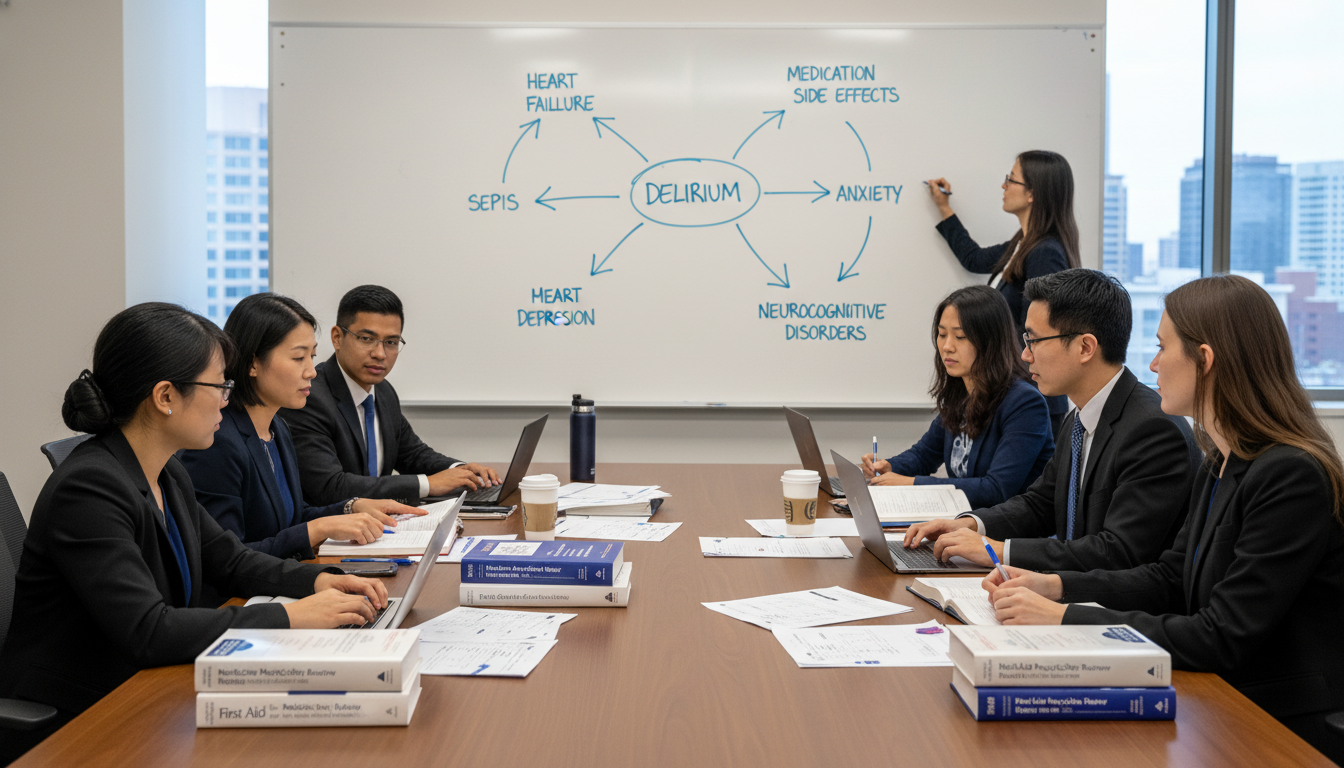
Make your own integrated notes and diagrams.
- Examples:
- Flowcharts comparing delirium vs dementia vs psychosis
- Tables of psychotropic side effects and their medical implications (e.g., QTc, metabolic syndrome, hyponatremia, agranulocytosis)
- Examples:
Study actively with peers.
- Form a med psych board prep group:
- 1 session/week: 60–90 minutes
- Rotate topics: one week IM cardiology, next week psychotic disorders, another week CL cases
- Teach each other short topics (“teach-back” is high-yield learning)
- Form a med psych board prep group:
Common Pitfalls to Avoid
Overcommitting to too many resources.
- Pick one primary Qbank per specialty and one or two main review texts. Extra resources are only for plugging specific gaps.
Ignoring one specialty during a heavy rotation in the other.
- Even on brutal IM months, maintain at least:
- 5–10 psychiatry questions/week OR
- 15–20 minutes of psych-focused reading/Anki
- Even on brutal IM months, maintain at least:
Cramming right before exams.
- Cramming might help recall niche facts but won’t fix weak foundations.
- Build knowledge gradually through spaced repetition and steady Qbank use.
Burnout from unrealistic goals.
- If you’re constantly failing your own targets, scale them down, not up.
- A realistic 15–20 questions/day consistently beats a theoretical 80/day that never happens.
Wellness and Sustainability
Sleep is non-negotiable.
Chronic sleep deprivation destroys memory consolidation; poor sleep the week before your exam can undo months of good studying.Use brief, focused sessions.
25–40-minute study blocks with short breaks are more effective than marathon sessions after 28-hour call.Allow off-days.
Build in 1 day/week with minimal or no studying to prevent resentment and burnout.
FAQs: Board Exam Study Resources in Medicine-Psychiatry
1. Do I need separate resources for ABIM and ABPN, or can I rely on USMLE/Step materials?
Yes, you need specialty-specific resources. While USMLE materials (including Anki USMLE decks) are excellent for early training and broad foundations, ABIM and ABPN expect more advanced, specialty-focused knowledge. Use USMLE-style resources for fundamentals, then transition to MKSAP/UWorld for Internal Medicine and psychiatry-specific Qbanks and board review books for Psychiatry.
2. How early should I start “serious” board prep in a med psych residency?
Begin structured but moderate prep by PGY3, especially for internal medicine. For psychiatry, most residents ramp up 6–12 months before ABPN, but starting earlier with light question bank exposure and PRITE review is wise. By PGY5, you should have a clear, written plan outlining question targets and review resources for both boards.
3. Is Anki really necessary if I’m already doing lots of questions?
Not mandatory, but highly beneficial. For med psych residents juggling two specialties, spaced repetition helps you retain rarely-seen but testable material (e.g., specific side effect profiles, obscure syndromes). At minimum, consider using Anki for:
- Missed Qbank questions
- High-yield tables (e.g., mood stabilizer monitoring)
- Overlap topics like delirium, neurocognitive disorders, and endocrine-psychiatric connections
4. What are the best ways to use UWorld tips and Qbank performance to guide my studying?
Track missed questions by system and topic. If you’re consistently missing, for example, nephrology acid-base disorders or psychotic disorders differentials, schedule brief, targeted reviews (MKSAP chapter, psychiatry review text section) on those topics. Reattempt similar Qbank questions after reviewing to confirm improvement. Use this feedback loop to constantly refine your focus—especially critical in a medicine psychiatry combined program where time is limited.
By choosing a small set of high-yield board exam resources, using Anki and question banks strategically, and pacing your efforts across the entire length of med psych residency, you can prepare effectively for both Internal Medicine and Psychiatry boards without burning out. Your dual training is a strength—use it to build a deep, integrated understanding that will serve you on exams and, more importantly, in lifelong clinical practice.