
Understanding Burnout in OB GYN Residency
Residency in Obstetrics & Gynecology is uniquely intense. You’re managing life-and-death emergencies, births at all hours, complex surgeries, and emotionally charged patient encounters—often on very little sleep. It’s no surprise that OB GYN has some of the highest rates of residency burnout and later physician burnout.
Burnout is more than “being tired” or “having a tough month.” It’s a work-related syndrome characterized by:
- Emotional exhaustion – feeling drained, used up, or unable to give more to patients or colleagues
- Depersonalization – becoming cynical, irritable, or detached; seeing patients as “tasks” or “numbers”
- Reduced sense of personal accomplishment – feeling ineffective, inadequate, or that your work doesn’t matter
In OB GYN residency, burnout often appears as:
- Dreading going into L&D or night float
- Feeling numb during deliveries or emergencies that used to excite you
- Snapping at nurses, co-residents, or family for minor things
- Persistent feelings that you’re “behind,” “not good enough,” or “failing”
- Thoughts of quitting, changing specialties, or regretting medicine altogether
Importantly, burnout is not a personal weakness. It’s a predictable response to chronic stress in a high-demand, often poorly supported environment. The goal of medical burnout prevention is not to “toughen you up,” but to build systems and habits that protect your physical and mental health while you grow into your role as an OB GYN.
This guide focuses on practical, realistic strategies for residency burnout prevention in Obstetrics & Gynecology—things you can start now as an MS4, intern, or senior resident, even within the constraints of call schedules and duty hours.
Why OB GYN Residents Are at High Risk for Burnout
Understanding why OB GYN residents are so vulnerable to burnout helps you anticipate risks and build protective strategies early—ideally before the obstetrics match and certainly during PGY-1.
Specialty-Specific Stressors
Unpredictable workload and circadian disruption
- L&D can go from quiet to chaos in minutes.
- Night float, 24-hour calls, and flip-flopping between day and night shifts disrupt sleep and mood.
- Sleep deprivation impairs memory, learning, and emotional regulation—key ingredients in burnout.
Dual nature of the work: high joy, high tragedy
- Many deliveries are joyful and fulfilling.
- But OB GYN also includes fetal demise, maternal morbidity, emergent hysterectomy, severe preeclampsia, hemorrhages, and coding mothers on the table.
- These emotionally intense events accumulate, especially if they’re not debriefed.
Complex roles and high expectations
- OB GYN combines surgery, primary care, emergency care, and longitudinal relationships.
- Residents are expected to master the OR, the clinic, triage, and L&D, plus develop research, teaching, and leadership skills.
- You’re often the first call at 2 a.m. for “nonreassuring tracing” or “heavy bleeding,” with limited backup in the moment.
Gender, bias, and boundary issues
- OB GYN is a female-majority specialty, and residents may face gender bias from patients, staff, or even colleagues.
- Sexual health topics, intimate exams, and reproductive decision-making can lead to boundary challenges, harassment, or emotionally charged interactions.
Litigation and high-stakes decision-making
- OB GYN is among the highest-risk specialties for malpractice claims.
- This amplifies anxiety around decisions like timing of C-section, management of VBAC, or handling shoulder dystocia.
System-Level Drivers of Burnout
Beyond specialty specifics, OB GYN residency shares broader structural issues:
- High documentation burden: EMR clicks, prior authorizations, and note requirements.
- Staffing shortages: Limited nursing, midwives, or ancillary staff puts more pressure on residents.
- Role confusion: Residents often fill in for missing coverage or non-physician tasks.
- Culture of silence: Implicit pressure to “deal with it,” minimize perceived weakness, or avoid “burdening others.”
Recognizing these systemic factors is crucial. Burnout prevention isn’t only about self-care; it’s about realistic adjustments and advocacy within your residency environment.
Recognizing Early Warning Signs of Burnout
You can’t prevent what you don’t see coming. Early recognition of residency burnout allows you to intervene before it escalates into major depression, anxiety, or leaving the profession.
Personal Early Warning Signs
Pay attention if you notice:
Sleep and energy changes
- Falling asleep the moment you sit down, even on days off
- Persistent insomnia or waking up repeatedly thinking about patients or work
- Using caffeine or energy drinks heavily just to feel baseline
Mood changes
- Increased irritability or emotional volatility
- Crying frequently after shifts or in call rooms
- Feeling hopeless about the future (“It will never get better”)
- Loss of enjoyment in things you previously loved—even outside medicine
Cognitive changes
- Difficulty concentrating during sign-out or cases
- Forgetting routine tasks or orders you never used to miss
- Feeling mentally “foggy” even on post-call days
Behavioral shifts
- Withdrawing from friends or co-residents
- Skipping meals or constantly eating junk food on the run
- Drinking more alcohol or using substances to “disconnect” after shifts
Values dissonance
- Feeling that the way you’re forced to practice (rushed visits, limited counseling time, overwork) clashes with the kind of physician you want to be
- Ethical distress over systemic issues (access to reproductive care, social determinants of health) without avenues for constructive action
When Stress Becomes Burnout—and When It’s an Emergency
Acute stress is normal in residency—before a big case, during a shoulder dystocia, when managing a massive hemorrhage. It usually resolves after the event.
Burnout is chronic and pervasive; it doesn’t lift on days off and affects your sense of identity and meaning in work.
Seek urgent professional help (through your program, employee assistance program, or local services) if you experience:
- Persistent thoughts of self-harm or wishing you wouldn’t wake up
- Feeling that patients would be better off without you
- Using substances heavily to get through shifts or sleep
- Panic attacks, severe anxiety, or inability to function at work
These are not signs you’re “failing at residency.” They’re signs the system and stress load have overwhelmed typical coping mechanisms and you need and deserve formal support.

Individual-Level Strategies for Burnout Prevention in OB GYN Residency
You can’t control staffing ratios or EMR design, but you can build personal systems that make residency more sustainable. Think of these strategies as non-negotiable components of your professional toolbox—just as critical as learning to read fetal heart tracings.
1. Protecting Sleep Within a Call Schedule
You will not get “ideal” sleep in residency, but you can prevent the worst damage:
On nights and 24-hour calls:
Pre-call:
- Aim for a short nap (60–90 minutes) before starting night shift.
- Avoid heavy meals and alcohol in the 4–6 hours before your call.
During call:
- If there’s a lull, actually lie down in the call room—set a 20–30 minute alarm. Micro-naps are better than scrolling on your phone.
- Use a sleep mask and earplugs if your call room environment is noisy or bright.
Post-call:
- Go home as soon as allowed; avoid “just finishing a few things” unless absolutely critical.
- Take a 90-minute nap max; sleeping the entire day often worsens your circadian rhythm.
- Avoid major life decisions (like job changes, breakups) when you’re acutely sleep deprived.
On days off after a stretch of nights:
- Gradually transition your schedule—don’t try to flip to full daytime in one day.
- Use light strategically: bright light in the “morning” of your new schedule, dim in the evening.
- Prioritize one solid, restorative night early in your stretch of days off.
2. Micro-Recovery: Small Practices with Big Impact
You might not get an hour for yoga, but you usually can get 60–120 seconds between tasks. Consistent micro-recovery interrupts the progression toward burnout.
Examples during a typical OB GYN shift:
- Box breathing during scrubbing: Inhale for 4 seconds, hold 4, exhale 4, hold 4. Repeat 4 cycles.
- Reset at the OR or L&D door: Before entering a room, pause, take one deliberate breath, and mentally shift: “New patient, fresh start.”
- Use transitions (elevator rides, walking from clinic to L&D) to check in: “What am I feeling right now? What do I need in the next hour?”
- Body scan while charting: Briefly scan for tension in shoulders, jaw, hands; consciously relax for 10 seconds.
These practices aren’t about “being perfectly mindful”—they’re about interrupting autopilot and giving your nervous system small windows to reset.
3. Building Sustainable Routines Around Unpredictable Hours
Rigid routines crumble in residency. Instead, create modular routines you can plug into different parts of your day:
Morning module (10–15 minutes) when on days:
- 2 minutes: stretch or mobility (neck rolls, shoulder circles, cat-cow)
- 5 minutes: review your to-do list or most important tasks (e.g., pre-round priorities, patient follow-ups)
- 3 minutes: a simple grounding practice—journaling three things you’re grateful for, or setting an intention (“Today I’ll focus on clear communication with patients.”)
Pre-sleep module (10–20 minutes) on any shift pattern:
- Turn off screens 15 minutes before bed when possible.
- Do a consistent, short routine (wash face, brush teeth, 5-minute decompress or journaling).
- Avoid replaying the day endlessly—write down “unfinished business” and intentionally tell yourself you’ll revisit it when rested.
4. Boundaries and Saying “No” Strategically
As a resident, you can’t decline clinical assignments, but you can protect against overextension in other areas:
Research and committees:
- Limit the number of projects you take on simultaneously.
- Ask explicitly about expectations (“How many hours per week do you anticipate this will require?”).
- It’s acceptable to say: “I’m very interested, but I want to make sure I can commit fully. Could we start with a smaller role and revisit expanding it later?”
Non-essential extras (talks, optional QI projects, social obligations):
- Use a simple heuristic: If it’s not required and doesn’t clearly advance your goals or replenish you, consider saying no.
- Practice phrases such as, “I’d love to, but my plate is full right now and I need to protect my off time.”
5. Healthy Coping vs. Numbing
Notice the difference between restorative and numbing activities.
- Restorative: Sleeping, light exercise, talking with a trusted friend, reading something non-medical, cooking, hobbies you genuinely enjoy.
- Numbing: Binge-drinking, constant social media scrolling, chain-watching TV until 2 a.m., using substances to escape uncomfortable feelings.
Both may temporarily reduce distress, but only restorative strategies help prevent long-term OB GYN residency burnout.
When you catch yourself numbing, try this:
- Ask: “What am I trying not to feel right now?”
- See if you can tolerate that feeling for 60 seconds—without acting on it.
- Then, choose one small restorative action (5-minute walk, text a friend, 5 pushups, journal a quick brain dump).
Team & Program-Level Strategies: Creating a Healthier OB GYN Culture
Burnout prevention in OB GYN residency is not just an individual responsibility. The most resilient residents work in programs that intentionally support well-being.
Even as a trainee, you can influence local culture and advocate for healthier norms.
1. Peer Support and Debriefing
Informal and semi-structured peer support is one of the most powerful buffers against burnout.
Practical ways to build it:
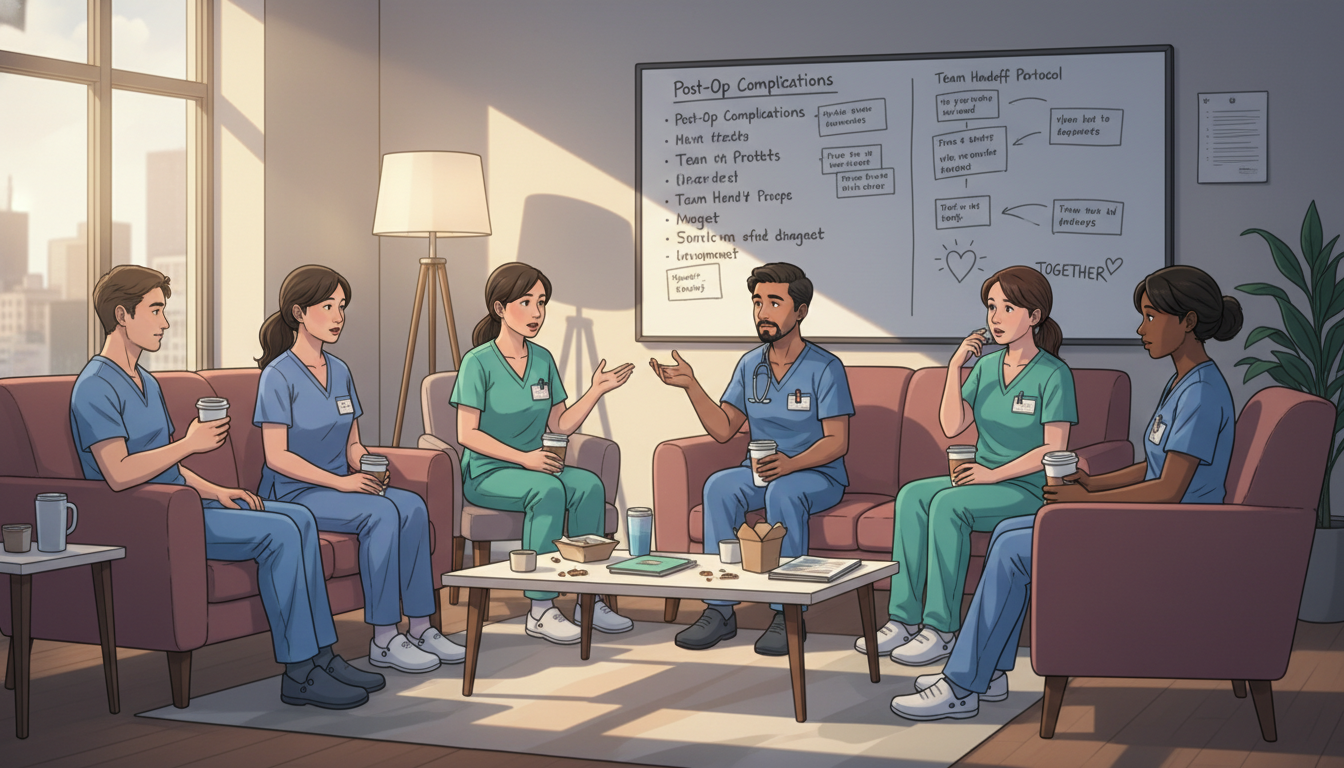
Post-event debriefs: After a shoulder dystocia, maternal code, fetal demise, or emergency hysterectomy, suggest a short team debrief once the patient is stable.
- What went well?
- What was challenging?
- What can we improve next time?
- How is everyone feeling?
Peer check-ins:
- Notice who leaves L&D in tears or goes quiet after a bad case; text them later: “That was a lot. Want to talk?”
- Normalize saying: “I’m still thinking about that delivery from yesterday—can I process it with you?”
Residency peer groups:
- Propose a monthly “closed” resident meeting to discuss stressors and coping strategies, separate from evaluation or formal faculty presence.
- Include explicit ground rules: confidentiality, no shaming, solution-focused but also space for emotion.
2. Faculty Mentorship and Safe Support
Identify 1–2 faculty members you trust who can be safe sounding boards for your experience.
When approaching a mentor about burnout risks:
- Be honest but focused: “I’m noticing that I’m getting more irritable and less excited about deliveries, and I’m worried about burnout. I’d like your perspective and advice.”
- Ask about their own experience: “How did you get through your residency? What did you wish you’d done differently?”
- Explore concrete adjustments: scheduling flexibility, targeted skill-building, or role reshaping that can reduce specific stressors.
Programs that excel at medical burnout prevention in OB GYN often:
- Build mentorship into the curriculum
- Have clear, confidential pathways for residents to seek help
- Train faculty to recognize and respond to burnout signs compassionately, not punitively
3. Advocate for Small but High-Yield System Changes
You may not transform your hospital’s staffing model, but you can help shape local workflow improvements that protect resident well-being.
Examples of realistic, resident-driven initiatives:
Protected didactics:
- Advocate for enforcement of protected education time (e.g., no non-urgent pages during core conferences).
- Track when and why didactics are interrupted and bring data to your program leadership.
Efficient sign-out systems:
- Standardize sign-out templates (e.g., SBAR) to reduce cognitive load and errors.
- Propose clear expectations for when to call attending vs. handle autonomously.
Clinical task optimization:
- Identify repetitive, non-physician tasks residents regularly do that could be delegated or streamlined (e.g., faxing forms, manual data entry).
- Work with nursing or administrative leadership to redistribute or automate them.
Over time, these small changes contribute significantly to the reduction of OB GYN residency burnout and create a model for sustainable practice.
4. Normalizing Mental Health Care
Residency culture can make it seem like seeking therapy or psychiatric support is a sign of failure. The reality:
- High-performing residents and attendings often stay that way because they use professional support early.
- Many institutions offer confidential counseling separate from employee health records.
- Talking with a therapist experienced in physician burnout can help you:
- Process traumatic births and losses
- Navigate identity shifts as you transition from student to physician
- Develop tailored strategies for anxiety, perfectionism, or impostor feelings
- Prevent burnout from turning into major depression or anxiety disorders
If you are applying to OB GYN residency, ask programs on the interview trail:
- “What mental health resources are available to residents?”
- “Are there barriers—real or perceived—to using them?”
- “How does your program address residency burnout and physician wellness?”
Their answers can be telling about how sustainable your training there will be.
Planning for a Sustainable OB GYN Career: From Match to Attending
Residency burnout prevention is not just about surviving four years—it’s about building habits and mindsets you can carry into fellowship and beyond.
Before and During the Obstetrics Match
As a medical student:
Be honest with yourself about your needs and limits
- If you know chronic sleep loss shatters your mental health, pay careful attention to how programs structure night float and 24-hour calls.
- Ask how many consecutive nights residents work and how post-call days are protected.
Use interviews to assess culture, not just prestige
- Ask residents privately: “Do you feel supported when you’re struggling?”
- “What happens if someone asks for help or needs adjustments?”
- “Have any residents taken leave for health or personal reasons? How was that handled?”
A program with a healthy culture of support is one of the most powerful protective factors against OB GYN residency burnout.
During Residency: Aligning Work with Meaning
Burnout risk is lower when you feel that what you’re doing matters and aligns with your values.
- Identify what aspects of OB GYN energize you the most:
- Complex surgery? Longitudinal continuity clinic? Family planning? Global health? Resident teaching?
- Look for small ways to increase your exposure to these areas:
- Ask to participate in specific cases.
- Volunteer to give a short teaching session on a topic you love.
- Join a relevant committee or QI project that truly interests you (within reason).
Preparing for Transition to Fellowship or Attending Life
Many residents assume burnout will magically resolve once they’re paid more and have more control. In reality, physician burnout often peaks in early attending years if boundaries and habits haven’t been established.
Carry these lessons forward:
- Protect time for relationships, health, and interests outside medicine from the beginning of your practice.
- Be intentional about the culture you join or create in your first job:
- Ask about call load, backup systems, team dynamics, and wellness efforts.
- Stay engaged with professional communities (local, national societies, online networks) that address physician burnout and advocate for systemic change.
Preventing long-term medical burnout is an ongoing process, not a single intervention.
Frequently Asked Questions (FAQ)
1. Is it normal to feel burned out during OB GYN residency, or is that a sign I chose the wrong specialty?
Feeling exhausted, overwhelmed, or disillusioned at times is very common in OB GYN residency and does not mean you chose the wrong field. It usually means:
- Your workload and stress level have exceeded your current coping capacity
- System-level factors (scheduling, supervision, support) are suboptimal
- You haven’t yet found sustainable ways to recover and reconnect with what you love about OB GYN
Persistent, severe burnout that doesn’t improve with support and adjustments may prompt a deeper reflection—but most residents who struggle at some point ultimately go on to have fulfilling OB GYN careers once they’re in better environments and have more control.
2. How can I tell the difference between normal residency stress and something that needs professional help?
Consider seeking professional help if:
- Your mood is consistently low or anxious most days for more than 2–3 weeks
- You’ve lost interest in almost everything you used to enjoy
- You’re having trouble performing safely at work due to sleep, anxiety, or concentration problems
- You’re using alcohol or substances heavily to cope
- You’re having thoughts that life isn’t worth living or that people would be better off without you
Normal stress waxes and wanes with rotations and calls. When distress becomes persistent, pervasive, and impairing, it’s time to involve a mental health professional—just as you’d consult a specialist for a complex medical problem.
3. What practical steps can I take this week to reduce my risk of burnout?
Three realistic actions you can start immediately:
- Schedule one real break in your next off day: a half day with no EMR, no reading, no residency tasks—just something you enjoy.
- Add one micro-recovery habit to your shifts: box breathing while scrubbing, a 60-second pause before entering each new patient room, or a brief stretch during sign-out.
- Connect with one supportive person—co-resident, friend, partner, or mentor—and have a candid conversation about how you’re really doing.
Small, consistent changes like these compound over time and are more effective than waiting for a perfect window for “self-care” that never comes.
4. I’m afraid talking about burnout will hurt my evaluations or fellowship chances. What can I safely do?
You can take meaningful steps while protecting your privacy:
- Use confidential resources: university counseling centers, employee assistance programs, or off-site therapists who are not involved in your evaluation.
- Choose your confidants carefully: find faculty mentors known for being supportive and resident-centered, and test the waters with smaller disclosures first.
- Frame issues around performance and learning when speaking with leadership: “I want to ensure I’m functioning at my best and I’m concerned my current workload is affecting my learning and safety.”
- Document your efforts to seek help and communicate concerns through appropriate channels. Professional, solution-focused conversations are usually viewed as maturity, not weakness.
Residency in Obstetrics & Gynecology is demanding, but it doesn’t have to break you. With intentional strategies, supportive peers and mentors, and a program that takes wellness seriously, you can build a resilient, meaningful career while protecting your health and humanity. Burnout prevention is not a luxury—it’s foundational to being the kind of OB GYN you set out to become.