Understanding Residency Burnout in Radiation Oncology
Radiation oncology residency is uniquely rewarding and uniquely stressful. You care for patients with life‑threatening cancers, master complex physics and biology, and work in highly technical environments with linear accelerators, treatment planning systems, and multidisciplinary tumor boards. That combination of emotional intensity and cognitive load makes radiation oncology residents particularly vulnerable to burnout.
Burnout is more than feeling tired. It is a work‑related syndrome characterized by three core components:
- Emotional exhaustion – feeling drained, overwhelmed, or unable to give any more of yourself.
- Depersonalization (or cynicism) – becoming detached, irritable, or negative toward patients, colleagues, or work.
- Reduced sense of personal accomplishment – feeling ineffective, unproductive, or that your work doesn’t matter.
In the context of a radiation oncology residency, burnout often appears as:
- Dreading clinic days or on‑treatment visits
- Irritability when plans come back from physics with corrections
- Feeling numb when giving bad news or discussing prognosis
- Procrastinating on contouring or plan checks
- Trouble concentrating during contour review or didactics
- A lingering sense that “I’m always behind” or “I’ll never be good enough”
National surveys show high rates of residency burnout across specialties, and radiation oncology is not immune. The specialty has additional stressors:
- Long‑term patient relationships with recurrent or progressive cancer
- High‑stakes decisions under time pressure (e.g., cord dose limits, SBRT plans)
- Rapidly advancing technology and evidence base that demand constant learning
- Evolving job market concerns that can amplify anxiety
Burnout is not a personal flaw or weakness; it is a predictable response to chronic, unmanaged occupational stress. The goal of medical burnout prevention is to recognize and address risks early—at individual, program, and system levels—before they crystallize into full‑blown physician burnout.
This guide focuses on radiation oncology residency and the rad onc match pathway, but the strategies are broadly relevant to trainees across oncology and beyond.
Why Radiation Oncology Residents Are at Risk
Understanding the specific drivers of burnout in radiation oncology helps you anticipate challenges and build targeted prevention strategies.
1. Emotional Weight of Oncology Care
Residents in radiation oncology:
- Deliver or reinforce cancer diagnoses
- Discuss prognosis, including palliative intent
- Manage side effects that impact quality of life long after treatment
- Participate in family meetings about progression or end‑of‑life care
The “holding space” for patient fear and grief is rewarding but emotionally expensive. Without intentional coping and debriefing, it accumulates.
Example:
A PGY‑3 on the head and neck service is managing multiple patients with painful mucositis, weight loss, and social challenges (like housing or substance use). By the third week of the rotation, they notice dreading seeing their follow‑up list, feeling numb when hearing about worsening pain, and snapping at staff over minor issues—classic burnout warning signs.
2. Cognitive and Technical Demands
Radiation oncology is a blend of:
- Complex anatomy (contouring)
- Radiobiology
- Physics and dosimetry
- Rapid literature updates
- Electronic health record and treatment planning software
Residents must:
- Contour accurately and efficiently
- Review plans with an eye for subtle dose/volume trade‑offs
- Keep up with disease‑site‑specific treatment paradigms
- Prepare for oral boards and in‑training exams
This constant cognitive demand can be mentally fatiguing, especially when paired with time pressure or high case volume.
3. Workflow and Time Pressure
While many radiation oncology residents don’t take q4 overnight calls like other specialties, they face a different kind of workload:
- Full clinic days with consults, on‑treat visits, and follow‑ups
- Night and weekend pages for urgent inpatient consults
- Planning deadlines with same‑day or next‑day simulation and treatment
- Frequent add‑ons for brain metastases or spinal cord compression
- Documentation, peer review, tumor boards, and chart rounds
The work often expands into evenings and weekends as residents “catch up” on contours, reading, or research. If this becomes the norm, residency burnout risk accelerates.
4. Academic and Career Pressure
Radiation oncology has historically placed strong emphasis on:
- Research productivity (abstracts, publications, grants)
- Subspecialty fellowship considerations (e.g., proton therapy, brachytherapy)
- Securing jobs in a shifting market, which can feel uncertain for residents
This can generate chronic anxiety, especially for residents who feel behind on research or compare themselves to highly productive co‑residents.
5. Culture and Expectations
Program culture matters. Trainees may internalize messages such as:
- “You should be available 24/7 for your patients.”
- “Real oncologists don’t show emotion.”
- “If you struggle, you’re not cut out for oncology.”
These unspoken norms reinforce stigma around seeking help, further fueling physician burnout.
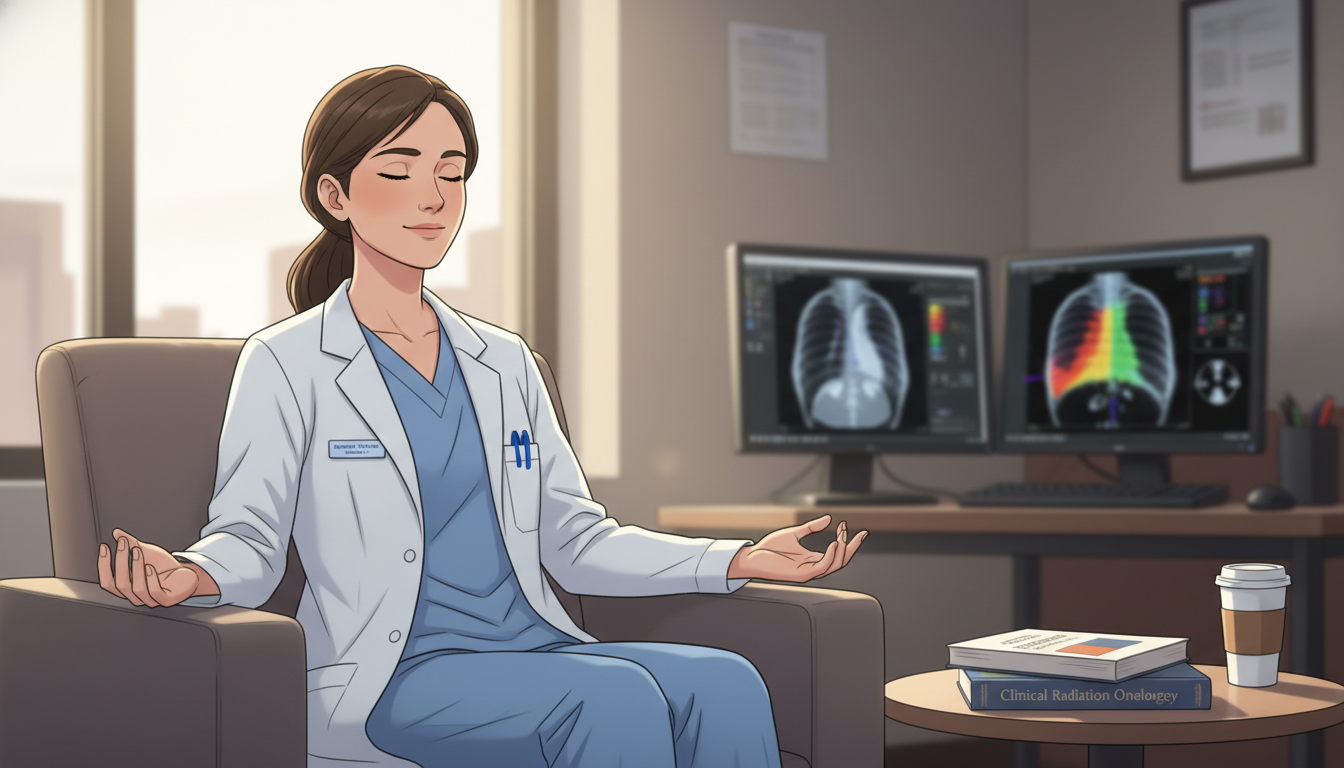
Foundations of Burnout Prevention: Before and During Residency
Preventing residency burnout starts earlier than most people think—ideally before you even start your PGY‑2 year in radiation oncology. Whether you’re still in the rad onc match process, just starting intern year, or midway through residency, these foundational steps matter.
1. Aligning Values, Specialty, and Program
One underestimated burnout risk is values mismatch—when your daily work feels out of sync with what matters most to you.
Reflect on:
- Do you value long‑term patient relationships or procedural variety more?
- Are you energized by complex planning and data, or does it feel draining?
- Do you want a heavily research‑oriented career, or primarily clinical?
During the rad onc match process and residency interviews, ask questions that help you assess fit:
- “How does the program support resident well‑being and prevent residency burnout?”
- “What are the expectations for research productivity, and how flexible are they?”
- “How is feedback delivered? How are remediation and support handled?”
Choosing a program that matches your values and learning style is one of the most powerful medical burnout prevention strategies.
2. Skill‑Building Before Intensity Peaks
Many residents wait until they’re already overwhelmed before learning coping strategies. Instead, build skills early:
- Time management and prioritization
- Use a digital calendar to block clinic, contouring, reading, and research time.
- Learn to distinguish “must do today” from “can safely wait.”
- Stress management
- Practice brief mindfulness or breathing exercises (2–5 minutes).
- Build a short “daily decompression” routine after work (walk, journaling, stretching).
- Communication and boundaries
- Practice scripts for saying “no” or “not right now” respectfully (e.g., to extra projects).
Treat these like core competencies—no different than learning how to contour a lung GTV or evaluate a spinal cord dose constraint.
3. Building a Support Network
Effective radiation oncology burnout prevention depends heavily on social support:
- Within the program
- Connect with co‑residents; consider a small “peer support pod.”
- Identify at least one faculty mentor you can speak with honestly.
- Outside medicine
- Maintain at least one non‑medical friend or community (sports club, religious group, music ensemble, etc.).
- Professional networks
- Engage with national rad onc organizations (e.g., resident sections, wellness committees).
- Online communities can help, but be cautious of comparison and negativity.
Actionable step:
At the start of PGY‑2, create a simple contact list of people you can reach out to when stressed—peers, mentors, family, mental health resources. Keep it in your phone.
4. Clarifying Expectations Early
Ambiguity breeds anxiety. Early in each rotation:
- Ask your attending how they prioritize:
- Turnaround times for consult notes and contours
- Independence vs supervision
- Research expectations
- Ask senior residents how they structure their days:
- “What does a typical clinic day look like?”
- “How much time do you allocate for contouring at home?”
- “What did you wish you’d known at the start of this rotation?”
Clear expectations reduce unnecessary stress and help prevent residency burnout by aligning your efforts with what truly matters.
Day-to-Day Strategies to Prevent Burnout in Radiation Oncology
Once residency is underway, prevention becomes about daily habits and micro‑choices. These strategies are practical, teachable, and adaptable to your program’s culture and workload.
1. Structuring Your Workday to Reduce Overload
a. Use “protected focus blocks”
Radiation oncology tasks like contouring and plan review demand deep concentration. Constant interruptions and multitasking drain your cognitive energy.
- Block 60–90 minutes for focused work when possible (early morning or late afternoon).
- Turn off non‑urgent notifications during these blocks.
- Let nurses and staff know you’ll be briefly less available but reachable for emergencies.
b. Create a daily “must‑do three” list
Each morning, identify the 3 most critical tasks:
- Example:
- Finalize SBRT spine contour for patient starting tomorrow
- Call patient with skin toxicity for toxicity assessment
- Draft abstract outline for upcoming conference
Completing these three reduces the sense of being perpetually behind and supports a sense of accomplishment, countering a key dimension of burnout.
c. Batch similar tasks
- Return calls in batches.
- Dictate notes at set times.
- Review similar disease‑site cases together when feasible.
This reduces task‑switching fatigue and saves mental energy.
2. Managing the Emotional Load of Oncology
a. Deliberate emotional processing
Avoiding your feelings may work in the short term, but it fuels physician burnout over time. Instead:
- After difficult encounters (e.g., progression scan, goals‑of‑care talk), take 2–3 minutes to:
- Name how you feel (sad, frustrated, helpless, angry).
- Remind yourself: “It’s normal to feel this way in this situation.”
- Take a few slow breaths before seeing the next patient.
b. Debrief with trusted colleagues
After a particularly hard case:
- Briefly debrief with a co‑resident or attending: “That was really tough; I’m still carrying it.”
- Ask attendings how they personally cope with long‑term loss and recurrence.
This normalizes emotional responses and strengthens your support network.
c. Maintain realistic boundaries of responsibility
Radiation oncology residents often internalize responsibility for outcomes far beyond their control. Work explicitly to distinguish:
- Your responsibility: thoughtful, evidence‑based recommendations, meticulous planning, clear communication.
- What is not under your control: tumor biology, comorbidities, system constraints, patient choices.
Consciously reminding yourself of this boundary can reduce guilt and helplessness.
3. Protecting Sleep, Nutrition, and Physical Health
Burnout prevention is not only cognitive and emotional; it’s biological.
Sleep:
- Aim for a consistent sleep window even if you can’t always get 8 hours.
- Prioritize wind‑down routines: 20–30 minutes without screens, dim lighting, simple rituals (reading, stretching).
- If you are on a service with frequent pages, consider:
- Vibrate only for non‑urgent calls.
- Shared call strategies with co‑residents if your program allows.
Nutrition:
- Keep simple, high‑protein snacks at work (nuts, yogurt, cheese, protein bars).
- Avoid running only on coffee; pair caffeine with hydration.
- When possible, eat one “real” meal sitting down each day, even if brief.
Physical activity:
- Think in micro‑doses on busy days (5–10 minutes):
- Stair climbing between floors
- A walk around the block before driving home
- Short body‑weight workouts at home
- On lighter weeks, schedule 2–3 longer sessions (gym, running, yoga, team sports).
These basics buffer stress and reduce susceptibility to medical burnout.
4. Cognitive Strategies: Managing Perfectionism and Impostor Syndrome
Radiation oncology attracts high‑achieving perfectionists—excellent for patient care, but risky for burnout.
a. Redefine “good enough”
Not every consult note or contour can be perfect. Learn to calibrate:
- When 95% precision is needed (e.g., stereotactic, cord abutting)
- When 80% is sufficient (e.g., early version of a research draft, initial chart review)
Practice explicitly saying: “This is good enough for now; I can refine it later if needed.”
b. Countering impostor thoughts
Common thoughts:
- “Everyone else is more competent than I am.”
- “If I ask this question, they’ll realize I don’t belong.”
Counter‑strategies:
- Mentally reframe: “I’m still learning, and asking questions is part of becoming a safer oncologist.”
- Ask senior residents privately what they struggled with at your stage; you’ll find your experience is not unique.
c. Celebrate micro‑successes
At the end of the day, quickly list 2–3 small wins:
- “I clarified goals of care clearly for one patient.”
- “I caught a plan issue during review.”
- “I stood my ground on a realistic research timeline.”
This builds a sense of accomplishment that protects against burnout.
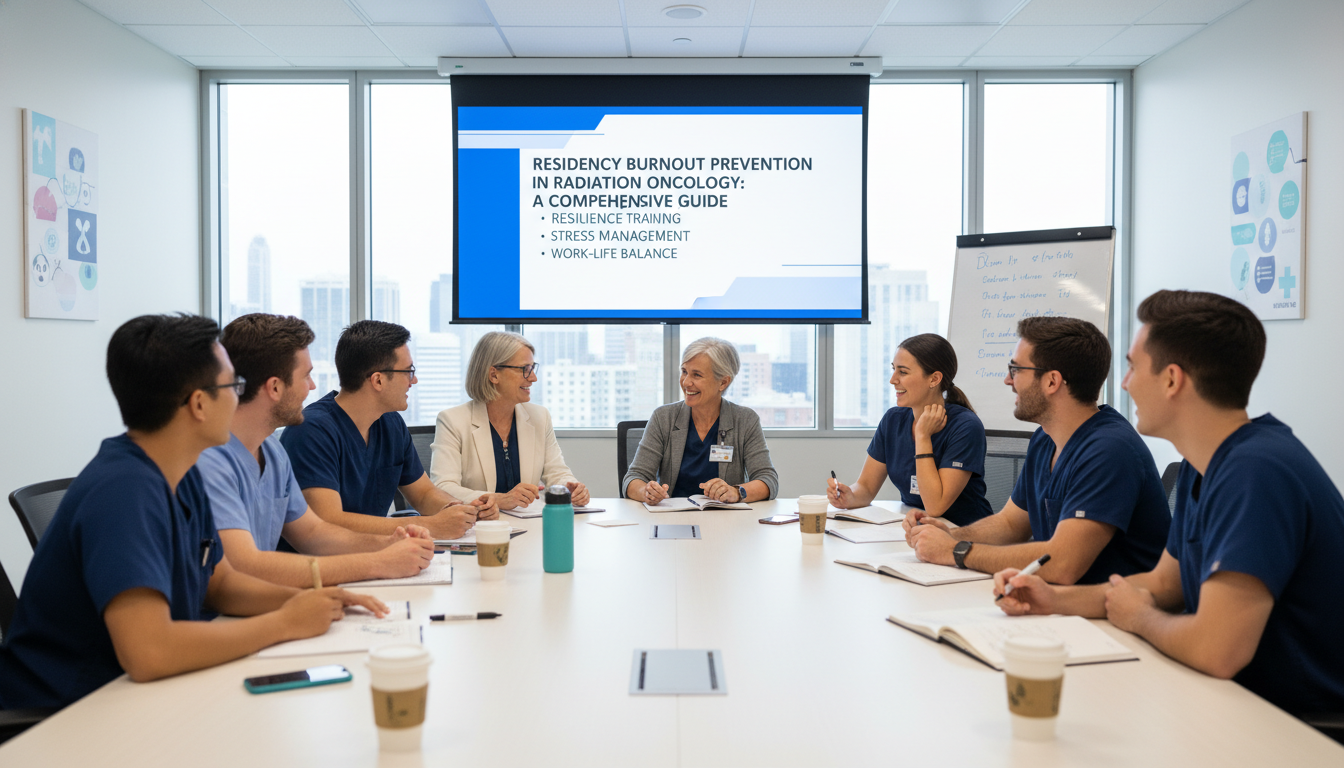
Program- and System-Level Burnout Prevention
Individual strategies matter, but residency burnout prevention cannot rest solely on residents. Programs and institutions have a responsibility to address structural drivers of physician burnout.
If you’re a resident, you may not control these factors, but you can:
- Advocate for changes
- Use existing resources
- Participate in wellness and curriculum initiatives
1. Workload, Autonomy, and Supervision
Programs can help by:
- Monitoring case volumes and consult load for each resident
- Ensuring progressive autonomy with appropriate backup, so residents feel both challenged and supported
- Avoiding relentless add‑ons without attention to capacity
Residents can:
- Give honest feedback in program evaluations
- Propose solutions (e.g., shared coverage models, structured backup for high‑volume weeks)
- Bring concrete examples when raising concerns: “On head & neck last month, I averaged X consults and Y simulations per day, and was routinely working until 10 pm on contours.”
2. Formal Wellness and Burnout Prevention Curricula
Effective curricula go beyond generic wellness talks:
- Skills‑based workshops:
- Time management and inbox management in oncology
- Difficult conversations and breaking bad news
- Managing emotionally complex patient and family interactions
- Peer discussion groups:
- Regular, facilitated groups where residents can share challenges confidentially
- Mentorship programs:
- Matching residents with multiple mentors (clinical, research, career, wellness)
If your program lacks these:
- Suggest bringing in faculty with interest in wellness
- Share literature on burnout in oncology and evidence‑based interventions
- Volunteer to help pilot small initiatives (e.g., a quarterly debrief session for residents after tough rotations)
3. Flexibility and Support for Life Events
Residency overlaps with major life milestones: marriage, children, illness (in yourself or your family), and more.
Programs that reduce residency burnout often:
- Provide clear parental leave and medical leave policies
- Offer schedule flexibility after major life events
- Normalize—not stigmatize—using these options
Residents can:
- Familiarize themselves with GME and institutional policies
- Speak with chief residents or program leadership early if a major life event is looming
- Support co‑residents who take leave, rather than seeing them as burdens
4. Accessible, Confidential Mental Health Resources
Burnout frequently coexists with depression, anxiety, or substance use—but these require specialized care beyond informal support.
Programs should:
- Ensure confidential access to counseling and psychiatric services
- Communicate clearly that seeking help will not automatically jeopardize licensure or career (and provide accurate information about state medical board requirements)
- Train attending physicians to recognize and respond to signs of resident distress
Residents can:
- Proactively identify how to access mental health resources before crisis hits
- Encourage a culture of “It’s okay to talk about therapy” among co‑residents
- Remember that using mental health care is a professional strength, not a weakness
Planning for a Sustainable Career Beyond Residency
Burnout prevention is not just about surviving residency; it’s about setting up a sustainable career in radiation oncology.
1. Clarifying Your Long-Term Professional Identity
Radiation oncology offers diverse paths:
- Predominantly clinical practice (community or academic)
- Academic clinician‑scientist roles
- Subspecialization (e.g., pediatrics, brachytherapy, proton therapy)
- Leadership roles in quality, safety, or administration
- Hybrid roles (informatics, global health, education)
Reflect on:
- What aspects of your current work feel most meaningful?
- Which tasks drain you the most?
- How do you imagine your ideal week 10 years from now?
Discuss these questions with mentors; align your fellowship, research, and job search strategies with your genuine interests to reduce future risk of physician burnout.
2. Developing Sustainable Work Patterns Early
Habits formed in residency often persist:
- If you always say yes to extra projects now, you’ll do the same as faculty.
- If you never protect vacation time in residency, you may carry that forward.
Practice now:
- Setting realistic limits on research and committees.
- Taking your allotted vacation and truly disconnecting.
- Turning off work email notifications during designated off hours when safe and appropriate.
These patterns help protect you from chronic medical burnout in faculty life.
3. Maintaining Non-Professional Identity
To counter depersonalization and keep perspective, you need an identity beyond “radiation oncologist.”
- Nurture hobbies—music, sports, art, travel, cooking, volunteering.
- Spend time with people who don’t know you primarily as “Dr. X.”
- Consider activities that help process stress: journaling, creative writing, art, or nature‑based activities.
Residents who maintain at least one meaningful, non‑medical identity tend to report lower residency burnout and better resilience.
Frequently Asked Questions (FAQ)
1. How common is burnout in radiation oncology residency?
Exact numbers vary by study and year, but surveys consistently show that a significant proportion of radiation oncology residents experience at least one dimension of burnout (emotional exhaustion, depersonalization, or low personal accomplishment). While rad onc may have fewer overnight calls than some specialties, the emotional intensity of oncology, complex cognitive demands, and academic pressures create a real risk of residency burnout if not actively addressed.
2. How can I tell if I’m experiencing burnout versus just normal stress?
Normal stress is time‑limited and usually tied to specific events (e.g., a busy week of consults, looming exam). Burnout is more chronic and includes:
- Persistent exhaustion that doesn’t fully improve with rest
- Increased cynicism or emotional numbness toward patients or colleagues
- A growing sense that your work doesn’t matter, or that you’re not effective
If you recognize these patterns for weeks to months, especially alongside changes in sleep, appetite, or mood, it’s wise to talk with a trusted mentor or mental health professional.
3. What should I do if I think I’m burning out right now?
Consider a three‑level approach:
Immediate self‑check:
- Are you safe? (no thoughts of self‑harm, substance misuse, or uncontrolled anger)
- If safety is a concern, seek urgent help (emergency services or crisis lines).
Short‑term adjustments:
- Talk with your chief resident or program director about your workload.
- Temporarily scale back non‑essential commitments (extra projects, committees).
- Use basic recovery strategies: prioritize sleep, short breaks, peer support.
Professional support:
- Access counseling or psychiatric resources offered by your institution.
- Discuss options for brief time off or adjusted duties if needed.
Burnout is treatable and addressing it early can prevent progression to more serious mental health problems.
4. How can applicants evaluate burnout risk when ranking radiation oncology programs?
During the rad onc match process, look beyond prestige and case volume:
- Ask residents:
- “Do you feel supported by leadership when you’re overwhelmed?”
- “How is feedback handled when someone is struggling?”
- “How often do you work late at home on contours or research?”
- Observe:
- Do residents seem genuinely comfortable speaking around faculty?
- Are there formal wellness programs or mentorship structures?
- How transparent are program leaders when discussing resident well‑being?
Programs that speak openly about residency burnout prevention, and back that up with clear structures and resources, are more likely to support your long‑term success and health.
Burnout prevention in radiation oncology residency is not a single intervention—it is a continuous process of aligning your values, managing your workload and emotional energy, building supportive relationships, and advocating for healthy systems. With intentional strategies at both individual and program levels, you can build a fulfilling, sustainable career caring for patients with cancer while also taking care of yourself.