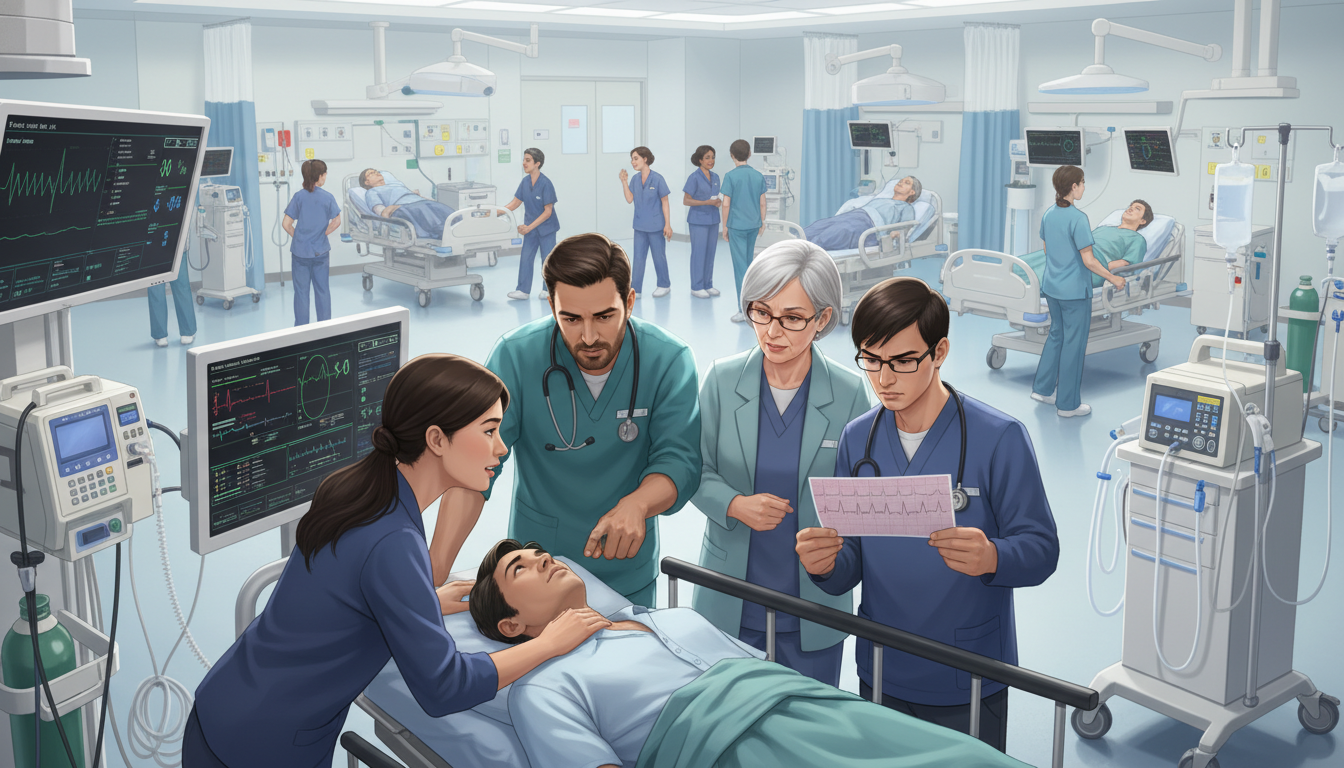
Understanding Whether Emergency Medicine Is the Right Specialty for You
Choosing a medical specialty is one of the most consequential decisions of your training. If you find yourself asking “what specialty should I do?” and repeatedly gravitating toward acute care, rapid decision-making, and team-based practice, emergency medicine (EM) may be on your short list. But knowing you like the ED is not the same as knowing emergency medicine residency is the right long-term fit.
This guide focuses on choosing a medical specialty in Emergency Medicine—not just “what is EM,” but whether you and EM are a good match, and how to evaluate that before the EM match. You’ll find:
- A realistic picture of EM practice and lifestyle
- Core traits and motivations of satisfied EM physicians
- Practical exercises to clarify your fit
- How to decide between EM and adjacent specialties (IM, FM, anesthesia, critical care, surgery, urgent care)
- How your choice plays into the EM match strategy
By the end, you should have a clearer, evidence-based answer to “Is emergency medicine the right specialty for me?” and what to do next if you think it might be.
1. What Does Emergency Medicine Actually Look Like?
Before you can decide if EM is the right specialty, you need to understand what the job really involves—beyond TV shows and your one-month clerkship.
1.1 Core Scope of Practice
Emergency medicine physicians are specialists in the initial evaluation, stabilization, and management of undifferentiated patients. Key features:
Undifferentiated complaints
- Chest pain, shortness of breath, abdominal pain, “found down,” “I just feel off.”
- You rarely get a neat diagnosis at triage; your job is to create order out of chaos.
Breadth over depth
- You’re expected to manage time-sensitive issues across all organ systems and ages: myocardial infarction, stroke, sepsis, trauma, psychiatric crisis, pediatric fever, obstetric emergencies, and more.
- Deep longitudinal management (e.g., chronic diabetes care, long-term cancer follow-up) is not your primary domain.
Stabilize, decide, and disposition
- Your primary deliverables:
- Rule out or treat life threats
- Narrow a dangerous differential
- Make sound disposition decisions (admit, discharge, observation, transfer)
- Your primary deliverables:
Procedural practice
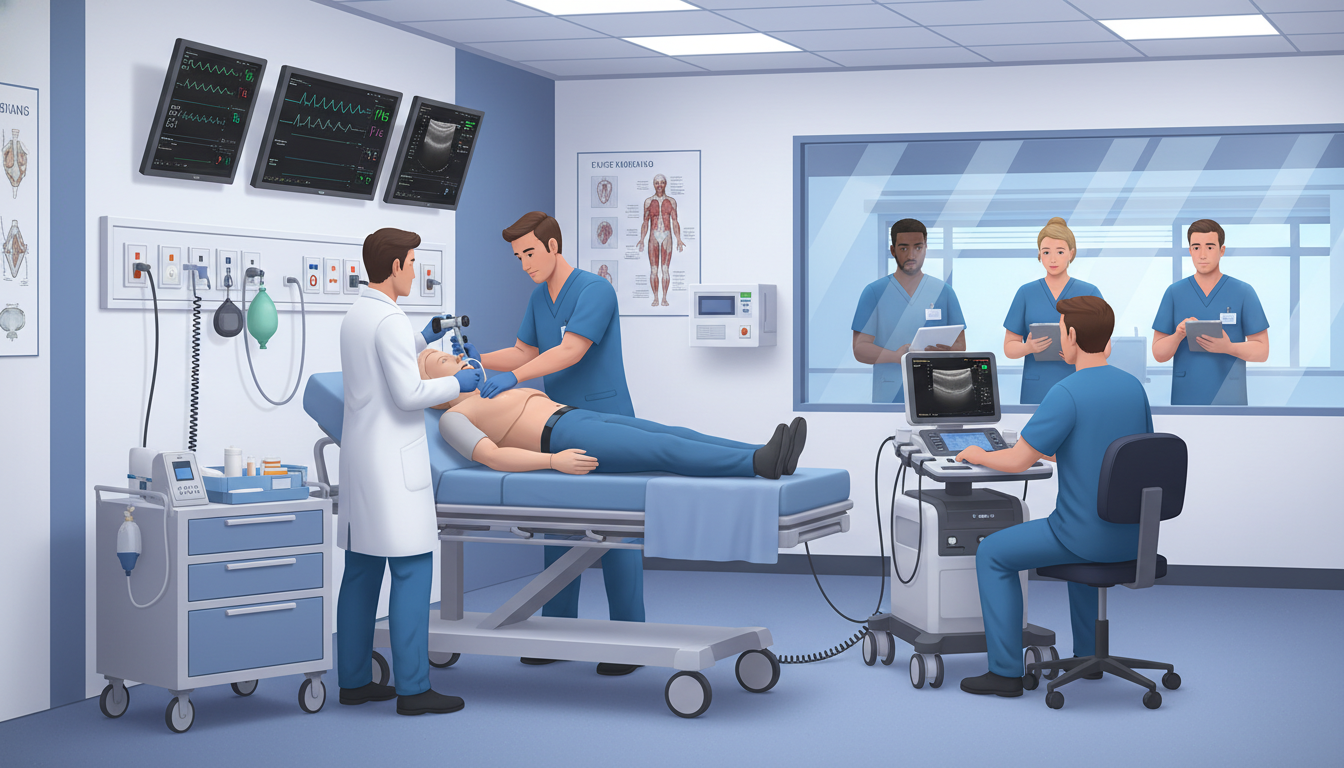
- Common EM procedures include intubation, central lines, chest tubes, LPs, procedural sedation, fracture reductions, dislocations, laceration repairs, and point-of-care ultrasound.
If you enjoy being the first physician to see the patient, thrive on uncertainty, and don’t mind handing off long-term care, the core scope of EM may appeal to you.
1.2 A Typical Shift: What Your Day Actually Feels Like
Emergency medicine is shift-based, not clinic- or round-based. A representative 8–10 hour shift might look like:
Hour 1–2: Front-loaded chaos
- Sign-out: you inherit 5–10 active patients from the previous team.
- Triage brings 2 new high-acuity cases within 30 minutes.
- You rapidly prioritize: who needs you right now vs. who can safely wait.
Hour 3–5: Juggling many balls
- You’re actively managing 10–15 patients at various stages of workup.
- You move between rooms: updating families, performing procedures, reassessing labs, coordinating with consultants.
Hour 6–8+: Decision & disposition pressure
- Admissions: refining plans with hospitalist, ICU, or specialty services.
- Discharges: patient education, return precautions, documentation, prescriptions.
- Your cognitive load is high: you’re constantly updating differentials, re-prioritizing tasks, and managing unexpected crises (e.g., a sudden trauma arrival).
You leave at or near the end of your shift, with sign-out to the next team—your patient panel doesn’t follow you home (though the emotional and cognitive residue sometimes does).
2. Personality, Values, and Skills: Who Thrives in Emergency Medicine?
EM is not just a clinical domain; it’s a specific way of working. Understanding your preferences is key to choosing medical specialty wisely.
2.1 Core Traits of Satisfied EM Physicians
While there’s no single “EM personality,” patterns among happy EM physicians include:
Comfort with uncertainty
- You can act decisively without every lab and imaging result.
- You’re okay with sometimes never knowing the final diagnosis because the inpatient team or outpatient follow-up will refine it.
Rapid pattern recognition and prioritization
- You’re good at quickly deciding: sick vs. not sick; now vs. later; my job vs. another team’s job.
Crisis composure
- You don’t need to be thrill-seeking, but you should be able to remain calm and functional during resuscitations, codes, and multi-trauma events.
Team orientation and communication
- EM is intensely collaborative—with nurses, techs, EMS, consultants, and social work.
- You must manage both medical complexity and the social dynamics of an ED team.
Emotional resilience and boundary-setting
- You see death, violence, addiction, and social crises routinely.
- Satisfied EM physicians develop reliable ways to process trauma and maintain boundaries.
If these traits sound like you—or like the version of yourself you’d like to grow into—emergency medicine residency may be a strong fit.
2.2 Red Flags: When EM Might Not Be the Best Fit
Consider alternatives if:
- You strongly prefer predictable, daytime schedules and struggle with circadian disruption.
- You need complete data and clear diagnoses before acting; ambiguity is deeply uncomfortable.
- You want long-term relationships with patients and continuity of care.
- You dislike frequent interruptions and multitasking; you work best with long, uninterrupted blocks of cognitive focus.
- Confrontation with patients, families, or consultants is very distressing, and you avoid it at all costs.
None of these absolutely rule out EM, but if several resonate strongly, another specialty may be better aligned with your temperament.
2.3 Self-Assessment Exercises
Use these to clarify your fit when choosing medical specialty:
Reflective journaling after ED shifts
- After each EM exposure, write briefly:
- What energized me today?
- What drained me?
- Did I feel more like myself in or out of the ED?
- After each EM exposure, write briefly:
Rate these statements from 1 (strongly disagree) to 5 (strongly agree):
- “I enjoy managing several tasks simultaneously.”
- “I can accept not having a definitive diagnosis as long as the patient is safe.”
- “I prefer short, focused patient encounters over long discussions.”
- “Intense, high-stakes situations bring out my best performance.”
- “I’m comfortable making fast decisions with incomplete information.”
A consistent 4–5 pattern suggests you may thrive in EM. Predominantly 1–2 suggests you should explore other fields more deeply.
Talk to EM attendings and residents
- Ask them directly:
- “What type of people are happiest in EM?”
- “What personal traits predict burnout in this field?”
- “What do you wish you had known before choosing EM?”
- Ask them directly:
Their narratives often clarify things more than any checklist.

3. Lifestyle, Training, and Career Trajectory in Emergency Medicine
When you ask, “What specialty should I do?” lifestyle and training structure should play a major role. EM offers unique pros and cons in both.
3.1 Emergency Medicine Residency Structure
Most EM residencies are:
- 3 years (PGY-1–3) in the U.S., with some 4-year programs.
- Front-loaded with ED shifts plus off-service rotations in:
- ICU (medical, surgical, neuro)
- Anesthesia and airway
- Trauma surgery and orthopedics
- OB/Gyn, pediatrics, neurology, and others depending on program
Common features:
Shift-based training:
- 8–12 hour shifts, mix of days, evenings, and nights.
- Blocks of nights are common; circadian disruption is real.
High responsibility early:
- You’ll manage major resuscitations as a junior resident with supervision, gradually taking more leadership.
Procedural volume:
- You get hands-on experience early—airways, lines, sedation, reductions.
When evaluating programs during the EM match process, consider:
- Trauma and critical care exposure
- Pediatric EM volume
- Ultrasound curriculum
- Wellness and schedule design (night float vs. scattered nights)
- Fellowships and career support
3.2 Lifestyle: The Reality of Shift Work
Emergency medicine often attracts students seeking flexible, non-clinic-based schedules. The reality is nuanced:
Upsides:
- Predictable off-time
- When your shift ends, your patient panel is signed out. No chronic inbox or daily clinic notes waiting at home.
- Schedule control (post-residency)
- Many EM physicians work ~12–16 shifts/month (8–12 hours each), condensing clinical time to increase uninterrupted days off.
- No primary call in the traditional sense—your work is your shift.
Downsides:
- Nights, evenings, and weekends are permanent
- The ED is 24/7/365; you will always work some nights and holidays.
- Circadian strain
- Rotating schedules can affect sleep, mood, relationships, and physical health.
- Intensity is front-loaded
- When you are at work, the cognitive and emotional burden is high; there’s little “easy” clinic time.
Ask yourself honestly:
- How do I respond to shift work and irregular hours?
- Can I protect sleep and self-care deliberately?
- Does having large blocks of time off appeal to me enough to offset nights/weekends?
3.3 Career Flexibility and Subspecialization
EM training opens diverse career paths:
Clinical practice models
- Academic EDs (teaching, research)
- Community hospitals (high-volume, less academic pressure)
- Rural/critical access hospitals (broad practice, more autonomy)
- Freestanding EDs, urgent care, telemedicine
Fellowships/Subspecialties (availability varies by country):
- Critical Care Medicine
- Ultrasound
- Toxicology
- Pediatric EM
- EMS/Prehospital/Disaster Medicine
- Hyperbaric/Undersea Medicine
- Global EM
- Palliative Care, Addiction Medicine (depending on region)
Non-clinical roles
- Hospital administration, quality & safety
- Health policy and public health
- Medical education leadership
- Industry, health tech, medical devices or AI triage systems
If you value breadth, procedural skills, and multiple career options, EM may align well with your long-term goals.
4. Emergency Medicine vs Other Specialties: Making a Comparative Decision
When you’re choosing medical specialty, it helps to compare EM directly with alternatives that often attract similar students. Below are common crossroads and how to think them through.
4.1 EM vs Internal Medicine / Family Medicine
Shared features: Medical problem-solving, broad physiology, multisystem understanding.
Key differences:
Time horizon
- EM: minutes to hours; focus on acute stabilization and high-risk decisions.
- IM/FM: days to years; focus on longitudinal management, chronic disease, preventive care.
Relationship style
- EM: episodic, often one-time encounters; empathic but brief.
- IM/FM: continuity, trust-building, complex shared decision-making over time.
Work pattern
- EM: shifts with off-time clean of patient panel responsibilities.
- IM/FM: mixture of clinic, hospital rounds, phone calls, documentation, and ongoing patient messaging.
Ask yourself:
- Do I care more about being the first doctor to handle the crisis, or the doctor who sees the patient through their long-term arc?
- Do I love the idea of closely following a patient’s chronic conditions, or does that feel less engaging than acute stabilization?
4.2 EM vs Surgery / Anesthesia
Shared features: Procedures, acute physiology, work in high-stakes settings.
EM vs Surgery:
EM:
- Diagnose, stabilize, and start management; then admit or consult.
- Broad range of complaints, fewer long, single-patient episodes.
Surgery:
- Operative skill, long-term surgical follow-up, focused on specific anatomic problems.
- Longer hours, often more hierarchical training.
If you enjoy rapid decisions across organ systems more than meticulous, repetitive procedural mastery in one system, EM may fit better.
EM vs Anesthesia:
EM:
- Unscheduled, unscreened patients; variety and unpredictability.
- Works across entire ED; multitasks multiple patients.
Anesthesia:
- Scheduled (and emergent) OR cases, but more structured environment.
- One (or few) patients at a time; continuous physiologic monitoring.
Choose EM if you prefer unstructured variety and multitasking; choose anesthesia if you enjoy procedural focus and minute-to-minute physiology on one patient at a time.
4.3 EM vs Critical Care Medicine
Many EM physicians are drawn to the ICU environment; some pursue dual training or fellowships.
Emergency Medicine
- Stabilize undifferentiated patients and initiate critical care.
- Time horizon: minutes to hours; you don’t stay with the patient long-term.
Critical Care
- Deep, continuous management of critically ill patients over days/weeks.
- Detailed titration of ventilators, pressors, sedation; extensive family discussions.
If your favorite part of the ED is the first 1–2 hours of resuscitation only, EM alone may satisfy you. If you wish you could “follow them upstairs and keep managing them,” consider an EM–Critical Care hybrid career via fellowship.
4.4 EM vs Urgent Care / Primary Care-Oriented Fields
Some students love “fast medicine” but dislike the intensity of the ED.
Emergency Medicine
- Sees the full acuity spectrum: from worried well to cardiac arrest and major trauma.
- High emotional stakes and frequent resuscitations.
Urgent Care / Outpatient
- Limited acuity (no strokes, major traumas, intubations, etc.).
- More regular hours; often no nights.
If you enjoy fast-paced minor care but dread codes and trauma activations, urgent care or outpatient-oriented specialties might better align with your values.
5. Practical Steps: How to Choose Emergency Medicine Intentionally
Once you suspect EM may (or may not) be right for you, structure your decision-making with deliberate steps.
5.1 Maximize Your Clinical Exposure
Do more than one EM rotation
- Try both academic and community settings if possible.
- Compare your energy level and engagement across settings.
Seek responsibility gradually
- Volunteer to run initial assessments, present plans, and lead parts of resuscitations under supervision.
- Notice whether this feels exhilarating, manageable, or chronically overwhelming.
Experience off-hours
- Specifically request some evening or night shifts.
- Pay attention to how your body and mind react after a week of altered sleep.
5.2 Build Honest Mentorship
- Identify at least two EM attendings and one EM resident you trust.
- Ask them:
- “What made you choose EM over other fields?”
- “When do you question your choice now, if ever?”
- “What traits in students make you think, ‘Yes, they’ll love EM’ vs ‘They might be happier elsewhere’?”
Be open to their candid feedback about your performance and visible traits. Sometimes others see your fit more clearly than you do.
5.3 Reflect on Your Long-Term Life Goals
When thinking about how to choose specialty, zoom out:
Location and practice environment
- Do you want urban tertiary centers, suburban hospitals, or rural practice?
- EM jobs and lifestyle vary greatly by setting.
Family and personal life
- Night and weekend work can be a strain but can also allow unusual daytime availability for childcare or other interests.
Career diversity
- If you want to intertwine clinical practice with teaching, EMS, administration, policy, or global health, EM can be a strong platform.
Make a simple table with three columns: Must-Haves, Nice-to-Haves, and Deal-Breakers for your career and life. See how EM stacks up, honestly.
5.4 Preparing Strategically for the EM Match
If you decide to pursue emergency medicine residency, integrate your choice into a focused EM match strategy:
Academics and exams
- While EM is holistic, strong clinical grades and solid board scores help secure interviews at a range of programs.
Letters of Recommendation in EM
- Aim for at least 2–3 strong letters from EM faculty, ideally from a standardized SLOE (Standardized Letter of Evaluation) system where applicable.
- Cultivate these by being reliable, teachable, and engaged on rotations.
Demonstrate authentic interest
- EM-related electives (toxicology, ultrasound, EMS, critical care).
- Involvement in EM interest groups, research, or QA/QI projects.
Personal statement
- Clearly articulate why EM fits your personality, values, and goals, supported by concrete stories.
- Avoid generic “I like emergencies” language; describe specific experiences that shaped your decision.
Your clarity about why you chose EM will not only help you in the match but also in maintaining resilience during residency and beyond.
6. Common Pitfalls and How to Avoid Regret
Even with careful deliberation, some residents discover late that EM isn’t the right fit. You can’t guarantee certainty, but you can reduce the chance of major mismatch.
6.1 Mistaking Short-Term Excitement for Long-Term Fit
Many students love the rotational high of the ED: procedures, drama, fast pace. But ask:
- Could I do this at 3 a.m. for decades?
- Would I still want this when I’m 45 with other life responsibilities?
- Do I love just the adrenaline spikes or also the routine of seeing abdominal pain, back pain, viral syndromes, and mild injuries over and over?
Talk with mid-career EM attendings to see how their perspectives changed after the initial novelty.
6.2 Ignoring Burnout and System Stressors
EM is on the frontlines of:
- ED boarding and overcrowding
- Under-resourced mental health and addiction care
- Administrative pressures, documentation burden
- Violence and security concerns in some settings
No specialty is immune to system issues, but EM feels them acutely. Ask programs during interviews:
- How do you manage ED boarding?
- What wellness and mental health resources do you provide for EM residents?
- What is your approach to workplace violence and de-escalation training?
Choose environments that acknowledge and actively address these realities.
6.3 Not Fully Exploring Other Options
Sometimes students commit to EM early and never deeply explore other specialties. To avoid regret:
- Do at least one medicine-based and one procedure-heavy rotation (e.g., IM wards and anesthesia or surgery) with an open mind.
- Challenge yourself: “If I could not do EM, what would I choose and why?”
- If another field seems equally or more appealing after real exposure, examine that carefully before locking in your EM match path.
FAQs: Choosing Emergency Medicine as Your Specialty
1. How do I know if emergency medicine is the right specialty for me?
Look at three domains:
- How you feel during ED rotations (energy, engagement, stress)
- Your core preferences (uncertainty tolerance, multitasking, shift work, brief encounters vs continuity)
- Your long-term goals (flexible schedule, career diversity, tolerance for nights/weekends).
If EM consistently energizes you more than other rotations and aligns with your values in all three domains, it’s likely a strong fit.
2. I like the ED, but I’m worried about burnout and nights. Should I still apply EM?
Be honest about how shift work affects you and what support you’ll need. Talk with EM residents and attendings about their schedules and coping strategies. If you love the work enough to accept nights and have a realistic plan for sleep, wellness, and boundary-setting, EM may still be appropriate. If nights feel intolerable even after short exposures, reconsider or explore EM-adjacent paths (e.g., urgent care later in your career).
3. Can I still keep my options open if I’m leaning toward emergency medicine?
Yes, to a point. Early in training, explore multiple fields deliberately. Once you commit to the EM match, your application should show coherent EM interest (rotations, letters, statement). If you’re truly undecided late in the process, speak with trusted advisors; dual-apply only if strategically appropriate, as it can dilute your signal to EM programs.
4. What type of student is most successful in an emergency medicine residency?
Residents who do well in EM are typically: adaptable, communicative, team-oriented, and comfortable making decisions with incomplete data. They show initiative, can juggle several tasks, and remain composed under stress. They also demonstrate humility—knowing when to ask for help—and invest in their own wellness to sustain a demanding, but rewarding, career.
Choosing a medical specialty is not about finding a “perfect” match, but about aligning your strengths, values, and desired life with the reality of a field. If, after honest reflection and broad exposure, emergency medicine still feels like the place where you are most fully yourself, then you’re likely on the right path—and can move forward into the EM match with clarity and purpose.