Understanding Radiation Oncology as a Medical Specialty
Radiation oncology is a highly specialized field focused on using ionizing radiation to treat cancer and certain benign conditions. As you consider how to choose a specialty and wonder “what specialty should I do?”, it’s easy for radiation oncology to remain a bit of a mystery—especially if your home institution doesn’t have a strong rad onc presence.
This guide is designed to help you decide whether a radiation oncology residency aligns with your interests, values, and long‑term career goals. We’ll walk through what the specialty actually looks like day to day, who tends to thrive in it, and how to navigate the rad onc match strategically.
At its core, radiation oncology combines:
- Oncology and longitudinal patient care – Following patients from diagnosis through survivorship or palliation.
- Physics and technology – Working with complex machines (linear accelerators) and sophisticated planning software.
- Imaging and anatomy – Using CT, MRI, PET, and sometimes ultrasound to define targets and organs at risk.
- Collaborative, team-based practice – Engaging with surgeons, medical oncologists, radiologists, pathologists, physicists, and therapists.
If you’re exploring choosing medical specialty options and are drawn to both patient-centered oncology and applied technology, radiation oncology deserves serious consideration.
What Does a Radiation Oncologist Actually Do?
Radiation oncology is more than “pressing a button to give radiation.” Understanding the concrete tasks and workflow is essential when deciding how to choose specialty.
Core Clinical Responsibilities
Radiation oncologists:
Evaluate patients in consultation
- New cancer diagnoses or recurrence
- Benign conditions (e.g., keloids, AVMs, sometimes trigeminal neuralgia)
- Urgent indications (e.g., spinal cord compression, brain metastases, SVC syndrome)
You’ll:
- Review pathology, imaging, and prior treatments
- Discuss prognosis, goals of care, and treatment options
- Determine whether radiation is appropriate and what intent (curative vs palliative)
Define targets and organs at risk (OARs)
- Using CT simulation scans (and often MRI/PET fusion), you:
- Delineate gross tumor volume (GTV)
- Define clinical target volume (CTV) and planning target volume (PTV)
- Contour nearby OARs (spinal cord, heart, bowel, optic structures, etc.)
This is where your detailed anatomical knowledge and imaging interpretation skills are crucial.
- Using CT simulation scans (and often MRI/PET fusion), you:
Design and approve radiation treatment plans
- Collaborate with dosimetrists and physicists to:
- Choose modality (e.g., 3D-CRT, IMRT, VMAT, SBRT, proton therapy)
- Determine dose and fractionation
- Evaluate dose-volume histograms (DVHs) to ensure targets are covered and OARs are spared
You are ultimately responsible for the safety and appropriateness of the plan.
- Collaborate with dosimetrists and physicists to:
Oversee treatment delivery
- Verify setup and imaging (e.g., portal films, cone-beam CT)
- Address daily issues: positioning challenges, side effects, machine issues
Manage acute and chronic toxicities
- Short-term: skin reactions, mucositis, fatigue, esophagitis, diarrhea, cystitis
- Long-term: fibrosis, strictures, secondary malignancies, organ-specific late effects
You’ll frequently coordinate with:
- Medical oncology (e.g., for concurrent chemoradiation)
- Palliative care
- Surgeons (e.g., pre- or post-operative radiation)
Provide survivorship and follow-up care
- Monitor for recurrence
- Track and manage late radiation effects
- Support survivors physically and psychosocially
Typical Practice Settings and Schedules
Radiation oncologists practice in:
Academic medical centers
- Complex cases, clinical trials
- Subspecialization (e.g., CNS, GU, GI, thoracic, pediatric)
- Significant teaching and research responsibilities
Community practices
- Broad case mix, often generalist
- Strong longitudinal patient relationships
- Greater emphasis on clinical efficiency and access
Hybrid/affiliated centers
- Mix of academic and community features
- Satellite centers linked to academic hubs
Schedule characteristics:
- Mostly outpatient, Monday–Friday
- Early morning to late afternoon/early evening
- Minimal in-house call; often home call
- Few emergencies require immediate on-site response (e.g., spinal cord compression, bleeding masses), but they’re not frequent
For many trainees, the work-life balance is a major draw compared with other oncology or procedural specialties.

Who Thrives in Radiation Oncology? Personality, Skills, and Interests
When wrestling with what specialty should I do, alignment between your temperament and the specialty’s core activities matters more than prestige or perceived lifestyle.
Traits and Interests That Fit Well
Interest in Oncology and Longitudinal Care
- You’re comfortable discussing prognosis, goals of care, and sometimes end-of-life decisions.
- You value building ongoing relationships with patients and families.
- You find meaning in both curative and palliative care settings.
Comfort with Technology and Physics Concepts
- You enjoy working with computers, software, and complex systems.
- You’re not afraid of dose calculations, constraints, and optimization.
- You like understanding how machines work at a conceptual level, even if you’re not doing the hands-on physics.
You don’t need to be a physicist, but curiosity and comfort with tech are key.
Strong Spatial and Visual Skills
- You enjoy anatomy and imaging.
- You can visualize 3D structures and their relationships.
- You like the idea of “painting” dose around sensitive structures.
Detail-Oriented and Methodical
- You’re meticulous in checking plans, contours, and constraints.
- You can manage complex documentation and quality assurance steps.
- You’re comfortable with the responsibility that small errors can have large consequences.
Collaborative, Team-Based Mindset
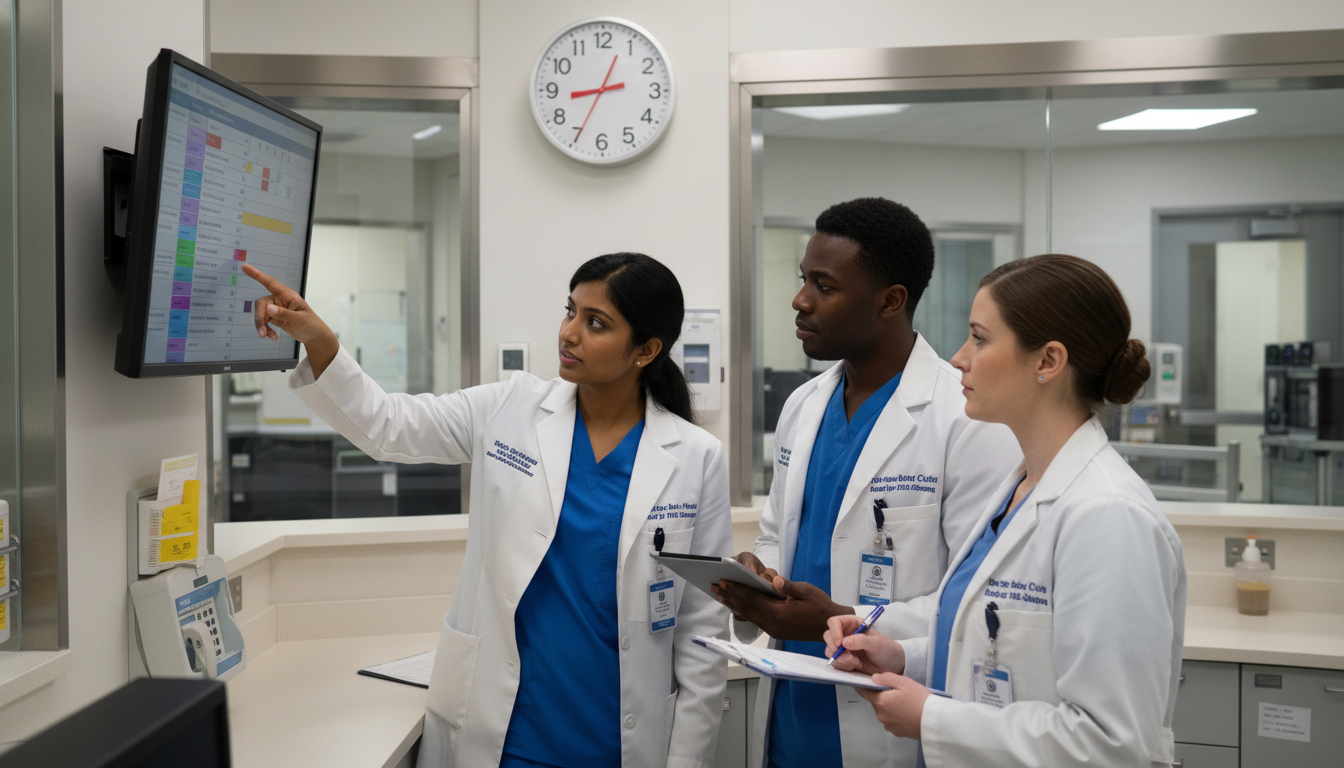
- You work well with physicists, dosimetrists, therapists, nurses, and other physicians.
- You’re willing to engage in multidisciplinary tumor boards and joint decision-making.
Emotional Resilience and Empathy
- You can handle frequent encounters with serious illness, suffering, and death.
- You derive meaning from helping patients even when cure isn’t possible.
- You balance empathy with boundaries to prevent burnout.
Misconceptions and Reality Checks
When choosing medical specialty, it’s crucial to correct common myths:
Myth: Radiation oncologists rarely see patients.
Reality: The job is clinically intense. You see new consults, on-treatment visits, follow-ups, and urgent cases. Some days are predominately face-to-face.Myth: It’s all physics and computers, not “real clinical medicine.”
Reality: You’ll manage complex oncologic and symptom issues, coordinate with other specialists, and counsel patients deeply. The technical component is integrated into holistic cancer care.Myth: The field is saturated; there are no jobs.
Reality: The job market has tightened relative to a decade ago, and regional variation is substantial. However, positions do exist, especially with geographic flexibility and strong training. This should factor into your decision, but it doesn’t automatically rule out the specialty.
Self-Assessment Questions
As you think through how to choose specialty, ask yourself:
- Do I enjoy oncology cases on rotations and find cancer care emotionally meaningful?
- Do I like complex imaging and anatomy more than hands-on procedures?
- Do I get satisfaction from careful, detail-oriented work rather than fast-paced procedural volume?
- Am I comfortable with advanced technology and eager to keep learning as it evolves?
- How do I handle discussions around prognosis, recurrence, and palliation?
If many of these resonate, radiation oncology may be a strong fit.
Training Pathway and the Rad Onc Match: What to Expect
If you’re serious about a radiation oncology residency, understanding the training structure and rad onc match dynamics will help you plan strategically.
Training Timeline
Medical School (4 years)
- Preclinical sciences, then clinical clerkships.
- Exposure to oncology often limited unless you seek electives.
Preliminary/Transitional Year (PGY‑1)
- Internal medicine, surgery, or a transitional year
- Provides broad clinical foundation, inpatient experience, and general medical skills.
Radiation Oncology Residency (PGY‑2 to PGY‑5)
- 4 years dedicated to radiation oncology
- Mix of:
- Clinical rotations across disease sites (breast, GU, GI, thoracic, CNS, head & neck, gyn, peds, lymphoma, etc.)
- Physics and biology coursework
- Research time (often 6–12 months protected in many programs)
- Board certification through the American Board of Radiology (ABR) after residency and exams.
Some programs are categorical (include the PGY‑1 year), but many require you to apply separately for a prelim/transitional year.
The Rad Onc Match Landscape
Radiation oncology has historically been competitive, then experienced a period of unfilled spots as residency capacity outpaced job growth. In recent cycles:
- Application numbers and positions are more balanced, but:
- Strong academic metrics still help.
- Demonstrated interest is essential (research, electives).
- Geographic flexibility remains advantageous.
Key points for the rad onc match:
- Application numbers: Many applicants apply broadly due to variable competitiveness and job market concerns.
- Program variety: From large NCI-designated cancer centers to smaller community-focused programs.
- Research emphasis: Some programs are heavily research-oriented; others prioritize clinical training and community practice preparation.
What Programs Look For
To stand out for a radiation oncology residency, programs typically value:
Academic Strength
- Solid USMLE/COMLEX scores (specific thresholds vary by cycle and program)
- Strong clinical evaluations and class rank (where applicable)
- Honors in oncology-related rotations can help
Demonstrated Interest in Radiation Oncology
- Rad onc rotations (home and away)
- Research in radiation oncology or related oncology fields
- Participation in oncology interest groups, tumor boards
Research Experience
- First- or co-author publications, abstracts, posters, or quality improvement projects
- Basic science, translational, clinical, or health services research
- Ability to discuss your work intelligently during interviews
Professionalism and Teamwork
- Strong letters from radiation oncologists emphasizing reliability, curiosity, and kindness
- Evidence that you work well within multidisciplinary teams
Personal Fit
- Maturity and emotional intelligence for serious patient conversations
- Clear motivation for choosing radiation oncology over other oncology fields

How to Explore Radiation Oncology in Medical School
If you’re in med school and trying to figure out choosing medical specialty options, rad onc can be hard to evaluate without intentional exploration. Here’s how to build clarity.
Step 1: Early Exposure (Preclinical and Early Clinical Years)
Shadow at a local cancer center
- Even half a day can introduce you to consults, simulation, and on-treatment visits.
- Ask to observe a tumor board or planning session.
Join an oncology or radiation oncology interest group
- Attend talks on radiation therapy basics, careers, and research.
Take advantage of electives or selectives
- If your school offers a radiation oncology elective, sign up early.
- If not, explore medical oncology or palliative care; the mindset and patient population overlap significantly.
Step 2: Focused Rotations (Core Clerkships and 3rd Year)
Schedule a formal radiation oncology elective
- Aim for at least 2–4 weeks.
- Request exposure to multiple disease sites (not just one niche).
- Ask to:
- See new consults and follow-ups
- Observe CT simulation and treatment planning
- Attend tumor boards and QA conferences
Keep a reflection journal
- Note what you enjoy, what drains you, and how the specialty’s day-to-day feels over time.
- Reflect on emotional responses to frequent cancer care.
Step 3: Research Involvement
Find a radiation oncology mentor
- Reach out to faculty or residents and ask about ongoing projects.
- Be honest about your level of experience and time constraints.
Start with manageable projects
- Retrospective chart reviews
- Outcomes or toxicity analyses
- Clinical case series
- Quality improvement projects
Aim for outputs you can discuss in the match
- Abstracts (ASTRO, ASCO, regional oncology meetings)
- Manuscripts (even if under review during match season)
- Departmental presentations
This not only strengthens your rad onc match profile but also helps you confirm your interest through real engagement with the specialty’s questions and challenges.
Step 4: Away Rotations and Clarifying Fit
For many applicants, away rotations are a critical part of how to choose specialty within a specific field and identify the right residency environment.
Why do an away rotation?
- See how different programs structure training.
- Obtain letters of recommendation from outside institutions.
- Clarify academic vs community-focused career interests.
When and where?
- Typically late 3rd year or early 4th year.
- Choose 1–2 programs that:
- Align with your career goals (academic vs community)
- Are realistic match targets given your academic profile
- Are in regions where you might want to live long-term
How to make the most of it
- Be reliable, engaged, and kind to all staff.
- Ask to participate in contouring, plan review, and patient counseling.
- Request feedback halfway through the rotation.
- Express interest in letters of recommendation if the fit feels strong.
Key Factors to Consider When Choosing Radiation Oncology
As you synthesize your experiences and decide whether radiation oncology residency is right for you, think beyond “Do I like the rotations?” to these deeper questions.
1. Clinical Content and Patient Population
Ask yourself:
- Do I feel energized—or at least deeply engaged—by caring for patients with cancer?
- Am I comfortable with uncertainty around prognosis and long-term outcomes?
- Does the mix of curative and palliative care feel meaningful rather than draining?
Consider observing not only “good days” (remission, successful treatments) but also recurrence discussions and end-of-life conversations.
2. Procedural vs Cognitive Orientation
Compared with other specialties:
- Radiation oncology is more cognitive and planning-based than hands-on procedural.
- You will perform some procedures (e.g., brachytherapy placements, fiducial markers, some on-site skills depending on the center), but these are not the primary daily focus in most practices.
- If you strongly crave frequent procedural work (e.g., interventional radiology, gastroenterology, surgery), rad onc may feel too desk-based.
3. Lifestyle and Work-Life Integration
Many students ask about lifestyle when choosing medical specialty. Radiation oncology tends to offer:
- Predictable weekday hours with limited weekend work.
- Low in-house call burden, often home call only.
- Emotional intensity from oncology, but less acute overnight chaos.
Reflect on:
- How much does schedule regularity matter to you?
- Are you comfortable with the emotional demands of oncology within that predictable framework?
4. Intellectual Themes and Long-Term Growth
Radiation oncology sits at the crossroads of:
- Rapidly evolving technology and imaging
- Ongoing advances in radiobiology and systemic therapies
- Increasing interest in personalized care and AI-driven planning
Consider whether you’re excited by:
- Lifelong learning in new techniques and evidence
- Incorporating new tools (e.g., AI-assisted contouring, adaptive radiotherapy)
- Participating in or applying clinical trials data
5. Job Market and Career Flexibility
Any guide on how to choose specialty in rad onc must address the job market honestly.
Key considerations:
- Job availability is regionally variable.
- Urban, highly desirable regions may be saturated.
- Underserved or rural regions more likely to have openings.
- Academic vs community jobs:
- Academic positions may require strong research profiles and fellowships in some niches.
- Community jobs emphasize clinical efficiency and breadth.
Practical advice:
- Talk with current residents and early-career attendings about their job search experiences.
- Ask prospective residency programs for:
- Recent graduates’ job locations and types (academic vs community)
- Time to job placement after graduation
- Be honest with yourself about:
- Geographic flexibility
- Desire for academic vs community practice
- Willingness to adapt to evolving practice patterns (e.g., hypofractionation, telehealth follow-ups)
If the combination of clinical content, lifestyle, tech emphasis, and market realities still appeals to you, radiation oncology can be deeply rewarding.
FAQs About Choosing Radiation Oncology as a Specialty
1. How early do I need to decide on radiation oncology to be competitive?
Earlier is better, but it’s not all-or-nothing. Ideally:
- By mid-3rd year, try to:
- Complete at least one radiation oncology elective.
- Initiate a research project.
- In 4th year, add:
- Another rad onc rotation (home or away).
- Finalize letters of recommendation.
Late deciders can still match, especially with strong overall applications and proactive engagement, but they may have less time for robust research or multiple away rotations.
2. Do I need a strong physics or engineering background to succeed in rad onc?
No formal background is required, but comfort with quantitative thinking helps. Programs teach the necessary physics and radiobiology. You’ll be expected to:
- Understand core physics concepts relevant to safe practice.
- Collaborate effectively with medical physicists.
- Use planning software and interpret dose distributions.
If you actively dislike physics or technology, the specialty may feel misaligned. If you’re neutral or curious, you’ll likely do fine.
3. How many radiation oncology programs should I apply to?
This depends on:
- Your academic metrics (scores, grades, research output).
- Strength and specificity of your rad onc experiences.
- Geographic constraints.
Because the rad onc match can fluctuate, most applicants apply widely. As a rough guide (not a hard rule):
- Strong applicants: ~20–30 programs
- Typical applicants: ~30–50 programs
- Applicants with significant red flags or heavy geographic constraints may choose more.
Discuss strategy with mentors who know your full application and are familiar with recent match cycles.
4. What if I like oncology but can’t decide between medical oncology and radiation oncology?
This is common when choosing medical specialty within cancer care. Consider:
Nature of the work:
- Medical oncology: systemic therapies (chemo, immunotherapy, targeted agents), more inpatient time, more frequent regimen changes.
- Radiation oncology: localized treatments with planning upfront, predominantly outpatient, more imaging and anatomy focus.
Procedural vs cognitive mix:
- Both are cognitive, but rad onc includes substantial imaging and technical planning.
- Med onc involves more pharmacology and systemic toxicity management.
Exploration strategy:
- Do rotations in both.
- Attend tumor boards and follow the same patient from med onc and rad onc perspectives.
- Reflect on which clinic days feel more natural and engaging.
Many students find that one environment consistently feels like a better fit for their personality and interests.
Choosing radiation oncology is ultimately about aligning your strengths, values, and long‑term goals with a specialty that blends oncology, technology, and longitudinal patient care. If you’re drawn to imaging, precision, and meaningful relationships with patients facing cancer—while valuing a relatively predictable schedule—radiation oncology may be the right answer to your question: “What specialty should I do?”