
Understanding Urology as a Specialty
Urology is a surgical subspecialty that focuses on the urinary tract of both sexes and the male reproductive system. It sits at a unique crossroads of surgery, medicine, oncology, and even aspects of primary care. If you’re wondering how to choose specialty or asking yourself what specialty should I do, urology deserves serious consideration—especially if you enjoy procedures, longitudinal patient care, and solving complex, often intimate health problems.
Scope of Urology
Urologists diagnose and treat conditions involving:
- Kidneys, ureters, bladder, urethra
- Prostate, testes, penis, and male reproductive system
- Adrenal glands (in some practices)
Common clinical domains include:
- Oncology: Prostate, bladder, kidney, testicular, and penile cancers
- Stone disease: Kidney and ureteral stones
- Benign prostatic hyperplasia (BPH): Lower urinary tract symptoms in older men
- Male infertility and sexual dysfunction: Erectile dysfunction, Peyronie’s disease, varicoceles
- Female pelvic medicine: Incontinence, pelvic organ prolapse (often overlapping with gynecology)
- Reconstructive urology: Urethral strictures, trauma, congenital anomalies
- Pediatric urology: Congenital abnormalities, vesicoureteral reflux, undescended testes
- Neuro-urology: Bladder dysfunction from neurologic disease (MS, spinal cord injury)
The specialty is highly procedural: cystoscopies in clinic, endoscopic stone surgery, robotic and open major surgeries, in-office minor procedures, and specialized reconstructive operations.
Why Urology Appeals to Many Students
When thinking through choosing medical specialty options, urology often stands out for several reasons:
- High procedural volume with variety (endoscopic, laparoscopic/robotic, open, microsurgical)
- Balanced medicine and surgery: You manage chronic conditions and do major operations
- Longitudinal relationships: Many patients are followed for years
- Rapidly evolving technology: Robotics, lasers, image-guided procedures, new oncologic therapies
- Generally high satisfaction: Many urologists report strong career satisfaction and camaraderie in the field
Urology residency is competitive, so your decision intersects closely with your strategy for the urology match. Understanding what the field truly entails is essential before you commit to the urology residency application pathway.
Is Urology Right for You? Core Fit Factors
Before focusing on the logistics of the urology match, it’s important to honestly assess your personal fit. When wondering what specialty should I do, these questions help you evaluate urology in a structured way.
1. Do You Enjoy Surgery and Procedures?
Urology is a surgical specialty first and foremost.
You will:
- Spend substantial time in the OR doing:
- Robotic prostatectomy or partial nephrectomy
- Cystectomy with urinary diversion
- Endoscopic stone procedures (URS, PCNL)
- Orchiectomies, scrotal surgery, reconstructive cases
- Perform frequent in-office procedures:
- Cystoscopy
- Prostate biopsies
- Vasectomies
- Injections (e.g., for ED, BPH treatments)
If you find yourself energized by operative days, enjoy using your hands, and like the immediate impact of procedures, urology aligns well. If prolonged OR days feel draining or you strongly prefer purely cognitive work, you may want to re-evaluate.
2. Comfort With Intimate and Sensitive Topics
Urologists regularly discuss:
- Erectile dysfunction, premature ejaculation, infertility
- Incontinence and pelvic floor disorders
- Penile/testicular abnormalities
- Genital trauma or sexually transmitted infections
Ask yourself:
- Am I comfortable talking about genital and sexual health with patients of all ages?
- Can I do this in a calm, nonjudgmental, and matter-of-fact manner?
Discomfort is common for students, but if with time, you feel more at ease and even appreciate helping patients with stigmatized issues, that’s a strong indicator urology may be a good fit.
3. Tolerance for On-Call and Emergencies
Compared with some surgical fields, urology can offer reasonable lifestyle options—but residency and many early-career jobs involve:
- Emergency consults:
- Testicular torsion
- Obstructing stones with infection (urosepsis)
- Acute urinary retention
- Trauma to kidneys, bladder, urethra, or genitals
Ask:
- How do I feel about night and weekend calls?
- Does the idea of emergent surgery (torsion, trauma) excite or stress me?
Urology call is often less intense than general surgery or trauma, but it is still real. Residency call can be demanding, especially in busy centers.
4. Interest in Oncology, Chronic Disease, and Longitudinal Care
Urology involves:
- Cancer care: Diagnosing, staging, surgically treating, and surveilling urologic cancers
- Chronic conditions: BPH, incontinence, chronic pelvic pain, recurrent stones
If you enjoy following patients over time—managing side effects, monitoring PSA trends, adjusting therapies—you’ll appreciate this aspect. Urology uniquely blends procedural intensity with meaningful, long-term relationships.
5. Personality and Culture Fit
The “urology personality” stereotype (with caveats) includes:
- Fun, collegial, team-oriented
- Technologically curious, enjoys gadgets and devices
- Appreciates procedural work but not always the most aggressive OR environment
- Comfortable with humor yet serious about patient dignity and privacy
During electives, observe:
- Do you enjoy being around urologists?
- Do their daily routines, communication style, and teamwork feel comfortable for you?
Fit with the people is often as important as fit with the pathology.

Day-to-Day Life in Urology: Residency and Beyond
To decide on a urology residency, you should have a realistic sense of what the training and career look like in practice. This perspective is critical for anyone serious about the urology match.
Urology Residency Structure
Most urology residencies in the U.S. are 5–6 years, typically:
- PGY-1 (Intern Year)
- Mix of general surgery, urology, ICU, and other rotations
- Learn fundamentals of perioperative care, lines/tubes, basic procedures
- PGY-2 to PGY-4
- Increasing urology exposure
- Inpatient consults, ward management, clinic and OR
- Learning fundamentals of cystoscopy, basic endoscopy, simple cases
- Senior Years (PGY-4/5/6)
- Chief responsibilities, complex cases, leading teams
- More subspecialty exposure (oncology, pediatrics, reconstructive, FPMRS, andrology)
Residency emphasizes:
- Building surgical skills systematically
- Gaining comfort with urologic emergencies
- Managing urologic conditions in diverse populations and practice settings
- Research and academic projects—a key part of competitive urology training
Typical Resident Week
Varies by program, but a sample might include:
Mornings
- Pre-round on inpatients
- Team rounds with senior/chief and attending
- OR start at 7–8 am on operative days
- Procedures ranging from cystoscopy and stone surgery to major robotic cases
Afternoons
- Finish OR cases
- Outpatient clinic: follow-ups, new consults, minor procedures
- Address floor issues, new consults from ED/ICU
Call Responsibilities
- Night float, home call, or in-house call depending on program
- ED consults (renal colic, retention, hematuria, trauma)
- Managing urgent issues in post-op patients
Life as an Attending Urologist
Your practice as an attending can vary widely:
- Academic urologist
- Mix of OR, clinics, teaching, research
- Subspecialty focus (e.g., oncology, reconstructive, pediatrics)
- Private practice or community urology
- Broader case mix, often more general urology
- May have more autonomy over schedule, variable call structure
- Hybrid models
- Employed by health systems, group practices with academic affiliations
Typical week:
- 2–3 days in OR, 2–3 days in clinic, plus admin time
- Procedural volume and clinic intensity vary by subspecialty and setting
Lifestyle: Many urologists report good work–life balance relative to other surgical fields, especially after training, though this depends on location, practice type, and call burden.
How to Decide: A Step-by-Step Framework for Choosing Urology
When working through choosing medical specialty decisions, form a structured plan instead of relying only on impressions.
Step 1: Early Exposure and Honest Reflection
- Rotate in urology as early as feasible (3rd or early 4th year).
- If formal rotations are limited, arrange a short elective or shadowing block.
- During your experience, keep a simple reflection log:
- Which parts of the day did I enjoy most?
- Did the hours feel draining or engaging?
- How did I feel in the OR vs. clinic?
- How did I react to emergency cases or late nights?
Patterns over weeks are more informative than a single great or terrible day.
Step 2: Compare Urology to Other Contenders
If your main question is what specialty should I do and urology is on a short list:
- Make a table listing your top 2–3 specialties (e.g., urology, general surgery, internal medicine, radiology).
- Rate each 1–5 on:
- Enjoyment of daily work
- Interest in patient population
- Tolerance of lifestyle and call
- Length and intensity of training
- Opportunities for procedures or cognitive work (depending on what you want)
- Geographic/job market considerations
Seeing this written out often clarifies which field is consistently a better fit.
Step 3: Seek Mentorship and Straight Answers
- Identify at least two urology mentors:
- One resident or fellow
- One attending (ideally in an area you might want to pursue)
- Ask direct questions:
- “What do you like least about urology?”
- “If you were choosing a specialty today, would you pick urology again?”
- “What personality traits do you see struggling most in this field?”
- “How have you balanced family or personal life with urology?”
Honest, nuanced responses are invaluable when deciding on a urology residency path.
Step 4: Try to Envision Your Future Self
Picture yourself in 10–15 years:
- In clinic discussing urinary incontinence or ED with multiple patients
- In the OR doing robotic cases or complex reconstructions
- On call late at night managing obstructing stones or trauma
Ask: Does this future energize me or feel misaligned with who I want to be?
If you repeatedly feel drawn to that vision, it’s a strong sign that urology might be the right answer to your how to choose specialty question.
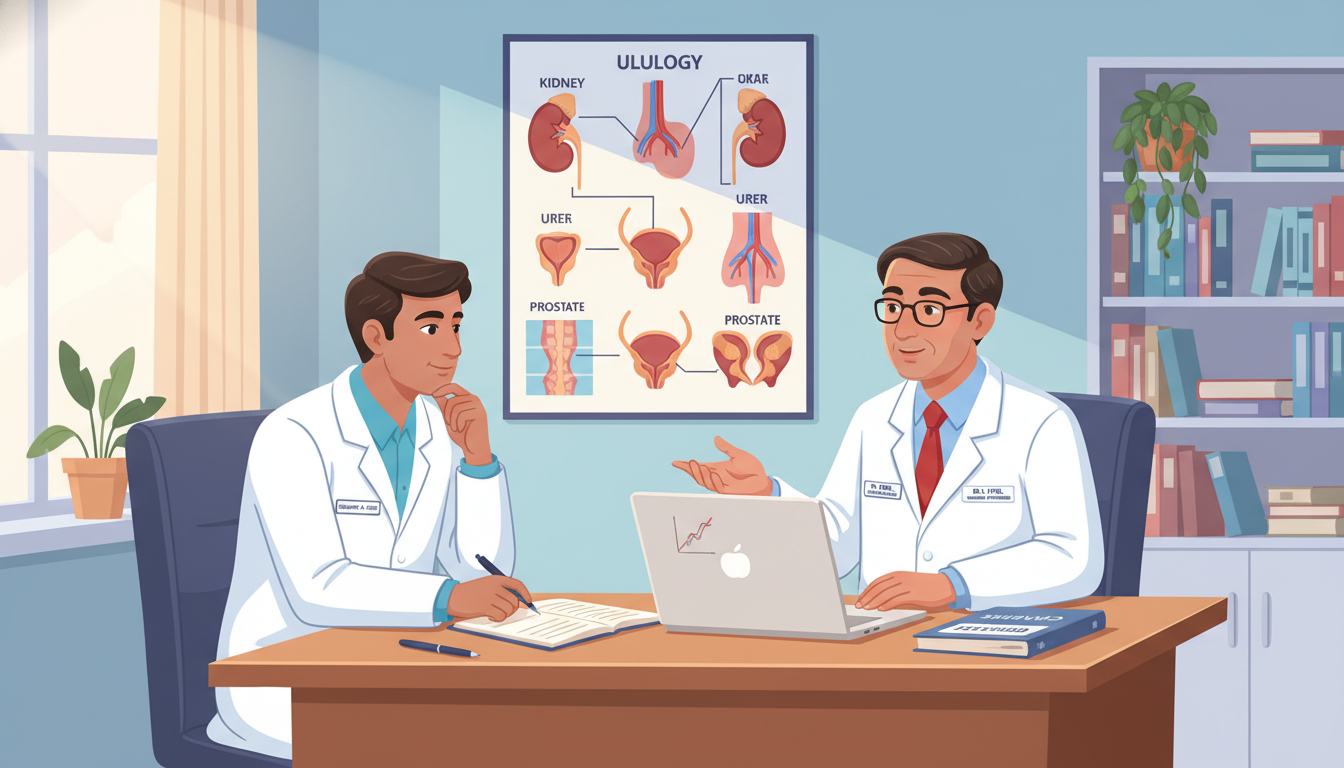
Preparing for the Urology Match: Strategic Steps
Once you’ve decided that urology is your answer to choosing medical specialty, you need a deliberate plan for the urology match. Urology uses its own match system (via the AUA) and tends to be competitive.
Academic Profile and Board Scores
Programs value:
- Strong pre-clinical and clinical performance
- Solid USMLE/COMLEX scores (or equivalent); while holistic review is increasing, metrics still matter
- Honors in surgery and urology rotations if available
Actionable tips:
- Identify and address knowledge gaps early (3rd year)
- Aim for strong performance on surgery and medicine clerkships
- Seek feedback on your clinical presentations and decision-making
Research and Scholarly Activity
Urology is an academic and innovation-driven field. Research is viewed favorably, especially at top programs.
Helpful activities:
- Urology-related projects (clinical research, QI, basic science, medical education)
- Poster or podium presentations at urology or surgical meetings
- Peer-reviewed publications in urology or related fields
If your school has limited urology research:
- Consider multi-institutional collaborations or remote projects
- Ask faculty if you can help with chart reviews, database work, or manuscript prep
Even small projects show sustained interest and familiarity with the field.
Clinical Rotations and Away Rotations
Your performance on urology rotations is crucial for both learning and letters.
On your home and away rotations:
- Be reliable and prepared:
- Arrive early, know your patients, read on upcoming cases
- Take initiative:
- Offer to draft notes, track consults, help with pre/post-op tasks
- Be teachable:
- Ask thoughtful questions; accept feedback graciously
Away rotations (“audition rotations”) can:
- Demonstrate your fit and work ethic to programs
- Give you additional letters of recommendation
- Help you assess program culture and environment
Plan away rotations strategically:
- Choose places that realistically fit your competitiveness and interests
- Schedule them to allow time for letters to be written before applications are due
Letters of Recommendation
Strong letters are essential in the urology residency application.
Ideal letter writers:
- Urology faculty who have directly supervised your clinical work
- A research mentor in urology who knows your work well
- Possibly a surgeon or internal medicine physician who can speak to your clinical abilities
Make it easy for letter writers:
- Provide your CV, personal statement draft, and a bullet list of projects/strengths
- Remind them of specific cases or rotations where you worked closely together
Personal Statement and Interviews
Your application should tell a coherent story about why urology, why you, and why now.
In your personal statement:
- Explain how you chose urology—include specific experiences with patients, cases, and mentors
- Highlight characteristics that fit the field:
- Teamwork under pressure
- Manual dexterity and love of procedures
- Empathy in dealing with sensitive issues
- Interest in oncology, innovation, or a subspecialty niche
- Avoid clichés (e.g., “I like to work with my hands”) unless supported by concrete examples
On interviews:
- Be prepared to discuss:
- Your research in detail
- Challenging situations on rotations and how you handled them
- Why this particular program fits your goals
Remember: programs care both about your ability to excel in urology residency and about whether you’ll be a collegial, reliable colleague.
Long-Term Career Pathways and Subspecialization
An important part of how to choose specialty is understanding your long-term options within urology. After residency, you can pursue fellowship training in:
- Endourology / Stone Disease
- Advanced stone surgery, minimally invasive approaches
- Urologic Oncology
- Complex cancer surgery, multidisciplinary care
- Male Reproductive Medicine / Andrology
- Fertility, microsurgery, erectile dysfunction, testosterone management
- Female Pelvic Medicine & Reconstructive Surgery (FPMRS)
- Pelvic floor disorders, incontinence, prolapse
- Pediatric Urology
- Congenital urologic conditions, pediatric cancers, complex reconstructions
- Reconstructive Urology
- Urethral strictures, trauma, gender-affirming surgery (in some practices)
- Neuro-urology
- Bladder dysfunction in neurologic disease and injury
If you enjoy the breadth of urology, you can remain a generalist. If you find one area particularly compelling, subspecialization can create a highly tailored career.
Consider, as you explore urology:
- Do I see myself as a generalist in a community setting?
- Am I drawn to high-complexity academic surgery?
- Do I want a niche in infertility, oncology, reconstructive work, or pediatrics?
Your answers don’t need to be final during medical school, but awareness of these paths can inform your decision to pursue urology in the first place.
Frequently Asked Questions (FAQ)
1. How competitive is urology, and what if I’m not a “top” student?
Urology is considered a competitive surgical specialty. Strong grades and board scores help, but they’re not the whole story. Programs look for:
- Demonstrated commitment to urology (rotations, research, involvement)
- Strong letters of recommendation from urology faculty
- Professionalism, teamwork, and work ethic
If your metrics are average:
- Focus on excellent clinical performance and relationships with mentors
- Target a realistic range of programs, including mid-tier and community-based
- Consider applying broadly and being flexible on geographic preferences
Many successful urologists did not have perfect scores; a cohesive, sincere, and hardworking application can offset some academic weaknesses.
2. What if I like both urology and another specialty—how do I decide?
Use a side-by-side comparison:
- Shadow both fields for at least several weeks
- Write down what you liked and disliked each day
- Talk to residents and attendings in both specialties about lifestyle, training, and long-term satisfaction
Ask yourself:
- On a random Tuesday, which specialty’s daily routine do I prefer?
- If I were required to give up one field permanently, which loss would feel bigger?
When you consistently miss or think about urology while rotating elsewhere—or vice versa—that’s a powerful signal.
3. Can I have a good work–life balance in urology?
Yes, many urologists report good or excellent work–life balance, especially compared with other surgical specialties. Key determinants:
- Practice setting (academic vs. community, large group vs. solo)
- Call coverage structure and volume
- Subspecialty focus (e.g., high-volume oncology vs. more clinic-heavy stone or andrology practices)
During your rotations and interviews:
- Ask residents and attendings about their typical weekly schedule, call burden, and family life
- Look for programs and eventual jobs that align with your personal priorities
4. What if I decide on urology late in medical school?
Late decisions are common, but you’ll need to be strategic:
- Meet with a urology advisor immediately to discuss feasibility and timelines
- Maximize your remaining time:
- Do a focused home rotation
- Arrange at least one away rotation if possible
- Get involved in a small, quickly actionable research project
- Make your application story coherent:
- Show how your earlier experiences logically led you to urology, even if the decision was later
If timing is too tight, some applicants choose a preliminary year or research year to strengthen their application for the subsequent urology match. Discuss this openly with mentors.
Choosing a medical specialty is one of the most consequential decisions of your training. Urology offers a compelling blend of surgery, medicine, technology, and longitudinal patient relationships. By seeking early exposure, engaging mentors, and honestly assessing your interests and values, you can determine whether a urology residency and the urology match align with your vision of a meaningful, sustainable medical career.