
Clinical volunteering is often the first meaningful bridge between classroom learning and real patient care. Whether you are a premed, medical student, or early in your residency journey, the right clinical volunteering experiences can sharpen your skills, clarify your career goals, and significantly strengthen your future residency application.
This complete guide walks you through what clinical volunteering is, why it matters, how to find and choose positions, and how to turn those hours into powerful stories on your application.
Understanding Clinical Volunteering: What It Is (and Isn’t)
Clinical volunteering (often synonymous with hospital volunteering) means working in healthcare settings where you interact with patients or directly support patient care teams in a non‑paid role. It is distinct from both purely administrative volunteering and formal clinical employment.
Types of Clinical Volunteering Roles
Common clinical volunteering roles include:
Hospital volunteers
- Escorting patients to imaging or procedures
- Assisting at information desks
- Supporting nursing staff with non-clinical tasks (stocking, making beds, delivering supplies)
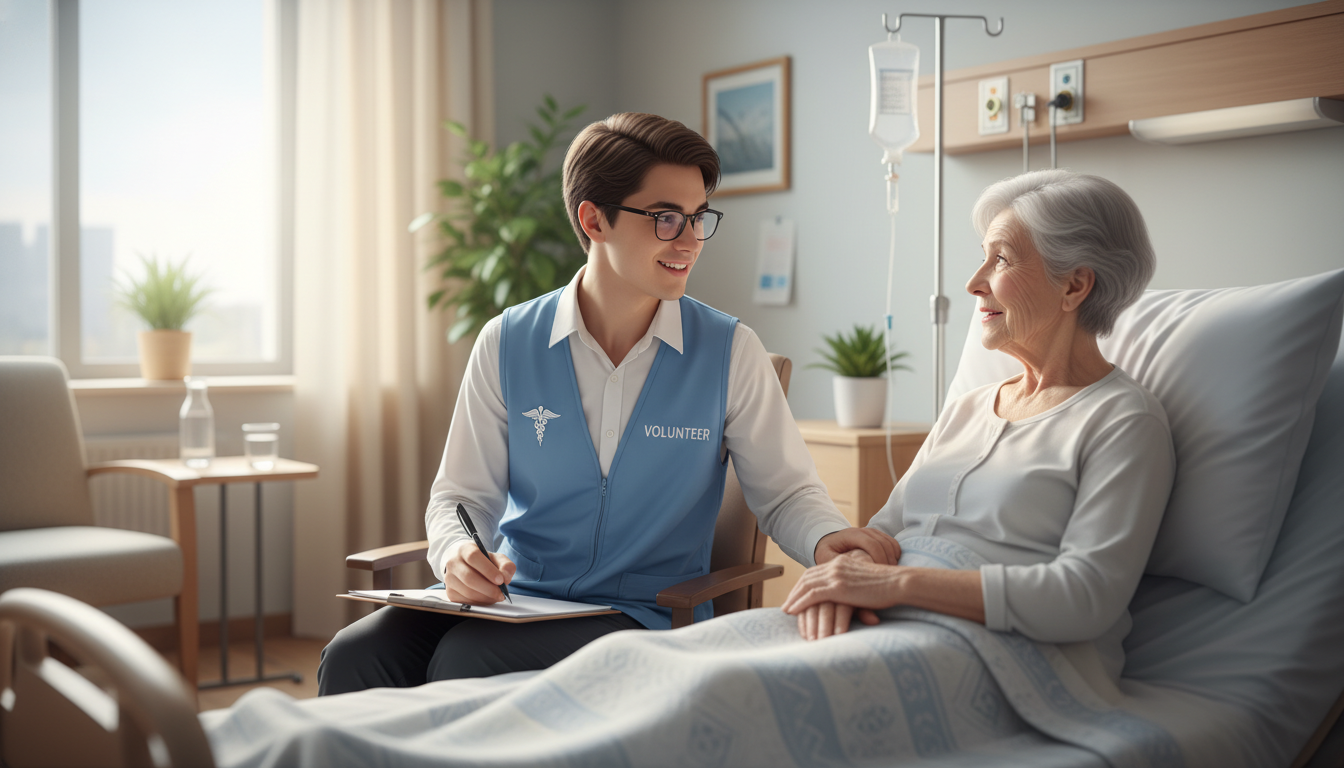
- Visiting patients for conversation, reading, or comfort
Emergency department volunteers
- Transporting patients to radiology or other units
- Helping with room turnover and stocking supplies
- Supporting family members in waiting areas
- Observing the flow of acute care
Clinic and outpatient volunteers
- Rooming patients (in some clinics)
- Taking non-clinical histories (social history, lifestyle questionnaires) if allowed
- Helping with check-in/check-out
- Assisting with health education materials
Long-term care / hospice volunteers
- Providing companionship to patients
- Supporting families during end‑of‑life care
- Helping with activities, meals, and comfort measures
Specialty clinic volunteers
- Oncology infusion center support
- Pediatric playroom supervision
- Rehabilitation or physical therapy support (often observational/supportive rather than hands-on)
Each setting gives different insights into healthcare systems and patient experiences, all of which qualify as meaningful clinical experience premed students can draw on.
What Counts as “Clinical”?
For residency programs and medical schools, an experience is “clinical” if there is:
- Regular, in-person exposure to patients, and
- You are part of the care environment, even if your tasks are non-medical.
Examples of clearly clinical volunteering:
- Talking with hospitalized patients, delivering meals, offering comfort
- Assisting in a clinic where you room patients and observe physician-patient interactions
- Supporting nurses while they care for patients (transport, positioning, stocking, etc.)
Borderline or non-clinical experiences:
- Volunteering in a hospital’s fundraising office (non-clinical)
- Working exclusively on data entry or back-office tasks with no patient exposure (non-clinical)
- Remote “tele-volunteering” with no direct patient interaction (usually not considered clinical)
When in doubt, ask yourself: Did I routinely see and interact with patients or family members in a healthcare context? If yes, it likely counts as clinical volunteering.
Why Clinical Volunteering Matters for Future Residents
Clinical volunteering is not just a “checkbox.” It shapes your development in ways that directly impact your future as a resident and physician.
1. Demonstrates Commitment to Medicine
Programs look for sustained clinical experience premed and throughout training to confirm that you understand:
- The daily realities of patient care (shift work, emotional demands, paperwork)
- The culture of hospitals and clinics
- The challenges of working with vulnerable, sick, or distressed people
A longitudinal pattern of clinical volunteering—rather than a brief, last-minute surge—signals authentic commitment.
2. Builds Core Professional Competencies
Even if you are not touching patients in a clinical sense, you’re building skills programs care about:
- Communication: Explaining processes, listening to patients, managing upset family members
- Teamwork: Supporting nurses, clerks, techs, and physicians; knowing your role and boundaries
- Time management: Showing up reliably, balancing shifts with school and other obligations
- Cultural humility: Working with diverse patient populations and healthcare teams
Residency programs look for these competencies explicitly in their evaluations and interviews. Volunteering gives you concrete examples to share.
3. Provides Stories That Humanize Your Application
It’s not the number of hours alone that sets you apart—it’s the meaningful experiences you can describe:
- The patient who changed your view of chronic illness
- The moment you helped de-escalate a tense situation in the ED waiting room
- Observing how a nurse explained a difficult diagnosis with empathy
These stories become:
- Personal statement themes
- Interview talking points
- Evidence of reflection in supplemental essays
4. Clarifies (or Changes) Your Career Direction
Exposure to a range of settings during hospital volunteering can:
- Confirm your interest in high-acuity environments (ED, ICU)
- Draw you toward primary care, oncology, pediatrics, palliative care, or psychiatry
- Help you understand what type of patient you feel most called to serve
This clarity is invaluable by the time you’re selecting rotations and, later, choosing a specialty for residency.
Finding and Securing Clinical Volunteering Positions
The search for meaningful clinical volunteering can feel overwhelming, especially in competitive urban areas or post-pandemic environments with tighter restrictions. A deliberate, multi-pronged strategy works best.
Step 1: Map Out Local Clinical Settings
Start with a broad list of institutions:
- Academic medical centers
- Community hospitals
- Children’s hospitals
- VA hospitals
- Free clinics and federally qualified health centers
- Rehabilitation hospitals and nursing homes
- Hospice organizations and palliative care centers
Use phrases like “hospital volunteering” and “volunteer services department” in your searches. Many institutions have a dedicated Volunteer Services office and a structured intake process.
Step 2: Understand Common Requirements
Most hospital volunteering programs will require:
- Application form and resume
- Background check
- Immunization records (MMR, varicella, TB testing, possibly hepatitis B, influenza, COVID depending on current policies)
- Drug screen (in some hospitals)
- HIPAA and safety training
- Minimum time commitment (e.g., 3–4 hours per week for 6–12 months)
Start collecting documentation early, especially vaccination records and TB testing, as these can delay your start date.
Step 3: Contact Volunteer Services Strategically
When you reach out:
- Use a professional email address.
- Attach a brief CV or resume.
- State your goals clearly:
“I’m a premed student seeking regular clinical experience premed before applying to medical school. I’m especially interested in patient-facing roles in inpatient or emergency medicine settings.”
Be realistic yet specific. Stating you are flexible in departments, but interested in particular areas (e.g., ED, pediatrics, oncology) can help placement without sounding demanding.
Step 4: Consider Non-Hospital Clinical Opportunities
If hospital programs are full or highly competitive:
Free clinics / community health centers
- Patient intake and registration
- Serving as medical interpreter (if qualified bilingual)
- Assisting with vitals or basic tasks under supervision, where permitted
Physician offices / private practices
- Some practices may accept volunteers for administrative and limited clinical support roles
- Great for shadowing integration if a physician is supportive
Long-term care and hospice
- Often more open to volunteers
- Rich in longitudinal patient relationships and family interaction
- Highly valuable for demonstrating empathy and professionalism
These can be just as impactful on your application as large, name-recognition hospitals—sometimes more so, if you gain deeper responsibility.
Step 5: Maximize the Interview and Onboarding Phase
If your volunteer program includes an interview or orientation:
- Dress business casual
- Emphasize reliability and respect for patient confidentiality
- Ask thoughtful questions:
- “What qualities distinguish your most effective volunteers?”
- “Are there opportunities to take on more responsibility after some time?”
Showing seriousness from the start increases the likelihood of assignments that offer more substantive clinical exposure.
Making the Most of Your Clinical Volunteering Experience
Getting the position is only half the battle. The real value comes from how you participate.
Show Up Like a Professional, Not a Visitor
Treat clinical volunteering as early professional training:
- Be punctual for every shift
- Communicate absences in advance and follow procedures
- Wear the required uniform or badge exactly as instructed
- Follow infection control and safety policies rigorously
Staff quickly distinguish between “students trying to fill hours” and “future colleagues.” Your reputation in this setting can lead to strong letters of recommendation later.
Build Relationships With the Healthcare Team
Don’t limit your interactions to patients only. Engage respectfully with:
- Nurses
- Unit clerks
- Technicians (radiology, respiratory therapy, phlebotomy)
- Social workers and case managers
- Physicians and advanced practice providers
Practical strategies:
Introduce yourself at the start of every shift:
“Hi, I’m Alex, the volunteer on the unit today. Is there anything specific I can do to be most helpful to you and the patients?”
Ask for feedback occasionally:
“I’d really appreciate any suggestions on how I can be more useful on the unit.”
These small gestures demonstrate maturity and openness to learning.
Focus on Patient-Centered Presence
Even simple tasks become meaningful when you’re truly present with patients:
- When delivering blankets or meals, linger a moment to ask, “Is there anything else I can help you with?”
- With permission, sit and listen if a patient wants to talk. Many are anxious, lonely, or bored.
- Be attentive to nonverbal cues—discomfort, confusion, or distress—and notify staff appropriately.
You are never there to provide medical advice, but you can provide emotional support and connection.
Stay Within Your Scope—Always
One of the fastest ways to lose trust is to push beyond your role:
- Never access the electronic medical record unless explicitly authorized and trained.
- Do not interpret test results, give medical opinions, or offer treatment suggestions.
- Do not attempt any clinical procedures (e.g., blood draws, IVs, injections) unless the program and rules explicitly permit it, and you are credentialed to do so.
If a patient asks for medical advice, a safe response is:
“That’s a really important question. I’m actually a volunteer, not a clinician. Let me get your nurse/doctor so they can talk with you about that.”
Keep a Reflective Journal
To later articulate your experiences in applications and interviews, you need a record. After each shift, in a HIPAA-compliant way (no names or identifying details), note:
- A memorable patient encounter
- An interaction that taught you something about healthcare teamwork
- A moment you felt proud, uncomfortable, or uncertain—and what you learned from it
- Any ethical or systems-level issues you observed
Over months or years, this turns into a treasure trove of material for:
- Personal statements
- ERAS experiences section descriptions
- Interview answers about challenges, mistakes, and growth

Strategic Planning: Building a Clinical Volunteering Portfolio
To maximize the impact on your eventual residency application, think in terms of a portfolio rather than isolated, disconnected activities.
Depth vs. Breadth: How Many Roles Do You Need?
For most applicants, an ideal clinical volunteering portfolio includes:
- One long-term role (e.g., 1–2 years in a hospital or clinic) showing dedication and continuity
- One or two shorter, focused experiences (e.g., a summer in the ED, a semester in hospice) to broaden perspective
Depth is more valuable than scattering yourself across five different hospitals for short bursts. Residency programs prefer:
- Sustained involvement
- Progressive responsibility
- Clear evidence of reflection and growth
Targeting Settings That Align With Future Interests
If you already have a sense of specialty interests, you can subtly shape your clinical experiences to support them:
Interested in internal medicine?
- Inpatient medicine wards, subspecialty clinics (cardiology, endocrine), community health centers
Considering emergency medicine?
- ED volunteering, EMS ride-alongs (where permitted), urgent care clinics
Leaning toward pediatrics?
- Children’s hospitals, pediatric clinics, child life departments
Drawn to psychiatry?
- Behavioral health units, crisis hotlines (telephone work is less “clinical” but still valuable), integrated behavioral health clinics
Avoid the trap of trying to “predict” your residency match solely with premed volunteering. Use it to explore, not to prematurely narrow your path.
Integrating Volunteering With Other Experiences
Clinical volunteering is one pillar of a strong application; it works best alongside:
Shadowing
- Shorter, more observation-focused
- Deeper insight into physicians’ decision-making and workflow
Research
- Shows intellectual curiosity and engagement with evidence-based medicine
Non-clinical service
- Tutoring, community outreach, social justice work
- Demonstrates broader commitment to serving others
Being able to say, for example, “I volunteered in a free clinic, conducted research on health disparities, and tutored underserved high school students” paints a cohesive narrative of service and advocacy.
When and How Much: Timing and Hours
For premed and early preclinical students:
- Aim for 2–4 hours per week consistently over at least 6–12 months.
- Many applicants end up with 100–300 hours of clinical volunteering by the time they apply, but there is no magic number.
For later medical students gearing toward residency:
- Continue some form of patient-centered service if feasible.
- Even with busy clerkships, occasional longitudinal volunteering in a clinic, hospice, or outreach program can demonstrate sustained commitment.
Ultimately, programs care less about your total hours and more about:
- What you learned
- How you grew
- How clearly you can articulate that growth
Turning Clinical Volunteering Into a Competitive Application Asset
Experiences only matter if you can communicate them effectively in your application.
Writing About Clinical Volunteering in Experiences Sections
When listing hospital volunteering or other clinical roles:
Be specific about duties
- Instead of “Helped nurses and talked to patients,” write:
“Escorted patients to imaging, delivered meals, provided companionship to isolated patients, and assisted nurses with non-clinical tasks to improve patient comfort.”
- Instead of “Helped nurses and talked to patients,” write:
Highlight impact and reflection
- Briefly note what you learned or how you contributed beyond tasks:
“Developed skills in communicating with anxious patients and coordinating with multidisciplinary teams in a busy ED environment.”
- Briefly note what you learned or how you contributed beyond tasks:
Quantify where appropriate
- Number of shifts, hours per week, duration in months/years.
Using Clinical Stories in Personal Statements
Strong personal statements often anchor around one or two key clinical volunteering stories that:
- Show your evolving understanding of illness and healing
- Highlight your values (compassion, humility, resilience, curiosity)
- Demonstrate insight into what residency and physician life entail
Avoid over-dramatizing or centering yourself as the “hero.” Instead, focus on:
- What the patient experience taught you
- How you changed your behavior or outlook afterwards
- How this informs the kind of resident and physician you hope to be
Discussing Volunteering in Interviews
Expect questions such as:
- “Tell me about a meaningful patient interaction you had as a volunteer.”
- “What did you learn about the healthcare system from hospital volunteering?”
- “Describe a time you faced a challenge or conflict in a clinical environment.”
Prepare by:
- Reviewing your reflective journal
- Choosing 3–5 key stories that illustrate different themes (empathy, teamwork, ethics, resilience)
- Practicing concise, structured answers (situation, your role, what you did, what you learned)
Programs want applicants who can think deeply about their experiences, not just list them.
Frequently Asked Questions About Clinical Volunteering
1. How many hours of clinical volunteering do I need?
There is no strict minimum, but a consistent pattern is essential. For many successful applicants:
- 100–300 hours of sustained, patient-facing clinical experience premed or during early medical school is typical.
- More important than total hours is longitudinal commitment (e.g., 2–4 hours/week for a year) and your ability to describe what you learned.
2. Does virtual or remote volunteering count as clinical experience?
Generally, no. Virtual roles that do not involve direct patient interaction (e.g., data entry, fundraising) are not considered clinical. Remote activities may still be valuable as service, but to count as true clinical experience, you typically need:
- In-person patient contact, or
- Active participation in care settings (e.g., telehealth support roles where you interact with patients in real time under supervision)
Always verify how your specific role would be perceived by advisors or program directors.
3. Can I list hospice or nursing home volunteering as clinical experience?
Yes—when you are regularly interacting with residents or patients in a care setting, hospice and nursing home volunteering usually qualify as clinical volunteering. These environments offer:
- Longitudinal relationships
- Exposure to end-of-life care
- Insight into chronic illness and functional decline
They can be some of the most powerful experiences to discuss in your application.
4. What if my hospital volunteering mostly involved non-patient tasks?
Even if your tasks were indirect (stocking supplies, cleaning, transporting items), the experience can still be meaningful if you:
- Had regular proximity to patients and staff
- Observed care processes and workflows
- Used downtime appropriately to ask staff polite, thoughtful questions about their work
When describing the experience, be honest about your responsibilities but emphasize what you learned about patient care, teamwork, and systems-level functioning. If you truly had almost no patient contact, consider complementing it with another, more directly patient-facing role.
Clinical volunteering is one of the most accessible and powerful ways to understand healthcare from the inside, long before you wear a white coat or start residency call. By choosing roles thoughtfully, engaging as a true professional, and reflecting deeply on your experiences, you can transform “hours on the unit” into a cornerstone of your development as a future resident and physician.