Understanding COMLEX Level 1–3 as a Non-US Citizen IMG
For a non-US citizen IMG (international medical graduate), the COMLEX series (Level 1, Level 2-CE, and Level 3) can be both an opportunity and a challenge. While many foreign national medical graduates focus primarily on USMLE, increasingly DO programs and even some MD programs are open to IMGs who demonstrate strong performance on both USMLE and COMLEX or, in some cases, COMLEX alone.
To use COMLEX scores strategically as a non-US citizen IMG, you need to understand:
- What each COMLEX Level tests
- How expectations differ from USMLE
- How residency programs interpret COMLEX for IMGs
- How to structure integrated preparation for all three Levels
Quick Overview of COMLEX Levels
COMLEX Level 1
- Focus: Foundational biomedical sciences, pathophysiology, and core OPP/OMM (Osteopathic Principles & Practice / Osteopathic Manipulative Medicine).
- When taken (US grads): After preclinical years.
- For IMGs: Often prepared alongside or shortly after basic sciences, or after USMLE Step 1.
COMLEX Level 2-CE (Cognitive Evaluation)
- Focus: Clinical medicine, diagnosis, management, patient safety, with integration of OPP/OMM in clinical decision-making.
- For IMGs: Usually after clinical rotations and/or USMLE Step 2 CK-level knowledge.
COMLEX Level 3
- Focus: Independent practice-level decision-making, longitudinal care, and systems-based practice; still includes osteopathic concepts.
- For IMGs: Often during or just before residency, sometime in PGY-1 or early PGY-2, depending on state licensing requirements.
Why COMLEX Matters for a Non-US Citizen IMG
As a non-US citizen IMG, your path is more competitive because:
- Programs must handle visa sponsorship.
- Many programs are more comfortable with US DO or MD graduates.
- You are often compared with US graduates who have taken COMLEX from within an osteopathic curriculum.
Strong COMLEX performance shows you can:
- Compete academically with DO students.
- Understand osteopathic philosophy and OMM well enough to work in a DO environment.
- Manage a high-volume, clinically integrated exam in a second language and system.
Some DO programs accept only COMLEX scores, others accept COMLEX + USMLE, and many prefer at least USMLE for IMGs. However, a high COMLEX score—especially if paired with a strong academic record, good US clinical experience, and evidence of OPP familiarity—can significantly strengthen your application to osteopathic residency programs.
Eligibility, Logistics, and Strategic Planning for Foreign National Medical Graduates
Confirming Eligibility as a Non-US Citizen IMG
The COMLEX exams are administered by the NBOME (National Board of Osteopathic Medical Examiners). Officially, COMLEX is designed for students and graduates of COCA-accredited osteopathic medical schools. However, in specific contexts (e.g., some special pathways, dual degree programs, or other agreements), non-DO graduates may have access.
Because eligibility for a foreign national medical graduate can be complex and institution-dependent, you should:
- Check NBOME policies directly on the NBOME website and look for any updates about non-traditional pathways.
- Communicate with potential DO residency programs:
- Ask whether they require COMLEX, accept USMLE only, or both.
- Clarify whether they have had IMGs or non-US citizen IMGs previously, and what exam pathway they used.
- Consider dual examination strategy:
- Many IMGs aiming at US residency still prioritize USMLE and may only pursue COMLEX if there is a clear pathway and benefit.
- If you are working with or sponsored by a DO faculty mentor or institution, inquire whether a formal pathway to COMLEX registration exists.
If you confirm you can take COMLEX, then the main question becomes how to efficiently integrate COMLEX preparation with your USMLE and clinical preparation.
Building a 12–18 Month Integrated Timeline
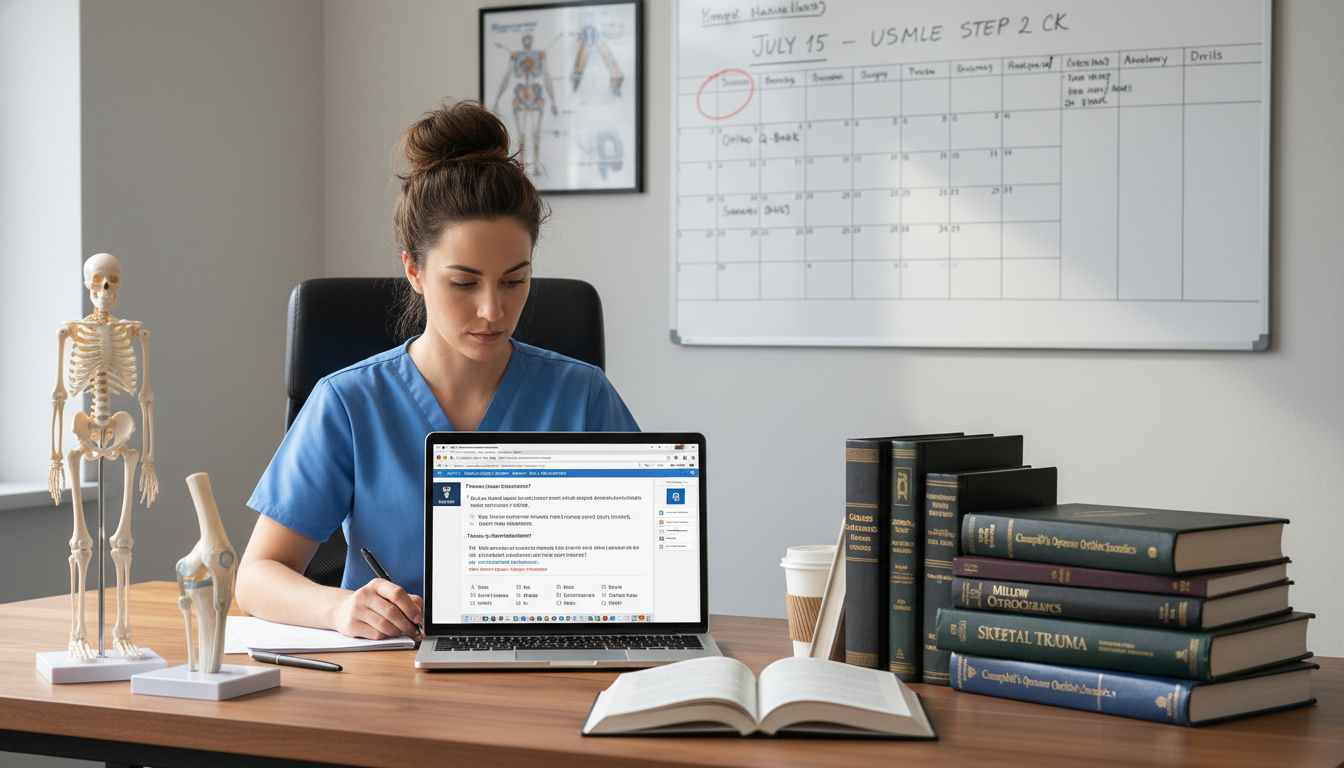
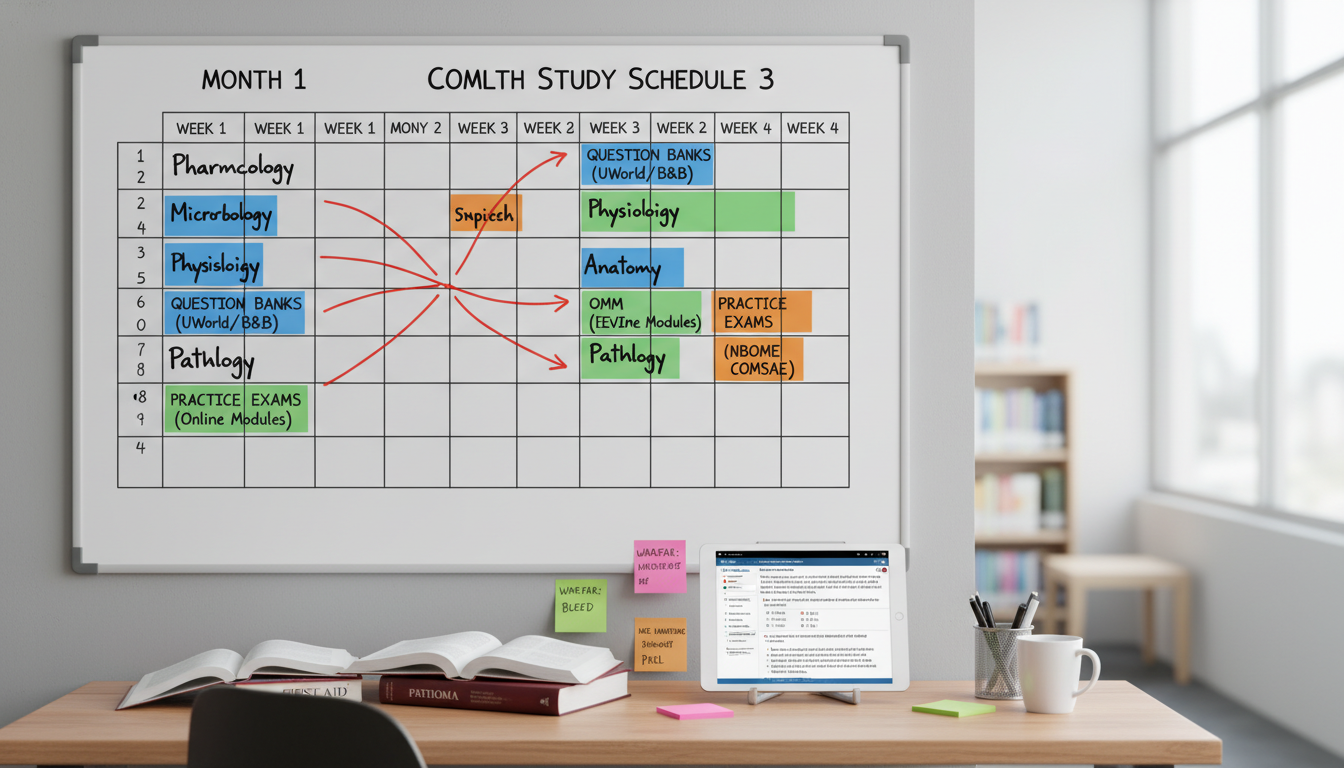
COMLEX preparation is most efficient when integrated with USMLE-level study. A sample 12–18-month plan for a non-US citizen IMG might look like this:
Months 1–6: Foundations (COMLEX Level 1 Focus)
- Study core basic sciences (anatomy, physiology, biochemistry, pathology, pharmacology, microbiology).
- Use primarily USMLE-style resources, but add:
- An OMM text or OPP review book.
- 2–3 hours per week focused on osteopathic principles and manipulative techniques theory.
- Start low-intensity question bank work for both USMLE and COMLEX styles.
Months 7–9: Dedicated Level 1 Study
- 6–10 weeks of higher intensity study.
- Heavy use of a COMLEX-specific question bank (e.g., COMQUEST, COMBANK/TrueLearn) plus your main USMLE-style question bank.
- Formal read-through of a comprehensive OMM resource.
- Schedule COMLEX Level 1 near or shortly after USMLE Step 1 (if taking both) to leverage your existing knowledge.
Months 10–14: Clinical Rotations + COMLEX Level 2-CE Prep
- Build clinical knowledge through rotations (US or home country).
- Focus question banks on Step 2 CK-style and COMLEX Level 2-style questions.
- Weekly OPP/OMM review sessions linking manipulative techniques to clinical cases.
- Plan Level 2-CE for the later part of this period.
Months 15–18: Early Residency / Internship + COMLEX Level 3 Prep
- If already in a residency that allows COMLEX Level 3, integrate prep with your daily clinical work.
- Focus on long-term management and multi-step clinical reasoning cases.
- Use case-based question banks and practice exam formats.
This is just one structure. Your timeline will depend on:
- Where you are in training
- Visa and travel logistics
- Testing availability
- Whether you are also sitting for USMLE
COMLEX Level 1 Preparation Strategies for Non-US Citizen IMGs
COMLEX Level 1 is your foundation. Even if you are a foreign national medical graduate trained outside the US, residency programs will use this score to gauge your basic medical knowledge and test-taking ability.
Content and Style Differences vs USMLE
COMLEX Level 1:
- Is day-long and heavily integrated across subjects.
- Emphasizes clinical vignettes even for basic science.
- Includes unique OPP/OMM questions and osteopathic philosophy.
- Sometimes features vignette styles and answer choices that are more wordy and less “refined” than USMLE, requiring strong reading stamina.
Non-US citizen IMGs often find:
- The question style feels less predictable than USMLE.
- The time pressure is significant, especially for non-native English speakers.
- OPP/OMM content is completely new and must be learned from scratch.
Core Resources for COMLEX Level 1
For a non-US citizen IMG, a combined approach using USMLE-style high yield sources plus COMLEX-specific resources is efficient:
Core Content (shared with USMLE)
- An integrated review book (e.g., First Aid-style resource, Pathoma for pathology, Sketchy-style resources for micro/pharm if accessible).
- Your lecture notes from medical school, especially for weak subjects.
Question Banks
- USMLE-style Qbank (e.g., UWorld) for core pathophysiology and management.
- COMLEX-specific Qbank (e.g., COMQUEST, TrueLearn/COMBANK) for:
- OPP/OMM
- COMLEX-style wording
- Timing practice
OPP/OMM Resources
- A concise OMM textbook or review (e.g., Savarese-style OMM review books).
- Video resources demonstrating techniques (YouTube channels, DO school materials if accessible).
- Flashcards for:
- Somatic dysfunction diagnosis (Fryette principles, naming conventions).
- Chapman’s points.
- Common techniques (HVLA, ME, Still, counterstrain, FPR, etc.) and their contraindications.
Study Framework for Level 1
For non-US citizen IMGs, especially those juggling work or rotations, a structured yet realistic framework is crucial.
1. Build a Weekly Structure
- 5–6 days/week of study.
- Each day:
- 40–80 USMLE-style questions + detailed review.
- 20–40 COMLEX-style questions.
- 30–60 minutes of OMM-specific review.
2. Integrate Systems-Based Review
Rotate through organ systems:
- Week 1–2: Cardio + respiratory
- Week 3–4: GI + renal
- Week 5–6: Endocrine + reproductive
- Week 7–8: Neuro + psych
- Week 9–10: MSK + OMM emphasis
- Week 11–12: Heme/Onc, immunology, mixed review
Each system:
- Read high-yield pages.
- Do targeted Qbank blocks.
- Summarize missed concepts in an error log.
3. OPP/OMM From Scratch: A Practical Plan
As a foreign national medical graduate, you don’t have years of OMM lab. Create a compressed but focused plan:
- Week 1–2: Core osteopathic philosophy, terminology, TART, somatic vs visceral dysfunction.
- Week 3–4: Spinal mechanics (Fryette’s principles), muscle energy, HVLA basics (indications, contraindications).
- Week 5–6: Rib and sacral dysfunction patterns, lumbar and pelvic mechanics.
- Week 7–8: Cranial osteopathy fundamentals, Chapman’s points, lymphatic techniques.
- Week 9–10: Technique selection in clinical scenarios (e.g., pregnancy, trauma, infection).
- Week 11–12: High-yield review with rapid-fire questions and flashcards.
You do not need to physically perform every technique to answer exam questions well. Instead, focus on:
- Patterns and principles (e.g., what improves inhalation vs exhalation rib dysfunction).
- Contraindications and best choices in specific clinical contexts.
4. Practice Exams and Score Benchmarks
Use practice exams from:
- COMLEX-specific providers (COMSAE or similar self-assessments if available).
- Qbank-created comprehensive simulations.
Non-US citizen IMGs often have a slower reading speed in English. Monitor:
- Your timing: aim for at least 5–10 minutes remaining per block.
- Your percentage correct in both USMLE and COMLEX-style blocks.
Plan at least:
- 2–3 full-length COMLEX-style practice days.
- 1–2 USMLE-style full-day simulations (if also taking USMLE).
COMLEX Level 2-CE: Clinical Application for the Non-US Citizen IMG
COMLEX Level 2-CE shifts from basic science to clinical scenarios. For a foreign national medical graduate, Level 2 performance is especially important to demonstrate readiness for US-style patient care.
Content Focus at Level 2-CE
- Diagnosis and management of common inpatient and outpatient presentations.
- Emergency medicine, OB-GYN, pediatrics, surgery, psychiatry, and internal medicine.
- Patient safety, ethics, communication, and systems-based practice.
- Integration of OPP/OMM into real clinical cases:
- When to apply OMM for musculoskeletal pain, respiratory issues, post-operative ileus, etc.
- How OMM fits into a broader management plan.
Efficient Resources for Level 2-CE
Clinical Knowledge
- A Step 2 CK-style main text or question-based review (e.g., a main CK review book).
- Rotation-specific notes or handbooks (Surgery, OB, Peds, IM).
Question Banks
- A primary CK-style Qbank for core clinical decision-making.
- A COMLEX Level 2-CE-focused Qbank for style, OMM integration, and exam pacing.
OPP/OMM in Clinical Context
- Case-based OMM resources.
- Tables summarizing which techniques to use/avoid in specific clinical conditions:
- Acute fractures
- Post-surgical patients
- Pregnancy
- Osteoporosis
- Infection or malignancy
Study Strategy: Linking Rotations to COMLEX Prep
If you are doing or have done clinical rotations (in the US or abroad), turn each rotation into Level 2-CE preparation:
During Rotations:
- Read daily about your patients’ key diagnoses.
- Practice forming assessment and plan sections in US-style SOAP notes.
- Ask: “If this were a COMLEX question, what would be the best next step in management?”
OMM Add-on:
- For each common complaint (e.g., low back pain, pneumonia, post-op ileus):
- Identify at least one osteopathic technique that might help.
- Learn contraindications and how outcomes might be improved.
Handling Unique Challenges for Non-US Citizen IMGs
Different Practice Patterns
- Your home country’s standard of care may differ from US guidelines.
- Use sources aligned with US guidelines (e.g., American Heart Association, USPSTF concepts).
- Pay attention to test explanations that describe “most evidence-based next step in the US.”
Communication and Ethics Questions
- Level 2-CE includes US-centered cultural and legal expectations.
- Study summarized US medical ethics:
- Informed consent.
- Confidentiality and mandatory reporting.
- Surrogate decision making and advance directives.
Time Management on Exam Day
- Build endurance: practice full-length days with breaks timed as on the real exam.
- For non-native English speakers, practice reading stems efficiently:
- Skim the question at the end first: “What is the most appropriate next step in management?”
- Then read stem, focusing on relevant clues.
COMLEX Level 3: Transition to Independent Practice
COMLEX Level 3 is about whether you can practice with relative independence. For non-US citizen IMGs, this is often taken during residency, and the stakes are high for licensure.
Focus of COMLEX Level 3
- Longitudinal care: managing chronic conditions over time.
- Emergency care and acute management.
- Population health, preventive care, and systems-based practice.
- Advanced integration of OPP/OMM into real-world cases (not as many purely “technical” OMM questions, more about choosing whether and how to use OMM).
Strategic Approach for Residents and Early Graduates
Non-US citizen IMGs in residency must balance:
- Clinical workload.
- Program expectations.
- Visa and licensing deadlines.
A realistic strategy:
1. Start Early in PGY-1
- Within the first 3–4 months, identify your testing window.
- Begin light prep:
- 10–20 questions/day.
- Review of your most common weaknesses (e.g., pediatrics, OB, psych).
2. Use Real Patients as Study Cases
- After each shift, pick 1–2 interesting cases and:
- Ask yourself, “If this was a COMLEX Level 3 question, what would be the key decision points?”
- Consider preventive aspects and long-term follow-up.
3. OMM at Level 3
- Review indications/contraindications at an advanced level.
- Focus on:
- When to integrate OMM vs refer to PT/OT or other modalities.
- Evidence-based use, not just theoretical application.
4. Full-Length Practice
- At least 1–2 full-day practice exams or comprehensive simulations.
- Pay attention to:
- Fatigue management.
- Your ability to prioritize patient safety and guideline-based care consistently.
Unique Considerations for Foreign National Medical Graduates
- Licensing requirements differ by state; some may require Level 3 earlier than others.
- As a non-US citizen IMG, you may face time pressure related to:
- Visa status.
- Contract renewal.
- Hospital credentialing.
- Coordinate with your program director to choose an exam date that does not collide with your heaviest rotations.
Integrated Strategies, Common Pitfalls, and Application Impact
Integrating COMLEX with USMLE Preparation
If you are also taking USMLE (common for non-US citizen IMGs targeting a broad range of programs):
- Use USMLE resources for foundational knowledge, then “overlay” COMLEX-specific practice.
- Ensure that:
- You do not neglect OMM.
- You regularly practice with COMLEX-style questions and timing.
- Many concepts (e.g., pathophysiology, pharmacology, core clinical medicine) will transfer directly between exams.
Common Pitfalls for Non-US Citizen IMGs
Underestimating OMM
- Programs expect DO-level familiarity among applicants using COMLEX, even if you are an IMG.
- Weak OMM performance can significantly drag down your COMLEX score.
Over-reliance on USMLE-Only Prep
- Question style and exam format differences matter.
- COMLEX often includes ambiguous or “least wrong” answer choices—practice is essential.
Poor Time Management
- Long stems and complex answer sets can trap non-native English speakers.
- Train with strict timing from the beginning.
Ignoring Wellness and Burnout
- Preparing for both USMLE and COMLEX while navigating visas and applications can be exhausting.
- Build in:
- Short breaks each day.
- One lighter study day per week, if possible.
Impact of COMLEX Scores on Residency Applications
For a non-US citizen IMG, strong COMLEX scores can:
- Make you more competitive at osteopathic residency programs.
- Show adaptability to the osteopathic curriculum and philosophy.
- Complement USMLE scores, if you have them.
However:
- Many MD programs still interpret COMLEX less comfortably than USMLE.
- Some DO programs are cautious about non-US citizen IMGs due to visa concerns.
To maximize impact:
- Pair strong COMLEX scores with:
- US clinical experience (USCE) and strong evaluations.
- Letters of recommendation from DO physicians, if possible.
- A personal statement showing understanding and appreciation of osteopathic principles.
Frequently Asked Questions (FAQ)
1. As a non-US citizen IMG, do I really need COMLEX if I already have USMLE?
Not always. Many IMGs match successfully with USMLE alone. COMLEX is primarily required or preferred for osteopathic residency programs. If your target list includes multiple DO programs that require COMLEX, then having solid COMLEX scores can be very beneficial. If you are mainly applying to MD programs, USMLE often remains the priority. Always confirm exam requirements with each program.
2. How much OMM/OPP do I need to know if I never had hands-on training?
You must know enough to answer pattern-based and principle-based questions:
- Recognize somatic dysfunction patterns.
- Choose appropriate techniques for specific clinical scenarios.
- Know key contraindications. Physical performance is less important for the exam itself; detailed conceptual knowledge is essential. Use visual resources, diagrams, and high-yield OMM review books to compensate for lack of lab exposure.
3. Can I prepare for COMLEX Level 1–3 using mostly USMLE resources?
You can use USMLE resources for most of the core content, but you cannot rely on them alone. You must add:
- A COMLEX-specific question bank at each Level.
- A dedicated OMM resource.
- Time practicing COMLEX-style timing and format. Think of USMLE resources as your “core,” and COMLEX-specific practice as your “specialization layer.”
4. How long should I dedicate to COMLEX Level 1 preparation as a foreign national medical graduate?
If you have recently finished basic sciences and/or USMLE Step 1, a 6–10-week dedicated period with integrated Qbanks and OMM review is typical. If you have been away from basic sciences for several years, plan 3–4 months of structured review (part-time at first, then more intensive in the final 6–8 weeks). Always adjust based on your baseline scores from practice exams and question banks.
By approaching COMLEX Level 1–3 with a structured plan tailored to the realities of a non-US citizen IMG—integrating USMLE-style foundations with COMLEX-specific practice and OMM mastery—you can turn these exams into a powerful asset in your residency application strategy.